

10 Best Inverse Leg Curl (on Pull-up Cable Machine) Alternatives for Limited Equipment
If you can't do the Inverse Leg Curl (on a pull-up cable), use Romanian deadlifts, Nordic hamstring curls, Swiss ball leg curls, prone machine leg curls, or single-leg RDLs. Cue: hinge at the hips with a neutral spine and lower under control for 3–4 seconds to eccentrically load the hamstrings via hip extension and knee flexion.
Original Exercise: Inverse Leg Curl (on Pull-up Cable Machine)
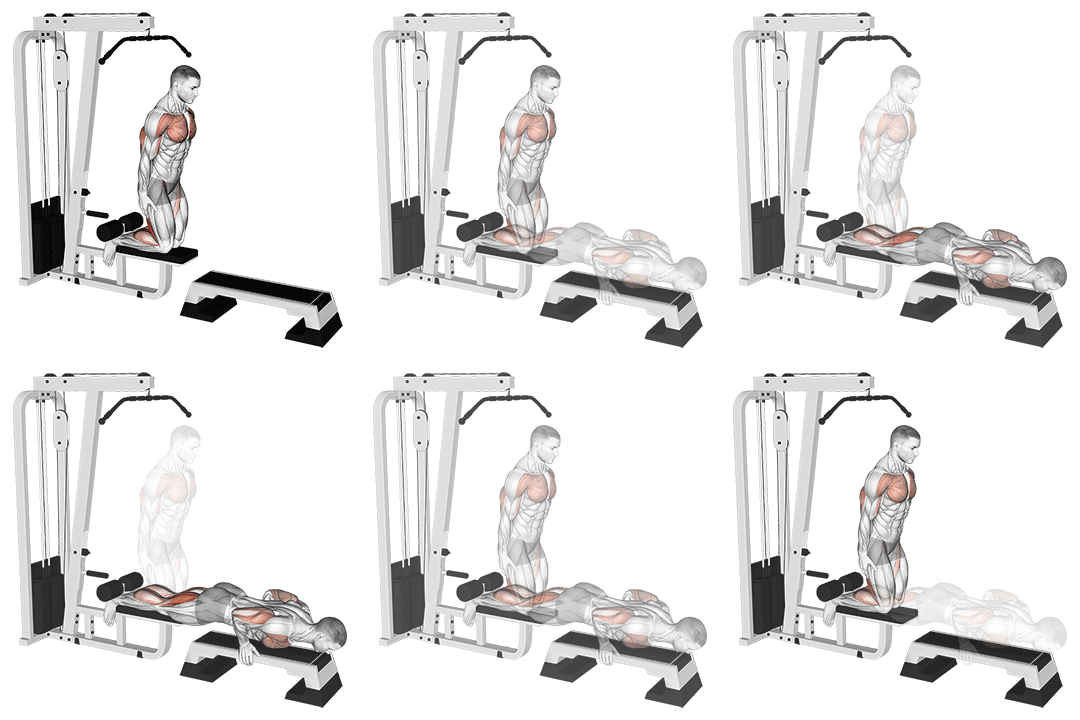
How to Perform Inverse Leg Curl (on Pull-up Cable Machine)
- Adjust the cable machine so that the ankle straps are at the lowest setting.
- Lie face down on the bench with your legs extended and the ankle straps attached to your feet.
- Hold onto the handles of the bench for stability.
- Bend your knees and curl your legs towards your glutes, squeezing your hamstrings.
- Pause for a moment at the top of the movement, then slowly lower your legs back to the starting position.
- Repeat for the desired number of repetitions.
Best Inverse Leg Curl (on Pull-up Cable Machine) Alternatives
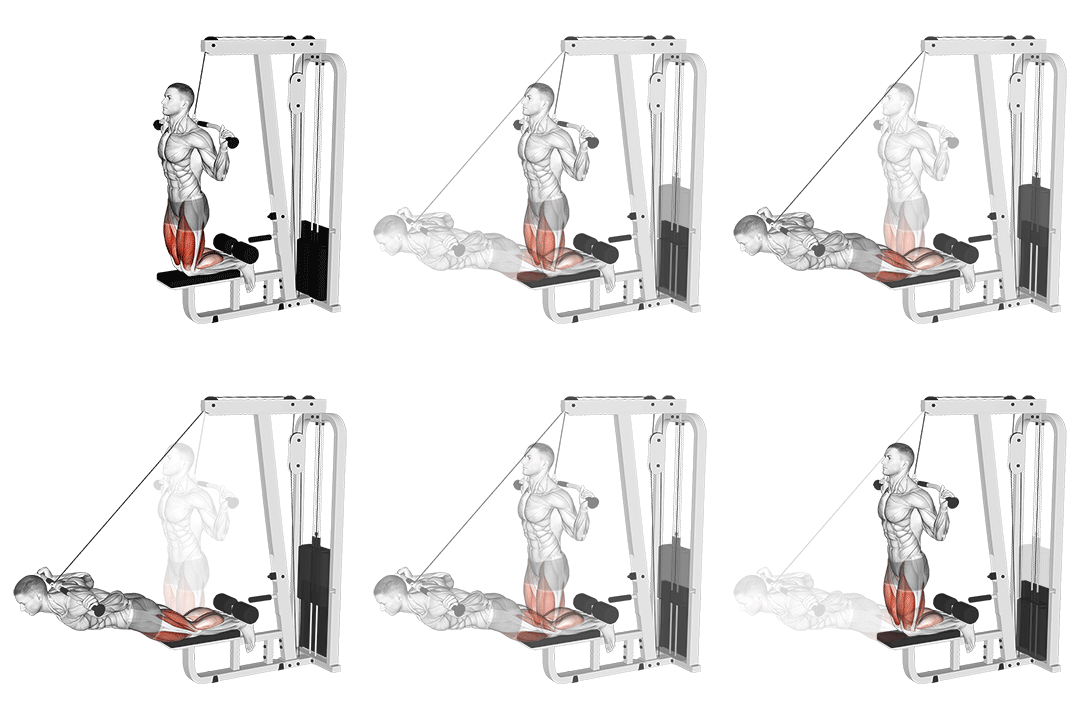
1. Cable Assisted Inverse Leg Curl
95.4% MatchHow to perform this exercise
- Adjust the cable machine so that the ankle attachment is at the lowest setting.
- Lie face down on the bench with your legs straight and the ankle attachment secured to your ankles.
- Hold onto the handles of the bench for stability.
- Keeping your upper body stationary, exhale and curl your legs up towards your glutes by flexing your knees.
- Pause for a moment at the top of the movement, squeezing your hamstrings.
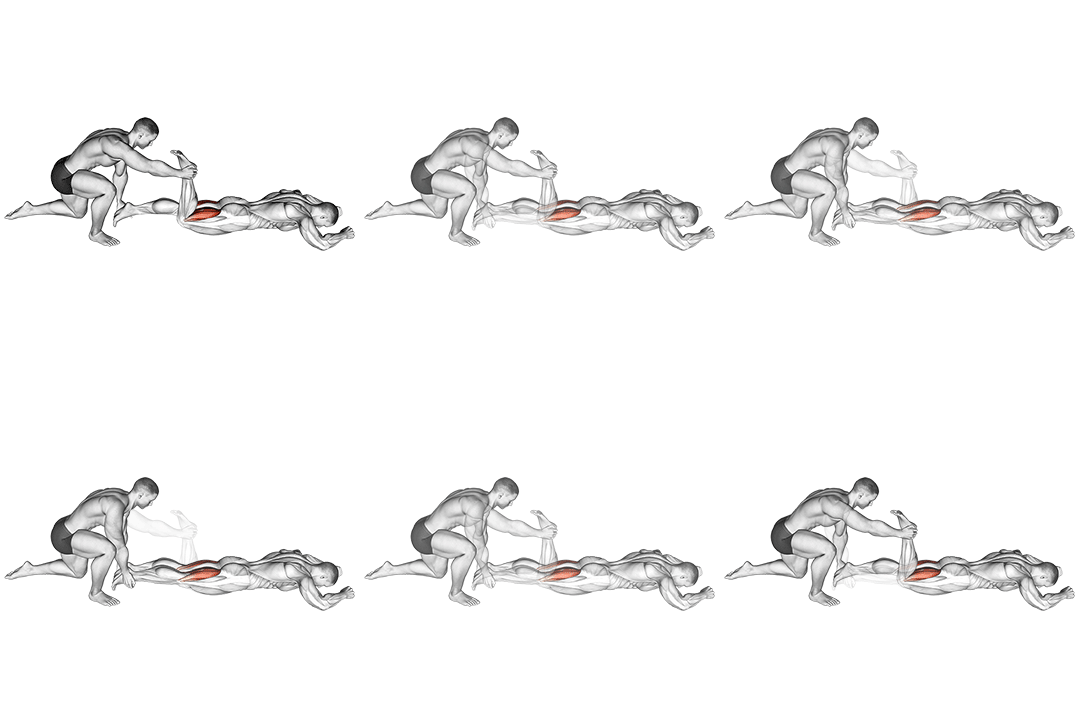
2. Assisted Prone Hamstring
84.7% MatchHow to perform this exercise
- Lie face down on a mat or bench with your legs fully extended.
- Have a partner or use a resistance band to secure your ankles.
- Engage your hamstrings and lift your legs towards your glutes, keeping your knees straight.
- Pause for a moment at the top, then slowly lower your legs back down to the starting position.
- Repeat for the desired number of repetitions.
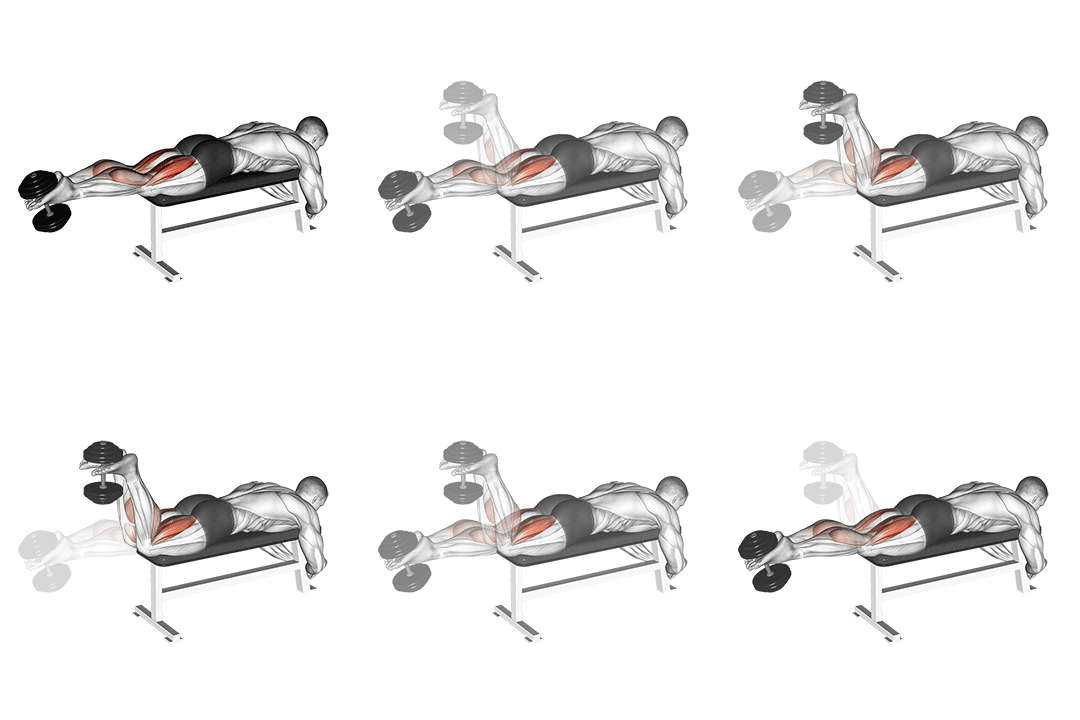
3. Dumbbell Lying Femoral
81.2% MatchHow to perform this exercise
- Lie flat on your back with your legs extended and a dumbbell resting on your lower abdomen.
- Bend your knees and bring the dumbbell towards your glutes, keeping your feet flat on the ground.
- Pause for a moment at the top, then slowly lower the dumbbell back to the starting position.
- Repeat for the desired number of repetitions.
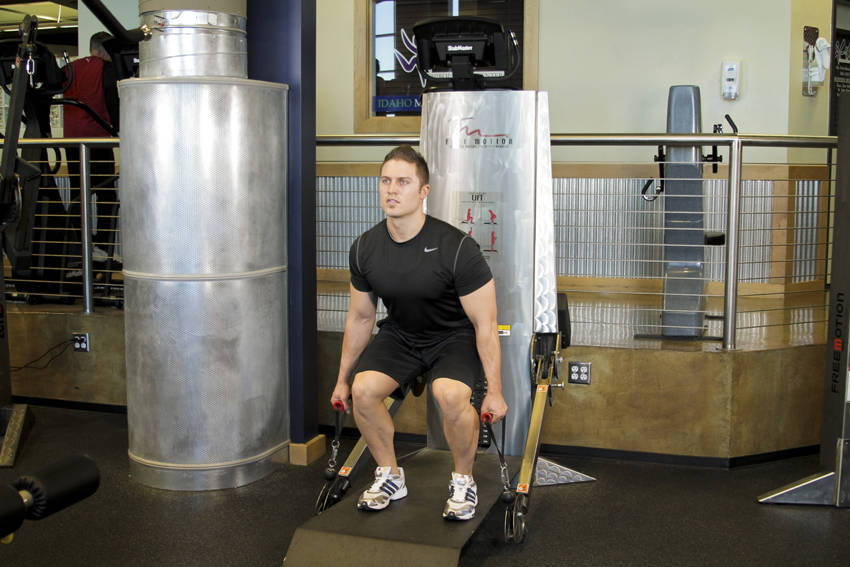
4. Cable Deadlifts
75.7% MatchHow to perform this exercise
- Move the cables to the bottom of the towers and select an appropriate weight. Stand directly in between the uprights.
- To begin, squat down be flexing your hips and knees until you can reach the handles.
- After grasping them, begin your ascent. Driving through your heels extend your hips and knees keeping your hands hanging at your side. Keep your head and chest up throughout the movement.
- After reaching a full standing position, Return to the starting position and repeat.
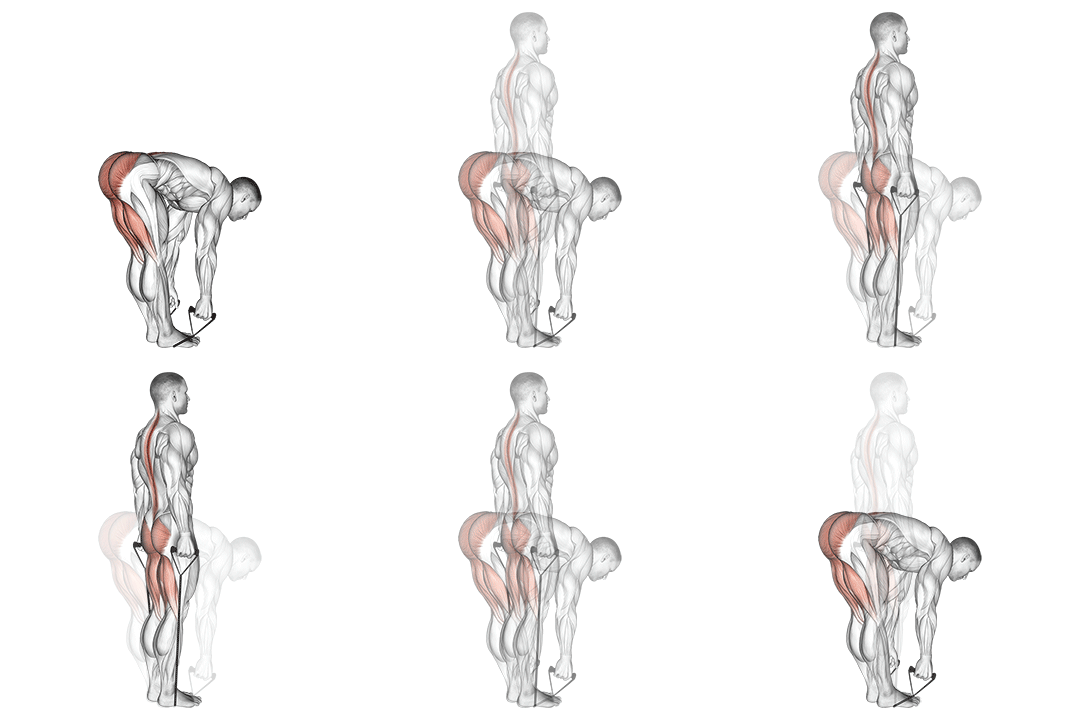
5. Band Straight Leg Deadlift
66.3% MatchHow to perform this exercise
- Stand with your feet shoulder-width apart and place the band around your feet.
- Hold the band with both hands, palms facing your body, and keep your arms straight.
- Engage your core and maintain a slight bend in your knees.
- Slowly hinge forward at your hips, keeping your back straight and chest lifted.
- Lower the band towards the ground while keeping your legs straight.
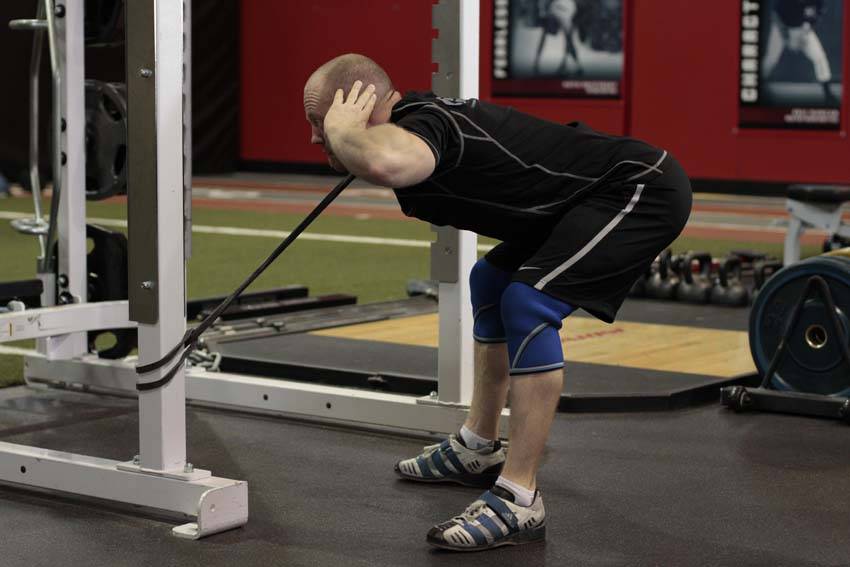
6. Band Good Morning (Pull Through)
64.9% MatchHow to perform this exercise
- Loop the band around a post. Standing a little ways away, loop the opposite end around the neck. Your hands can help hold the band in position.
- Begin by bending at the hips, getting your butt back as far as possible. Keep your back flat and bend forward to about 90 degrees. Your knees should be only slightly bent.
- Return to the starting position be driving through with the hips to come back to a standing position.
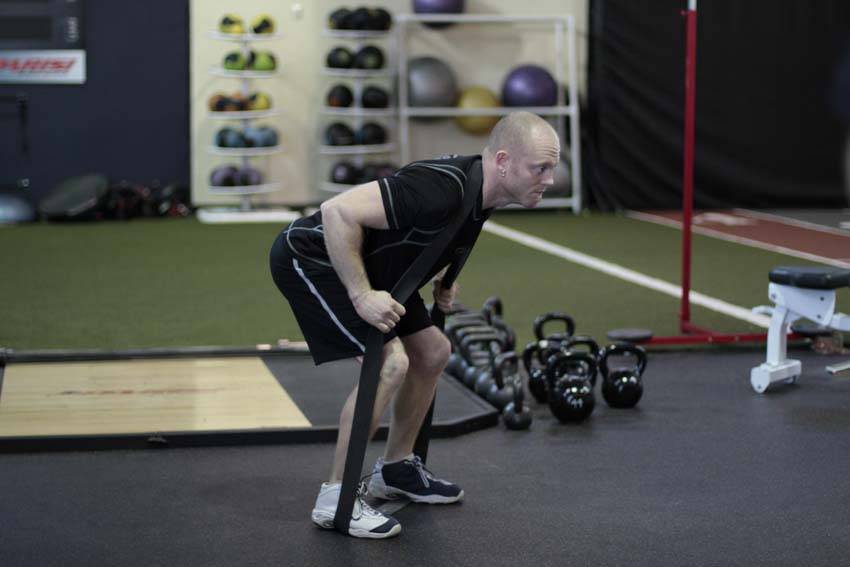
7. Band Good Morning
62.2% MatchHow to perform this exercise
- Using a 41 inch band, stand on one end, spreading your feet a small amount. Bend at the hips to loop the end of the band behind your neck. This will be your starting position.
- Keeping your legs straight, extend through the hips to come to a near vertical position.
- Ensure that you do not round your back as you go down back to the starting position.
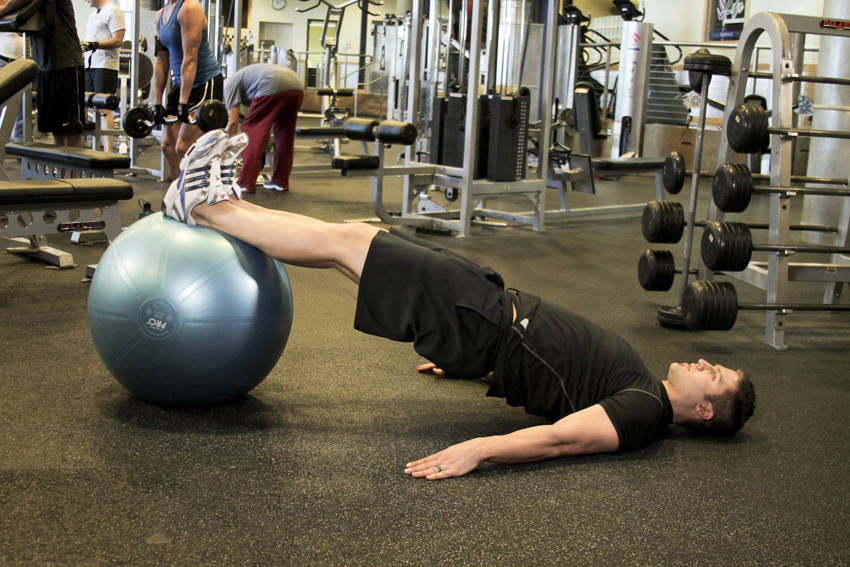
8. Ball Leg Curl
62% MatchHow to perform this exercise
- Begin on the floor laying on your back with your feet on top of the ball.
- Position the ball so that when your legs are extended your ankles are on top of the ball. This will be your starting position.
- Raise your hips off of the ground, keeping your weight on the shoulder blades and your feet.
- Flex the knees, pulling the ball as close to you as you can, contracting the hamstrings.
- After a brief pause, return to the starting position.
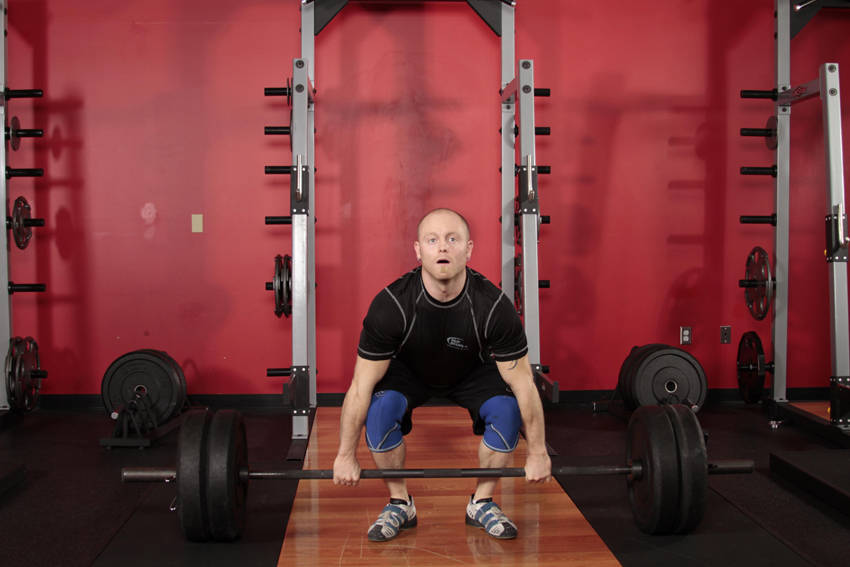
9. Clean Deadlift
60.3% MatchHow to perform this exercise
- Begin standing with a barbell close to your shins. Your feet should be directly under your hips with your feet turned out slightly. Grip the bar with a double overhand grip or hook grip, about shoulder width apart. Squat down to the bar. Your spine should be in full extension, with a back angle that places your shoulders in front of the bar and your back as vertical as possible.
- Begin by driving through the floor through the front of your heels. As the bar travels upward, maintain a constant back angle. Flare your knees out to the side to help keep them out of the bar's path.
- After the bar crosses the knees, complete the lift by driving the hips into the bar until your hips and knees are extended.
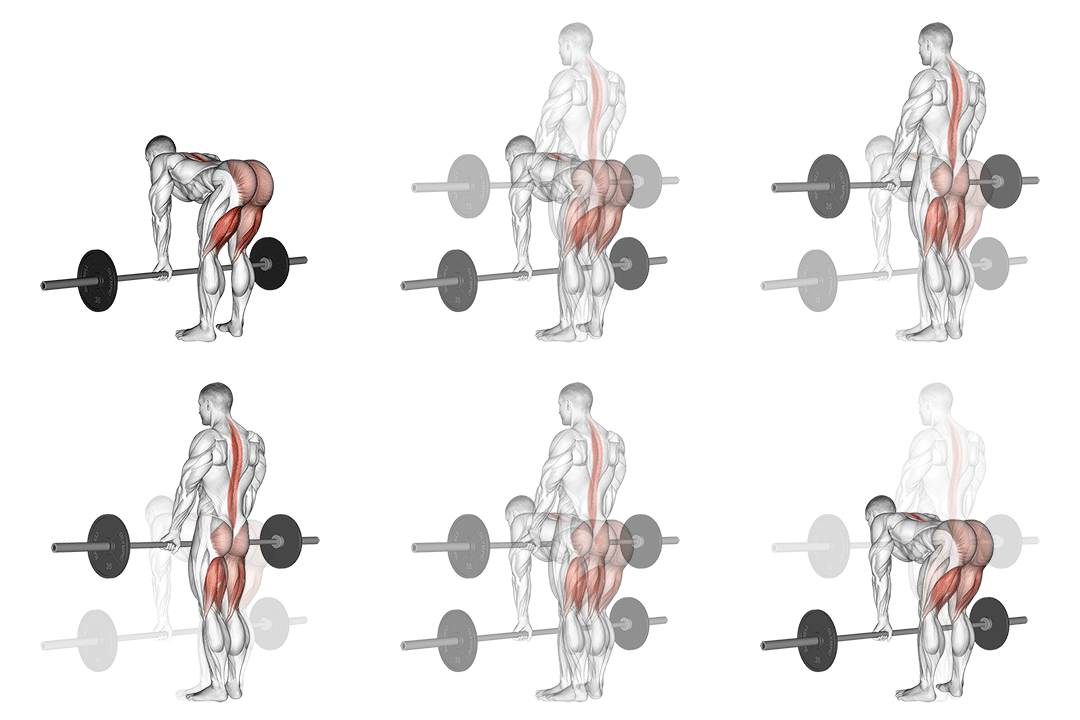
10. Barbell Straight Leg Deadlift
60% MatchHow to perform this exercise
- Stand with your feet shoulder-width apart and your toes pointing forward.
- Hold the barbell with an overhand grip, hands slightly wider than shoulder-width apart.
- Bend at your hips and lower the barbell towards the ground, keeping your back straight and your knees slightly bent.
- Lower the barbell until you feel a stretch in your hamstrings.
- Engage your hamstrings and glutes to lift the barbell back up to the starting position.
Why You Might Need a Inverse Leg Curl (on Pull-up Cable Machine) Alternative
You may need substitutes because gyms lack a pull-up cable rig, you feel knee or hip pain with the cable setup, or you want different loading patterns (hip-dominant vs knee-dominant). The Inverse Leg Curl isolates knee flexion; alternatives let you target hamstrings through hip hinge (RDLs) or emphasize eccentric overload (Nordic curls). Maintain a slight knee bend and push hips back on hinge movements to bias proximal hamstring and glute activation, or lock the hips and focus on controlled knee flexion for distal hamstring loading.
How to Choose the Right Substitute
Choose based on the stimulus you need: pick Nordic curls for maximal eccentric stress and tendon resilience (perform slow 3–5 second descents), RDLs for hip-dominant strength and proximal hamstring hypertrophy (hinge with a neutral spine and drive hips forward), Swiss ball or prone machine curls for targeted knee-flexion isolation. Also factor equipment, pain history, and unilateral needs — single-leg RDLs carry balance and stability demands while providing unilateral overload and increased muscle activation on the working side.
Frequently Asked Questions
What muscles does Inverse Leg Curl (on Pull-up Cable Machine) work?
It primarily targets the hamstrings, especially the distal fibers involved in knee flexion, and provides secondary activation to the calves and glutes. The movement isolates knee flexion, so it stresses the hamstrings eccentrically and concentrically across the knee joint.
What is the best bodyweight alternative to Inverse Leg Curl (on Pull-up Cable Machine)?
The Nordic hamstring curl is the top bodyweight substitute because it places heavy eccentric demand on the hamstrings. Anchor your ankles, lean forward slowly with a tight core, and use your hands to catch at the bottom — this emphasizes eccentric control and posterior chain hypertrophy.
Can I build muscle without doing Inverse Leg Curl (on Pull-up Cable Machine)?
Yes. Use hip-hinge exercises like Romanian deadlifts and single-leg RDLs to load the proximal hamstrings and glutes, and use Nordic curls or Swiss ball leg curls to overload knee-flexion. Focused progressive overload, controlled eccentrics, and proper technique will drive hamstring hypertrophy without the cable inverse curl.
More Exercise Alternatives
Find Alternatives for Any Exercise
Use our free tool to discover the best substitute exercises based on your available equipment and goals.
Try the Exercise Substitution Finder →