

10 Best Kettlebell One Arm Row Alternatives for Limited Equipment
If you can’t do the kettlebell one-arm row, choose movements that recreate the horizontal-pull pattern and elbow-driven lat loading. Top options include the dumbbell one-arm row, chest-supported row, single-arm cable row, inverted row, and Pendlay row. Cue: hinge at the hips, brace your core, and pull the elbow to the hip to engage the lats.
Original Exercise: Kettlebell One Arm Row
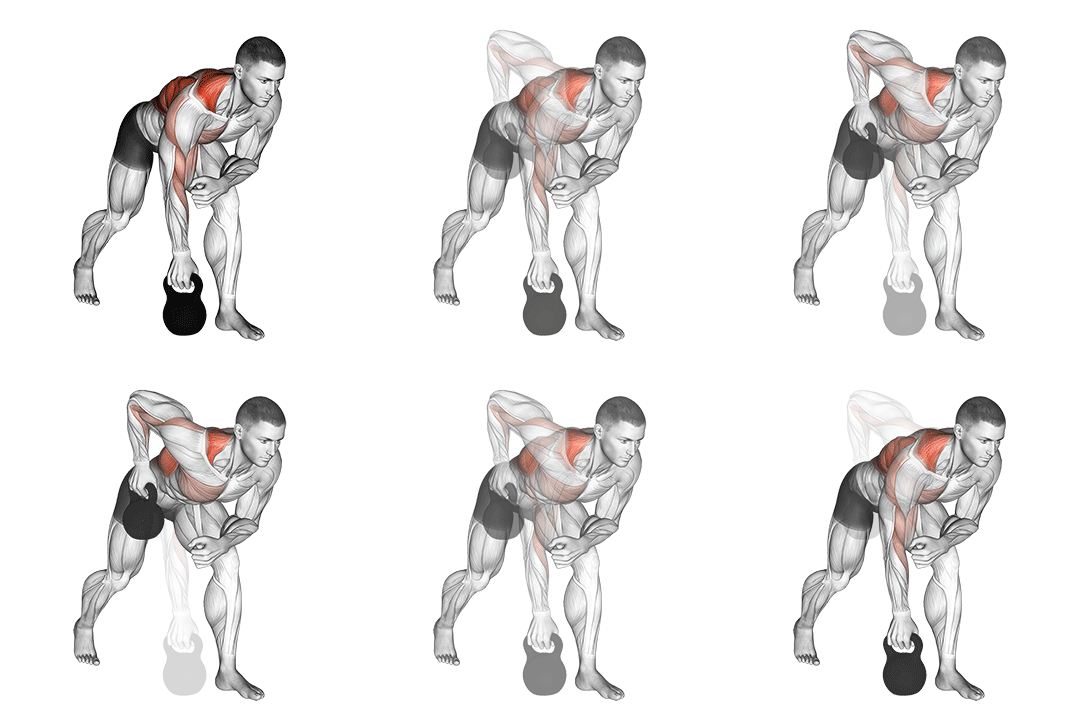
How to Perform Kettlebell One Arm Row
- Stand with your feet shoulder-width apart, holding a kettlebell in one hand with an overhand grip.
- Bend your knees slightly and hinge forward at the hips, keeping your back straight and your core engaged.
- Pull the kettlebell up towards your chest, keeping your elbow close to your body and squeezing your shoulder blades together.
- Pause for a moment at the top, then slowly lower the kettlebell back down to the starting position.
- Repeat for the desired number of repetitions, then switch sides and repeat with the other arm.
Best Kettlebell One Arm Row Alternatives
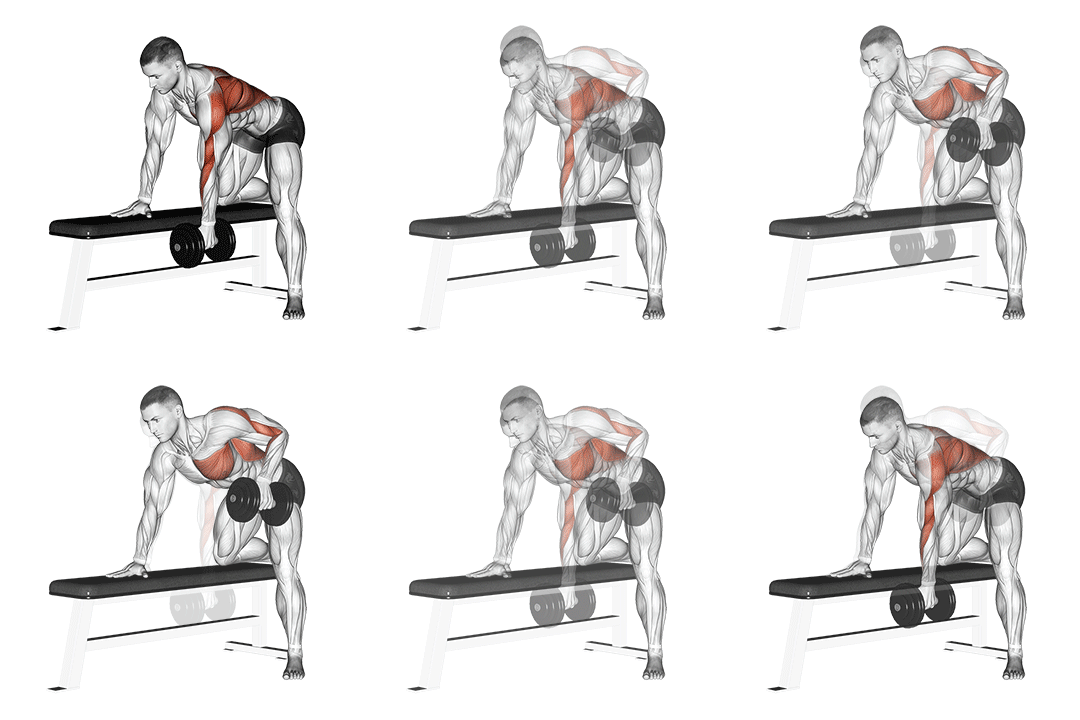
1. Dumbbell One Arm Bent-over Row
97.1% MatchHow to perform this exercise
- Stand with your feet shoulder-width apart, holding a dumbbell in one hand with your palm facing your body.
- Bend your knees slightly and hinge forward at the hips, keeping your back straight and your core engaged.
- Let the dumbbell hang straight down towards the floor, with your arm fully extended.
- Pull the dumbbell up towards your chest, keeping your elbow close to your body and squeezing your shoulder blades together.
- Pause for a moment at the top, then slowly lower the dumbbell back down to the starting position.
2. Barbell One Arm Bent Over Row
96% MatchHow to perform this exercise
- Stand with your feet shoulder-width apart, knees slightly bent, and hold a barbell with one hand using an overhand grip.
- Bend forward at the hips, keeping your back straight and your head in a neutral position.
- Pull the barbell up towards your chest, keeping your elbow close to your body and squeezing your shoulder blades together.
- Lower the barbell back down to the starting position in a controlled manner.
- Repeat for the desired number of repetitions, then switch to the other arm.
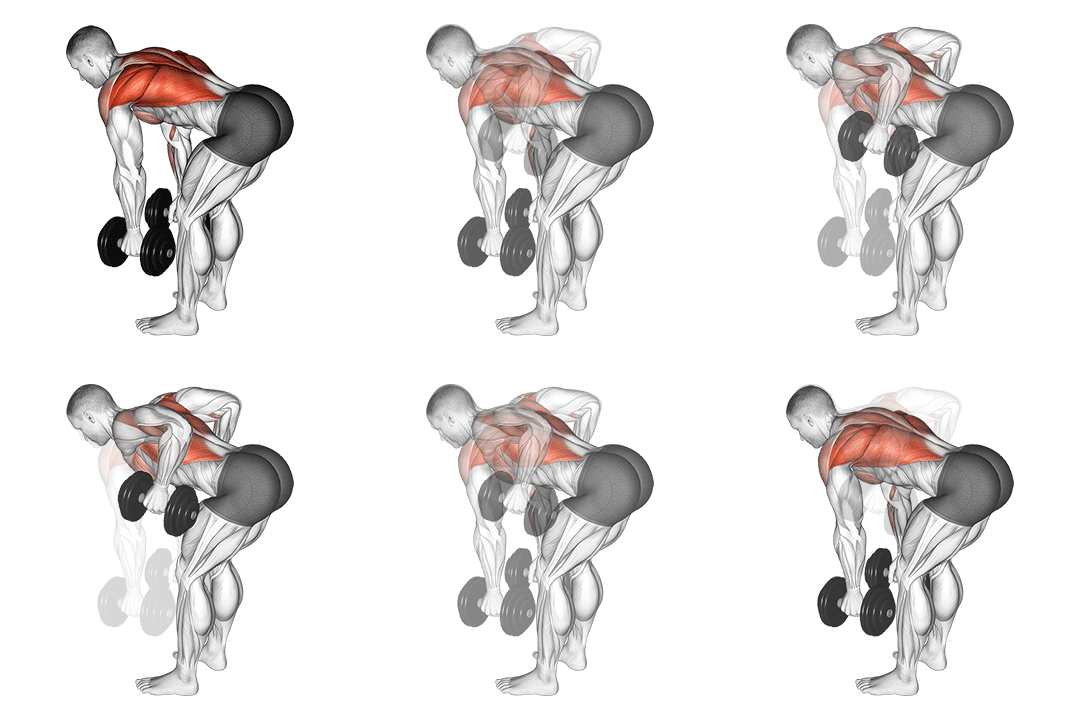
3. Dumbbell Bent Over Row
91.7% MatchHow to perform this exercise
- Stand with your feet shoulder-width apart, knees slightly bent, and hold a dumbbell in each hand with your palms facing your body.
- Bend forward at the hips, keeping your back straight and your core engaged.
- Let your arms hang straight down towards the floor, with your elbows slightly bent.
- Pull the dumbbells up towards your chest, squeezing your shoulder blades together.
- Pause for a moment at the top, then slowly lower the dumbbells back down to the starting position.
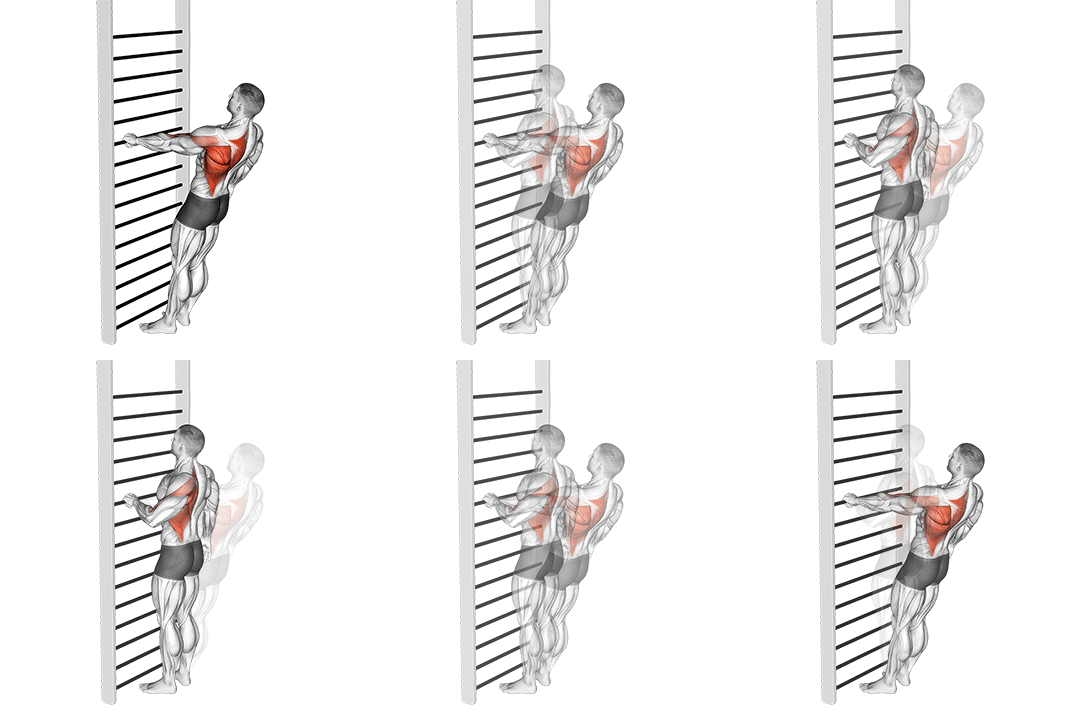
4. Bodyweight Standing One Arm Row
88.7% MatchHow to perform this exercise
- Stand with your feet shoulder-width apart, knees slightly bent, and hold a dumbbell in one hand.
- Bend forward at the hips, keeping your back straight and your core engaged.
- Let the dumbbell hang straight down in front of you, with your arm fully extended.
- Pull the dumbbell up towards your chest, keeping your elbow close to your body.
- Squeeze your shoulder blades together at the top of the movement.
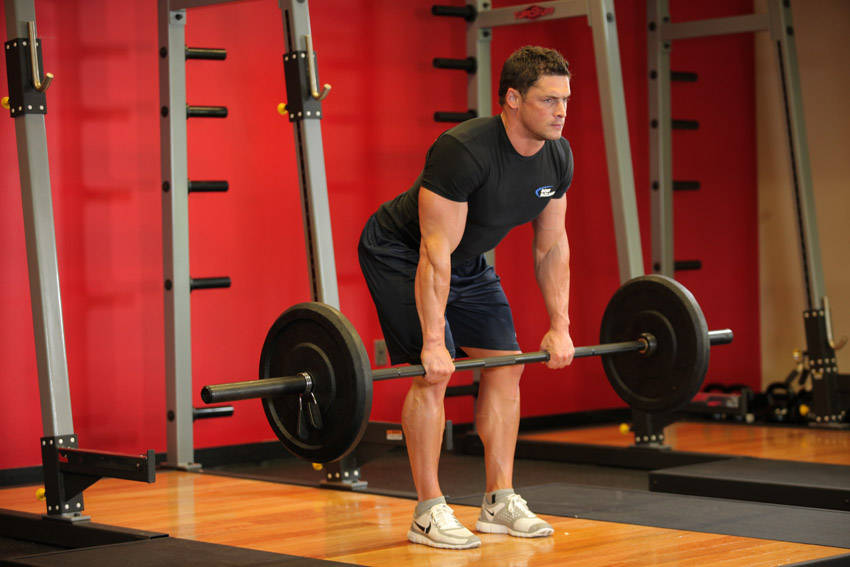
5. Bent Over Barbell Row
88.2% MatchHow to perform this exercise
- Holding a barbell with a pronated grip (palms facing down), bend your knees slightly and bring your torso forward, by bending at the waist, while keeping the back straight until it is almost parallel to the floor. Tip: Make sure that you keep the head up. The barbell should hang directly in front of you as your arms hang perpendicular to the floor and your torso. This is your starting position.
- Now, while keeping the torso stationary, breathe out and lift the barbell to you. Keep the elbows close to the body and only use the forearms to hold the weight. At the top contracted position, squeeze the back muscles and hold for a brief pause.
- Then inhale and slowly lower the barbell back to the starting position.
- Repeat for the recommended amount of repetitions.
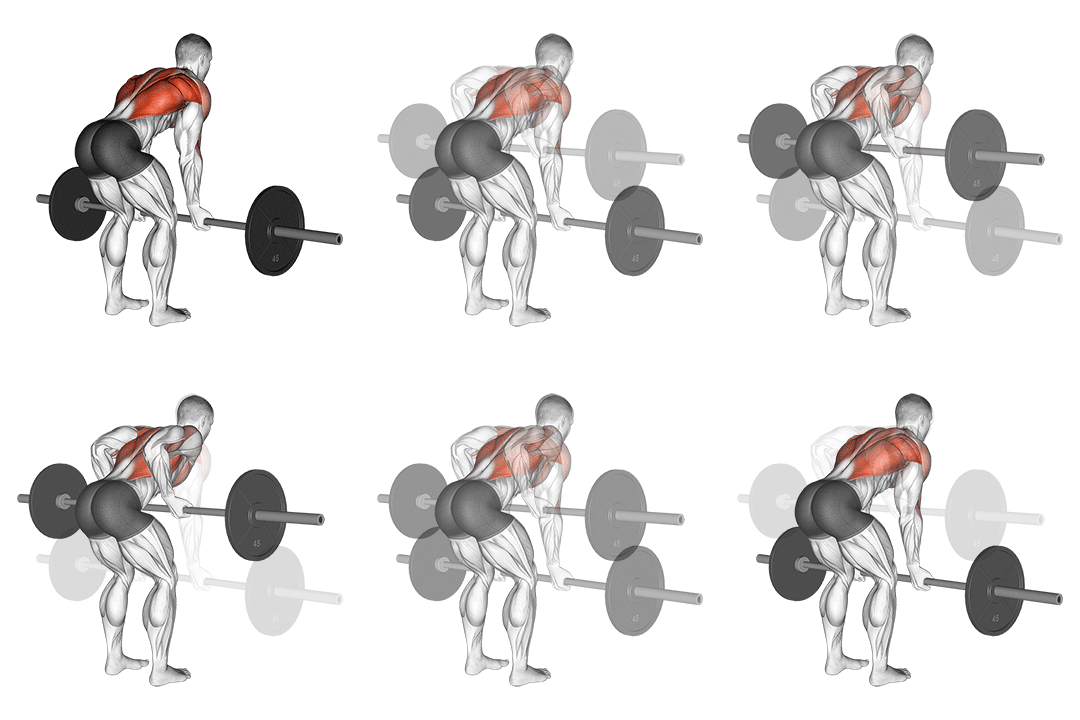
6. Barbell Reverse Grip Bent Over Row
88.2% MatchHow to perform this exercise
- Stand with your feet shoulder-width apart and knees slightly bent.
- Hold a barbell with an overhand grip, palms facing down, and hands slightly wider than shoulder-width apart.
- Bend forward at the hips, keeping your back straight and chest up, until your torso is almost parallel to the floor.
- Pull the barbell towards your lower chest, squeezing your shoulder blades together.
- Pause for a moment at the top, then slowly lower the barbell back to the starting position.
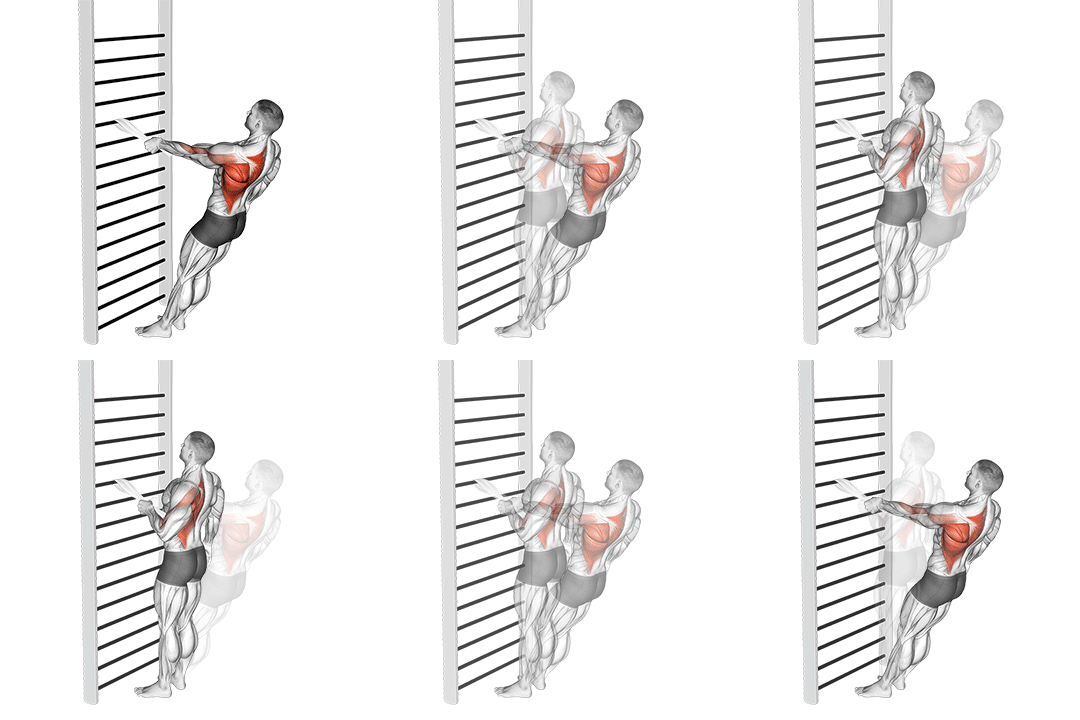
7. Bodyweight Standing One Arm Row (with Towel)
87.9% MatchHow to perform this exercise
- Stand with your feet shoulder-width apart, knees slightly bent, and hold a towel with one hand.
- Bend forward at the hips, keeping your back straight and your core engaged.
- Pull the towel towards your chest, squeezing your shoulder blades together.
- Pause for a moment at the top, then slowly lower the towel back to the starting position.
- Repeat for the desired number of repetitions, then switch to the other arm.
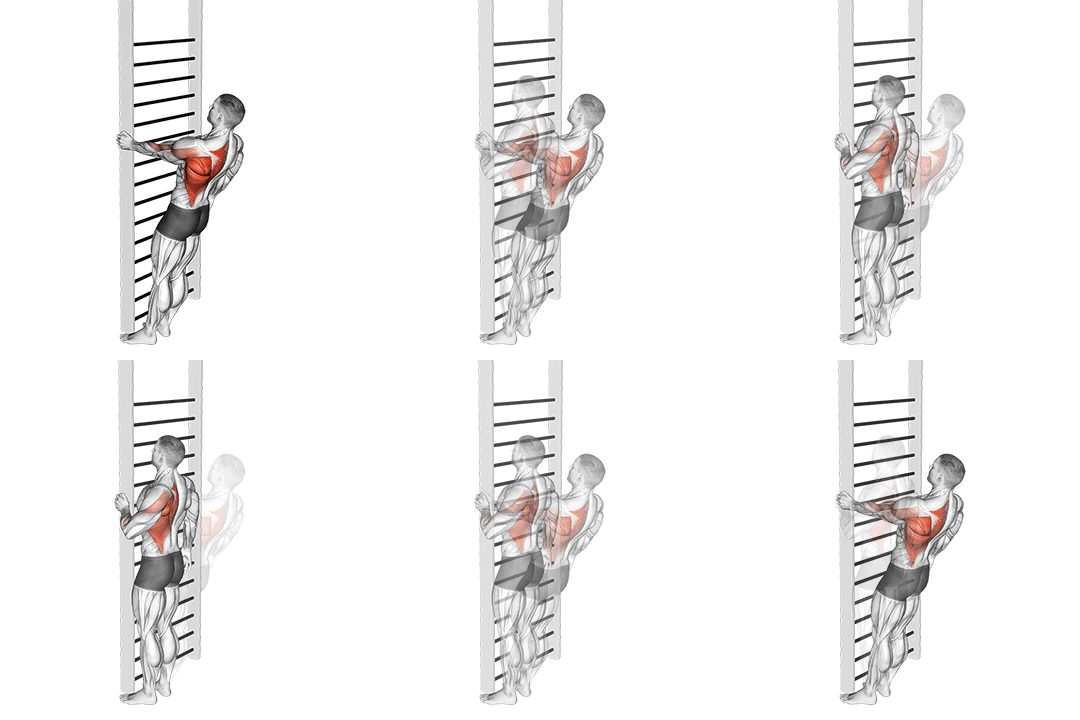
8. Bodyweight Standing Close-grip One Arm Row
85.2% MatchHow to perform this exercise
- Stand with your feet shoulder-width apart, knees slightly bent, and hold a dumbbell in one hand with a neutral grip.
- Bend forward at the hips, keeping your back straight and your core engaged.
- Pull the dumbbell up towards your chest, keeping your elbow close to your body and squeezing your shoulder blades together.
- Pause for a moment at the top, then slowly lower the dumbbell back down to the starting position.
- Repeat for the desired number of repetitions, then switch sides.
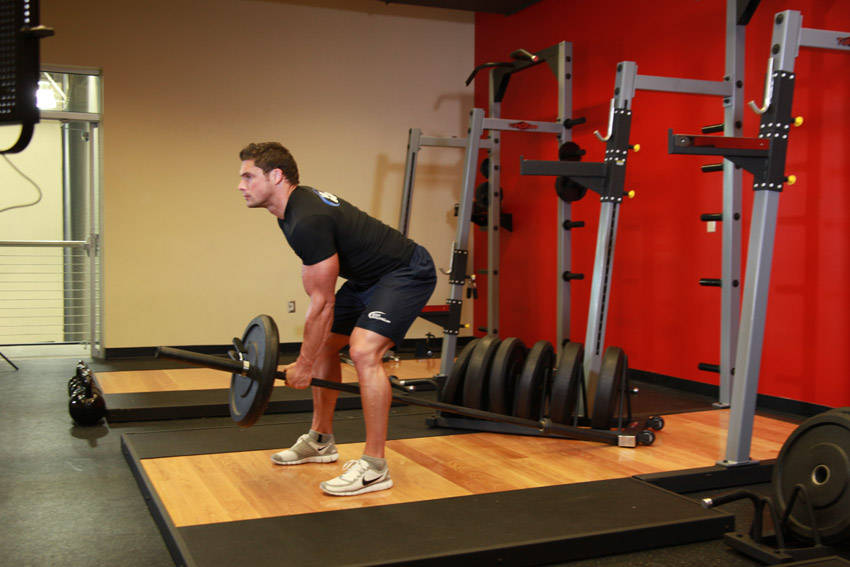
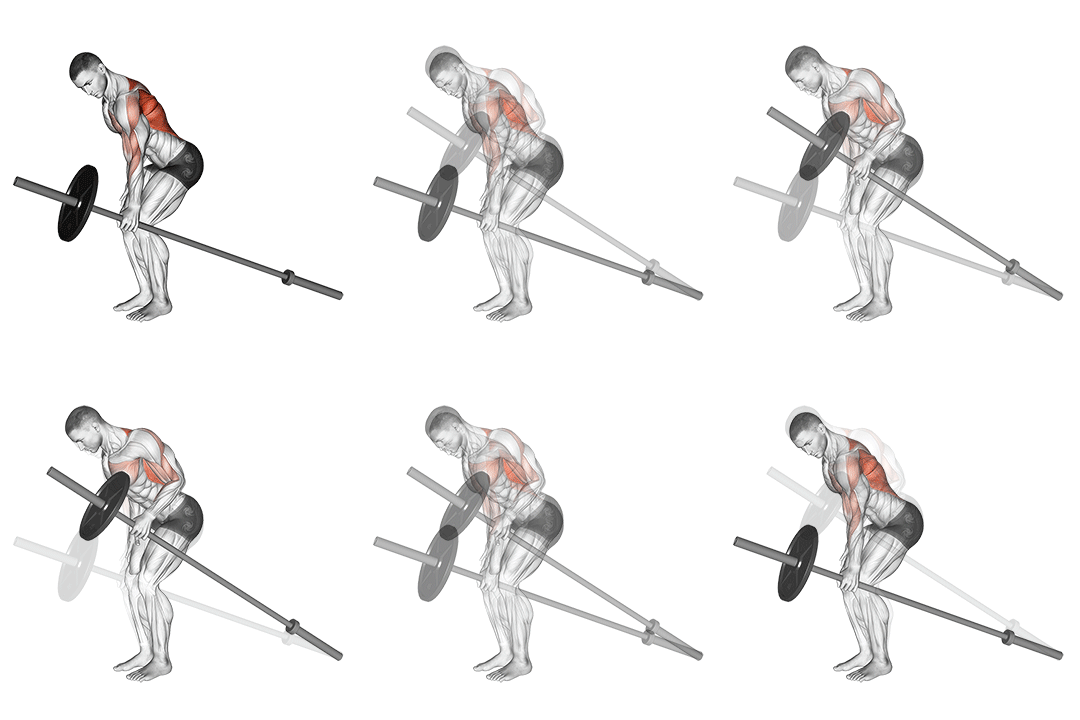
9. Bent Over One-Arm Long Bar Row
85% MatchHow to perform this exercise
- Put weight on one of the ends of an Olympic barbell. Make sure that you either place the other end of the barbell in the corner of two walls; or put a heavy object on the ground so the barbell cannot slide backward.
- Bend forward until your torso is as close to parallel with the floor as you can and keep your knees slightly bent.
- Now grab the bar with one arm just behind the plates on the side where the weight was placed and put your other hand on your knee. This will be your starting position.
- Pull the bar straight up with your elbow in (to maximize back stimulation) until the plates touch your lower chest. Squeeze the back muscles as you lift the weight up and hold for a second at the top of the movement. Breathe out as you lift the weight. Tip: Do not allow for any swinging of the torso. Only the arm should move.
- Slowly lower the bar to the starting position getting a nice stretch on the lats. Tip: Do not let the plates touch the floor. To ensure the best range of motion, I recommend using small plates (25-lb ones) as opposed to larger plates (like 35-45lb ones).
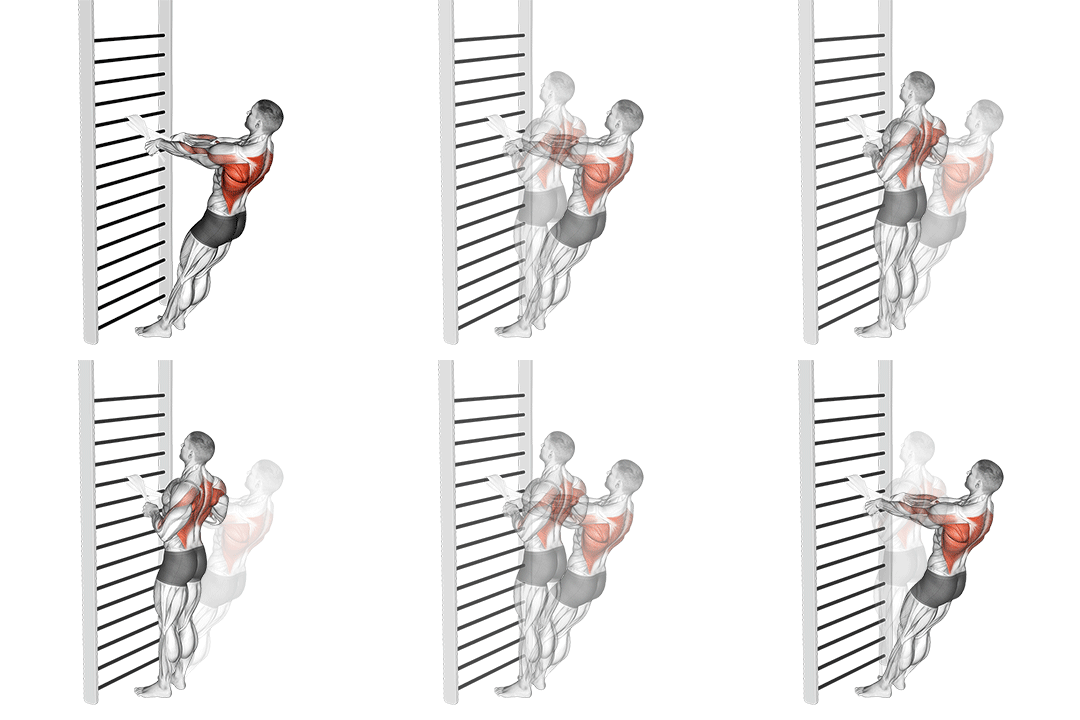
10. Bodyweight Standing Row (with Towel)
82.2% MatchHow to perform this exercise
- Stand with your feet shoulder-width apart and hold a towel in front of you with both hands.
- Bend your knees slightly and hinge forward at the hips, keeping your back straight.
- Pull the towel towards your chest, squeezing your shoulder blades together.
- Pause for a moment at the top, then slowly release the tension and return to the starting position.
- Repeat for the desired number of repetitions.
Why You Might Need a Kettlebell One Arm Row Alternative
People swap the kettlebell one-arm row for several practical reasons: no kettlebell available, shoulder or wrist pain with the kettlebell handle, uneven unilateral strength, or a need for safer spinal loading. Substitutes let you change trunk support, grip, and range of motion to alter lat recruitment and reduce lumbar shear. For example, a chest-supported row reduces erector spinae demand and isolates the lats and rhomboids; a single-arm cable row keeps constant tension through the ROM to emphasize the tendon-to-muscle force transfer. Use neutral grips to limit wrist strain and cue full scapular retraction to maximize lat activation.
How to Choose the Right Substitute
Pick a substitute based on equipment, unilateral needs, and where you want tension through the range. If you lack a kettlebell but have a dumbbell, use the dumbbell one-arm row with the same hip hinge and elbow-to-hip cue to preserve lat mechanics. If low back pain limits hinging, choose a chest-supported row to remove lumbar extension and focus force through scapular retraction. For continual tension and precision of load, pick single-arm cable rows and emphasize a long lever to increase lat torque. Always test grip positions and start light to confirm you’re loading the lats rather than overusing biceps.
Frequently Asked Questions
What muscles does Kettlebell One Arm Row work?
The kettlebell one-arm row primarily targets the latissimus dorsi through a horizontal-pull pattern. Secondary muscles include the rhomboids, middle/lower traps, posterior deltoid, biceps, and the erector spinae for trunk stabilization; cue scapular retraction and elbow drive to load the lats.
What is the best bodyweight alternative to Kettlebell One Arm Row?
The single-arm inverted row (or one-arm Australian pull-up) is the best bodyweight substitute because it preserves the horizontal-pull mechanics and unilateral demand. Keep a rigid plank line, pull the elbow to the hip, and actively retract the scapula to maximize lat recruitment.
Can I build muscle without doing Kettlebell One Arm Row?
Yes. Build back muscle using progressive overload with alternative rows and pulldowns that stress the lats through full ROM. Focus on controlled eccentrics, strong scapular retraction, and incremental load increases to drive hypertrophy without that specific kettlebell variation.
More Exercise Alternatives
Find Alternatives for Any Exercise
Use our free tool to discover the best substitute exercises based on your available equipment and goals.
Try the Exercise Substitution Finder →