

10 Best Knee Circles Alternatives for Calf Mobility
If you can’t perform Knee Circles, use standing calf raises, seated calf raises, eccentric heel drops, toe walks, or ankle circles to target the calves. For standing calf raises, cue: keep knees extended, drive through the forefoot, and pause at full plantarflexion to engage the gastrocnemius. These options preserve plantarflexion loading and ankle mobility with no equipment.
Original Exercise: Knee Circles
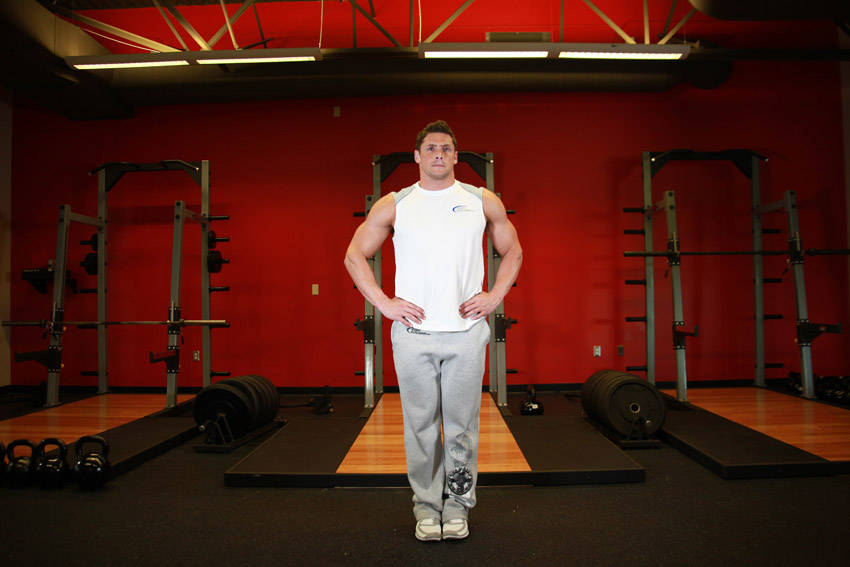
How to Perform Knee Circles
- Stand with your legs together and hands by your waist.
- Now move your knees in a circular motion as you breathe normally.
- Repeat for the recommended amount of repetitions.
Pro Tips
- Category: Stretching
- Force: Pull
- Movement type: Compound
Best Knee Circles Alternatives
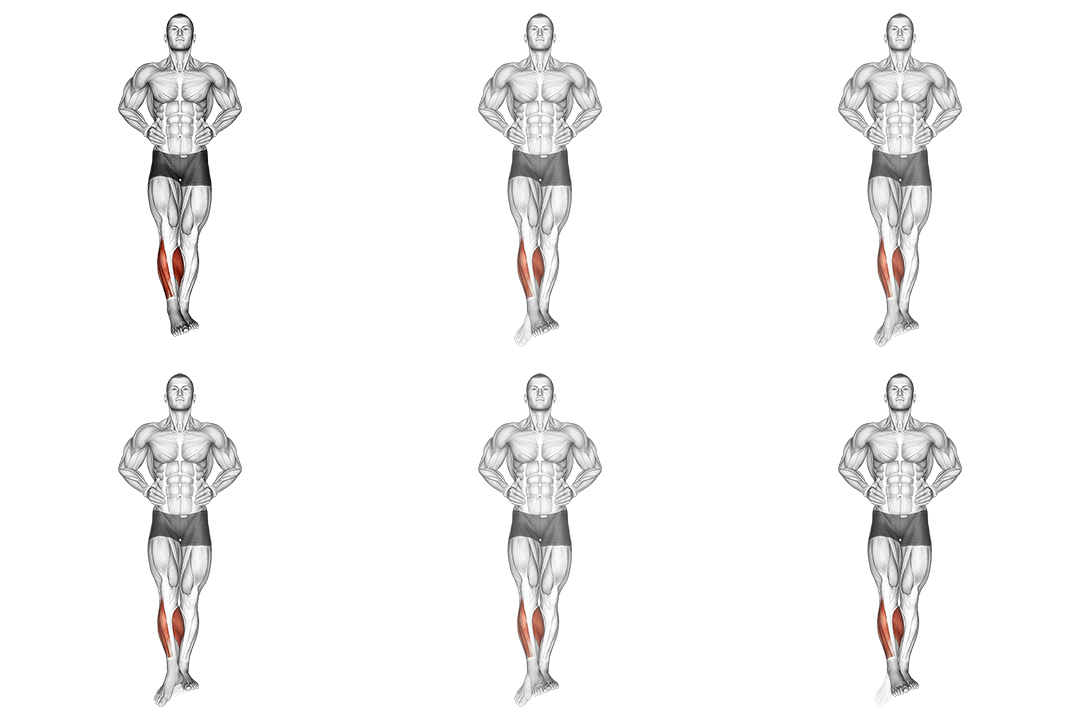
1. Ankle Circles
85% MatchHow to perform this exercise
- Sit on the ground with your legs extended in front of you.
- Lift one leg off the ground and rotate your ankle in a circular motion.
- Perform the desired number of circles in one direction, then switch to the other direction.
- Repeat with the other leg.
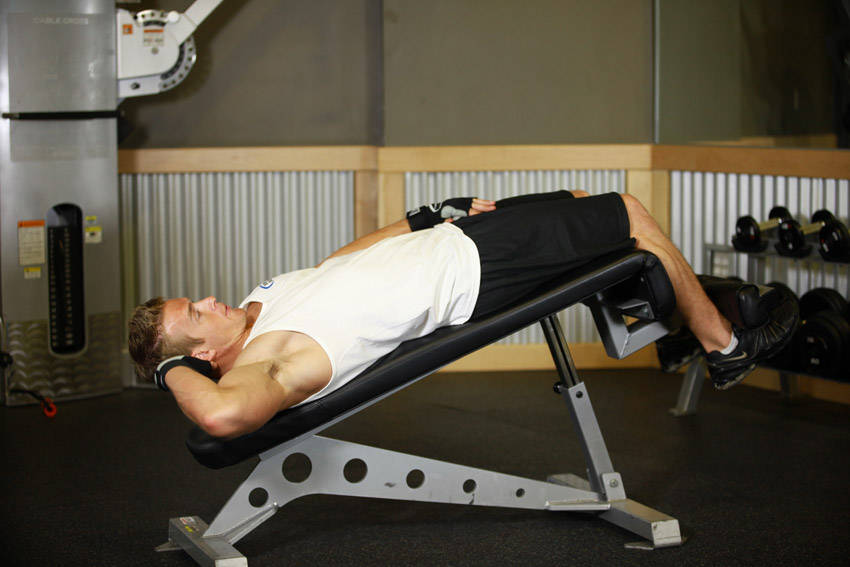
2. Decline Oblique Crunch
79.7% MatchHow to perform this exercise
- Secure your legs at the end of the decline bench and slowly lay down on the bench.
- Raise your upper body off the bench until your torso is about 35-45 degrees if measured from the floor.
- Put one hand beside your head and the other on your thigh. This will be your starting position.
- Raise your upper body slowly from the starting position while turning your torso to the left. Continue crunching up as you exhale until your right elbow touches your left knee. Hold this contracted position for a second. Tip: Focus on keeping your abs tight and keeping the movement slow and controlled.
- Lower your body back down slowly to the starting position as you inhale.
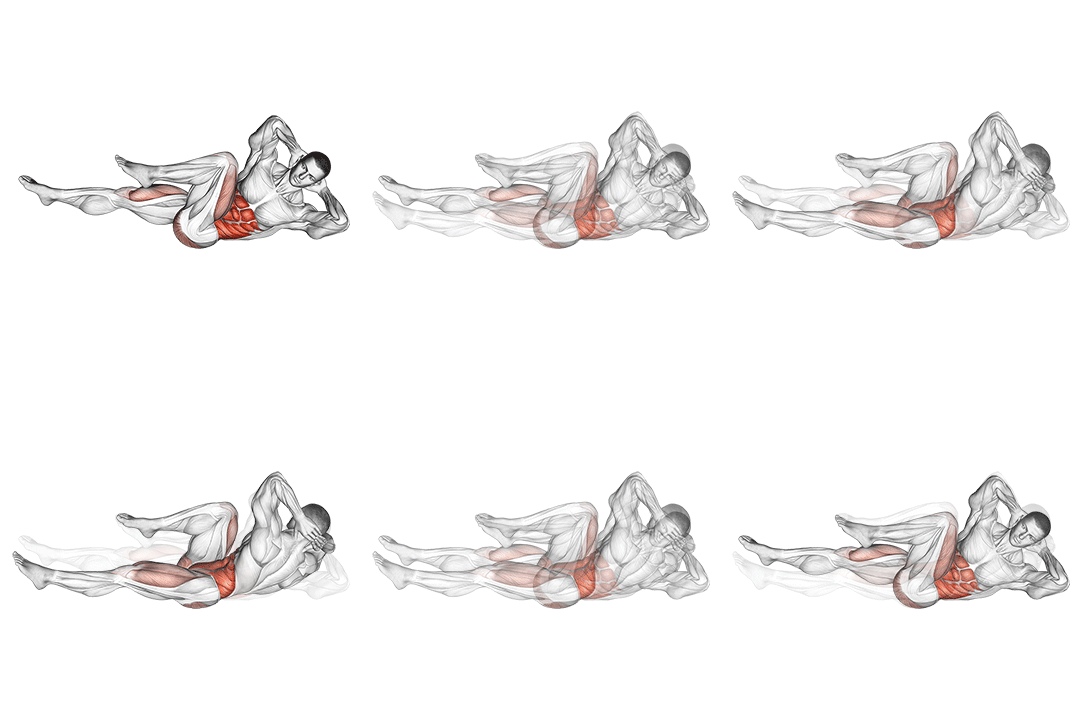
3. Elbow-to-knee
75.3% MatchHow to perform this exercise
- Start by lying flat on your back with your knees bent and feet flat on the ground.
- Place your hands behind your head with your elbows pointing outwards.
- Engage your abs and lift your upper body off the ground, bringing your right elbow towards your left knee.
- At the same time, bring your left knee towards your right elbow, creating a twisting motion.
- Pause for a moment at the top, then slowly lower your upper body and extend your legs back to the starting position.
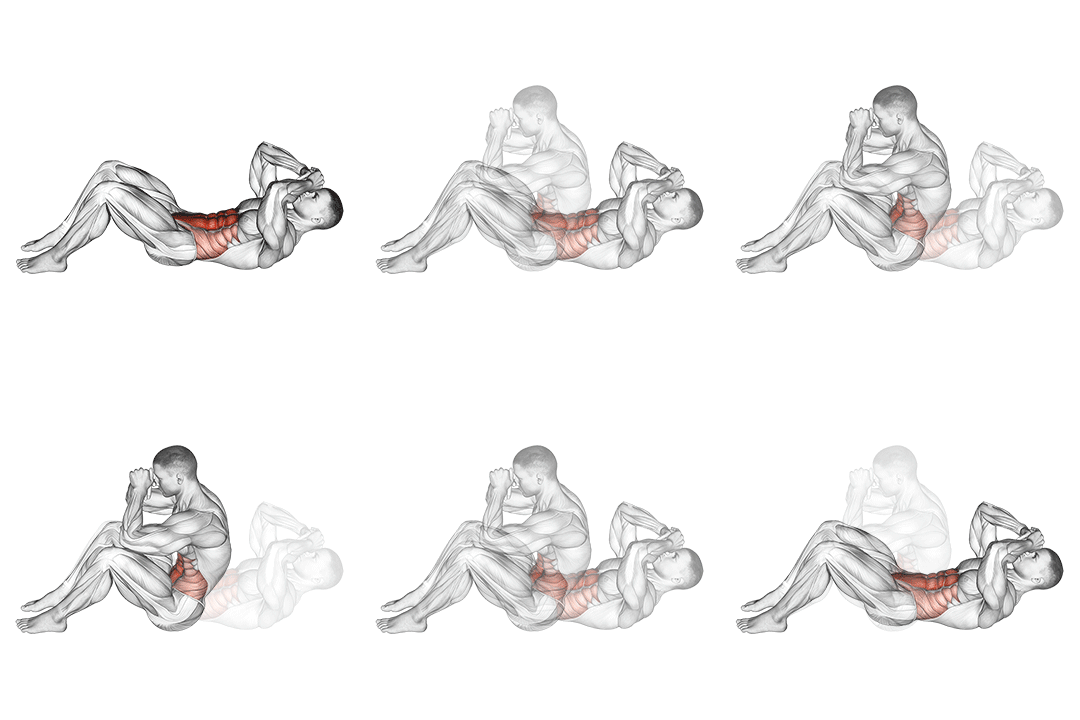
4. 3/4 Sit-up
73.3% MatchHow to perform this exercise
- Lie flat on your back with your knees bent and feet flat on the ground.
- Place your hands behind your head with your elbows pointing outwards.
- Engaging your abs, slowly lift your upper body off the ground, curling forward until your torso is at a 45-degree angle.
- Pause for a moment at the top, then slowly lower your upper body back down to the starting position.
- Repeat for the desired number of repetitions.
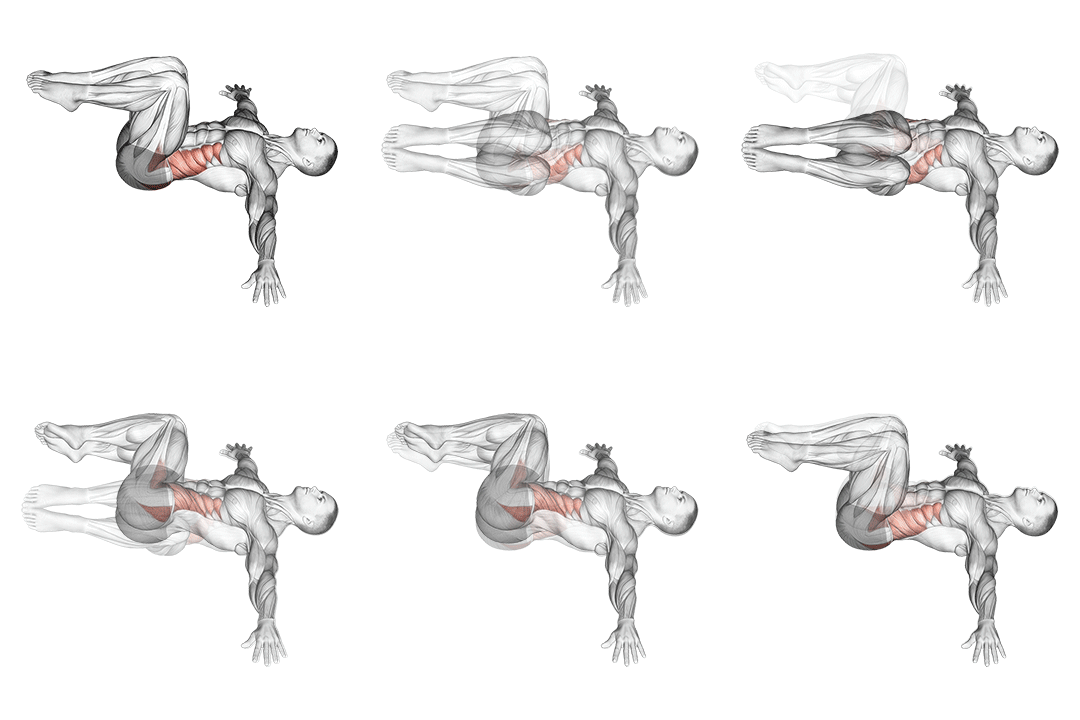
5. Bent Knee Lying Twist (male)
72.7% MatchHow to perform this exercise
- Lie flat on your back with your knees bent and feet flat on the ground.
- Extend your arms out to the sides, perpendicular to your body.
- Keeping your knees together, slowly lower them to one side, aiming to touch the ground with your knees.
- Pause for a moment, then engage your core and slowly lift your knees back to the starting position.
- Repeat the movement to the other side.
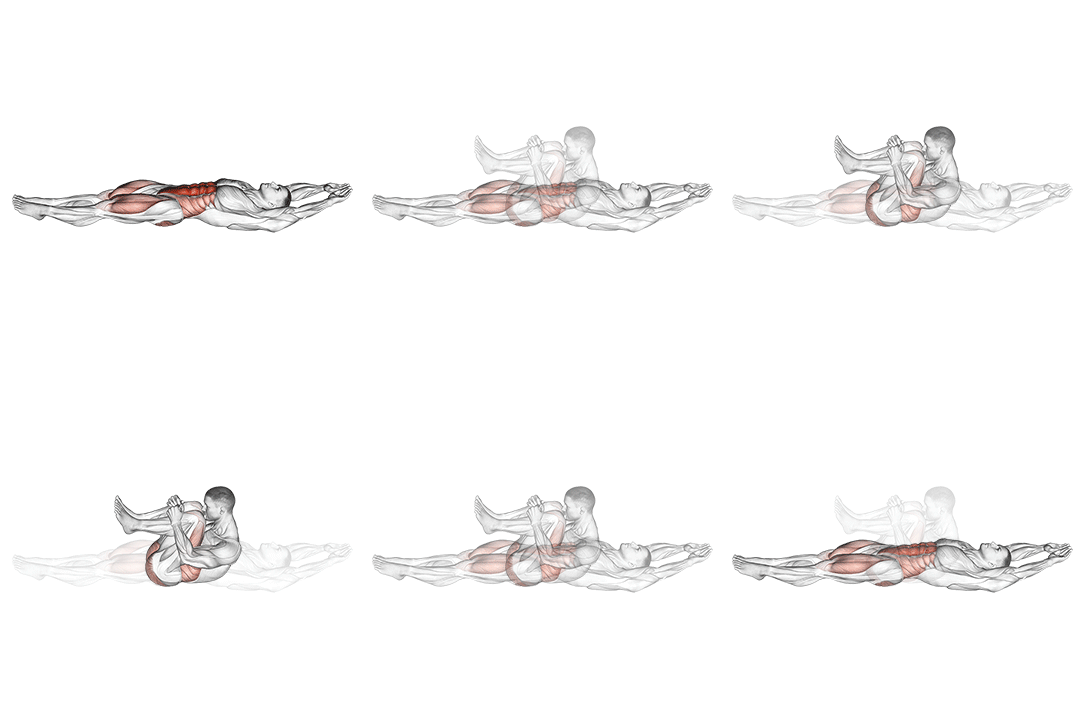
6. Cocoons
70.2% MatchHow to perform this exercise
- Lie flat on your back with your knees bent and feet flat on the ground.
- Place your hands behind your head with your elbows pointing outwards.
- Engaging your abs, slowly lift your upper body off the ground, curling forward until your torso is at a 45-degree angle.
- Pause for a moment at the top, then slowly lower your upper body back down to the starting position.
- Repeat for the desired number of repetitions.
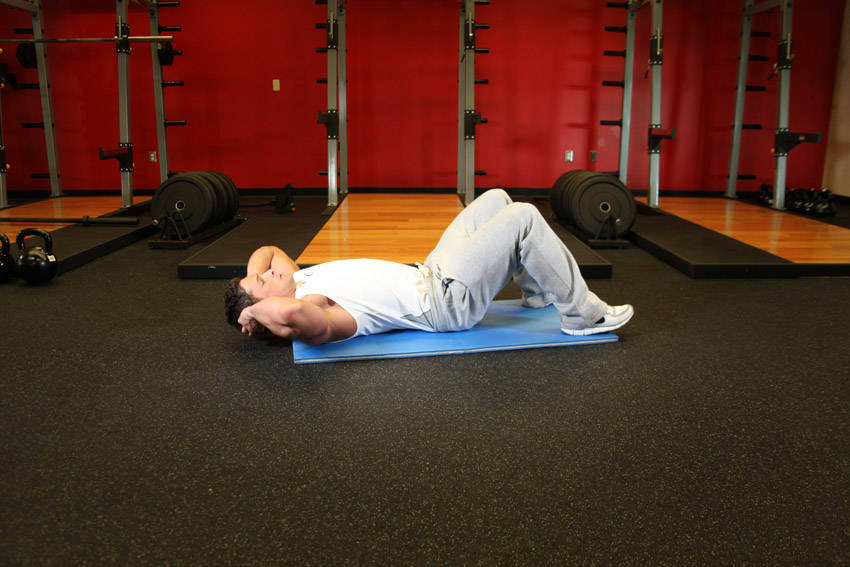
7. Crunches
69.7% MatchHow to perform this exercise
- Lie flat on your back with your feet flat on the ground, or resting on a bench with your knees bent at a 90 degree angle. If you are resting your feet on a bench, place them three to four inches apart and point your toes inward so they touch.
- Now place your hands lightly on either side of your head keeping your elbows in. Tip: Don't lock your fingers behind your head.
- While pushing the small of your back down in the floor to better isolate your abdominal muscles, begin to roll your shoulders off the floor.
- Continue to push down as hard as you can with your lower back as you contract your abdominals and exhale. Your shoulders should come up off the floor only about four inches, and your lower back should remain on the floor. At the top of the movement, contract your abdominals hard and keep the contraction for a second. Tip: Focus on slow, controlled movement - don't cheat yourself by using momentum.
- After the one second contraction, begin to come down slowly again to the starting position as you inhale.
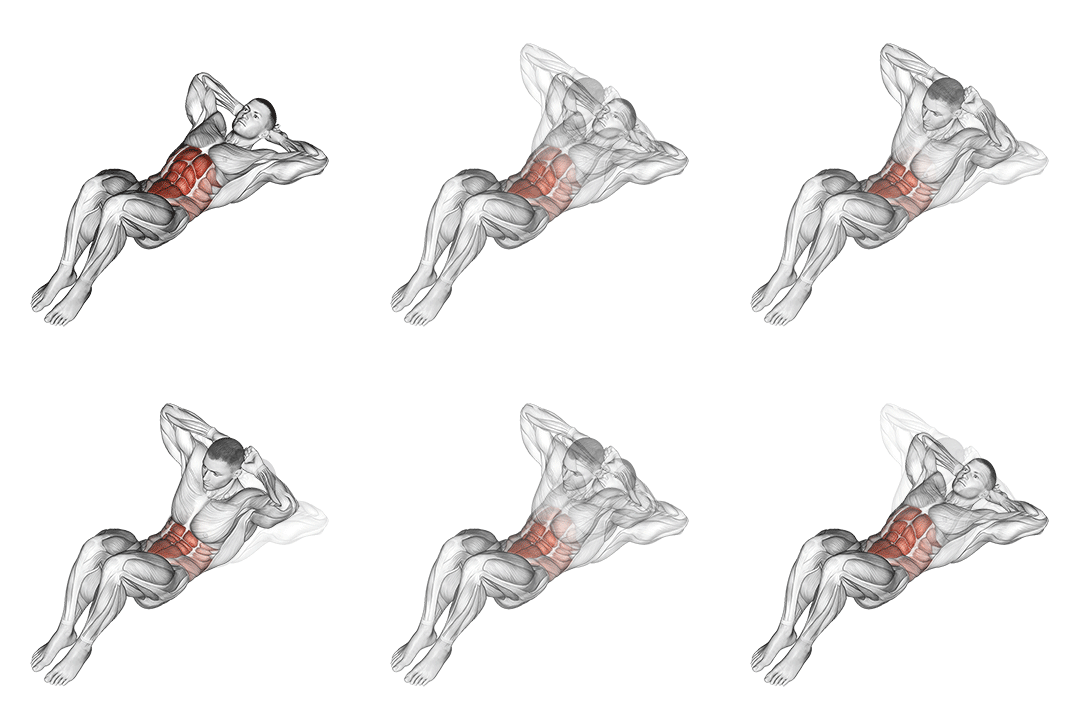
8. Crunch Floor
68.9% MatchHow to perform this exercise
- Lie flat on your back with your knees bent and feet flat on the ground.
- Place your hands behind your head with your elbows pointing outwards.
- Engage your abs and lift your shoulders off the ground, curling forward towards your knees.
- Pause for a moment at the top, then slowly lower your shoulders back down to the starting position.
- Repeat for the desired number of repetitions.
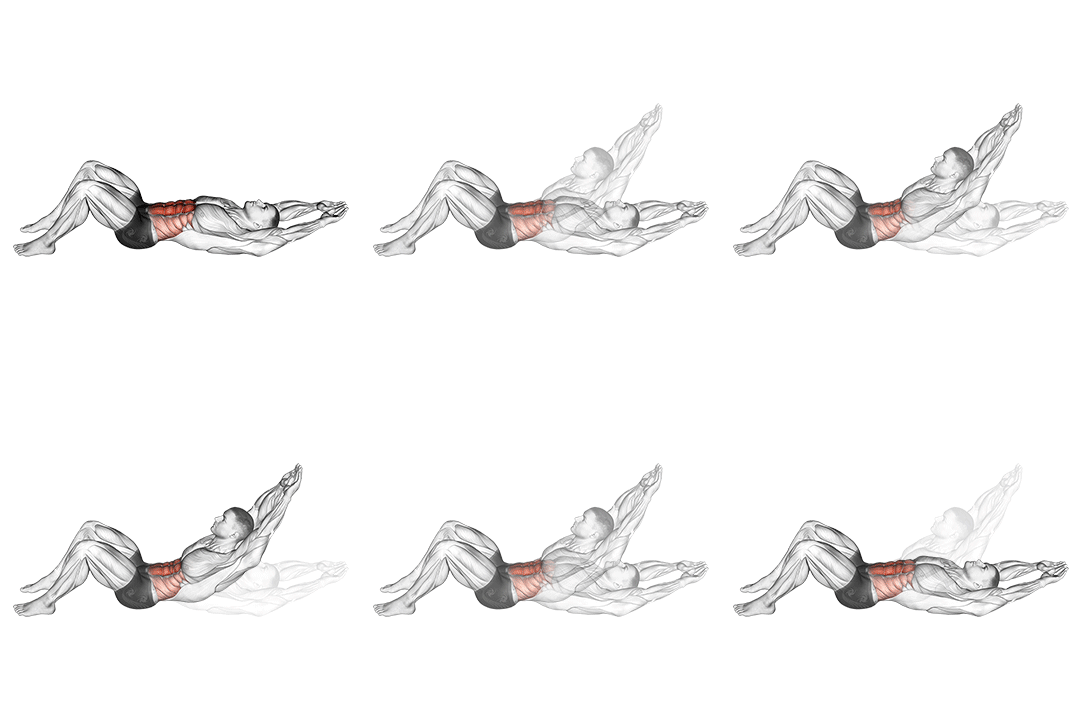
9. Crunch (hands Overhead)
68.9% MatchHow to perform this exercise
- Lie flat on your back with your knees bent and feet flat on the ground.
- Extend your arms straight above your head.
- Engaging your abs, lift your upper body off the ground, curling forward towards your knees.
- Pause for a moment at the top, then slowly lower your upper body back down to the starting position.
- Repeat for the desired number of repetitions.
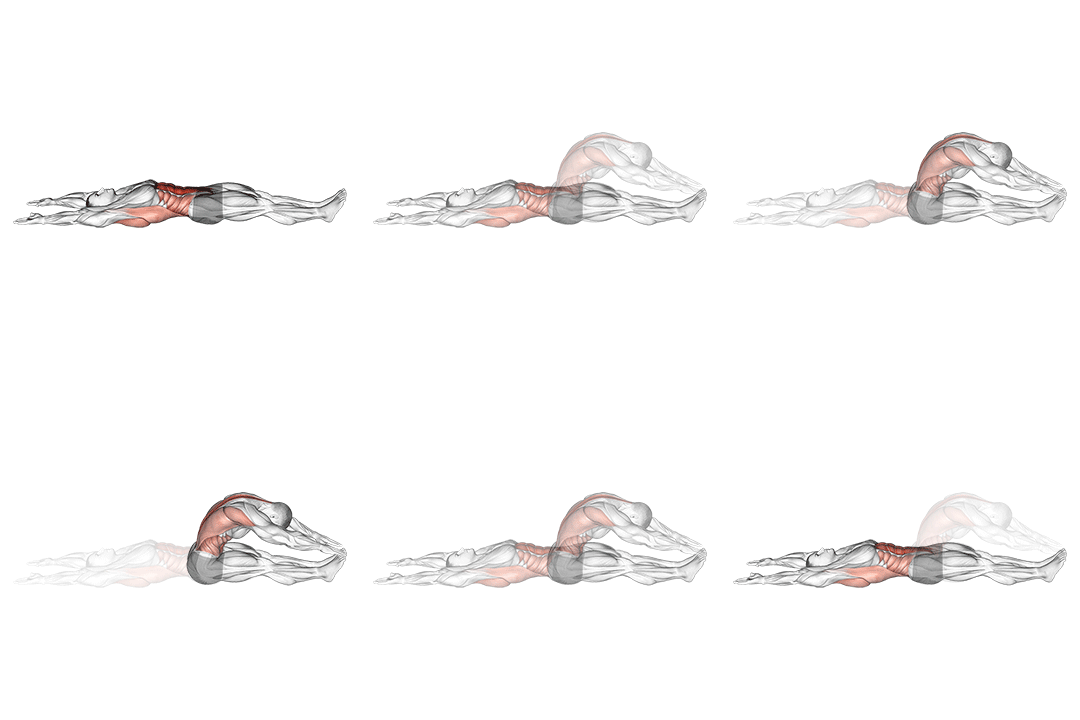
10. Arms Overhead Full Sit-up (male)
68.1% MatchHow to perform this exercise
- Lie flat on your back with your knees bent and feet flat on the ground.
- Extend your arms overhead, keeping them straight.
- Engaging your abs, slowly lift your upper body off the ground, curling forward until your torso is upright.
- Pause for a moment at the top, then slowly lower your upper body back down to the starting position.
- Repeat for the desired number of repetitions.
Why You Might Need a Knee Circles Alternative
You might substitute Knee Circles because of ankle pain, limited knee range, balance issues, or a lack of training stimulus. Injuries often change how you load the plantarflexors, so pick a safer pattern; for example, seated calf raises reduce gastrocnemius torque by flexing the knee and shift activation to the soleus—cue: sit with knees at 90° and press through the balls of your feet. Equipment or training goals also drive changes: eccentric heel drops increase tendon load for remodeling, while toe walks emphasize dynamic stability and neuromuscular control.
How to Choose the Right Substitute
Choose a substitute based on the muscle emphasis, joint constraints, and progression needs. If you want gastrocnemius strength, select standing calf raises or single-leg raises and keep the knee near full extension; cue: drive through the big toe and avoid knee collapse. For soleus focus or if you have knee issues, use seated calf raises with a 90° knee angle. Prioritize range of motion, tempo (slow eccentrics), and ability to add reps or unilateral loading when selecting a long-term replacement.
Frequently Asked Questions
What muscles does Knee Circles work?
Knee Circles primarily target the plantarflexors—gastrocnemius and soleus—by driving repeated ankle motion. Biomechanically, they emphasize plantarflexion and ankle mobility; cue: focus on pushing through the forefoot to maximize gastrocnemius recruitment.
What is the best bodyweight alternative to Knee Circles?
A standing single-leg calf raise is the best bodyweight alternative for strength and balance; it loads the gastrocnemius unilaterally. Cue: keep the knee extended, push through the big toe, and lower slowly over 2–3 seconds to maximize tension.
Can I build muscle without doing Knee Circles?
Yes—progressive overload and consistent tension on the plantarflexors build muscle without Knee Circles. Use full-range heel drops or weighted progressions, and apply tempo control (slow eccentrics) to increase mechanical tension and stimulate hypertrophy.
More Exercise Alternatives
Find Alternatives for Any Exercise
Use our free tool to discover the best substitute exercises based on your available equipment and goals.
Try the Exercise Substitution Finder →