

10 Best Cable Standing One Leg Calf Raise Alternatives for Limited Equipment
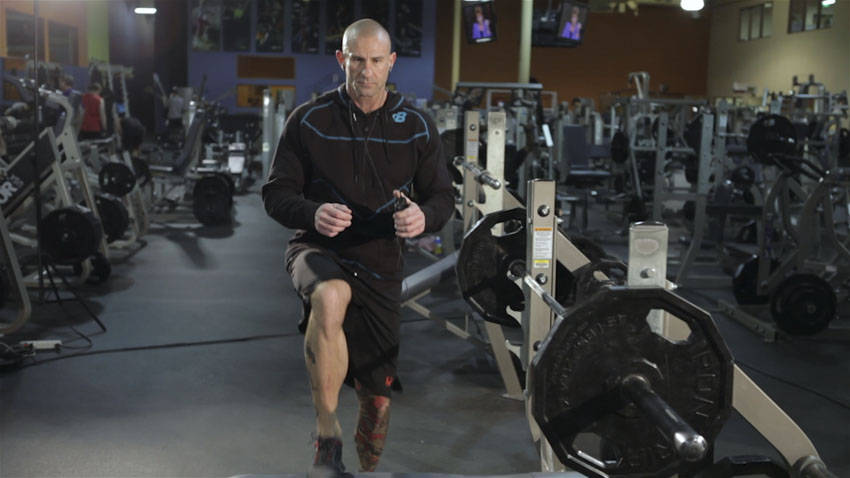
The Cable Standing One Leg Calf Raise is done standing with a cable machine. Ranked closest by our scoring: the Box Jump Down With One Leg Stabilization and the Cable Standing Calf Raise.
Updated Ranked by our 12-factor similarity model How it works
Original Exercise: Cable Standing One Leg Calf Raise
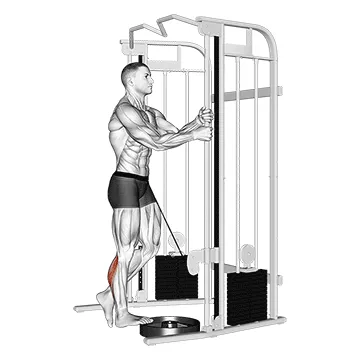
- Primary muscle
- Calves
- Equipment
- Cable
- Difficulty
- Intermediate
- Type
- Isolation
Secondary muscles: Ankles, Feet
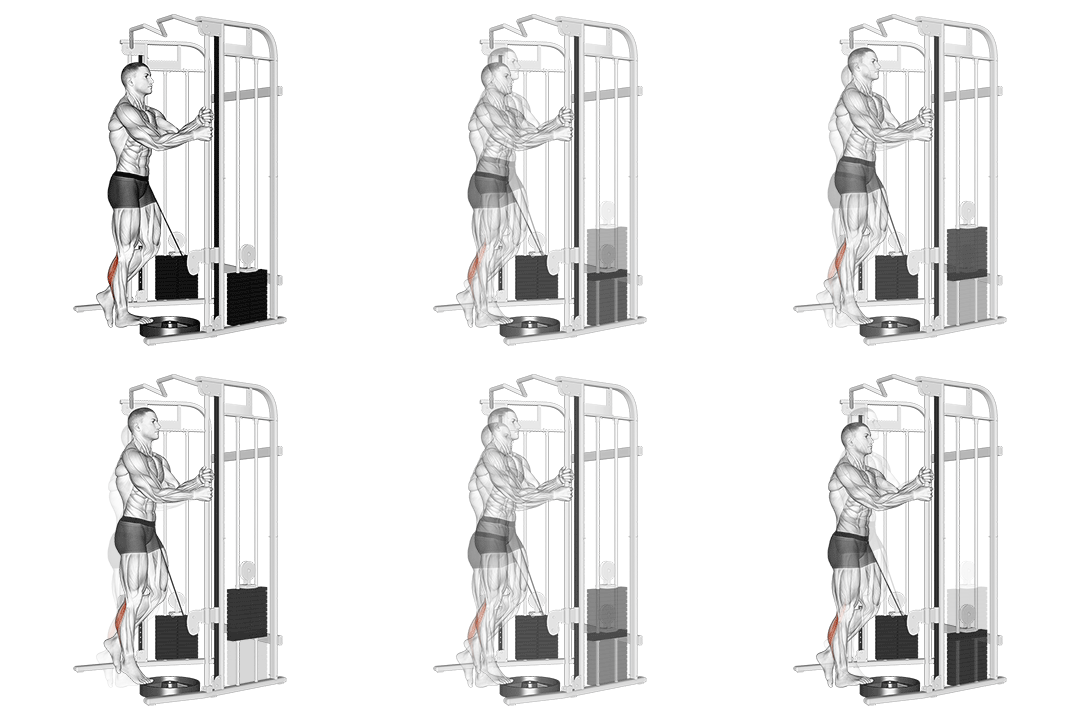
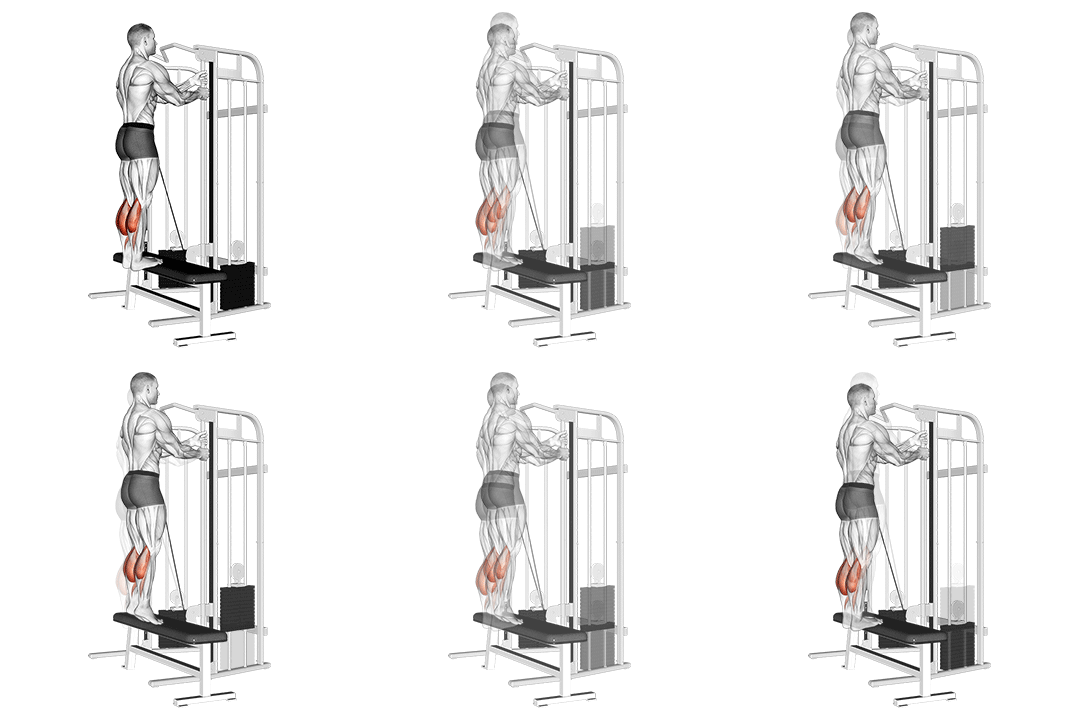
How to perform Cable Standing One Leg Calf Raise
- Stand facing a cable machine with your feet shoulder-width apart.
- Hold onto the cable machine for support.
- Lift one leg off the ground and balance on the other leg.
- Slowly raise your heel off the ground, lifting your body up onto your toes.
- Pause for a moment at the top, then slowly lower your heel back down to the starting position.
- Repeat for the desired number of repetitions, then switch legs.
Ranked Cable Standing One Leg Calf Raise Alternatives
10 substitutes, ranked by how closely each one matches the Cable Standing One Leg Calf Raise on movement pattern, muscles worked, equipment and body position. The higher the score, the less you change. Open "How to perform this exercise" on a card for the steps; every card title links to that exercise's own alternatives page.
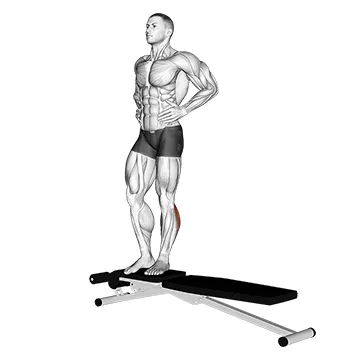
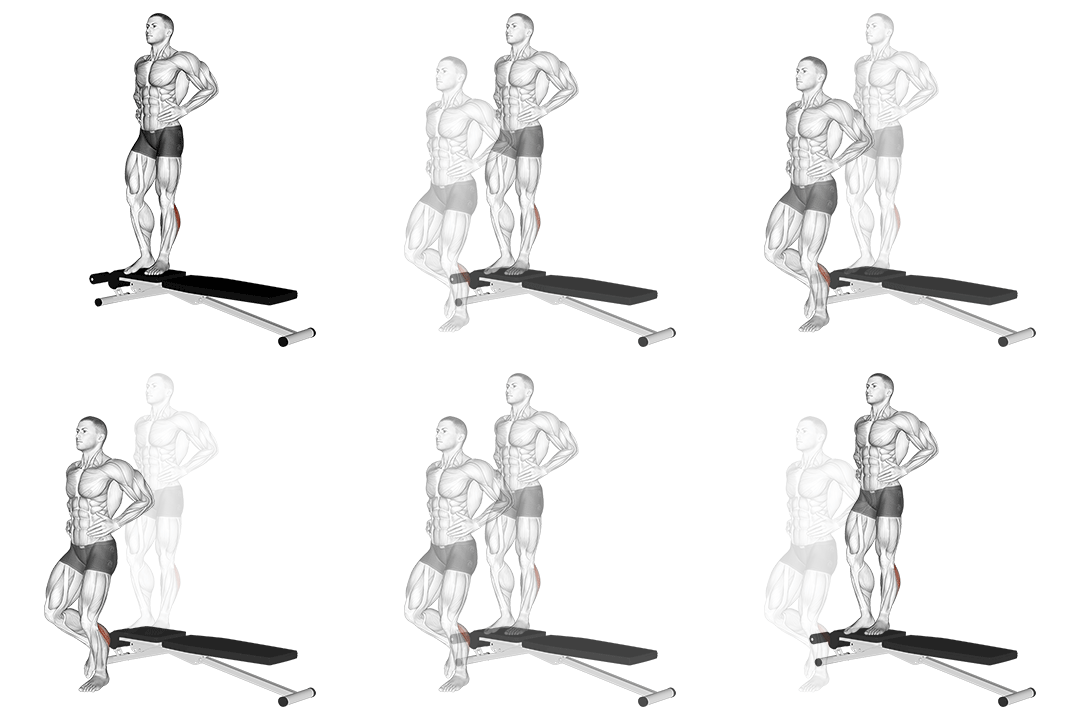
Best match - Calves
- Bodyweight
- Intermediate
- Compound
Use this when you have nothing to train with, because it works the calves with bodyweight alone.
How to perform this exercise
- Stand in front of a box or platform with your feet shoulder-width apart.
- Bend your knees and jump onto the box, landing softly with one foot on the box and the other foot hanging off the edge.
- Stabilize yourself on the box with the foot that is on it, while keeping the other foot off the ground.
- Hold this position for a few seconds, engaging your calf muscles to maintain balance.
- Slowly step down with the foot that is on the box, returning to the starting position.
- Repeat the exercise with the other leg.
Sets and reps: 3 or 4 sets of 6 to 10 reps on each side.
Why this matches
- Primary muscle: calves, the same as the Cable Standing One Leg Calf Raise
- Equipment: bodyweight only, not a cable
- Body position: standing, the same as the Cable Standing One Leg Calf Raise
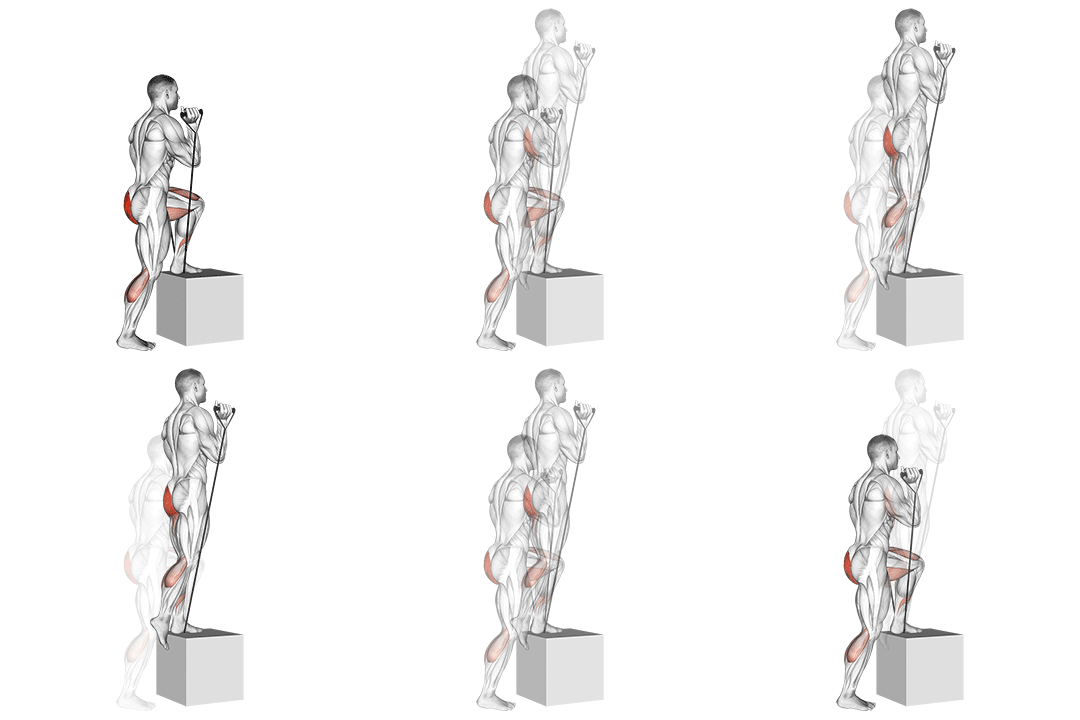
2. Band Step-up
61% match- Glutes
- Band
- Intermediate
- Compound
A looser match: it works the glutes rather than the calves.
How to perform this exercise
- Place a band around your thighs, just above your knees.
- Stand facing a step or platform with your feet hip-width apart.
- Step up onto the platform with your right foot, pushing through your heel.
- Extend your left leg behind you, keeping it straight.
- Lower your left foot back down to the ground.
- Repeat with your left foot stepping up onto the platform.
- Continue alternating legs for the desired number of repetitions.
Sets and reps: 3 or 4 sets of 6 to 10 reps on each side.
Why this matches
- Primary muscle: glutes, not calves
- Equipment: a band, not a cable
- Body position: standing, the same as the Cable Standing One Leg Calf Raise
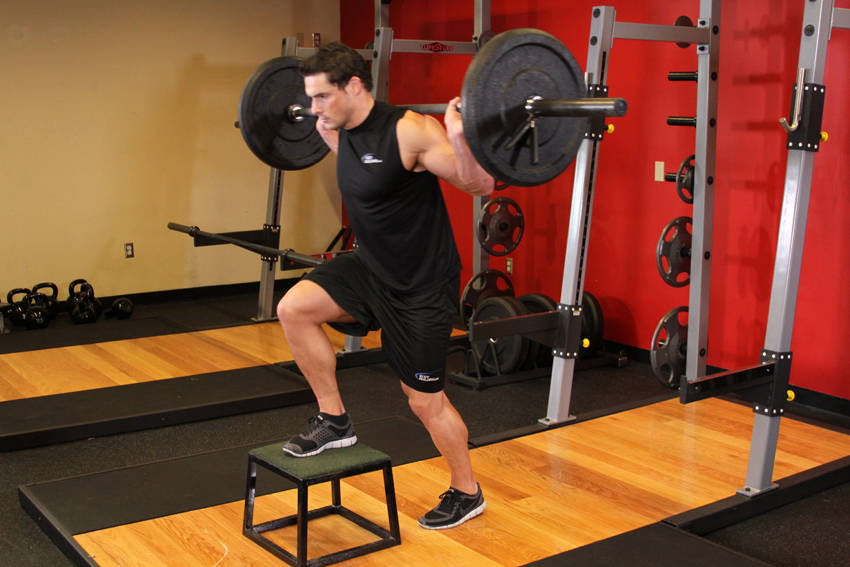
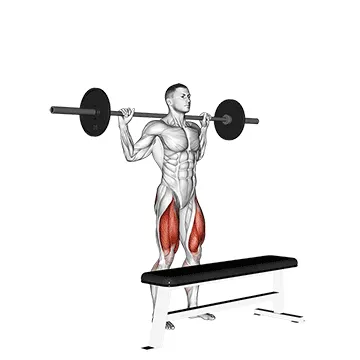
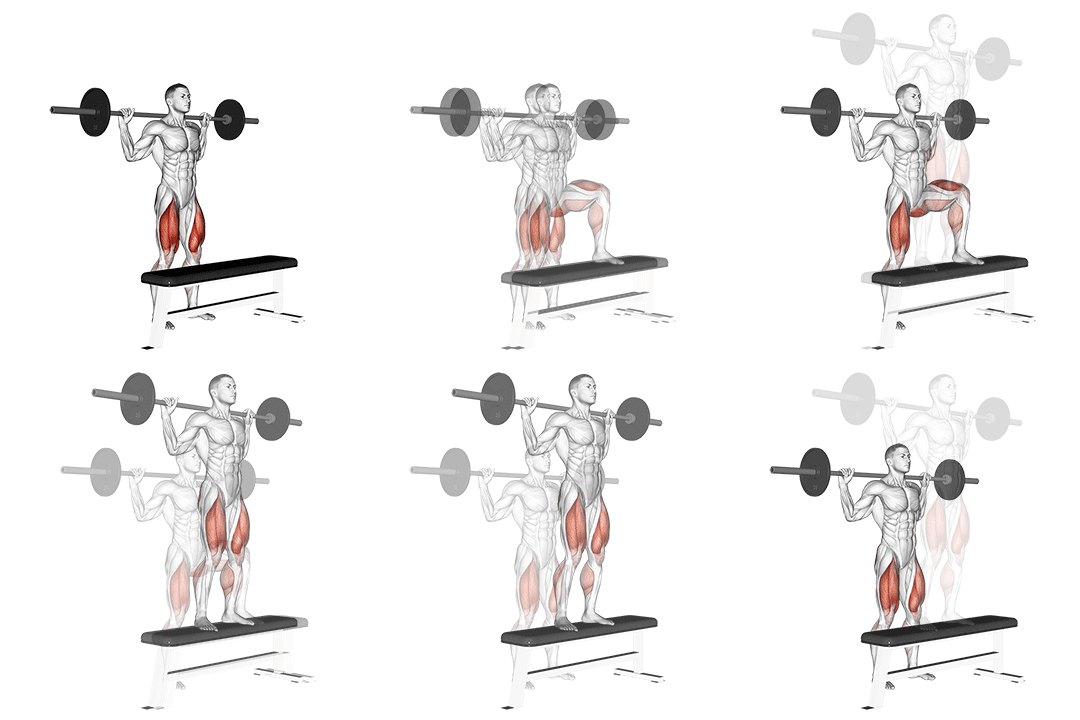
3. Barbell Step Ups
61% match- Quads
- Barbell
- Intermediate
- Compound
A looser match: it works the quads rather than the calves.
How to perform this exercise
- Stand up straight while holding a barbell placed on the back of your shoulders (slightly below the neck) and stand upright behind an elevated platform (such as the one used for spotting behind a flat bench). This is your starting position.
- Place the right foot on the elevated platform. Step on the platform by extending the hip and the knee of your right leg. Use the heel mainly to lift the rest of your body up and place the foot of the left leg on the platform as well. Breathe out as you execute the force required to come up.
- Step down with the left leg by flexing the hip and knee of the right leg as you inhale. Return to the original standing position by placing the right foot of to next to the left foot on the initial position.
- Repeat with the right leg for the recommended amount of repetitions and then perform with the left leg.
Sets and reps: 3 or 4 sets of 6 to 10 reps on each side.
Why this matches
- Primary muscle: quads, not calves
- Equipment: free weights, not a cable
- Body position: standing, the same as the Cable Standing One Leg Calf Raise
4. Barbell Step-up
61% match- Glutes
- Barbell
- Intermediate
- Compound
How to perform this exercise
- Stand in front of a bench or step with a barbell resting on your upper back.
- Place one foot on the bench or step, ensuring your entire foot is in contact with the surface.
- Push through your heel and step up onto the bench or step, fully extending your hip and knee.
- Pause briefly at the top, then lower yourself back down to the starting position.
- Repeat with the opposite leg.
- Continue alternating legs for the desired number of repetitions.
Sets and reps: 3 to 5 sets of 5 to 8 reps on each side.
Why this matches
- Primary muscle: glutes, not calves
- Equipment: free weights, not a cable
- Body position: standing, the same as the Cable Standing One Leg Calf Raise
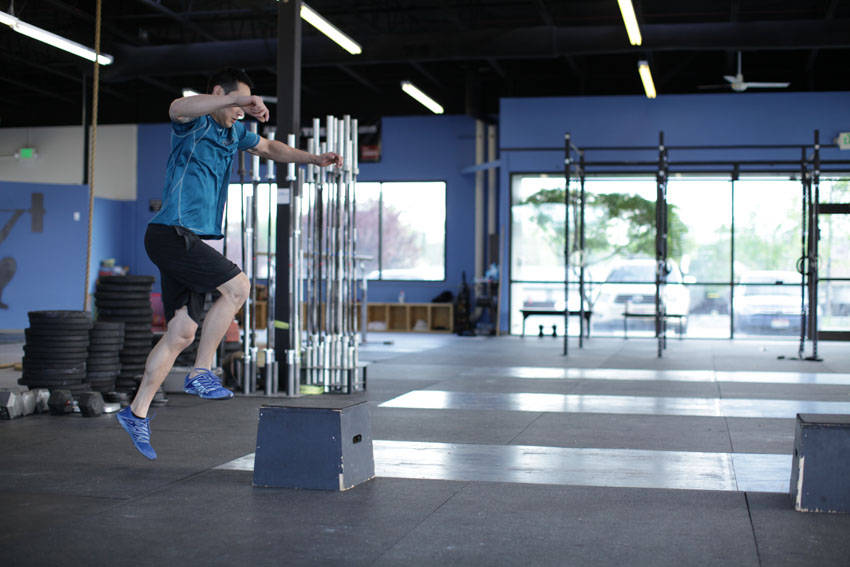
5. Box Skip
58% match- Glutes
- Other
- Intermediate
- Compound
How to perform this exercise
- You will need several boxes lined up about 8 feet apart.
- Begin facing the first box with one leg slightly behind the other.
- Drive off the back leg, attempting to gain as much height with the hips as possible.
- Immediately upon landing on the box, drive the other leg forward and upward to gain height and distance, leaping from the box. Land between the first two boxes with the same leg that landed on the first box.
- Then, step to the next box and repeat.
Sets and reps: 3 or 4 sets of 6 to 10 reps on each side.
Why this matches
- Primary muscle: glutes, not calves
- Equipment: bodyweight only, not a cable
- Body position: standing, the same as the Cable Standing One Leg Calf Raise
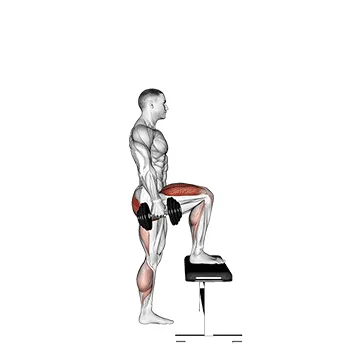
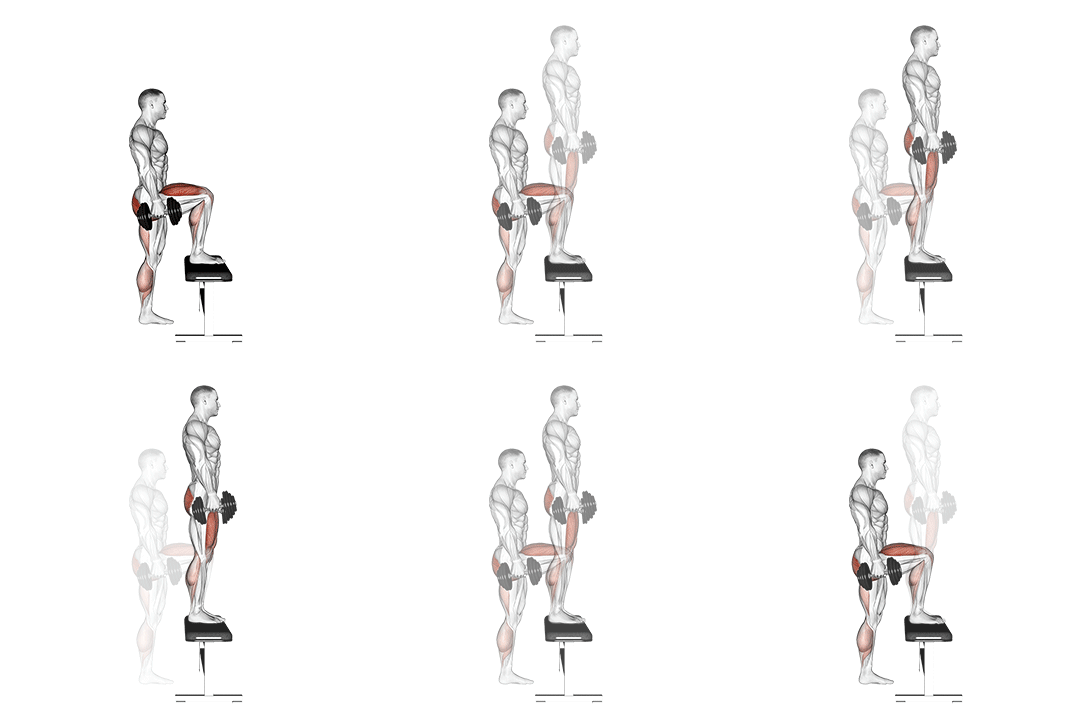
6. Dumbbell Step-up
58% match- Glutes
- Dumbbell
- Intermediate
- Compound
How to perform this exercise
- Stand in front of a bench or step with a dumbbell in each hand, palms facing your body.
- Place your right foot on the bench or step, ensuring your entire foot is in contact with the surface.
- Push through your right heel and lift your body up onto the bench or step, straightening your right leg.
- Bring your left foot up onto the bench or step, standing fully upright.
- Step back down with your left foot, followed by your right foot, returning to the starting position.
- Repeat for the desired number of repetitions, then switch legs.
Sets and reps: 3 or 4 sets of 6 to 10 reps on each side.
Why this matches
- Primary muscle: glutes, not calves
- Equipment: free weights, not a cable
- Body position: standing, the same as the Cable Standing One Leg Calf Raise
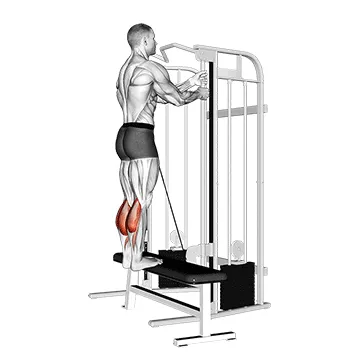
7. Cable Standing Calf Raise
58% match- Calves
- Cable
- Intermediate
- Isolation
It still works the calves, through a different movement.
How to perform this exercise
- Stand facing a cable machine with your feet shoulder-width apart.
- Hold onto the cable machine handles or attach a cable ankle strap to your ankles.
- Raise your heels off the ground by extending your ankles as high as possible.
- Pause for a moment at the top, then slowly lower your heels back down to the starting position.
- Repeat for the desired number of repetitions.
Sets and reps: 3 sets of 10 to 15 reps.
Why this matches
- Primary muscle: calves, the same as the Cable Standing One Leg Calf Raise
- Equipment: a cable, the same as the Cable Standing One Leg Calf Raise
- Body position: standing, the same as the Cable Standing One Leg Calf Raise
- Balance: easier to stay steady on than the Cable Standing One Leg Calf Raise
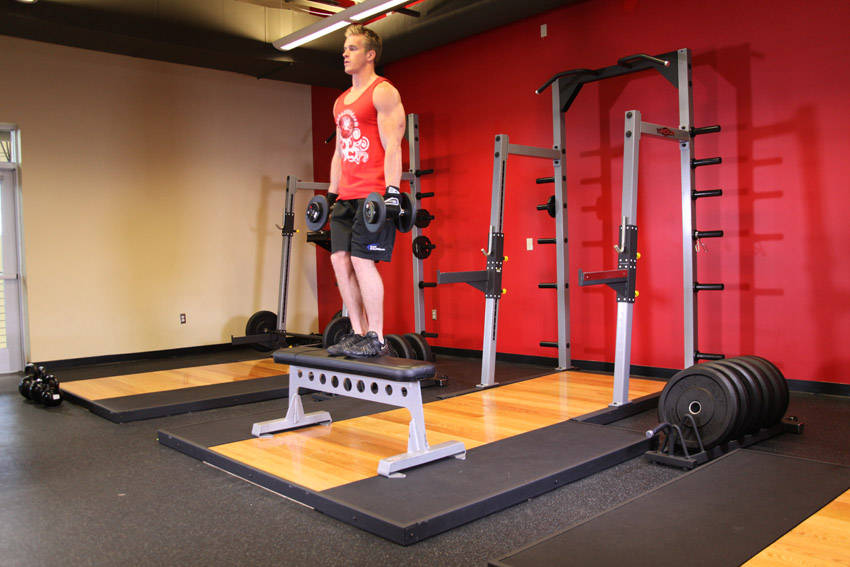
8. Dumbbell Step Ups
58% match- Quadriceps
- Dumbbell
- Intermediate
- Compound
How to perform this exercise
- Stand up straight while holding a dumbbell on each hand (palms facing the side of your legs).
- Place the right foot on the elevated platform. Step on the platform by extending the hip and the knee of your right leg. Use the heel mainly to lift the rest of your body up and place the foot of the left leg on the platform as well. Breathe out as you execute the force required to come up.
- Step down with the left leg by flexing the hip and knee of the right leg as you inhale. Return to the original standing position by placing the right foot of to next to the left foot on the initial position.
- Repeat with the right leg for the recommended amount of repetitions and then perform with the left leg.
Sets and reps: 3 or 4 sets of 6 to 10 reps on each side.
Why this matches
- Primary muscle: quadriceps, not calves
- Equipment: free weights, not a cable
- Body position: standing, the same as the Cable Standing One Leg Calf Raise
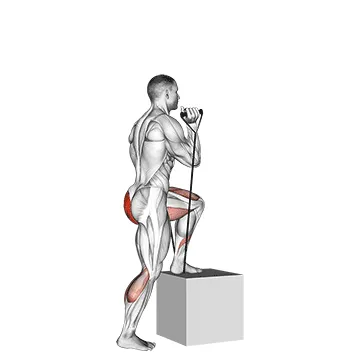
9. Step-up With Knee Raise
54% match- Glutes
- Bodyweight
- Intermediate
- Compound
How to perform this exercise
- Stand facing a box or bench of an appropriate height with your feet together. This will be your starting position.
- Begin the movement by stepping up, putting your left foot on the top of the bench. Extend through the hip and knee of your front leg to stand up on the box. As you stand on the box with your left leg, flex your right knee and hip, bringing your knee as high as you can.
- Reverse this motion to step down off the box, and then repeat the sequence on the opposite leg.
Sets and reps: 3 or 4 sets of 6 to 10 reps on each side.
Why this matches
- Primary muscle: glutes, not calves
- Equipment: bodyweight only, not a cable
- Body position: standing, the same as the Cable Standing One Leg Calf Raise
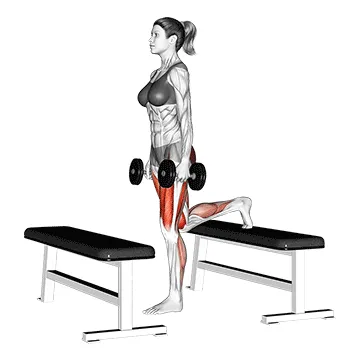
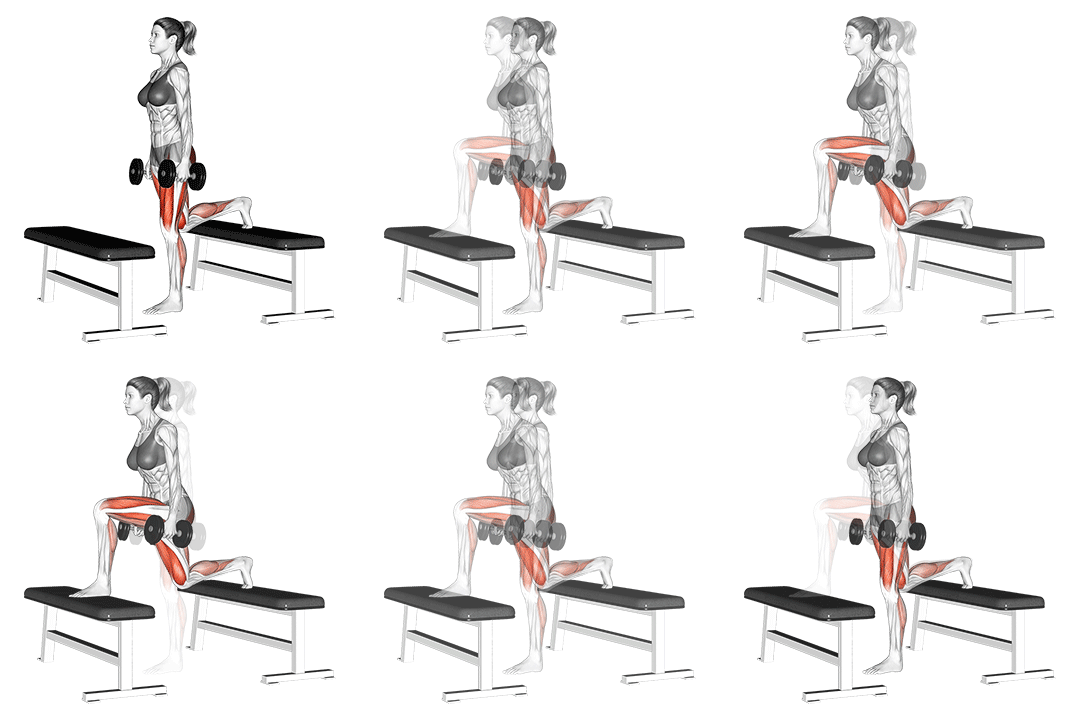
10. Dumbbell Step-up Lunge
53% match- Quads
- Dumbbell
- Intermediate
- Compound
How to perform this exercise
- Stand in front of a step or platform with a dumbbell in each hand, palms facing your sides.
- Place your right foot on the step, ensuring your entire foot is on the surface.
- Push through your right heel and lift your body up onto the step, bringing your left foot up as well.
- Once both feet are on the step, lower your left foot back down to the starting position, keeping your right foot on the step.
- Repeat the movement, alternating which foot you step up with each time.
- Continue for the desired number of repetitions.
Sets and reps: 3 or 4 sets of 6 to 10 reps on each side.
Why this matches
- Primary muscle: quads, not calves
- Equipment: free weights, not a cable
- Body position: standing, the same as the Cable Standing One Leg Calf Raise
Why You Might Need a Cable Standing One Leg Calf Raise Alternative
You might substitute this cable isolation for several reasons: no cable station, ankle or knee pain, poor single-leg balance, or the need for heavier progressive overload. Standing single-leg cable raises emphasize the gastrocnemius via an extended knee and constant horizontal resistance. If you have knee pain or want more soleus work, choose seated raises with a bent knee. Use cues such as a full plantarflexion squeeze at the top and a slow 2–3 second descent to maximize muscle time under tension and safe biomechanics.
How to Choose the Right Cable Standing One Leg Calf Raise Substitute
Choose a substitute based on target muscle, equipment, and stability. To stress the gastrocnemius, use a standing single-leg variation with a straight knee and drive through the ball of the foot; to bias the soleus, do seated raises with knees bent and push through the midfoot. Prioritize exercises that allow progressive loading, barbell or Smith-machine variations permit heavier loads, while bands maintain constant tension. Also consider balance demands: if instability limits load, use two-leg or supported single-leg variations and keep controlled eccentrics (2–3 seconds) to maintain hypertrophic stimulus.
Cable Standing One Leg Calf Raise FAQ
What muscles does Cable Standing One Leg Calf Raise work?
The exercise primarily targets the gastrocnemius (upper calf) and secondarily the soleus and other plantarflexors. Performed with a straight knee, it emphasizes gastrocnemius activation; cue a full plantarflexion and a controlled 2–3 second lowering phase to maximize recruitment.
What is the best bodyweight alternative to Cable Standing One Leg Calf Raise?
A single-leg heel raise on a step is the top bodyweight substitute, stand on the forefoot edge and lower the heel below the step, then drive up through the ball of the foot. Emphasize a full ROM, pause at the top for a 1–2 second squeeze, and control the eccentric to hit the same unilateral calf firing pattern.
Find Alternatives for Any Exercise
Search the exercise database and filter the ranked substitutes by the equipment you own.
Similarity scores compare exercise metadata such as movement pattern, muscles, equipment and body position. They are not a safety rating or a check that you own the equipment. Learn about our methodology