

10 Best Lever Standing Chest Press Alternatives for Limited Equipment
If you can’t use a lever standing chest press, choose exercises that reproduce horizontal pressing and pec loading. Good options are push-up variations, flat or incline dumbbell presses, single-arm cable presses, machine chest press, and floor presses. Cue: retract your scapula, tuck elbows ~45°, and press while squeezing the pectoralis major.
Original Exercise: Lever Standing Chest Press
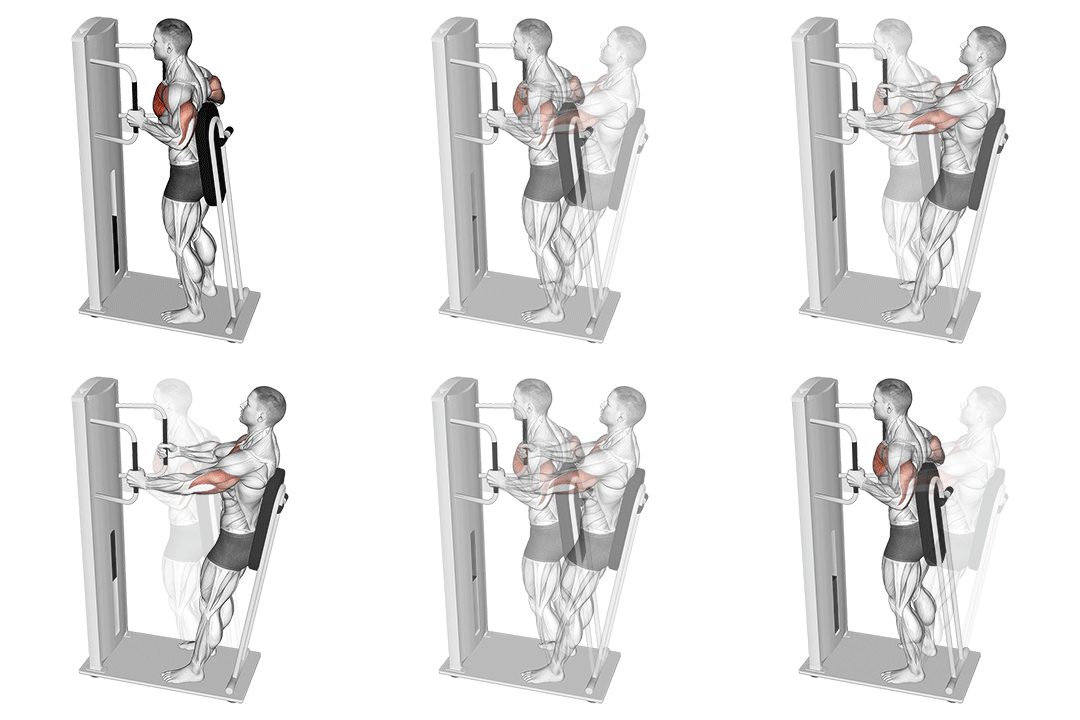
How to Perform Lever Standing Chest Press
- Adjust the seat height and position yourself on the machine with your feet flat on the ground.
- Grasp the handles with an overhand grip and position your hands at chest level.
- Push the handles forward until your arms are fully extended, keeping your elbows slightly bent.
- Pause for a moment, then slowly bring the handles back towards your chest, maintaining control throughout the movement.
- Repeat for the desired number of repetitions.
Best Lever Standing Chest Press Alternatives
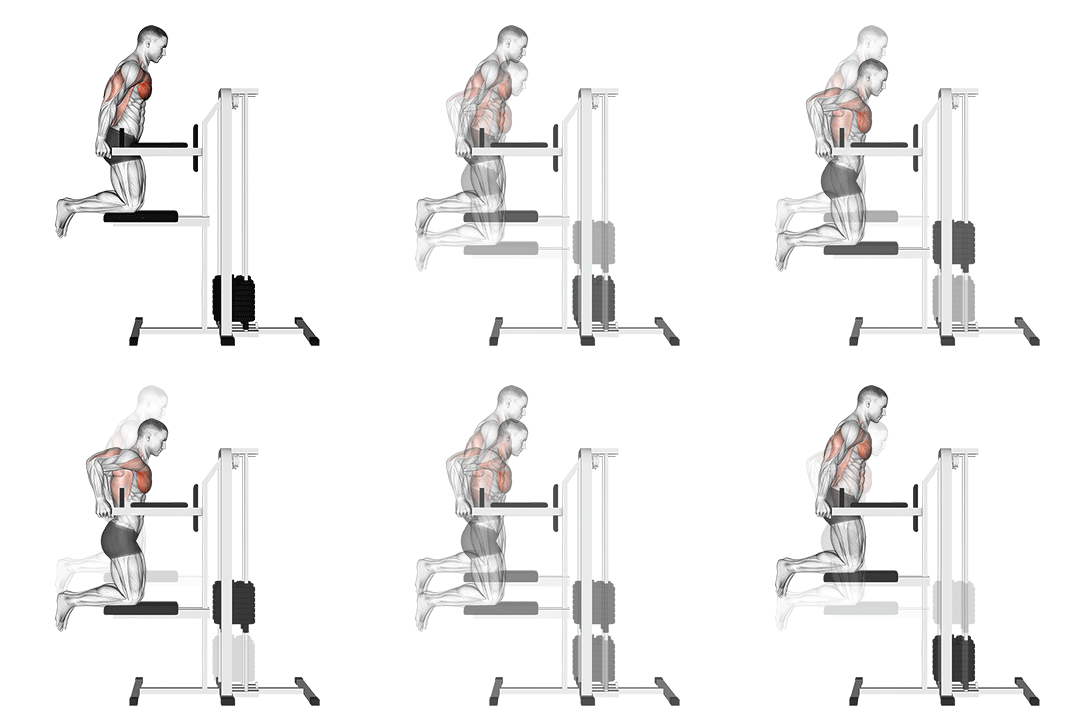
1. Assisted Chest Dip (kneeling)
81.7% MatchHow to perform this exercise
- Adjust the machine to your desired height and secure your knees on the pad.
- Grasp the handles with your palms facing down and your arms fully extended.
- Lower your body by bending your elbows until your upper arms are parallel to the floor.
- Pause for a moment, then push yourself back up to the starting position.
- Repeat for the desired number of repetitions.
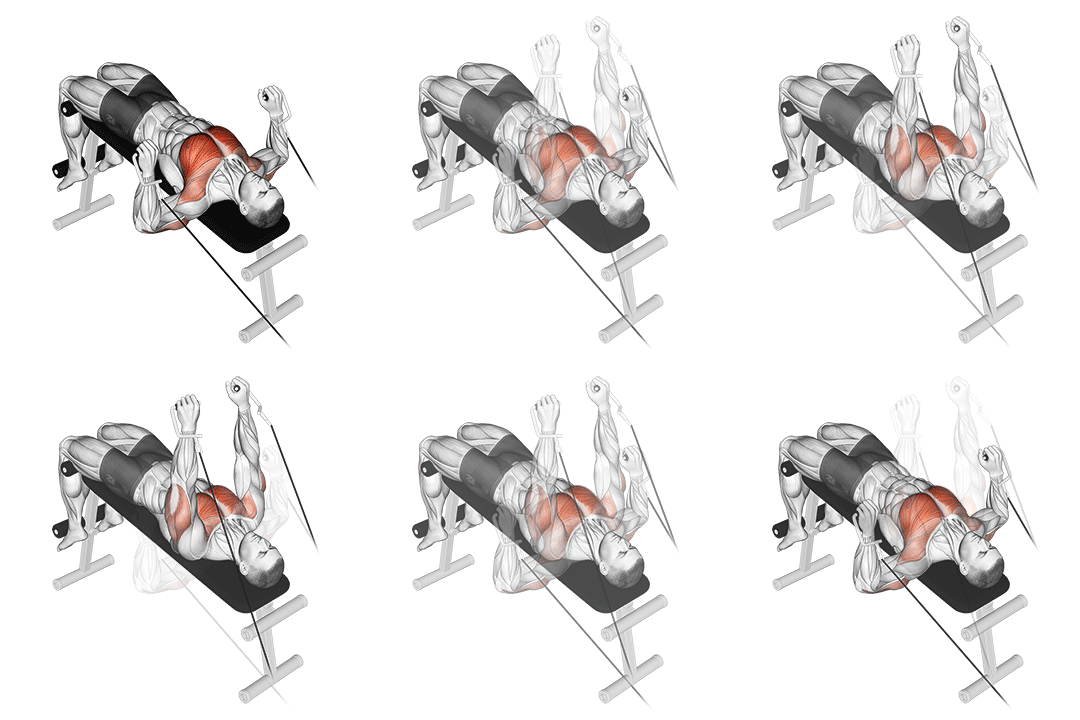
2. Cable Decline Press
81.2% MatchHow to perform this exercise
- Adjust the cable machine to a decline position.
- Sit on the decline bench facing the cable machine.
- Grasp the handles with an overhand grip and position them at chest level.
- Keep your feet flat on the ground and your back firmly against the bench.
- Exhale and push the handles away from your body, extending your arms fully.
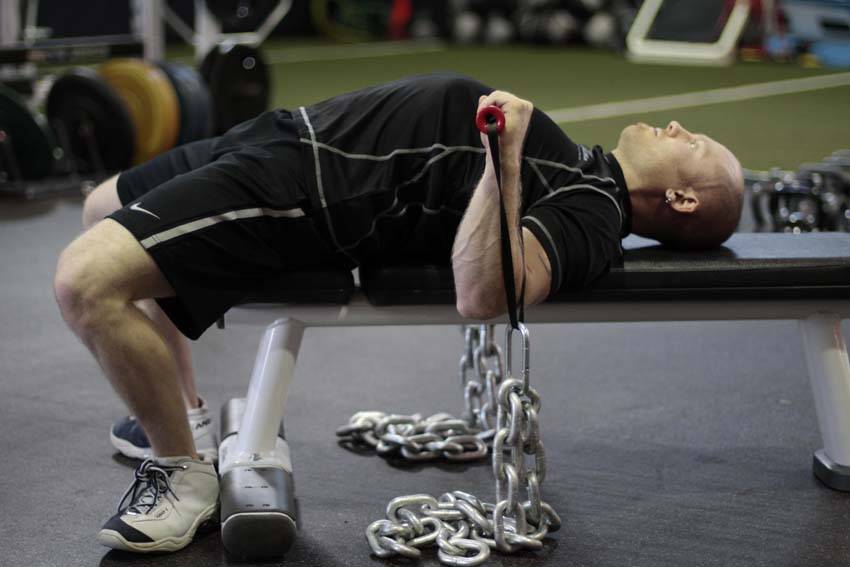
3. Chain Press
74.8% MatchHow to perform this exercise
- Begin by connecting the chains to the cable handle attachments. Position yourself on the flat bench in the same position as for a dumbbell press. Your wrists should be pronated and arms perpendicular to the floor. This will be your starting position.
- Lower the chains by flexing the elbows, unloading some of the chain onto the floor.
- Continue until your elbow forms a 90 degree angle, and then reverse the motion by extending through the elbow to lockout.
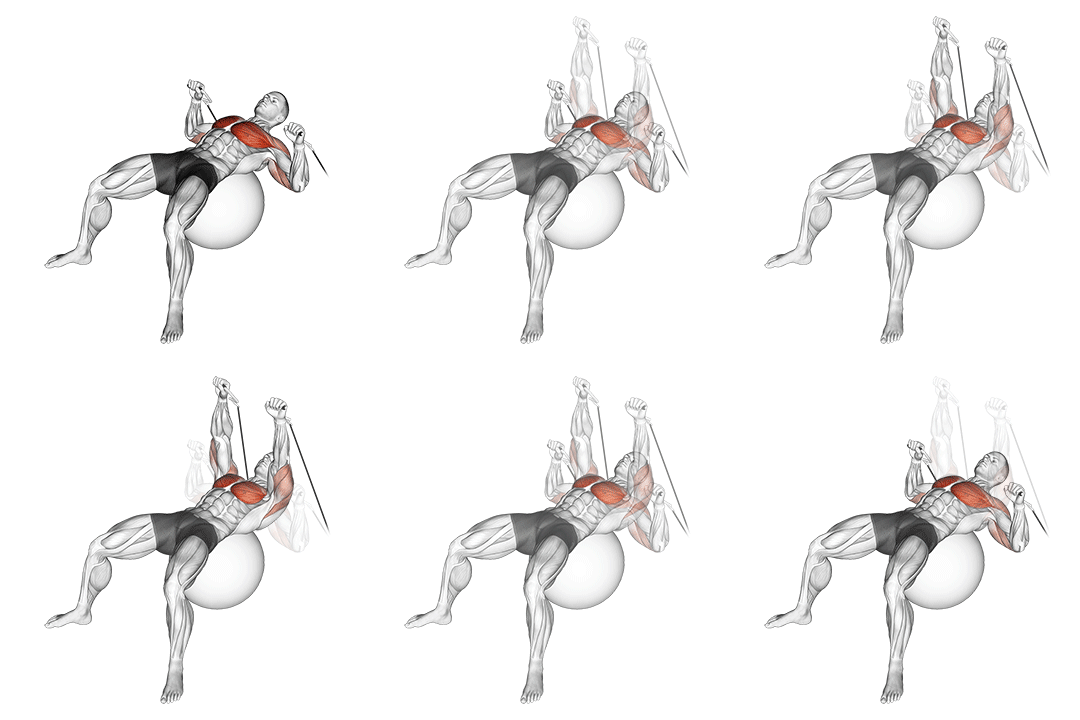
4. Cable Press On Exercise Ball
73% MatchHow to perform this exercise
- Sit on an exercise ball with your feet flat on the ground and your knees at a 90-degree angle.
- Hold the cable handles at chest height with your palms facing down and your elbows bent.
- Engage your core and press the cable handles forward until your arms are fully extended.
- Pause for a moment, then slowly release the tension and bring the cable handles back to the starting position.
- Repeat for the desired number of repetitions.
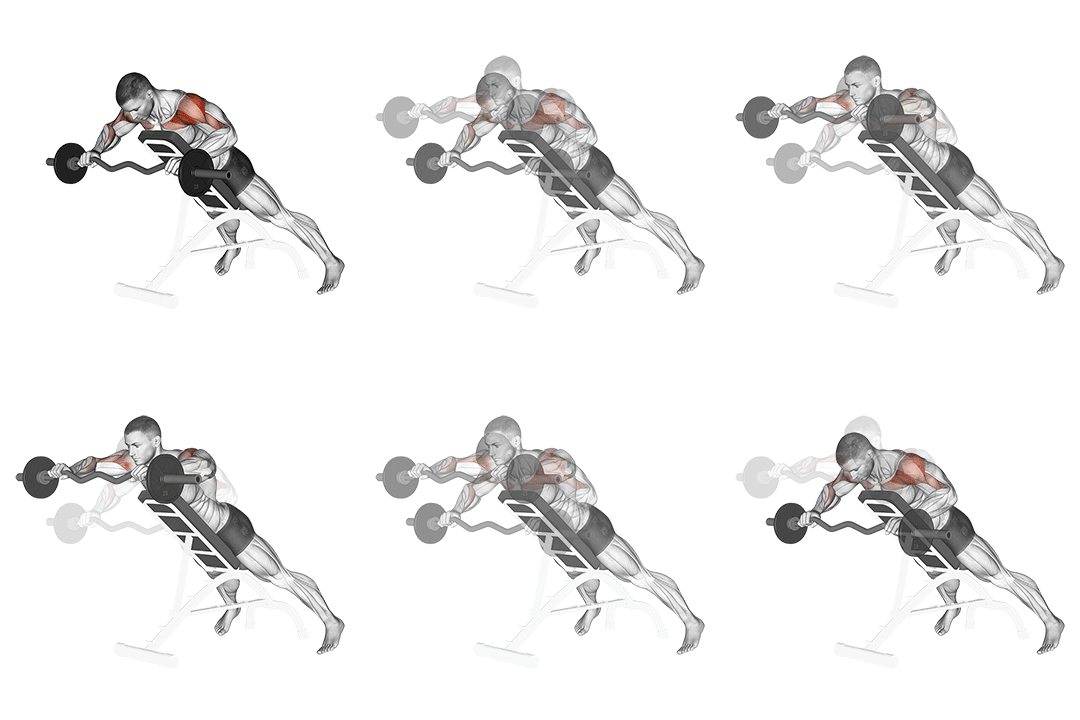
5. Ez Barbell Anti Gravity Press
71.6% MatchHow to perform this exercise
- Start by standing with your feet shoulder-width apart and holding the ez barbell with an overhand grip.
- Raise the barbell to shoulder height, keeping your elbows slightly bent and your palms facing forward.
- Press the barbell overhead, extending your arms fully.
- Lower the barbell back to shoulder height and repeat for the desired number of repetitions.
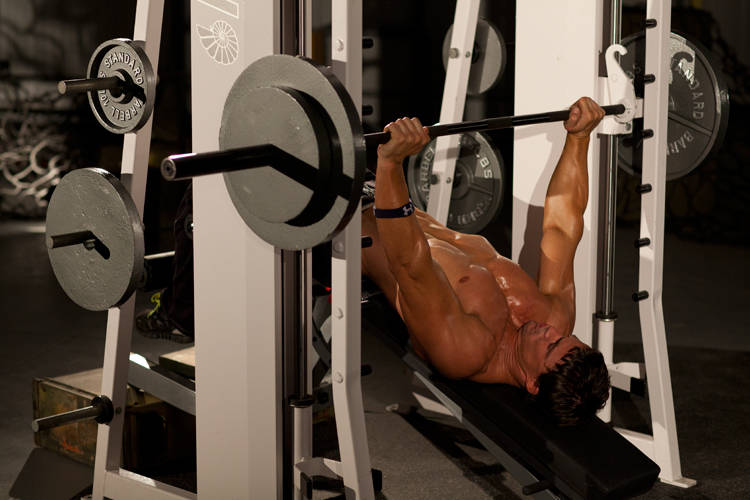
6. Decline Smith Press
71.4% MatchHow to perform this exercise
- Place a decline bench underneath the Smith machine. Now place the barbell at a height that you can reach when lying down and your arms are almost fully extended. Using a pronated grip that is wider than shoulder width, unlock the bar from the rack and hold it straight over you with your arms extended. This will be your starting position.
- As you inhale, lower the bar under control by allowing the elbows to flex, lightly contacting the torso.
- After a brief pause, bring the bar back to the starting position by extending the elbows, exhaling as you do so.
- Repeat the movement for the prescribed amount of repetitions.
- When the set is complete, lock the bar back in the rack.
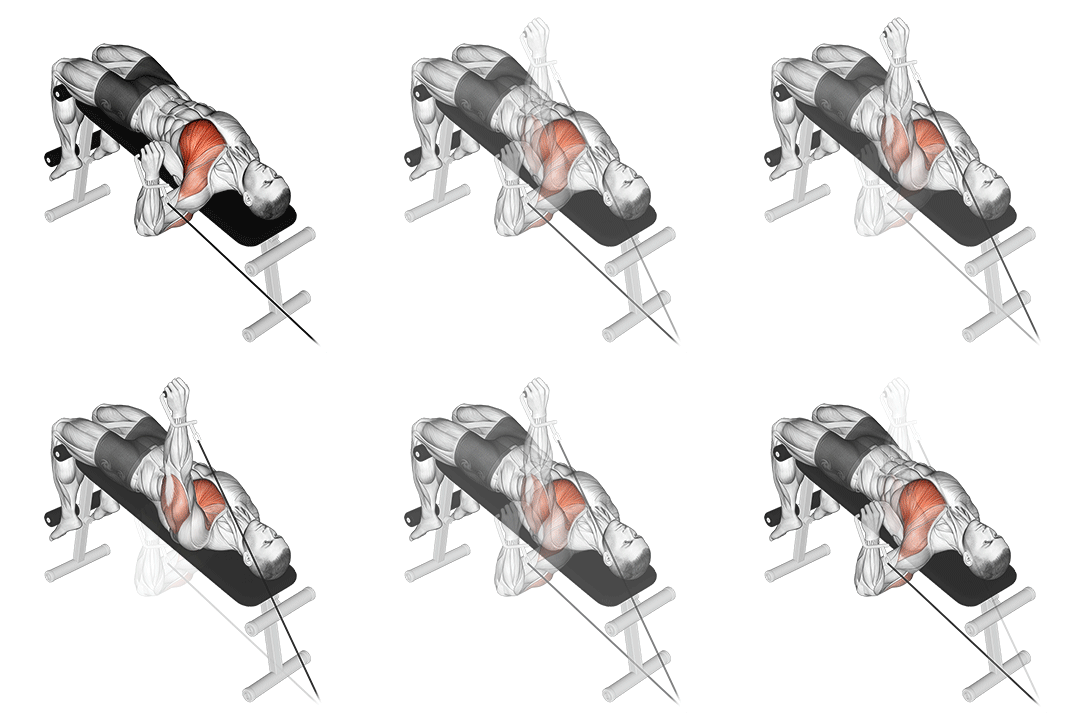
7. Cable Decline One Arm Press
70.2% MatchHow to perform this exercise
- Adjust the cable machine to a decline position.
- Stand facing away from the machine and grab the handle with one hand.
- Position yourself with your back against the decline bench and your arm extended straight in front of you.
- Bend your elbow and lower the handle towards your chest while keeping your upper arm stationary.
- Pause for a moment at the bottom, then push the handle back up to the starting position.
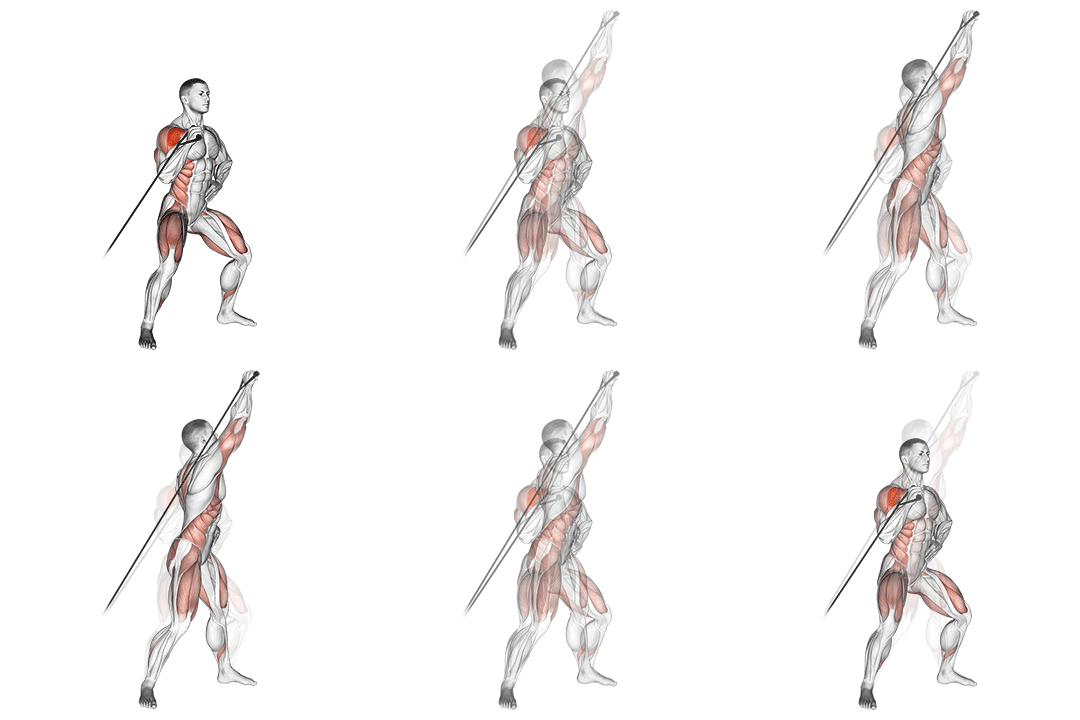
8. Band Twisting Overhead Press
70.2% MatchHow to perform this exercise
- Stand with your feet shoulder-width apart and place the band under your feet.
- Hold the band handles at shoulder height with your palms facing forward.
- Engage your core and press the band overhead, fully extending your arms.
- As you press, twist your torso to one side, keeping your hips stable.
- Pause for a moment at the top, then return to the starting position.
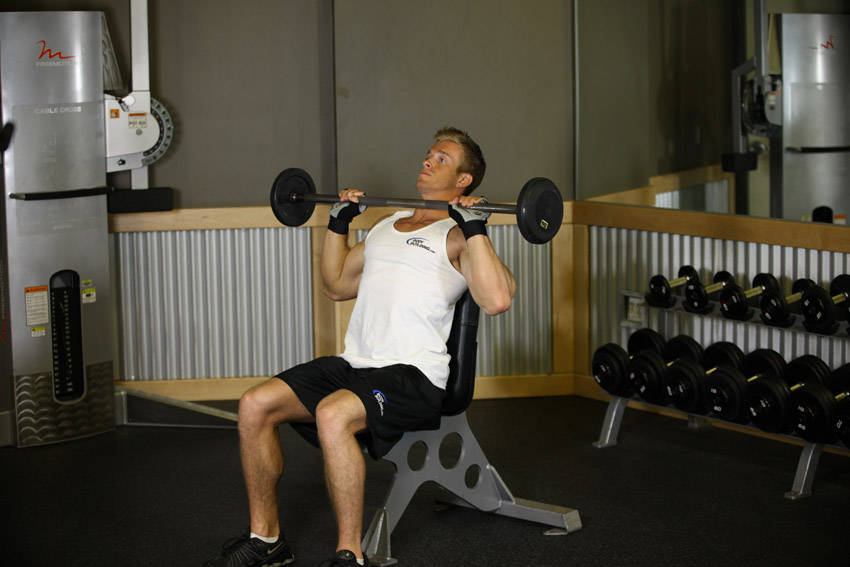
9. Bradford/Rocky Presses
70.2% MatchHow to perform this exercise
- Sit on a Military Press Bench with a bar at shoulder level with a pronated grip (palms facing forward). Tip: Your grip should be wider than shoulder width and it should create a 90-degree angle between the forearm and the upper arm as the barbell goes down. This is your starting position.
- Once you pick up the barbell with the correct grip, lift the bar up over your head by locking your arms.
- Now lower the bar down to the back of the head slowly as you inhale.
- Lift the bar back up to the starting position as you exhale.
- Lower the bar down to the starting position slowly as you inhale. This is one repetition.
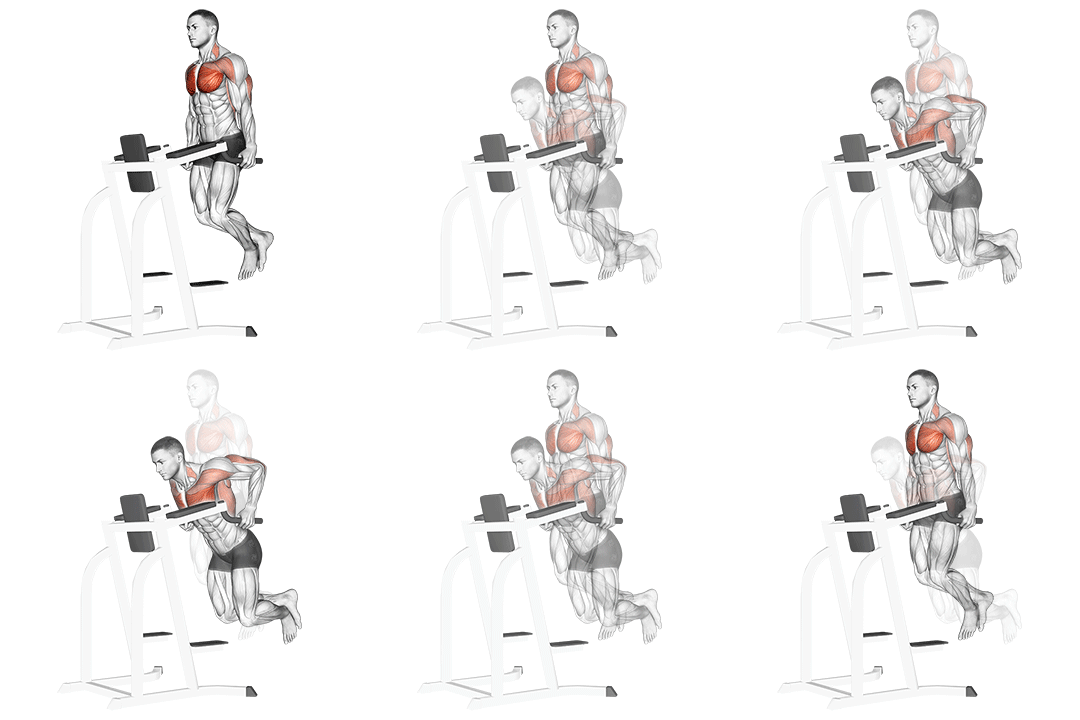
10. Chest Dip
70.1% MatchHow to perform this exercise
- Position yourself on parallel bars with your arms fully extended and your body straight.
- Lower your body by bending your elbows until your shoulders are below your elbows.
- Push yourself back up to the starting position by straightening your arms.
- Repeat for the desired number of repetitions.
Why You Might Need a Lever Standing Chest Press Alternative
You may substitute the lever standing chest press for several practical reasons: machine unavailability, shoulder pain with fixed arcs, rehab needs, or a desire for unilateral work. Alternatives let you change stability demands and range of motion to reduce joint stress and improve muscle activation. For example, single-arm cable presses increase scapular stabilizer engagement and core anti-rotation, while incline dumbbell presses emphasize the clavicular head of the pectoralis major. Use technique cues—keep a neutral spine, control the eccentric for 2–3 seconds, and maintain a 45° elbow tuck—to protect the shoulder and preserve targeted chest recruitment.
How to Choose the Right Substitute
Match the substitute to your goal, equipment, and injury profile. Prioritize movement pattern (horizontal push), loading type (constant vs. variable resistance), and stability demand: machine presses provide fixed path and higher load tolerance, while free weights and cables require greater scapular and core stabilization. For targeted activation, choose incline angles to shift load to the upper pecs or single-arm work to correct unilateral weaknesses. Cue selection: set the scapula back and down, control the descent 2–3 seconds, and finish with a full pec squeeze at lockout to maximize muscle tension and safe biomechanics.
Frequently Asked Questions
What muscles does Lever Standing Chest Press work?
The lever standing chest press primarily targets the pectoralis major (sternal and clavicular heads) and also loads the anterior deltoid and triceps brachii. Proper technique—scapular retraction, ~45° elbow tuck, and pressing through the sternum—maximizes pec activation and reduces deltoid dominance.
What is the best bodyweight alternative to Lever Standing Chest Press?
Standard push-ups are the most direct bodyweight substitute because they replicate the horizontal pressing pattern and recruit the pectorals, triceps, and anterior deltoids. Cue: keep a rigid plank, retract the scapula at the top, and lower with a 2–3 second eccentric to increase time under tension and pec recruitment.
Can I build muscle without doing Lever Standing Chest Press?
Yes. Compound presses like dumbbell bench presses, incline presses, cable chest presses, and progressive push-up variations will produce hypertrophy when you apply progressive overload. Emphasize full range of motion, controlled eccentrics, and deliberate pec contraction at lockout to ensure consistent muscle activation.
More Exercise Alternatives
Find Alternatives for Any Exercise
Use our free tool to discover the best substitute exercises based on your available equipment and goals.
Try the Exercise Substitution Finder →