

10 Best Lunge With Twist Alternatives for Limited Equipment
If you can’t do a Lunge With Twist, use movements that preserve rotation and anti-rotation under load: reverse lunge with thoracic rotation, standing Russian twists, Pallof press, split squat with oblique reach, or woodchoppers. Cue: brace your core, rotate from the thoracic spine, and keep hips square to target the obliques and stabilize the waist.
Original Exercise: Lunge With Twist
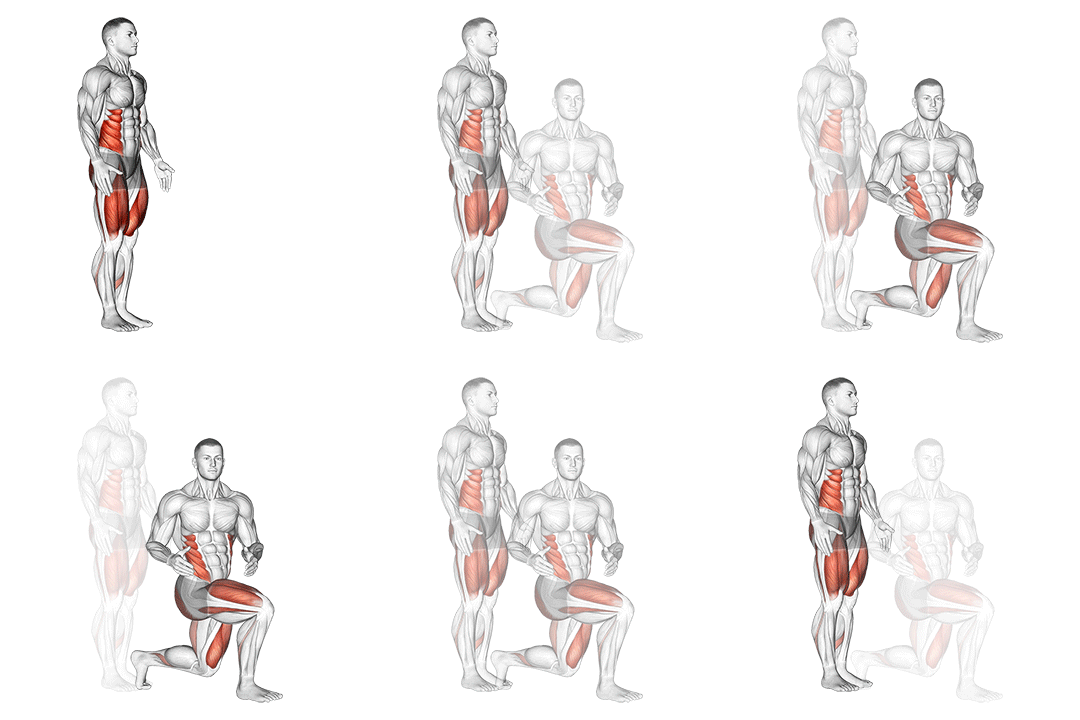
How to Perform Lunge With Twist
- Start by standing with your feet shoulder-width apart.
- Take a step forward with your right foot, lowering your body into a lunge position.
- As you lunge, twist your torso to the right, bringing your left elbow towards your right knee.
- Pause for a moment, then return to the starting position.
- Repeat on the other side, stepping forward with your left foot and twisting your torso to the left.
- Continue alternating sides for the desired number of repetitions.
Best Lunge With Twist Alternatives
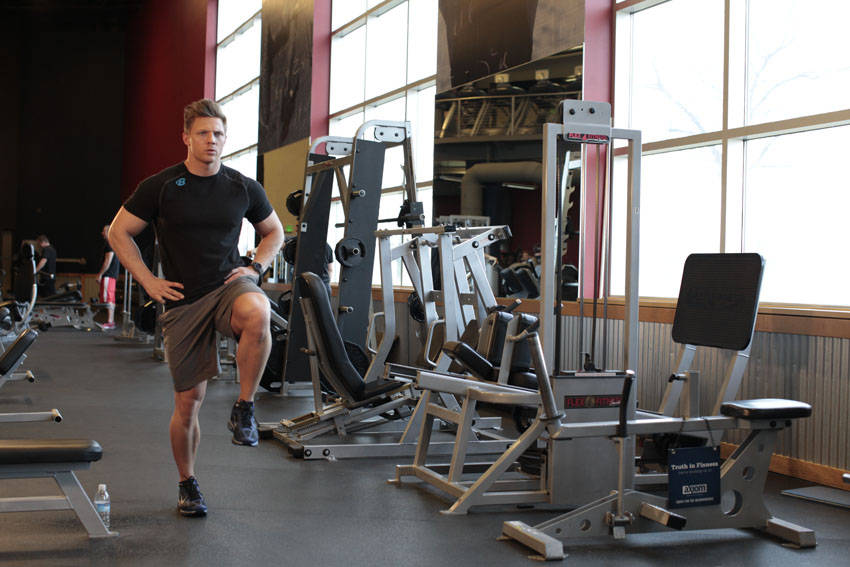
1. Bodyweight Walking Lunge
84.2% MatchHow to perform this exercise
- Begin standing with your feet shoulder width apart and your hands on your hips.
- Step forward with one leg, flexing the knees to drop your hips. Descend until your rear knee nearly touches the ground. Your posture should remain upright, and your front knee should stay above the front foot.
- Drive through the heel of your lead foot and extend both knees to raise yourself back up.
- Step forward with your rear foot, repeating the lunge on the opposite leg.
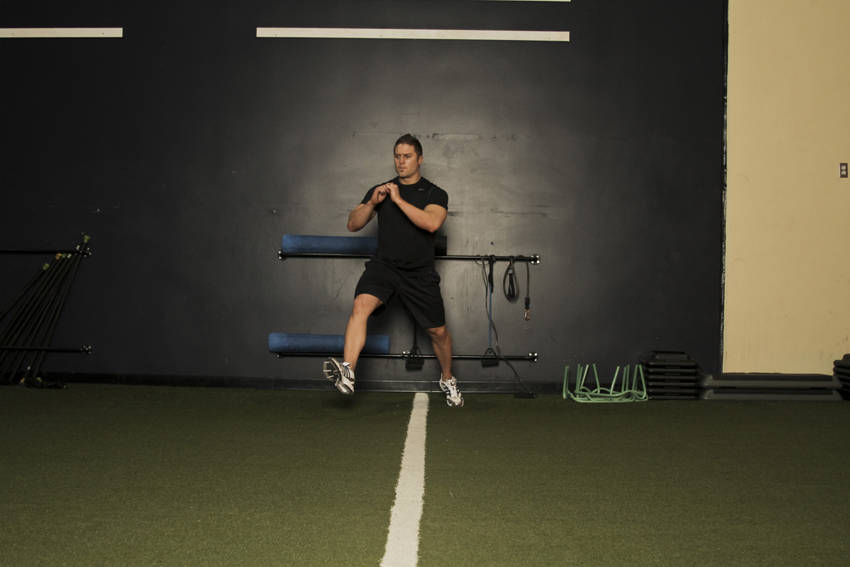
2. Alternate Leg Diagonal Bound
79.7% MatchHow to perform this exercise
- Assume a comfortable stance with one foot slightly in front of the other.
- Begin by pushing off with the front leg, driving the opposite knee forward and as high as possible before landing. Attempt to cover as much distance to each side with each bound.
- It may help to use a line on the ground to guage distance from side to side.
- Repeat the sequence with the other leg.
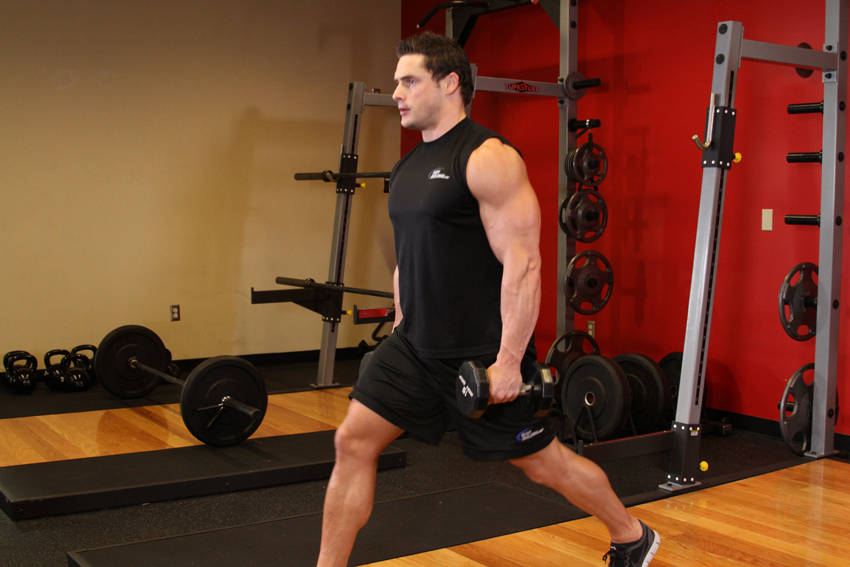
3. Dumbbell Lunges
74.4% MatchHow to perform this exercise
- Stand with your torso upright holding two dumbbells in your hands by your sides. This will be your starting position.
- Step forward with your right leg around 2 feet or so from the foot being left stationary behind and lower your upper body down, while keeping the torso upright and maintaining balance. Inhale as you go down. Note: As in the other exercises, do not allow your knee to go forward beyond your toes as you come down, as this will put undue stress on the knee joint. Make sure that you keep your front shin perpendicular to the ground.
- Using mainly the heel of your foot, push up and go back to the starting position as you exhale.
- Repeat the movement for the recommended amount of repetitions and then perform with the left leg.
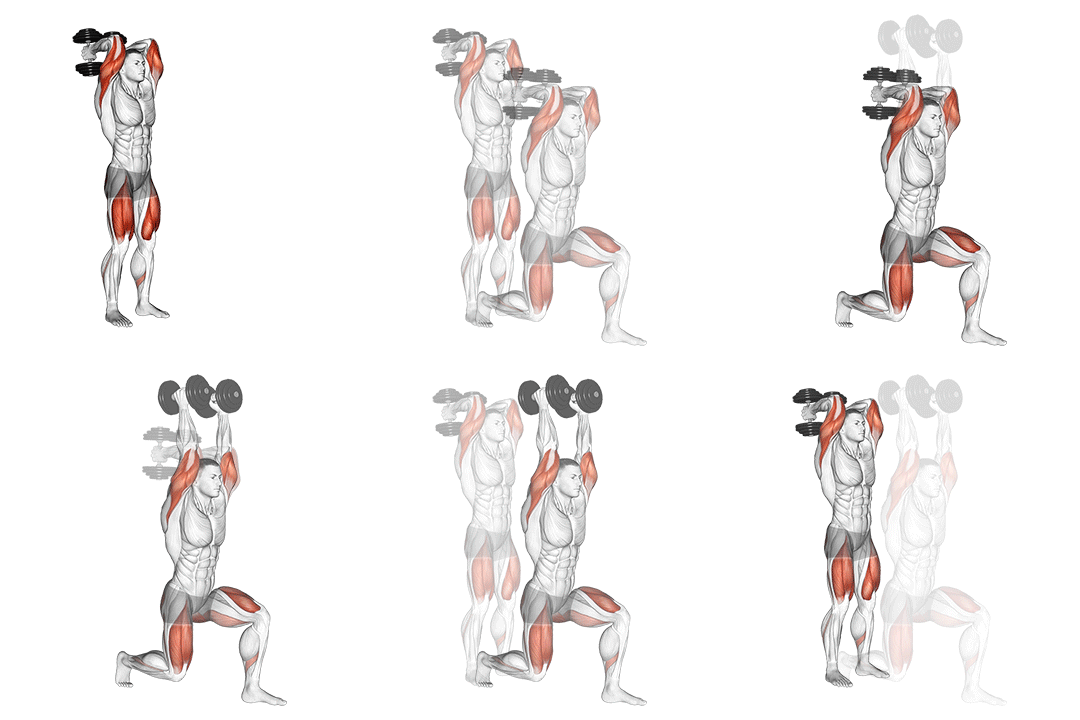
4. Dumbbell Forward Lunge Triceps Extension
73.7% MatchHow to perform this exercise
- Stand with your feet shoulder-width apart, holding a dumbbell in each hand.
- Take a step forward with your right foot, lowering your body into a lunge position.
- Keep your back straight and your chest up.
- Extend your arms straight overhead, keeping your elbows close to your ears.
- Lower the dumbbells behind your head by bending your elbows.
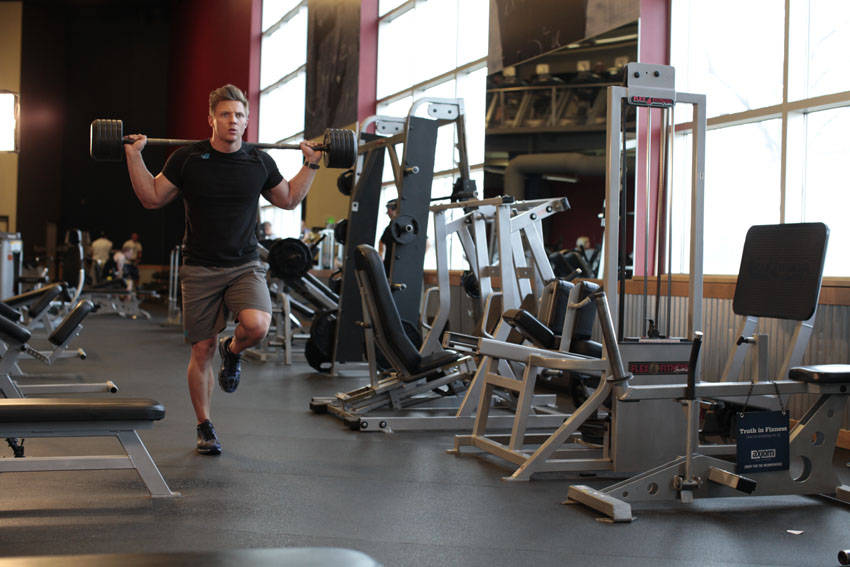
5. Barbell Walking Lunge
70.2% MatchHow to perform this exercise
- Begin standing with your feet shoulder width apart and a barbell across your upper back.
- Step forward with one leg, flexing the knees to drop your hips. Descend until your rear knee nearly touches the ground. Your posture should remain upright, and your front knee should stay above the front foot.
- Drive through the heel of your lead foot and extend both knees to raise yourself back up.
- Step forward with your rear foot, repeating the lunge on the opposite leg.
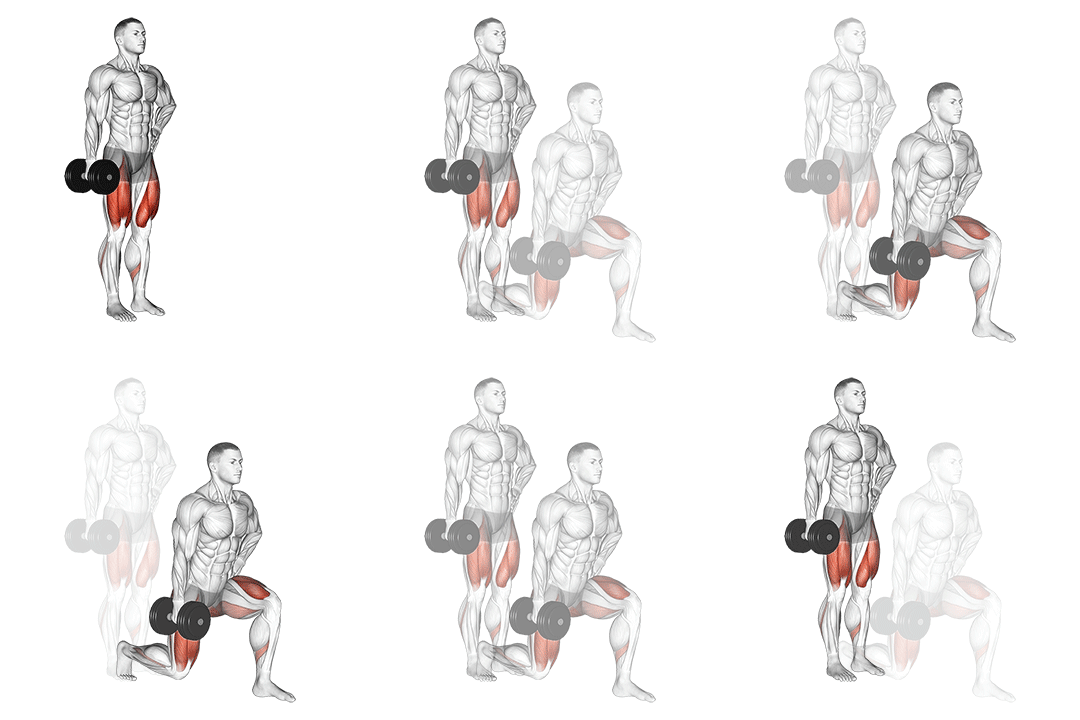
6. Dumbbell Contralateral Forward Lunge
68% MatchHow to perform this exercise
- Stand with your feet shoulder-width apart, holding a dumbbell in each hand.
- Take a step forward with your right foot, keeping your back straight and core engaged.
- Lower your body by bending both knees until your right thigh is parallel to the ground.
- Push through your right heel to return to the starting position.
- Repeat with your left leg.
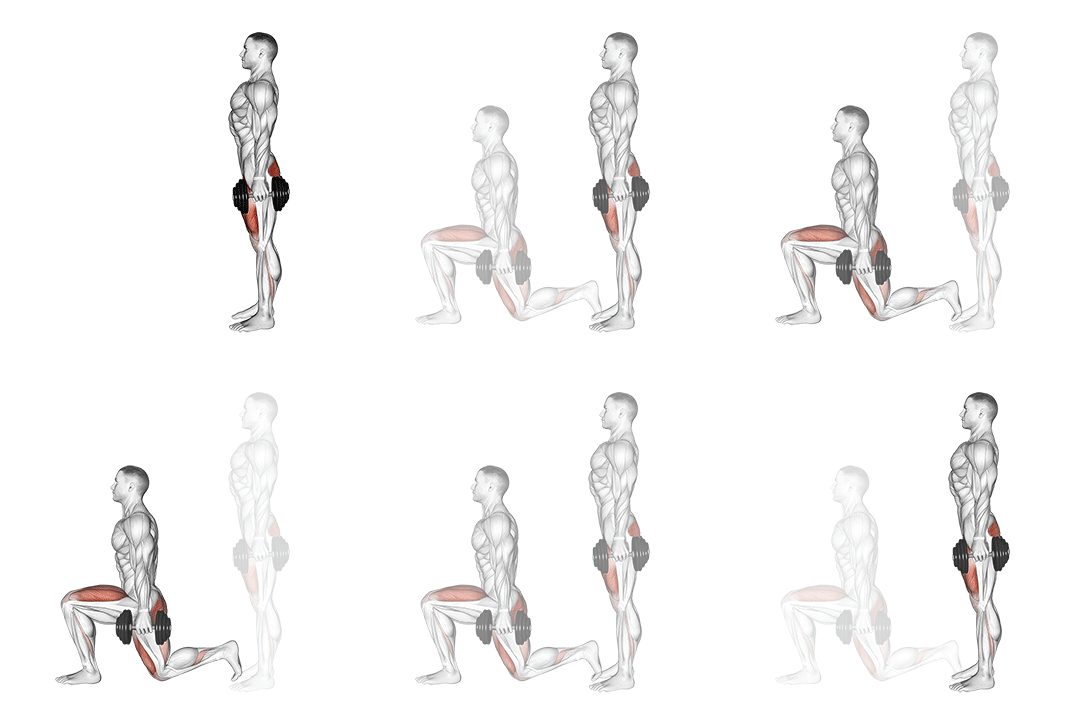
7. Dumbbell Lunge
68% MatchHow to perform this exercise
- Stand with your feet shoulder-width apart, holding a dumbbell in each hand.
- Take a step forward with your right foot, lowering your body into a lunge position.
- Keep your back straight and your chest up as you lower your body.
- Push through your right heel to return to the starting position.
- Repeat with your left leg.
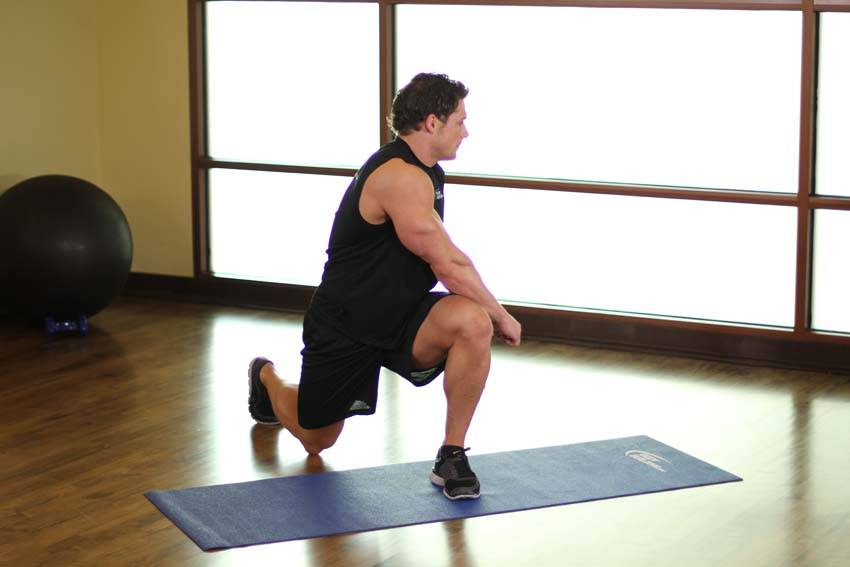
8. Crossover Reverse Lunge
68% MatchHow to perform this exercise
- Stand with your feet shoulder width apart. This will be your starting position.
- Perform a rear lunge by stepping back with one foot and flexing the hips and front knee. As you do so, rotate your torso across the front leg.
- After a brief pause, return to the starting position and repeat on the other side, continuing in an alternating fashion.
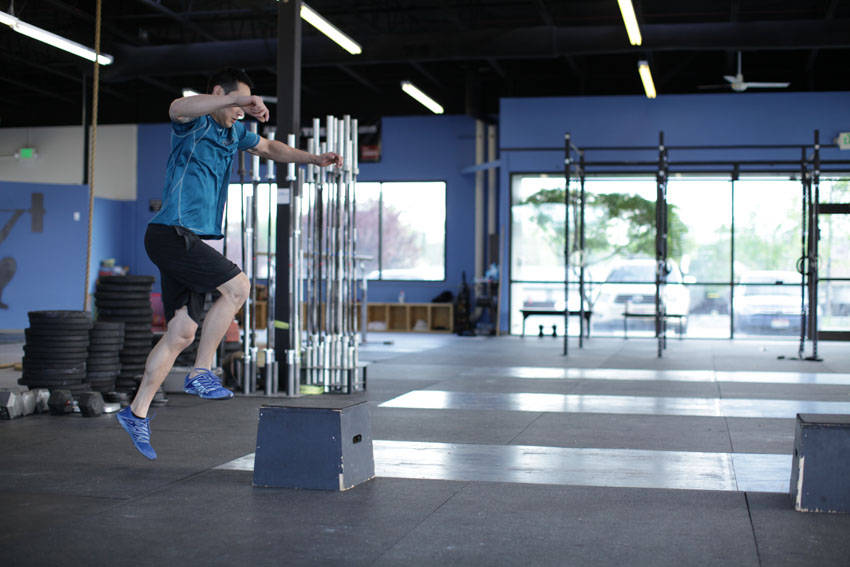
9. Box Skip
65.2% MatchHow to perform this exercise
- You will need several boxes lined up about 8 feet apart.
- Begin facing the first box with one leg slightly behind the other.
- Drive off the back leg, attempting to gain as much height with the hips as possible.
- Immediately upon landing on the box, drive the other leg forward and upward to gain height and distance, leaping from the box. Land between the first two boxes with the same leg that landed on the first box.
- Then, step to the next box and repeat.
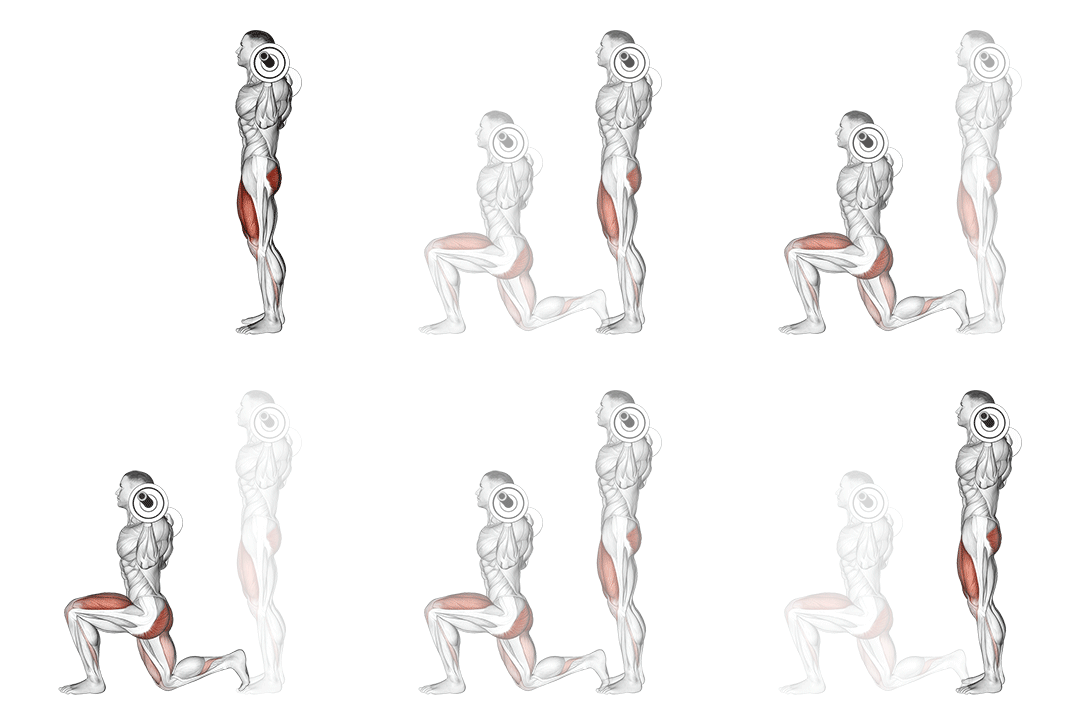
10. Barbell Lunge
65.2% MatchHow to perform this exercise
- Start by standing with your feet shoulder-width apart and a barbell resting on your upper back.
- Take a step forward with your right foot, keeping your torso upright.
- Lower your body by bending your right knee until your thigh is parallel to the ground.
- Push through your right heel to return to the starting position.
- Repeat with your left leg, alternating legs for the desired number of repetitions.
Why You Might Need a Lunge With Twist Alternative
You may replace a Lunge With Twist for several practical reasons: knee pain, limited thoracic mobility, low-back irritation from lumbar rotation, or lack of space or equipment. Substitutes let you preserve oblique activation while removing harmful lumbar shear or excessive knee torque. Choose anti-rotation options like the Pallof press when rotation flares the lumbar spine, or pick single-leg anti-rotation holds to maintain hip and core stability. Technique cue: keep ribs down and initiate rotation from the chest, not the low back, to maximize oblique engagement and protect the lumbar vertebrae.
How to Choose the Right Substitute
Decide based on pain, mobility, training goal, and balance ability. If your goal is dynamic rotation and oblique torque, use standing Russian twists or controlled woodchoppers and rotate from the thoracic spine. For stability or back concerns, pick anti-rotation moves like the Pallof press or side plank with knee drive to load the obliques without spinal shear. If balance is the limiter, use split squats with an oblique reach and keep the front knee tracking over the second toe. Technique cue: prioritize thoracic rotation, brace the transverse abdominis, and maintain neutral pelvis to optimize oblique activation and hip extension.
Frequently Asked Questions
What muscles does Lunge With Twist work?
The Lunge With Twist primarily targets the obliques and rectus abdominis through dynamic rotation, while recruiting the glutes, quads, and hamstrings for the lunge. It also requires anti-rotational control from the transverse abdominis and hip stabilizers to maintain pelvic alignment.
What is the best bodyweight alternative to Lunge With Twist?
A reverse lunge with thoracic rotation is the best bodyweight alternative because it preserves the hip extension and single-leg stability while emphasizing oblique activation. Cue: step back, brace your core, and rotate the chest over the front thigh while keeping hips square to avoid lumbar rotation.
Can I build muscle without doing Lunge With Twist?
Yes. You can build core and lower-body muscle with progressive overload using alternatives like split squats, single-leg Romanian deadlifts, and weighted anti-rotation presses. Focus on increasing time under tension, range of motion, and loading while maintaining proper oblique activation and hip mechanics.
More Exercise Alternatives
Find Alternatives for Any Exercise
Use our free tool to discover the best substitute exercises based on your available equipment and goals.
Try the Exercise Substitution Finder →