

10 Best Pull-in (On Stability Ball) Alternatives for Home & Gym
The Pull-in (On Stability Ball) is done lying face down with a stability ball. Ranked closest by our scoring: the Exercise Ball Crunch, the Prone Twist On Stability Ball and Cocoons. Three harder versions, the Exercise Ball Pull-in, the Arms Straight) Crunch (On Stability Ball and the Crunch (On Stability Ball), are listed below as progressions rather than swaps.
Updated Ranked by our 12-factor similarity model How it works
Original Exercise: Pull-in (On Stability Ball)
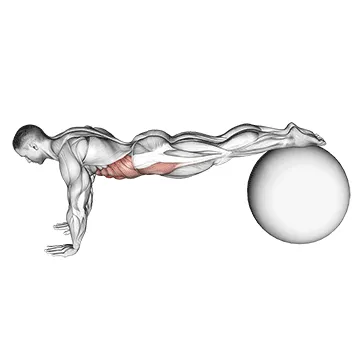
- Primary muscle
- Abs
- Equipment
- Stability-ball
- Difficulty
- Intermediate
- Type
- Isolation
Secondary muscles: Hip Flexors
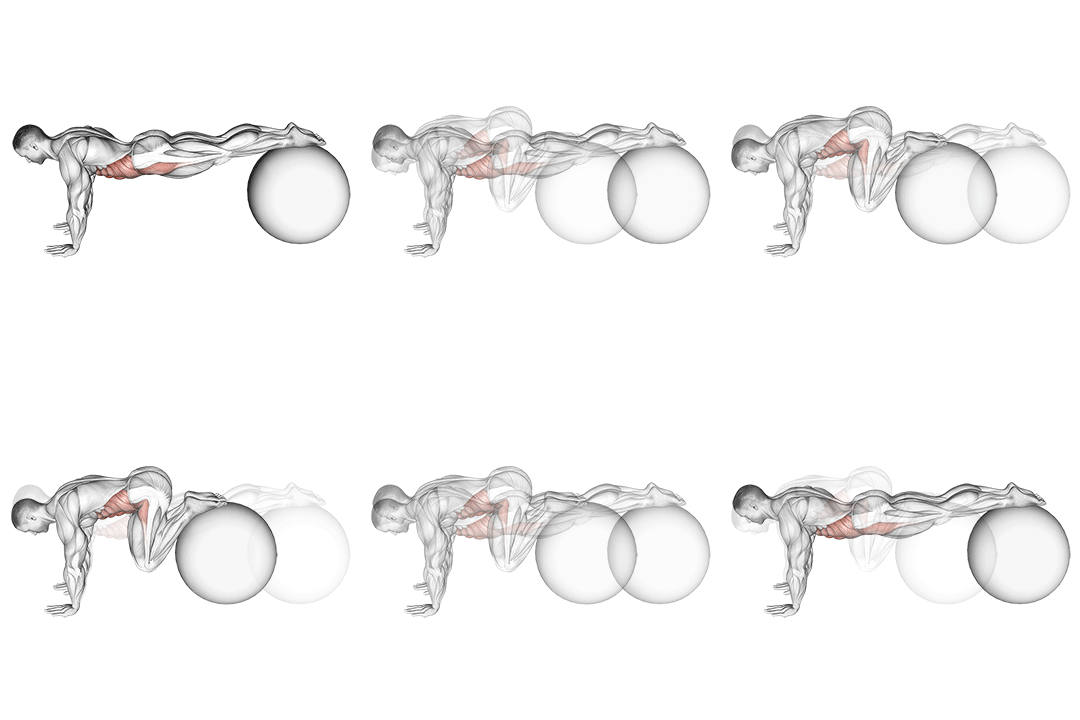
How to perform Pull-in (On Stability Ball)
- Start by sitting on the stability ball with your feet flat on the ground and your knees bent at a 90-degree angle.
- Place your hands on the sides of the stability ball for support.
- Engage your abs and slowly roll your hips forward, bringing your knees towards your chest.
- Pause for a moment at the top of the movement, then slowly extend your legs back to the starting position.
- Repeat for the desired number of repetitions.
Ranked Pull-in (On Stability Ball) Alternatives
10 substitutes, ranked by how closely each one matches the Pull-in (On Stability Ball) on movement pattern, muscles worked, equipment and body position. The higher the score, the less you change. Open "How to perform this exercise" on a card for the steps; every card title links to that exercise's own alternatives page. Harder versions are tagged as progressions and kept out of the top spot even when they score higher.
Best match 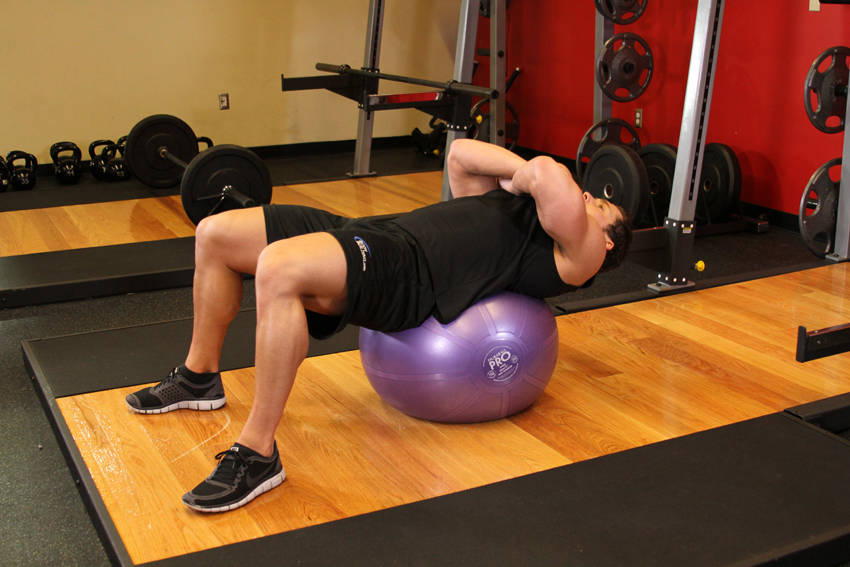
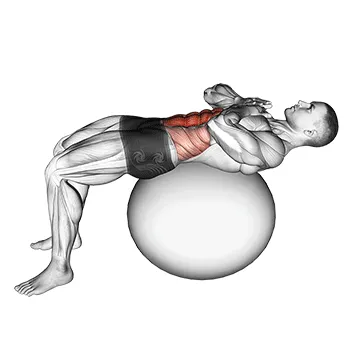
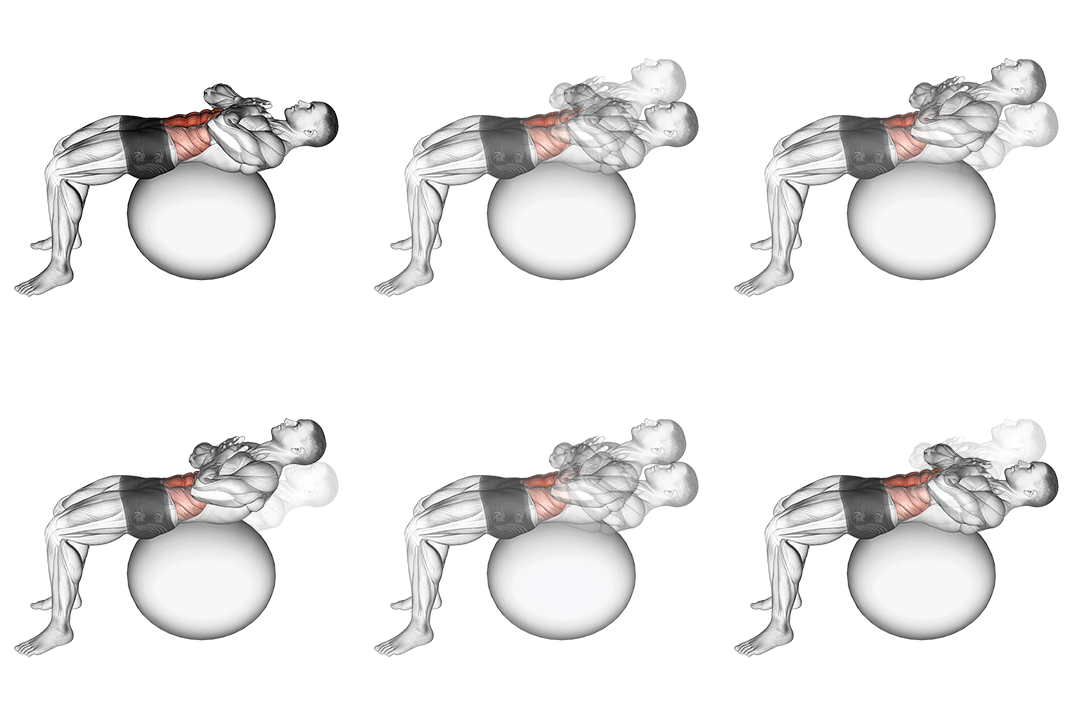
1. Exercise Ball Crunch
85% match- Abs
- Stability-ball
- Beginner
- Isolation
Pick this when you want an easier version that still works the abs.
How to perform this exercise
- Lie on an exercise ball with your lower back curvature pressed against the spherical surface of the ball. Your feet should be bent at the knee and pressed firmly against the floor. The upper torso should be hanging off the top of the ball. The arms should either be kept alongside the body or crossed on top of your chest as these positions avoid neck strains (as opposed to the hands behind the back of the head position).
- Lower your torso into a stretch position keeping the neck stationary at all times. This will be your starting position.
- With the hips stationary, flex the waist by contracting the abdominals and curl the shoulders and trunk upward until you feel a nice contraction on your abdominals. The arms should simply slide up the side of your legs if you have them at the side or just stay on top of your chest if you have them crossed. The lower back should always stay in contact with the ball. Exhale as you perform this movement and hold the contraction for a second.
- As you inhale, go back to the starting position.
- Repeat for the recommended amount of repetitions.
Sets and reps: 3 sets of 8 to 12 reps, and add reps before you add load.
Why this matches
- Primary muscle: abs, the same as the Pull-in (On Stability Ball)
- Equipment: bodyweight only, the same as the Pull-in (On Stability Ball)
- Body position: lying on your back, not lying face down
Progression
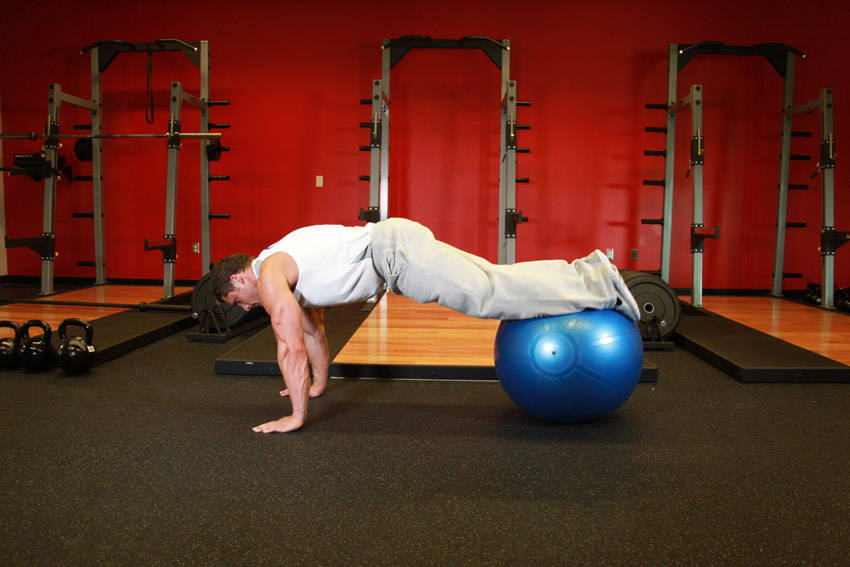
2. Exercise Ball Pull-in
89% match- Abs
- Stability-ball
- Intermediate
- Compound
Pick this when you want a harder version that still works the abs.
How to perform this exercise
- Place an exercise ball nearby and lay on the floor in front of it with your hands on the floor shoulder width apart in a push-up position.
- Now place your lower shins on top of an exercise ball. Tip: At this point your legs should be fully extended with the shins on top of the ball and the upper body should be in a push-up type of position being supported by your two extended arms in front of you. This will be your starting position.
- While keeping your back completely straight and the upper body stationary, pull your knees in towards your chest as you exhale, allowing the ball to roll forward under your ankles. Squeeze your abs and hold that position for a second.
- Now slowly straighten your legs, rolling the ball back to the starting position as you inhale.
- Repeat for the recommended amount of repetitions.
Sets and reps: 3 or 4 sets of 6 to 10 reps.
Why this matches
- Primary muscle: abs, the same as the Pull-in (On Stability Ball)
- Equipment: bodyweight only, the same as the Pull-in (On Stability Ball)
- Body position: lying face down, the same as the Pull-in (On Stability Ball)
Progression
- Abs
- Stability-ball
- Intermediate
- Isolation
How to perform this exercise
- Sit on the stability ball with your feet flat on the ground and your knees bent at a 90-degree angle.
- Lie back on the ball until your lower back is supported and your upper body is parallel to the floor.
- Place your hands behind your head or cross them over your chest.
- Engage your abs and lift your upper body off the ball, curling your shoulders towards your hips.
- Pause for a moment at the top, then slowly lower your upper body back down to the starting position.
- Repeat for the desired number of repetitions.
Sets and reps: 3 sets of 10 to 15 reps.
Why this matches
- Primary muscle: abs, the same as the Pull-in (On Stability Ball)
- Equipment: bodyweight only, the same as the Pull-in (On Stability Ball)
- Body position: lying on your back, not lying face down
Progression
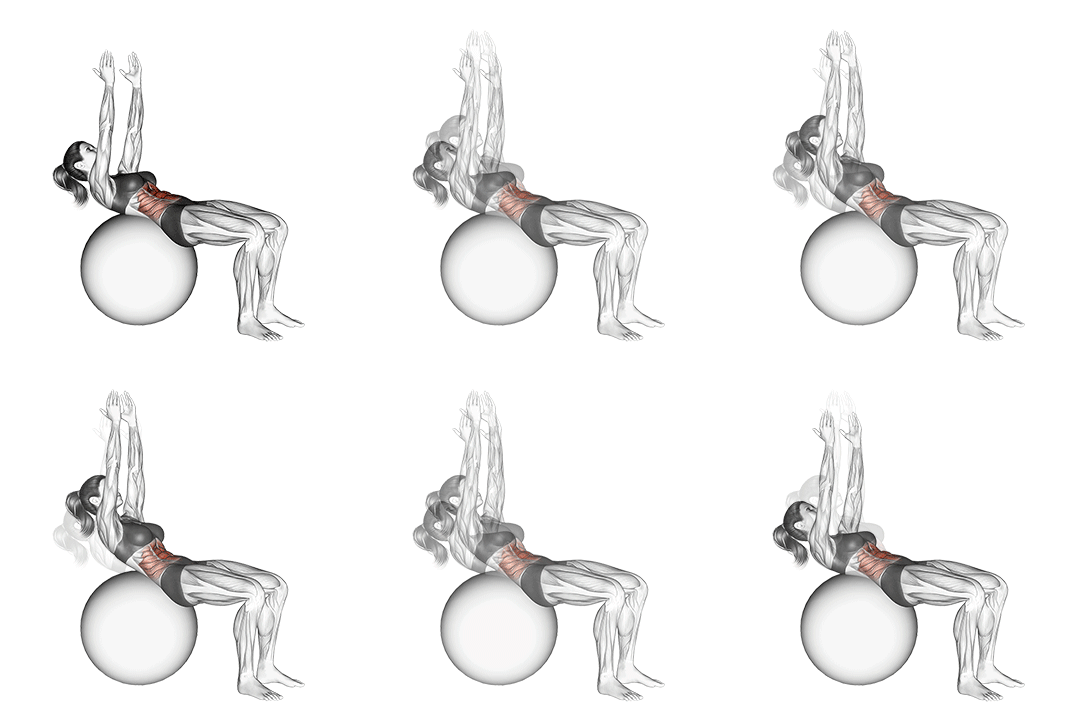
4. Crunch (On Stability Ball)
86% match- Abs
- Stability-ball
- Intermediate
- Isolation
How to perform this exercise
- Sit on the stability ball with your feet flat on the ground and your knees bent at a 90-degree angle.
- Lie back on the ball until your lower back is supported and your upper body is parallel to the floor.
- Place your hands behind your head or across your chest.
- Engage your abs and lift your upper body towards your knees, curling your torso forward.
- Pause for a moment at the top of the movement, then slowly lower your upper body back down to the starting position.
- Repeat for the desired number of repetitions.
Sets and reps: 3 sets of 10 to 15 reps.
Why this matches
- Primary muscle: abs, the same as the Pull-in (On Stability Ball)
- Equipment: bodyweight only, the same as the Pull-in (On Stability Ball)
- Body position: lying on your back, not lying face down
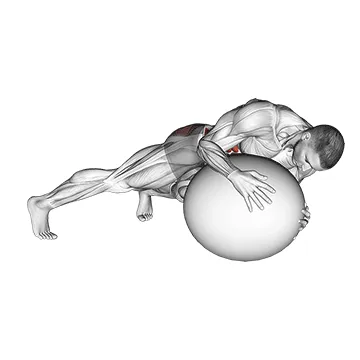
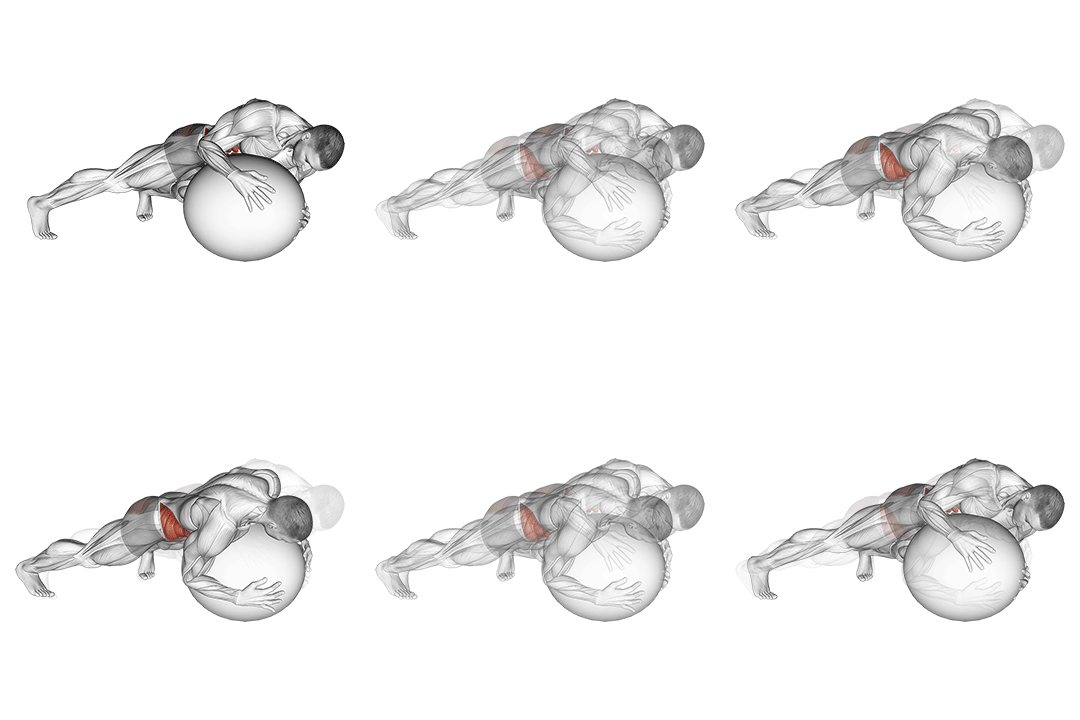
5. Prone Twist On Stability Ball
85% match- Abs
- Stability-ball
- Intermediate
- Isolation
It uses the same equipment and still works the abs.
How to perform this exercise
- Start by lying face down on a stability ball with your feet shoulder-width apart and your toes touching the ground.
- Place your hands behind your head or cross them over your chest.
- Engage your core muscles and slowly lift your upper body off the ball, keeping your back straight.
- Rotate your torso to one side, bringing your shoulder towards your hip. Keep your hips and legs stable throughout the movement.
- Pause for a moment, then return to the starting position.
- Repeat the rotation to the other side.
- Continue alternating sides for the desired number of repetitions.
Sets and reps: 3 sets of 10 to 15 reps.
Why this matches
- Primary muscle: abs, the same as the Pull-in (On Stability Ball)
- Equipment: bodyweight only, the same as the Pull-in (On Stability Ball)
- Body position: lying face down, the same as the Pull-in (On Stability Ball)
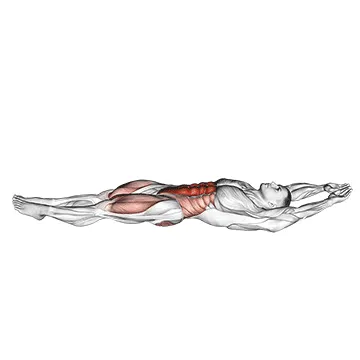
6. Cocoons
85% match- Abs
- Bodyweight
- Beginner
- Isolation
Use this when you have nothing to train with, because it works the abs with bodyweight alone.
How to perform this exercise
- Lie flat on your back with your knees bent and feet flat on the ground.
- Place your hands behind your head with your elbows pointing outwards.
- Engaging your abs, slowly lift your upper body off the ground, curling forward until your torso is at a 45-degree angle.
- Pause for a moment at the top, then slowly lower your upper body back down to the starting position.
- Repeat for the desired number of repetitions.
Sets and reps: 3 sets of 8 to 12 reps, and add reps before you add load.
Why this matches
- Primary muscle: abs, the same as the Pull-in (On Stability Ball)
- Equipment: bodyweight only, the same as the Pull-in (On Stability Ball)
- Body position: lying on your back, not lying face down
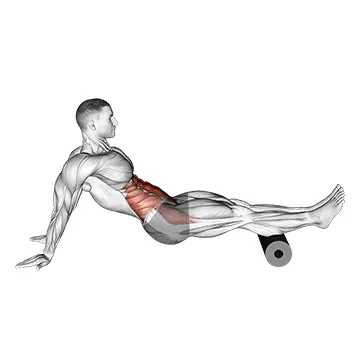
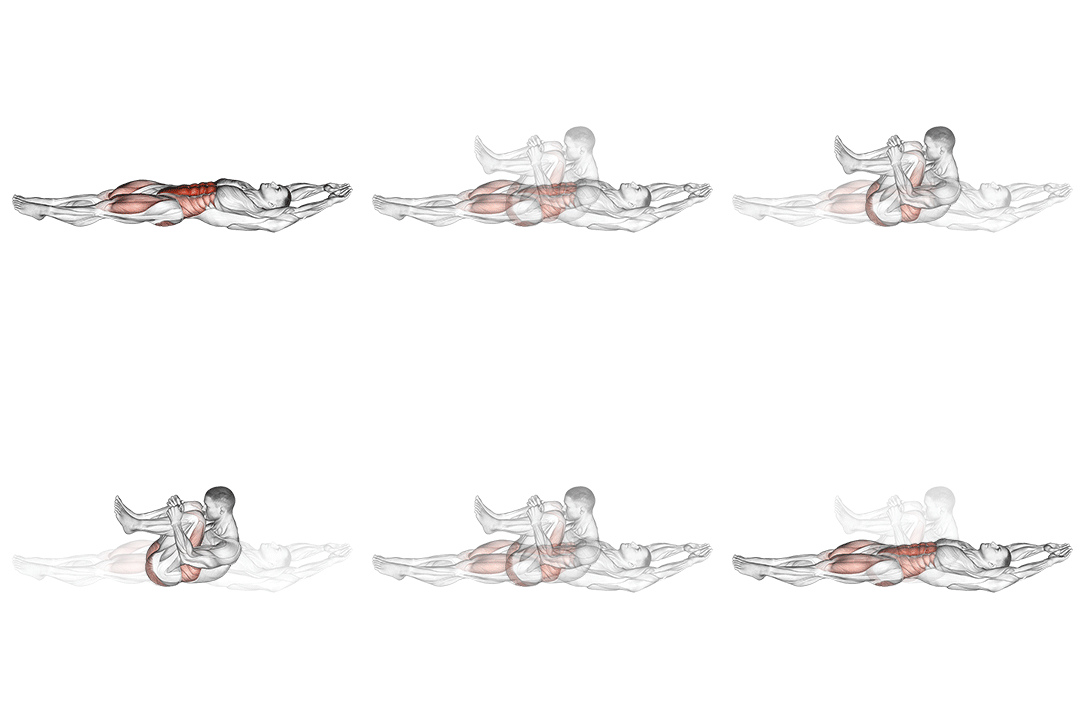
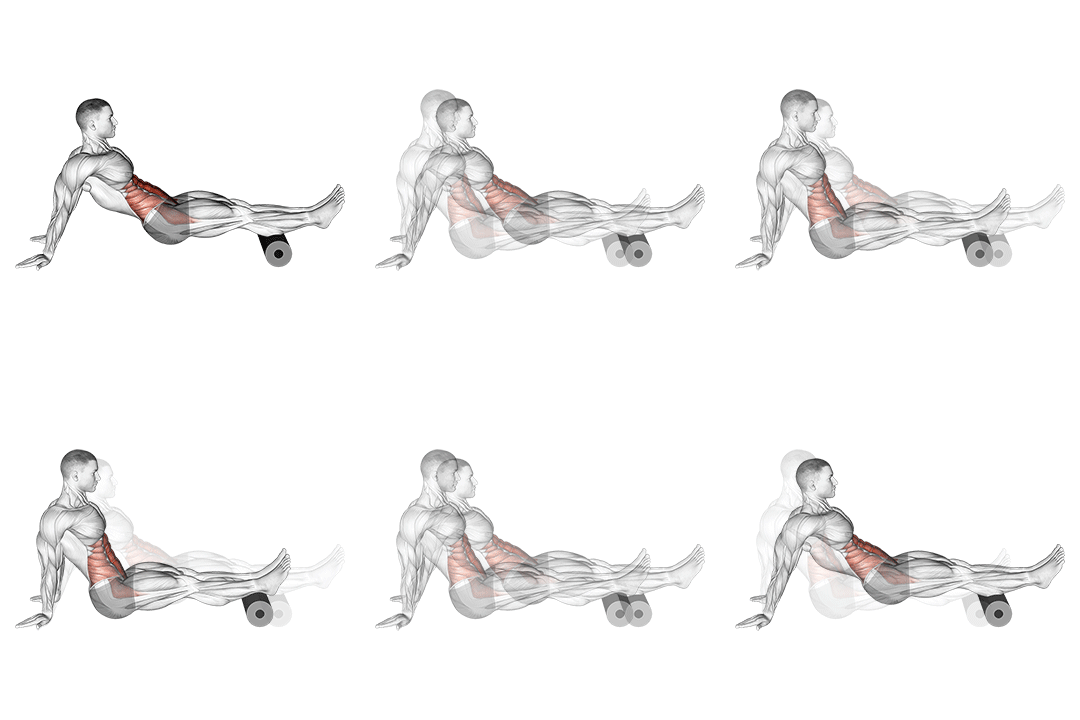
7. Roller Reverse Crunch
84% match- Abs
- Foam-roll
- Intermediate
- Isolation
A good swap when you have a foam roller to work with, and it still works the abs.
How to perform this exercise
- Lie flat on your back with your arms extended straight above your head and your legs straight out in front of you.
- Place the roller between your feet and grip it with your toes.
- Engaging your abs, lift your legs off the ground and curl your knees towards your chest, rolling the roller towards your body.
- Pause for a moment at the top, then slowly lower your legs back down to the starting position, rolling the roller away from your body.
- Repeat for the desired number of repetitions.
Sets and reps: 3 sets of 10 to 15 reps.
Why this matches
- Primary muscle: abs, the same as the Pull-in (On Stability Ball)
- Equipment: bodyweight only, the same as the Pull-in (On Stability Ball)
- Body position: lying on your back, not lying face down
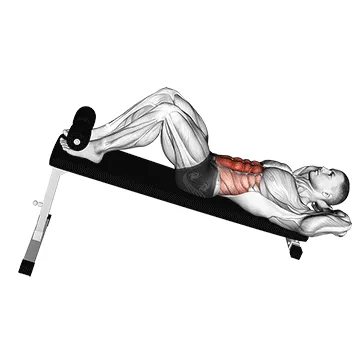
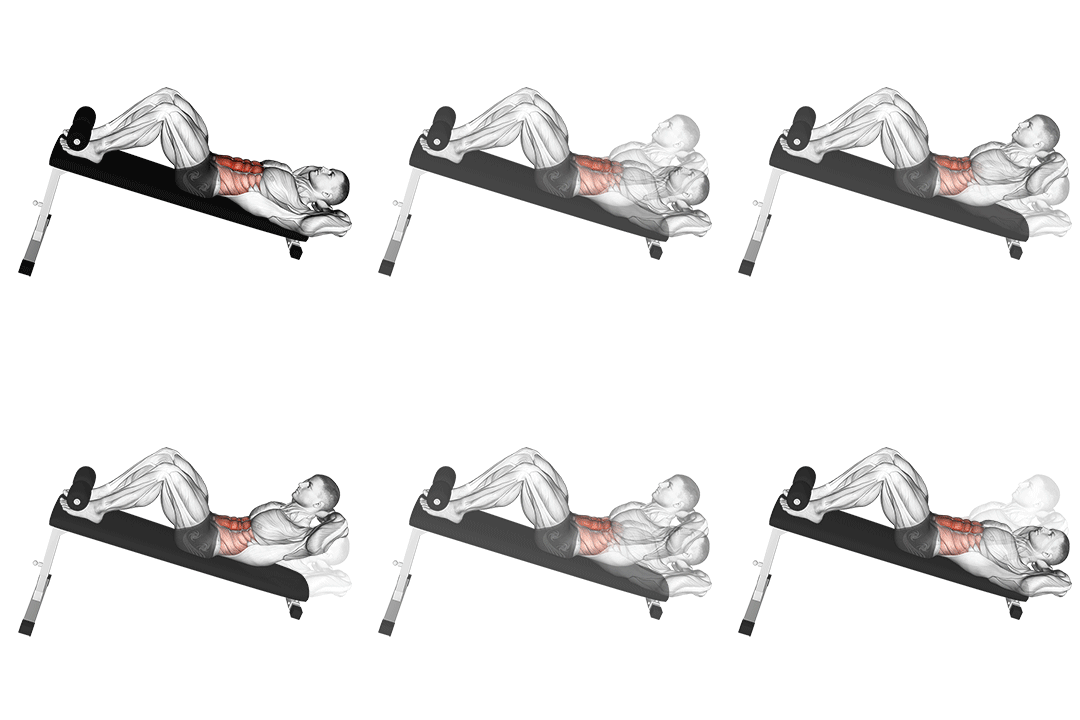
8. Decline Crunch
83% match- Abs
- Bodyweight
- Intermediate
- Isolation
How to perform this exercise
- Lie on a decline bench with your feet secured and your knees bent at a 90-degree angle.
- Place your hands behind your head or across your chest.
- Engage your abs and lift your upper body towards your knees, curling your torso.
- Pause for a moment at the top, then slowly lower your upper body back down to the starting position.
- Repeat for the desired number of repetitions.
Sets and reps: 3 sets of 10 to 15 reps.
Why this matches
- Primary muscle: abs, the same as the Pull-in (On Stability Ball)
- Equipment: bodyweight only, the same as the Pull-in (On Stability Ball)
- Body position: lying on your back, not lying face down
- Balance: easier to stay steady on than the Pull-in (On Stability Ball)
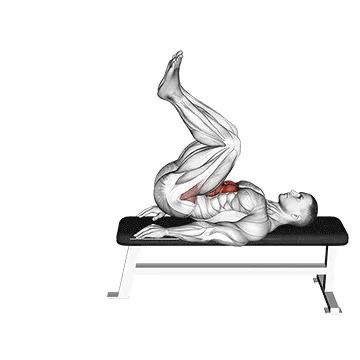
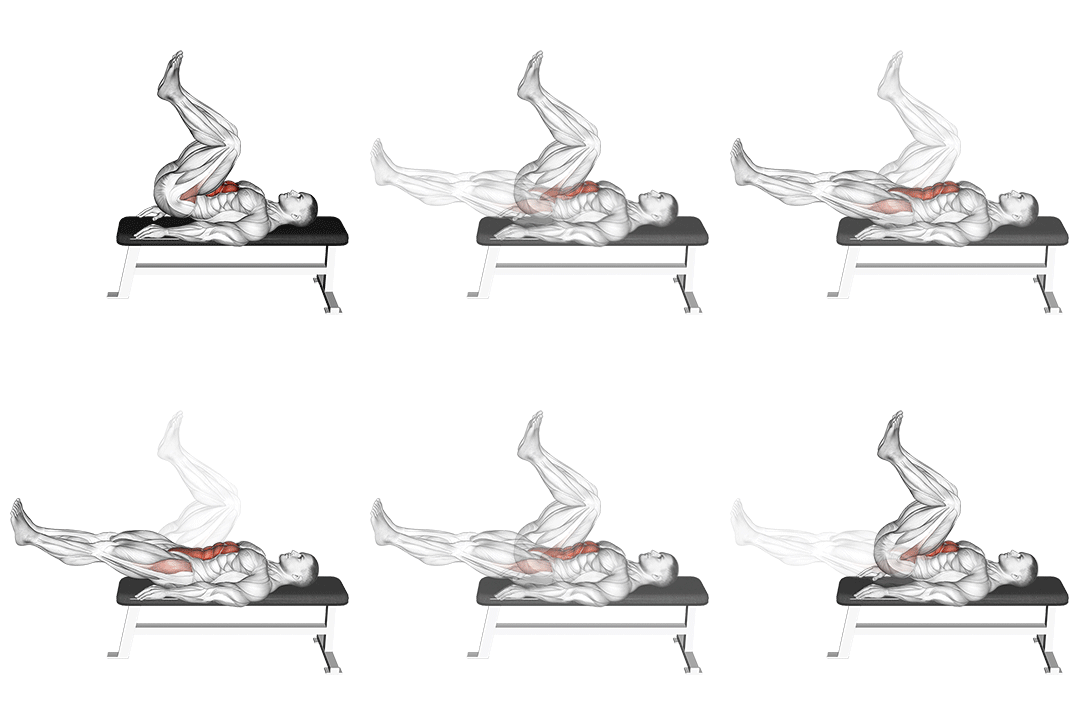
9. Leg Pull In Flat Bench
82% match- Abs
- Bodyweight
- Intermediate
- Isolation
How to perform this exercise
- Sit on a flat bench with your legs extended straight out in front of you.
- Place your hands on the bench beside your hips for support.
- Engage your abs and lift your legs off the ground, bringing your knees towards your chest.
- Pause for a moment at the top, then slowly lower your legs back down to the starting position.
- Repeat for the desired number of repetitions.
Sets and reps: 3 sets of 10 to 15 reps.
Why this matches
- Primary muscle: abs, the same as the Pull-in (On Stability Ball)
- Equipment: bodyweight only, the same as the Pull-in (On Stability Ball)
- Body position: seated, not lying face down
- Balance: easier to stay steady on than the Pull-in (On Stability Ball)
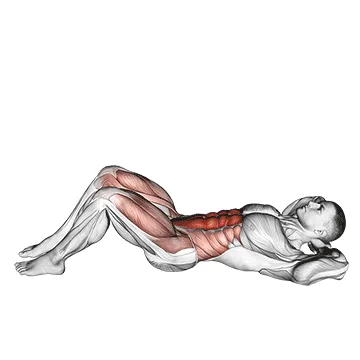
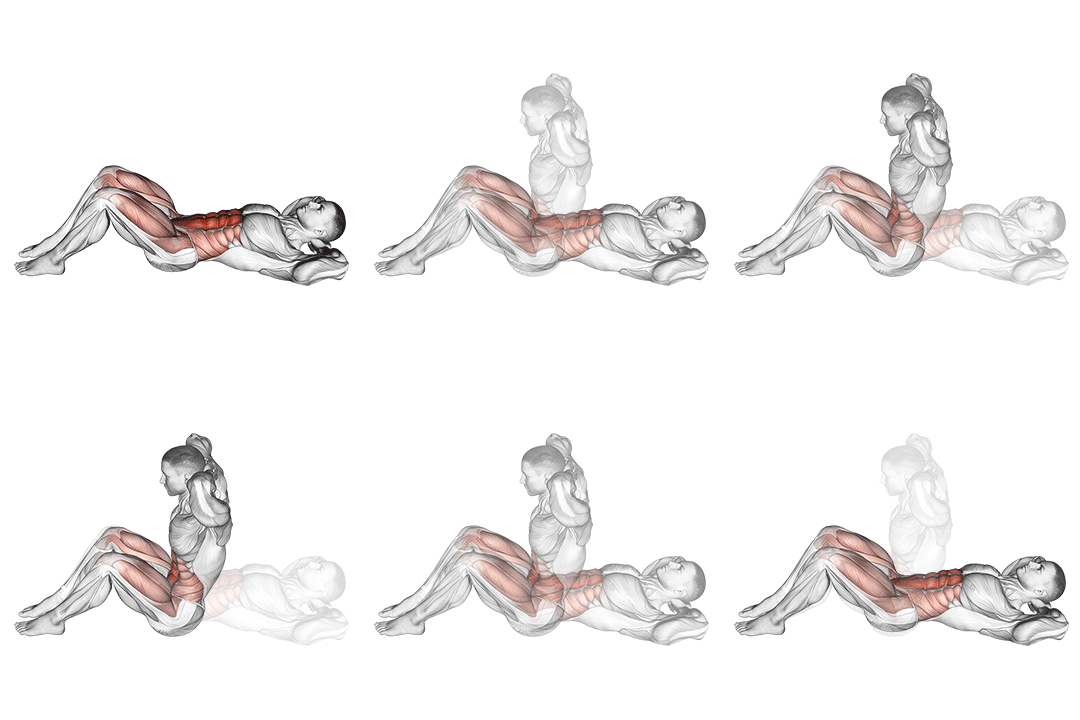
10. Sit-up
82% match- Abs
- Bodyweight
- Beginner
- Isolation
How to perform this exercise
- Lie flat on your back with your knees bent and feet flat on the ground.
- Place your hands behind your head with your elbows pointing outwards.
- Engaging your abs, slowly lift your upper body off the ground, curling forward until your torso is at a 45-degree angle.
- Pause for a moment at the top, then slowly lower your upper body back down to the starting position.
- Repeat for the desired number of repetitions.
Sets and reps: 3 sets of 8 to 12 reps, and add reps before you add load.
Why this matches
- Primary muscle: abs, the same as the Pull-in (On Stability Ball)
- Equipment: bodyweight only, the same as the Pull-in (On Stability Ball)
- Body position: lying on your back, not lying face down
Pull-in (On Stability Ball) FAQ
What muscles does Pull-in (on Stability Ball) work?
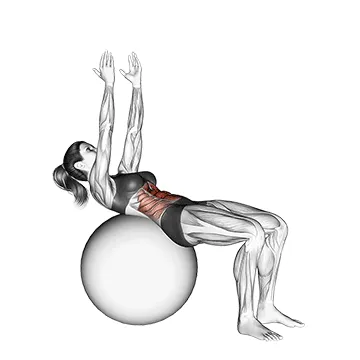
The Pull-in primarily targets the rectus abdominis with secondary involvement from the hip flexors. You also engage the transverse abdominis for stabilization; cue a pelvic tuck and exhale to emphasize abdominal curl over hip drive.
Find Alternatives for Any Exercise
Search the exercise database and filter the ranked substitutes by the equipment you own.
Similarity scores compare exercise metadata such as movement pattern, muscles, equipment and body position. They are not a safety rating or a check that you own the equipment. Learn about our methodology