

7 Best Lying Face Down Plate Neck Resistance Alternatives for Rehab
If you can't perform Lying Face Down Plate Neck Resistance, use seated banded neck extensions, a neck-harness extension, prone isometric extensions, manual resistance, or scapular-supported neck curls. For banded extensions, anchor the band at chest height, keep a neutral cervical spine, and drive through the occiput to load the deep cervical extensors and upper traps.
Original Exercise: Lying Face Down Plate Neck Resistance
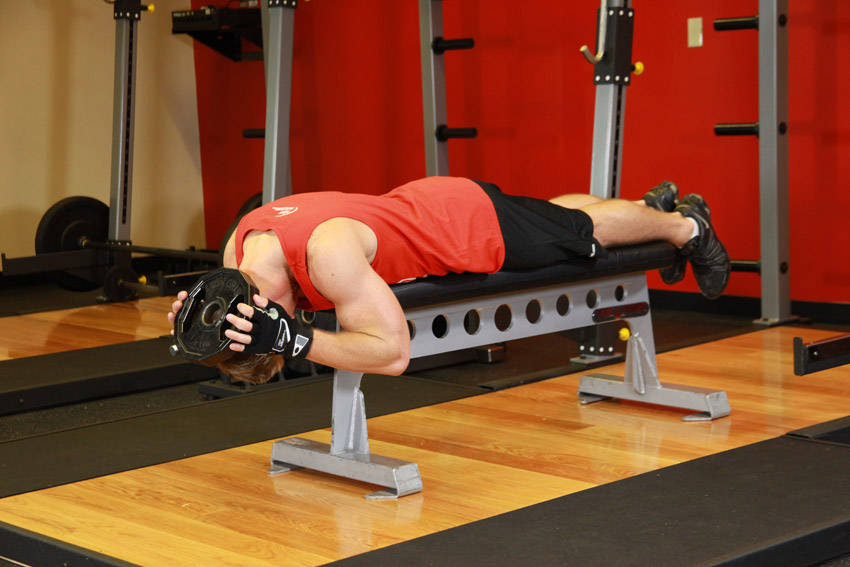
How to Perform Lying Face Down Plate Neck Resistance
- Lie face down with your whole body straight on a flat bench while holding a weight plate behind your head. Tip: You will need to position yourself so that your shoulders are slightly above the end of a flat bench in order for the upper chest, neck and face to be off the bench. This will be your starting position.
- While keeping the plate secure on the back of your head slowly lower your head (as in saying "yes") as you breathe in.
- Raise your head back up to the starting position in a semi-circular motion as you breathe out. Hold the contraction for a second.
- Repeat for the recommended amount of repetitions.
Pro Tips
- Category: Strength
- Force: Pull
- Movement type: Isolation
Ranked Lying Face Down Plate Neck Resistance Alternatives
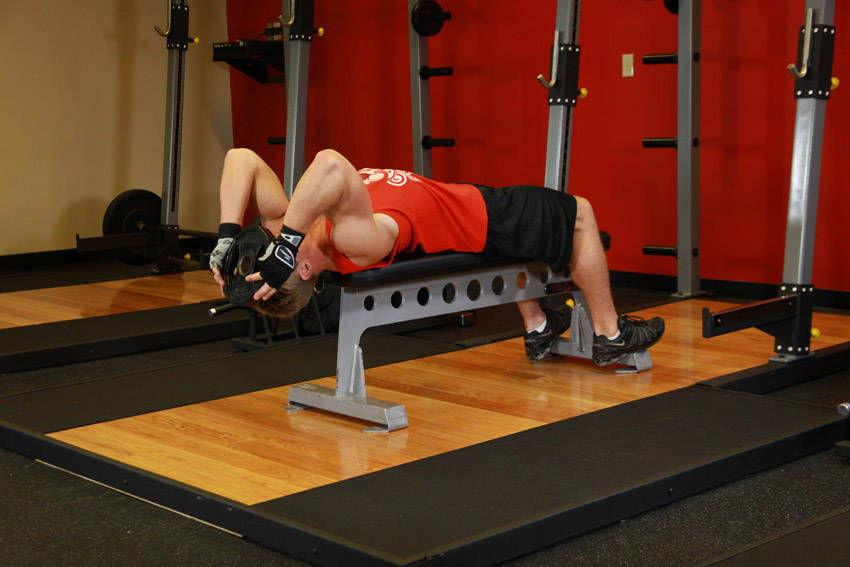
1. Lying Face Up Plate Neck Resistance
92% MatchHow to perform this exercise
- Lie face up with your whole body straight on a flat bench while holding a weight plate on top of your forehead. Tip: You will need to position yourself so that your shoulders are slightly above the end of a flat bench in order for the traps, neck and head to be off the bench. This will be your starting position.
- While keeping the plate secure on your forehead slowly lower your head back in a semi-circular motion as you breathe in.
- Raise your head back up to the starting position in a semi-circular motion as you breathe out. Hold the contraction for a second.
- Repeat for the recommended amount of repetitions.
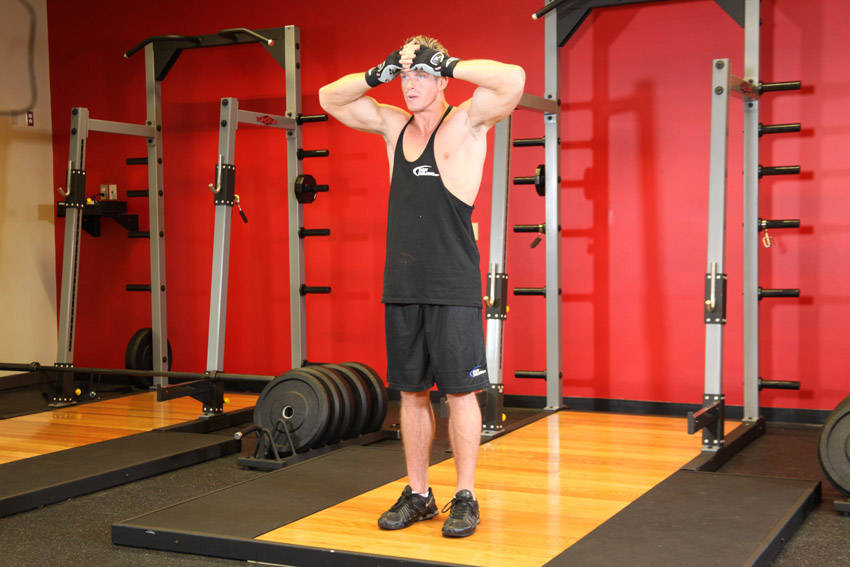
2. Isometric Neck Exercise - Front And Back
79.3% MatchHow to perform this exercise
- With your head and neck in a neutral position (normal position with head erect facing forward), place both of your hands on the front side of your head.
- Now gently push forward as you contract the neck muscles but resisting any movement of your head. Start with slow tension and increase slowly. Keep breathing normally as you execute this contraction.
- Hold for the recommended number of seconds.
- Now release the tension slowly.
- Rest for the recommended amount of time and repeat with your hands placed on the back side of your head.
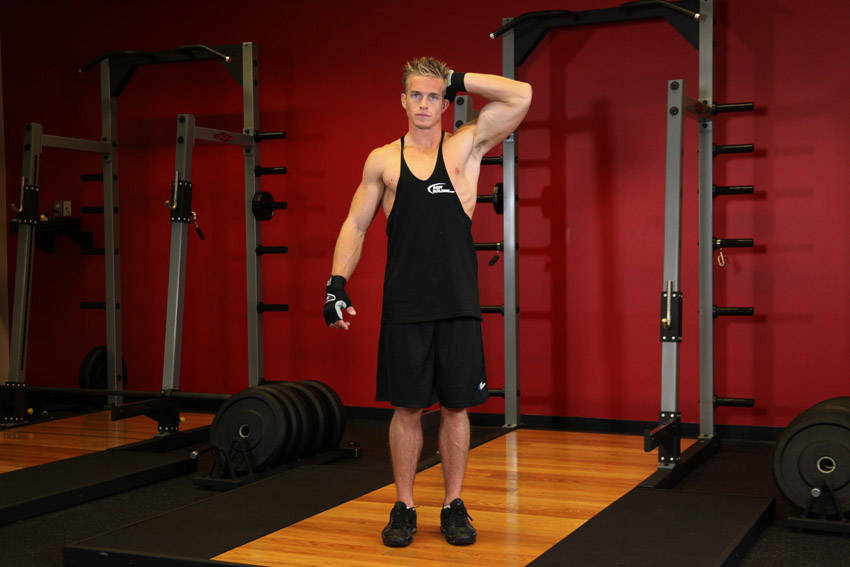
3. Isometric Neck Exercise - Sides
79.3% MatchHow to perform this exercise
- With your head and neck in a neutral position (normal position with head erect facing forward), place your left hand on the left side of your head.
- Now gently push towards the left as you contract the left neck muscles but resisting any movement of your head. Start with slow tension and increase slowly. Keep breathing normally as you execute this contraction.
- Hold for the recommended number of seconds.
- Now release the tension slowly.
- Rest for the recommended amount of time and repeat with your right hand placed on the right side of your head.
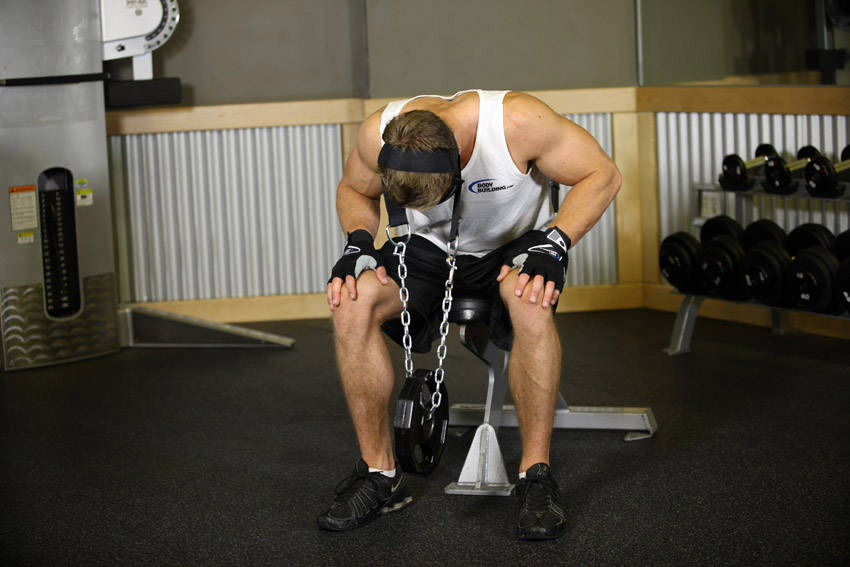
4. Seated Head Harness Neck Resistance
57.2% MatchHow to perform this exercise
- Place a neck strap on the floor at the end of a flat bench. Once you have selected the weights, sit at the end of the flat bench with your feet wider than shoulder width apart from each other. Your toes should be pointed out.
- Slowly move your torso forward until it is almost parallel with the floor. Using both hands, securely position the neck strap around your head. Tip: Make sure the weights are still lying on the floor to prevent any strain on the neck. Now grab the weight with both hands while elevating your torso back until it is almost perpendicular to the floor. Note: Your head and torso needs to be slightly tilted forward to perform this exercise.
- Now place both hands on top of your knees. This is the starting position.
- Slowly lower your neck down until your chin touches the upper part of your chest while breathing in.
- While exhaling, bring your neck back to the starting position.
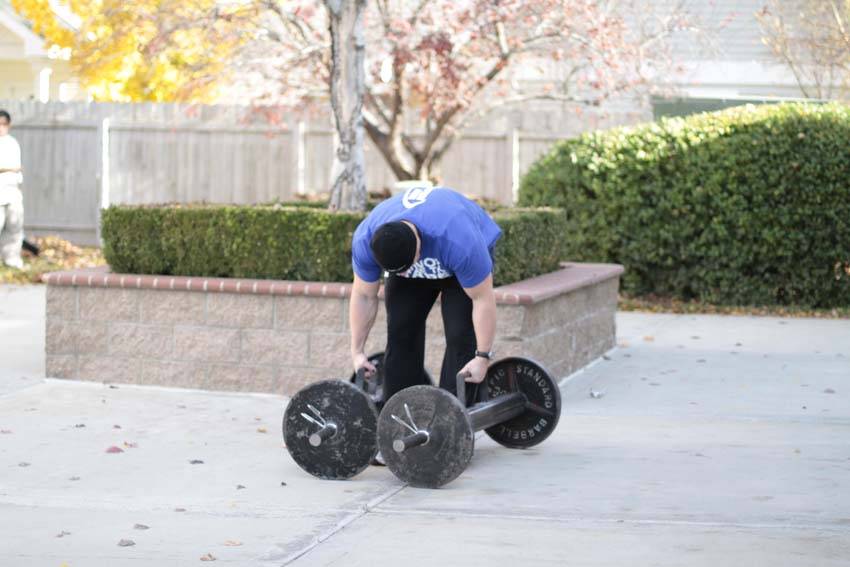
5. Farmer's Walk
34.1% MatchHow to perform this exercise
- There are various implements that can be used for the farmers walk. These can also be performed with heavy dumbbells or short bars if these implements aren't available. Begin by standing between the implements.
- After gripping the handles, lift them up by driving through your heels, keeping your back straight and your head up.
- Walk taking short, quick steps, and don't forget to breathe. Move for a given distance, typically 50-100 feet, as fast as possible.
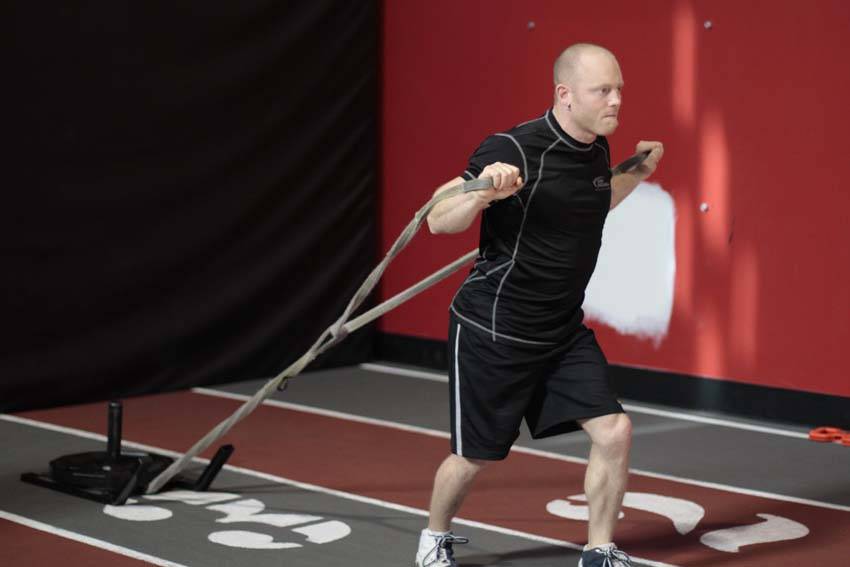
6. Forward Drag With Press
33.2% MatchHow to perform this exercise
- Attach a dual handled chain or rope attachment to the sled. You should be facing away from the sled, holding a handle in each hand.
- Begin the movement by moving forward for one step. Leaning forward, extend through the legs and hips to move, pausing with each step to extend through the elbows, pressing your hands forward. Step forward until you return to the start position prepared to press.
7. Heavy Bag Thrust
30.9% MatchHow to perform this exercise
- Utilize a heavy bag for this exercise. Assume an upright stance next to the bag, with your feet staggered, fairly wide apart. Place your hand on the bag at about chest height. This will be your starting position.
- Begin by twisting at the waist, pushing the bag forward as hard as possible. Perform this move quickly, pushing the bag away from your body.
- Receive the bag as it swings back by reversing these steps.
Why You Might Need a Lying Face Down Plate Neck Resistance Alternative
You may substitute this isolation exercise for injury, pain with prone loading, lack of plates or bench access, or preference for graded resistance. Alternatives let you control cervical loading and range of motion, reducing shear on C-spine segments. For example, a neck harness shifts the load vector and reduces thoracic compression; prone isometrics let you train the cervical extensors without large lever arms. Use neutral alignment and slow concentric/controlled eccentric tempo to emphasize semispinalis and splenius activation while protecting facet joints.
How to Choose the Right Substitute
Select a substitute based on load control, movement pattern, and cervical safety. Match the primary movement, cervical extension, by choosing exercises that load the occiput-to-thorax vector (banded extension or harness). Consider progressive overload (increase band tension, plate weight on harness, or hold time for isometrics). Prioritize neutral cervical alignment, avoid end-range hyperextension, and pick exercises that let you feel deep extensor activation (gentle posterior skull lift) while maintaining scapular stability.
Frequently Asked Questions
What muscles does Lying Face Down Plate Neck Resistance work?
It primarily targets the cervical extensor group, semispinalis capitis, splenius capitis, and the upper fibers of trapezius and levator scapulae. The exercise produces concentrated neck extension torque, forcing the deep extensors and superficial extensors to eccentrically control the head on the cervical spine.
What is the best bodyweight alternative to Lying Face Down Plate Neck Resistance?
Prone isometric neck extensions are the best bodyweight substitute: lie face down with your forehead off a bench, keep the cervical spine neutral, and lift the head slowly into extension and hold for 6–12 seconds. Focus on driving through the occiput and feeling semispinalis contraction to replicate the same extension moment.
Can I build muscle without doing Lying Face Down Plate Neck Resistance?
Yes. You can hypertrophy cervical extensors using bands, a neck harness, heavier manual resistance, or progressive isometrics by increasing tension, load, or time under tension. Maintain progressive overload, proper cervical alignment, and sufficient volume (multiple sets and regular frequency) to stimulate growth.
More Exercise Alternatives
Find Alternatives for Any Exercise
Use the exercise substitution finder to compare ranked alternatives for your available equipment and training preference.
Try the Exercise Substitution Finder →