

10 Best Isometric Neck Front & Back Alternatives for Neck Strength
The Isometric Neck Exercise - Front And Back is done seated. Ranked closest by our scoring: the Isometric Neck Exercise - Sides, the Lying Face Down Plate Neck Resistance and the Lying Face Up Plate Neck Resistance.
Each substitute is scored on movement pattern, muscles worked, equipment and body position. Read how we rank alternatives
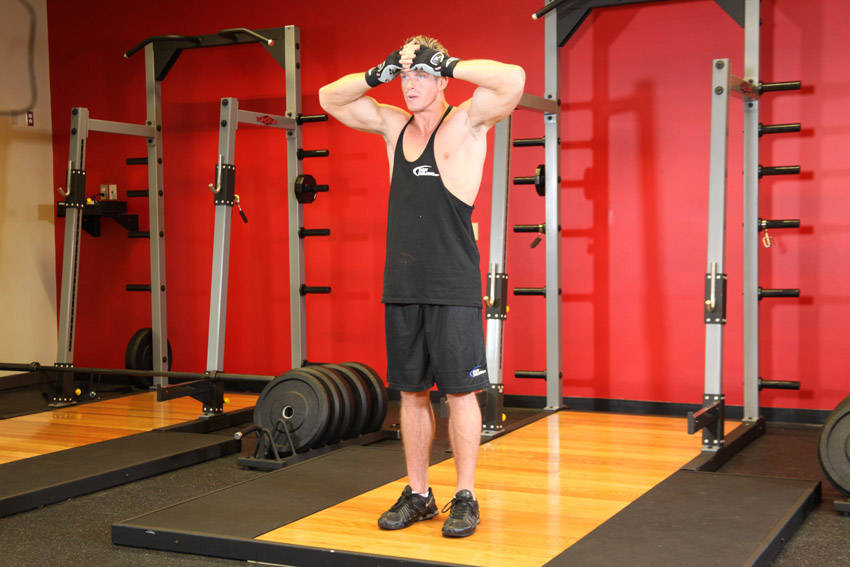
How to Do the Isometric Neck Exercise - Front And Back
The steps for the Isometric Neck Exercise - Front And Back itself, so you can judge how close each substitute below really is.
Neck · Bodyweight · Beginner · Isolation
- With your head and neck in a neutral position (normal position with head erect facing forward), place both of your hands on the front side of your head.
- Now gently push forward as you contract the neck muscles but resisting any movement of your head. Start with slow tension and increase slowly. Keep breathing normally as you execute this contraction.
- Hold for the recommended number of seconds.
- Now release the tension slowly.
- Rest for the recommended amount of time and repeat with your hands placed on the back side of your head.
The 10 Best Isometric Neck Exercise - Front And Back Alternatives
10 substitutes, ranked by how closely each one matches the Isometric Neck Exercise - Front And Back on movement pattern, muscles worked, equipment and body position. The higher the score, the less you change. Cards with a "How to perform it" link open to show the steps; every card title links to that exercise's own alternatives page.
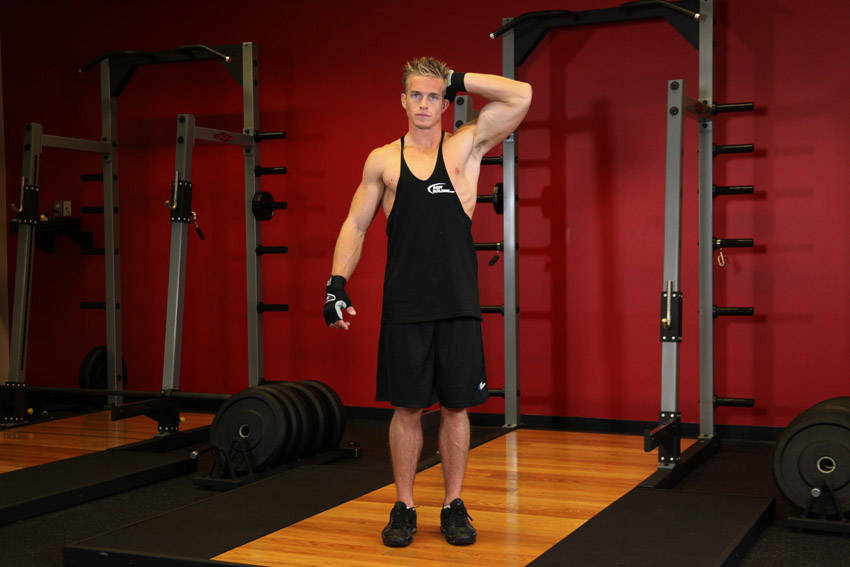
1. Isometric Neck Exercise - Sides
99% matchNeck · Beginner · Isolation
It uses the same equipment and still works the neck.
- Bodyweight
How to perform it
- With your head and neck in a neutral position (normal position with head erect facing forward), place your left hand on the left side of your head.
- Now gently push towards the left as you contract the left neck muscles but resisting any movement of your head. Start with slow tension and increase slowly. Keep breathing normally as you execute this contraction.
- Hold for the recommended number of seconds.
- Now release the tension slowly.
- Rest for the recommended amount of time and repeat with your right hand placed on the right side of your head.
Sets and reps: Hold for 20 to 30 seconds, 3 sets.
Why this matches
- Primary muscle: neck, the same as the Isometric Neck Exercise - Front And Back
- Equipment: bodyweight only, the same as the Isometric Neck Exercise - Front And Back
- Body position: seated, the same as the Isometric Neck Exercise - Front And Back
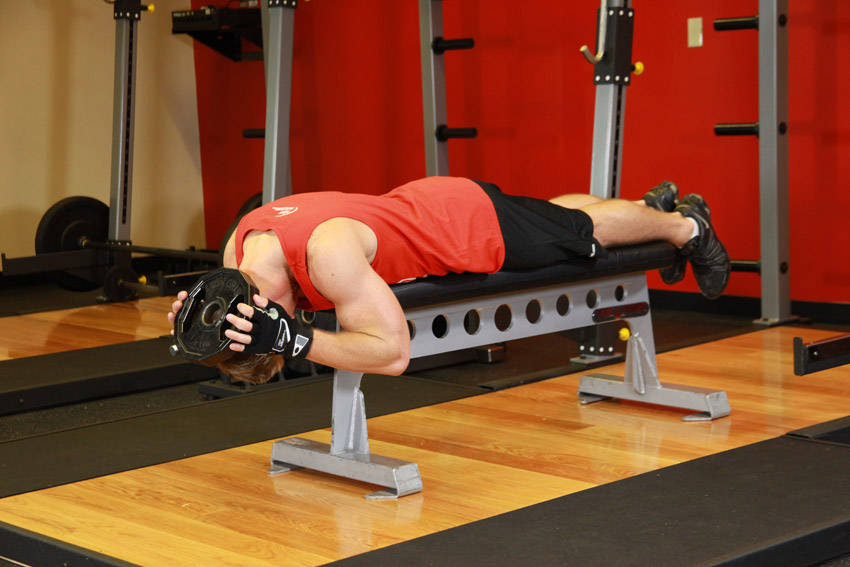
Neck · Beginner · Isolation
Pick this when you want a harder version that still works the neck.
- Other
How to perform it
- Lie face down with your whole body straight on a flat bench while holding a weight plate behind your head. Tip: You will need to position yourself so that your shoulders are slightly above the end of a flat bench in order for the upper chest, neck and face to be off the bench. This will be your starting position.
- While keeping the plate secure on the back of your head slowly lower your head (as in saying "yes") as you breathe in.
- Raise your head back up to the starting position in a semi-circular motion as you breathe out. Hold the contraction for a second.
- Repeat for the recommended amount of repetitions.
Sets and reps: Hold for 30 to 60 seconds and repeat 2 or 3 times.
Why this matches
- Primary muscle: neck, the same as the Isometric Neck Exercise - Front And Back
- Body position: lying face down, not seated
Neck · Beginner · Isolation
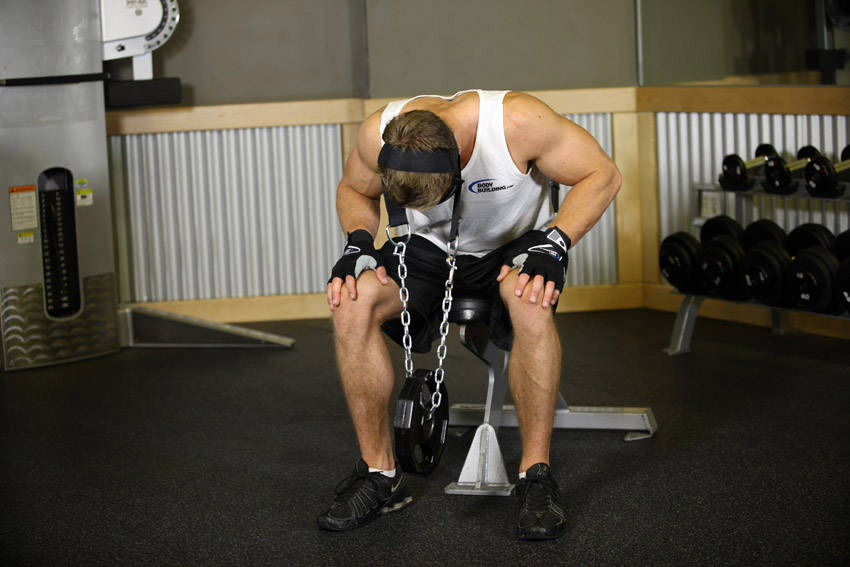
Neck · Intermediate · Isolation
It still works the neck, through a different movement.
- Other
How to perform it
- Place a neck strap on the floor at the end of a flat bench. Once you have selected the weights, sit at the end of the flat bench with your feet wider than shoulder width apart from each other. Your toes should be pointed out.
- Slowly move your torso forward until it is almost parallel with the floor. Using both hands, securely position the neck strap around your head. Tip: Make sure the weights are still lying on the floor to prevent any strain on the neck. Now grab the weight with both hands while elevating your torso back until it is almost perpendicular to the floor. Note: Your head and torso needs to be slightly tilted forward to perform this exercise.
- Now place both hands on top of your knees. This is the starting position.
- Slowly lower your neck down until your chin touches the upper part of your chest while breathing in.
- While exhaling, bring your neck back to the starting position.
- Repeat for the recommended amount of repetitions.
Sets and reps: 3 sets of 10 to 15 reps.
Why this matches
- Primary muscle: neck, the same as the Isometric Neck Exercise - Front And Back
- Body position: seated, the same as the Isometric Neck Exercise - Front And Back
- Balance: harder to stay steady on than the Isometric Neck Exercise - Front And Back
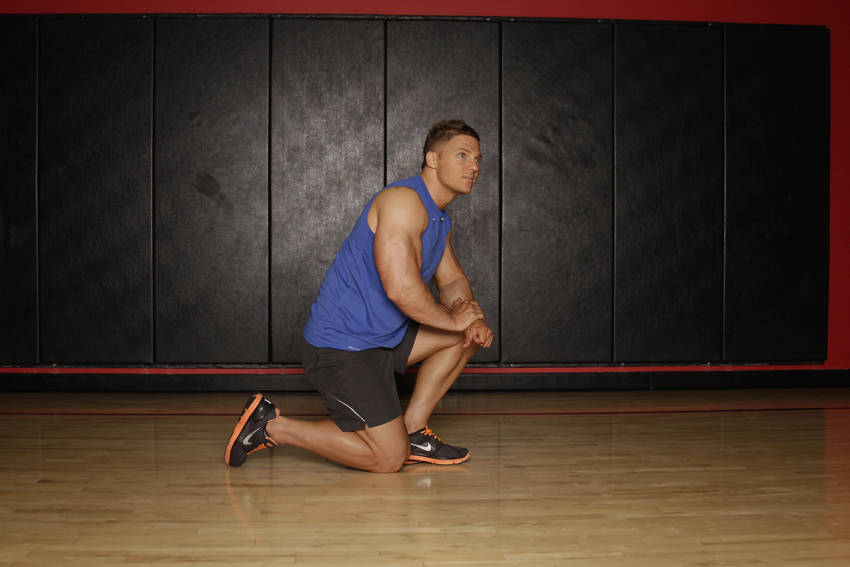
5. Plank
38% matchAbs · Beginner · Compound
A looser match: it uses the same equipment, but it works the abs rather than the neck.
- Bodyweight
How to perform it
- Get into a prone position on the floor, supporting your weight on your toes and your forearms. Your arms are bent and directly below the shoulder.
- Keep your body straight at all times, and hold this position as long as possible. To increase difficulty, an arm or leg can be raised.
Sets and reps: Hold for 20 to 30 seconds, 3 sets.
Why this matches
- Primary muscle: abs, not neck
- Equipment: bodyweight only, the same as the Isometric Neck Exercise - Front And Back
- Body position: lying face down, not seated
6. V-sit On Floor
37% matchAbs · Advanced · Compound
7. Potty Squat With Support
36% matchGlutes · Beginner · Compound
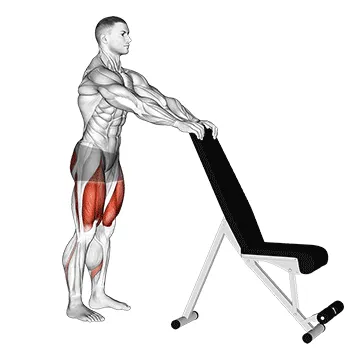
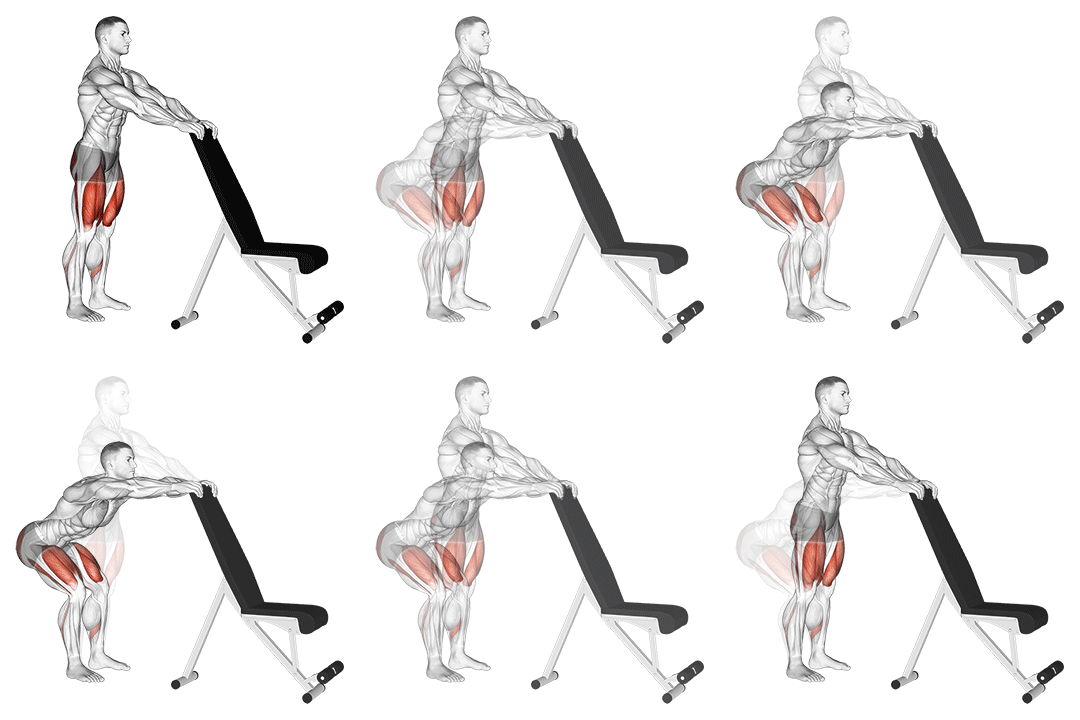
A looser match: it uses the same equipment, but it works the glutes rather than the neck.
- Bodyweight
How to perform it
- Stand with your feet shoulder-width apart, toes pointing slightly outward.
- Hold onto a stable support, such as a chair or wall, for balance.
- Lower your body down into a squat position by bending your knees and pushing your hips back.
- Keep your chest up and your back straight throughout the movement.
- Pause for a moment at the bottom, then push through your heels to return to the starting position.
- Repeat for the desired number of repetitions.
Sets and reps: 3 sets of 8 to 12 reps, and add reps before you add load.
Why this matches
- Primary muscle: glutes, not neck
- Equipment: bodyweight only, the same as the Isometric Neck Exercise - Front And Back
- Body position: standing, not seated
- Balance: harder to stay steady on than the Isometric Neck Exercise - Front And Back
8. Bodyweight Squat
35% matchQuads · Beginner · Compound
9. Hip Raise (Bent Knee)
35% matchAbs · Beginner · Compound
10. Freehand Jump Squat
35% matchQuads · Intermediate · Compound
Why You Might Need an Isometric Neck Exercise - Front And Back Alternative
You may need substitutes because of cervical pain, recent surgery, lack of a training partner for manual resistance, or a preference to avoid compressive loads. Isometrics can increase intradiscal pressure if alignment is poor, so select movements that distribute load across deep flexors (longus colli), superficial flexors (sternocleidomastoid), and extensors (splenius, semispinalis). Choose exercises that preserve a neutral cervical spine and emphasize motor control. For example, use a banded chin tuck and cue a soft gaze with a deliberate retraction rather than forceful downward chin motion to reduce anterior shear and selectively activate deep stabilizers.
How to Choose the Right Isometric Neck Exercise - Front And Back Substitute
Base your choice on pain status, training goal, and available equipment. For rehab and motor control pick low-load drills that target deep cervical flexors, perform wall or banded chin tucks for 3 sets of 8–12 holds, each hold 6–8 seconds. For strength or hypertrophy progress to resisted neck extensions (band or harness) and increase time under tension or load. Always maintain neutral thoracic and cervical alignment; cue "chest up, eyes forward" to avoid extension bias. If symptoms radiate or dizziness occurs, regress to unloaded control drills and consult a clinician.
Isometric Neck Exercise - Front And Back FAQ
What muscles does Isometric Neck Exercise - Front And Back work?
The exercise targets cervical flexors and extensors: deep flexors (longus colli, longus capitis), superficial flexors (sternocleidomastoid), and extensors (splenius capitis, semispinalis, upper trapezius). It trains local endurance and stabilization by producing sustained co-contraction that resists unwanted shear; maintain a neutral cervical spine when holding.
What is the best bodyweight alternative to Isometric Neck Exercise - Front And Back?
Use wall chin tucks for the front and prone head lifts for the back as a bodyweight pairing. For the chin tuck press the occiput to the wall, retract the chin and hold 6–10 seconds to activate longus colli; for the prone lift lie on a bench and raise the head 1–2 inches with slow control to engage posterior neck extensors.
Can I build muscle without doing Isometric Neck Exercise - Front And Back?
Yes. You can build cervical muscle with progressive overload using dynamic neck curls, band resistance, or a neck harness while increasing tension or time under tension. Emphasize controlled tempo, slow eccentrics (2–3 seconds) and deliberate concentric contractions, to maximize hypertrophy of cervical flexors and extensors.
Find Alternatives for Any Exercise
Search the exercise database and filter the ranked substitutes by the equipment you own.