

10 Best Lying Prone Quadriceps Alternatives for Home and Rehab
If you can't perform Lying Prone Quadriceps, use seated leg extensions, banded standing knee extensions, reverse Nordic curls, sissy squats, or Bulgarian split squats. These choices preserve quad isolation or add joint stability depending on need. Cue: keep the knee tracking over the second toe and contract the quads at full extension to maximize activation.
Original Exercise: Lying Prone Quadriceps
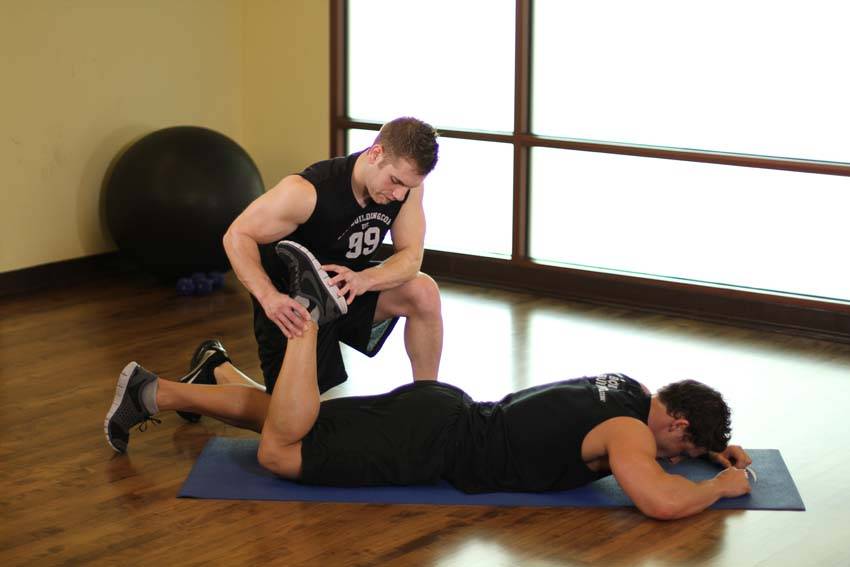
How to Perform Lying Prone Quadriceps
- Lay face down on the floor with your partner kneeling beside you. Flex one knee and raise that leg off the ground, attempting to touch your glutes with your foot. Your partner should hold the knee and ankle. This will be your starting position.
- Attempt to extend your knee while your partner prevents any actual movement.
- After 10-20 seconds, relax your muscles as your partner gently pushes the foot towards your glutes, further stretching the quadriceps and hip flexors.
- After 10-20 seconds, switch sides.
Pro Tips
- Category: Stretching
Best Lying Prone Quadriceps Alternatives
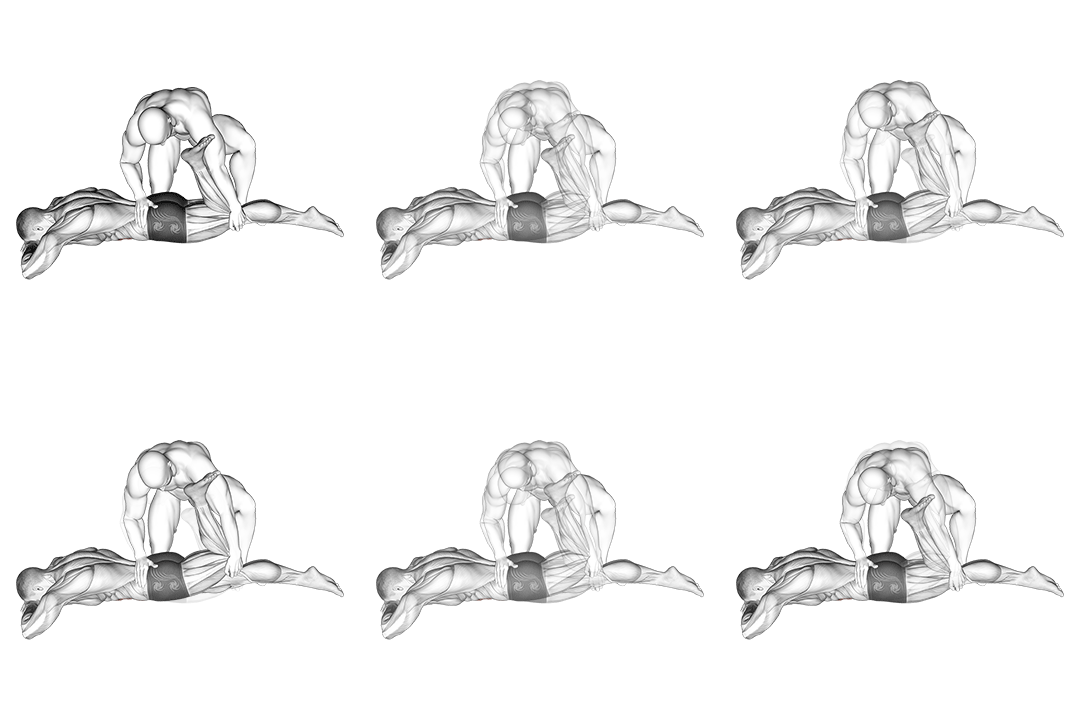
1. Assisted Prone Rectus Femoris Stretch
99.2% MatchHow to perform this exercise
- Lie face down on the ground with your legs straight.
- Bend your right knee and reach back with your right hand to grab your right foot or ankle.
- Gently pull your right foot or ankle towards your glutes, feeling a stretch in the front of your right thigh.
- Hold the stretch for 20-30 seconds.
- Release and repeat on the other side.
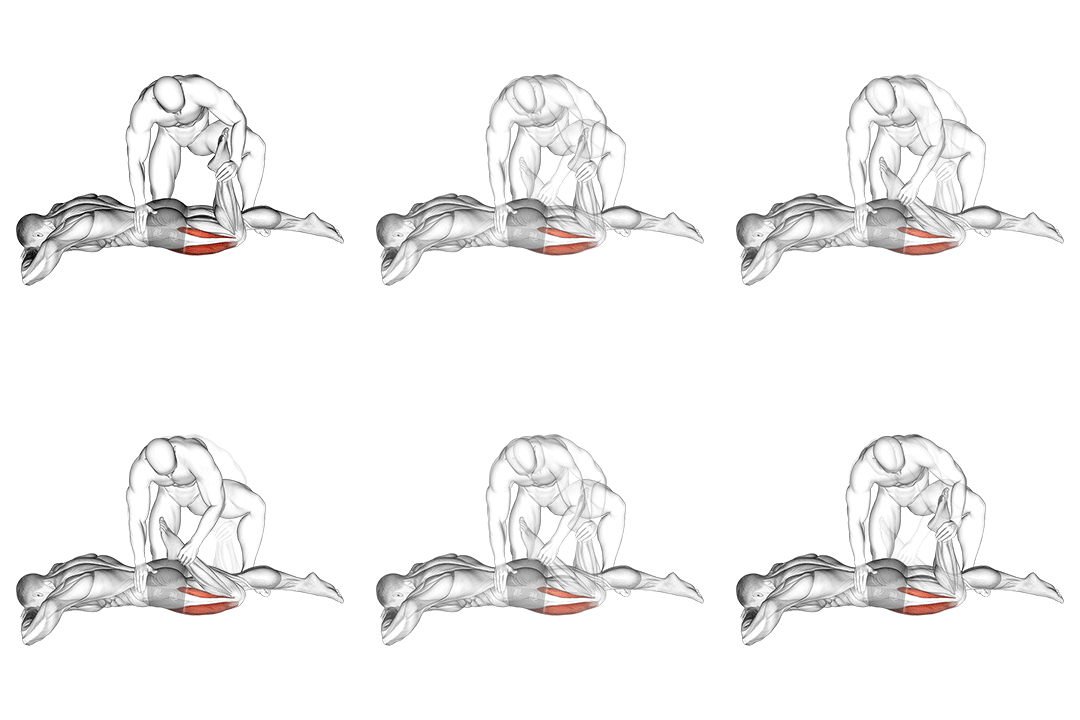
2. Assisted Prone Lying Quads Stretch
99.2% MatchHow to perform this exercise
- Lie face down on the ground with your legs extended.
- Bend your left knee and reach back with your left hand to grab your left foot or ankle.
- Gently pull your left foot towards your glutes, feeling a stretch in your left quad.
- Hold the stretch for 20-30 seconds, then release.
- Repeat with your right leg.
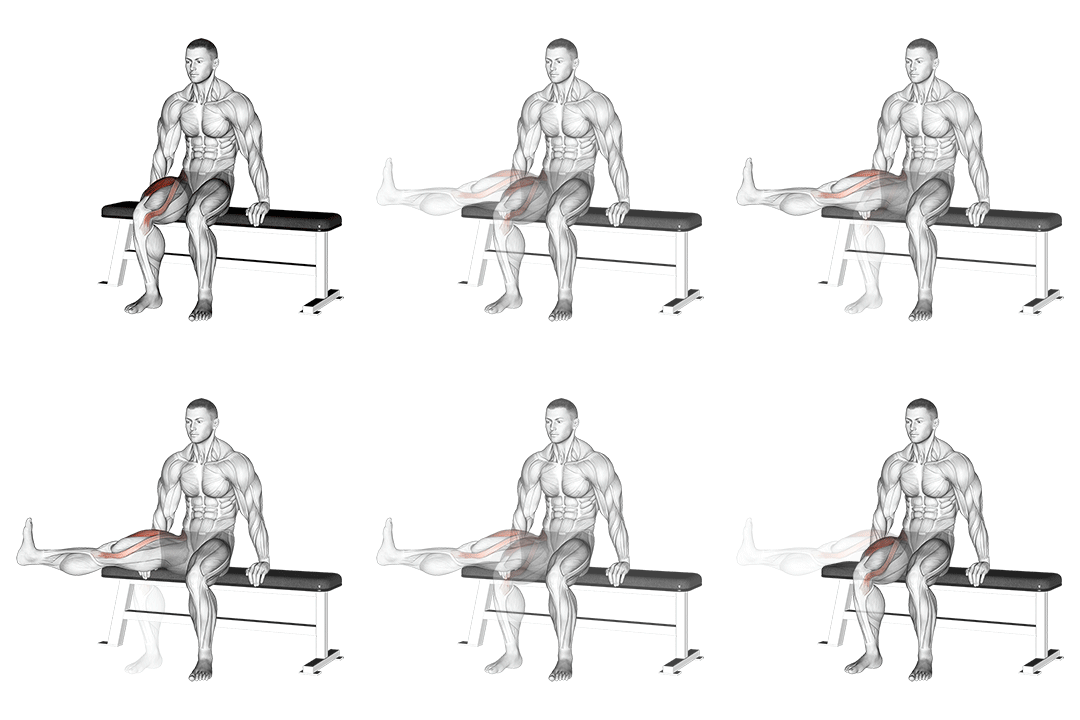
3. Chair Leg Extended Stretch
82.2% MatchHow to perform this exercise
- Sit on the edge of a chair with your back straight and feet flat on the ground.
- Extend one leg straight out in front of you, keeping your heel on the ground.
- Lean forward slightly, feeling a stretch in your quadriceps.
- Hold this position for 20-30 seconds.
- Switch legs and repeat the stretch.
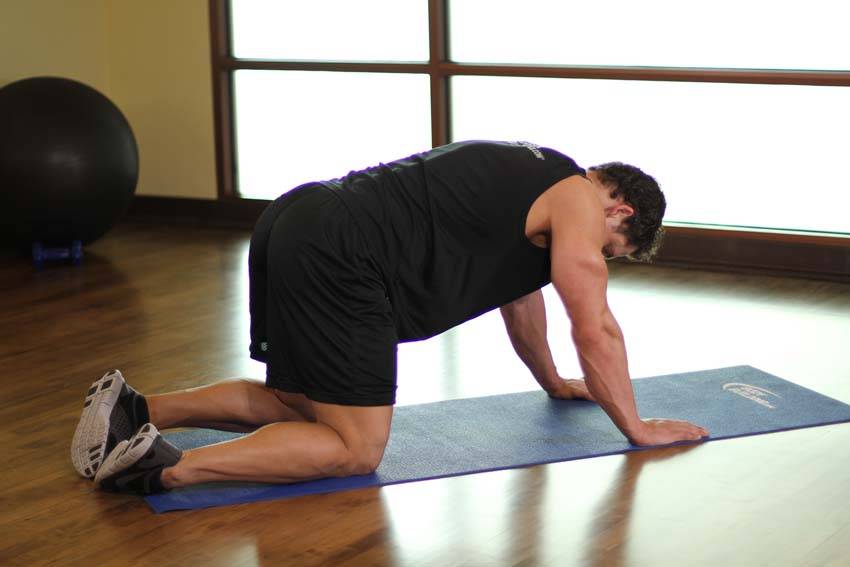
4. All Fours Quad Stretch
80.2% MatchHow to perform this exercise
- Start off on your hands and knees, then lift your leg off the floor and hold the foot with your hand.
- Use your hand to hold the foot or ankle, keeping the knee fully flexed, stretching the quadriceps and hip flexors.
- Focus on extending your hips, thrusting them towards the floor. Hold for 10-20 seconds and then switch sides.
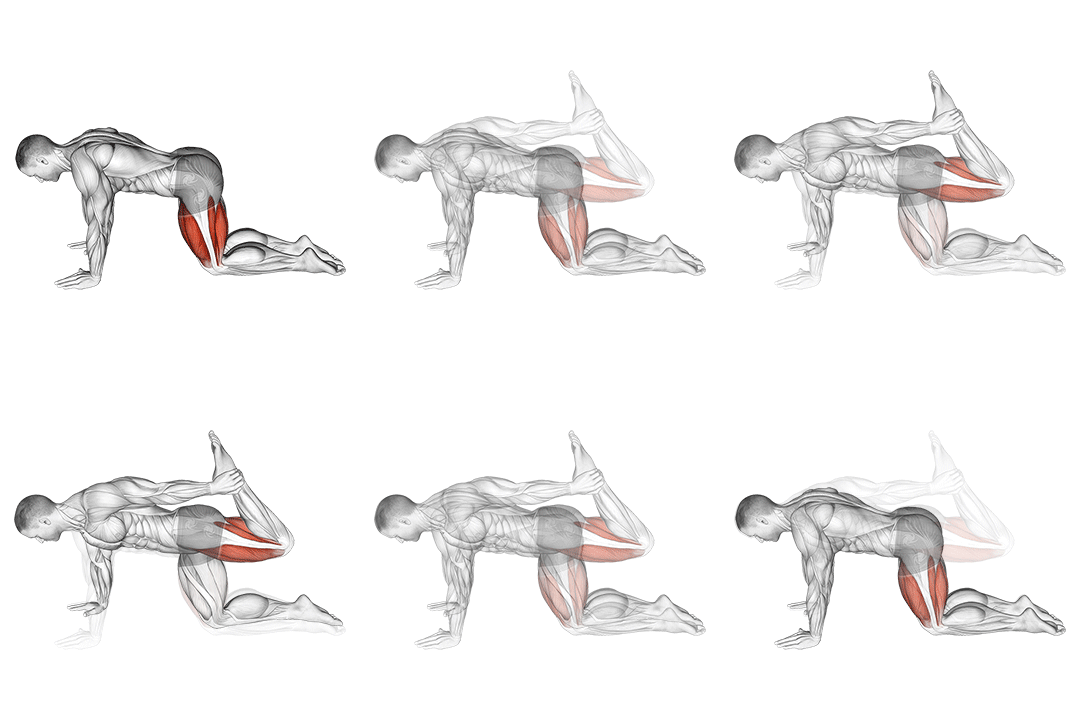
5. All Fours Squad Stretch
80.2% MatchHow to perform this exercise
- Start on all fours with your hands directly under your shoulders and your knees directly under your hips.
- Extend one leg straight back, keeping your knee bent and your foot flexed.
- Slowly lower your hips towards the ground, feeling a stretch in your quads.
- Hold this position for 20-30 seconds.
- Switch legs and repeat the stretch on the other side.
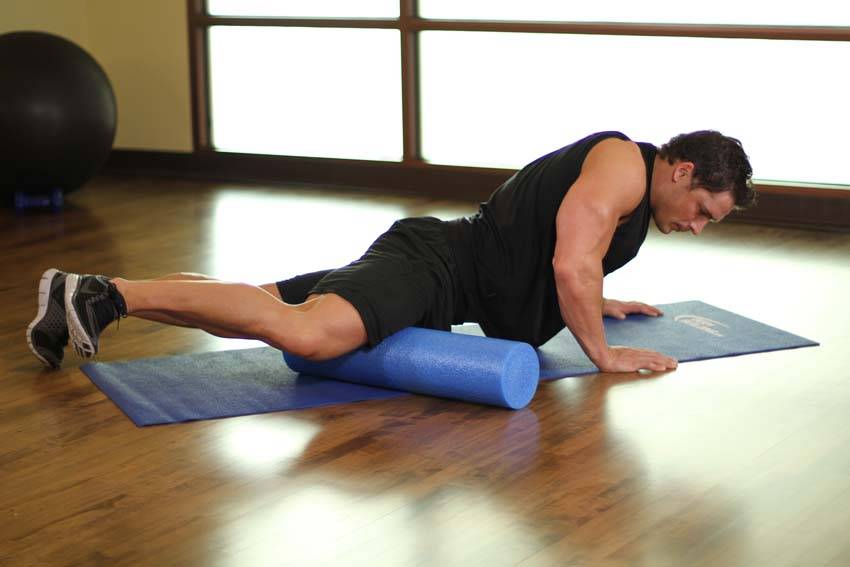
6. Adductor
75.2% MatchHow to perform this exercise
- Lie face down with one leg on a foam roll.
- Rotate the leg so that the foam roll contacts against your inner thigh. Shift as much weight onto the foam roll as can be tolerated.
- While trying to relax the muscles if the inner thigh, roll over the foam between your hip and knee, holding points of tension for 10-30 seconds. Repeat with the other leg.
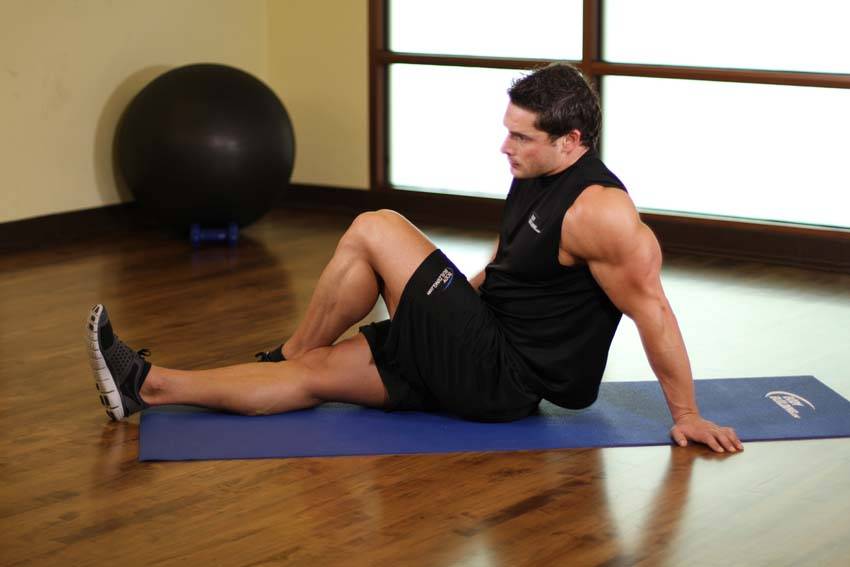
7. Dancer's Stretch
72.2% MatchHow to perform this exercise
- Sit up on the floor.
- Cross your right leg over your left, keeping the knee bent. Your left leg is straight and down on the floor.
- Place your left arm on your right leg and your right hand on the floor.
- Rotate your upper body to the right, and hold for 10-20 seconds. Switch sides.
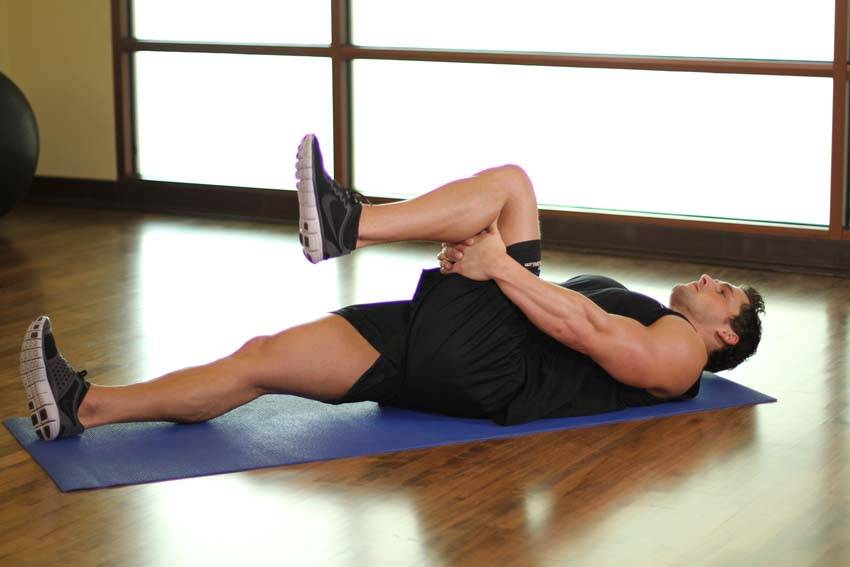
8. 90/90 Hamstring
71.7% MatchHow to perform this exercise
- Lie on your back, with one leg extended straight out.
- With the other leg, bend the hip and knee to 90 degrees. You may brace your leg with your hands if necessary. This will be your starting position.
- Extend your leg straight into the air, pausing briefly at the top. Return the leg to the starting position.
- Repeat for 10-20 repetitions, and then switch to the other leg.
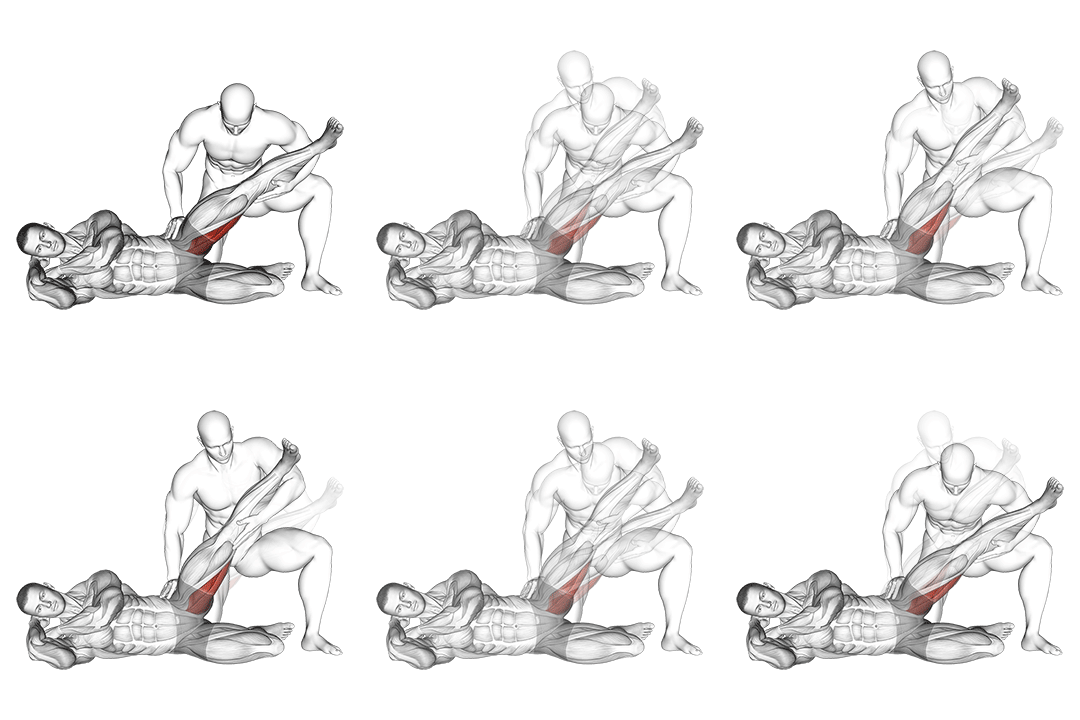
9. Assisted Side Lying Adductor Stretch
71.2% MatchHow to perform this exercise
- Lie on your side with your legs straight and stacked on top of each other.
- Bend your bottom leg slightly for stability.
- Place your top foot on a stable surface, such as a bench or step.
- Keeping your top leg straight, slowly lower it towards the ground, feeling a stretch in your inner thigh.
- Hold the stretch for 20-30 seconds.
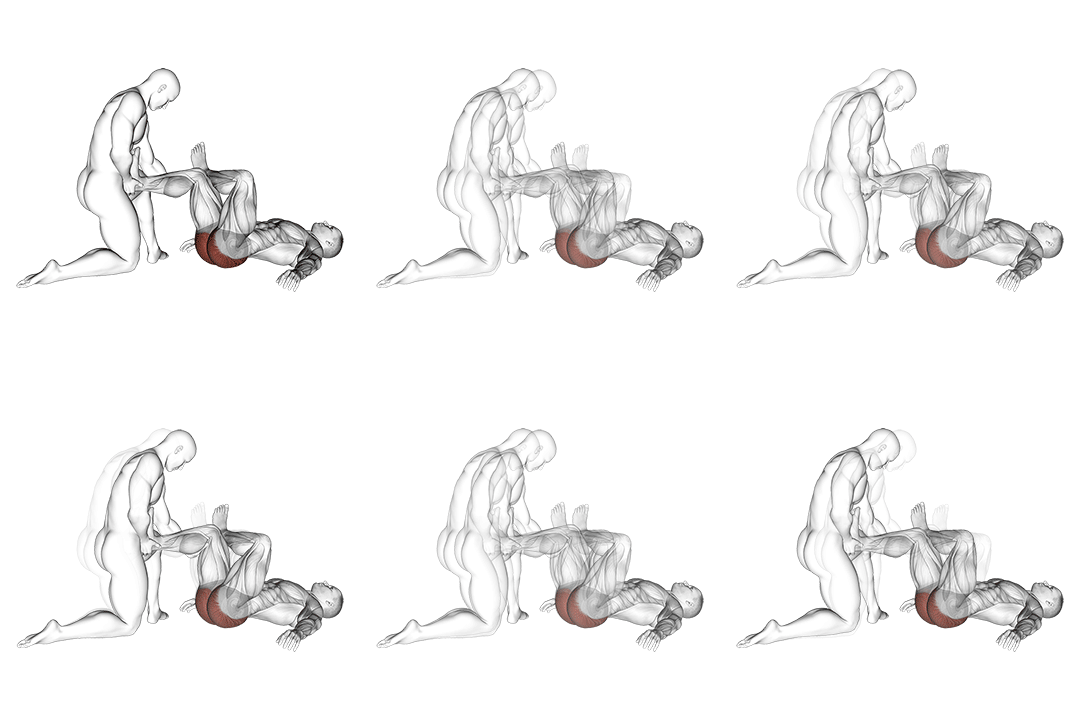
10. Assisted Lying Gluteus And Piriformis Stretch
71.2% MatchHow to perform this exercise
- Lie on your back with your legs extended.
- Bend your right knee and place your right ankle on your left thigh, just above the knee.
- Grasp your left thigh with both hands and gently pull it towards your chest.
- Hold the stretch for 20-30 seconds.
- Release the stretch and repeat on the other side.
Why You Might Need a Lying Prone Quadriceps Alternative
You might substitute Lying Prone Quadriceps for knee pain, limited equipment, or to target quad heads differently. The prone position shortens the rectus femoris if the hip is extended, which changes force production and can irritate anterior knee structures. Closed-chain options like Bulgarian split squats reduce anterior tibial shear and improve joint stability, while open-chain seated leg extensions let you isolate the vasti. For rehab, choose lower load, slow tempo options and emphasize pain-free range of motion. Cue: avoid locking the knee at full extension and stop if you feel sharp anterior knee pain.
How to Choose the Right Substitute
Decide based on equipment, desired muscle emphasis, and joint tolerance. If you want pure isolation of the vasti, pick a seated leg-extension machine or banded standing knee extension and focus on a controlled eccentric phase. If you need functional strength and stability, choose Bulgarian split squats or single-leg Sissy squats to increase co-contraction of quads and hip stabilizers. Consider hip position: exercises with the hip flexed (seated extensions) bias the rectus femoris less than prone variations. Cue: keep pelvic neutral, brace your core, and ensure the knee tracks over the toe to load the quads safely.
Frequently Asked Questions
What muscles does Lying Prone Quadriceps work?
Lying Prone Quadriceps primarily targets the quadriceps group — rectus femoris, vastus lateralis, vastus medialis, and vastus intermedius. Hip position alters activation: with the hip extended the rectus femoris shortens and contributes less force, shifting load to the vasti.
What is the best bodyweight alternative to Lying Prone Quadriceps?
The reverse Nordic curl is the best pure bodyweight alternative for quad isolation; kneel and lean back from the knees while keeping hips extended and control the eccentric. Cue: pull your ribs down to maintain a neutral pelvis and feel a strong quad contraction as you return upright.
Can I build muscle without doing Lying Prone Quadriceps?
Yes. You can hypertrophy quads with other high-tension movements like seated leg extensions, sissy squats, and heavy single-leg split squats. Focus on progressive overload, full range of motion, and deliberate eccentric control to maximize quad stimulus.
More Exercise Alternatives
Find Alternatives for Any Exercise
Use our free tool to discover the best substitute exercises based on your available equipment and goals.
Try the Exercise Substitution Finder →