

10 Best Medicine Ball Chest Pass Alternatives for Home or Gym
Use pressing and explosive pushing drills to replace the medicine ball chest pass and still target the pecs. Effective alternatives include barbell or dumbbell bench press, cable chest press, resistance-band chest presses, and plyometric push-ups. Cue: brace your core, drive with horizontal adduction, and finish with full elbow extension to maximize pectoral recruitment.
Original Exercise: Medicine Ball Chest Pass
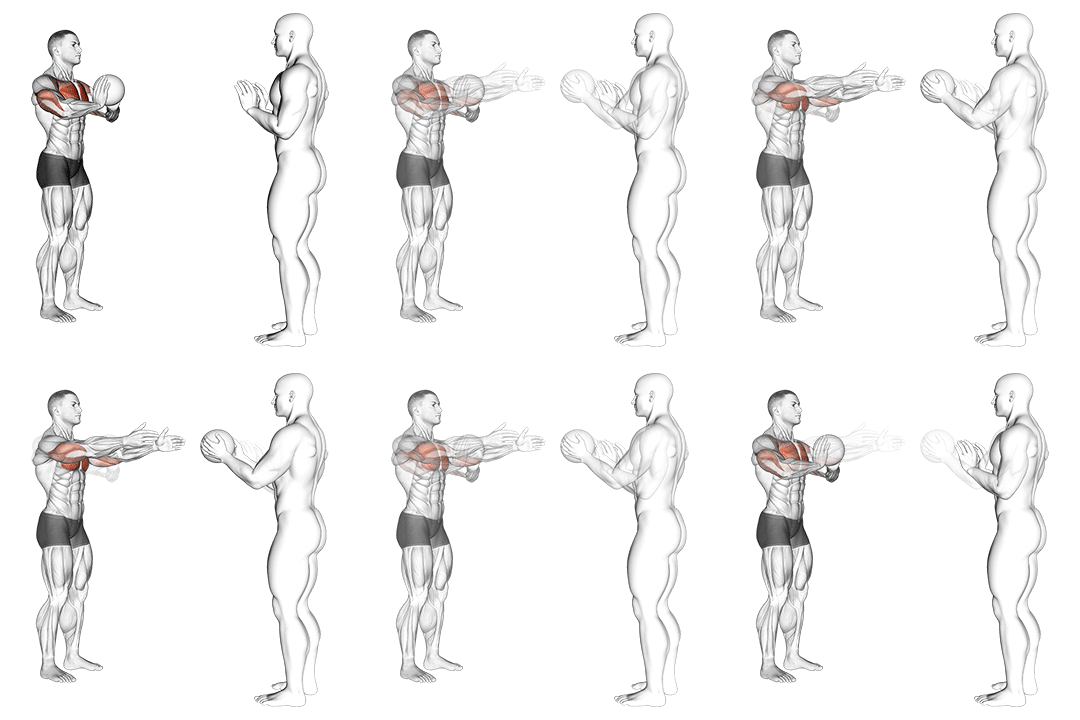
How to Perform Medicine Ball Chest Pass
- Stand with your feet shoulder-width apart, holding the medicine ball at chest level.
- Extend your arms forward, pushing the medicine ball away from your chest with force.
- As you release the ball, follow through with your arms and torso, transferring your weight from your back foot to your front foot.
- Catch the ball as it rebounds off the wall or partner, and immediately repeat the movement.
- Continue for the desired number of repetitions.
Best Medicine Ball Chest Pass Alternatives
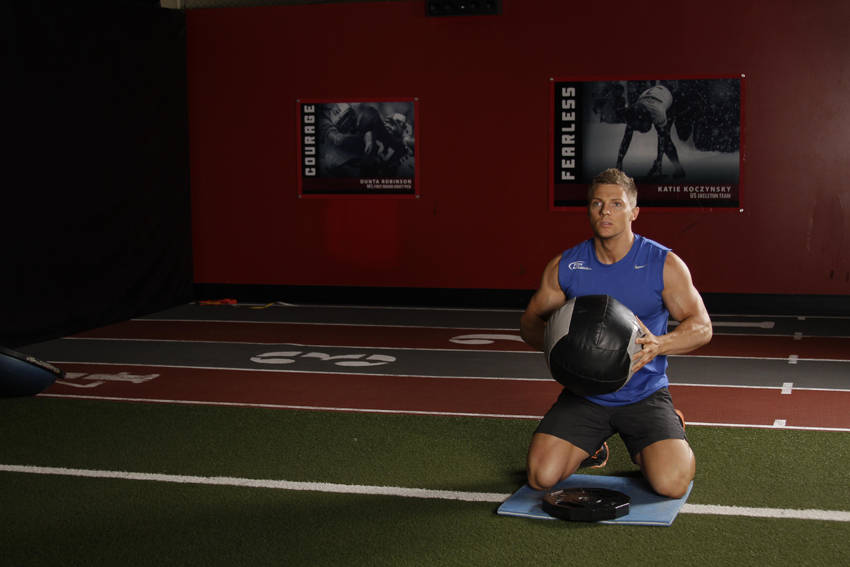
1. Chest Push (single Response)
93.6% MatchHow to perform this exercise
- Begin in a kneeling position holding the medicine ball with both hands tightly into the chest.
- Execute the pass by exploding forward and outward with the hips while pushing the ball as far as possible.
- Follow through by falling forward, catching yourself with your hands.
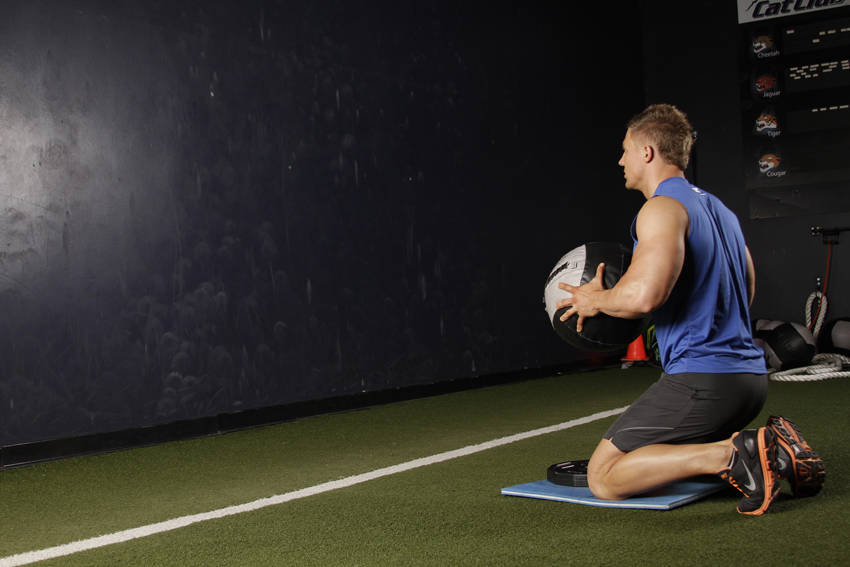
2. Chest Push (multiple Response)
92.9% MatchHow to perform this exercise
- Begin in a kneeling position facing a wall or utilize a partner. Hold the ball with both hands tight into the chest.
- Execute the pass by exploding forward and outward with the hips while pushing the ball as hard as possible.
- Follow through by falling forward, catching yourself with your hands.
- Immediately return to an upright position. Repeat for the desired number of repetitions.
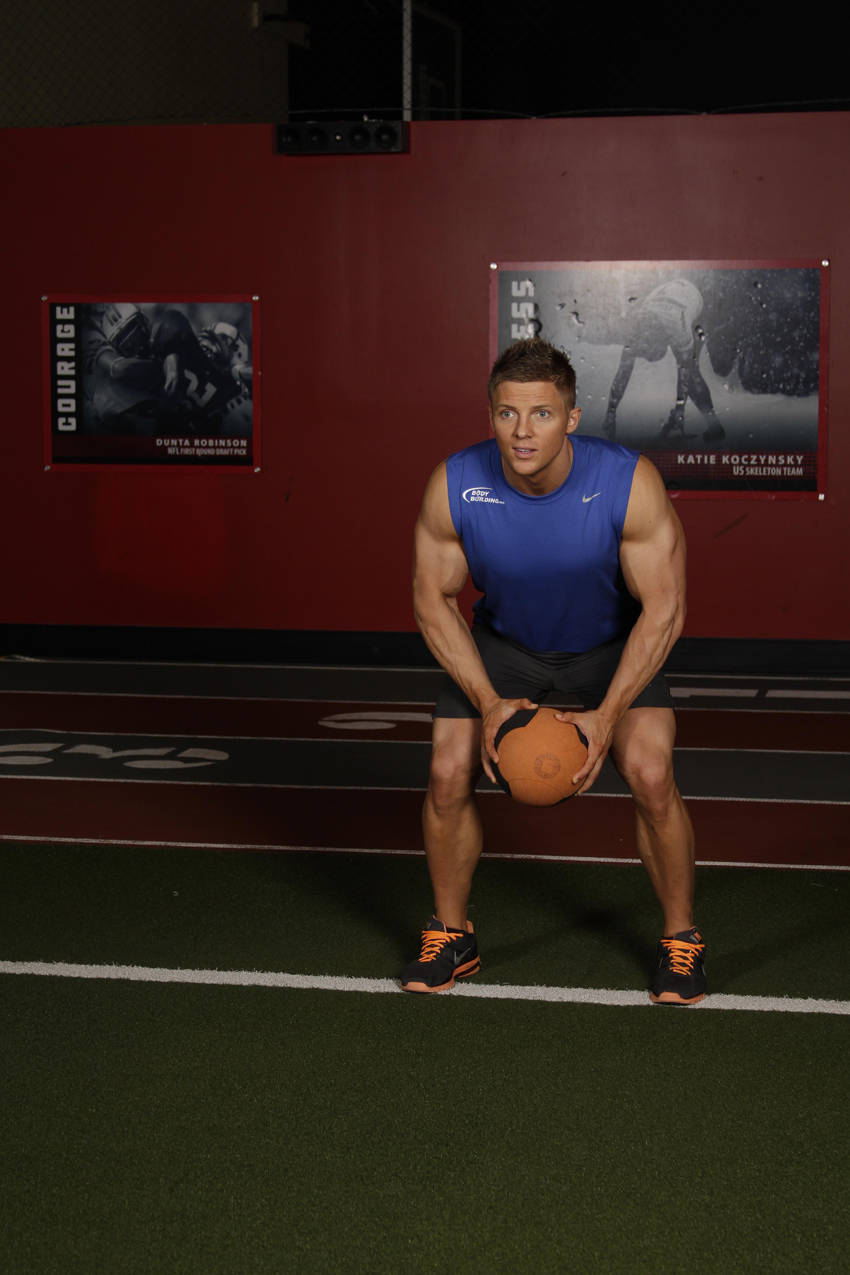
3. Chest Push With Run Release
91.6% MatchHow to perform this exercise
- Begin in an athletic stance with the knees bent, hips back, and back flat. Hold the medicine ball near your legs. This will be your starting position.
- While taking your first step draw the medicine ball into your chest.
- As you take the second step, explosively push the ball forward, immediately sprinting for 10 yards after the release. If you are really fast, you can catch your own pass!
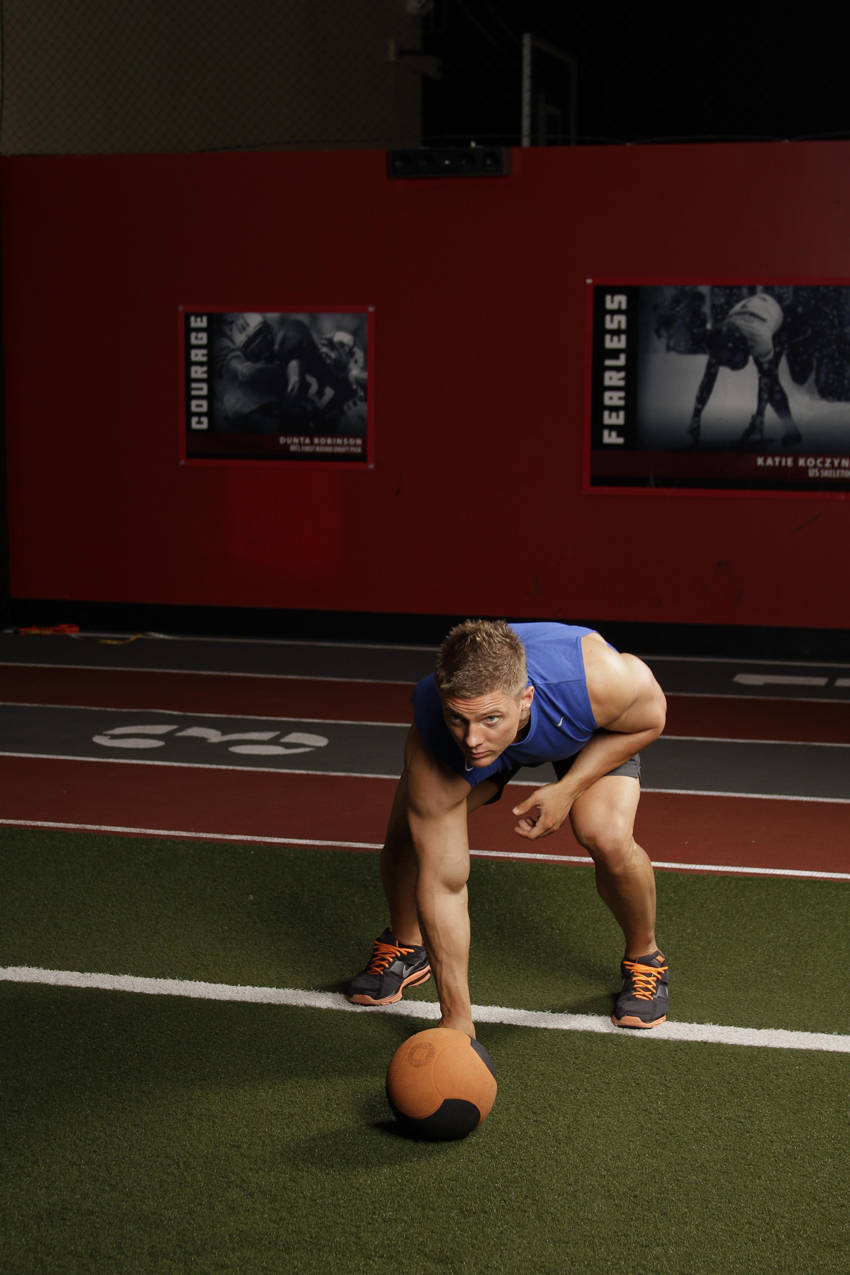
4. Chest Push From 3 Point Stance
85.6% MatchHow to perform this exercise
- Begin in a three point stance, squatted down with your back flat and one hand on the ground. Place the medicine ball directly in front of you.
- To begin, take your first step as you pull the ball to your chest, positioning both hands to prepare for the throw.
- As you execute the second step, explosively release the ball forward as hard as possible.
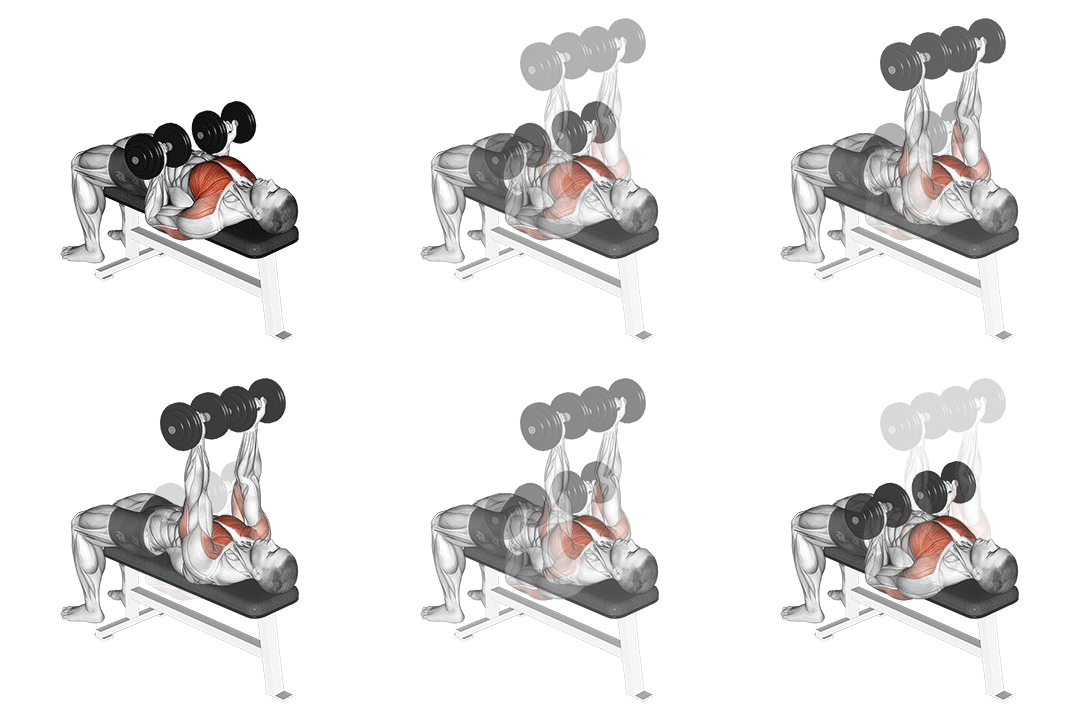
5. Dumbbell Reverse Bench Press
84.7% MatchHow to perform this exercise
- Lie flat on a bench with your feet flat on the ground and your knees bent.
- Hold a dumbbell in each hand with an overhand grip, palms facing towards your feet.
- Extend your arms straight up towards the ceiling, keeping a slight bend in your elbows.
- Slowly lower the dumbbells towards your chest, allowing your elbows to flare out to the sides.
- Pause for a moment at the bottom, then push the dumbbells back up to the starting position.
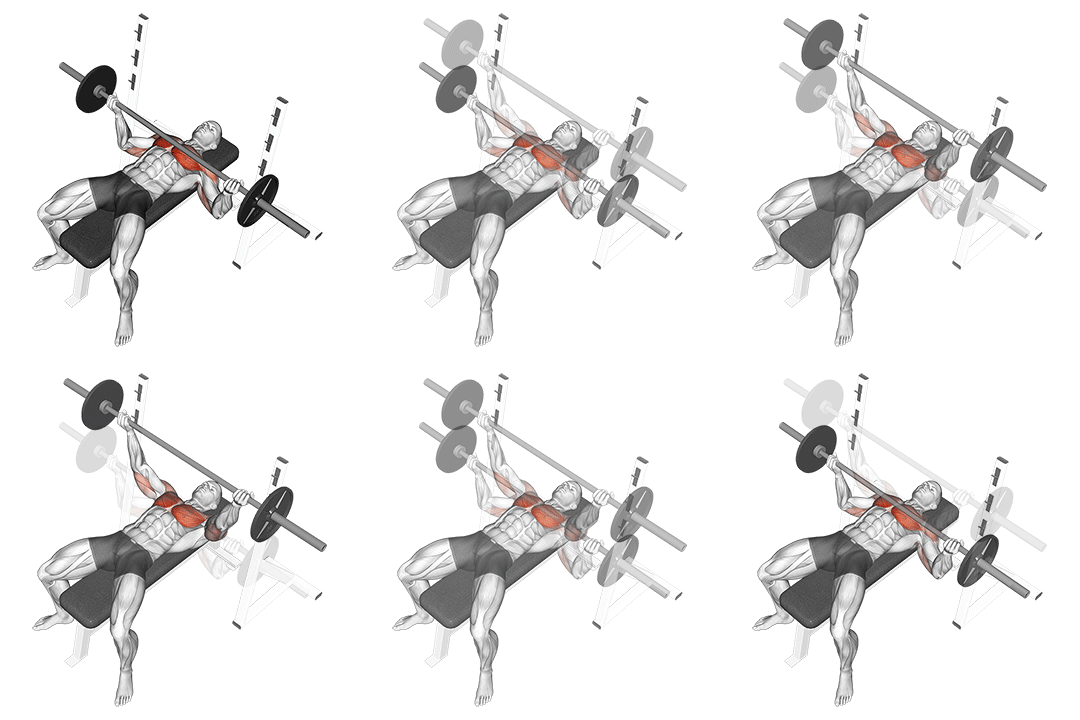
6. Barbell Wide Reverse Grip Bench Press
84.1% MatchHow to perform this exercise
- Lie flat on a bench with your feet flat on the ground and your back pressed against the bench.
- Grasp the barbell with a wide reverse grip, slightly wider than shoulder-width apart.
- Lift the barbell off the rack and hold it directly above your chest with your arms fully extended.
- Lower the barbell slowly towards your chest, keeping your elbows tucked in and your wrists straight.
- Pause for a moment when the barbell touches your chest, then push it back up to the starting position.
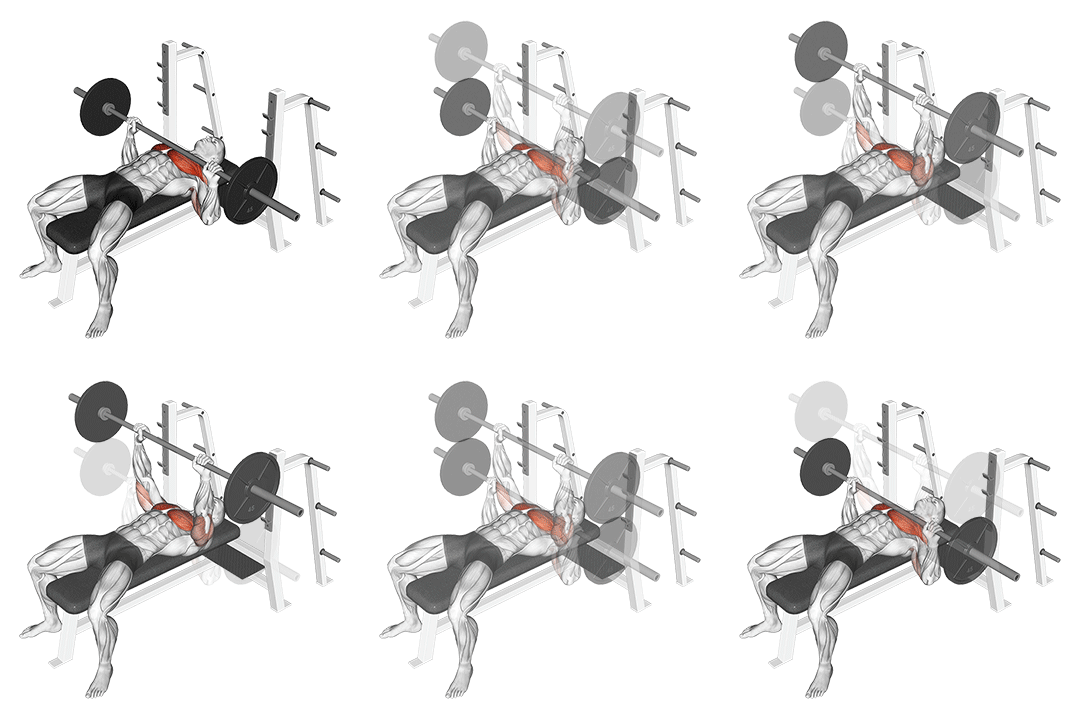
7. Barbell Bench Press
83.4% MatchHow to perform this exercise
- Lie flat on a bench with your feet flat on the ground and your back pressed against the bench.
- Grasp the barbell with an overhand grip slightly wider than shoulder-width apart.
- Lift the barbell off the rack and hold it directly above your chest with your arms fully extended.
- Lower the barbell slowly towards your chest, keeping your elbows tucked in.
- Pause for a moment when the barbell touches your chest.
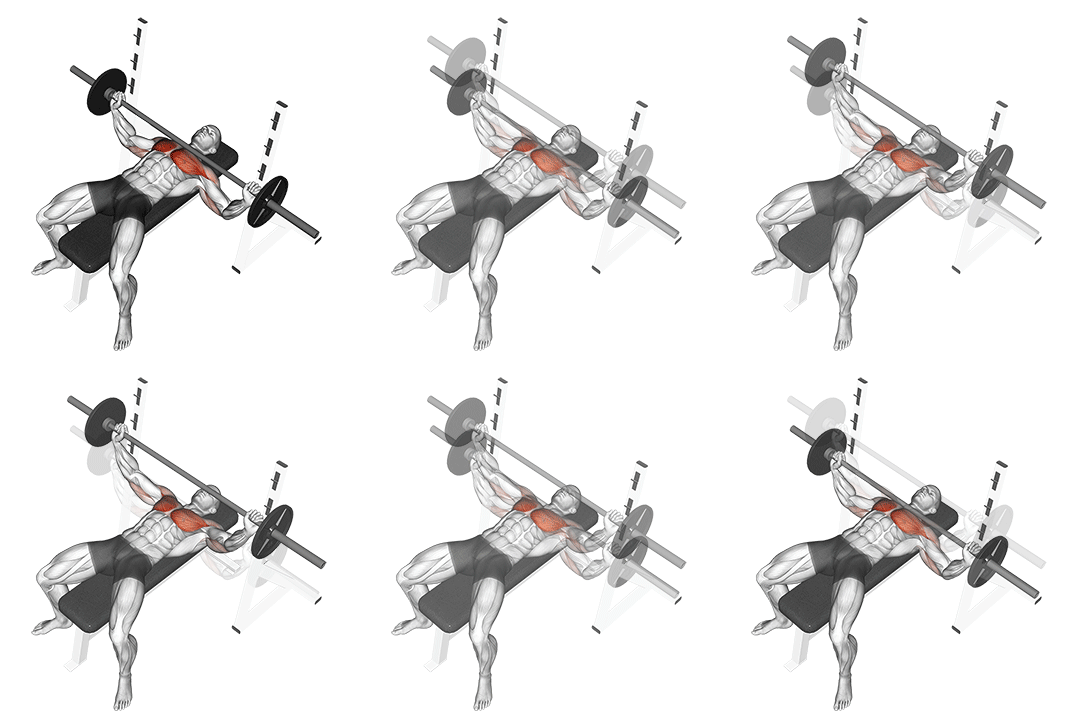
8. Barbell Wide Bench Press
83.4% MatchHow to perform this exercise
- Lie flat on a bench with your feet flat on the ground and your back pressed against the bench.
- Grasp the barbell with a wide grip, slightly wider than shoulder-width apart.
- Lift the barbell off the rack and hold it directly above your chest with your arms fully extended.
- Lower the barbell slowly towards your chest, keeping your elbows slightly flared out.
- Pause for a moment when the barbell touches your chest, then push it back up to the starting position.
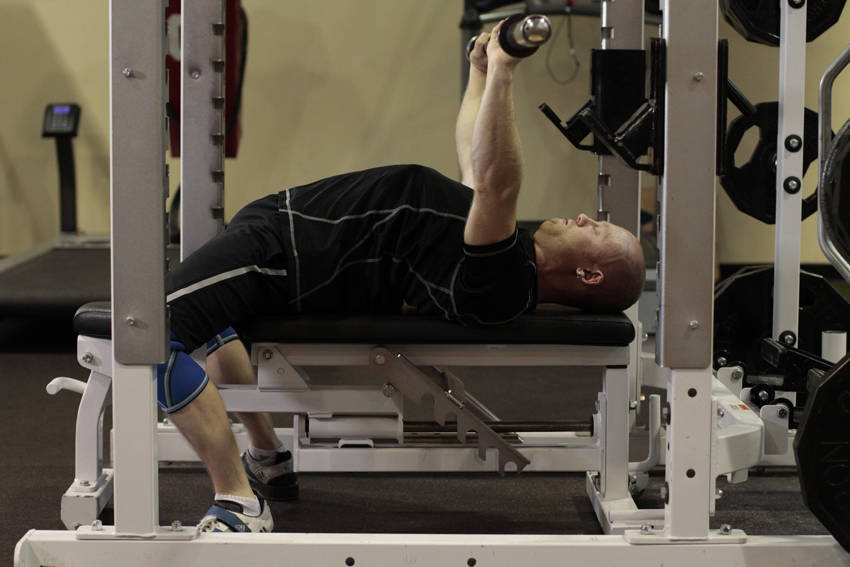
9. Bench Press - Powerlifting
83.4% MatchHow to perform this exercise
- Begin by lying on the bench, getting your head beyond the bar if possible. Tuck your feet underneath you and arch your back. Using the bar to help support your weight, lift your shoulder off the bench and retract them, squeezing the shoulder blades together. Use your feet to drive your traps into the bench. Maintain this tight body position throughout the movement.
- However wide your grip, it should cover the ring on the bar. Pull the bar out of the rack without protracting your shoulders. Focus on squeezing the bar and trying to pull it apart.
- Lower the bar to your lower chest or upper stomach. The bar, wrist, and elbow should stay in line at all times.
- Pause when the barbell touches your torso, and then drive the bar up with as much force as possible. The elbows should be tucked in until lockout.
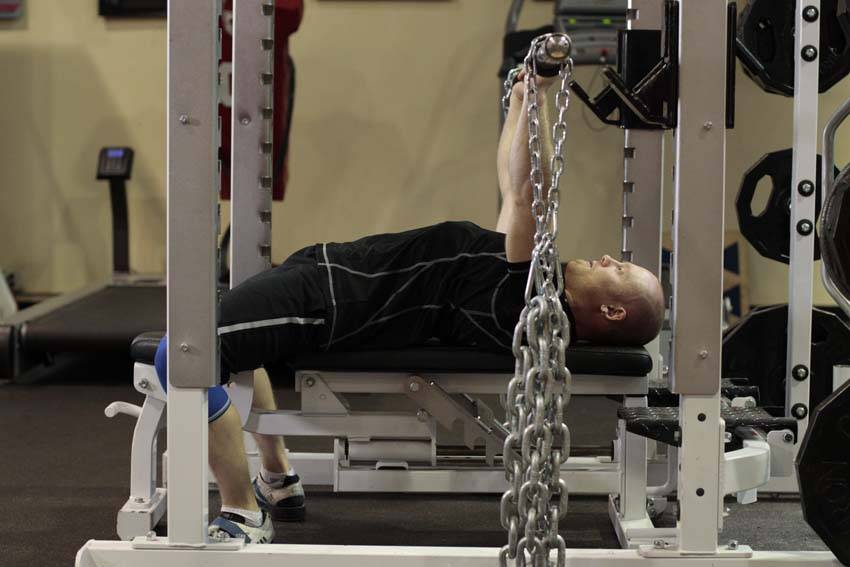
10. Bench Press With Chains
83.1% MatchHow to perform this exercise
- Adjust the leader chain, shortening it to the desired length.Place the chains on the sleeves of the bar.
- Lying on the bench, get your head beyond the bar if possible. Tuck your feet underneath you and arch your back. Using the bar to help support your weight, lift your shoulder off the bench and retract them, squeezing the shoulder blades together. Use your feet to drive your traps into the bench. Maintain this tight body position throughout the movement. However wide your grip, it should cover the ring on the bar.
- Pull the bar out of the rack without protracting your shoulders. Focus on squeezing the bar and trying to pull it apart. Lower the bar to your lower chest or upper stomach. The bar, wrist, and elbow should stay in line at all times.
- Pause when the barbell touches your torso, and then drive the bar up with as much force as possible. The elbows should be tucked in until lockout.
Why You Might Need a Medicine Ball Chest Pass Alternative
You might substitute the medicine ball chest pass for several reasons: shoulder pain or recent rotator cuff issues make ballistic horizontal pushes risky; you may lack a safe throw space or the right ball; or your goal may favor strength or hypertrophy over reactive power. Alternatives let you control load, tempo, and range of motion while still stressing the pectoralis major and supporting deltoids. For example, cables and bands maintain continuous tension through horizontal adduction and reduce impulse stress on the glenohumeral joint. Cue: stabilize the scapula on setup and emphasize concentric horizontal adduction to keep pectoral recruitment high while limiting unwanted shoulder shear.
How to Choose the Right Substitute
Match the substitute to your goal, available equipment, and shoulder health. For power and RFD pick explosive press variations or plyometrics (explosive push-ups, weighted throws) and focus on fast concentric drive; for strength or hypertrophy choose bench or dumbbell presses with controlled eccentrics and progressive overload. If you have shoulder issues, opt for cables or bands that allow a neutral arm path and reduce peak shear. Consider unilateral presses to correct imbalances and lower spinal loading. Technique cue: set a stable ribcage, retract the scapula slightly at setup, then drive through the chest with elbows tracking near the sternum to maximize pectoral activation.
Frequently Asked Questions
What muscles does Medicine Ball Chest Pass work?
The primary mover is the pectoralis major, with assistance from the anterior deltoids and triceps during elbow extension. The serratus anterior and core stabilize the scapula and torso during the concentric throw when you protract the shoulder blades to transfer force.
What is the best bodyweight alternative to Medicine Ball Chest Pass?
An explosive plyometric push-up is the top bodyweight substitute; push fast enough for your hands to leave the floor to develop rate of force. Cue: drive through horizontal adduction, squeeze the chest at full extension, and land softly while maintaining scapular control to preserve pectoral activation.
Can I build muscle without doing Medicine Ball Chest Pass?
Yes. You can stimulate hypertrophy with controlled barbell or dumbbell presses, cable chest presses, or band work using progressive overload and sufficient volume. Emphasize full range of motion, a controlled eccentric, and a strong concentric chest squeeze to maximize pectoral recruitment.
More Exercise Alternatives
Find Alternatives for Any Exercise
Use our free tool to discover the best substitute exercises based on your available equipment and goals.
Try the Exercise Substitution Finder →