

10 Best One-arm Overhead Kettlebell Squats Alternatives for Strength & Stability
One-arm Overhead Kettlebell Squats are done standing with a kettlebell. Ranked closest by our scoring: the Split Squat With Dumbbells, Zercher Squats and Jefferson Squats.
Updated Ranked by our 12-factor similarity model How it works
Original Exercise: One-arm Overhead Kettlebell Squats
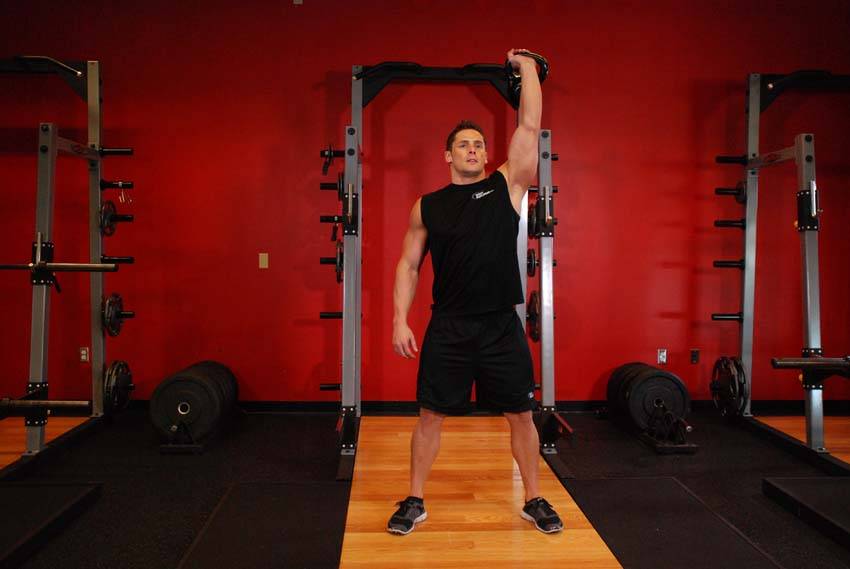
- Primary muscle
- Quadriceps
- Equipment
- Kettlebell
- Difficulty
- Advanced
- Type
- Compound
Secondary muscles: Calves, Glutes, Hamstrings, Shoulders
How to perform One-arm Overhead Kettlebell Squats
- Clean and press a kettlebell with one arm. Clean the kettlebell to your shoulder by extending through the legs and hips as you pull the kettlebell towards your shoulder. Rotate your wrist as you do so. Press the weight overhead by extending through the elbow.This will be your starting position.
- Looking straight ahead and keeping a kettlebell locked out above you, flex the knees and hips and lower your torso between your legs, keeping your head and chest up.
- Pause at the bottom position for a second before rising back to the top, driving through the heels of your feet.
Ranked One-arm Overhead Kettlebell Squats Alternatives
10 substitutes, ranked by how closely each one matches One-arm Overhead Kettlebell Squats on movement pattern, muscles worked, equipment and body position. The higher the score, the less you change. Open "How to perform this exercise" on a card for the steps; every card title links to that exercise's own alternatives page.
Best match 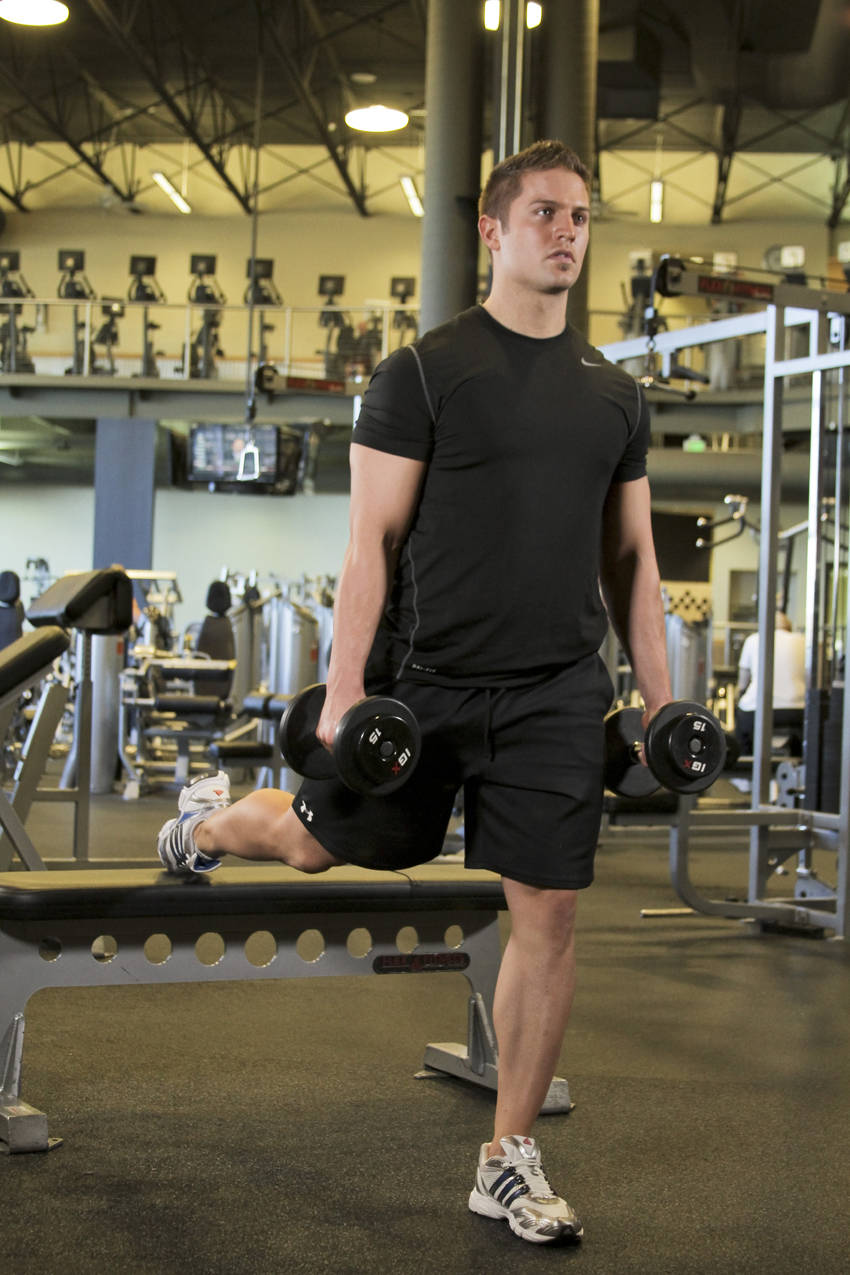
1. Split Squat With Dumbbells
88% match- Quadriceps
- Dumbbell
- Intermediate
- Compound
A good swap when you have dumbbells to work with, and it still works the quadriceps.
How to perform this exercise
- Position yourself into a staggered stance with the rear foot elevated and front foot forward.
- Hold a dumbbell in each hand, letting them hang at the sides. This will be your starting position.
- Begin by descending, flexing your knee and hip to lower your body down. Maintain good posture througout the movement. Keep the front knee in line with the foot as you perform the exercise.
- At the bottom of the movement, drive through the heel to extend the knee and hip to return to the starting position.
Sets and reps: 3 or 4 sets of 6 to 10 reps on each side.
Why this matches
- Primary muscle: quadriceps, the same as One-arm Overhead Kettlebell Squats
- Equipment: free weights, the same as One-arm Overhead Kettlebell Squats
- Body position: standing, the same as One-arm Overhead Kettlebell Squats
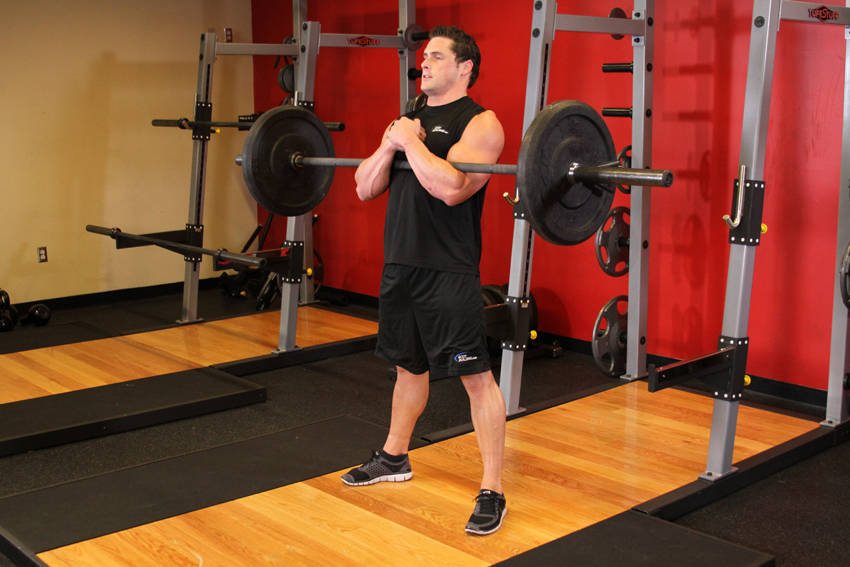
2. Zercher Squats
81% match- Quadriceps
- Barbell
- Advanced
- Compound
A good swap when you have a barbell to work with, and it still works the quadriceps.
How to perform this exercise
- This exercise is best performed inside a squat rack for safety purposes. To begin, first set the bar on a rack that best matches your height. The correct height should be anywhere above the waist but below the chest. Once the correct height is chosen and the bar is loaded, lock your hands together and place the bar on top of your arms in between the forearm and upper arm.
- Lift the bar up so that it is resting on top of your forearms. If you are holding the bar properly, it should look as if you have your arms crossed but with a bar running across them.
- Step away from the rack and position your legs using a shoulder width medium stance with the toes slightly pointed out. Keep your head up at all times as looking down will get you off balance and also maintain a straight back. This will be your starting position. (Note: For the purposes of this discussion we will use the medium stance described above which targets overall development; however you can choose any of the three stances discussed in the foot stances section).
- Begin to lower the bar by bending the knees as you maintain a straight posture with the head up. Continue down until the angle between the upper leg and the calves becomes slightly less than 90-degrees (which is the point in which the upper legs are below parallel to the floor). Inhale as you perform this portion of the movement. Tip: If you performed the exercise correctly, the front of the knees should make an imaginary straight line with the toes that is perpendicular to the front. If your knees are past that imaginary line (if they are past your toes) then you are placing undue stress on the knee and the exercise has been performed incorrectly.
- Begin to raise the bar as you exhale by pushing the floor with the ball of your foot mainly as you straighten the legs again and go back to the starting position.
- Repeat for the recommended amount of repetitions.
Sets and reps: 3 to 5 sets of 5 to 8 reps.
Why this matches
- Primary muscle: quadriceps, the same as One-arm Overhead Kettlebell Squats
- Equipment: free weights, the same as One-arm Overhead Kettlebell Squats
- Body position: standing, the same as One-arm Overhead Kettlebell Squats
- Balance: easier to stay steady on than One-arm Overhead Kettlebell Squats
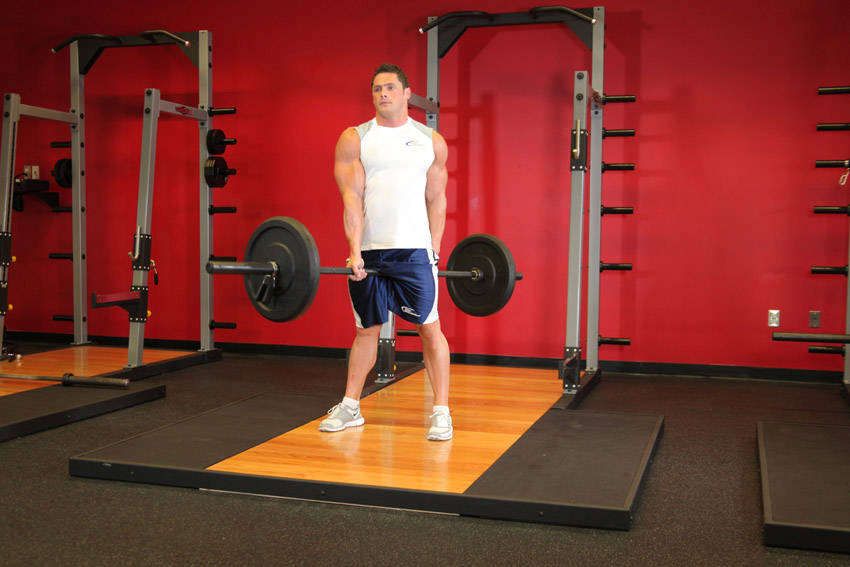
3. Jefferson Squats
76% match- Quadriceps
- Barbell
- Intermediate
- Compound
How to perform this exercise
- Place a barbell on the floor.
- Stand in the middle of the bar length wise.
- Bend down by bending at the knees and keeping your back straight and grasp the front of the bar with your right hand. Your palm should be in (neutral grip) facing the left side.
- Grasp the rear of the bar with your left hand. The palm of your hand should be in neutral grip alignment (palms facing the right side). Tip: Ensure that your grip is even on the bar. Your torso should be positioned right in the middle of the bar and the distance between your torso and your right hand (which should be at the front) should be the same as the distance between your torso and your left hand (which should be to your back).
- Now stand straight up with the weight. Tip: Your feet should be shoulder width apart and your toes slightly pointed out.
- Squat down by bending at the knees and keeping your back straight until your upper thighs are parallel with the floor. Tip: Keep your back as vertical as possible with the floor and your head up. Also remember to not let your knees go past your toes. Inhale during this portion of the movement.
- Now drive yourself back up to the starting position by pushing with the feet . Tip: Keep the bar hanging at arm's length and your elbows locked with a slight bend. The arms only serve as hooks. Avoid doing any lifting with them. Do the lifting with your thighs; not your arms.
Sets and reps: 3 or 4 sets of 6 to 10 reps.
Why this matches
- Primary muscle: quadriceps, the same as One-arm Overhead Kettlebell Squats
- Equipment: free weights, the same as One-arm Overhead Kettlebell Squats
- Balance: easier to stay steady on than One-arm Overhead Kettlebell Squats
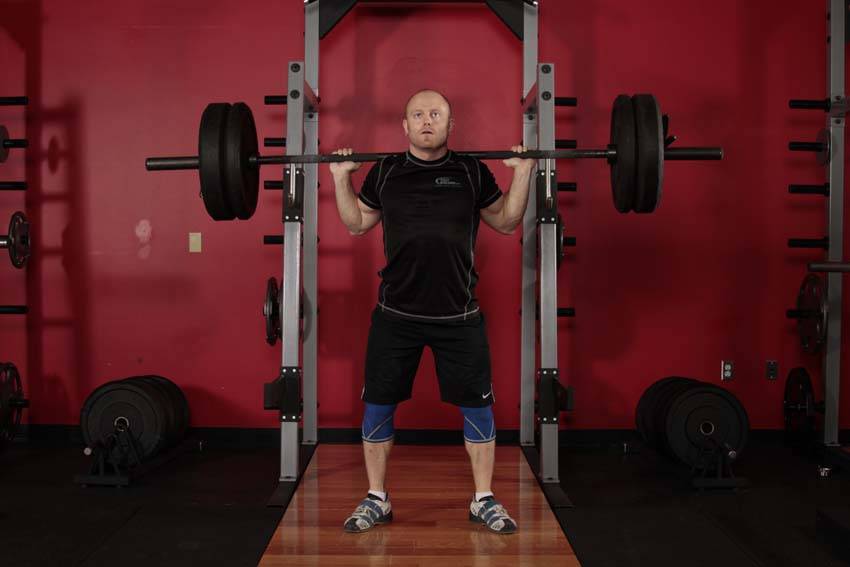
4. Olympic Squat
76% match- Quadriceps
- Barbell
- Intermediate
- Compound
How to perform this exercise
- Begin with a barbell supported on top of the traps. The chest should be up, and the head facing forward. Adopt a hip width stance with the feet turned out as needed.
- Descend by flexing the knees, refraining from moving the hips back as much as possible. This requires that the knees travel forward; ensure that they stay aligned with the feet. The goal is to keep the torso as upright as possible. Continue all the way down, keeping the weight on the front of the heel.
- At the moment the upper legs contact the lower, reverse the motion, driving the weight upward.
Sets and reps: 3 or 4 sets of 6 to 10 reps.
Why this matches
- Primary muscle: quadriceps, the same as One-arm Overhead Kettlebell Squats
- Equipment: free weights, the same as One-arm Overhead Kettlebell Squats
- Body position: standing, the same as One-arm Overhead Kettlebell Squats
- Balance: easier to stay steady on than One-arm Overhead Kettlebell Squats
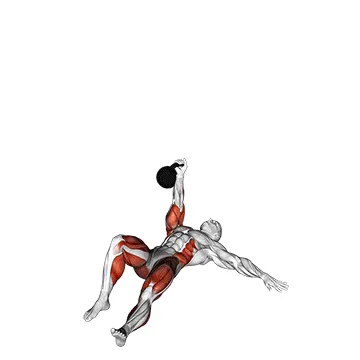
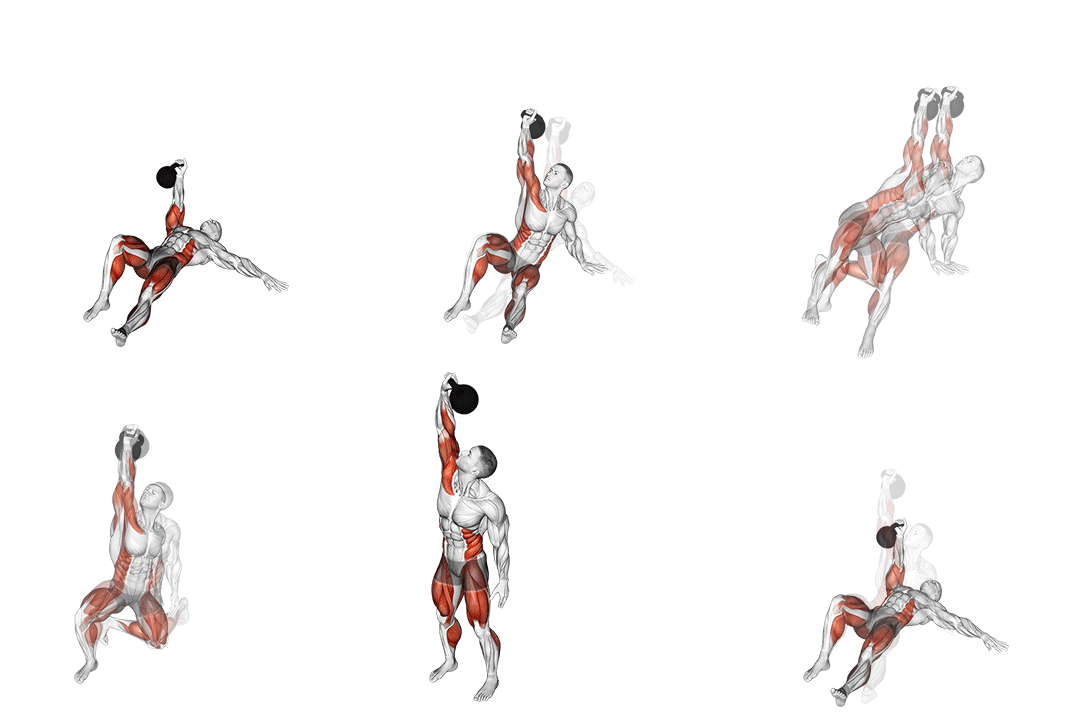
- Glutes
- Kettlebell
- Advanced
- Compound
A looser match: it uses the same equipment, but it works the glutes rather than the quadriceps.
How to perform this exercise
- Start by lying on your back with your legs extended and the kettlebell held in your right hand, arm fully extended above your shoulder.
- Bend your right knee and place your right foot flat on the ground, keeping your left leg extended.
- Pressing through your right foot, lift your hips off the ground, coming into a bridge position.
- Slide your left leg underneath your body, bending your left knee and placing your left foot flat on the ground.
- Rotate your torso to the left, bringing your left hand to the ground for support.
- Pressing through your right foot and left hand, lift your torso off the ground, coming into a kneeling position.
- From the kneeling position, stand up, keeping the kettlebell extended overhead.
- Reverse the movement to return to the starting position.
- Repeat the exercise on the other side, starting with the kettlebell in your left hand.
Sets and reps: 3 to 5 sets of 5 to 8 reps on each side.
Why this matches
- Primary muscle: glutes, not quadriceps
- Equipment: free weights, the same as One-arm Overhead Kettlebell Squats
- Body position: kneeling, not standing
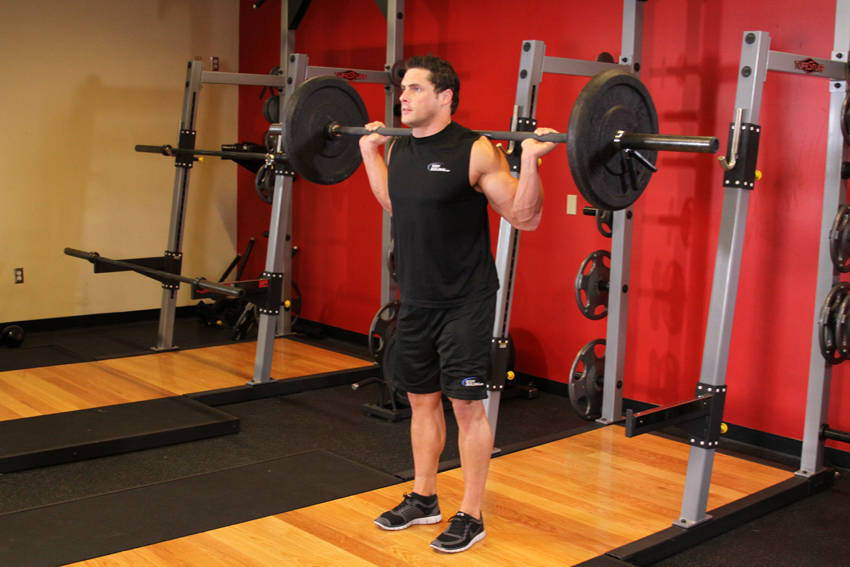
6. Narrow Stance Squats
76% match- Quadriceps
- Barbell
- Intermediate
- Compound
How to perform this exercise
- This exercise is best performed inside a squat rack for safety purposes. To begin, first set the bar on a rack that best matches your height. Once the correct height is chosen and the bar is loaded, step under the bar and place the back of your shoulders (slightly below the neck) across it.
- Hold on to the bar using both arms at each side and lift it off the rack by first pushing with your legs and at the same time straightening your torso.
- Step away from the rack and position your legs using a less-than-shoulder-width narrow stance with the toes slightly pointed out. Feet should be around 3-6 inches apart. Keep your head up at all times (looking down will get you off balance) and maintain a straight back. This will be your starting position. (Note: For the purposes of this discussion we will use the medium stance described above which targets overall development; however you can choose any of the three stances discussed in the foot stances section).
- Begin to slowly lower the bar by bending the knees as you maintain a straight posture with the head up. Continue down until the angle between the upper leg and the calves becomes slightly less than 90-degrees (which is the point in which the upper legs are below parallel to the floor). Inhale as you perform this portion of the movement. Tip: If you performed the exercise correctly, the front of the knees should make an imaginary straight line with the toes that is perpendicular to the front. If your knees are past that imaginary line (if they are past your toes) then you are placing undue stress on the knee and the exercise has been performed incorrectly.
- Begin to raise the bar as you exhale by pushing the floor with the heel of your foot mainly as you straighten the legs again and go back to the starting position.
- Repeat for the recommended amount of repetitions.
Sets and reps: 3 or 4 sets of 6 to 10 reps.
Why this matches
- Primary muscle: quadriceps, the same as One-arm Overhead Kettlebell Squats
- Equipment: free weights, the same as One-arm Overhead Kettlebell Squats
- Body position: standing, the same as One-arm Overhead Kettlebell Squats
- Balance: easier to stay steady on than One-arm Overhead Kettlebell Squats
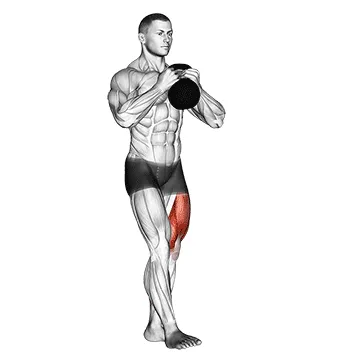
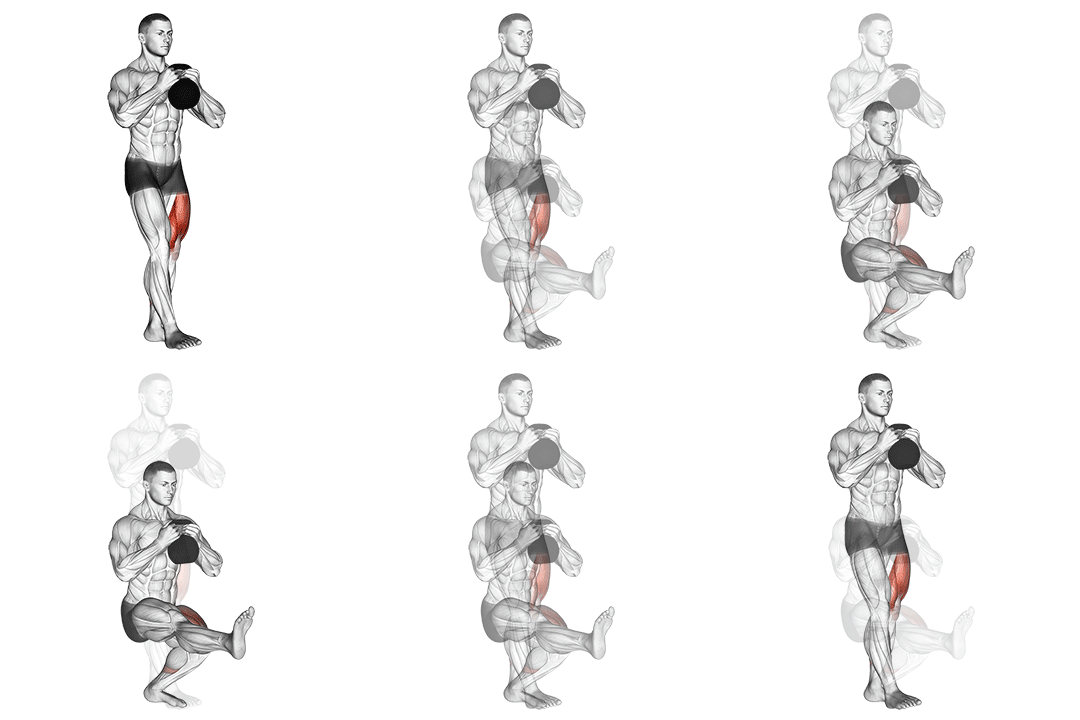
7. Kettlebell Pistol Squat
75% match- Glutes
- Kettlebell
- Advanced
- Compound
How to perform this exercise
- Stand with your feet shoulder-width apart, holding a kettlebell in front of your chest with both hands.
- Lift your left foot off the ground and extend it forward, keeping it parallel to the ground.
- Slowly lower your body down into a squat position, keeping your right foot flat on the ground and your left leg extended.
- Pause for a moment at the bottom of the squat, then push through your right heel to return to the starting position.
- Repeat for the desired number of repetitions, then switch legs.
Sets and reps: 3 to 5 sets of 5 to 8 reps on each side.
Why this matches
- Primary muscle: glutes, not quadriceps
- Equipment: free weights, the same as One-arm Overhead Kettlebell Squats
- Body position: standing, the same as One-arm Overhead Kettlebell Squats
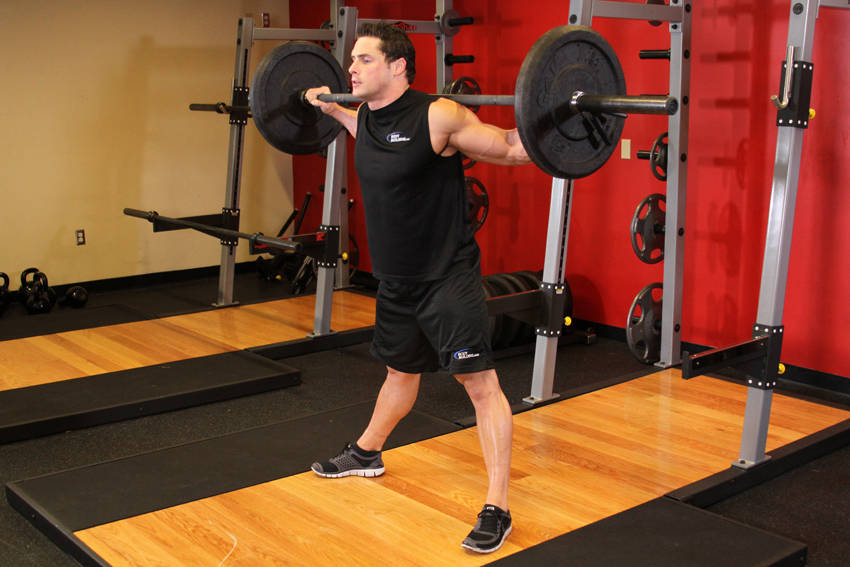
8. Wide Stance Barbell Squat
75% match- Quadriceps
- Barbell
- Intermediate
- Compound
How to perform this exercise
- This exercise is best performed inside a squat rack for safety purposes. To begin, first set the bar on a rack that best matches your height. Once the correct height is chosen and the bar is loaded, step under the bar and place the back of your shoulders (slightly below the neck) across it.
- Hold on to the bar using both arms at each side and lift it off the rack by first pushing with your legs and at the same time straightening your torso.
- Step away from the rack and position your legs using a wider-than-shoulder-width stance with the toes slightly pointed out. Keep your head up at all times as looking down will get you off balance, and also maintain a straight back. This will be your starting position.
- Begin to slowly lower the bar by bending the knees as you maintain a straight posture with the head up. Continue down until the angle between the upper leg and the calves becomes slightly less than 90-degrees (which is the point in which the upper legs are below parallel to the floor). Inhale as you perform this portion of the movement. Tip: If you performed the exercise correctly, the front of the knees should make an imaginary straight line with the toes that is perpendicular to the front. If your knees are past that imaginary line (if they are past your toes) then you are placing undue stress on the knee and the exercise has been performed incorrectly.
- Begin to raise the bar as you exhale by pushing the floor with the heel of your foot as you straighten the legs again and go back to the starting position.
- Repeat for the recommended amount of repetitions.
Sets and reps: 3 or 4 sets of 6 to 10 reps.
Why this matches
- Primary muscle: quadriceps, the same as One-arm Overhead Kettlebell Squats
- Equipment: free weights, the same as One-arm Overhead Kettlebell Squats
- Body position: standing, the same as One-arm Overhead Kettlebell Squats
- Balance: easier to stay steady on than One-arm Overhead Kettlebell Squats
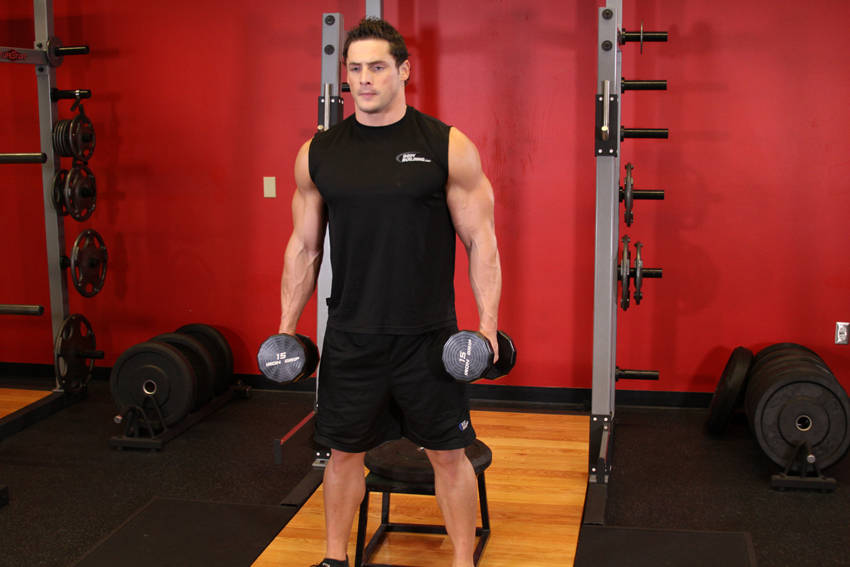
9. Dumbbell Squat To A Bench
74% match- Quadriceps
- Dumbbell
- Beginner
- Compound
How to perform this exercise
- Stand up straight with a flat bench behind you while holding a dumbbell on each hand (palms facing the side of your legs).
- Position your legs using a shoulder width medium stance with the toes slightly pointed out. Keep your head up at all times as looking down will get you off balance and also maintain a straight back. This will be your starting position. Note: For the purposes of this discussion we will use the medium stance described above which targets overall development; however you can choose any of the three stances discussed in the foot stances section.
- Begin to slowly lower your torso by bending the knees as you maintain a straight posture with the head up. Continue down until you slightly touch the bench behind you. Inhale as you perform this portion of the movement. Tip: If you performed the exercise correctly, the front of the knees should make an imaginary straight line with the toes that is perpendicular to the front. If your knees are past that imaginary line (if they are past your toes) then you are placing undue stress on the knee and the exercise has been performed incorrectly.
- Begin to raise the bar as you exhale by pushing the floor with the heel of your foot mainly as you straighten the legs again and go back to the starting position.
- Repeat for the recommended amount of repetitions.
Sets and reps: 3 or 4 sets of 6 to 10 reps.
Why this matches
- Primary muscle: quadriceps, the same as One-arm Overhead Kettlebell Squats
- Equipment: free weights, the same as One-arm Overhead Kettlebell Squats
- Body position: standing, the same as One-arm Overhead Kettlebell Squats
- Balance: easier to stay steady on than One-arm Overhead Kettlebell Squats
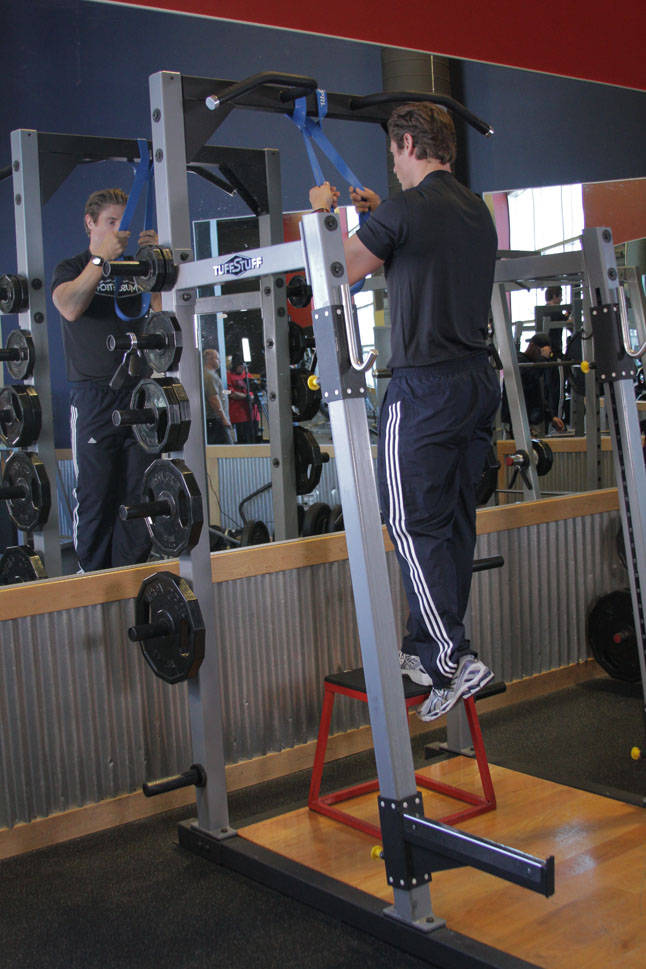
10. Single-leg High Box Squat
74% match- Quadriceps
- Other
- Advanced
- Compound
How to perform this exercise
- Position a box in a rack. Secure a band or rope in place above the box.
- Standing in front of it, step onto the box to a full standing position, letting your other leg remain unsupported. Hold onto the band for balance
- . Continue stepping up and down on the same leg before switching to the opposite side.
Sets and reps: 3 or 4 sets of 6 to 10 reps on each side.
Why this matches
- Primary muscle: quadriceps, the same as One-arm Overhead Kettlebell Squats
- Equipment: bodyweight only, not free weights
- Body position: standing, the same as One-arm Overhead Kettlebell Squats
Why You Might Need a One-arm Overhead Kettlebell Squats Alternative
You may substitute one-arm overhead kettlebell squats for several practical reasons: limited shoulder mobility, painful rotator cuff or AC joint, lack of a suitable kettlebell, or balance deficits that make the overhead position unsafe. The overhead variation places high demand on scapular stability and the deltoids while forcing an upright torso to emphasize the quadriceps; removing the overhead load shifts stress to the hips and spine differently. Choosing alternatives lets you preserve progressive overload on the quads without exposing a compromised shoulder to shearing forces. Cue for substitutes: keep knees tracking over toes and drive from the midfoot to maintain quad-dominant force production.
One-arm Overhead Kettlebell Squats FAQ
What muscles does One-arm Overhead Kettlebell Squats work?
The exercise primarily targets the quadriceps through deep knee flexion while the glutes and hamstrings assist hip extension. The overhead load forces high core and scapular stabilizer activation, your deltoid and upper trap work isometrically to keep the weight locked out; brace your core and keep the elbow locked to transfer load safely.
What is the best bodyweight alternative to One-arm Overhead Kettlebell Squats?
A controlled single-leg box pistol (assisted if needed) is the top bodyweight alternative because it isolates the quad and trains unilateral strength and balance. Cue: sit back onto your heel on the descent, keep the chest upright, and push through the midfoot to emphasize quad activation and protect the knee.
Find Alternatives for Any Exercise
Search the exercise database and filter the ranked substitutes by the equipment you own.
Similarity scores compare exercise metadata such as movement pattern, muscles, equipment and body position. They are not a safety rating or a check that you own the equipment. Learn about our methodology