

10 Best Power Partials Alternatives for Shoulder Strength
If you can’t do Power Partials, use five options: strict dumbbell overhead press, seated lateral raise, kettlebell push press, incline reverse fly, and Arnold press. Focus on scapular stability, drive with the deltoids on the concentric phase, and control the descent to maintain tension on lateral and anterior delt fibers.
Original Exercise: Power Partials
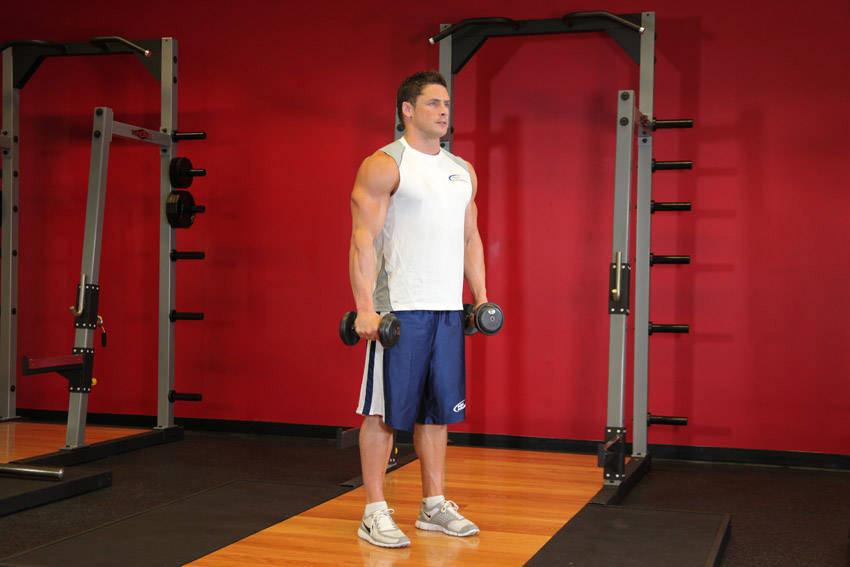
How to Perform Power Partials
- Stand up with your torso upright and a dumbbell on each hand being held at arms length. The elbows should be close to the torso.
- The palms of the hands should be facing your torso. Your feet should be about shoulder width apart. This will be your starting position.
- Keeping your arms straight and the torso stationary, lift the weights out to your sides until they are about shoulder level height while exhaling.
- Feel the contraction for a second and begin to lower the weights back down to the starting position while inhaling. Tip: Keep the palms facing down with the little finger slightly higher while lifting and lowering the weights as it will concentrate the stress on your shoulders mainly.
- Repeat for the recommended amount of repetitions.
Pro Tips
- Category: Strength
- Force: Push
- Movement type: Isolation
Best Power Partials Alternatives
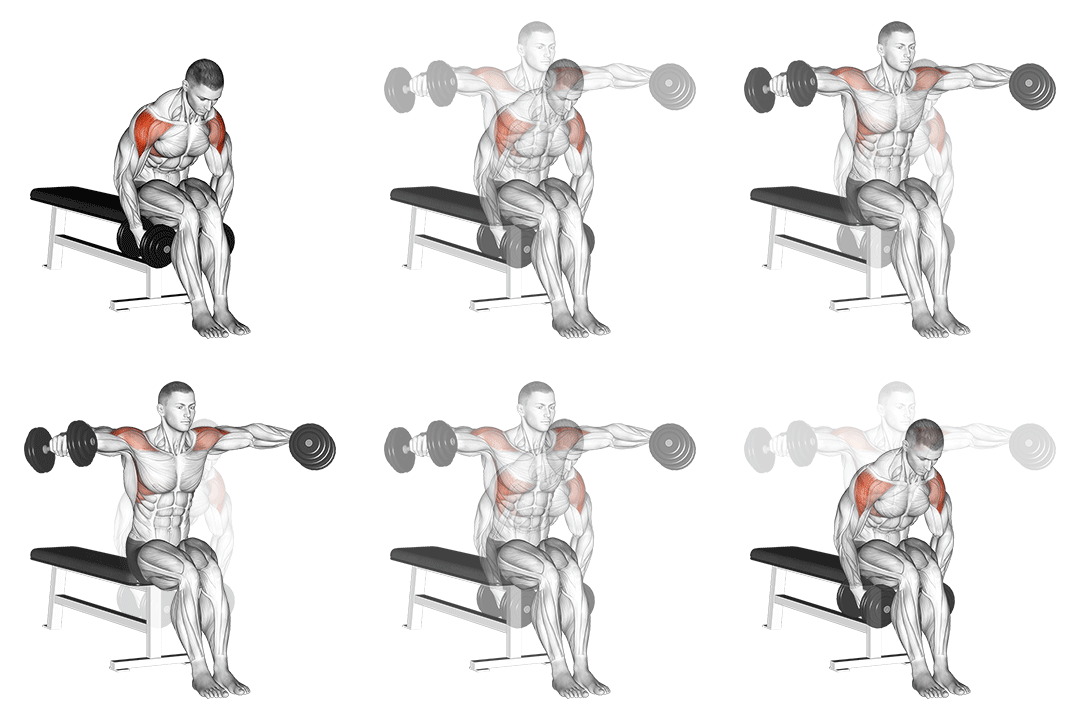
1. Dumbbell Seated Bent Arm Lateral Raise
79.1% MatchHow to perform this exercise
- Sit on a bench with your back straight and feet flat on the ground.
- Hold a dumbbell in each hand with your palms facing your body and your arms bent at a 90-degree angle.
- Keeping your elbows bent, raise your arms out to the sides until they are parallel to the ground.
- Pause for a moment at the top, then slowly lower your arms back down to the starting position.
- Repeat for the desired number of repetitions.

2. Backward Medicine Ball Throw
77.2% MatchHow to perform this exercise
- This exercise is best done with a partner. If you lack a partner, the ball can be thrown and retrieved or thrown against a wall.
- Begin standing a few meters in front of your partner, both facing the same direction. Begin holding the ball between your legs.
- Squat down and then forcefully reverse direction, coming to full extension and you toss the ball over your head to your partner.
- Your partner can then roll the ball back to you. Repeat for the desired number of repetitions.
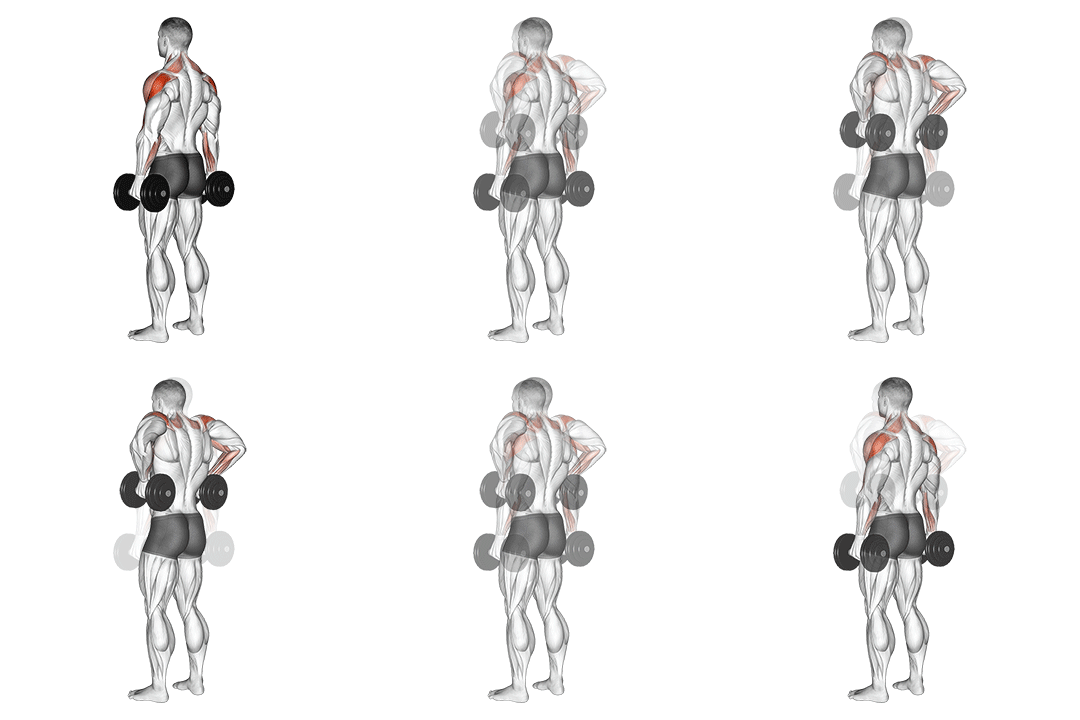
3. Dumbbell Rear Delt Raise
71.9% MatchHow to perform this exercise
- Stand with your feet shoulder-width apart and hold a dumbbell in each hand, palms facing your body.
- Bend your knees slightly and hinge forward at the hips, keeping your back straight.
- Raise your arms out to the sides, keeping a slight bend in your elbows, until they are parallel to the floor.
- Pause for a moment at the top, then slowly lower your arms back down to the starting position.
- Repeat for the desired number of repetitions.
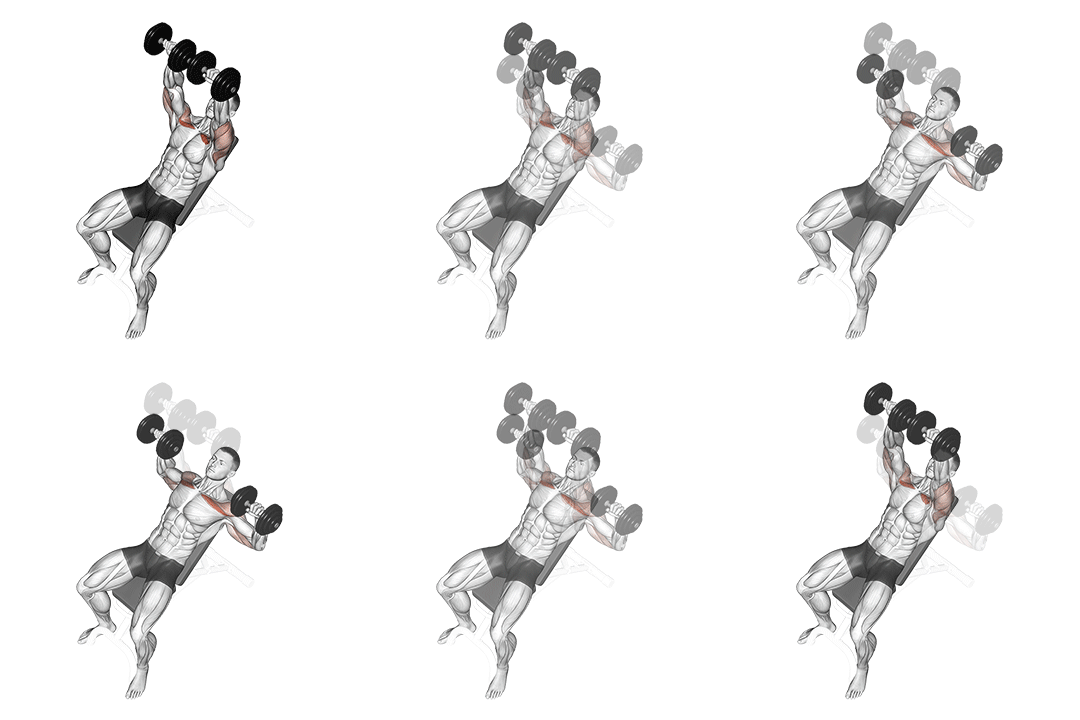
4. Dumbbell Incline Bench Press
71.7% MatchHow to perform this exercise
- Set up an incline bench at a 45-degree angle.
- Sit on the bench with your feet flat on the ground and your back pressed firmly against the bench.
- Hold a dumbbell in each hand, palms facing forward, and lift them to shoulder height.
- Slowly lower the dumbbells to the sides of your chest, keeping your elbows at a 90-degree angle.
- Push the dumbbells back up to the starting position, fully extending your arms.
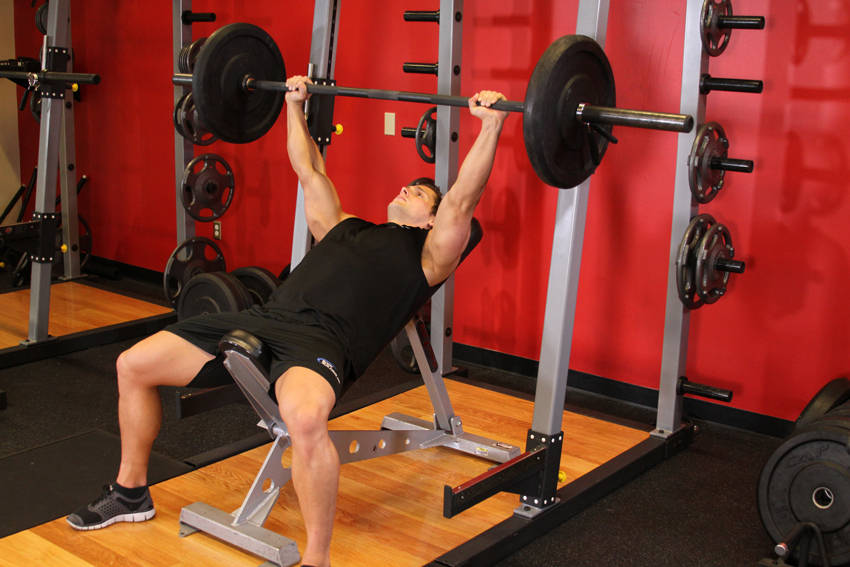
5. Barbell Incline Bench Press - Medium Grip
71.7% MatchHow to perform this exercise
- Lie back on an incline bench. Using a medium-width grip (a grip that creates a 90-degree angle in the middle of the movement between the forearms and the upper arms), lift the bar from the rack and hold it straight over you with your arms locked. This will be your starting position.
- As you breathe in, come down slowly until you feel the bar on you upper chest.
- After a second pause, bring the bar back to the starting position as you breathe out and push the bar using your chest muscles. Lock your arms in the contracted position, squeeze your chest, hold for a second and then start coming down slowly again. Tip: it should take at least twice as long to go down than to come up.
- Repeat the movement for the prescribed amount of repetitions.
- When you are done, place the bar back in the rack.
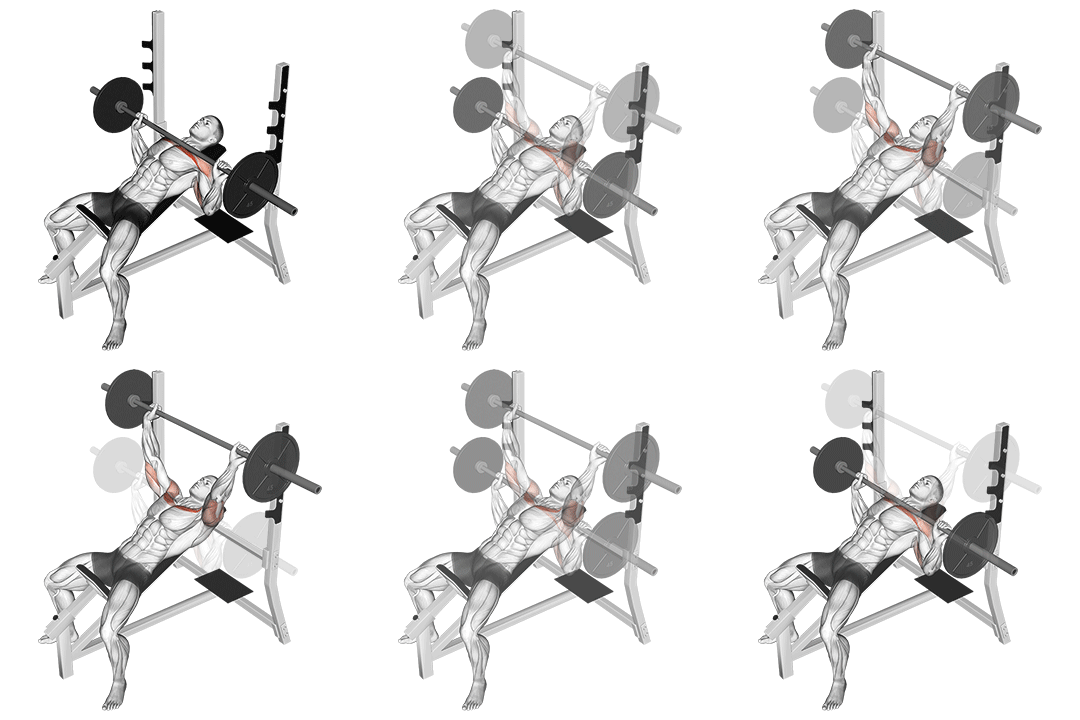
6. Barbell Incline Bench Press
71.7% MatchHow to perform this exercise
- Set up an incline bench at a 45-degree angle.
- Lie down on the bench with your feet flat on the ground.
- Grasp the barbell with an overhand grip, slightly wider than shoulder-width apart.
- Unrack the barbell and lower it slowly towards your chest, keeping your elbows at a 45-degree angle.
- Pause for a moment at the bottom, then push the barbell back up to the starting position.
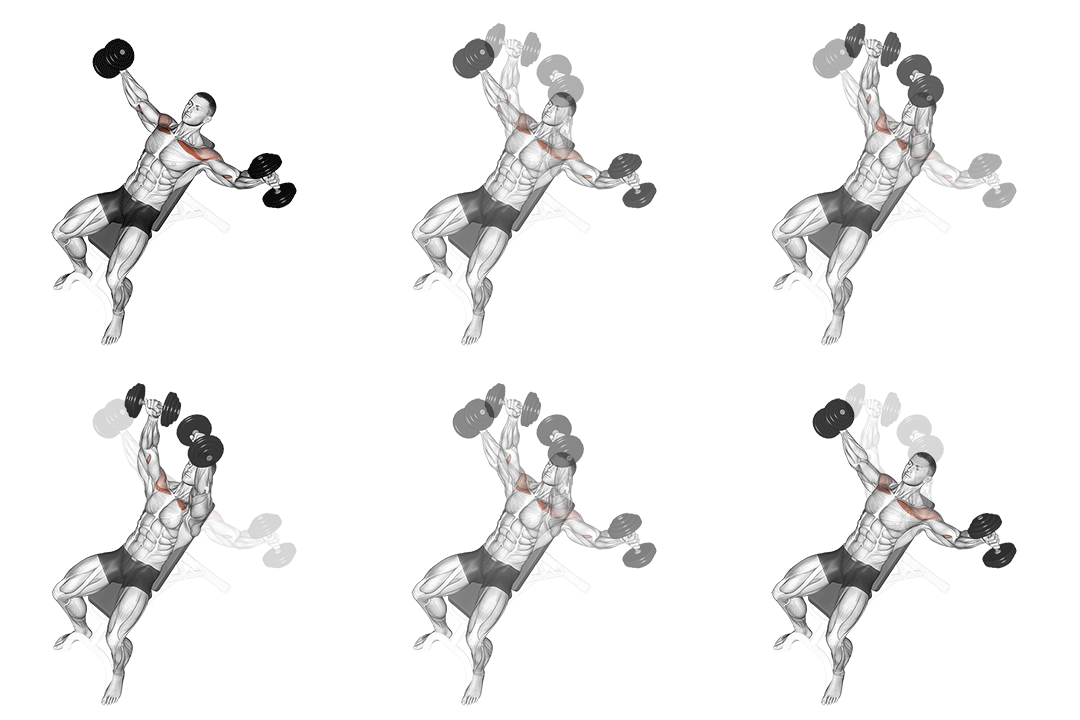
7. Dumbbell Incline Breeding
70.9% MatchHow to perform this exercise
- Set up an incline bench at a 45-degree angle.
- Sit on the bench with your back against the pad and feet flat on the ground.
- Hold a dumbbell in each hand with an overhand grip, palms facing forward.
- Start with your arms fully extended, perpendicular to the ground.
- Lower the dumbbells slowly to the sides of your chest, keeping your elbows at a 90-degree angle.
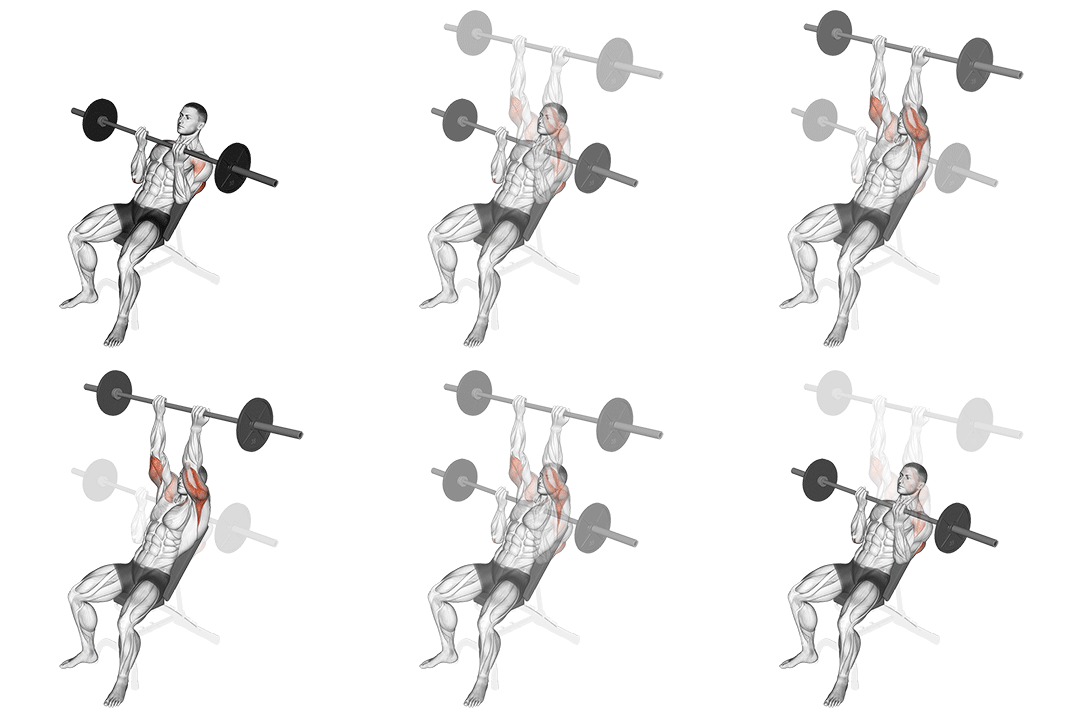
8. Barbell Incline Reverse-grip Press
68.2% MatchHow to perform this exercise
- Set up an incline bench at a 45-degree angle.
- Lie back on the bench and grasp the barbell with a reverse grip, hands slightly wider than shoulder-width apart.
- Unrack the barbell and lower it towards your upper chest, keeping your elbows tucked in.
- Pause for a moment at the bottom, then push the barbell back up to the starting position.
- Repeat for the desired number of repetitions.
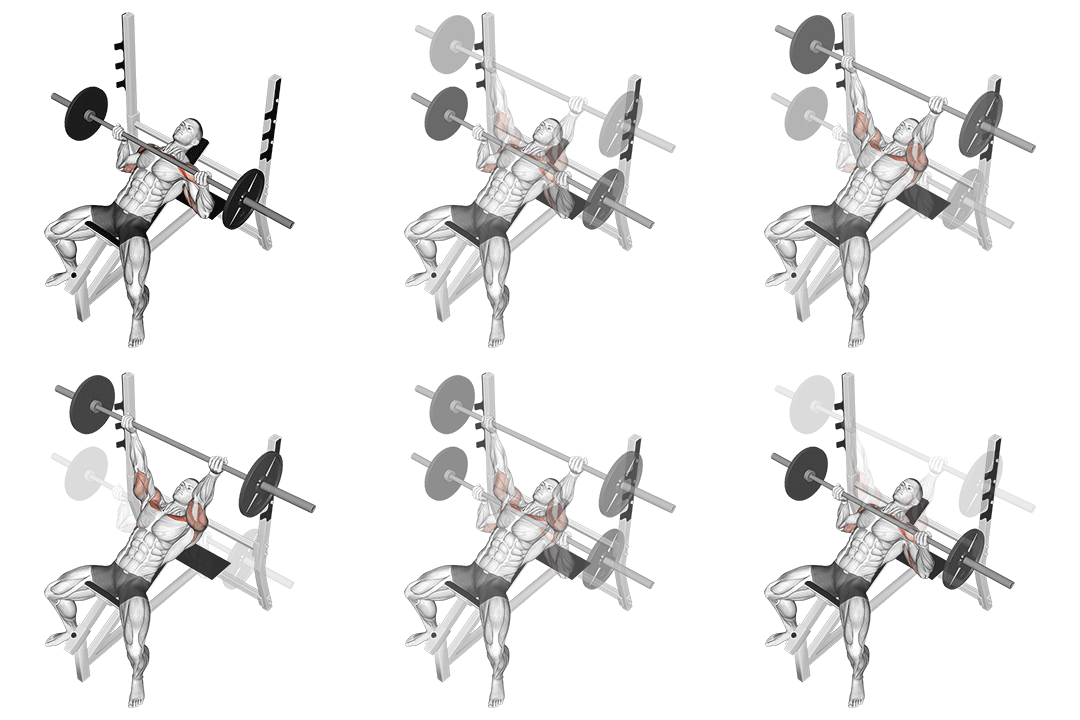
9. Barbell Reverse Grip Incline Bench Press
68.2% MatchHow to perform this exercise
- Set up an incline bench at a 45-degree angle.
- Lie down on the bench with your feet flat on the ground.
- Grasp the barbell with a reverse grip, hands slightly wider than shoulder-width apart.
- Unrack the barbell and lower it slowly towards your chest, keeping your elbows tucked in.
- Pause for a moment when the barbell touches your chest.
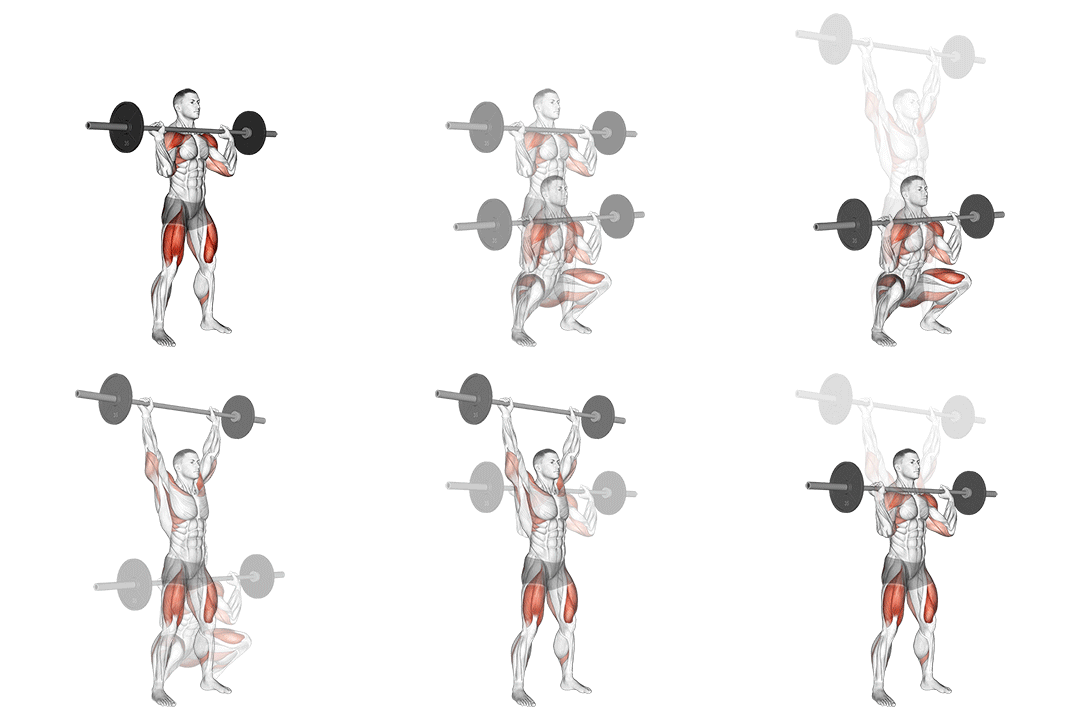
10. Barbell Thruster
68% MatchHow to perform this exercise
- Start by standing with your feet shoulder-width apart, holding a barbell at shoulder height with an overhand grip.
- Lower into a squat position by bending your knees and pushing your hips back.
- As you reach the bottom of the squat, explosively drive through your heels to stand up, simultaneously pressing the barbell overhead.
- Lower the barbell back to shoulder height as you lower back into the squat position.
- Repeat for the desired number of repetitions.
Why You Might Need a Power Partials Alternative
You might substitute Power Partials for pain, limited equipment, or to target different portions of the deltoid. Partials load the top range, which increases peak tension but can aggravate impingement or overuse issues. Use neutral-grip presses to reduce supraspinatus strain, or swap to full-range seated lateral raises to distribute load across the lateral head. If you lack heavy dumbbells, kettlebell push presses add hip drive and transfer force through the delts while lowering shoulder joint stress. Cue a slight elbow bend and stable scapula to keep torque on the delts instead of the traps.
How to Choose the Right Substitute
Choose a substitute by matching movement plane, loading capacity, and your injury history. Prefer vertical pressing patterns (overhead press, push press) when you want compound strength; pick isolation moves (lateral raises, incline reverse flyes) for targeted hypertrophy of the lateral delt. Consider grip and elbow position—neutral grips and a micro-bend at the elbow reduce rotator cuff strain. If you must prioritize progressive overload, select exercises that let you increase load safely (e.g., standing push press). Always cue controlled eccentrics (2–3 second lower) and stable scapula positioning to maximize delt activation and protect the shoulder.
Frequently Asked Questions
What muscles does Power Partials work?
Power Partials primarily target the deltoid, with emphasis on the anterior and lateral heads depending on arm position. Secondary muscles include the upper trapezius and triceps; rotator cuff muscles work isometrically for shoulder stability. Keep elbows slightly forward during the lift to bias anterior delt activation.
What is the best bodyweight alternative to Power Partials?
The pike push-up is the most practical bodyweight substitute because it loads the deltoids on a vertical plane. Elevate your feet to increase shoulder loading, tuck the chin, lower until your forehead nears the floor, and press up while maintaining scapular control to maximize delt engagement.
Can I build muscle without doing Power Partials?
Yes. Use progressive overload with full-range presses, lateral raises, and reverse fly variations to stimulate the delts. Emphasize controlled eccentrics, 1–2 second pauses at peak contraction, and increasing load or volume to drive hypertrophy while maintaining proper scapular mechanics.
More Exercise Alternatives
Find Alternatives for Any Exercise
Use our free tool to discover the best substitute exercises based on your available equipment and goals.
Try the Exercise Substitution Finder →