

10 Best Bent-arm Lateral Raise Alternatives for Limited Gear
The Dumbbell Seated Bent Arm Lateral Raise is done seated with dumbbells. Ranked closest by our scoring: the Weighted Round Arm, the Seated Side Lateral Raise and the Rack Delivery. Five harder versions, among them the Dumbbell Iron Cross and Power Partials, are listed below as progressions rather than swaps.
Updated Ranked by our 12-factor similarity model How it works
Original Exercise: Dumbbell Seated Bent Arm Lateral Raise
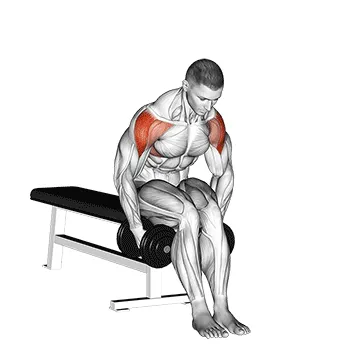
- Primary muscle
- Delts
- Equipment
- Dumbbell
- Difficulty
- Beginner
- Type
- Isolation
Secondary muscles: Trapezius, Rhomboids
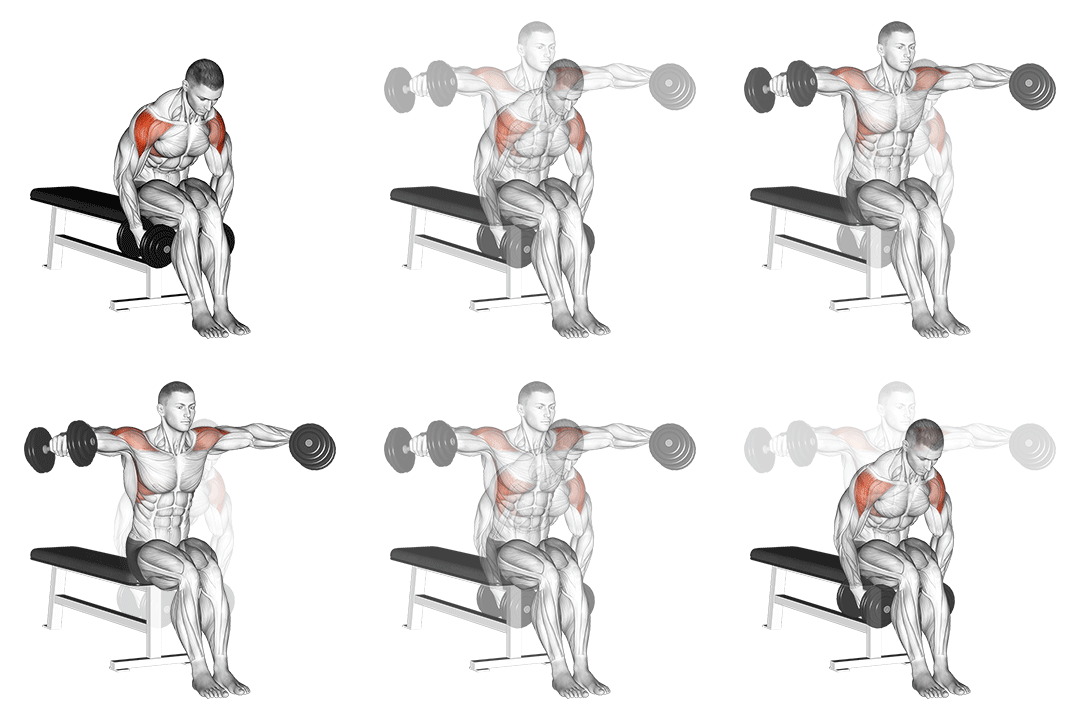
How to perform Dumbbell Seated Bent Arm Lateral Raise
- Sit on a bench with your back straight and feet flat on the ground.
- Hold a dumbbell in each hand with your palms facing your body and your arms bent at a 90-degree angle.
- Keeping your elbows bent, raise your arms out to the sides until they are parallel to the ground.
- Pause for a moment at the top, then slowly lower your arms back down to the starting position.
- Repeat for the desired number of repetitions.
Ranked Dumbbell Seated Bent Arm Lateral Raise Alternatives
10 substitutes, ranked by how closely each one matches the Dumbbell Seated Bent Arm Lateral Raise on movement pattern, muscles worked, equipment and body position. The higher the score, the less you change. Open "How to perform this exercise" on a card for the steps; every card title links to that exercise's own alternatives page. Harder versions are tagged as progressions and kept out of the top spot even when they score higher.
Best match 1. Weighted Round Arm
84% match- Delts
- Weighted
- Intermediate
- Isolation
Pick this when you want a harder version that still works the delts.
How to perform this exercise
- Stand with your feet shoulder-width apart and hold a dumbbell in each hand.
- Bend your knees slightly and hinge forward at the hips, keeping your back straight.
- Raise your arms out to the sides, keeping a slight bend in your elbows.
- Continue lifting your arms until they are parallel to the ground.
- Pause for a moment at the top, then slowly lower your arms back down to the starting position.
- Repeat for the desired number of repetitions.
Sets and reps: 3 sets of 10 to 15 reps.
Why this matches
- Primary muscle: delts, the same as the Dumbbell Seated Bent Arm Lateral Raise
- Equipment: free weights, the same as the Dumbbell Seated Bent Arm Lateral Raise
- Body position: standing, not seated
Progression
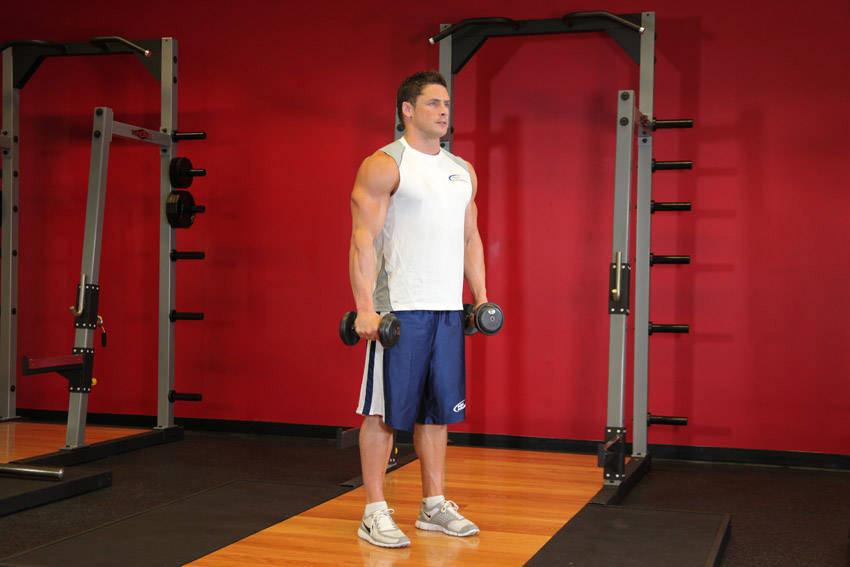
2. Dumbbell Iron Cross
81% match- Delts
- Dumbbell
- Advanced
- Isolation
How to perform this exercise
- Stand with your feet shoulder-width apart, holding a dumbbell in each hand at your sides.
- Raise your arms out to the sides until they are parallel to the ground, forming a T shape with your body.
- Pause for a moment, then slowly lower your arms back down to the starting position.
- Repeat for the desired number of repetitions.
Sets and reps: 3 sets of 10 to 15 reps.
Why this matches
- Primary muscle: delts, the same as the Dumbbell Seated Bent Arm Lateral Raise
- Equipment: free weights, the same as the Dumbbell Seated Bent Arm Lateral Raise
- Body position: standing, not seated
Progression
3. Power Partials
79% match- Delts
- Dumbbell
- Intermediate
- Compound
How to perform this exercise
- Stand up with your torso upright and a dumbbell on each hand being held at arms length. The elbows should be close to the torso.
- The palms of the hands should be facing your torso. Your feet should be about shoulder width apart. This will be your starting position.
- Keeping your arms straight and the torso stationary, lift the weights out to your sides until they are about shoulder level height while exhaling.
- Feel the contraction for a second and begin to lower the weights back down to the starting position while inhaling. Tip: Keep the palms facing down with the little finger slightly higher while lifting and lowering the weights as it will concentrate the stress on your shoulders mainly.
- Repeat for the recommended amount of repetitions.
Sets and reps: 3 or 4 sets of 6 to 10 reps.
Why this matches
- Primary muscle: delts, the same as the Dumbbell Seated Bent Arm Lateral Raise
- Equipment: free weights, the same as the Dumbbell Seated Bent Arm Lateral Raise
- Body position: seated, the same as the Dumbbell Seated Bent Arm Lateral Raise
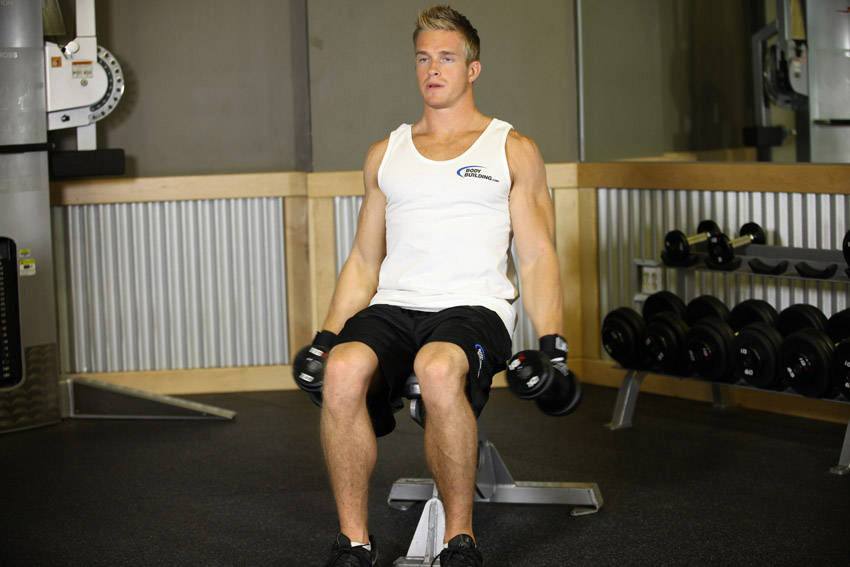
4. Seated Side Lateral Raise
76% match- Delts
- Dumbbell
- Beginner
- Isolation
It uses the same equipment and still works the delts.
How to perform this exercise
- Pick a couple of dumbbells and sit at the end of a flat bench with your feet firmly on the floor. Hold the dumbbells with your palms facing in and your arms straight down at your sides at arms' length. This will be your starting position.
- While maintaining the torso stationary (no swinging), lift the dumbbells to your side with a slight bend on the elbow and the hands slightly tilted forward as if pouring water in a glass. Continue to go up until you arms are parallel to the floor. Exhale as you execute this movement and pause for a second at the top.
- Lower the dumbbells back down slowly to the starting position as you inhale.
- Repeat for the recommended amount of repetitions.
Sets and reps: 3 sets of 10 to 15 reps.
Why this matches
- Primary muscle: delts, the same as the Dumbbell Seated Bent Arm Lateral Raise
- Equipment: free weights, the same as the Dumbbell Seated Bent Arm Lateral Raise
- Body position: seated, the same as the Dumbbell Seated Bent Arm Lateral Raise
Progression
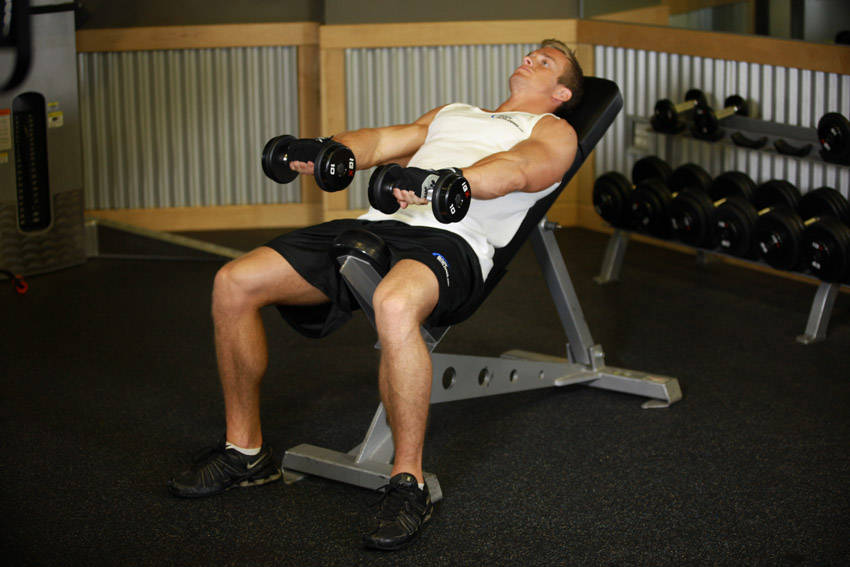
5. Front Incline Dumbbell Raise
71% match- Delts
- Dumbbell
- Intermediate
- Isolation
How to perform this exercise
- Sit down on an incline bench with the incline set anywhere between 30 to 60 degrees while holding a dumbbell on each hand. Tip: You can change the angle to hit the muscle a little differently each time.
- Extend your arms straight in front of you and have your palms facing down with the dumbbells raised about 1 inch above your thighs. This will be your starting position.
- Slowly raise the dumbbells straight up until they are slightly above your shoulders, while keeping your elbows locked. Squeeze at the top for a second and make sure you breathe out during this portion of the movement. Tip: Keep your head resting down against the bench and your legs on the floor at all times.
- Lower the arms back to the starting position as you inhale.
- Repeat for the recommended amount of repetitions.
Sets and reps: 3 sets of 10 to 15 reps.
Why this matches
- Primary muscle: delts, the same as the Dumbbell Seated Bent Arm Lateral Raise
- Equipment: free weights, the same as the Dumbbell Seated Bent Arm Lateral Raise
- Body position: seated, the same as the Dumbbell Seated Bent Arm Lateral Raise
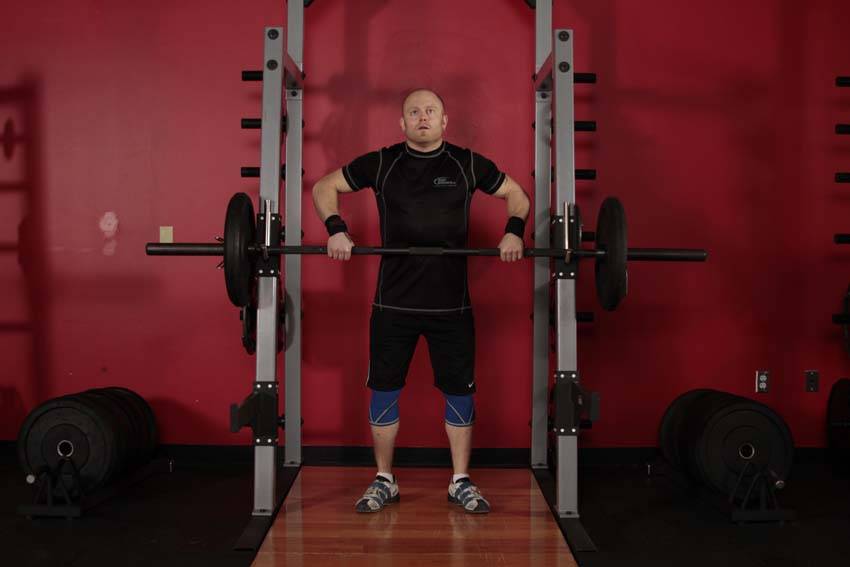
6. Rack Delivery
69% match- Delts
- Barbell
- Intermediate
- Compound
A good swap when you have a barbell to work with, and it still works the delts.
How to perform this exercise
- This drill teaches the delivery of the barbell to the rack position on the shoulders. Begin holding a bar in the scarecrow position, with the upper arms parallel to the floor, and the forearms hanging down. Use a hook grip, with your fingers wrapped over your thumbs.
- Begin by rotating the elbows around the bar, delivering the bar to the shoulders. As your elbows come forward, relax your grip. The shoulders should be protracted, providing a shelf for the bar, which should lightly contact the throat.
- It is important that the bar stay close to the body at all times, as with a heavier load any distance will result in an unwanted collision. As the movement becomes smoother, speed and load can be increased before progressing further.
Sets and reps: 3 or 4 sets of 6 to 10 reps.
Why this matches
- Primary muscle: delts, the same as the Dumbbell Seated Bent Arm Lateral Raise
- Equipment: free weights, the same as the Dumbbell Seated Bent Arm Lateral Raise
- Body position: standing, not seated
Progression
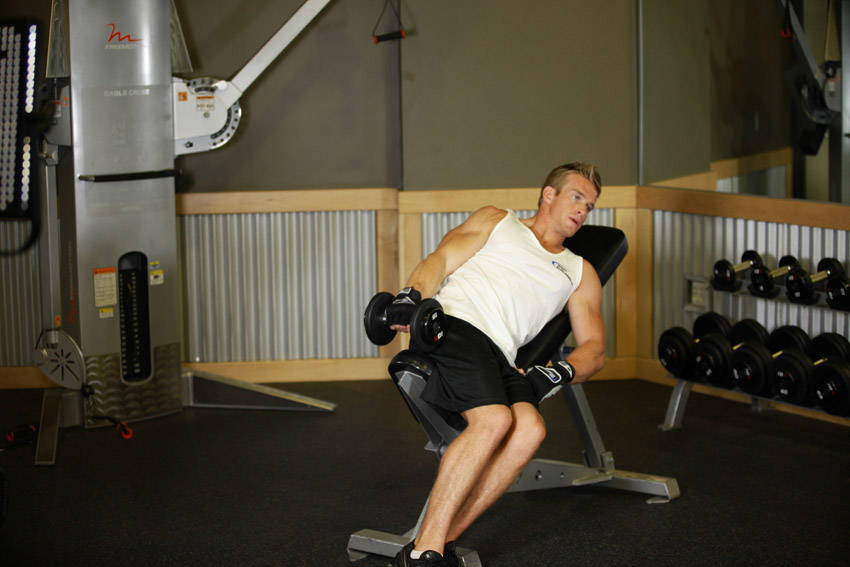
7. One-arm Incline Lateral Raise
68% match- Delts
- Dumbbell
- Intermediate
- Isolation
Pick this when you want a harder single-arm version that still works the delts.
How to perform this exercise
- Lie down sideways on an incline bench press with a dumbbell in the hand. Make sure the shoulder is pressing against the incline bench and the arm is lying across your body with the palm around your navel.
- Hold a dumbbell in your uppermost arm while keeping it extended in front of you parallel to the floor. This is your starting position.
- While keeping the dumbbell parallel to the floor at all times, perform a lateral raise. Your arm should travel straight up until it is pointing at the ceiling. Tip: Exhale as you perform this movement. Hold the dumbbell in the position and feel the contraction in the shoulders for a second.
- While inhaling lower the weight across your body back into the starting position.
- Repeat the movement for the prescribed amount of repetitions.
- Switch arms and repeat the movement.
Sets and reps: 3 sets of 10 to 15 reps on each side.
Why this matches
- Primary muscle: delts, the same as the Dumbbell Seated Bent Arm Lateral Raise
- Equipment: free weights, the same as the Dumbbell Seated Bent Arm Lateral Raise
- Body position: seated, the same as the Dumbbell Seated Bent Arm Lateral Raise
Progression
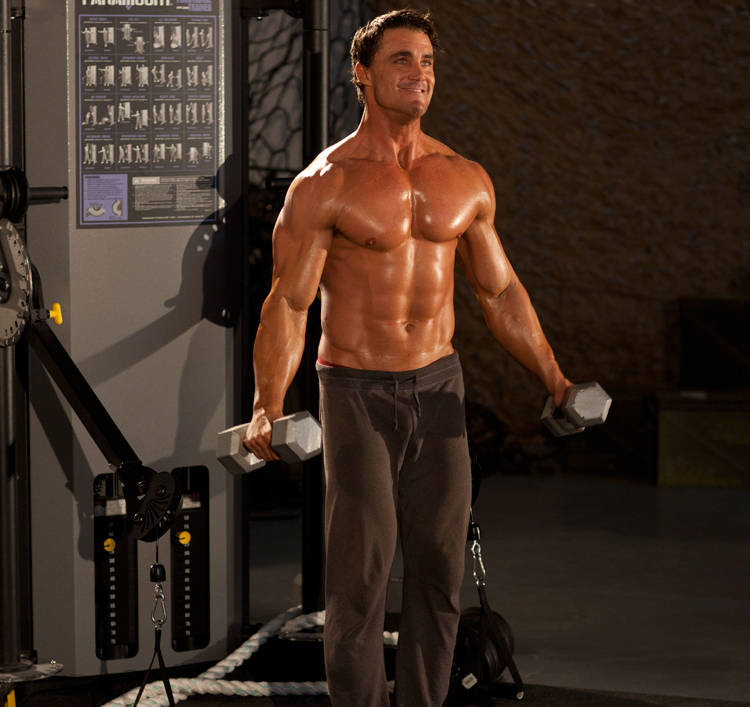
8. Side Laterals To Front Raise
68% match- Delts
- Dumbbell
- Intermediate
- Isolation
How to perform this exercise
- In a standing position, hold a pair of dumbbells at your side. This will be your starting position.
- Keeping your elbows slightly bent, raise the weights directly in front of you to shoulder height, avoiding any swinging or cheating.
- At the top of the exercise move the weights out in front of you, keeping your arms extended.
- Lower the weights with a controlled motion.
- On the next repetition, raise the weights in front of you to shoulder height before moving the weights laterally to your sides.
- Lower the weights to the starting position.
Sets and reps: 3 sets of 10 to 15 reps.
Why this matches
- Primary muscle: delts, the same as the Dumbbell Seated Bent Arm Lateral Raise
- Equipment: free weights, the same as the Dumbbell Seated Bent Arm Lateral Raise
- Body position: standing, not seated
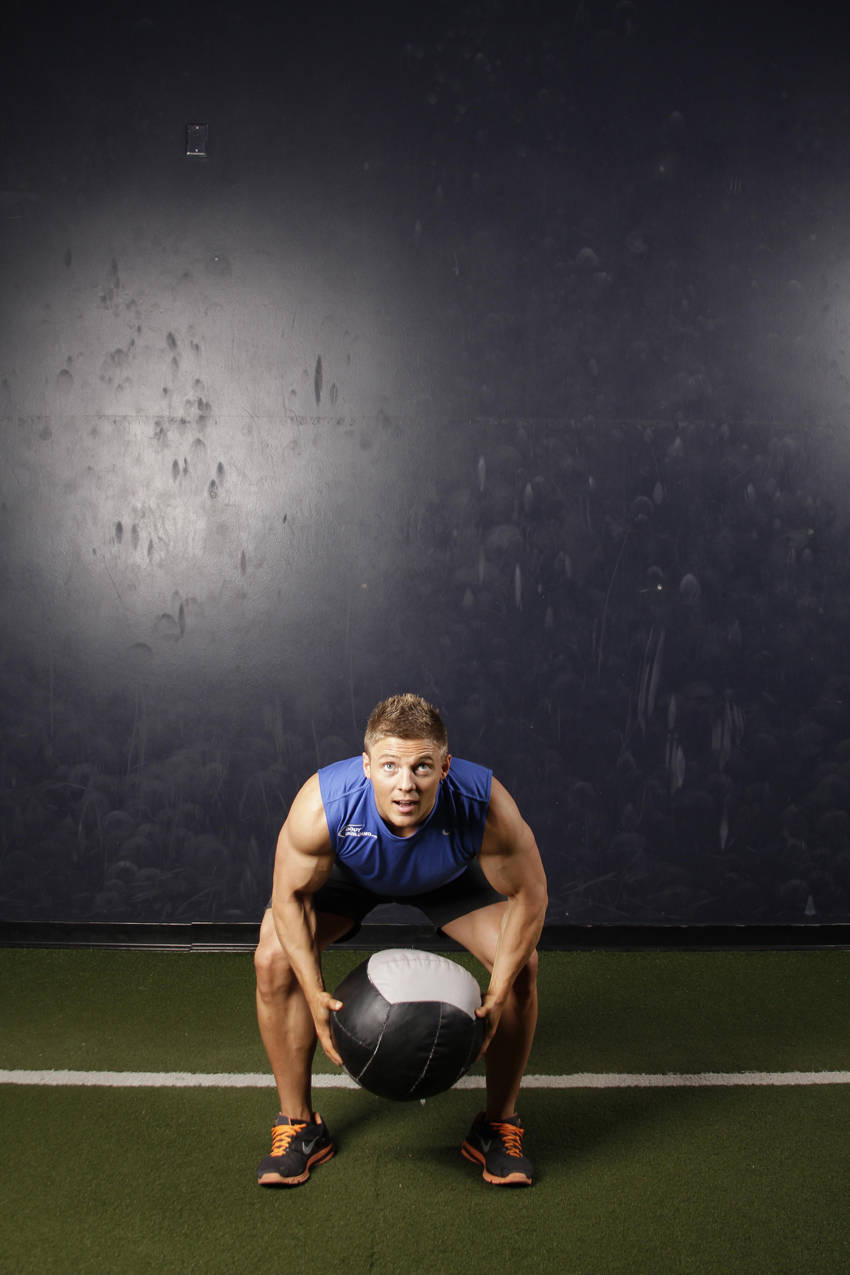
9. Backward Medicine Ball Throw
68% match- Delts
- Medicine-ball
- Intermediate
- Compound
How to perform this exercise
- This exercise is best done with a partner. If you lack a partner, the ball can be thrown and retrieved or thrown against a wall.
- Begin standing a few meters in front of your partner, both facing the same direction. Begin holding the ball between your legs.
- Squat down and then forcefully reverse direction, coming to full extension and you toss the ball over your head to your partner.
- Your partner can then roll the ball back to you. Repeat for the desired number of repetitions.
Sets and reps: 3 or 4 sets of 6 to 10 reps.
Why this matches
- Primary muscle: delts, the same as the Dumbbell Seated Bent Arm Lateral Raise
- Equipment: free weights, the same as the Dumbbell Seated Bent Arm Lateral Raise
- Body position: standing, not seated
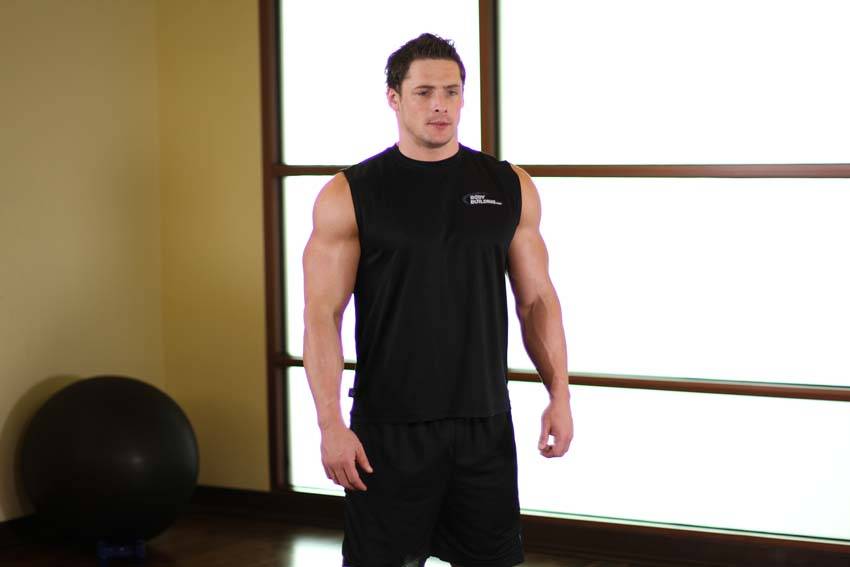
10. Shoulder Raise
67% match- Delts
- Dumbbell
- Beginner
- Isolation
How to perform this exercise
- Relax your arms to your sides and raise your shoulders up toward your ears, then back down.
Sets and reps: 3 sets of 10 to 15 reps.
Why this matches
- Primary muscle: delts, the same as the Dumbbell Seated Bent Arm Lateral Raise
- Equipment: free weights, the same as the Dumbbell Seated Bent Arm Lateral Raise
- Body position: standing, not seated
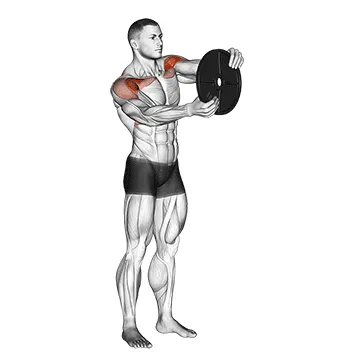
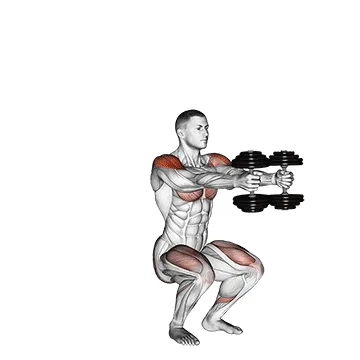
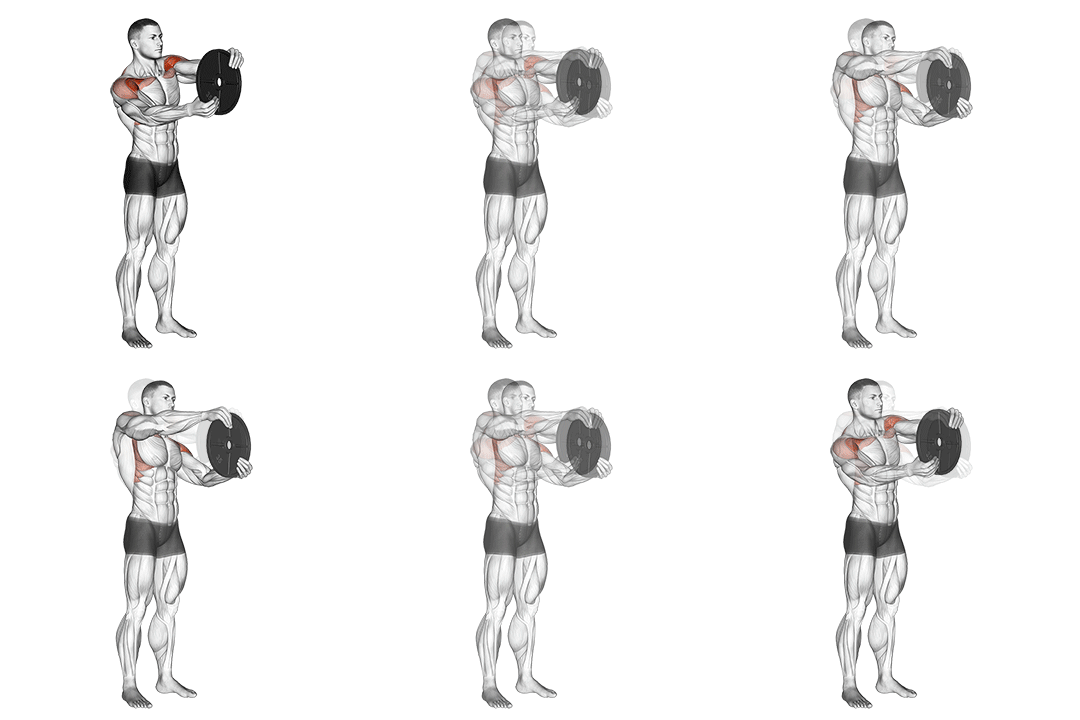
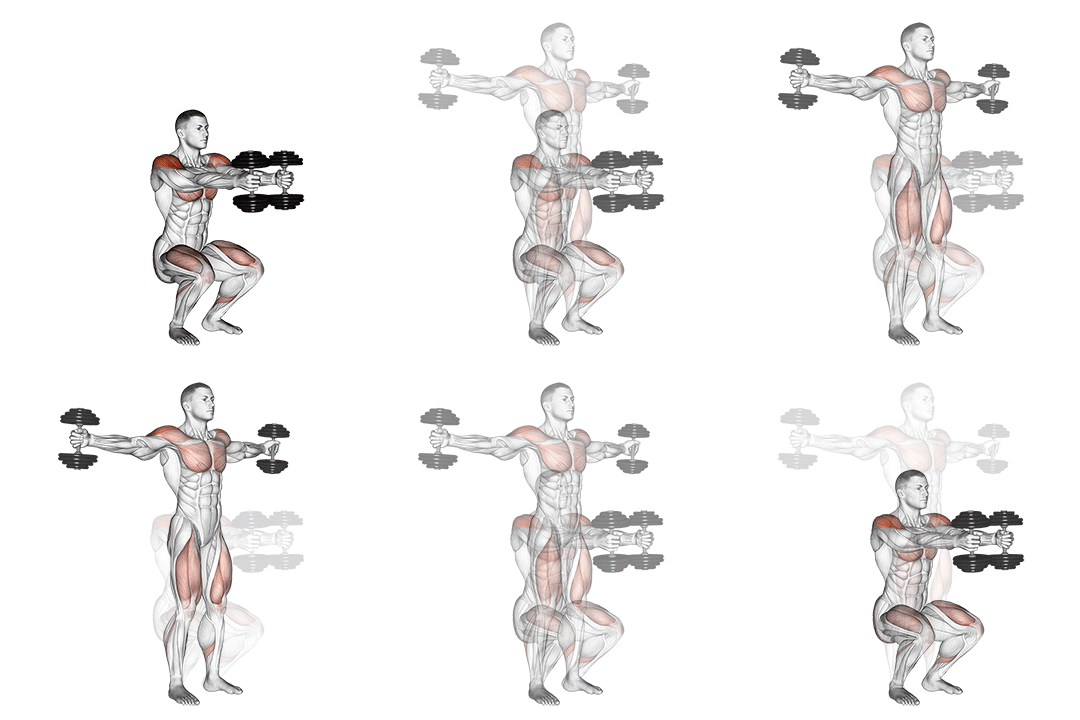
How to Choose the Right Dumbbell Seated Bent Arm Lateral Raise Substitute
Select a substitute based on equipment, training goal, and shoulder mechanics. For hypertrophy pick cables or dumbbells to progress load and time under tension; cue: pause at 90° abduction and control the eccentric. For rehab or pain use light bands or side-lying raises to limit joint stress and focus on scapular stability, keep the scapula down and avoid shrugging. If you lack equipment, choose isometric lateral holds to increase time under tension. Prioritize options that allow you to keep the elbow bent to shorten the lever arm and maintain humeral abduction in the frontal plane.
Dumbbell Seated Bent Arm Lateral Raise FAQ
What muscles does Dumbbell Seated Bent Arm Lateral Raise work?
The exercise primarily targets the lateral (middle) deltoid while the anterior and posterior deltoid assist. The rotator cuff and scapular stabilizers engage isometrically to control the humeral head; cue: keep the elbow at about 90° and lead with the elbow to maximize lateral-delt activation and limit trapezius takeover.
What is the best bodyweight alternative to Dumbbell Seated Bent Arm Lateral Raise?
A practical bodyweight option is the side-lying arm raise: lie on your side and lift the top arm into abduction, keeping the elbow bent and thumb up to bias the lateral deltoid. Use slow eccentrics and a controlled pause at the top to increase tension when you lack external load.
Can I build muscle without doing Dumbbell Seated Bent Arm Lateral Raise?
Yes. You can build lateral-delt size with cables, bands, standing bent-arm laterals, or machine lateral raises as long as you apply progressive overload and sufficient volume. Focus on strict elbow-led abduction, controlled eccentrics, and progressive resistance to ensure targeted lateral-delt recruitment.
Find Alternatives for Any Exercise
Search the exercise database and filter the ranked substitutes by the equipment you own.
Similarity scores compare exercise metadata such as movement pattern, muscles, equipment and body position. They are not a safety rating or a check that you own the equipment. Learn about our methodology