

10 Best Quick Feet V. 2 Alternatives for Calf Conditioning
If you can't perform Quick Feet V. 2, choose other calf-focused drills that preserve rapid plantarflexion and neuromuscular speed. Options include pogo hops, single- and double-leg calf raises, seated calf raises, and eccentric heel drops. Technique cue: drive from the balls of your feet and keep ankles springy; bend the knees slightly to bias the soleus.
Original Exercise: Quick Feet V. 2
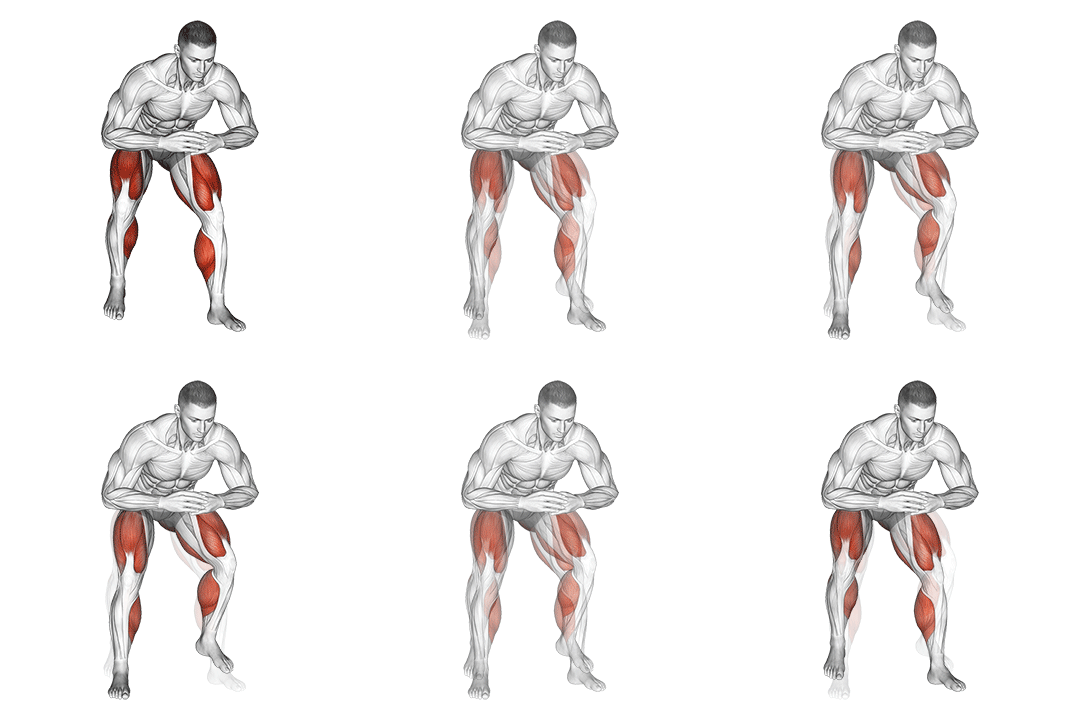
How to Perform Quick Feet V. 2
- Stand with your feet shoulder-width apart and your arms by your sides.
- Begin by rapidly moving your feet up and down, as if you were running in place.
- Keep your movements quick and light, focusing on staying on the balls of your feet.
- Continue for the desired duration or number of repetitions.
Best Quick Feet V. 2 Alternatives
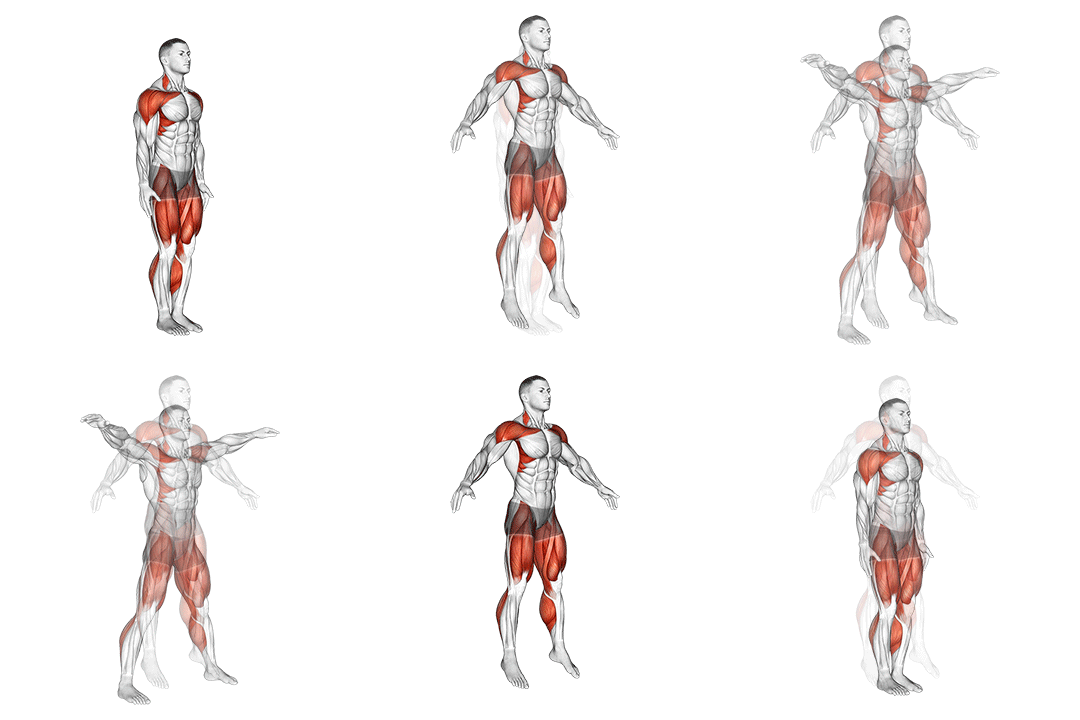
1. Astride Jumps (male)
76% MatchHow to perform this exercise
- Stand with your feet shoulder-width apart.
- Bend your knees and lower your body into a squat position.
- Jump explosively upwards, extending your legs and arms.
- While in the air, spread your legs apart and bring your arms out to the sides.
- Land softly with your feet shoulder-width apart, bending your knees to absorb the impact.
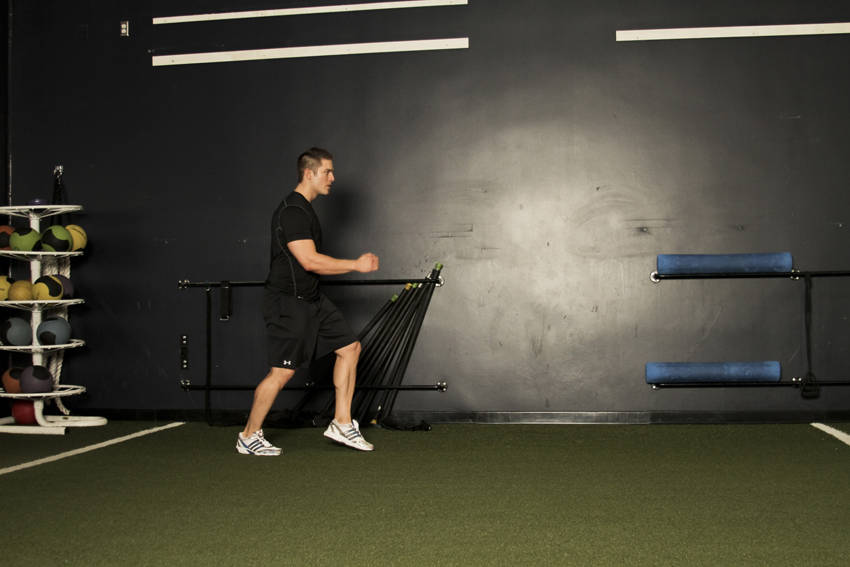
2. Fast Skipping
68.9% MatchHow to perform this exercise
- Start in a relaxed position with one leg slightly forward. This will be your starting position.
- Skip by executing a step-hop pattern of right-right-step to left-left-step, and so on, alternating back and forth.
- Perform fast skips by maintaining close contact with the ground and reduce air time, moving as quickly as possible.
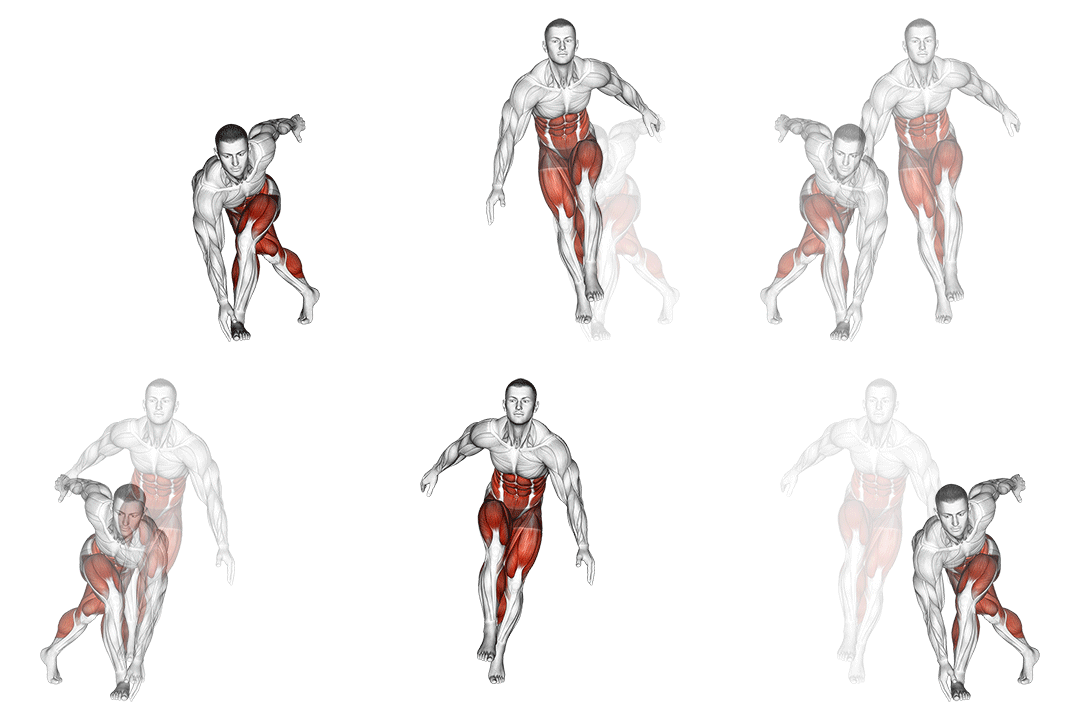
3. Back And Forth Step
68.9% MatchHow to perform this exercise
- Stand with your feet shoulder-width apart.
- Step forward with your right foot, bending your knee and lowering your body into a lunge position.
- Push off with your right foot and step back to the starting position.
- Repeat the movement with your left foot, alternating legs with each step.
- Continue stepping back and forth, maintaining a steady pace.
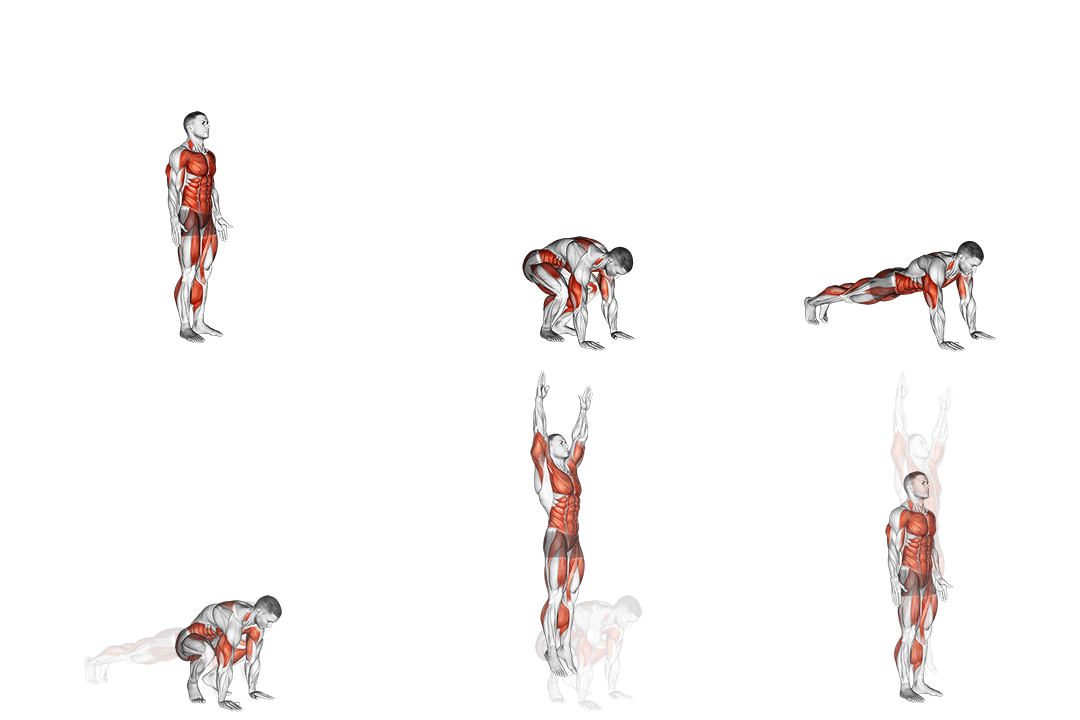
4. Burpee
67.9% MatchHow to perform this exercise
- Start in a standing position with your feet shoulder-width apart.
- Lower your body into a squat position by bending your knees and placing your hands on the floor in front of you.
- Kick your feet back into a push-up position.
- Perform a push-up, keeping your body in a straight line.
- Jump your feet back into the squat position.
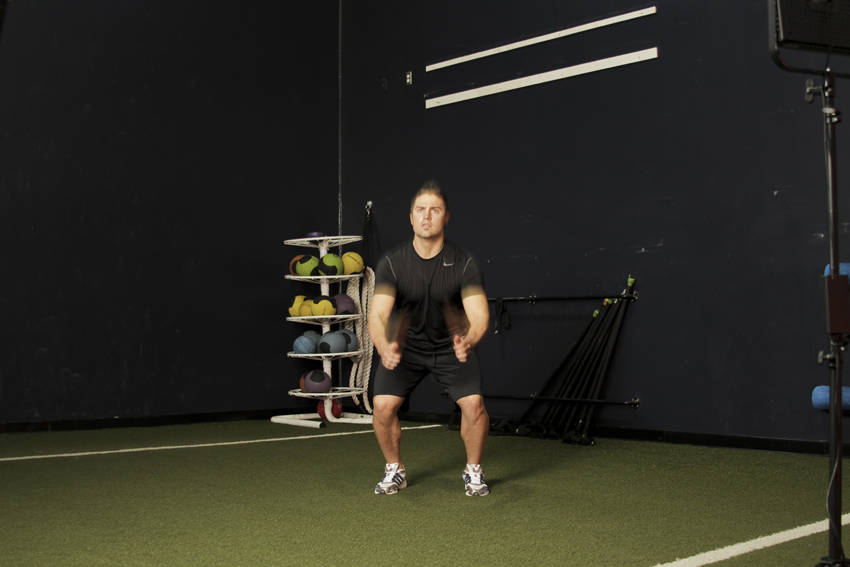
5. Double Leg Butt Kick
66.3% MatchHow to perform this exercise
- Begin standing with your knees slightly bent.
- Quickly squat a short distance, flexing the hips and knees, and immediately extend to jump for maximum vertical height.
- As you go up, tuck your heels by flexing the knees, attempting to touch the buttocks.
- Finish the motion by landing with the knees only partially bent, using your legs to absorb the impact.
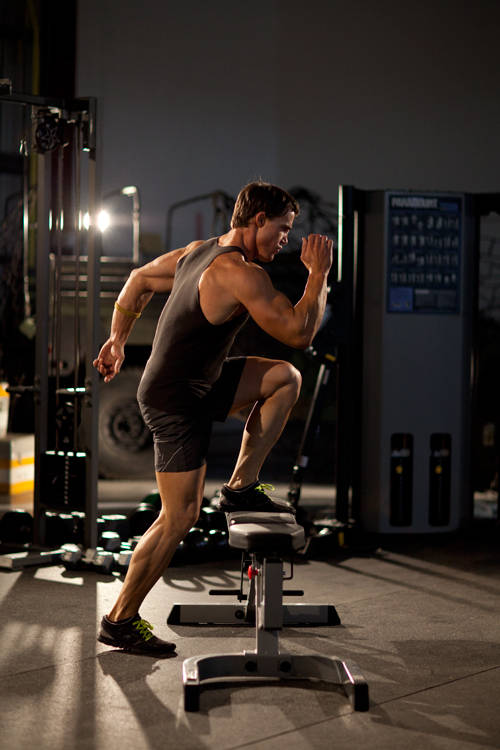
6. Bench Sprint
59.9% MatchHow to perform this exercise
- Stand on the ground with one foot resting on a bench or box with your heel close to the edge.
- Push off with your foot on top of the bench, extending through the hip and knee.
- Land with the opposite foot on top of the box, returning your other foot back to the start position.
- Continue alternating from one foot to another to complete the set.
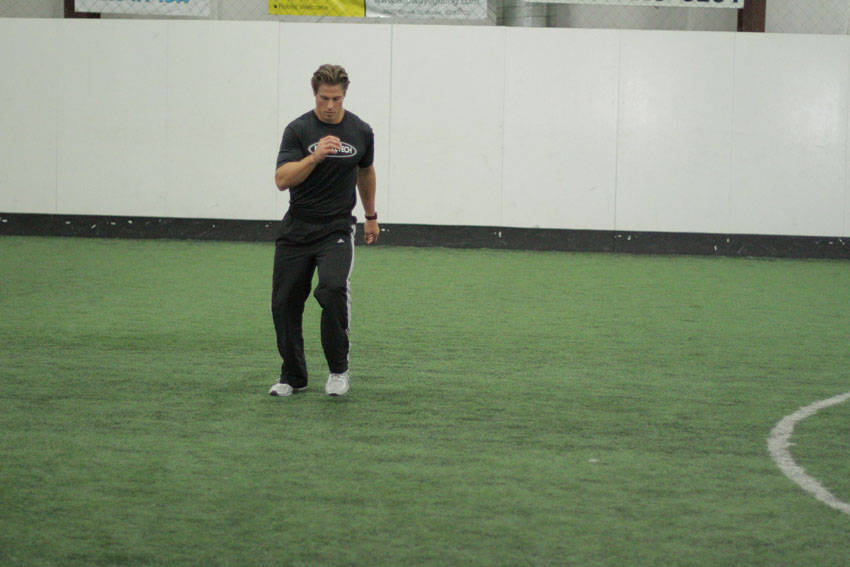
7. Carioca Quick Step
59.7% MatchHow to perform this exercise
- Begin with your feet a few inches apart and your left arm up in a relaxed, athletic position.
- With your right foot, quick step behind and pull the knee up.
- Fire your arms back up when you pull the right knee, being sure that your knee goes straight up and down. Avoid turning your feet as you move and continue to look forward as you move to the side.
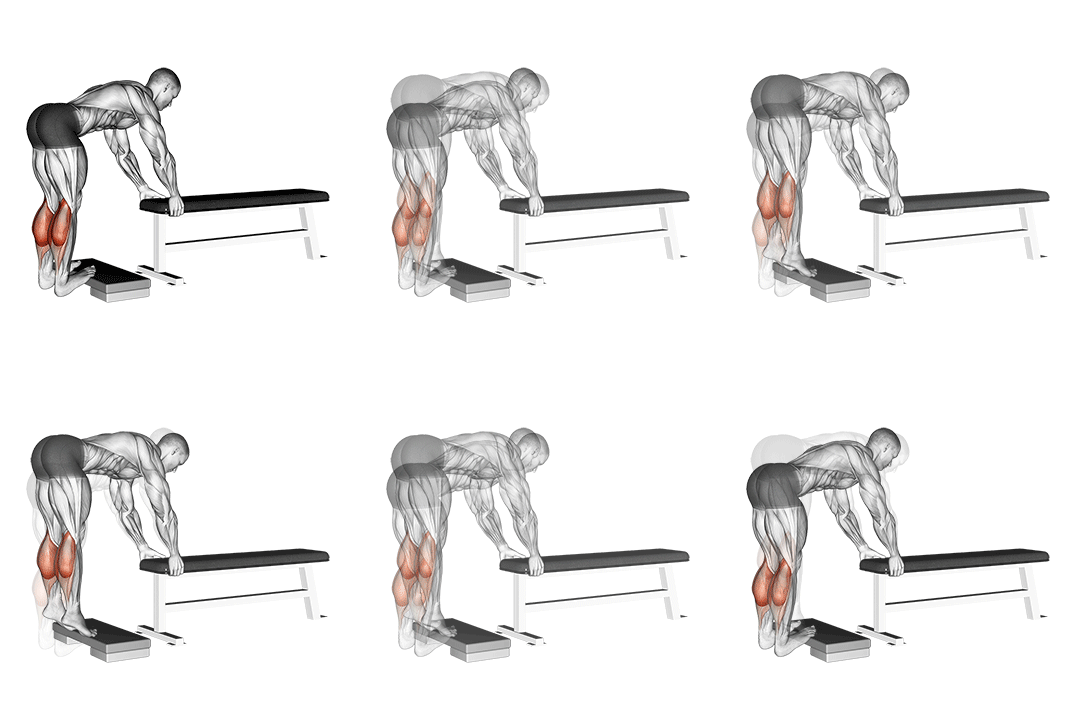
8. Donkey Calf Raise
56.7% MatchHow to perform this exercise
- Stand with your toes on an elevated surface, such as a step or block.
- Place your hands on a stable support, such as a wall or railing, for balance.
- Raise your heels as high as possible, lifting your body weight onto the balls of your feet.
- Pause for a moment at the top, then slowly lower your heels back down to the starting position.
- Repeat for the desired number of repetitions.
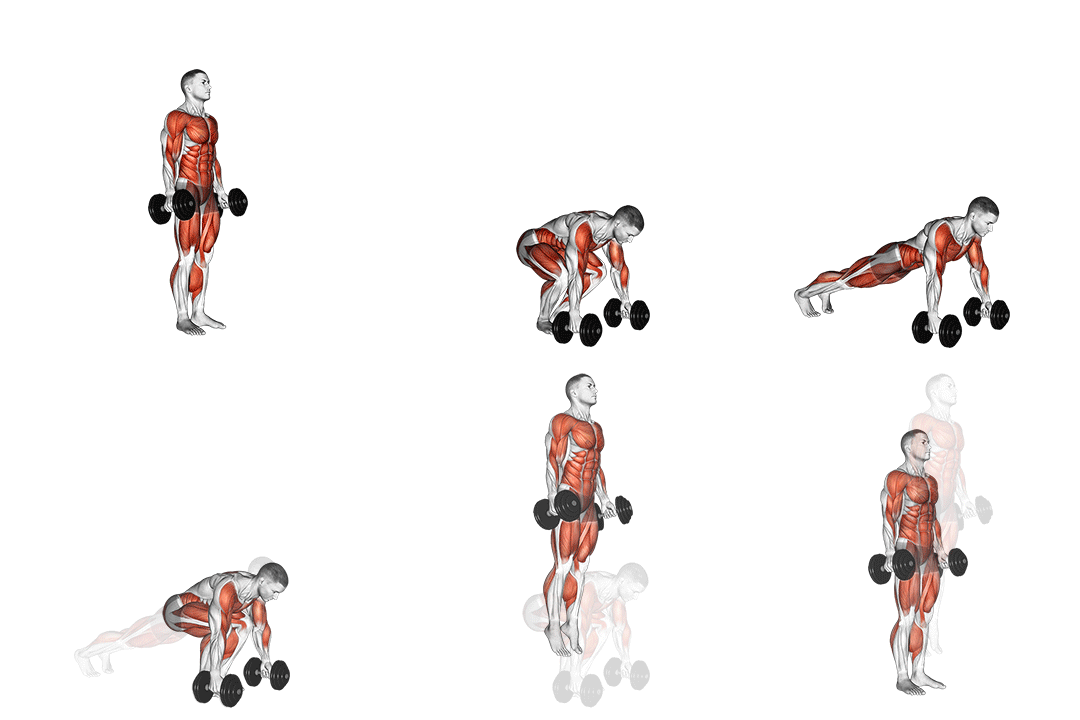
9. Dumbbell Burpee
56.6% MatchHow to perform this exercise
- Start in a standing position with your feet shoulder-width apart and a dumbbell in each hand.
- Lower your body into a squat position, placing the dumbbells on the ground in front of you.
- Kick your feet back into a push-up position, keeping your body in a straight line.
- Perform a push-up, bending your elbows and lowering your chest towards the ground.
- Jump your feet back towards your hands, landing in a squat position.
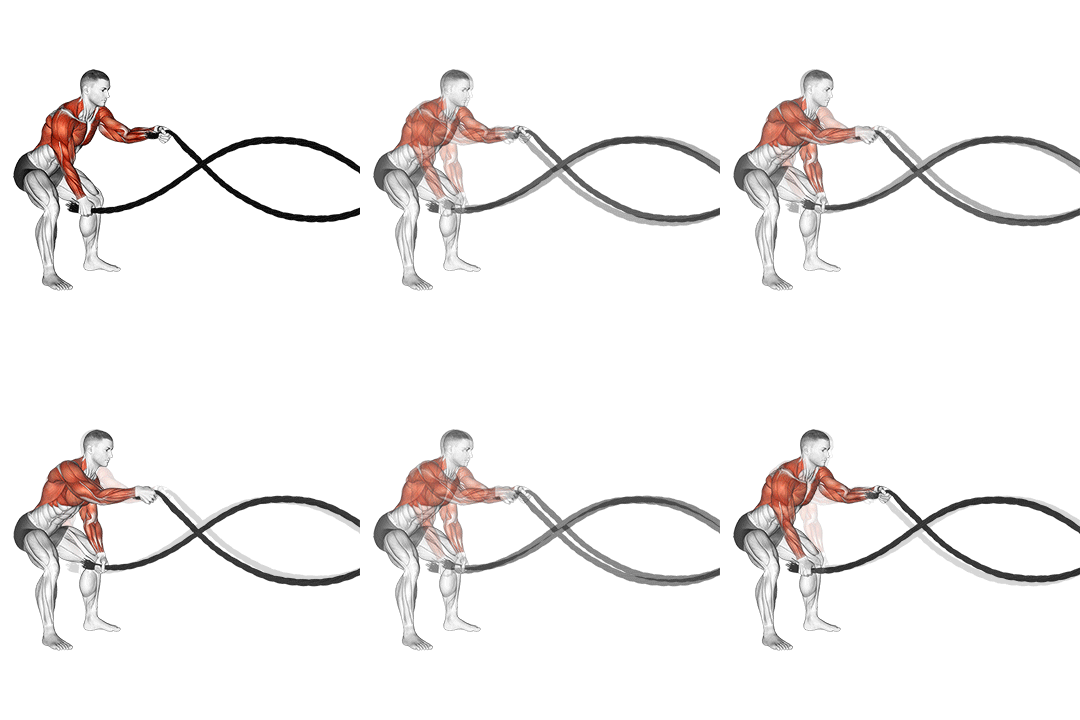
10. Battling Ropes
56.2% MatchHow to perform this exercise
- Stand with your feet shoulder-width apart and knees slightly bent.
- Hold one end of the rope in each hand, with your palms facing each other.
- Raise your arms to shoulder height, keeping your elbows slightly bent.
- Begin making alternating waves with the ropes by rapidly raising and lowering each arm.
- Continue for the desired duration or number of repetitions.
Why You Might Need a Quick Feet V. 2 Alternative
You may need alternatives because Quick Feet V. 2 is high-impact and loads the Achilles and gastrocnemius quickly, which can aggravate ankle or tendon issues. Substitutes let you reduce impact, increase time under tension for hypertrophy, or emphasize unilateral control to fix imbalances. Biomechanically, Quick Feet emphasize fast plantarflexion and short ground contact; slower heel raises or seated variations shift load to the soleus and reduce tendon shear. Technique cue: when using eccentric heel drops, control the descent for 2–3 seconds and avoid collapsing at the ankle to maintain safe joint mechanics.
How to Choose the Right Substitute
Select a substitute by matching your training goal, joint status, and available space. For power and reactive ability pick plyometrics like pogo hops and cue short ground contact by springing from the balls of your feet with soft knees. For hypertrophy use slow bilateral or single-leg heel raises with 2–3 second eccentrics and full range of motion to increase time under tension. If you have Achilles or ankle pain prioritize seated or bent-knee raises to bias the soleus and cut tendon shear. Add unilateral work to address side-to-side deficits and progress with bands or external load when bodyweight becomes easy.
Frequently Asked Questions
What muscles does Quick Feet V. 2 work?
Quick Feet V. 2 primarily targets the calf complex: the gastrocnemius for rapid plantarflexion and the soleus for sustained ankle plantarflexion. It also loads the Achilles tendon and recruits stabilizers like the tibialis anterior and peroneals to control ankle position.
What is the best bodyweight alternative to Quick Feet V. 2?
Single-leg calf hops are an effective bodyweight substitute because they replicate rapid plantarflexion and neuromuscular demand while allowing progression. Technique cue: keep your torso upright, land softly with a slightly bent knee, and minimize ground contact time to train reactive strength.
Can I build muscle without doing Quick Feet V. 2?
Yes. Calf hypertrophy responds to mechanical tension and volume rather than one specific drill. Use higher-rep calf raises, slow eccentrics, and unilateral progressions to increase time under tension and overload the gastrocnemius and soleus.
More Exercise Alternatives
Find Alternatives for Any Exercise
Use our free tool to discover the best substitute exercises based on your available equipment and goals.
Try the Exercise Substitution Finder →