

10 Best Reverse Machine Flyes Alternatives for Gym & Home
If you can't do Reverse Machine Flyes, use bent-over dumbbell reverse flyes, face pulls, band pull-aparts, chest-supported reverse flyes, or single-arm cable rear-delt flyes. Focus on horizontal abduction and scapular retraction; lead with the elbows, keep a slight bend, and emphasize posterior deltoid contraction through full ROM.
Original Exercise: Reverse Machine Flyes
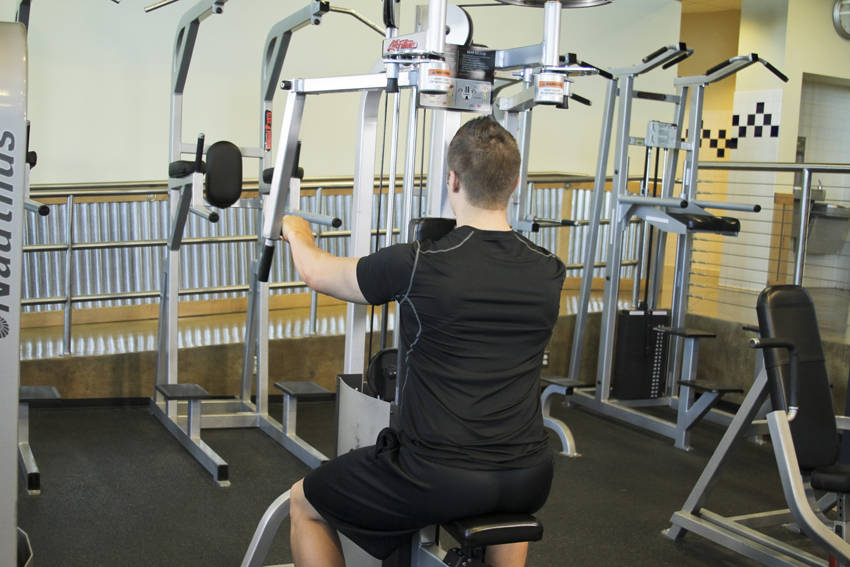
How to Perform Reverse Machine Flyes
- Adjust the handles so that they are fully to the rear. Make an appropriate weight selection and adjust the seat height so the handles are at shoulder level. Grasp the handles with your hands facing inwards. This will be your starting position.
- In a semicircular motion, pull your hands out to your side and back, contracting your rear delts.
- Keep your arms slightly bent throughout the movement, with all of the motion occurring at the shoulder joint.
- Pause at the rear of the movement, and slowly return the weight to the starting position.
Pro Tips
- Category: Strength
- Force: Pull
- Movement type: Isolation
Best Reverse Machine Flyes Alternatives
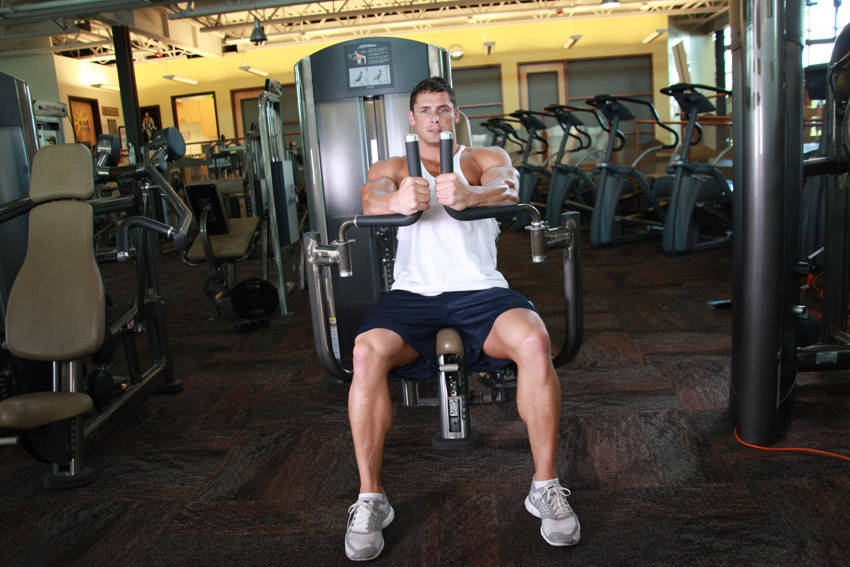
1. Butterfly
84.3% MatchHow to perform this exercise
- Sit on the machine with your back flat on the pad.
- Take hold of the handles. Tip: Your upper arms should be positioned parallel to the floor; adjust the machine accordingly. This will be your starting position.
- Push the handles together slowly as you squeeze your chest in the middle. Breathe out during this part of the motion and hold the contraction for a second.
- Return back to the starting position slowly as you inhale until your chest muscles are fully stretched.
- Repeat for the recommended amount of repetitions.
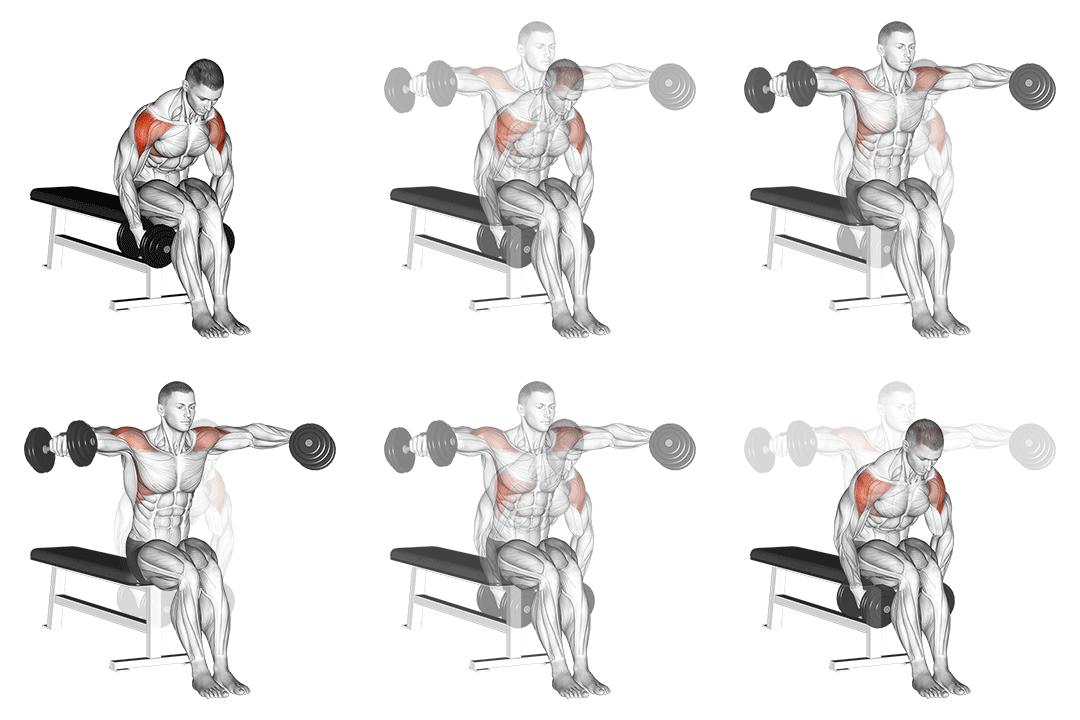
2. Dumbbell Seated Bent Arm Lateral Raise
82.6% MatchHow to perform this exercise
- Sit on a bench with your back straight and feet flat on the ground.
- Hold a dumbbell in each hand with your palms facing your body and your arms bent at a 90-degree angle.
- Keeping your elbows bent, raise your arms out to the sides until they are parallel to the ground.
- Pause for a moment at the top, then slowly lower your arms back down to the starting position.
- Repeat for the desired number of repetitions.
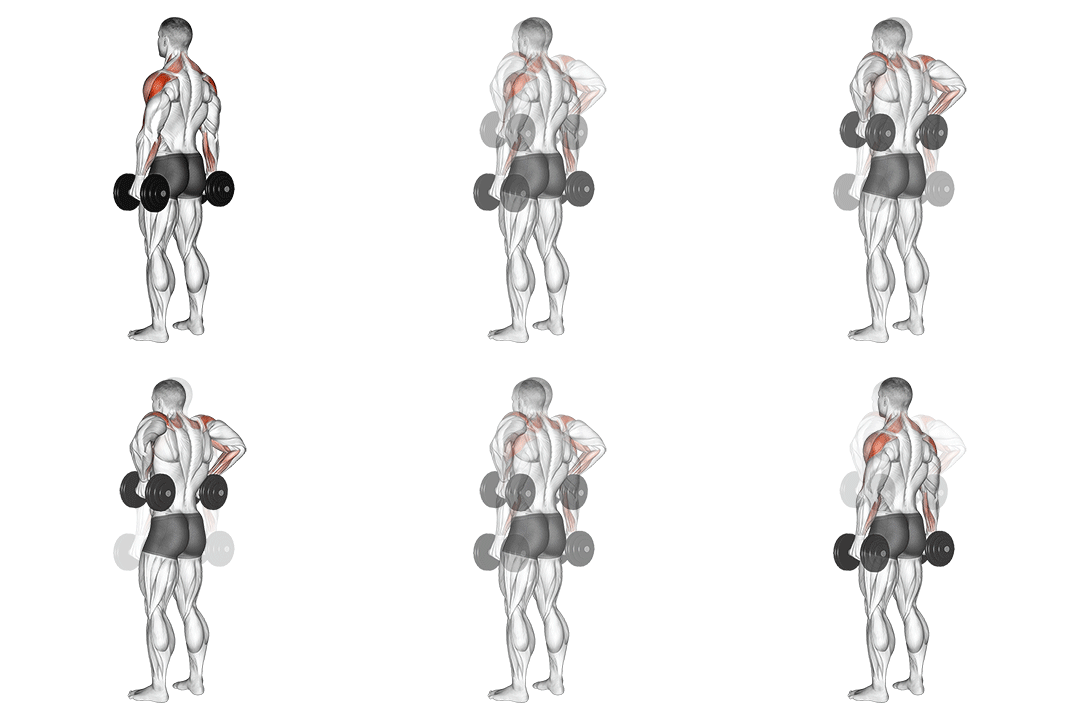
3. Dumbbell Rear Delt Raise
73.8% MatchHow to perform this exercise
- Stand with your feet shoulder-width apart and hold a dumbbell in each hand, palms facing your body.
- Bend your knees slightly and hinge forward at the hips, keeping your back straight.
- Raise your arms out to the sides, keeping a slight bend in your elbows, until they are parallel to the floor.
- Pause for a moment at the top, then slowly lower your arms back down to the starting position.
- Repeat for the desired number of repetitions.
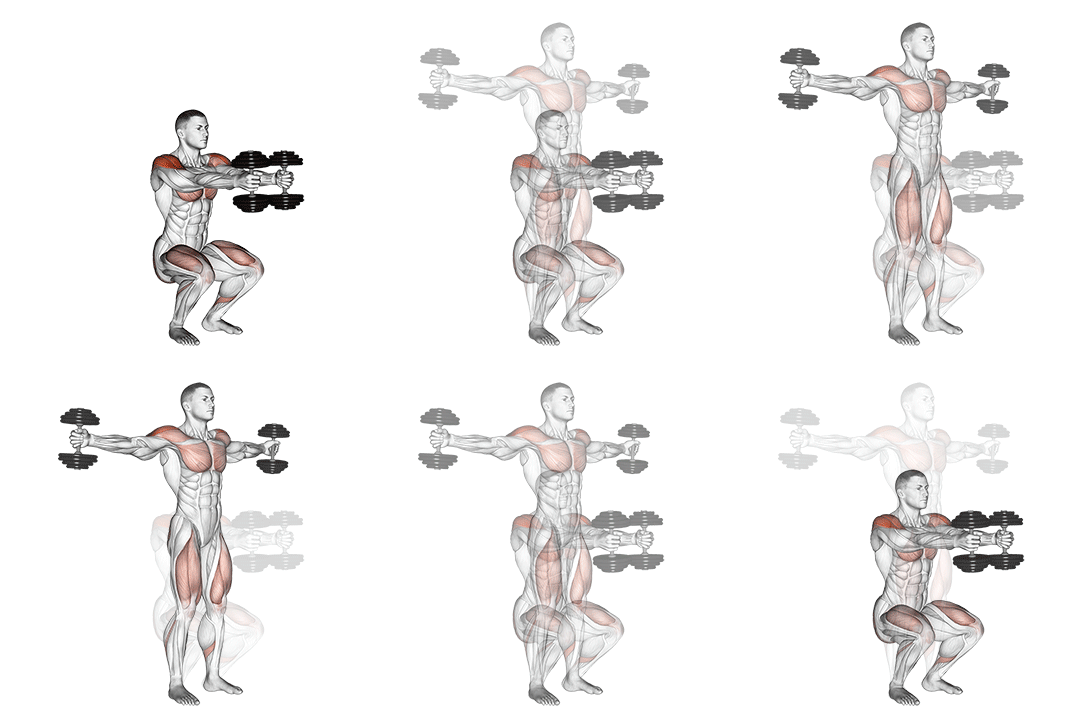
4. Dumbbell Iron Cross
71.9% MatchHow to perform this exercise
- Stand with your feet shoulder-width apart, holding a dumbbell in each hand at your sides.
- Raise your arms out to the sides until they are parallel to the ground, forming a T shape with your body.
- Pause for a moment, then slowly lower your arms back down to the starting position.
- Repeat for the desired number of repetitions.
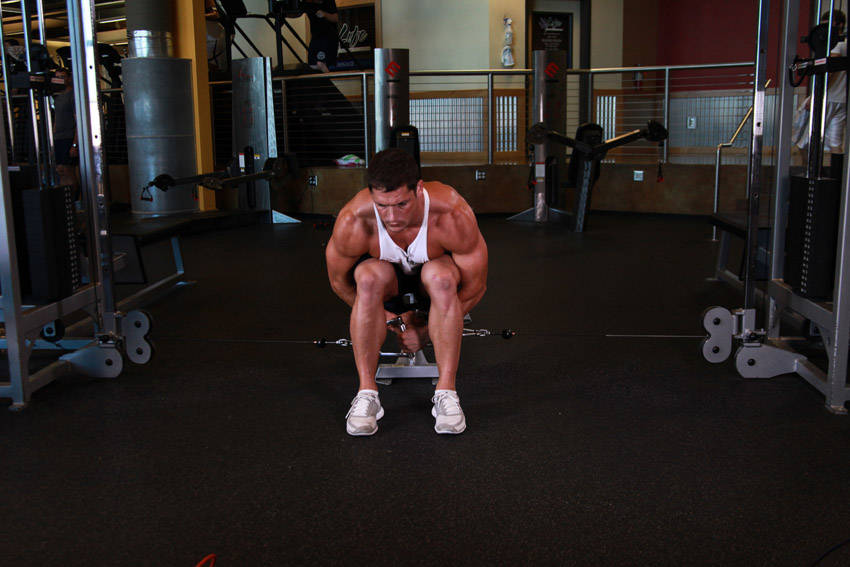
5. Cable Seated Lateral Raise
68.7% MatchHow to perform this exercise
- Stand in the middle of two low pulleys that are opposite to each other and place a flat bench right behind you (in perpendicular fashion to you; the narrow edge of the bench should be the one behind you). Select the weight to be used on each pulley.
- Now sit at the edge of the flat bench behind you with your feet placed in front of your knees.
- Bend forward while keeping your back flat and rest your torso on the thighs.
- Have someone give you the single handles attached to the pulleys. Grasp the left pulley with the right hand and the right pulley with the left after you select your weight. The pulleys should run under your knees and your arms will be extended with palms facing each other and a slight bend at the elbows. This will be the starting position.
- While keeping the arms stationary, raise the upper arms to the sides until they are parallel to the floor and at shoulder height. Exhale during the execution of this movement and hold the contraction for a second.

6. Cross Over - With Bands
65.7% MatchHow to perform this exercise
- Secure an exercise band around a stationary post.
- While facing away from the post, grab the handles on both ends of the band and step forward enough to create tension on the band.
- Raise your arms to the sides, parallel to the floor, perpendicular to your torso (your torso and the arms should resemble the letter "T") and with the palms facing forward. Have them extended with a slight bend at the elbows. This will be your starting position.
- While keeping your arms straight, bring them across your chest in a semicircular motion to the front as you exhale and flex your pecs. Hold the contraction for a second.
- Slowly return to the starting position as you inhale.
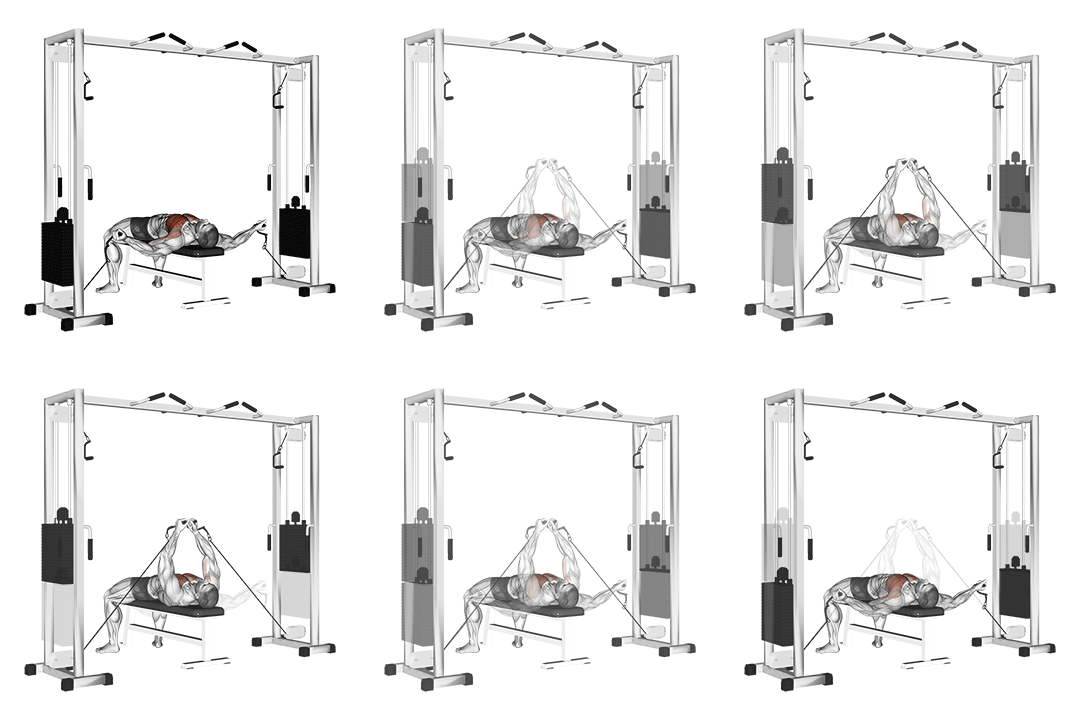
7. Cable Lying Fly
65.4% MatchHow to perform this exercise
- Attach the handles to the cables and lie flat on a bench with your feet flat on the ground.
- Hold the handles with your palms facing each other and your arms extended straight above your chest.
- Keeping a slight bend in your elbows, lower your arms out to the sides in a wide arc until you feel a stretch in your chest.
- Pause for a moment, then squeeze your chest muscles to bring your arms back to the starting position.
- Repeat for the desired number of repetitions.
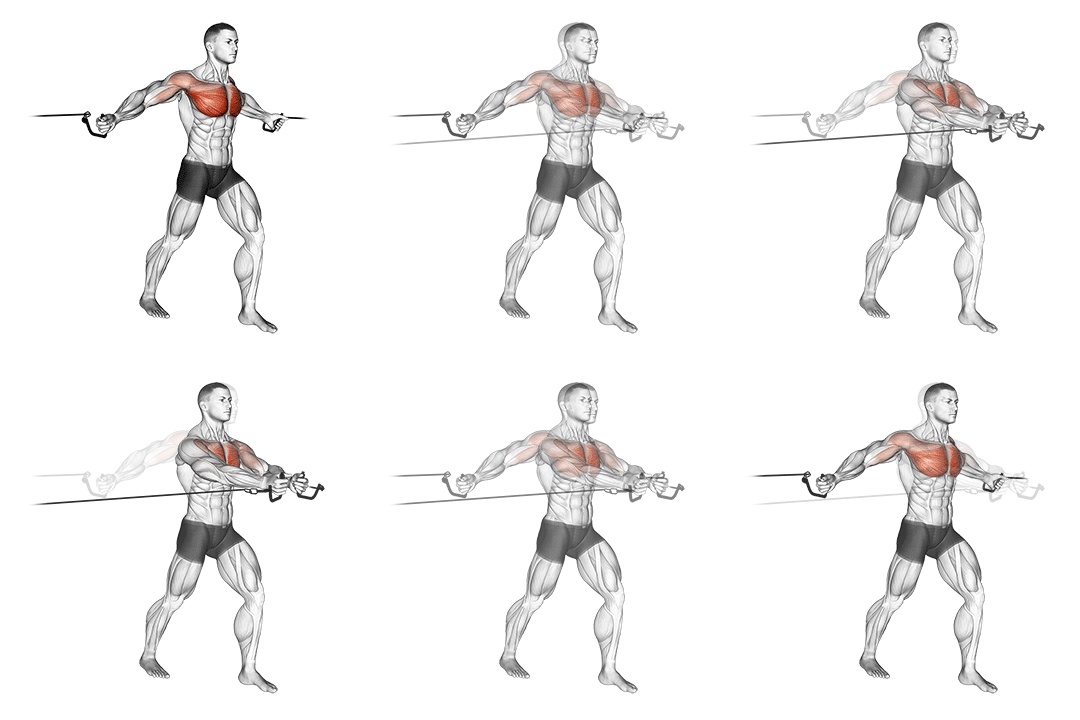
8. Cable Middle Fly
65.4% MatchHow to perform this exercise
- Attach cables to both sides of a cable machine at chest height.
- Stand in the center of the machine with one foot slightly in front of the other.
- Grasp the handles with an overhand grip and extend your arms out to the sides.
- Keep a slight bend in your elbows and maintain a slight forward lean.
- Engage your chest muscles and bring your arms forward in a sweeping motion.
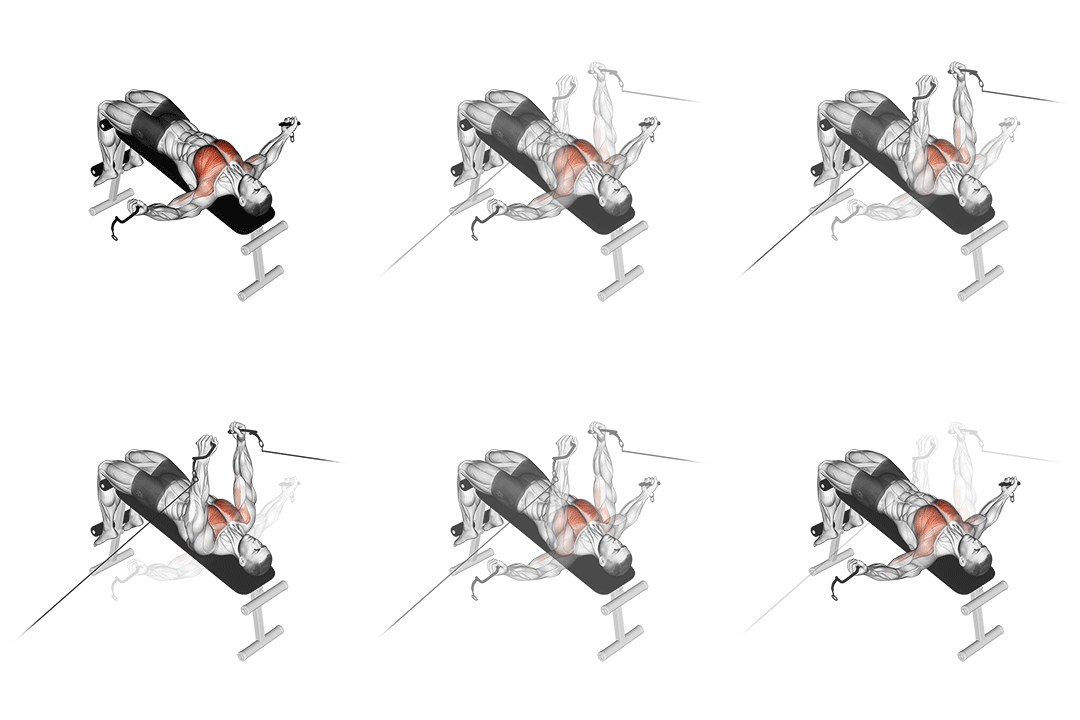
9. Cable Decline Fly
64.3% MatchHow to perform this exercise
- Adjust the cable machine to a decline position.
- Stand facing away from the machine with your feet shoulder-width apart.
- Hold the handles with your palms facing forward and your arms extended straight out in front of you.
- Keeping a slight bend in your elbows, open your arms out to the sides in a controlled motion.
- Pause for a moment at the fully extended position, then slowly return to the starting position.
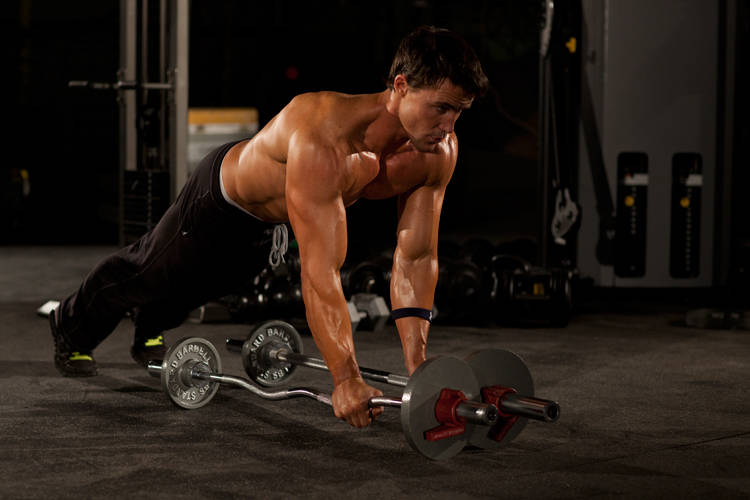
10. Bodyweight Flyes
64.3% MatchHow to perform this exercise
- Position two equally loaded EZ bars on the ground next to each other. Ensure they are able to roll.
- Assume a push-up position over the bars, supporting your weight on your toes and hands with your arms extended and body straight.
- Place your hands on the bars. This will be your starting position.
- Using a slow and controlled motion, move your hands away from the midline of your body, rolling the bars apart. Inhale during this portion of the motion.
- After moving the bars as far apart as you can, return to the starting position by pulling them back together. Exhale as you perform this movement.
Why You Might Need a Reverse Machine Flyes Alternative
You might substitute Reverse Machine Flyes because the machine is unavailable, you have shoulder discomfort with the machine path, or you want unilateral strength and better scapular control. Alternatives let you adjust range of motion, loading tempo, and plane of movement to reduce impingement risk. For example, chest-supported reverse flyes remove lumbar torque and let you drive horizontal abduction from the posterior deltoid; cue a 30-degree torso hinge and squeeze the scapulae at peak contraction to feel posterior-delt activation. Bands and cables let you alter line of pull to emphasize external rotation and scapular retraction when machines feel restrictive.
How to Choose the Right Substitute
Choose a substitute based on available equipment, shoulder health, and whether you need isolation or carryover to compound lifts. Prioritize movements that reproduce horizontal abduction and external rotation — the primary mechanics for posterior delts. If you have shoulder pain, pick chest-supported or banded options to limit compensatory lumbar extension and scapular winging; cue a slight elbow bend and lead with the elbow to isolate the posterior deltoid. For progressive overload, prefer dumbbells or cables so you can increase load in small increments while maintaining posterior-delt tension through the eccentric phase.
Frequently Asked Questions
What muscles does Reverse Machine Flyes work?
Reverse Machine Flyes primarily target the posterior deltoid and secondarily engage the middle trapezius and rhomboids for scapular retraction. Perform horizontal abduction with a slight elbow bend to emphasize the posterior delt and limit triceps contribution.
What is the best bodyweight alternative to Reverse Machine Flyes?
Prone Y or T raises on a bench or floor are the best bodyweight options because they reproduce horizontal abduction and scapular retraction. Cue thumbs-up and lift from the scapula, aiming to feel the posterior deltoid and mid-trap activation rather than neck or upper trap tension.
Can I build muscle without doing Reverse Machine Flyes?
Yes. You can build posterior-delt mass with dumbbell reverse flyes, cables, bands, and bodyweight raises by ensuring progressive overload and sufficient time under tension. Use slow eccentrics, pause at peak contraction, and maintain external rotation and horizontal abduction to maximize posterior-delt recruitment.
More Exercise Alternatives
Find Alternatives for Any Exercise
Use our free tool to discover the best substitute exercises based on your available equipment and goals.
Try the Exercise Substitution Finder →