

10 Best Running, Treadmill Alternatives for Quad Strength & Cardio
If you can’t use a treadmill, choose exercises that maintain quad loading and cardiovascular output: stationary bike, stair climber, hill sprints, sled pushes, and weighted step-ups. For example, pedal at 80–100 rpm on a bike while keeping a slight knee bend to emphasize quad concentric drive through the pedal stroke.
Original Exercise: Running, Treadmill
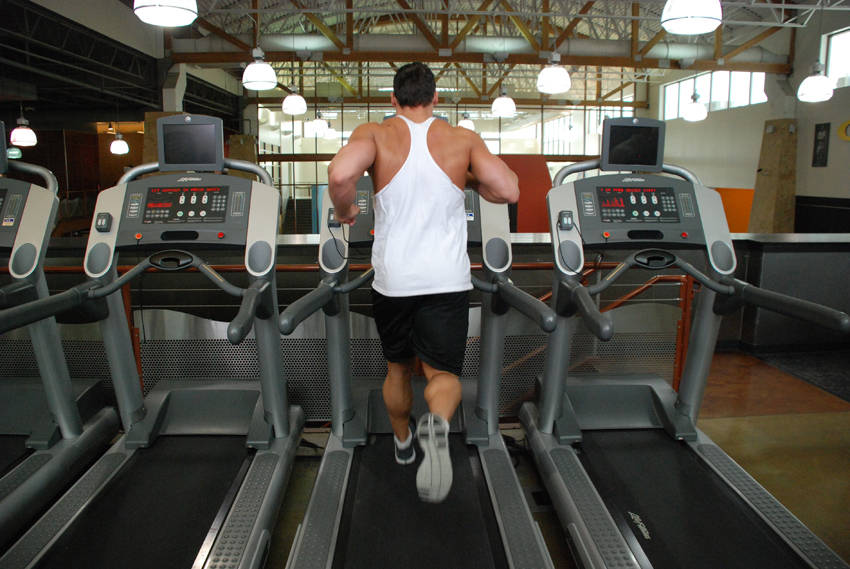
How to Perform Running, Treadmill
- To begin, step onto the treadmill and select the desired option from the menu. Most treadmills have a manual setting, or you can select a program to run. Typically, you can enter your age and weight to estimate the amount of calories burned during exercise. Elevation can be adjusted to change the intensity of the workout.
- Treadmills offer convenience, cardiovascular benefits, and usually have less impact than running outside. A 150 lb person will burn over 450 calories running 8 miles per hour for 30 minutes. Maintain proper posture as you run, and only hold onto the handles when necessary, such as when dismounting or checking your heart rate.
Pro Tips
- Category: Cardio
Best Running, Treadmill Alternatives
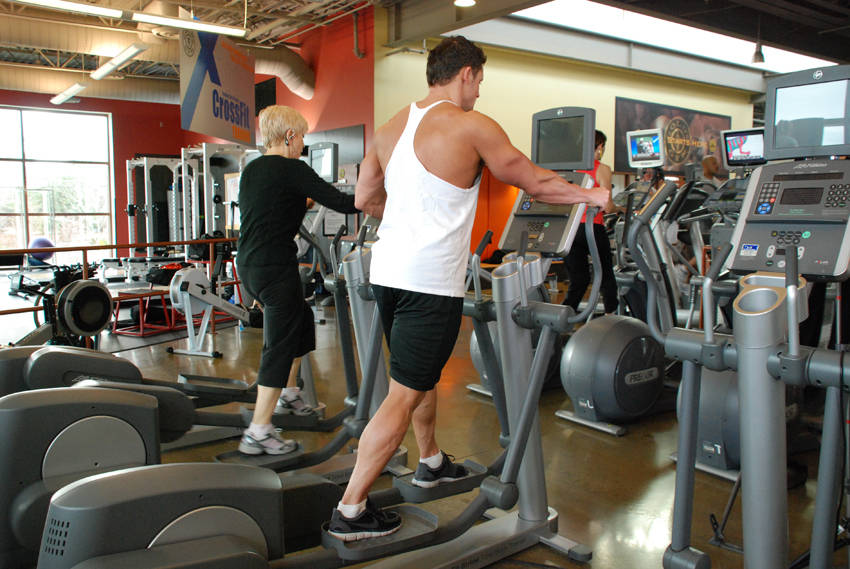
1. Elliptical Trainer
84.4% MatchHow to perform this exercise
- To begin, step onto the elliptical and select the desired option from the menu. Most ellipticals have a manual setting, or you can select a program to run. Typically, you can enter your age and weight to estimate the amount of calories burned during exercise. Elevation can be adjusted to change the intensity of the workout.
- The handles can be used to monitor your heart rate to help you stay at an appropriate intensity.
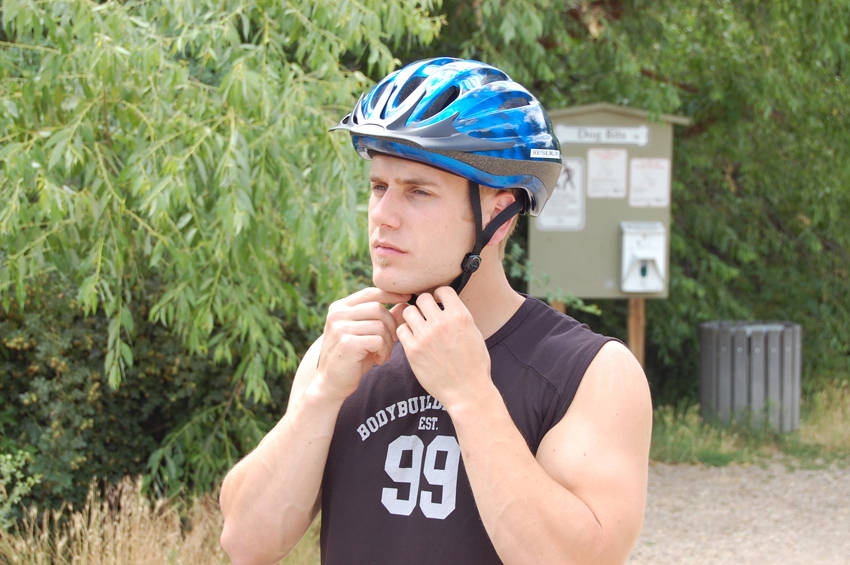
2. Bicycling
70% MatchHow to perform this exercise
- To begin, seat yourself on the bike and adjust the seat to your height.
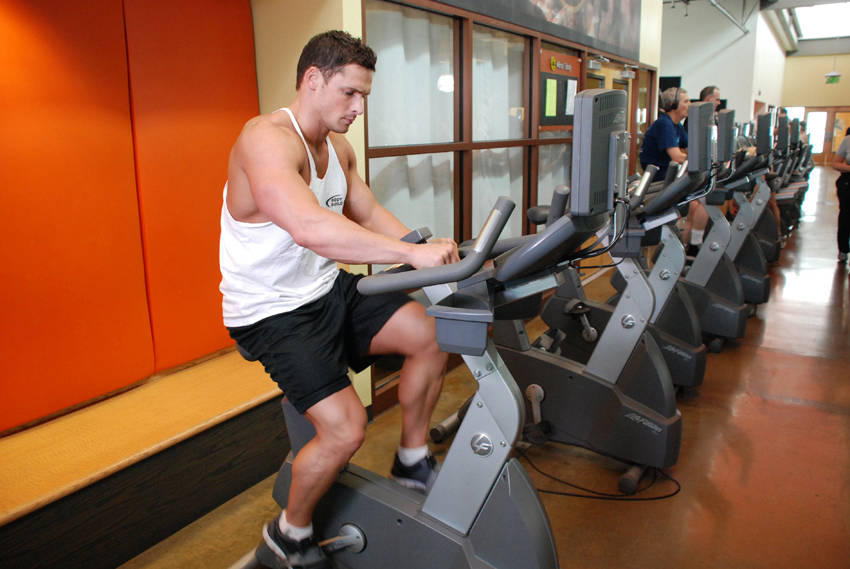
3. Bicycling, Stationary
70% MatchHow to perform this exercise
- To begin, seat yourself on the bike and adjust the seat to your height.
- Select the desired option from the menu. You may have to start pedaling to turn it on. You can use the manual setting, or you can select a program to use. Typically, you can enter your age and weight to estimate the amount of calories burned during exercise. The level of resistance can be changed throughout the workout. The handles can be used to monitor your heart rate to help you stay at an appropriate intensity.
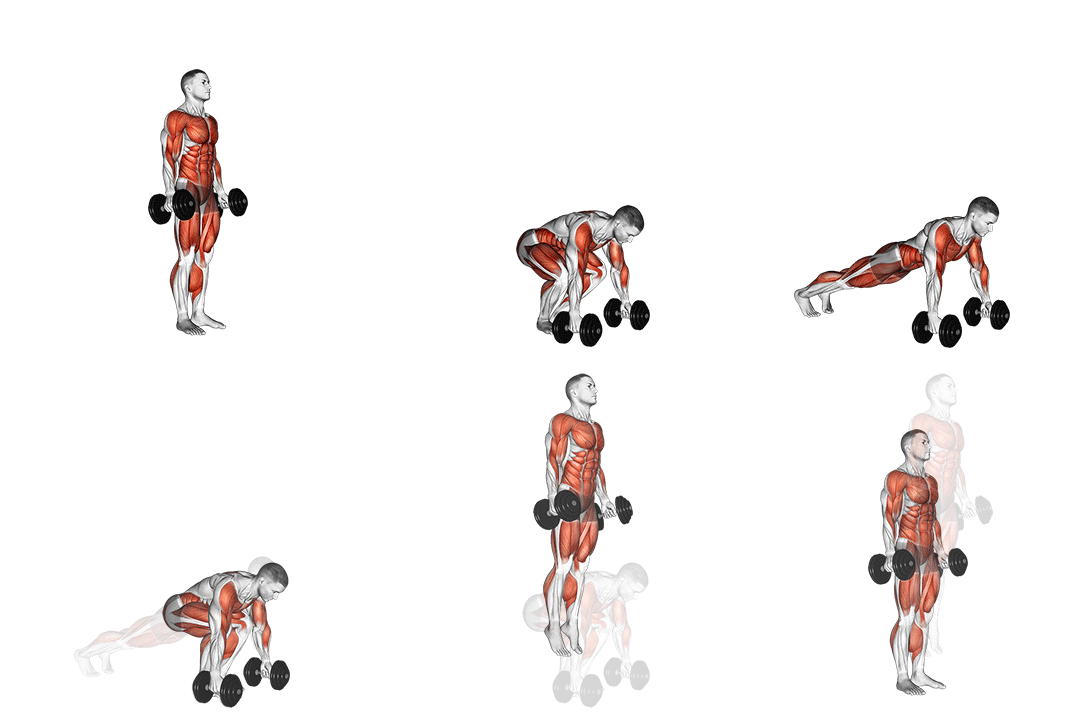
4. Dumbbell Burpee
68.9% MatchHow to perform this exercise
- Start in a standing position with your feet shoulder-width apart and a dumbbell in each hand.
- Lower your body into a squat position, placing the dumbbells on the ground in front of you.
- Kick your feet back into a push-up position, keeping your body in a straight line.
- Perform a push-up, bending your elbows and lowering your chest towards the ground.
- Jump your feet back towards your hands, landing in a squat position.
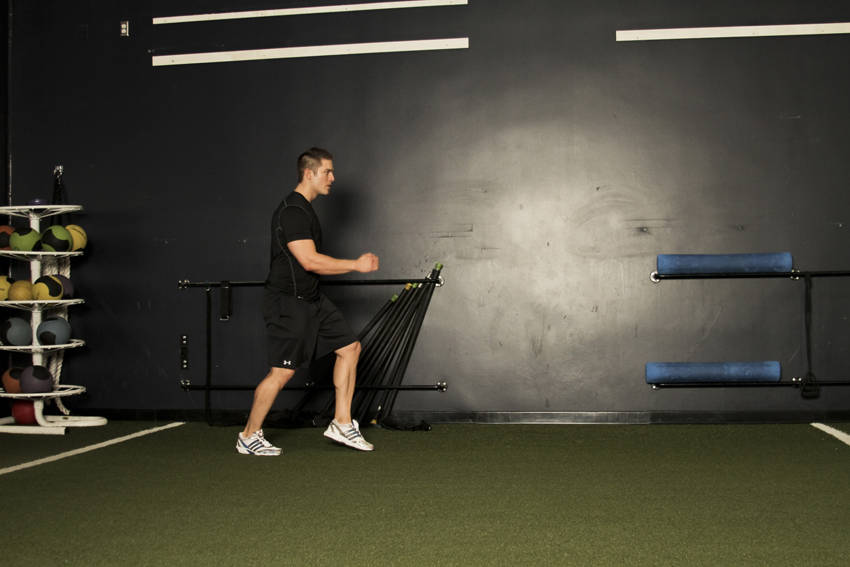
5. Fast Skipping
63.4% MatchHow to perform this exercise
- Start in a relaxed position with one leg slightly forward. This will be your starting position.
- Skip by executing a step-hop pattern of right-right-step to left-left-step, and so on, alternating back and forth.
- Perform fast skips by maintaining close contact with the ground and reduce air time, moving as quickly as possible.
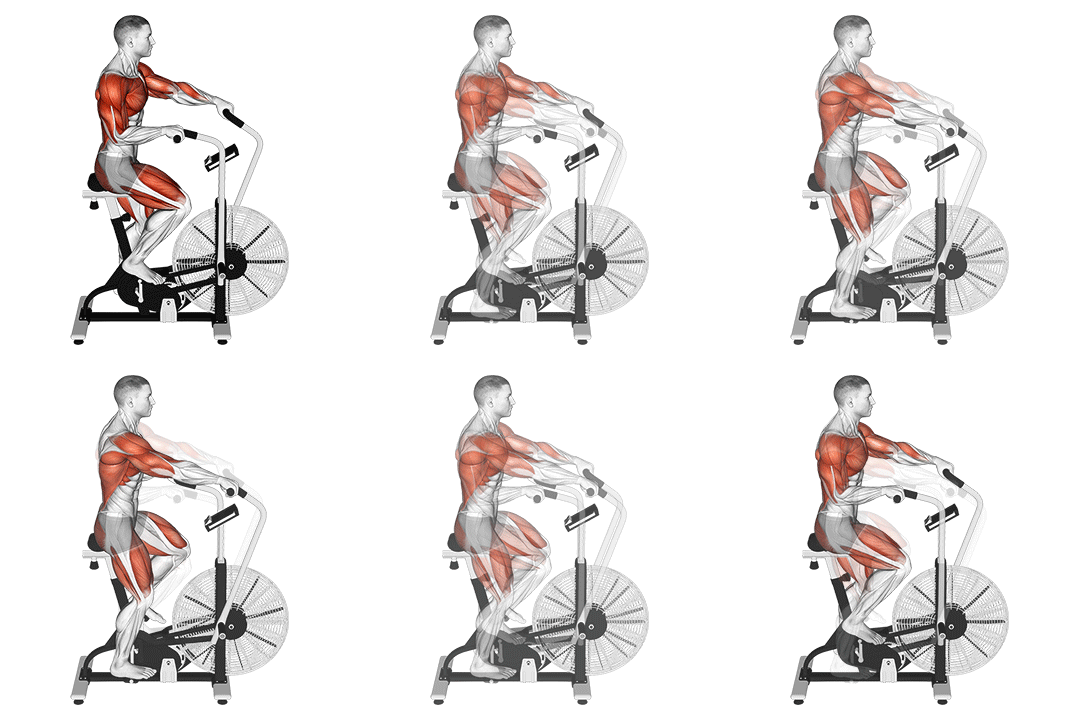
6. Cycle Cross Trainer
61.7% MatchHow to perform this exercise
- Adjust the seat height and position yourself on the cycle cross trainer.
- Place your feet on the pedals and grip the handlebars.
- Start pedaling in a smooth and controlled motion.
- Maintain a steady pace and increase the resistance if desired.
- Continue pedaling for the desired duration of your cardio workout.
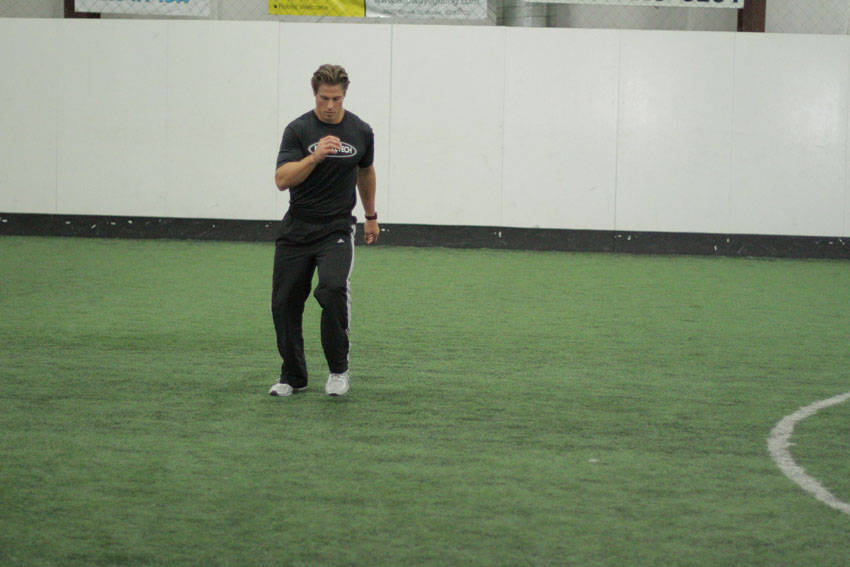
7. Carioca Quick Step
59.6% MatchHow to perform this exercise
- Begin with your feet a few inches apart and your left arm up in a relaxed, athletic position.
- With your right foot, quick step behind and pull the knee up.
- Fire your arms back up when you pull the right knee, being sure that your knee goes straight up and down. Avoid turning your feet as you move and continue to look forward as you move to the side.
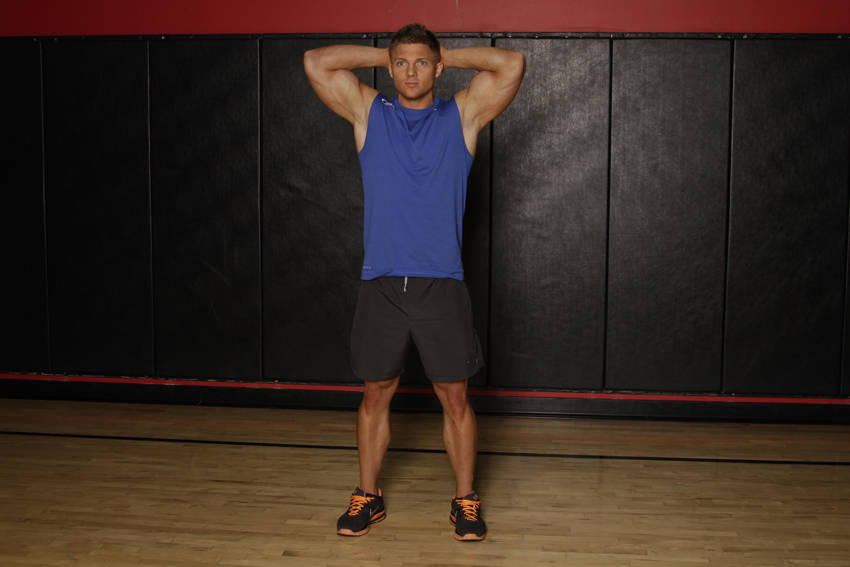
8. Bodyweight Squat
58.7% MatchHow to perform this exercise
- Stand with your feet shoulder width apart. You can place your hands behind your head. This will be your starting position.
- Begin the movement by flexing your knees and hips, sitting back with your hips.
- Continue down to full depth if you are able,and quickly reverse the motion until you return to the starting position. As you squat, keep your head and chest up and push your knees out.
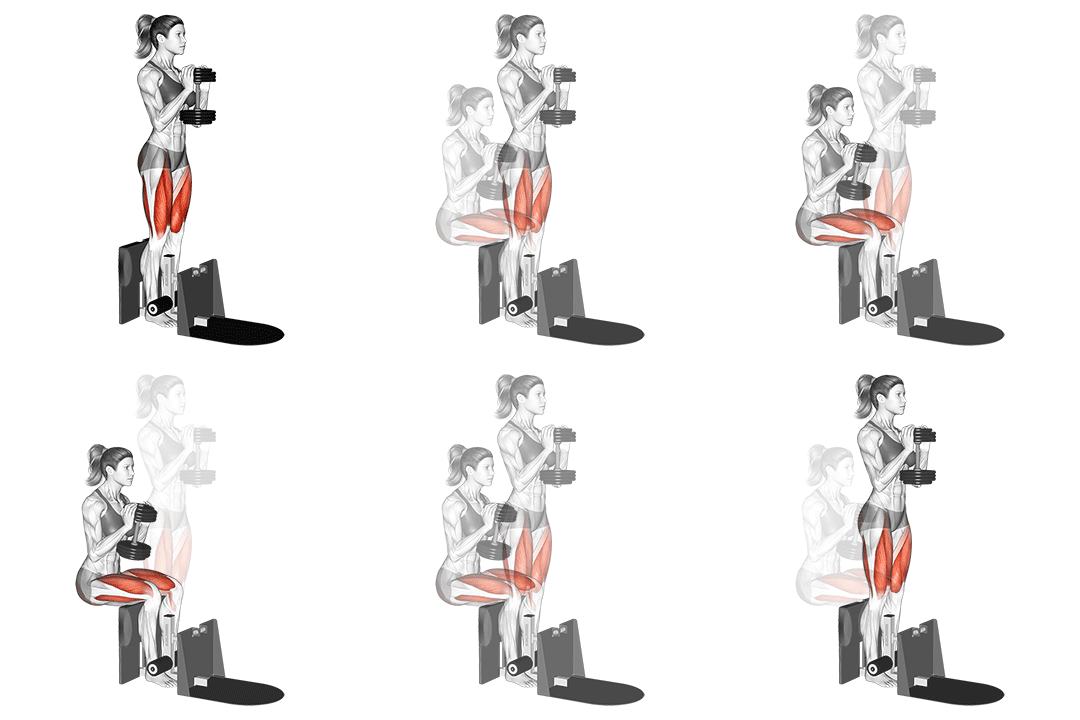
9. Dumbbell Supported Squat
56.6% MatchHow to perform this exercise
- Stand with your feet shoulder-width apart, holding a dumbbell in each hand at your sides.
- Keeping your chest up and core engaged, slowly lower your body down by bending your knees and pushing your hips back.
- Continue lowering until your thighs are parallel to the ground, or as low as you can comfortably go.
- Pause for a moment at the bottom, then push through your heels to return to the starting position.
- Repeat for the desired number of repetitions.
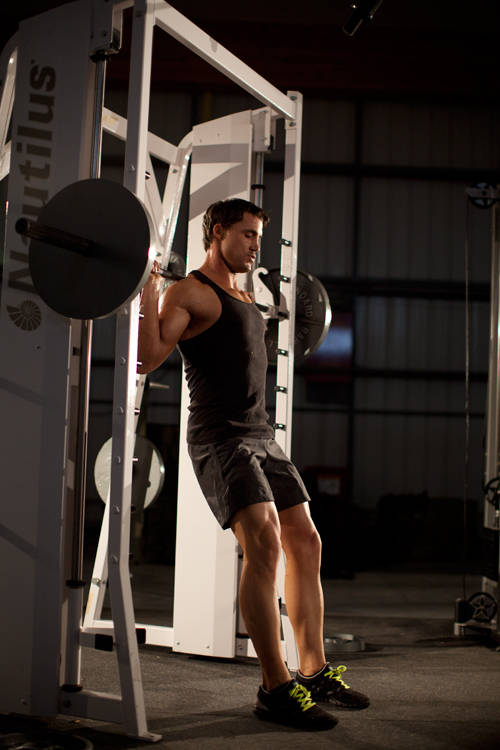
10. Chair Squat
55.4% MatchHow to perform this exercise
- To begin, first set the bar to a position that best matches your height. Once the bar is loaded, step under it and position it across the back of your shoulders.
- Take the bar with your hands facing forward, unlock it and lift it off the rack by extending your legs.
- Move your feet forward about 18 inches in front of the bar. Position your legs using a shoulder width stance with the toes slightly pointed out. Look forward at all times and maintain a neutral or slightly arched spine. This will be your starting position.
- Slowly lower the bar by bending the knees as you maintain a straight posture with the head up. Continue down until the angle between the upper and lower leg breaks 90 degrees.
- Begin to raise the bar as you exhale by pushing the floor with the heels of your feet, extending the knees and returning to the starting position.
Why You Might Need a Running, Treadmill Alternative
You may need substitutes because of joint pain, lack of treadmill access, training variety, or sport-specific goals. Running on a treadmill loads the quadriceps through repeated concentric and eccentric cycles; alternatives change force vectors and impact. A stair climber increases knee extension demand, a bike emphasizes concentric quad drive with reduced impact, and sled pushes shift loading to a horizontal force pattern that targets quads and glutes with minimal eccentric stress. Use cues like “push through the midfoot” on stairs or “keep hips level and drive knees forward” on bike sprints to replicate quad activation while protecting affected tissues.
How to Choose the Right Substitute
Pick a substitute based on desired quad loading, impact tolerance, and equipment. If you need low impact but high quad activation, choose a stationary bike and use high resistance with a cadence cue of 75–90 rpm to force concentric quad work. For power and sprint conditioning, choose hill sprints or sled pushes and cue a forward lean with explosive knee drive to load quads dynamically. If you want steady-state cardio with quad emphasis, use the stair climber and focus on full knee extension each step. Always adjust resistance, cadence, or incline to match the cardio intensity and mechanical load of your usual treadmill sessions.
Frequently Asked Questions
What muscles does Running, Treadmill work?
Treadmill running primarily targets the quadriceps, glutes, hamstrings, and calves while also engaging the core for stabilization. Quads absorb eccentric force at footstrike and produce concentric knee extension during push-off, so you feel both deceleration and propulsion on each stride.
What is the best bodyweight alternative to Running, Treadmill?
Stair climbing or continuous step-ups are the best bodyweight options to mimic treadmill quad demand. Use a controlled rhythm, drive through the midfoot, and fully extend the knee on each step to emphasize concentric quad activation and sustain cardiovascular load.
Can I build muscle without doing Running, Treadmill?
Yes. Combine resistance-focused alternatives like weighted step-ups, sled pushes, and high-resistance cycling to overload the quads and stimulate hypertrophy. Prioritize progressive overload—add weight, increase reps, or raise resistance—and cue full knee extension and controlled eccentrics to maximize muscle recruitment.
More Exercise Alternatives
Find Alternatives for Any Exercise
Use our free tool to discover the best substitute exercises based on your available equipment and goals.
Try the Exercise Substitution Finder →