

10 Best Seated Overhead Stretch Alternatives for No-Equipment Core Work
If you need an alternative to the Seated Overhead Stretch, pick exercises that preserve a neutral spine while activating the rectus abdominis and obliques. Effective substitutes include dead bugs, standing side bends, supine reach-throughs, Pallof press isometrics and modified bird-dogs. Cue: brace your abs, posteriorly tilt the pelvis and move from the thoracic spine rather than arching your lower back.
Original Exercise: Seated Overhead Stretch
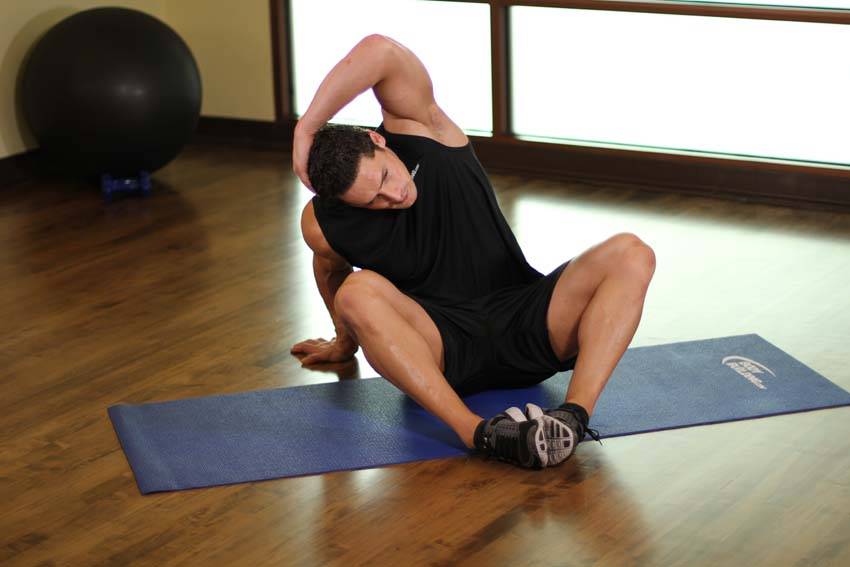
How to Perform Seated Overhead Stretch
- Sit up straight on an exercise mat.
- Touch the soles of your feet together with your feet six to eight inches in front of your hips.
- Place one hand on the floor beside you and your other hand behind your head.
- Lift your elbow to the ceiling as you incline your torso to the other side. Hold for 10 to 20 seconds, then switch sides.
Pro Tips
- Category: Stretching
- Force: Static
- Movement type: Isolation
Best Seated Overhead Stretch Alternatives
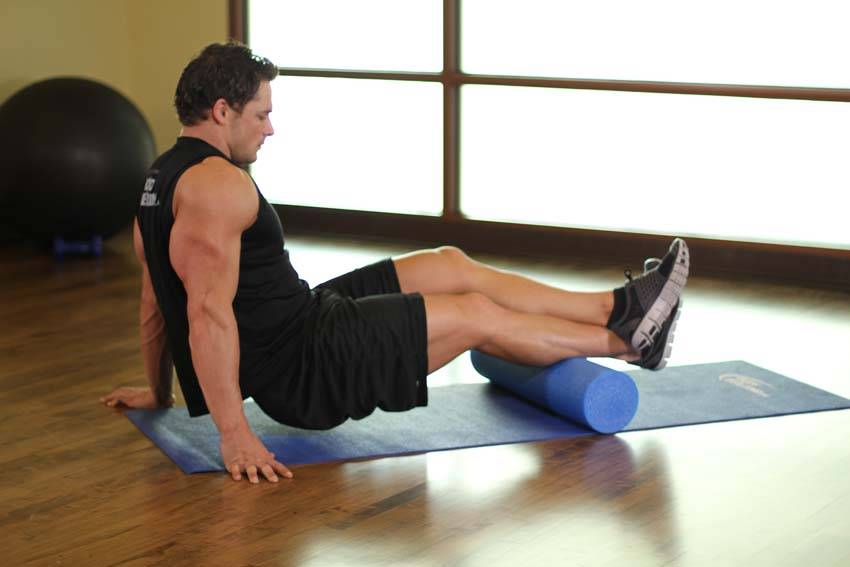
1. Calves-SMR
80.2% MatchHow to perform this exercise
- Begin seated on the floor. Place a foam roller underneath your lower leg. Your other leg can either be crossed over the opposite or be placed on the floor, supporting some of your weight. This will be your starting position.
- Place your hands to your side or just behind you, and press down to raise your hips off of the floor, placing much of your weight against your calf muscle. Roll from below the knee to above the ankle, pausing at points of tension for 10-30 seconds. Repeat for the other leg.
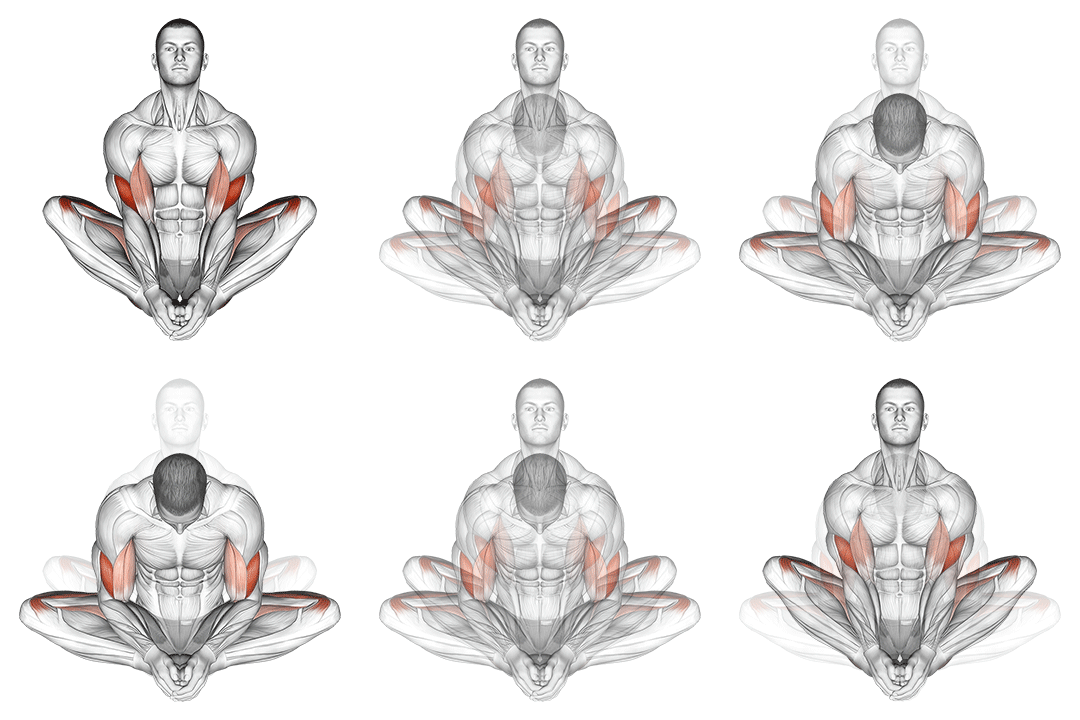
2. Butterfly Yoga Pose
78.7% MatchHow to perform this exercise
- Sit on the floor with your legs extended in front of you.
- Bend your knees and bring the soles of your feet together, allowing your knees to fall out to the sides.
- Hold onto your ankles or feet with your hands.
- Sit up tall and lengthen your spine.
- Gently press your knees down towards the floor, feeling a stretch in your inner thighs.
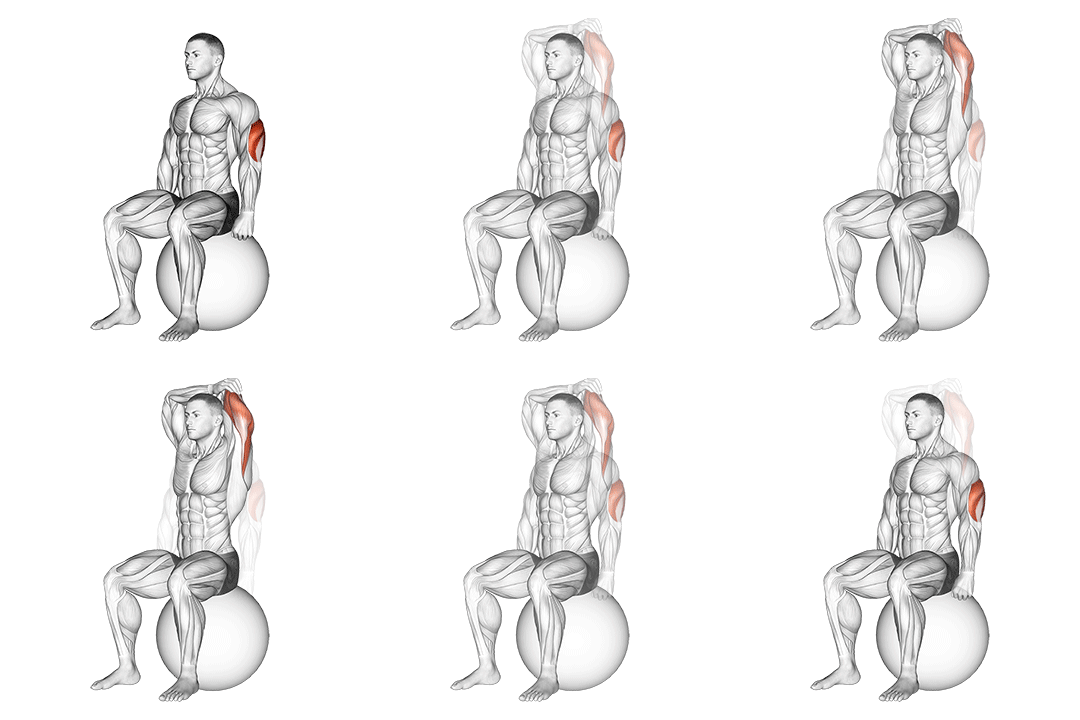
3. Exercise Ball Seated Triceps Stretch
78.4% MatchHow to perform this exercise
- Sit on a stability ball with your feet flat on the ground and your back straight.
- Hold a dumbbell in one hand and extend your arm straight up above your head.
- Bend your elbow and lower the dumbbell behind your head, keeping your upper arm close to your ear.
- Hold the stretch for a few seconds, then return to the starting position.
- Repeat with the other arm.
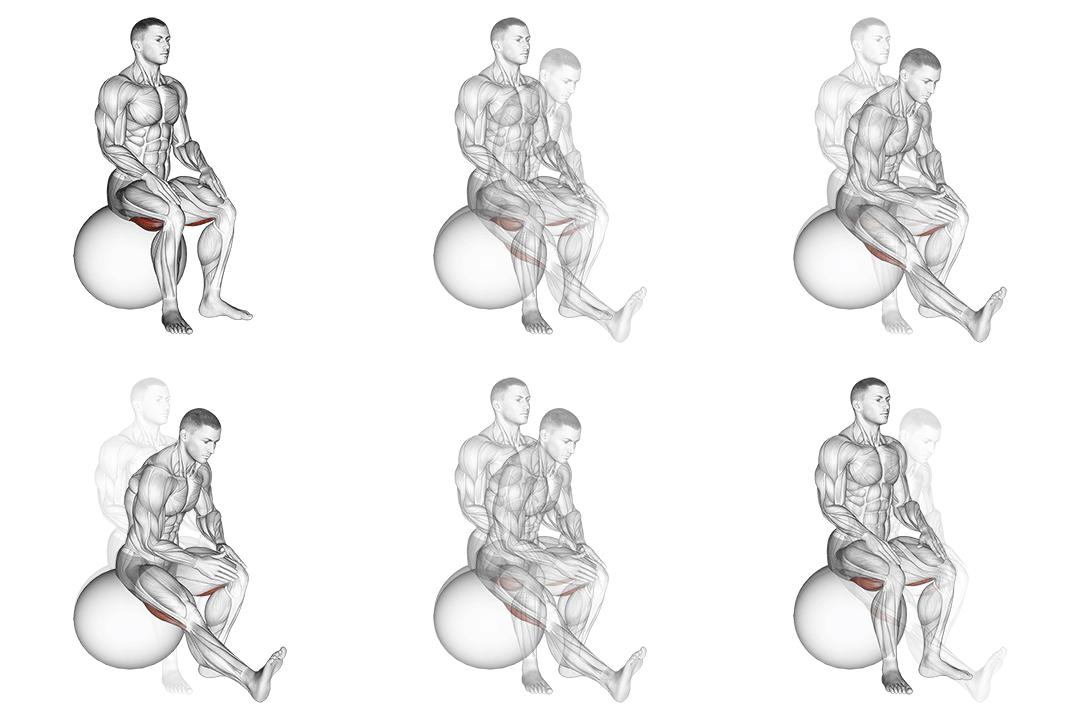
4. Exercise Ball Seated Hamstring Stretch
77.9% MatchHow to perform this exercise
- Sit on the stability ball with your feet flat on the ground and your knees bent at a 90-degree angle.
- Slowly roll the ball forward, walking your feet out until your upper back is resting on the ball and your legs are extended straight in front of you.
- Place your hands on your hips for support.
- Engage your core and slowly lower your upper body towards the ground, keeping your back straight and your chest lifted.
- Stop when you feel a stretch in your hamstrings, and hold the position for 20-30 seconds.
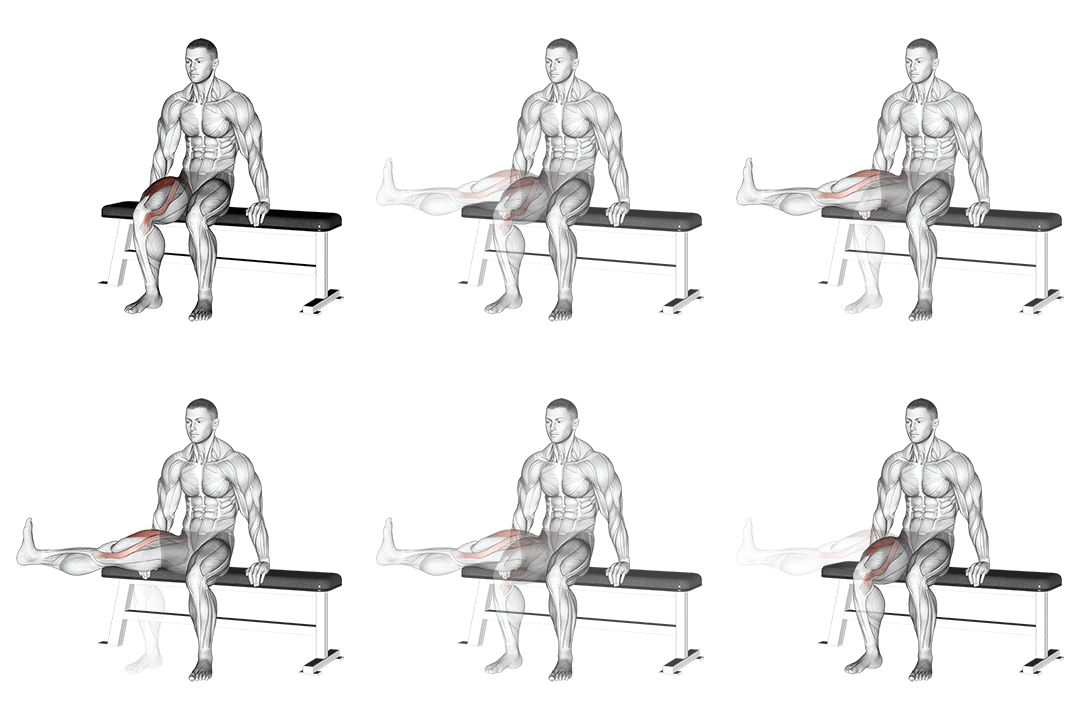
5. Chair Leg Extended Stretch
77.2% MatchHow to perform this exercise
- Sit on the edge of a chair with your back straight and feet flat on the ground.
- Extend one leg straight out in front of you, keeping your heel on the ground.
- Lean forward slightly, feeling a stretch in your quadriceps.
- Hold this position for 20-30 seconds.
- Switch legs and repeat the stretch.
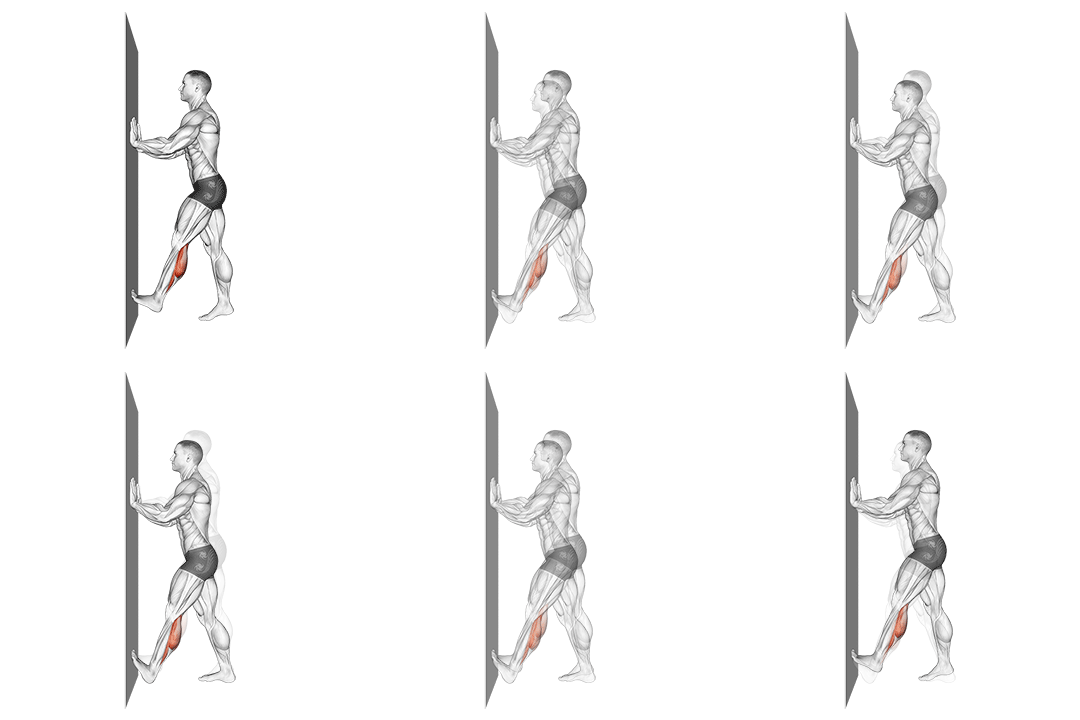
6. Calf Push Stretch With Hands Against Wall
76.2% MatchHow to perform this exercise
- Stand facing a wall with your feet hip-width apart.
- Place your hands against the wall at shoulder height.
- Step back with one foot, keeping your heel on the ground and your leg straight.
- Bend your front knee slightly and lean forward, feeling a stretch in your calf.
- Hold the stretch for 20-30 seconds.
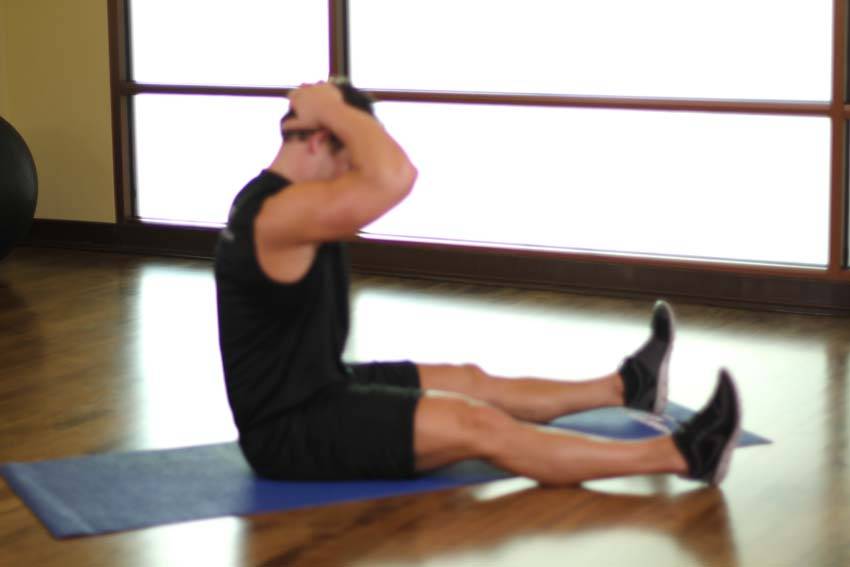
7. Chin To Chest Stretch
76% MatchHow to perform this exercise
- Get into a seated position on the floor.
- Place both hands at the rear of your head, fingers interlocked, thumbs pointing down and elbows pointing straight ahead. Slowly pull your head down to your chest. Hold for 20-30 seconds.
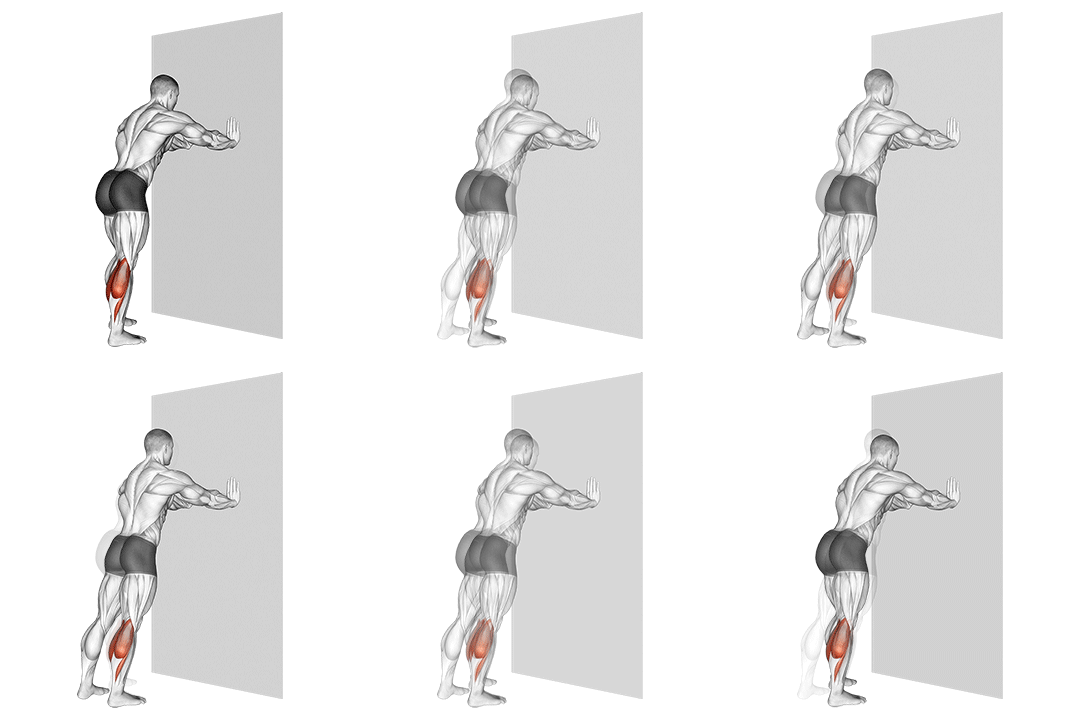
8. Calf Stretch With Hands Against Wall
73% MatchHow to perform this exercise
- Stand facing a wall with your feet hip-width apart.
- Place your hands against the wall at shoulder height.
- Step your right foot back, keeping your heel on the ground and your leg straight.
- Bend your left knee and lean forward, keeping your back leg straight and your heel on the ground.
- Hold the stretch for 20-30 seconds.
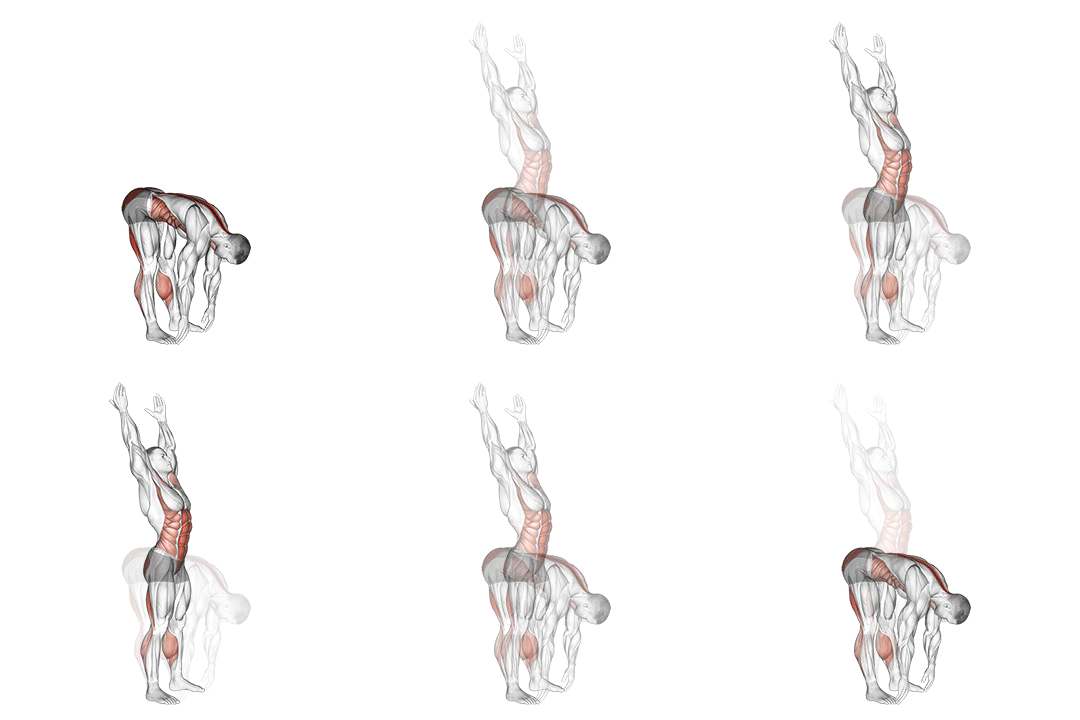
9. Basic Toe Touch (male)
73% MatchHow to perform this exercise
- Stand with your feet shoulder-width apart and your arms by your sides.
- Bend forward at the waist, keeping your back straight and your knees slightly bent.
- Reach down towards your toes with your hands, keeping your legs as straight as possible.
- Pause for a moment at the bottom, then slowly return to the starting position.
- Repeat for the desired number of repetitions.
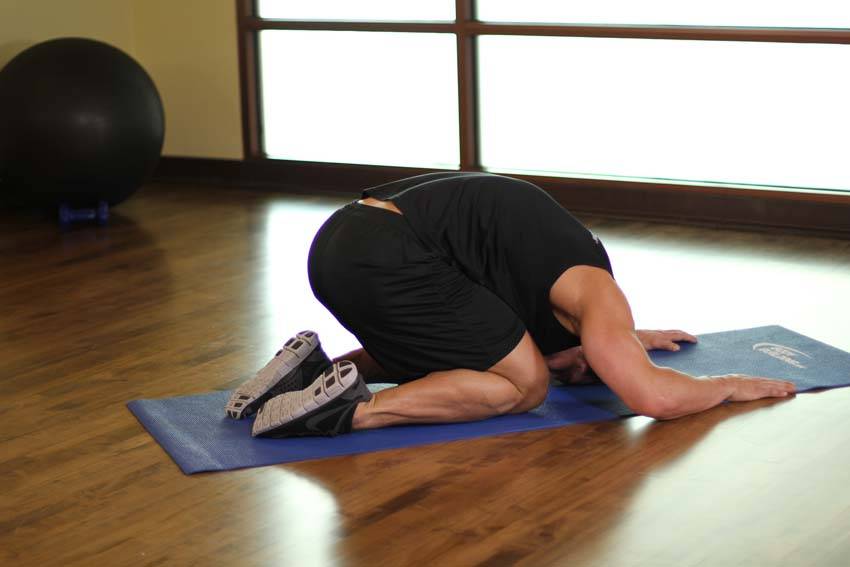
10. Child's Pose
73% MatchHow to perform this exercise
- Get on your hands and knees, walk your hands in front of you.
- Lower your buttocks down to sit on your heels. Let your arms drag along the floor as you sit back to stretch your entire spine.
- Once you settle onto your heels, bring your hands next to your feet and relax. "breathe" into your back. Rest your forehead on the floor. Avoid this position if you have knee problems.
Why You Might Need a Seated Overhead Stretch Alternative
You might substitute the Seated Overhead Stretch for several reasons: shoulder or thoracic mobility limits, lower-back pain from end-range lumbar extension, or a desire for stronger anti-extension core work. Overhead reaching can drive lumbar lordosis if you lack thoracic mobility; alternatives keep ribs stacked over the pelvis and load the abs and obliques without excessive lumbar extension. Use exercises that emphasize core bracing and controlled breathing to isolate the rectus abdominis and obliques while protecting spinal segments. Cue: exhale as you reach or resist, maintain a neutral pelvis, and avoid flaring the ribs.
How to Choose the Right Substitute
Choose a substitute based on your goal—mobility, stretch tolerance, or anti-extension strength. For mobility and gentle lengthening, select thoracic rotations or supine reach-throughs and cue thoracic rotation with relaxed shoulders. For core activation and waist control, pick Pallof presses or dead bugs and cue a firm brace and posterior pelvic tilt to recruit rectus abdominis and obliques. If pain limits movement, prioritize isometric holds that avoid lumbar extension. Progress by adding time under tension or unilateral variations that increase oblique demand while keeping ribs stacked over pelvis.
Frequently Asked Questions
What muscles does Seated Overhead Stretch work?
The Seated Overhead Stretch primarily affects the lateral waist and abdominal region by lengthening the obliques and engaging the rectus abdominis for spinal support. Mechanically it promotes thoracic extension and lateral flexion while the core must eccentrically control lumbar position; cue a gentle brace and avoid lower-back arching.
What is the best bodyweight alternative to Seated Overhead Stretch?
For a bodyweight alternative that preserves core control, use the dead bug to target the abs and waist. Cue: lie supine, posteriorly tilt the pelvis, brace the abs and lower one arm and opposite leg slowly; this maintains neutral spine and activates rectus abdominis and obliques without overhead strain.
Can I build muscle without doing Seated Overhead Stretch?
Yes—you can build abdominal and oblique muscle through resisted and isometric core exercises instead of the stretch. Use progressive overload via longer hold times on Pallof presses, added unilateral tempo on side planks, or increased repetitions and tempo-controlled dead bugs while cueing firm bracing to maximize muscle activation.
More Exercise Alternatives
Find Alternatives for Any Exercise
Use our free tool to discover the best substitute exercises based on your available equipment and goals.
Try the Exercise Substitution Finder →