

10 Best Smith Machine Bicep Curl Alternatives for Limited Equipment
If you can’t do a Smith Machine Bicep Curl, use dumbbell curls, cable curls, hammer curls, chin-ups, or preacher curls to hit the biceps. For example, perform alternating dumbbell curls with your elbow pinned to your side, supinate through the concentric, and lower with a controlled 2–3 second eccentric to emphasize biceps long-head activation.
Original Exercise: Smith Machine Bicep Curl
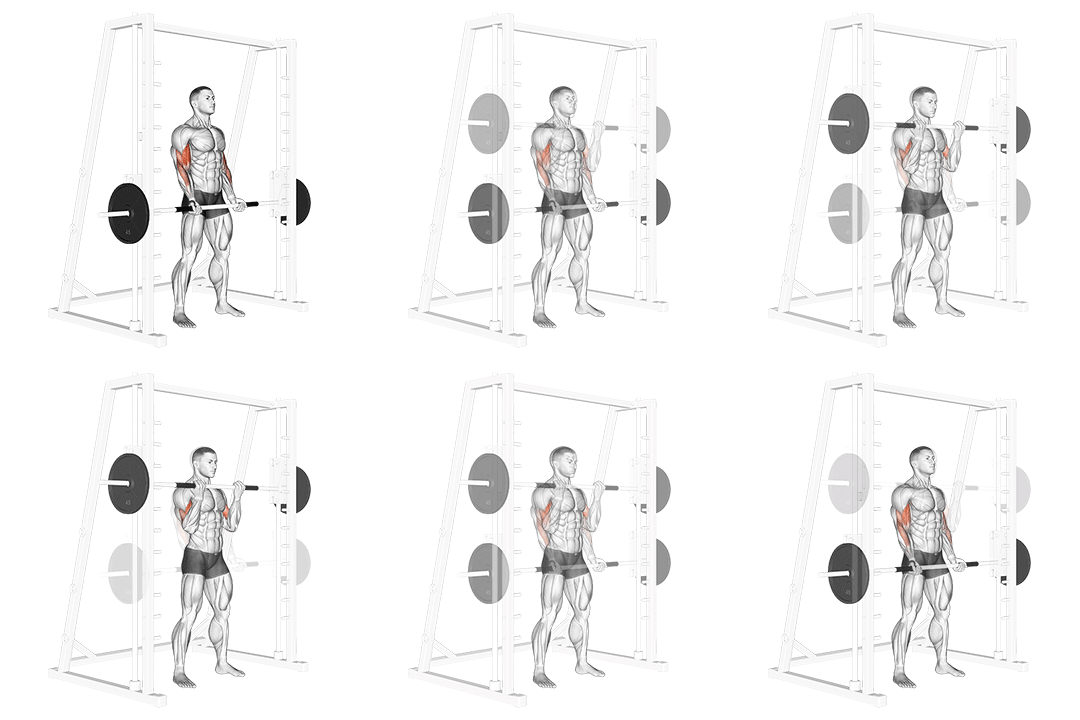
How to Perform Smith Machine Bicep Curl
- Adjust the height of the smith machine bar to be at waist level.
- Stand facing the smith machine with your feet shoulder-width apart.
- Grasp the bar with an underhand grip, hands slightly wider than shoulder-width apart.
- Keep your elbows close to your sides and your upper arms stationary.
- Exhale and curl the bar up towards your shoulders, contracting your biceps.
- Pause for a moment at the top of the movement, squeezing your biceps.
- Inhale and slowly lower the bar back down to the starting position.
- Repeat for the desired number of repetitions.
Best Smith Machine Bicep Curl Alternatives
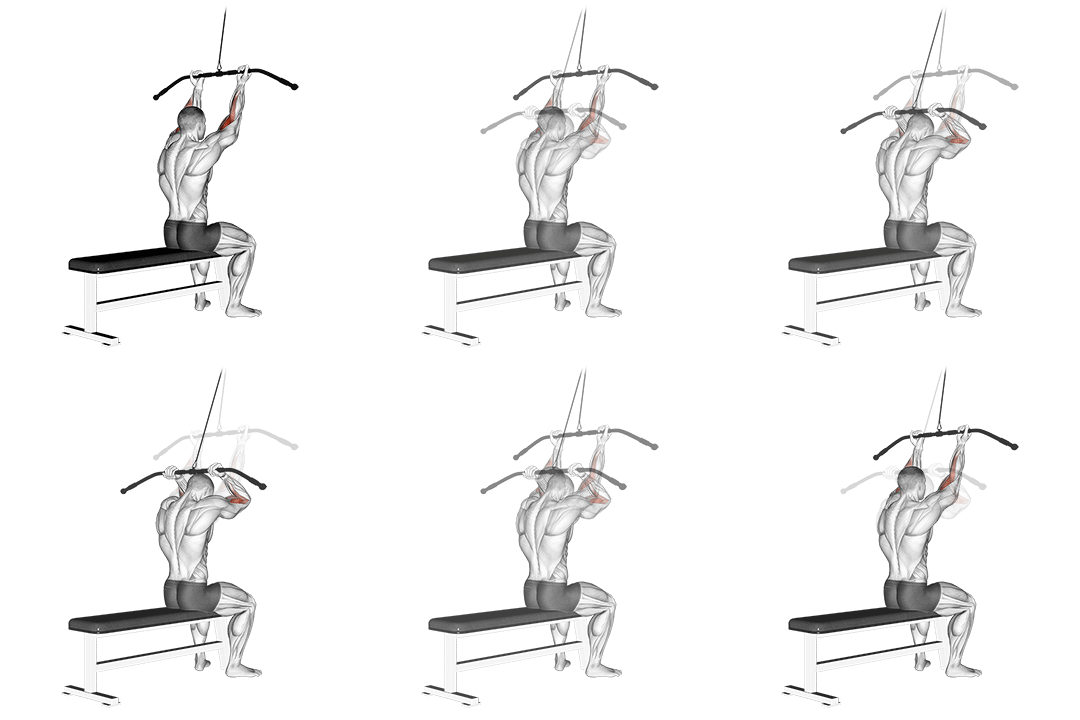
1. Cable Pulldown Bicep Curl
80.1% MatchHow to perform this exercise
- Attach a straight bar to the cable machine at the highest setting.
- Stand facing the machine with your feet shoulder-width apart.
- Grasp the bar with an underhand grip, hands shoulder-width apart.
- Keep your elbows close to your sides and your upper arms stationary.
- Exhale and slowly curl the bar down towards your thighs, keeping your wrists straight.
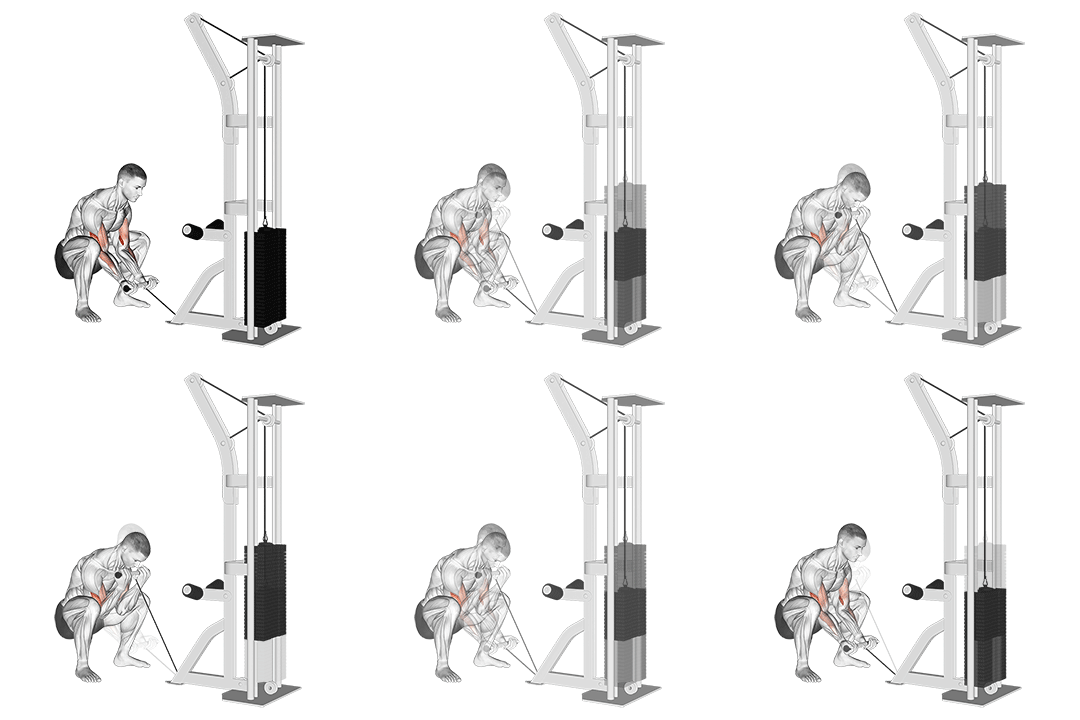
2. Cable Squatting Curl
74.7% MatchHow to perform this exercise
- Attach a cable handle to the lowest setting on a cable machine.
- Stand facing the machine with your feet shoulder-width apart.
- Hold the cable handle with an underhand grip, palms facing up, and arms fully extended.
- Lower your body into a squat position, keeping your back straight and knees behind your toes.
- As you squat down, curl the cable handle towards your shoulders, keeping your elbows close to your sides.
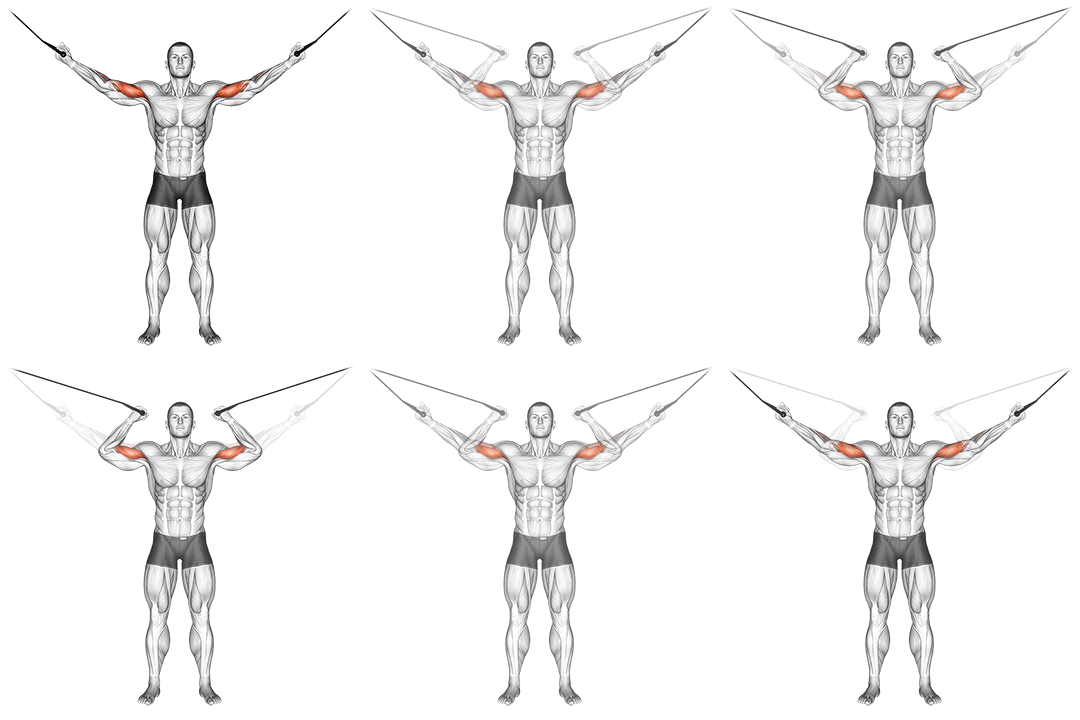
3. Cable Overhead Curl
73.1% MatchHow to perform this exercise
- Attach a straight bar to a high pulley cable machine.
- Stand facing the machine with your feet shoulder-width apart.
- Grasp the bar with an underhand grip, hands shoulder-width apart.
- Keep your elbows close to your sides and your upper arms stationary.
- Exhale and curl the bar down towards your forehead, keeping your upper arms stationary.
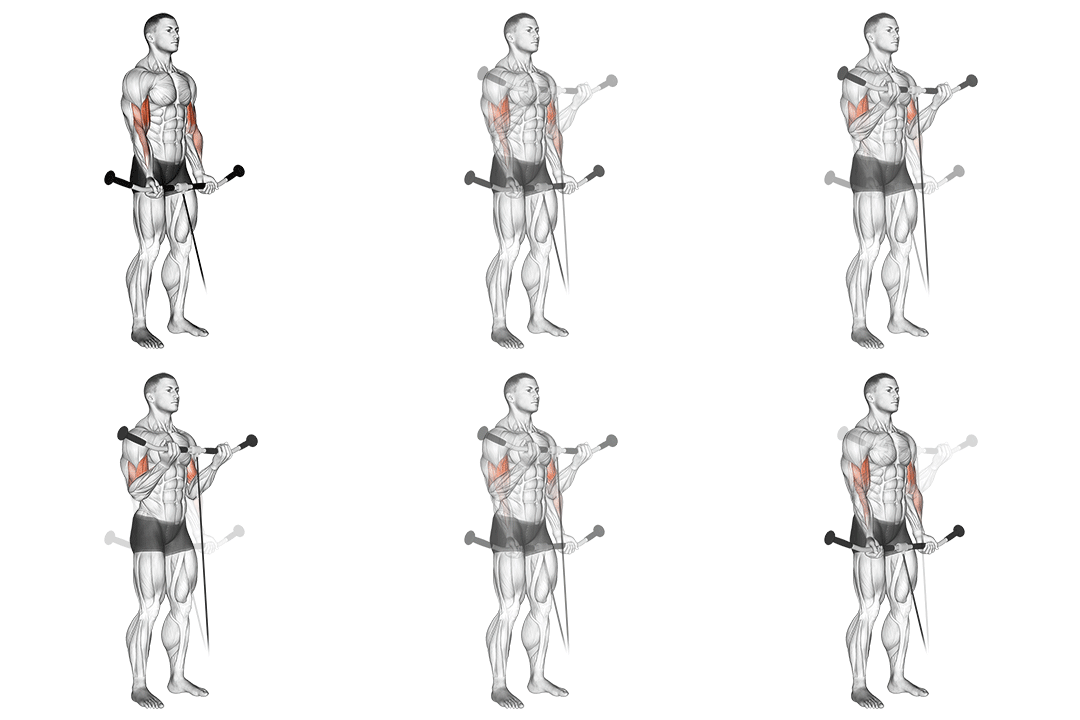
4. Cable Curl
73.1% MatchHow to perform this exercise
- Stand facing the cable machine with your feet shoulder-width apart.
- Grasp the cable attachment with an underhand grip, palms facing up.
- Keep your elbows close to your sides and your upper arms stationary.
- Exhale and curl the cable attachment towards your shoulders, contracting your biceps.
- Pause for a moment at the top of the movement, squeezing your biceps.
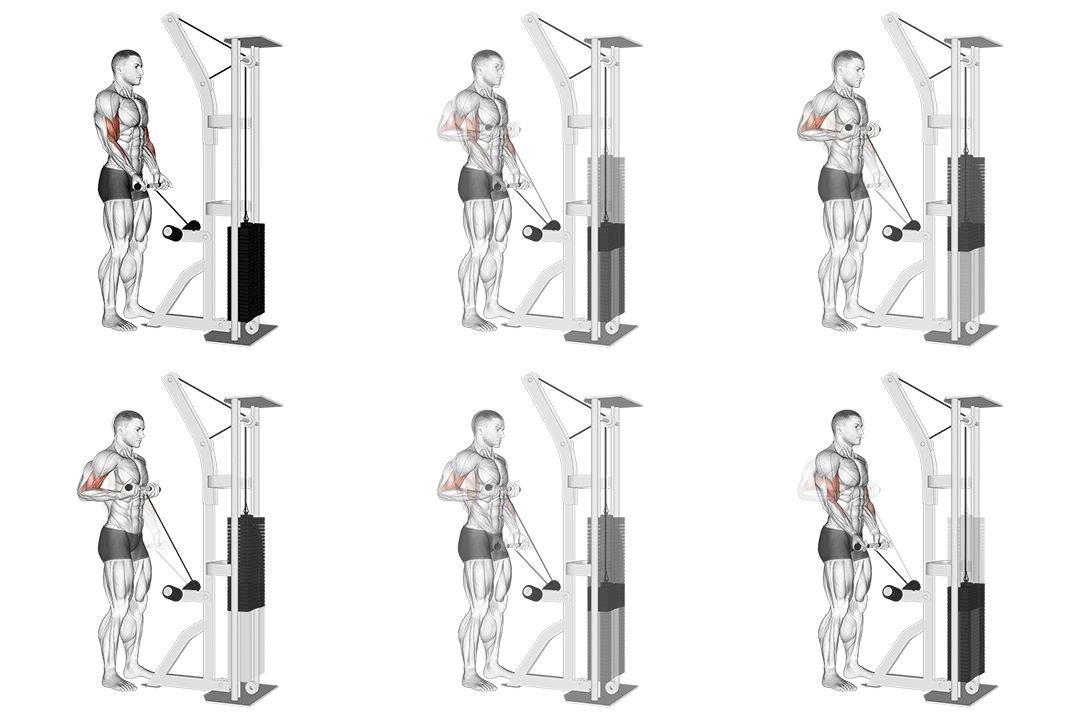
5. Cable Drag Curl
73.1% MatchHow to perform this exercise
- Stand facing a cable machine with your feet shoulder-width apart.
- Grasp the cable attachment with an underhand grip, palms facing up, and arms fully extended.
- Keeping your upper arms stationary, exhale and curl the cable attachment towards your shoulders by contracting your biceps.
- Pause for a moment at the top of the movement, squeezing your biceps.
- Inhale and slowly lower the cable attachment back to the starting position, fully extending your arms.
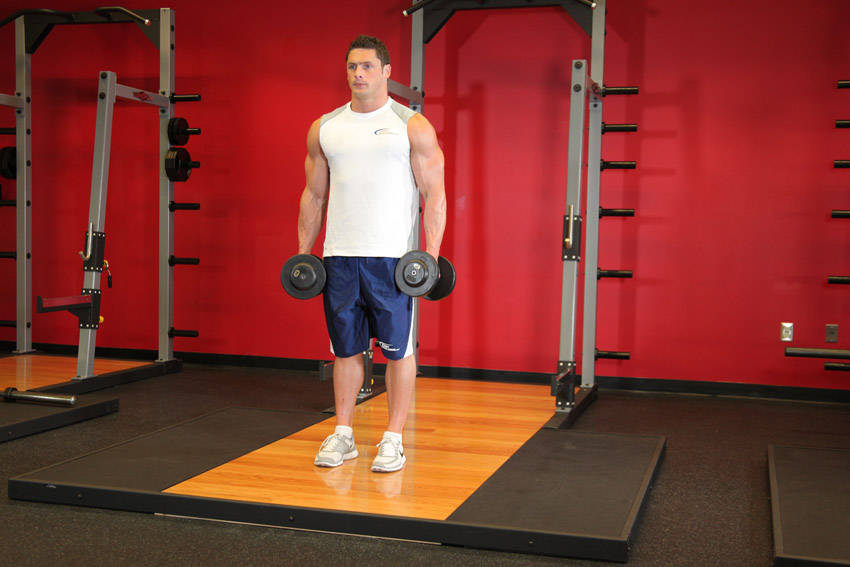
6. Dumbbell Bicep Curl
72.9% MatchHow to perform this exercise
- Stand up straight with a dumbbell in each hand at arm's length. Keep your elbows close to your torso and rotate the palms of your hands until they are facing forward. This will be your starting position.
- Now, keeping the upper arms stationary, exhale and curl the weights while contracting your biceps. Continue to raise the weights until your biceps are fully contracted and the dumbbells are at shoulder level. Hold the contracted position for a brief pause as you squeeze your biceps.
- Then, inhale and slowly begin to lower the dumbbells back to the starting position.
- Repeat for the recommended amount of repetitions.
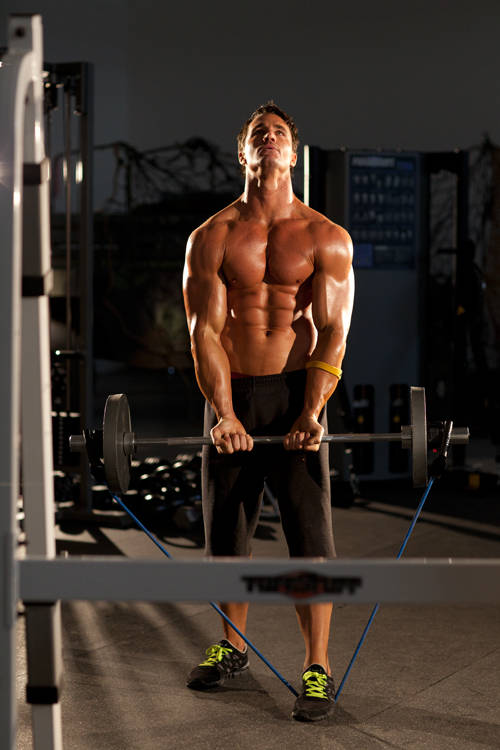
7. Close-Grip EZ-Bar Curl With Band
72.9% MatchHow to perform this exercise
- Attach a band to each end of the bar. Take the bar, placing a foot on the middle of the band. Stand upright with a narrow, supinated grip on the EZ bar. The elbows should be close to the torso. This will be your starting position.
- While keeping the upper arms in place, flex the elbows to execute the curl. Exhale as the weight is lifted.
- Continue the movement until your biceps are fully contracted and the bar is at shoulder level. Hold the contracted position for a second and squeeze the biceps hard.
- Slowly begin to bring the bar back to starting position as your breathe in.
- Repeat for the recommended amount of repetitions.
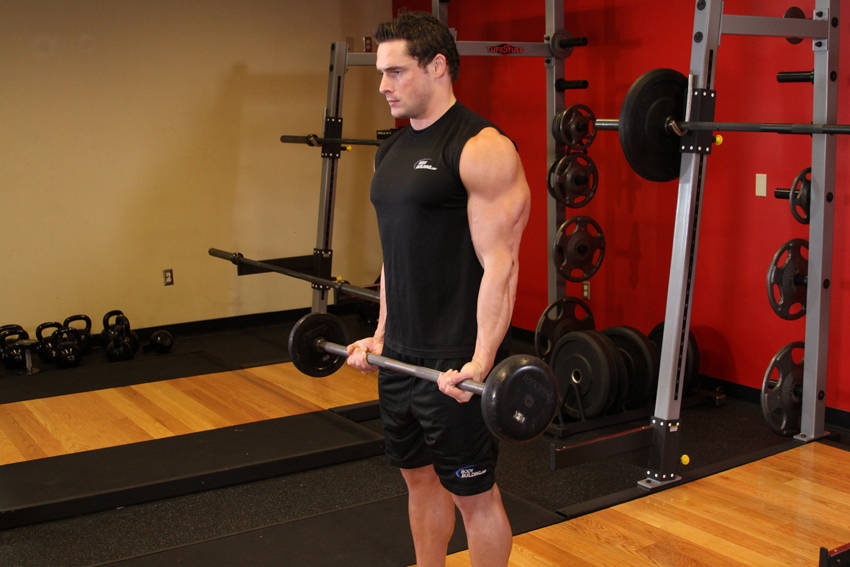
8. Drag Curl
72.9% MatchHow to perform this exercise
- Grab a barbell with a supinated grip (palms facing forward) and get your elbows close to your torso and back. This will be your starting position.
- As you exhale, curl the bar up while keeping the elbows to the back as you "Drag" the bar up by keeping it in contact with your torso. Tip: As you can see, you will not be keeping the elbows pinned to your sides, but instead you will be bringing them back. Also, do not lift your shoulders.
- Slowly go back to the starting position as you keep the bar in contact with the torso at all times.
- Repeat for the recommended amount of repetitions.
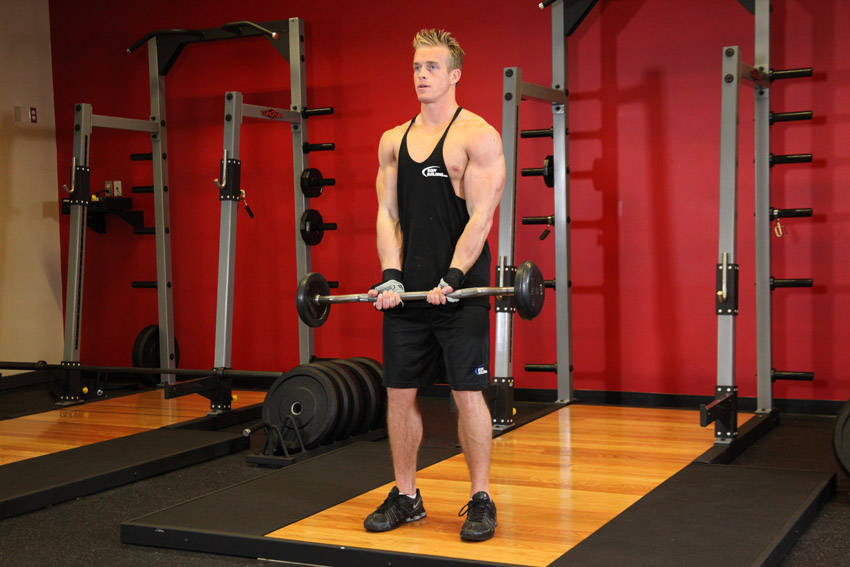
9. Close-Grip EZ Bar Curl
72.9% MatchHow to perform this exercise
- Stand up with your torso upright while holding an E-Z Curl Bar at the closer inner handle. The palm of your hands should be facing forward and they should be slightly tilted inwards due to the shape of the bar. The elbows should be close to the torso. This will be your starting position.
- While holding the upper arms stationary, curl the weights forward while contracting the biceps as you breathe out. Tip: Only the forearms should move.
- Continue the movement until your biceps are fully contracted and the bar is at shoulder level. Hold the contracted position for a second and squeeze the biceps hard.
- Slowly begin to bring the bar back to starting position as your breathe in.
- Repeat for the recommended amount of repetitions.
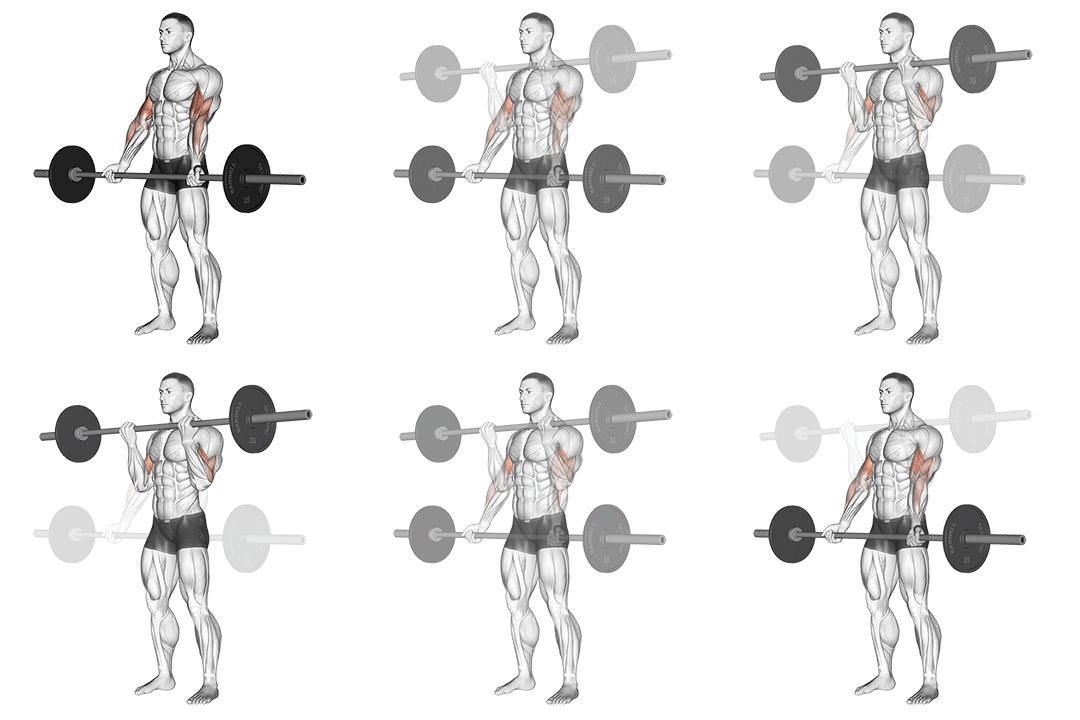
10. Barbell Curl
72.9% MatchHow to perform this exercise
- Stand up straight with your feet shoulder-width apart and hold a barbell with an underhand grip, palms facing forward.
- Keep your elbows close to your torso and exhale as you curl the weights while contracting your biceps.
- Continue to raise the bar until your biceps are fully contracted and the bar is at shoulder level.
- Hold the contracted position for a brief pause as you squeeze your biceps.
- Inhale as you slowly begin to lower the bar back to the starting position.
Why You Might Need a Smith Machine Bicep Curl Alternative
You may substitute the Smith Machine Bicep Curl for reasons including machine availability, shoulder or elbow pain, or the need for different stimulus. The Smith machine fixes the bar path and reduces stabilizer demand; swapping to dumbbells or cables increases transverse-plane control and recruits the brachialis and brachioradialis. If you have elbow tendinopathy, use neutral-grip hammer curls to shift load away from the distal biceps tendon. If you want greater peak contraction, use cable curls with a short pause at 90° elbow flexion to increase time under tension and maximize motor unit recruitment in the biceps brachii.
How to Choose the Right Substitute
Decide based on equipment, joint health, and the muscle emphasis you need. For maximal peak contraction and constant tension choose cable curls—keep the elbow fixed and retract the scapula to isolate the biceps. For unilateral balance and ROM control pick dumbbells and focus on a full supination to bias the long head. Use hammer curls when you want more brachialis and brachioradialis involvement; hold a neutral grip and avoid shoulder elevation. If spinal loading is the issue, perform seated preacher or concentration curls to limit torso compensation and strictly load elbow flexors.
Frequently Asked Questions
What muscles does Smith Machine Bicep Curl work?
The Smith Machine Bicep Curl primarily targets the biceps brachii (both long and short heads) and secondarily the brachialis and brachioradialis. Fixed bar path minimizes scapular and core involvement, so the exercise isolates elbow flexion and concentrates torque at the elbow joint.
What is the best bodyweight alternative to Smith Machine Bicep Curl?
A close bodyweight substitute is the chin-up with an underhand grip—perform slow eccentrics and pause at the top to increase biceps loading. Keep the torso vertical and pull with the elbows to bias elbow flexors rather than the lats.
Can I build muscle without doing Smith Machine Bicep Curl?
Yes. You can achieve comparable hypertrophy using free weights, cables, or bodyweight movements by maintaining progressive overload and proper form. Use strict technique—pin the elbow, control the eccentric, and vary grips to target long head, short head, and brachialis activation.
More Exercise Alternatives
Find Alternatives for Any Exercise
Use our free tool to discover the best substitute exercises based on your available equipment and goals.
Try the Exercise Substitution Finder →