

10 Best Cable Hammer Curl (With Rope) Alternatives for Biceps and Forearm Strength
The Cable Hammer Curl (With Rope) is done standing with a cable machine. Ranked closest by our scoring: Cable Hammer Curls - Rope Attachment, the Standing Biceps Cable Curl and the Cable Close Grip Curl. Four harder versions, among them the Cable Reverse Curl and the Overhead Cable Curl, are listed below as progressions rather than swaps.
The station you use for the rope hammer curl is taken, and the rest of the cable stack is free. The Cable Hammer Curl (With Rope) trains your biceps and forearms with a palms-facing grip and steady pulley tension, and the Cable Hammer Curls - Rope Attachment is the closest match: it is the same lift under a second name, so take it once a rope frees up. If you would rather switch grips entirely, the Standing Biceps Cable Curl runs off the same stack with your palms turned up.
Updated Ranked by our 12-factor similarity model How it works
Original Exercise: Cable Hammer Curl (With Rope)
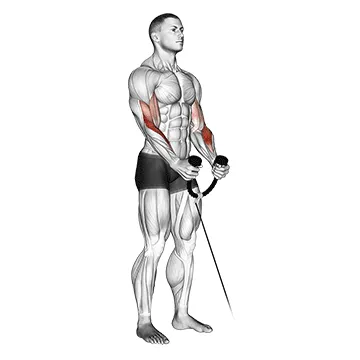
- Primary muscle
- Biceps
- Equipment
- Cable
- Difficulty
- Beginner
- Type
- Isolation
Secondary muscles: Forearms
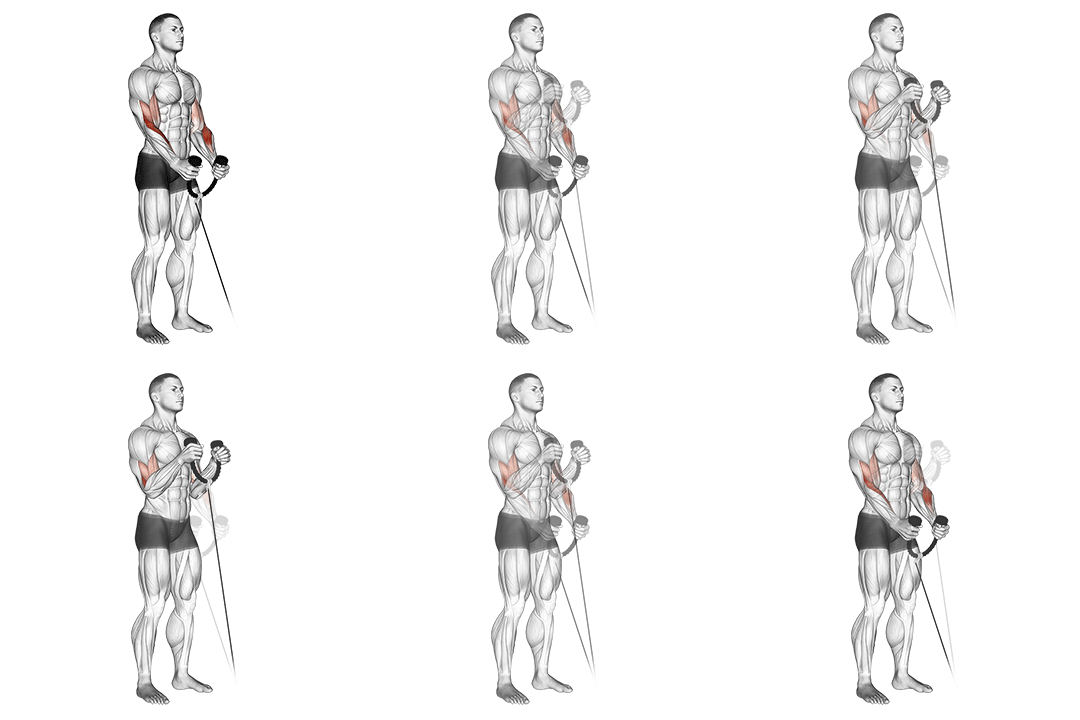
How to perform Cable Hammer Curl (With Rope)
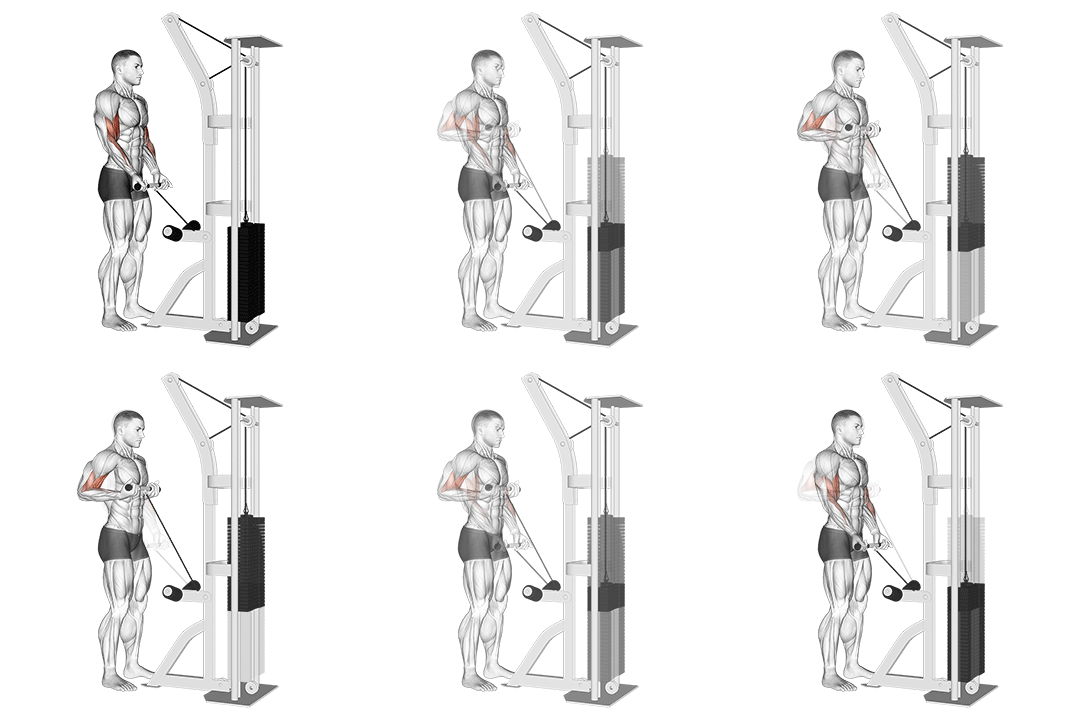
- Stand upright with your feet shoulder-width apart and a slight bend in your knees.
- Hold the cable rope attachment with an underhand grip, palms facing each other, and your arms fully extended.
- Keeping your upper arms stationary, exhale and curl the weights while contracting your biceps.
- Continue to raise the cable rope attachment until your biceps are fully contracted and the rope is at shoulder level.
- Hold the contracted position for a brief pause as you squeeze your biceps.
- Inhale and slowly begin to lower the cable rope attachment back to the starting position.
- Repeat for the desired number of repetitions.
Ranked Cable Hammer Curl (With Rope) Alternatives
10 substitutes, ranked by how closely each one matches the Cable Hammer Curl (With Rope) on movement pattern, muscles worked, equipment and body position. The higher the score, the less you change. Open "How to perform this exercise" on a card for the steps; every card title links to that exercise's own alternatives page. Harder versions are tagged as progressions and kept out of the top spot even when they score higher.
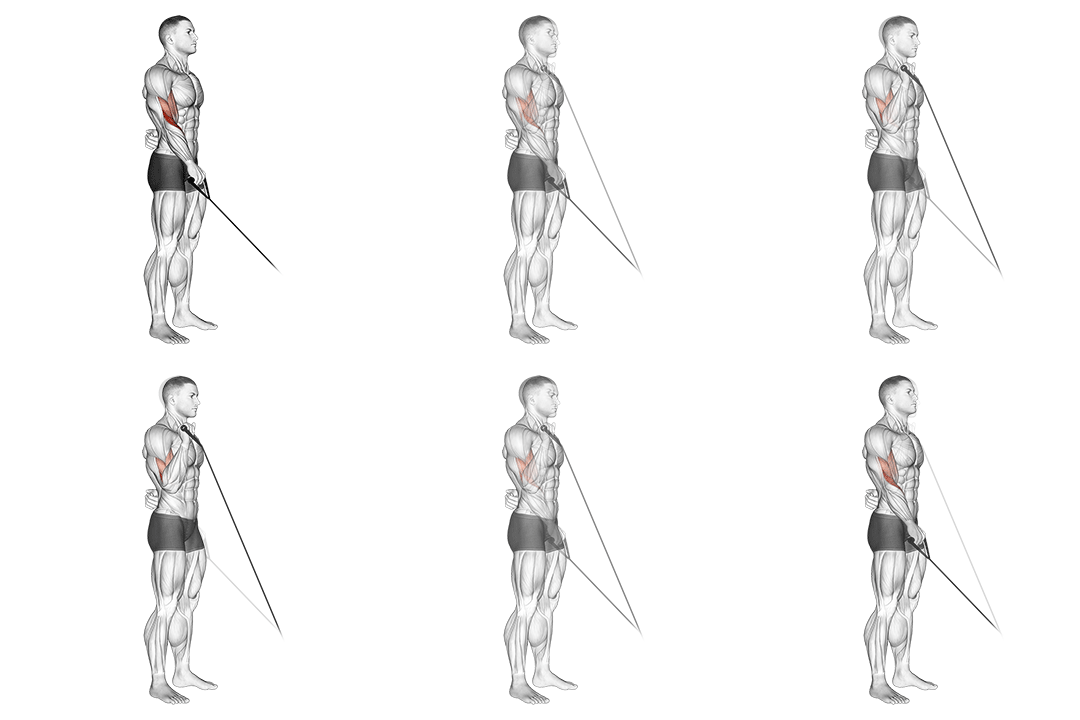
Best match 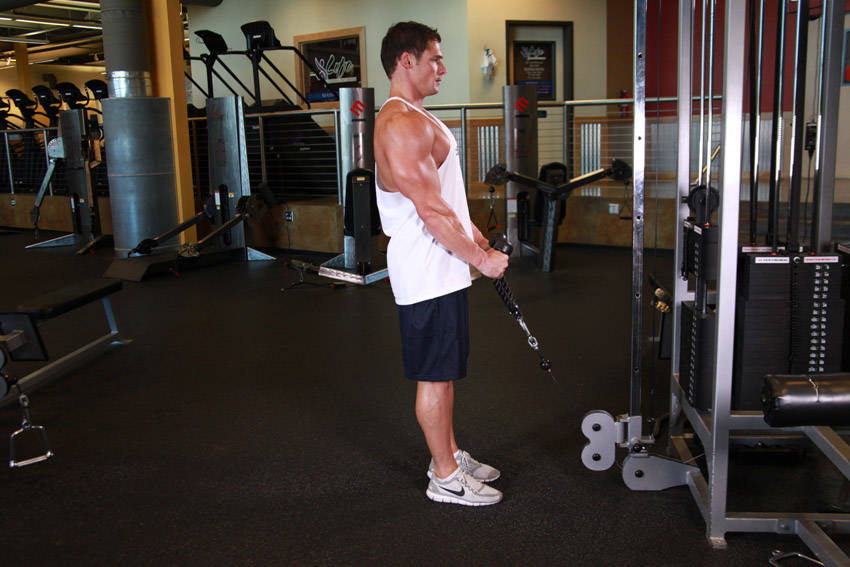
- Biceps
- Cable
- Beginner
- Isolation
Pick this when you want to work the biceps with less balance to manage.
How to perform this exercise
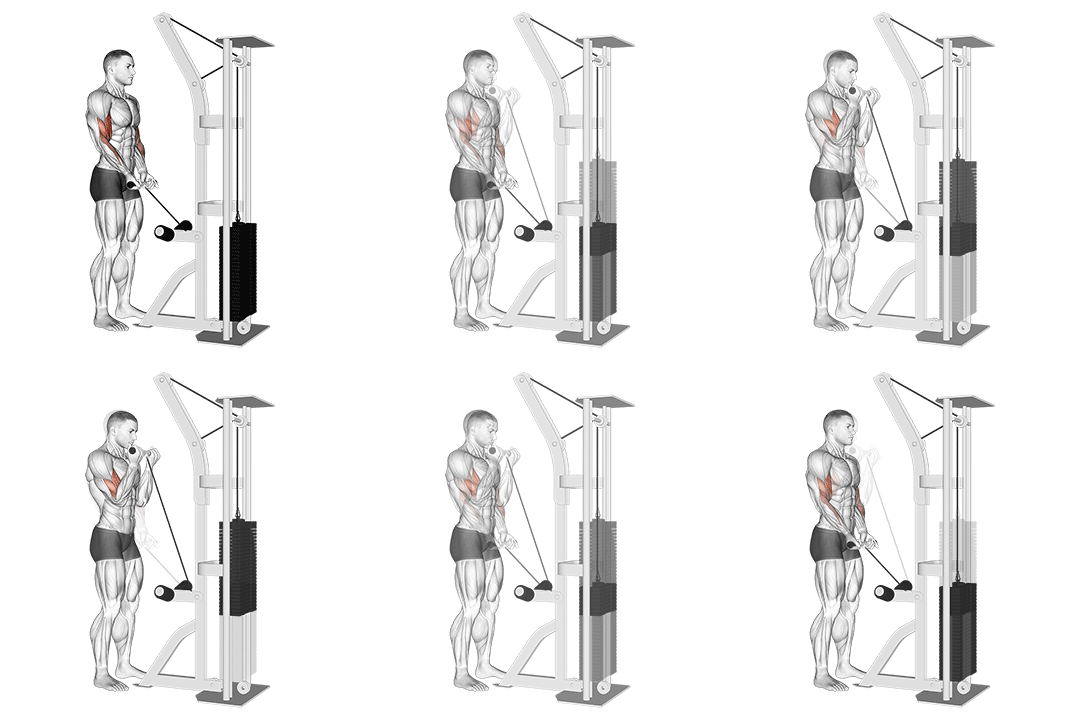
- Attach a rope attachment to a low pulley and stand facing the machine about 12 inches away from it.
- Grasp the rope with a neutral (palms-in) grip and stand straight up keeping the natural arch of the back and your torso stationary.
- Put your elbows in by your side and keep them there stationary during the entire movement. Tip: Only the forearms should move; not your upper arms. This will be your starting position.
- Using your biceps, pull your arms up as you exhale until your biceps touch your forearms. Tip: Remember to keep the elbows in and your upper arms stationary.
- After a 1 second contraction where you squeeze your biceps, slowly start to bring the weight back to the original position.
- Repeat for the recommended amount of repetitions.
Sets and reps: 3 sets of 10 to 15 reps.
Why this matches
- Movement: curl, the same as the Cable Hammer Curl (With Rope)
- Primary muscle: biceps, the same as the Cable Hammer Curl (With Rope)
- Equipment: a cable, the same as the Cable Hammer Curl (With Rope)
- Body position: standing, the same as the Cable Hammer Curl (With Rope)
- Balance: easier to stay steady on than the Cable Hammer Curl (With Rope)
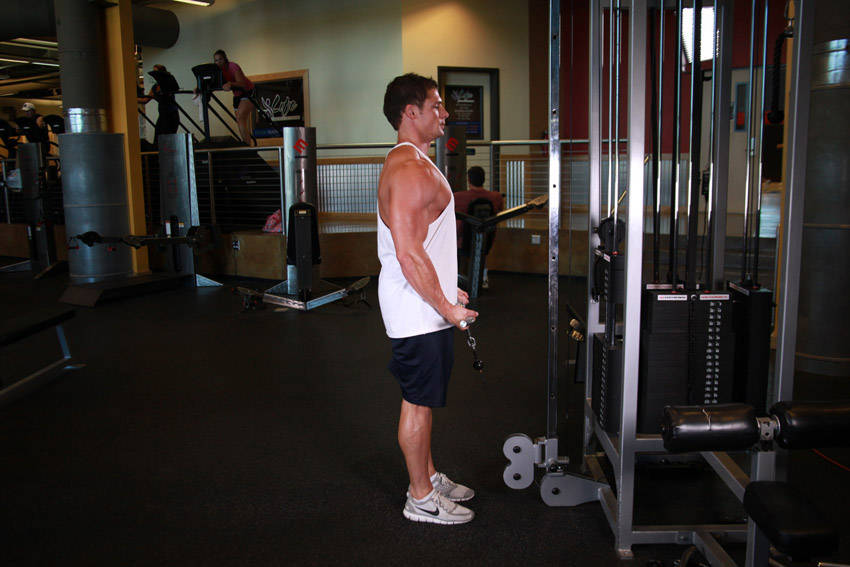
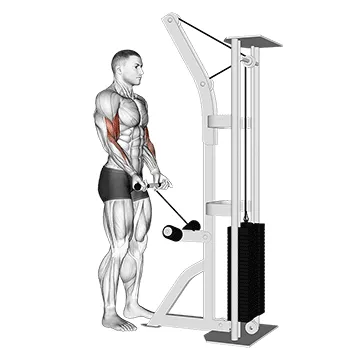
2. Standing Biceps Cable Curl
95% match- Biceps
- Cable
- Beginner
- Isolation
The same equipment, taken with an underhand grip.
How to perform this exercise
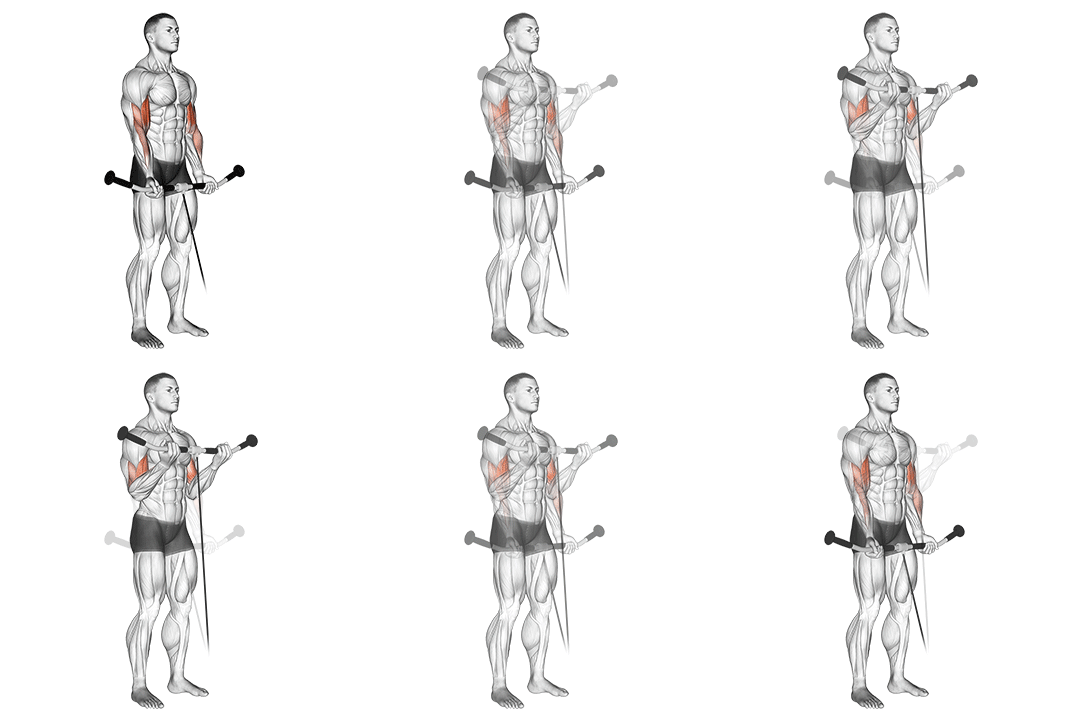
- Stand up with your torso upright while holding a cable curl bar that is attached to a low pulley. Grab the cable bar at shoulder width and keep the elbows close to the torso. The palm of your hands should be facing up (supinated grip). This will be your starting position.
- While holding the upper arms stationary, curl the weights while contracting the biceps as you breathe out. Only the forearms should move. Continue the movement until your biceps are fully contracted and the bar is at shoulder level. Hold the contracted position for a second as you squeeze the muscle.
- Slowly begin to bring the curl bar back to starting position as your breathe in.
- Repeat for the recommended amount of repetitions.
Sets and reps: 3 sets of 10 to 15 reps.
Why this matches
- Movement: curl, the same as the Cable Hammer Curl (With Rope)
- Primary muscle: biceps, the same as the Cable Hammer Curl (With Rope)
- Equipment: a cable, the same as the Cable Hammer Curl (With Rope)
- Body position: standing, the same as the Cable Hammer Curl (With Rope)
3. Cable Close Grip Curl
94% match- Biceps
- Cable
- Beginner
- Isolation
How to perform this exercise
- Attach a straight bar to a low pulley cable machine.
- Stand facing the machine with your feet shoulder-width apart and your knees slightly bent.
- Grasp the bar with an underhand grip, hands shoulder-width apart.
- Keep your elbows close to your sides and your upper arms stationary throughout the exercise.
- Exhale and curl the bar up towards your shoulders, contracting your biceps.
- Pause for a moment at the top of the movement, squeezing your biceps.
- Inhale and slowly lower the bar back to the starting position, fully extending your arms.
- Repeat for the desired number of repetitions.
Sets and reps: 3 sets of 10 to 15 reps.
Why this matches
- Movement: curl, the same as the Cable Hammer Curl (With Rope)
- Primary muscle: biceps, the same as the Cable Hammer Curl (With Rope)
- Equipment: a cable, the same as the Cable Hammer Curl (With Rope)
- Body position: standing, the same as the Cable Hammer Curl (With Rope)
- Balance: easier to stay steady on than the Cable Hammer Curl (With Rope)
Progression
4. Cable Reverse Curl
94% match- Biceps
- Cable
- Beginner
- Isolation
Pick this when you want a harder version that still works the biceps.
How to perform this exercise
- Attach a straight bar to a low pulley cable machine.
- Stand facing the machine with your feet shoulder-width apart and your knees slightly bent.
- Grasp the bar with an underhand grip, hands shoulder-width apart.
- Keep your elbows close to your sides and your upper arms stationary throughout the exercise.
- Exhale and curl the bar up towards your shoulders, contracting your biceps.
- Pause for a moment at the top, squeezing your biceps.
- Inhale and slowly lower the bar back to the starting position, fully extending your arms.
- Repeat for the desired number of repetitions.
Sets and reps: 3 sets of 10 to 15 reps.
Why this matches
- Movement: curl, the same as the Cable Hammer Curl (With Rope)
- Primary muscle: biceps, the same as the Cable Hammer Curl (With Rope)
- Equipment: a cable, the same as the Cable Hammer Curl (With Rope)
- Body position: standing, the same as the Cable Hammer Curl (With Rope)
- Balance: easier to stay steady on than the Cable Hammer Curl (With Rope)
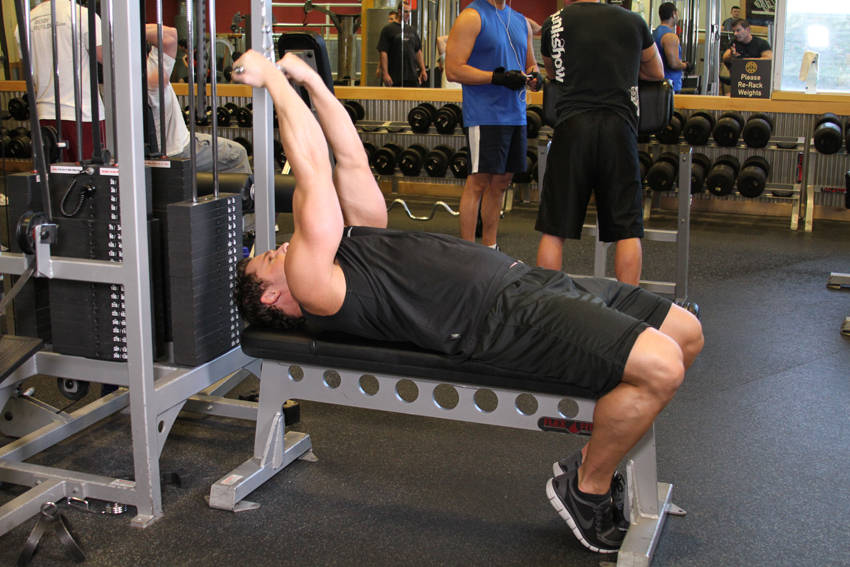
5. High Cable Curls
94% match- Biceps
- Cable
- Beginner
- Isolation
How to perform this exercise
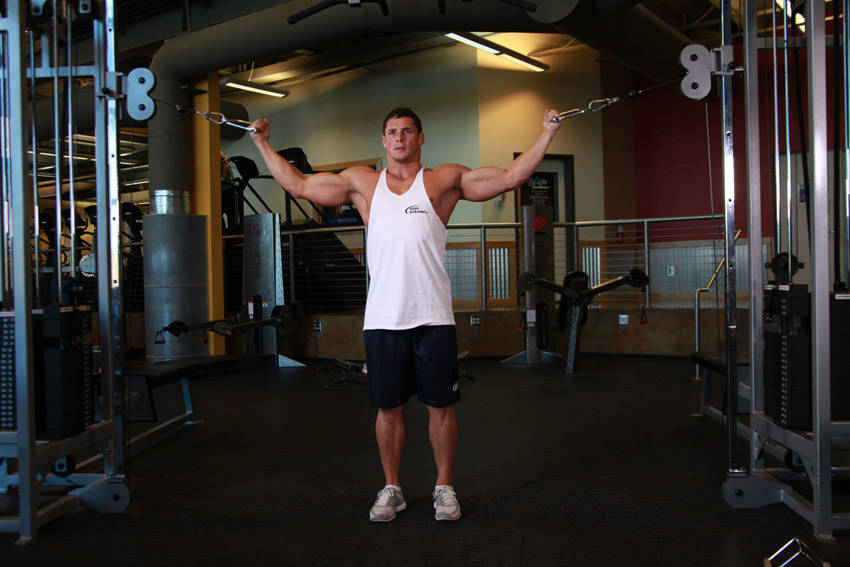
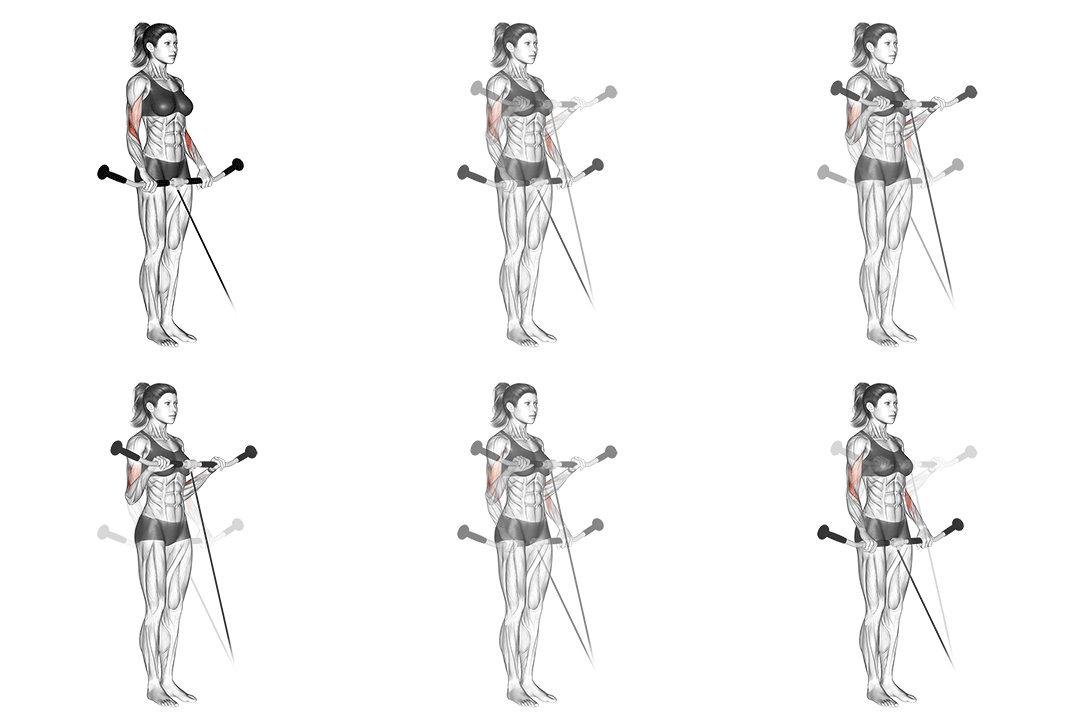
- Stand between a couple of high pulleys and grab a handle in each arm. Position your upper arms in a way that they are parallel to the floor with the palms of your hands facing you. This will be your starting position.
- Curl the handles towards you until they are next to your ears. Make sure that as you do so you flex your biceps and exhale. The upper arms should remain stationary and only the forearms should move. Hold for a second in the contracted position as you squeeze the biceps.
- Slowly bring back the arms to the starting position.
- Repeat for the recommended amount of repetitions.
Sets and reps: 3 sets of 10 to 15 reps.
Why this matches
- Movement: curl, the same as the Cable Hammer Curl (With Rope)
- Primary muscle: biceps, the same as the Cable Hammer Curl (With Rope)
- Equipment: a cable, the same as the Cable Hammer Curl (With Rope)
- Body position: standing, the same as the Cable Hammer Curl (With Rope)
- Balance: easier to stay steady on than the Cable Hammer Curl (With Rope)
Progression
6. Overhead Cable Curl
94% match- Biceps
- Cable
- Intermediate
- Isolation
How to perform this exercise
- To begin, set a weight that is comfortable on each side of the pulley machine. Note: Make sure that the amount of weight selected is the same on each side.
- Now adjust the height of the pulleys on each side and make sure that they are positioned at a height higher than that of your shoulders.
- Stand in the middle of both sides and use an underhand grip (palms facing towards the ceiling) to grab each handle. Your arms should be fully extended and parallel to the floor with your feet positioned shoulder width apart from each other. Your body should be evenly aligned the handles. This is the starting position.
- While exhaling, slowly squeeze the biceps on each side until your forearms and biceps touch.
- While inhaling, move your forearms back to the starting position. Note: Your entire body is stationary during this exercise except for the forearms.
- Repeat for the recommended amount of repetitions prescribed in your program.
Sets and reps: 3 sets of 10 to 15 reps.
Why this matches
- Movement: curl, the same as the Cable Hammer Curl (With Rope)
- Primary muscle: biceps, the same as the Cable Hammer Curl (With Rope)
- Equipment: a cable, the same as the Cable Hammer Curl (With Rope)
- Body position: standing, the same as the Cable Hammer Curl (With Rope)
- Balance: easier to stay steady on than the Cable Hammer Curl (With Rope)
7. Cable Curl
94% match- Biceps
- Cable
- Beginner
- Isolation
How to perform this exercise
- Stand facing the cable machine with your feet shoulder-width apart.
- Grasp the cable attachment with an underhand grip, palms facing up.
- Keep your elbows close to your sides and your upper arms stationary.
- Exhale and curl the cable attachment towards your shoulders, contracting your biceps.
- Pause for a moment at the top of the movement, squeezing your biceps.
- Inhale and slowly lower the cable attachment back to the starting position.
- Repeat for the desired number of repetitions.
Sets and reps: 3 sets of 10 to 15 reps.
Why this matches
- Movement: curl, the same as the Cable Hammer Curl (With Rope)
- Primary muscle: biceps, the same as the Cable Hammer Curl (With Rope)
- Equipment: a cable, the same as the Cable Hammer Curl (With Rope)
- Body position: standing, the same as the Cable Hammer Curl (With Rope)
- Balance: easier to stay steady on than the Cable Hammer Curl (With Rope)
Progression
8. Cable Drag Curl
94% match- Biceps
- Cable
- Intermediate
- Isolation
How to perform this exercise
- Stand facing a cable machine with your feet shoulder-width apart.
- Grasp the cable attachment with an underhand grip, palms facing up, and arms fully extended.
- Keeping your upper arms stationary, exhale and curl the cable attachment towards your shoulders by contracting your biceps.
- Pause for a moment at the top of the movement, squeezing your biceps.
- Inhale and slowly lower the cable attachment back to the starting position, fully extending your arms.
- Repeat for the desired number of repetitions.
Sets and reps: 3 sets of 10 to 15 reps.
Why this matches
- Movement: curl, the same as the Cable Hammer Curl (With Rope)
- Primary muscle: biceps, the same as the Cable Hammer Curl (With Rope)
- Equipment: a cable, the same as the Cable Hammer Curl (With Rope)
- Body position: standing, the same as the Cable Hammer Curl (With Rope)
- Balance: easier to stay steady on than the Cable Hammer Curl (With Rope)
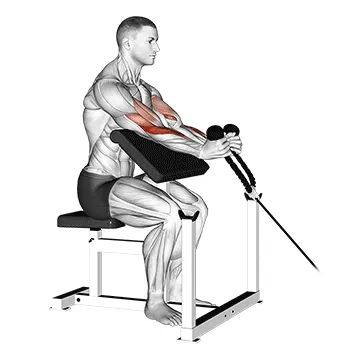
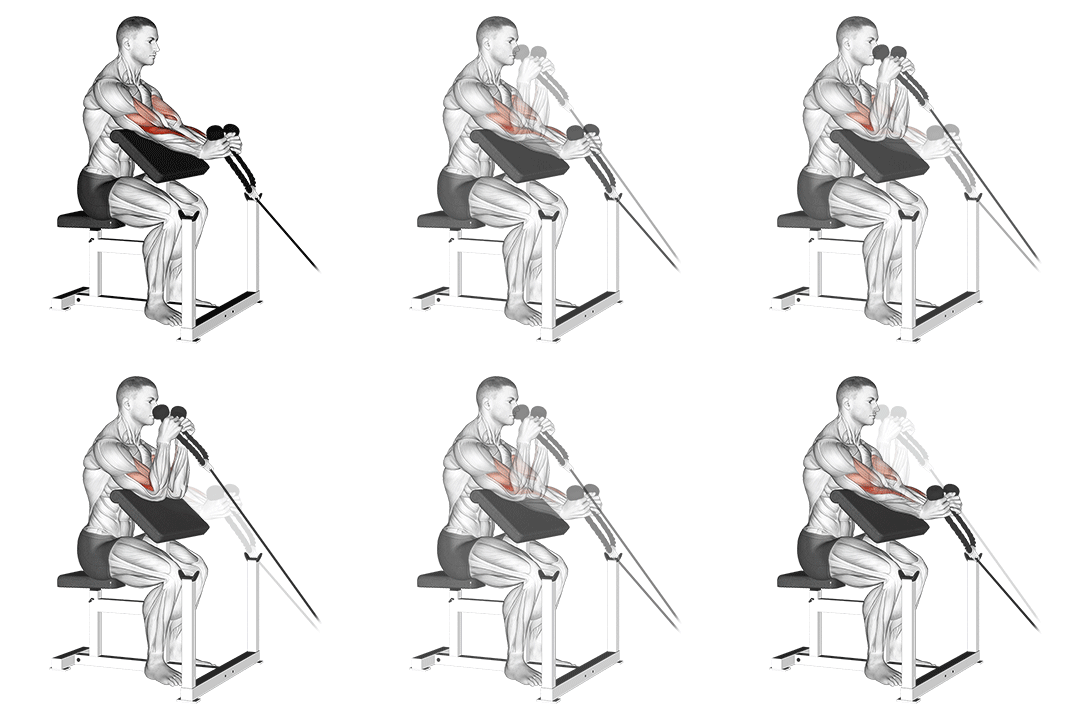
9. Cable Rope Hammer Preacher Curl
90% match- Biceps
- Cable
- Beginner
- Isolation
How to perform this exercise
- Attach a rope attachment to a low pulley cable machine.
- Stand facing the machine with your feet shoulder-width apart.
- Grasp the rope with a neutral grip (palms facing each other).
- Position your upper arms against the preacher bench pad, keeping your elbows slightly bent.
- Keeping your upper arms stationary, exhale and curl the rope towards your shoulders by contracting your biceps.
- Hold the contracted position for a brief pause as you squeeze your biceps.
- Inhale and slowly lower the rope back to the starting position.
- Repeat for the desired number of repetitions.
Sets and reps: 3 sets of 10 to 15 reps.
Why this matches
- Movement: curl, the same as the Cable Hammer Curl (With Rope)
- Primary muscle: biceps, the same as the Cable Hammer Curl (With Rope)
- Equipment: a cable, the same as the Cable Hammer Curl (With Rope)
- Body position: seated, not standing
- Balance: easier to stay steady on than the Cable Hammer Curl (With Rope)
Progression
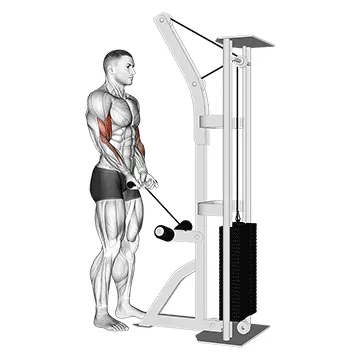
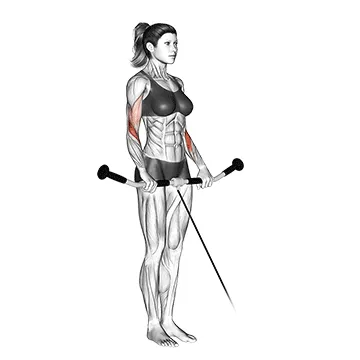
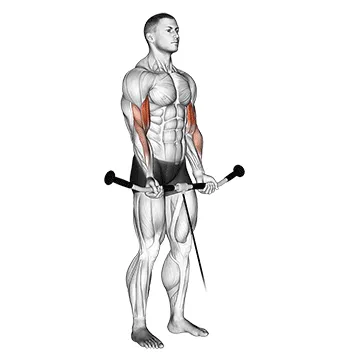
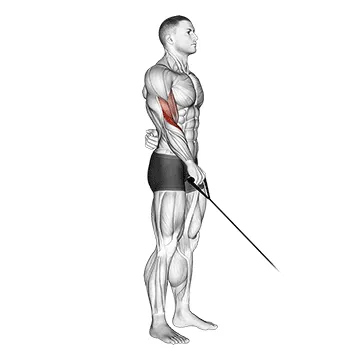
10. Cable Reverse One Arm Curl
88% match- Biceps
- Cable
- Intermediate
- Isolation
How to perform this exercise
- Stand facing a cable machine with your feet shoulder-width apart.
- Grasp the cable handle with an underhand grip, palm facing down.
- Keep your elbow close to your side and slowly curl your forearm up towards your shoulder.
- Pause for a moment at the top, then slowly lower your forearm back down to the starting position.
- Repeat for the desired number of repetitions.
Sets and reps: 3 sets of 10 to 15 reps on each side.
Why this matches
- Movement: curl, the same as the Cable Hammer Curl (With Rope)
- Primary muscle: biceps, the same as the Cable Hammer Curl (With Rope)
- Equipment: a cable, the same as the Cable Hammer Curl (With Rope)
- Body position: standing, the same as the Cable Hammer Curl (With Rope)
Why You Might Need a Cable Hammer Curl (With Rope) Alternative
The Cable Hammer Curl (With Rope) needs a cable stack and a rope attachment, and gyms often only have one rope for several stations, so it disappears first when the gym fills up. Every one of these still runs off a pulley, so the difference is the attachment and the angle rather than the equipment itself. Standing Biceps Cable Curl swaps the rope for a curl bar, turning your palms up; Cable Curl keeps a cable attachment with the same palms-up grip. High Cable Curls and Overhead Cable Curl move the pulley higher, changing the angle your arm pulls against without changing the muscle doing the work. Cable Reverse One Arm Curl works one arm at a time from the stack, so two lifters can share the same station.
How to Choose the Right Cable Hammer Curl (With Rope) Substitute
If your problem is one shared rope, move to a bar attachment on the same stack. Standing Biceps Cable Curl, Cable Close Grip Curl and Cable Reverse Curl all trade the rope for a bar with your elbows pinned to your sides. Cable Curl and Cable Drag Curl use a cable attachment with the same palms-up grip. For a higher pull, High Cable Curls and Overhead Cable Curl raise the pulley above your shoulders, so you curl toward your head with your upper arms raised instead of pinned at your sides. The Cable Rope Hammer Preacher Curl keeps the rope but rests your upper arms on a preacher pad. If you train alone, the Cable Reverse One Arm Curl loads one arm at a time and leaves your other hand free.
Cable Hammer Curl (With Rope) FAQ
Do the alternatives all need a cable stack?
Yes. Every swap, from the Cable Close Grip Curl to the Cable Reverse One Arm Curl, runs off the same pulley system as the Cable Hammer Curl (With Rope). A cable keeps tension on your arm through the whole range of motion, which free weights lose near the top and bottom, so none of these substitutes trade that away.
What is the difference between the rope and a straight bar setup?
The rope lets your palms face each other the whole way up, which is the grip the Cable Hammer Curl (With Rope) uses. The Cable Close Grip Curl and Cable Reverse Curl put a straight bar on the low pulley, and the Standing Biceps Cable Curl uses a curl bar; on all three your palms turn up and stay there instead of facing each other through the curl.
Which swap asks the most of my forearms?
The Cable Rope Hammer Preacher Curl and the Cable Hammer Curls - Rope Attachment keep the palms-facing rope grip that the Cable Hammer Curl (With Rope) uses, which is where the forearm work you feel from it comes from. The bar and handle versions turn your palms up, which changes the grip your forearms hold through the curl.
Is there a version I can do with one arm at a time?
Yes, the Cable Reverse One Arm Curl. It runs off the same cable stack as the rope version but uses a single handle, so you curl one arm while the other rests. That makes it useful for fixing a strength gap between arms or sharing a station with someone else.
Find Alternatives for Any Exercise
Search the exercise database and filter the ranked substitutes by the equipment you own.
Similarity scores compare exercise metadata such as movement pattern, muscles, equipment and body position. They are not a safety rating or a check that you own the equipment. Learn about our methodology