

10 Best Smith Machine Bicep Curl Alternatives for Limited Equipment
The Smith Machine Bicep Curl is done standing with a Smith machine. Ranked closest by our scoring: the Machine Bicep Curl, Machine Preacher Curls and the Lying Close-grip Bar Curl On High Pulley.
Updated Ranked by our 12-factor similarity model How it works
Original Exercise: Smith Machine Bicep Curl
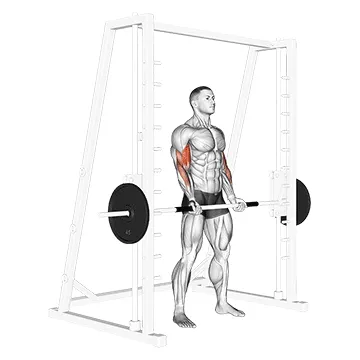
- Primary muscle
- Biceps
- Equipment
- Smith-machine
- Difficulty
- Beginner
- Type
- Isolation
Secondary muscles: Forearms
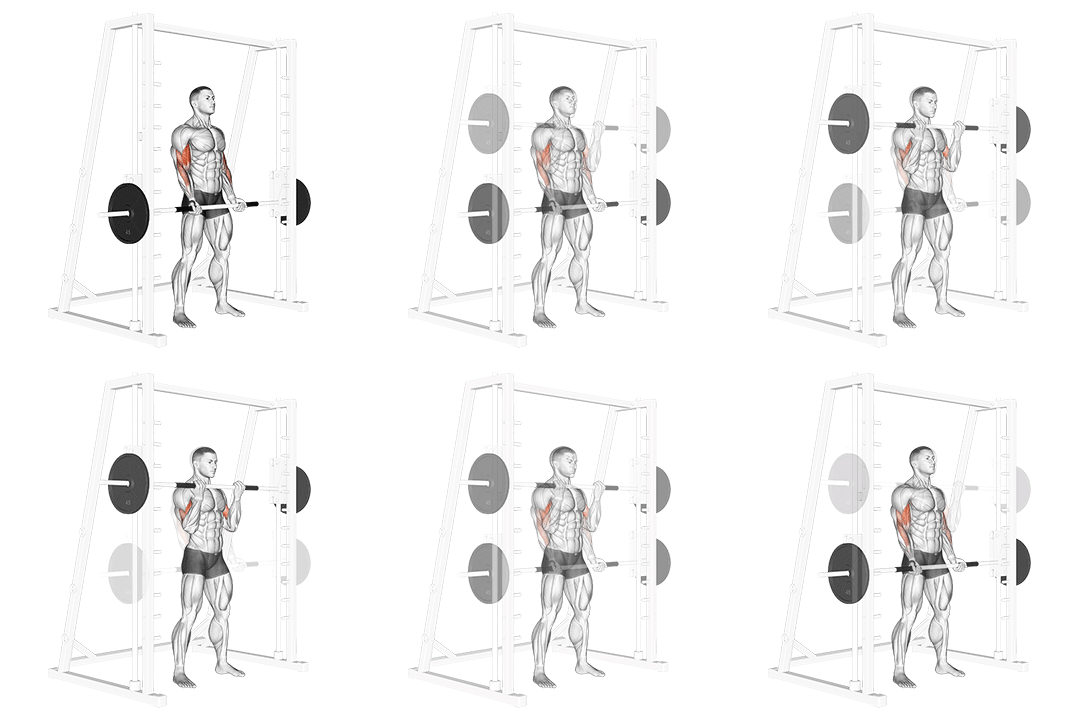
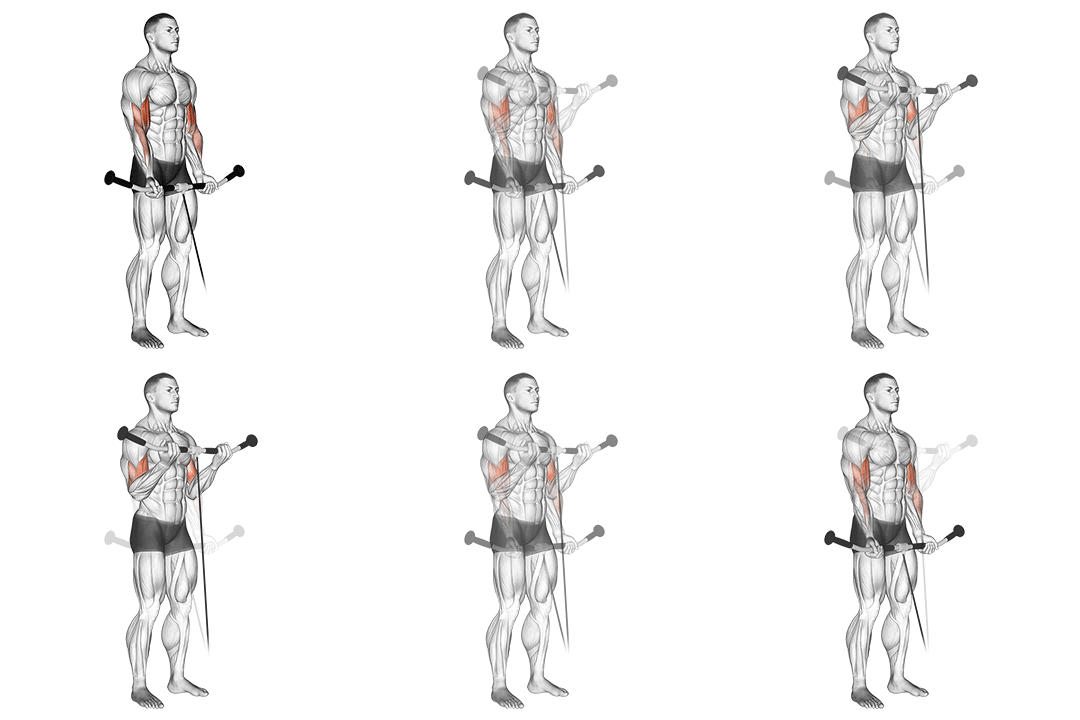
How to perform Smith Machine Bicep Curl
- Adjust the height of the smith machine bar to be at waist level.
- Stand facing the smith machine with your feet shoulder-width apart.
- Grasp the bar with an underhand grip, hands slightly wider than shoulder-width apart.
- Keep your elbows close to your sides and your upper arms stationary.
- Exhale and curl the bar up towards your shoulders, contracting your biceps.
- Pause for a moment at the top of the movement, squeezing your biceps.
- Inhale and slowly lower the bar back down to the starting position.
- Repeat for the desired number of repetitions.
Ranked Smith Machine Bicep Curl Alternatives
10 substitutes, ranked by how closely each one matches the Smith Machine Bicep Curl on movement pattern, muscles worked, equipment and body position. The higher the score, the less you change. Open "How to perform this exercise" on a card for the steps; every card title links to that exercise's own alternatives page.
Best match 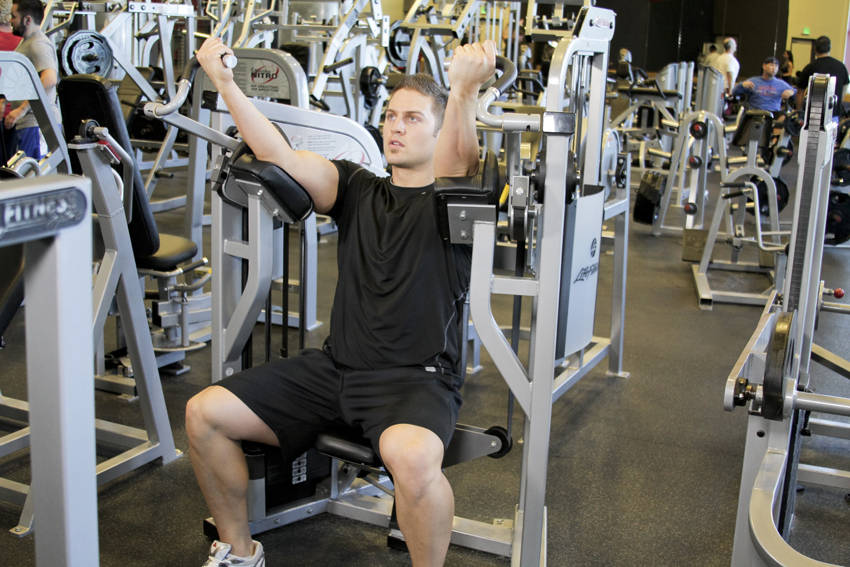
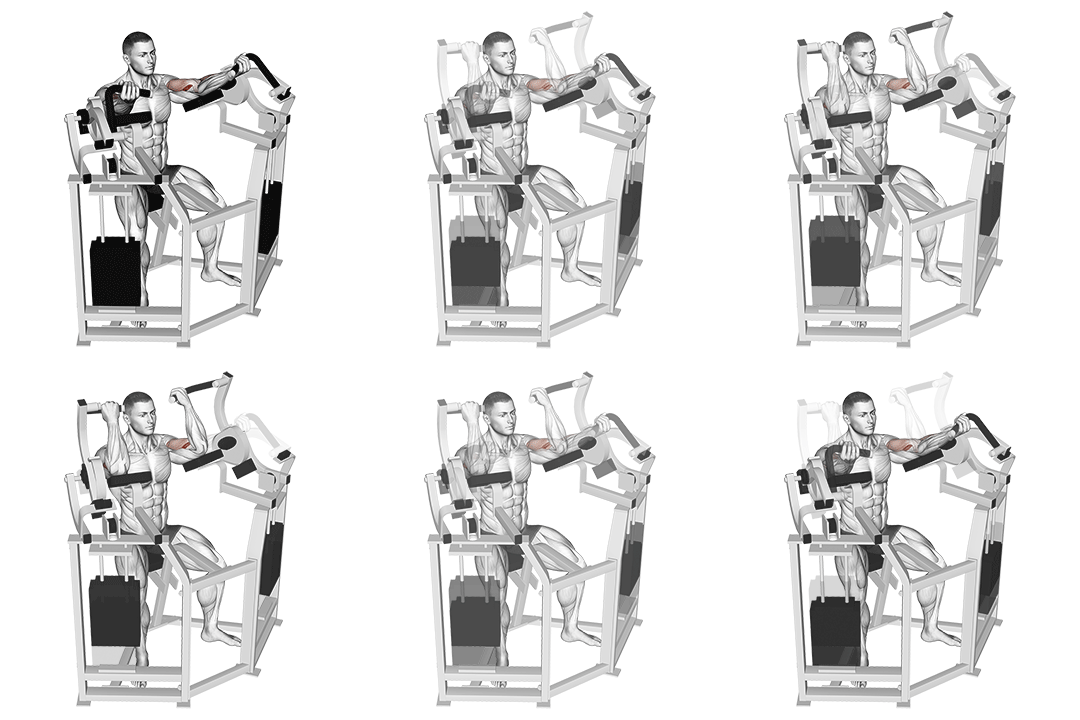
1. Machine Bicep Curl
92% match- Biceps
- Machine
- Beginner
- Isolation
A good swap when you have a machine to work with, and it still works the biceps.
How to perform this exercise
- Adjust the seat to the appropriate height and make your weight selection. Place your upper arms against the pads and grasp the handles. This will be your starting position.
- Perform the movement by flexing the elbow, pulling your lower arm towards your upper arm.
- Pause at the top of the movement, and then slowly return the weight to the starting position.
- Avoid returning the weight all the way to the stops until the set is complete to keep tension on the muscles being worked.
Sets and reps: 3 sets of 10 to 15 reps.
Why this matches
- Movement: curl, the same as the Smith Machine Bicep Curl
- Primary muscle: biceps, the same as the Smith Machine Bicep Curl
- Equipment: a machine, the same as the Smith Machine Bicep Curl
- Body position: seated, not standing
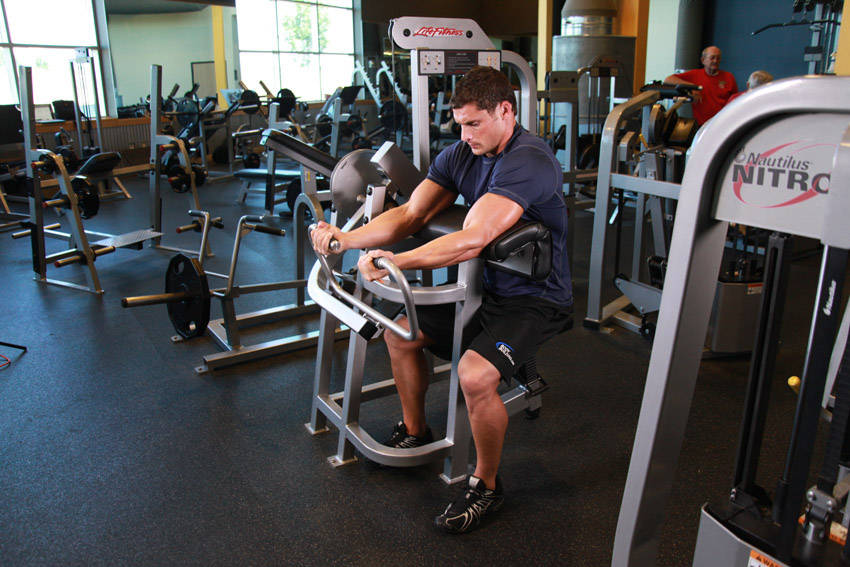
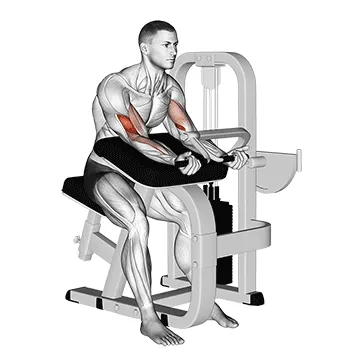
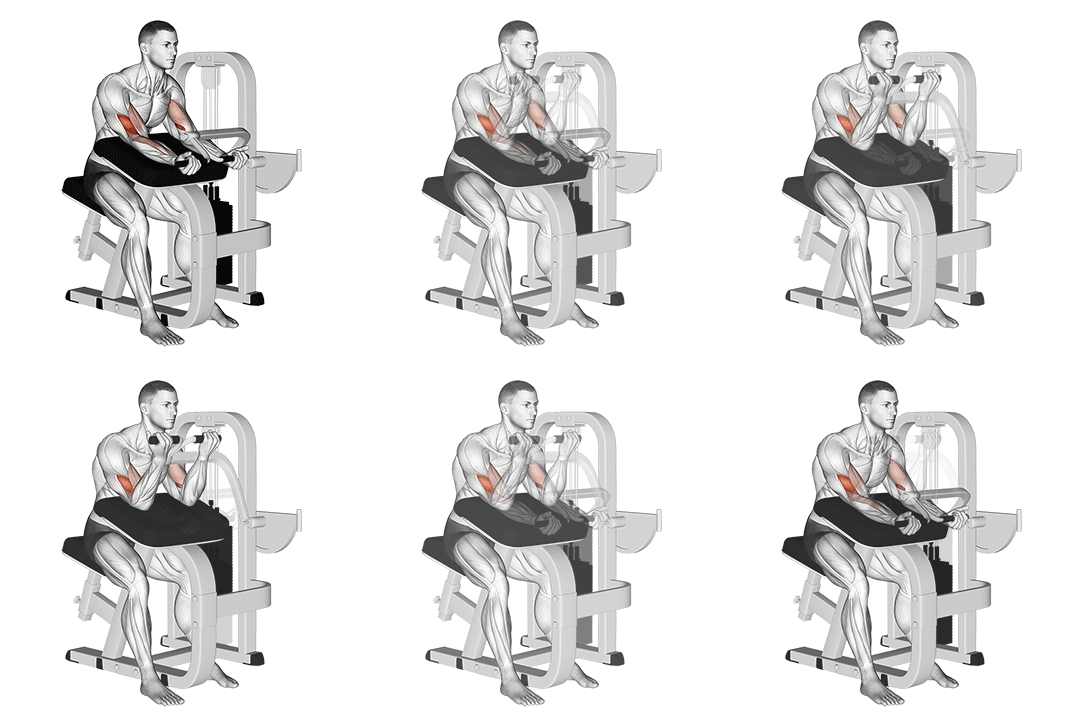
2. Machine Preacher Curls
92% match- Biceps
- Machine
- Beginner
- Isolation
How to perform this exercise
- Sit down on the Preacher Curl Machine and select the weight.
- Place the back of your upper arms (your triceps) on the preacher pad provided and grab the handles using an underhand grip (palms facing up). Tip: Make sure that when you place the arms on the pad you keep the elbows in. This will be your starting position.
- Now lift the handles as you exhale and you contract the biceps. At the top of the position make sure that you hold the contraction for a second. Tip: Only the forearms should move. The upper arms should remain stationary and on the pad at all times.
- Lower the handles slowly back to the starting position as you inhale.
- Repeat for the recommended amount of repetitions.
Sets and reps: 3 sets of 10 to 15 reps.
Why this matches
- Movement: curl, the same as the Smith Machine Bicep Curl
- Primary muscle: biceps, the same as the Smith Machine Bicep Curl
- Equipment: a machine, the same as the Smith Machine Bicep Curl
- Body position: seated, not standing
- Biceps
- Cable
- Beginner
- Isolation
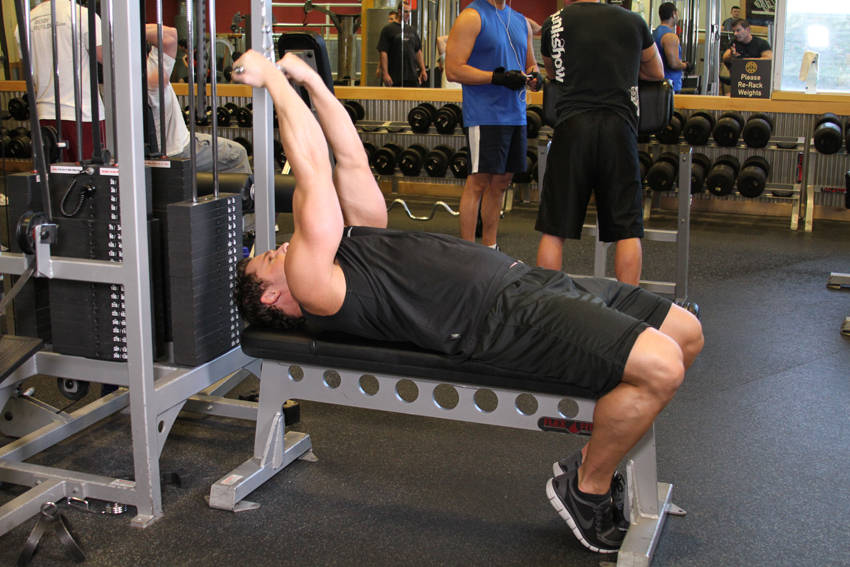
A good swap when you have a cable machine to work with, and it still works the biceps.
How to perform this exercise
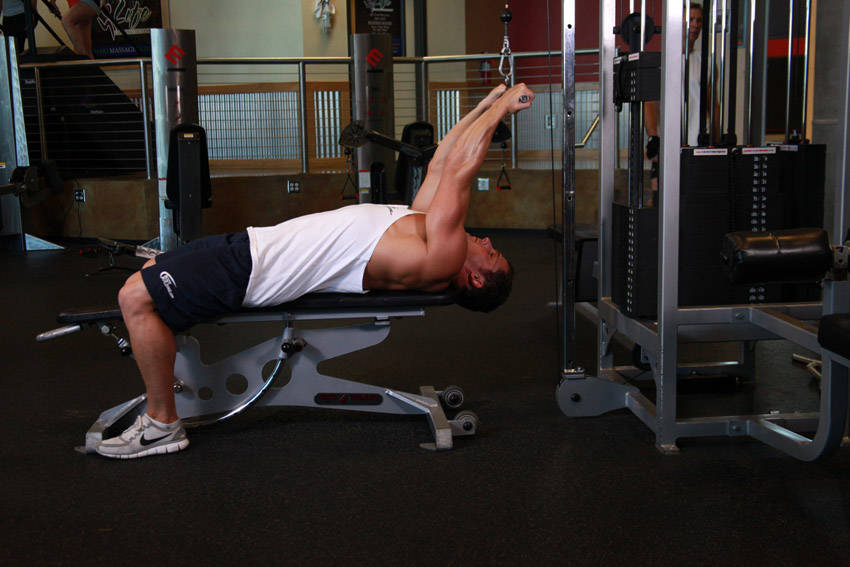
- Place a flat bench in front of a high pulley or lat pulldown machine.
- Hold the straight bar attachment using an underhand grip (palms up) that is about shoulder width.
- Lie on your back with your head over the end of the bench.
- Now extend your arms straight above your shoulders. Your torso and your arms should make a 90-degree angle and the elbows should be in. This will be your starting position.
- As you breathe out, curl the bar down in a semicircular motion until it touches your chin. Squeeze the biceps for a second at the top contracted position. Tip: As you execute this motion only the forearms should move. At no time should the upper arms be moving at all. They are to remain perpendicular throughout the movement.
- Return to starting position slowly.
- Repeat for the recommended amount of repetitions.
Sets and reps: 3 sets of 10 to 15 reps.
Why this matches
- Movement: curl, the same as the Smith Machine Bicep Curl
- Primary muscle: biceps, the same as the Smith Machine Bicep Curl
- Equipment: a cable, not a machine
- Body position: lying on your back, not standing
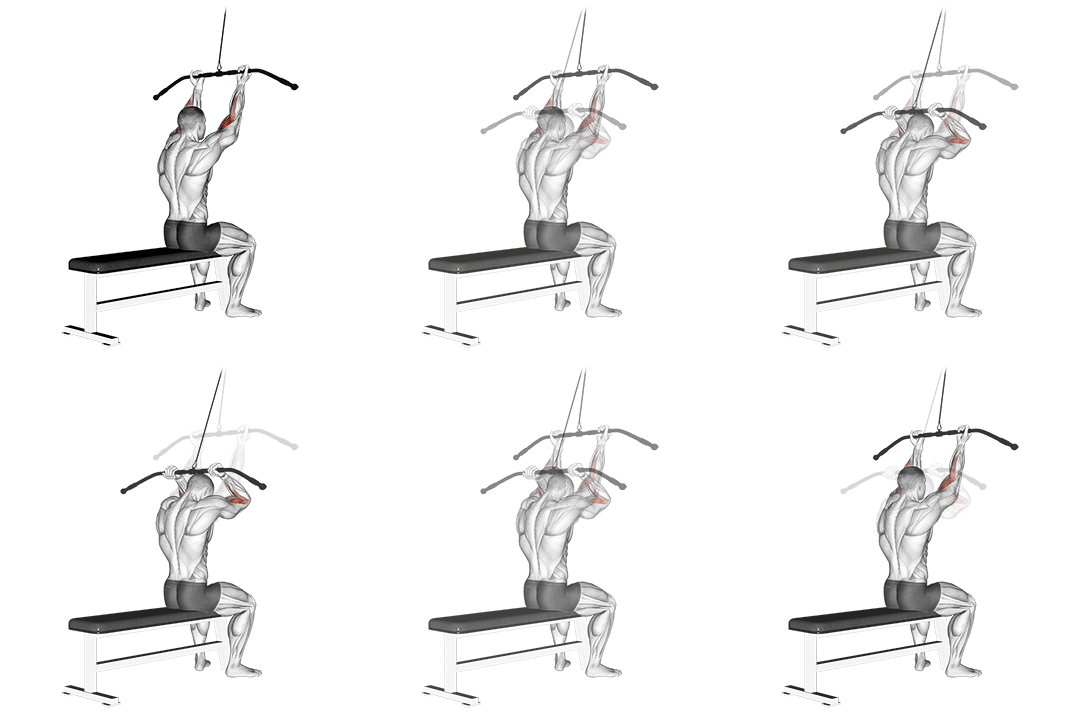
4. Cable Pulldown Bicep Curl
80% match- Biceps
- Cable
- Beginner
- Isolation
How to perform this exercise
- Attach a straight bar to the cable machine at the highest setting.
- Stand facing the machine with your feet shoulder-width apart.
- Grasp the bar with an underhand grip, hands shoulder-width apart.
- Keep your elbows close to your sides and your upper arms stationary.
- Exhale and slowly curl the bar down towards your thighs, keeping your wrists straight.
- Pause for a moment at the bottom of the movement, squeezing your biceps.
- Inhale and slowly return the bar to the starting position, fully extending your arms.
- Repeat for the desired number of repetitions.
Sets and reps: 3 sets of 10 to 15 reps.
Why this matches
- Movement: curl, the same as the Smith Machine Bicep Curl
- Primary muscle: biceps, the same as the Smith Machine Bicep Curl
- Equipment: a cable, not a machine
- Body position: seated, not standing
5. Lever Bicep Curl
77% match- Biceps
- Lever
- Beginner
- Isolation
A good swap when you have a lever machine to work with, and it still works the biceps.
How to perform this exercise
- Adjust the seat height and position yourself on the machine with your back against the pad.
- Grasp the handles with an underhand grip, palms facing up, and keep your elbows close to your sides.
- Exhale and curl the handles upward, contracting your biceps.
- Pause for a moment at the top of the movement, squeezing your biceps.
- Inhale and slowly lower the handles back to the starting position, fully extending your arms.
- Repeat for the desired number of repetitions.
Sets and reps: 3 sets of 10 to 15 reps.
Why this matches
- Primary muscle: biceps, the same as the Smith Machine Bicep Curl
- Equipment: a machine, the same as the Smith Machine Bicep Curl
- Body position: seated, not standing
6. Lever Preacher Curl
77% match- Biceps
- Lever
- Beginner
- Isolation
How to perform this exercise
- Adjust the seat height and position yourself on the leverage machine.
- Place your upper arms on the pad and grip the handles with an underhand grip.
- Keep your back straight and your elbows positioned on the pad.
- Exhale and curl your forearms towards your upper arms, contracting your biceps.
- Pause for a moment at the top of the movement, squeezing your biceps.
- Inhale and slowly lower the handles back to the starting position.
- Repeat for the desired number of repetitions.
Sets and reps: 3 sets of 10 to 15 reps.
Why this matches
- Primary muscle: biceps, the same as the Smith Machine Bicep Curl
- Equipment: a machine, the same as the Smith Machine Bicep Curl
- Body position: seated, not standing
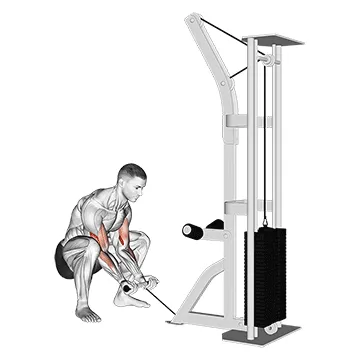
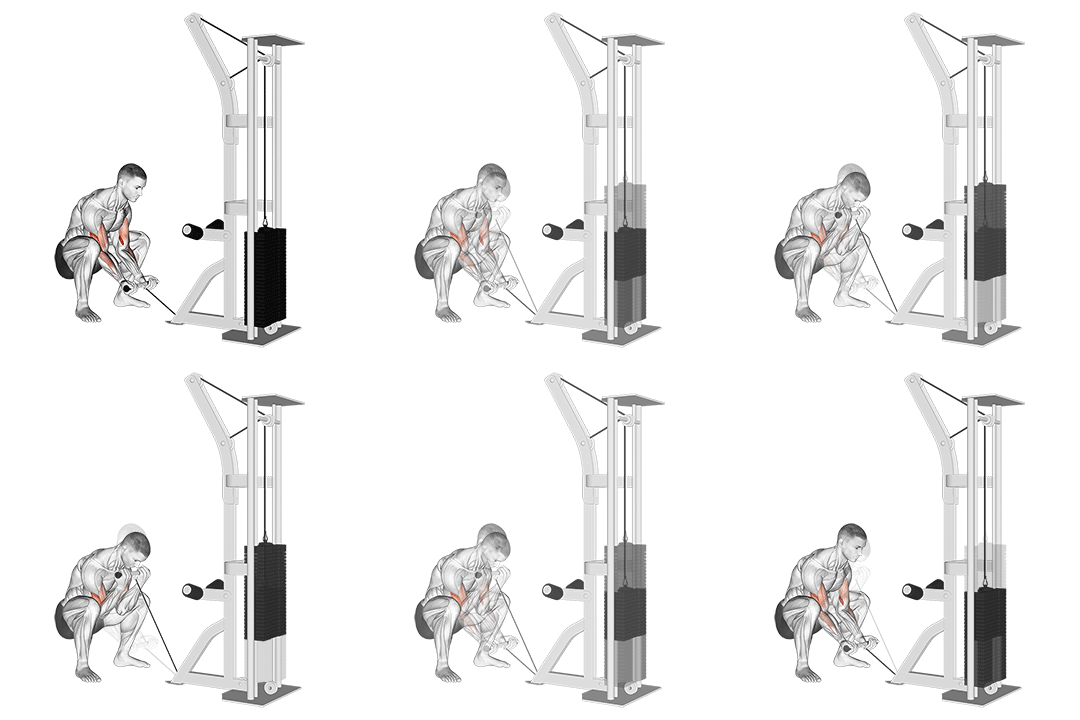
7. Cable Squatting Curl
75% match- Biceps
- Cable
- Intermediate
- Isolation
How to perform this exercise
- Attach a cable handle to the lowest setting on a cable machine.
- Stand facing the machine with your feet shoulder-width apart.
- Hold the cable handle with an underhand grip, palms facing up, and arms fully extended.
- Lower your body into a squat position, keeping your back straight and knees behind your toes.
- As you squat down, curl the cable handle towards your shoulders, keeping your elbows close to your sides.
- Pause for a moment at the top of the curl, squeezing your biceps.
- Slowly lower the cable handle back to the starting position, fully extending your arms.
- Repeat for the desired number of repetitions.
Sets and reps: 3 sets of 10 to 15 reps.
Why this matches
- Primary muscle: biceps, the same as the Smith Machine Bicep Curl
- Equipment: a cable, not a machine
- Body position: standing, the same as the Smith Machine Bicep Curl
- Balance: harder to stay steady on than the Smith Machine Bicep Curl
8. High Cable Curls
74% match- Biceps
- Cable
- Beginner
- Isolation
How to perform this exercise
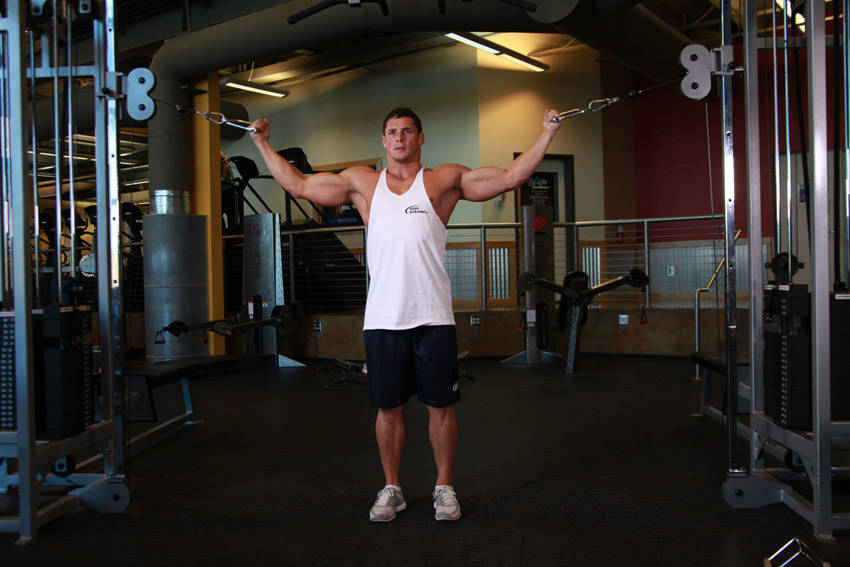
- Stand between a couple of high pulleys and grab a handle in each arm. Position your upper arms in a way that they are parallel to the floor with the palms of your hands facing you. This will be your starting position.
- Curl the handles towards you until they are next to your ears. Make sure that as you do so you flex your biceps and exhale. The upper arms should remain stationary and only the forearms should move. Hold for a second in the contracted position as you squeeze the biceps.
- Slowly bring back the arms to the starting position.
- Repeat for the recommended amount of repetitions.
Sets and reps: 3 sets of 10 to 15 reps.
Why this matches
- Primary muscle: biceps, the same as the Smith Machine Bicep Curl
- Equipment: a cable, not a machine
- Body position: standing, the same as the Smith Machine Bicep Curl
9. Overhead Cable Curl
74% match- Biceps
- Cable
- Intermediate
- Isolation
How to perform this exercise
- To begin, set a weight that is comfortable on each side of the pulley machine. Note: Make sure that the amount of weight selected is the same on each side.
- Now adjust the height of the pulleys on each side and make sure that they are positioned at a height higher than that of your shoulders.
- Stand in the middle of both sides and use an underhand grip (palms facing towards the ceiling) to grab each handle. Your arms should be fully extended and parallel to the floor with your feet positioned shoulder width apart from each other. Your body should be evenly aligned the handles. This is the starting position.
- While exhaling, slowly squeeze the biceps on each side until your forearms and biceps touch.
- While inhaling, move your forearms back to the starting position. Note: Your entire body is stationary during this exercise except for the forearms.
- Repeat for the recommended amount of repetitions prescribed in your program.
Sets and reps: 3 sets of 10 to 15 reps.
Why this matches
- Primary muscle: biceps, the same as the Smith Machine Bicep Curl
- Equipment: a cable, not a machine
- Body position: standing, the same as the Smith Machine Bicep Curl
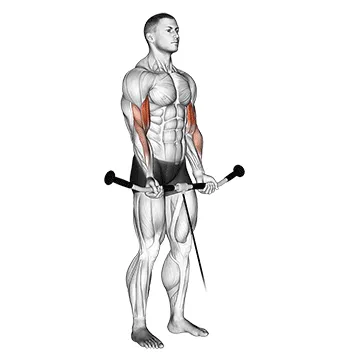
10. Cable Curl
73% match- Biceps
- Cable
- Beginner
- Isolation
How to perform this exercise
- Stand facing the cable machine with your feet shoulder-width apart.
- Grasp the cable attachment with an underhand grip, palms facing up.
- Keep your elbows close to your sides and your upper arms stationary.
- Exhale and curl the cable attachment towards your shoulders, contracting your biceps.
- Pause for a moment at the top of the movement, squeezing your biceps.
- Inhale and slowly lower the cable attachment back to the starting position.
- Repeat for the desired number of repetitions.
Sets and reps: 3 sets of 10 to 15 reps.
Why this matches
- Primary muscle: biceps, the same as the Smith Machine Bicep Curl
- Equipment: a cable, not a machine
- Body position: standing, the same as the Smith Machine Bicep Curl
Smith Machine Bicep Curl FAQ
What muscles does Smith Machine Bicep Curl work?
The Smith Machine Bicep Curl primarily targets the biceps brachii (both long and short heads) and secondarily the brachialis and brachioradialis. Fixed bar path minimizes scapular and core involvement, so the exercise isolates elbow flexion and concentrates torque at the elbow joint.
Can I build muscle without doing Smith Machine Bicep Curl?
Yes. You can achieve comparable hypertrophy using free weights, cables, or bodyweight movements by maintaining progressive overload and proper form. Use strict technique, pin the elbow, control the eccentric, and vary grips to target long head, short head, and brachialis activation.
Find Alternatives for Any Exercise
Search the exercise database and filter the ranked substitutes by the equipment you own.
Similarity scores compare exercise metadata such as movement pattern, muscles, equipment and body position. They are not a safety rating or a check that you own the equipment. Learn about our methodology