

10 Best Smith Standing Military Press Alternatives for Home Gyms
If you can't do the Smith standing military press, use dumbbell overhead presses, landmine presses, push presses, seated barbell presses, or pike/handstand presses instead. Maintain a packed scapula and braced core, press through the mid-foot, and keep elbows tracking slightly forward to preserve vertical loading and target the delts.
Original Exercise: Smith Standing Military Press
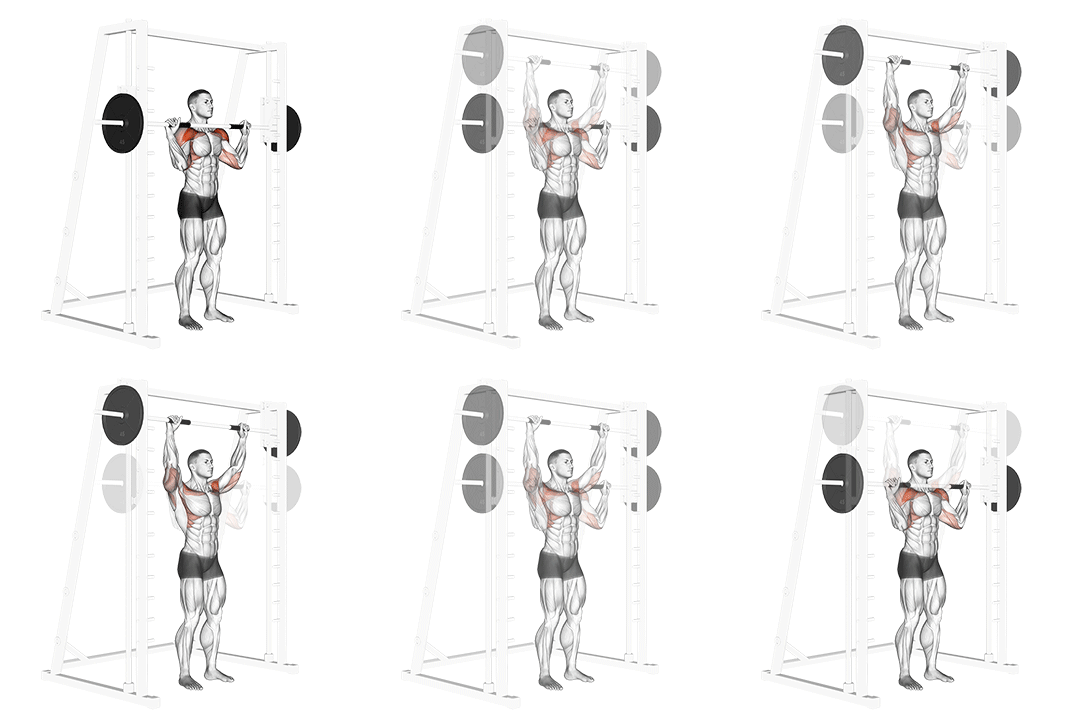
How to Perform Smith Standing Military Press
- Stand with your feet shoulder-width apart and your knees slightly bent.
- Grasp the barbell with an overhand grip, slightly wider than shoulder-width apart.
- Lift the barbell off the rack and bring it down to shoulder level, with your palms facing forward.
- Press the barbell upward until your arms are fully extended overhead.
- Pause for a moment at the top, then slowly lower the barbell back down to shoulder level.
- Repeat for the desired number of repetitions.
Best Smith Standing Military Press Alternatives
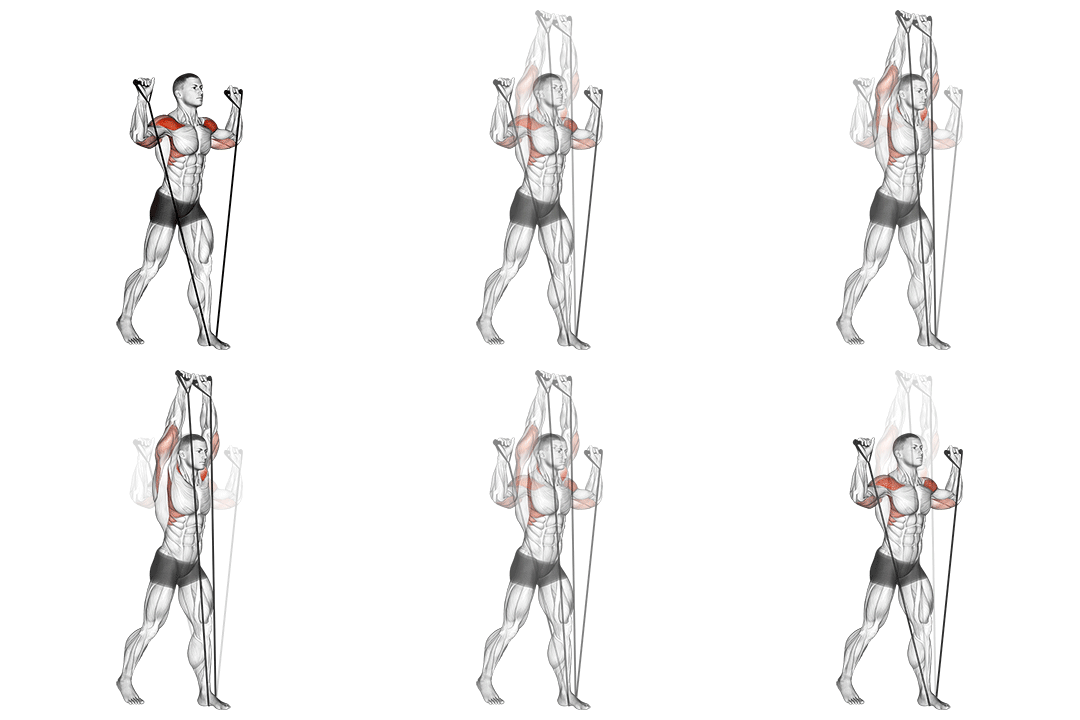
1. Band Shoulder Press
89.2% MatchHow to perform this exercise
- Stand with your feet shoulder-width apart and place the band under your feet.
- Hold the band with your palms facing forward and raise your hands to shoulder height, elbows bent.
- Press the band overhead, fully extending your arms.
- Pause for a moment at the top, then slowly lower the band back to shoulder height.
- Repeat for the desired number of repetitions.
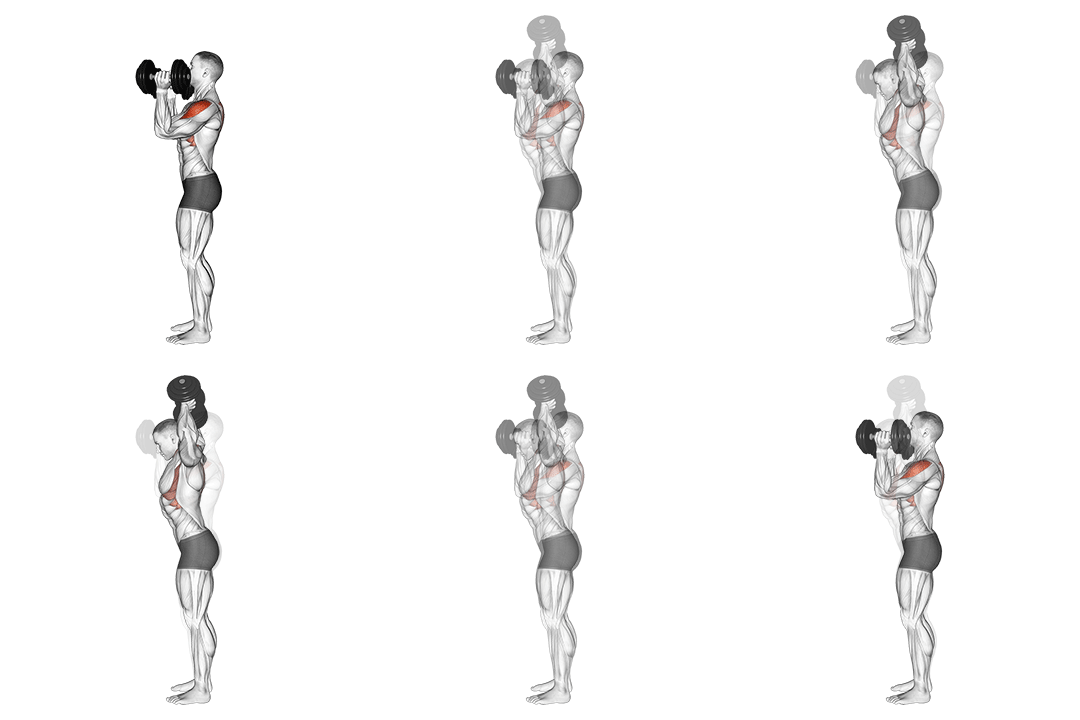
2. Dumbbell Scott Press
87.9% MatchHow to perform this exercise
- Sit on a bench with a dumbbell in each hand, palms facing forward.
- Raise the dumbbells to shoulder height, with your elbows bent and palms facing forward.
- Press the dumbbells upward until your arms are fully extended.
- Pause for a moment at the top, then slowly lower the dumbbells back to the starting position.
- Repeat for the desired number of repetitions.
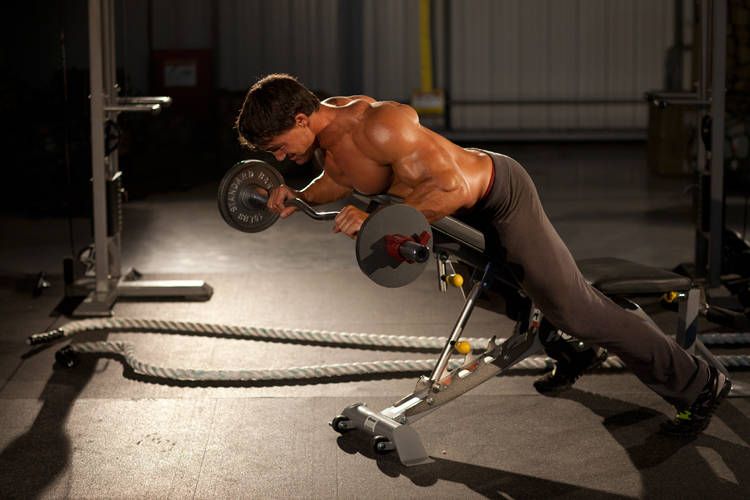
3. Anti-Gravity Press
87.9% MatchHow to perform this exercise
- Place a bar on the ground behind the head of an incline bench.
- Lay on the bench face down. With a pronated grip, pick the barbell up from the floor. Flex the elbows, performing a reverse curl to bring the bar near your chest. This will be your starting position.
- To begin, press the barbell out in front of your head by extending your elbows. Keep your arms parallel to the ground throughout the movement.
- Return to the starting position and repeat to complete the set.
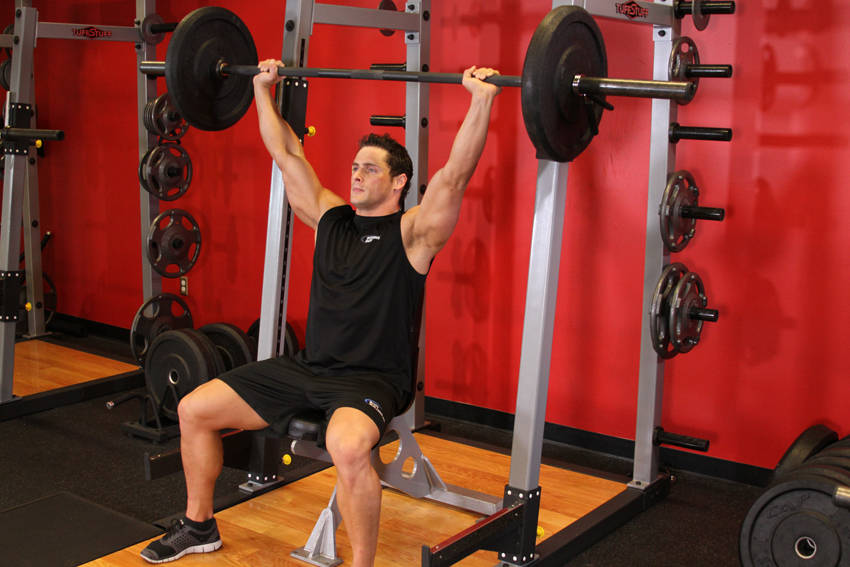
4. Barbell Shoulder Press
87.9% MatchHow to perform this exercise
- Sit on a bench with back support in a squat rack. Position a barbell at a height that is just above your head. Grab the barbell with a pronated grip (palms facing forward).
- Once you pick up the barbell with the correct grip width, lift the bar up over your head by locking your arms. Hold at about shoulder level and slightly in front of your head. This is your starting position.
- Lower the bar down to the shoulders slowly as you inhale.
- Lift the bar back up to the starting position as you exhale.
- Repeat for the recommended amount of repetitions.
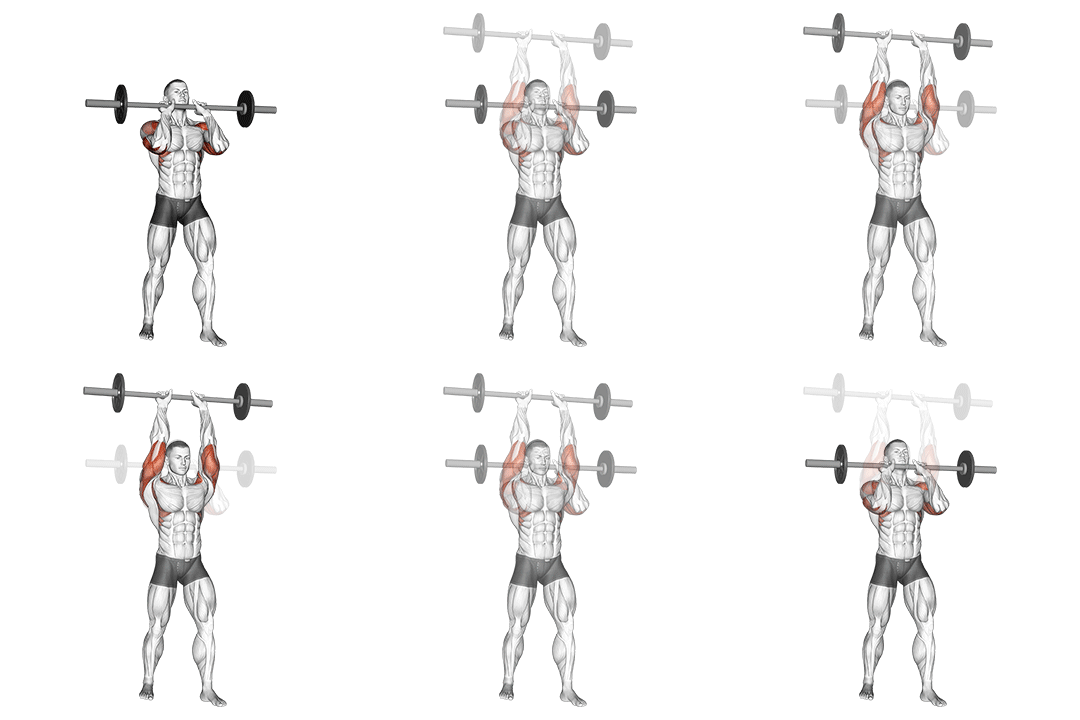
5. Barbell Standing Close Grip Military Press
87.9% MatchHow to perform this exercise
- Stand with your feet shoulder-width apart and hold the barbell with an overhand grip, hands slightly closer than shoulder-width apart.
- Lift the barbell to shoulder height, keeping your elbows close to your body.
- Press the barbell overhead, extending your arms fully.
- Lower the barbell back to shoulder height.
- Repeat for the desired number of repetitions.
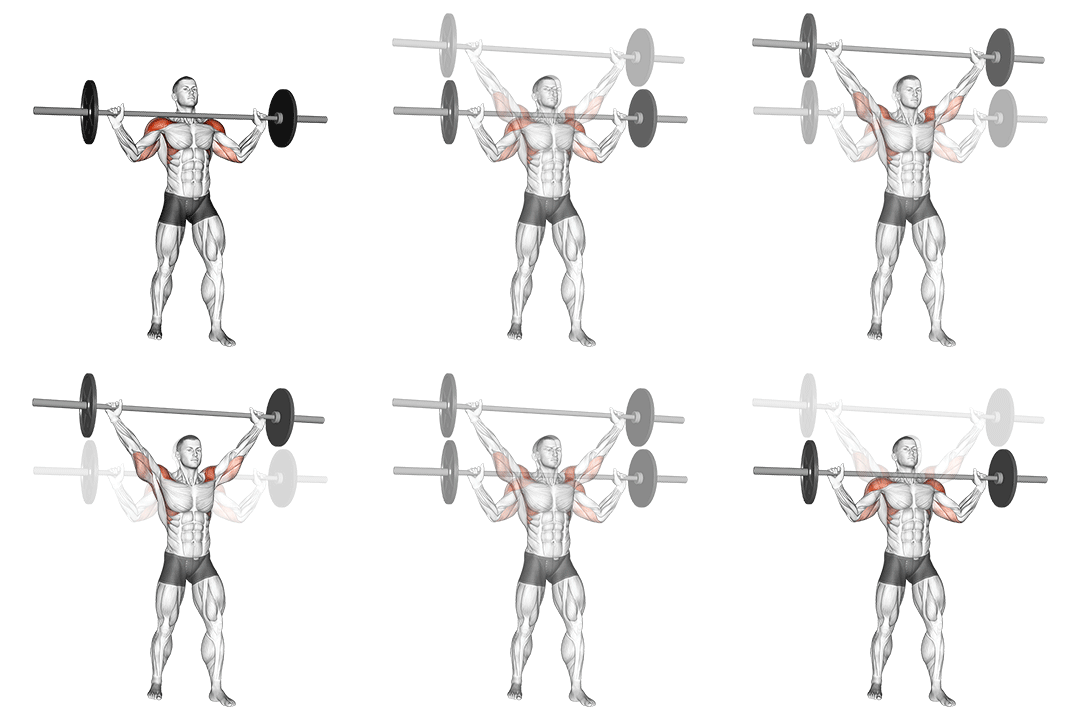
6. Barbell Standing Wide Military Press
85.9% MatchHow to perform this exercise
- Stand with your feet shoulder-width apart and hold the barbell with an overhand grip, slightly wider than shoulder-width.
- Lift the barbell to shoulder height, keeping your elbows slightly in front of the bar.
- Press the barbell overhead, extending your arms fully.
- Lower the barbell back to shoulder height and repeat for the desired number of repetitions.
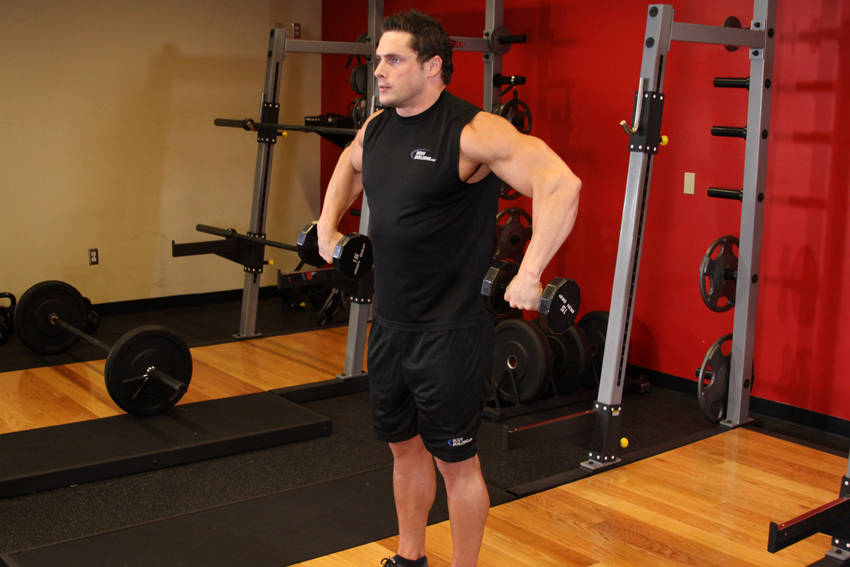
7. Cuban Press
84.7% MatchHow to perform this exercise
- Take a dumbbell in each hand with a pronated grip in a standing position. Raise your upper arms so that they are parallel to the floor, allowing your lower arms to hang in the "scarecrow" position. This will be your starting position.
- To initiate the movement, externally rotate the shoulders to move the upper arm 180 degrees. Keep the upper arms in place, rotating the upper arms until the wrists are directly above the elbows, the forearms perpendicular to the floor.
- Now press the dumbbells by extending at the elbows, straightening your arms overhead.
- Return to the starting position as you breathe in by reversing the steps.
- Repeat for the recommended amount of repetitions.
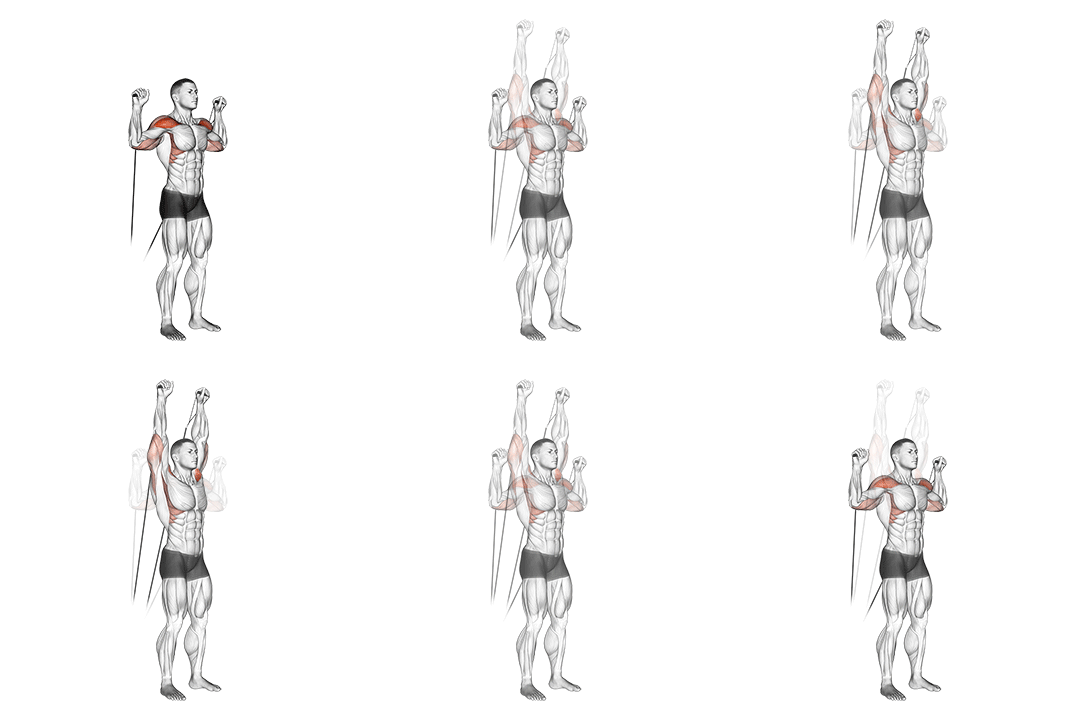
8. Cable Shoulder Press
84.2% MatchHow to perform this exercise
- Adjust the cable machine so that the handles are at shoulder height.
- Stand facing away from the machine with your feet shoulder-width apart.
- Grasp the handles with an overhand grip and bring them up to shoulder level, with your elbows bent and pointing outwards.
- Press the handles upwards until your arms are fully extended overhead.
- Pause for a moment at the top, then slowly lower the handles back down to shoulder level.
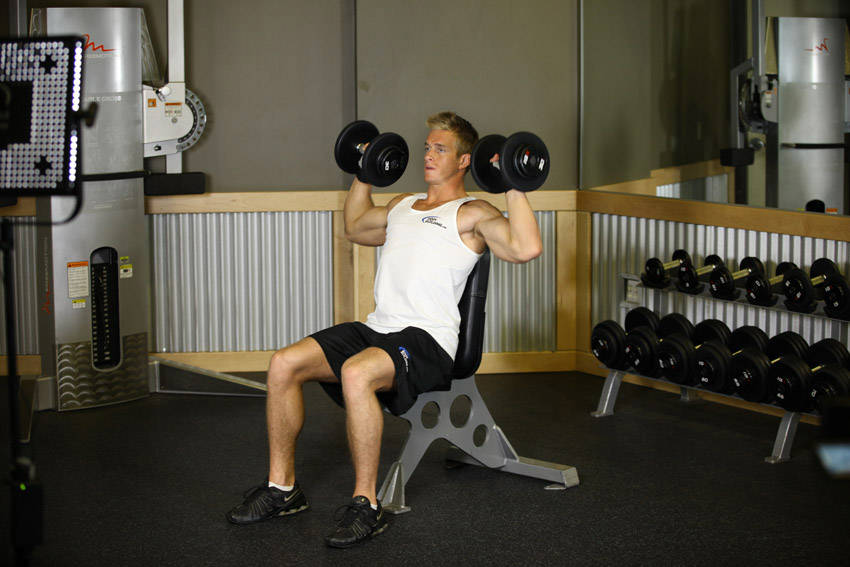
9. Dumbbell Shoulder Press
83.9% MatchHow to perform this exercise
- While holding a dumbbell in each hand, sit on a military press bench or utility bench that has back support. Place the dumbbells upright on top of your thighs.
- Now raise the dumbbells to shoulder height one at a time using your thighs to help propel them up into position.
- Make sure to rotate your wrists so that the palms of your hands are facing forward. This is your starting position.
- Now, exhale and push the dumbbells upward until they touch at the top.
- Then, after a brief pause at the top contracted position, slowly lower the weights back down to the starting position while inhaling.
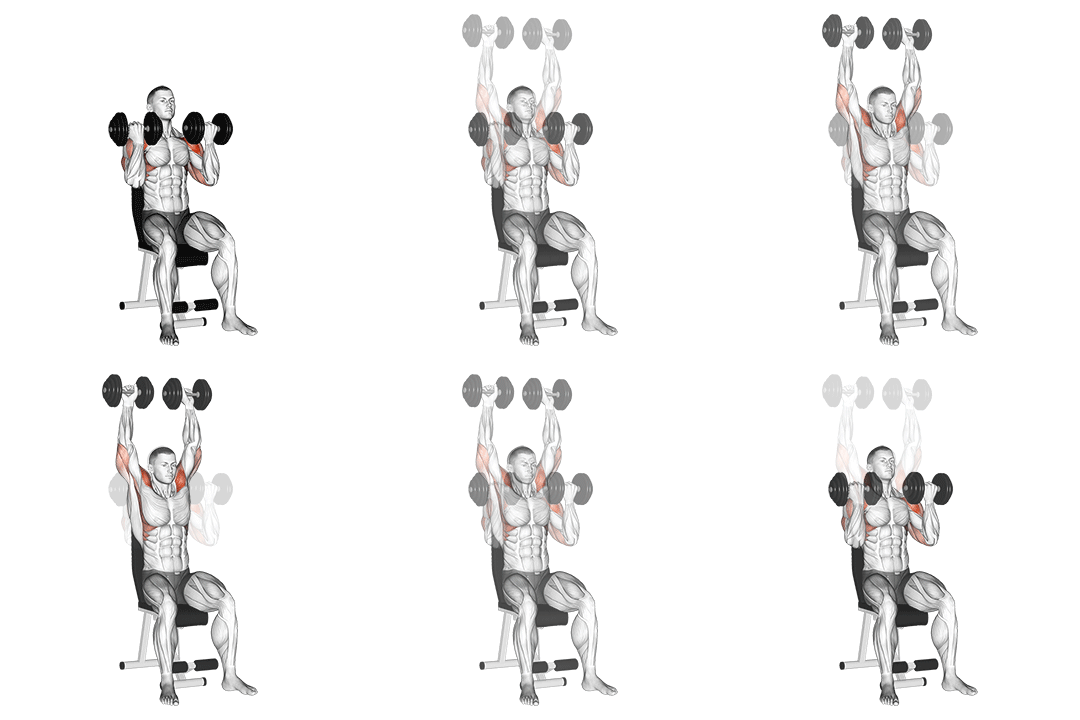
10. Dumbbell Arnold Press
83.9% MatchHow to perform this exercise
- Sit on a bench with back support and hold a dumbbell in each hand at shoulder level, palms facing your body and elbows bent.
- Press the dumbbells upward until your arms are fully extended and your palms are facing forward.
- Rotate your wrists as you lift, so that your palms are facing forward at the top of the movement.
- Pause for a moment at the top, then slowly lower the dumbbells back to the starting position.
- Repeat for the desired number of repetitions.
Why You Might Need a Smith Standing Military Press Alternative
You might substitute the Smith standing military press for injury, equipment limits, or programming needs. A fixed bar path can aggravate impingement or scapular dyskinesis; switching to dumbbells or a landmine lets you rotate the humerus and reduce GH joint shear. Other reasons include wanting unilateral work to fix strength imbalances or adding explosive demands with a push press. Choose alternatives that preserve vertical shoulder loading if you want deltoid emphasis, or pick a neutral-grip dumbbell press to reduce anterior impingement. Cue: start each press by packing the scapula and avoiding shoulder elevation to limit upper-trap takeover and isolate the delts.
How to Choose the Right Substitute
Consider equipment, shoulder health, and movement goals when selecting a substitute. If you lack a Smith machine, use dumbbells or a landmine to allow natural scapular rotation; cue a neutral grip to lower impingement risk. For rehab or pain, reduce range of motion and keep the torso more upright while avoiding lumbar extension—brace your core and press with elbows under wrists. For strength and load progression, choose bilateral barbell or dumbbell presses; for stability and muscle balance, pick single-arm presses. Also match the variant to the deltoid head you want to emphasize: anterior-biased presses use a slightly forward elbow path, while lateral emphasis comes from wider elbow positioning.
Frequently Asked Questions
What muscles does Smith Standing Military Press work?
The exercise primarily targets the deltoids—especially the anterior and lateral heads—while recruiting triceps for elbow extension and the upper traps for scapular stabilization. Keep the scapula packed and avoid shrugging to emphasize deltoid activation over trap takeover.
What is the best bodyweight alternative to Smith Standing Military Press?
A pike push-up or progressive handstand push-up is the top bodyweight substitute because it reproduces vertical pressing and loads the delts. Cue a tucked chin and maintain a neutral spine so you drive through the shoulders and upper chest rather than arching the lower back.
Can I build muscle without doing Smith Standing Military Press?
Yes—you can build shoulder mass with alternatives like seated dumbbell presses, landmine presses, and push presses combined with progressive overload and controlled eccentrics. Ensure you pack the scapula, control the descent for time under tension, and progressively increase load or reps to drive hypertrophy.
More Exercise Alternatives
Find Alternatives for Any Exercise
Use our free tool to discover the best substitute exercises based on your available equipment and goals.
Try the Exercise Substitution Finder →