

10 Best Standing Barbell Calf Raise Alternatives for Home or Gym
The Standing Barbell Calf Raise is done standing with a barbell. Ranked closest by our scoring: the Donkey Calf Raise, the Bodyweight Standing Calf Raise and the Standing Calf Raise (On A Staircase).
Updated Ranked by our 12-factor similarity model How it works
Original Exercise: Standing Barbell Calf Raise
- Primary muscle
- Calves
- Equipment
- Barbell
- Difficulty
- Beginner
- Type
- Isolation
How to perform Standing Barbell Calf Raise
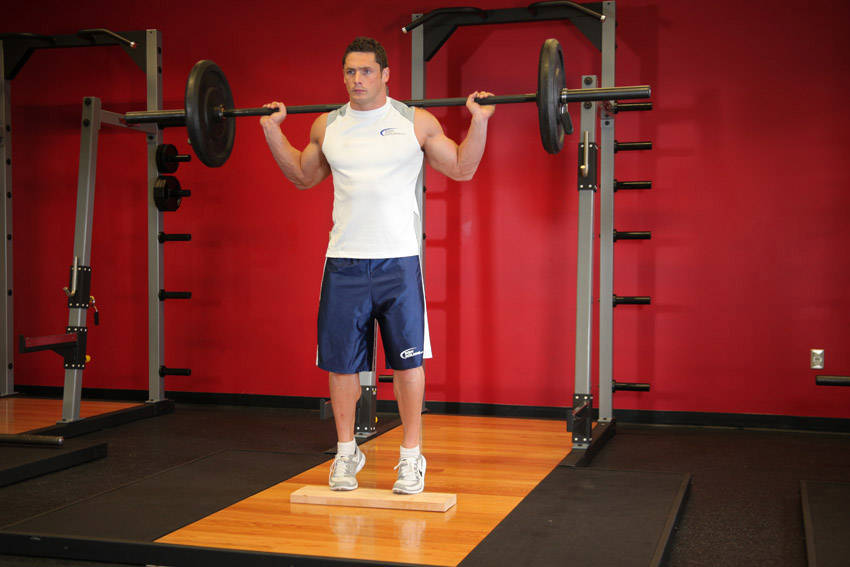
- This exercise is best performed inside a squat rack for safety purposes. To begin, first set the bar on a rack that best matches your height. Once the correct height is chosen and the bar is loaded, step under the bar and place the bar on the back of your shoulders (slightly below the neck).
- Hold on to the bar using both arms at each side and lift it off the rack by first pushing with your legs and at the same time straightening your torso.
- Step away from the rack and position your legs using a shoulder width medium stance with the toes slightly pointed out. Keep your head up at all times as looking down will get you off balance and also maintain a straight back. The knees should be kept with a slight bend; never locked. This will be your starting position. Tip: For better range of motion you may also place the ball of your feet on a wooden block but be careful as this option requires more balance and a sturdy block.
- Raise your heels as you breathe out by extending your ankles as high as possible and flexing your calf. Ensure that the knee is kept stationary at all times. There should be no bending at any time. Hold the contracted position by a second before you start to go back down.
- Go back slowly to the starting position as you breathe in by lowering your heels as you bend the ankles until calves are stretched.
- Repeat for the recommended amount of repetitions.
Ranked Standing Barbell Calf Raise Alternatives
10 substitutes, ranked by how closely each one matches the Standing Barbell Calf Raise on movement pattern, muscles worked, equipment and body position. The higher the score, the less you change. Open "How to perform this exercise" on a card for the steps; every card title links to that exercise's own alternatives page.
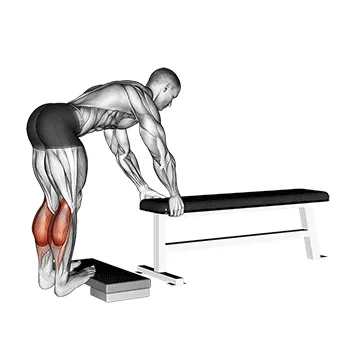
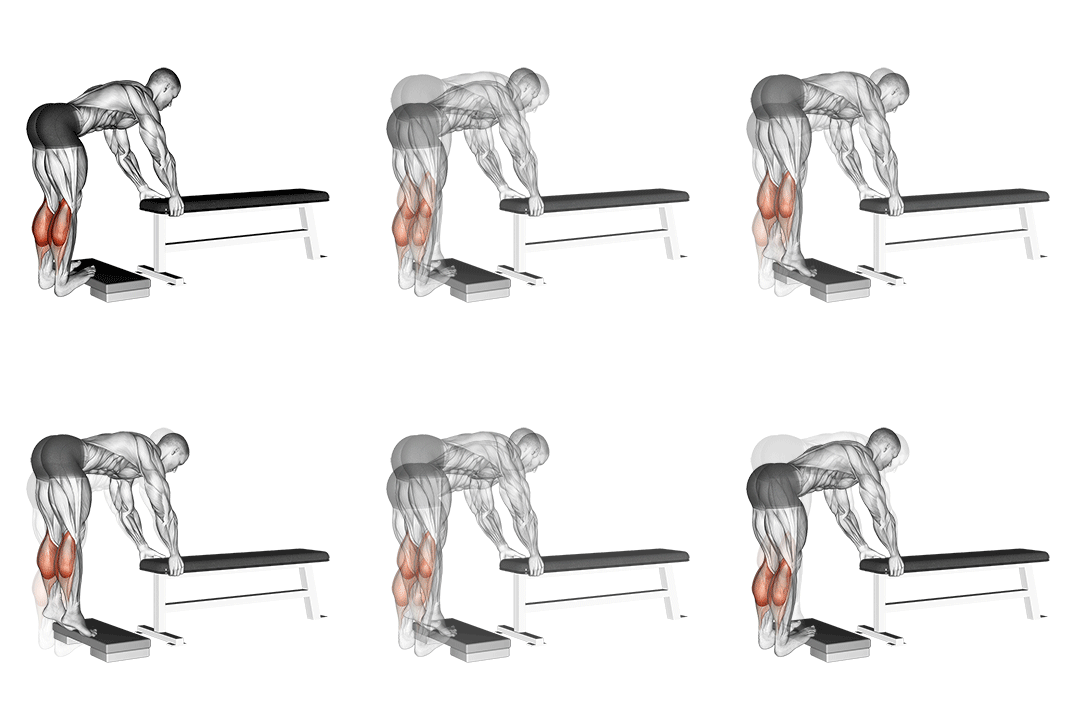
Best match 1. Donkey Calf Raise
84% match- Calves
- Bodyweight
- Beginner
- Isolation
Use this when you have nothing to train with, because it works the calves with bodyweight alone.
How to perform this exercise
- Stand with your toes on an elevated surface, such as a step or block.
- Place your hands on a stable support, such as a wall or railing, for balance.
- Raise your heels as high as possible, lifting your body weight onto the balls of your feet.
- Pause for a moment at the top, then slowly lower your heels back down to the starting position.
- Repeat for the desired number of repetitions.
Sets and reps: 3 sets of 8 to 12 reps, and add reps before you add load.
Why this matches
- Primary muscle: calves, the same as the Standing Barbell Calf Raise
- Equipment: bodyweight only, not free weights
- Body position: standing, the same as the Standing Barbell Calf Raise
- Balance: easier to stay steady on than the Standing Barbell Calf Raise
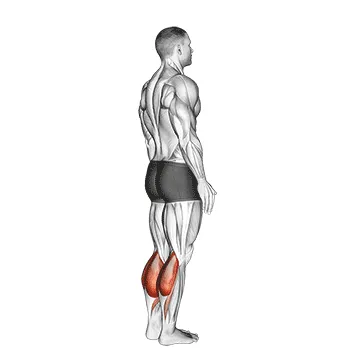
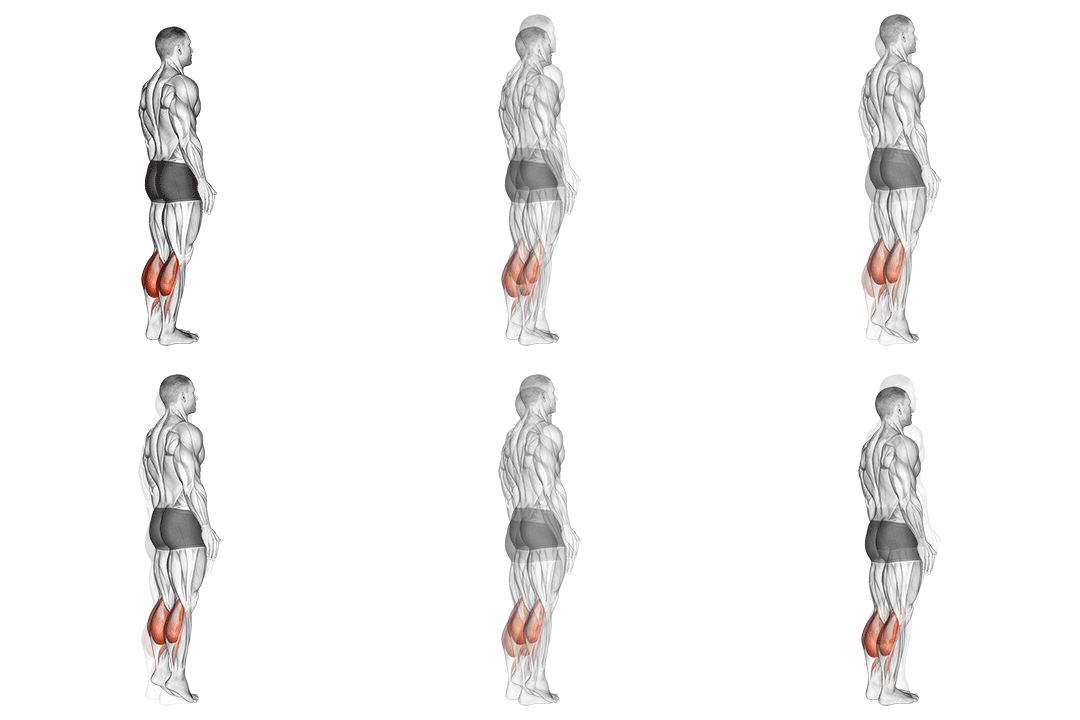
2. Bodyweight Standing Calf Raise
84% match- Calves
- Bodyweight
- Beginner
- Isolation
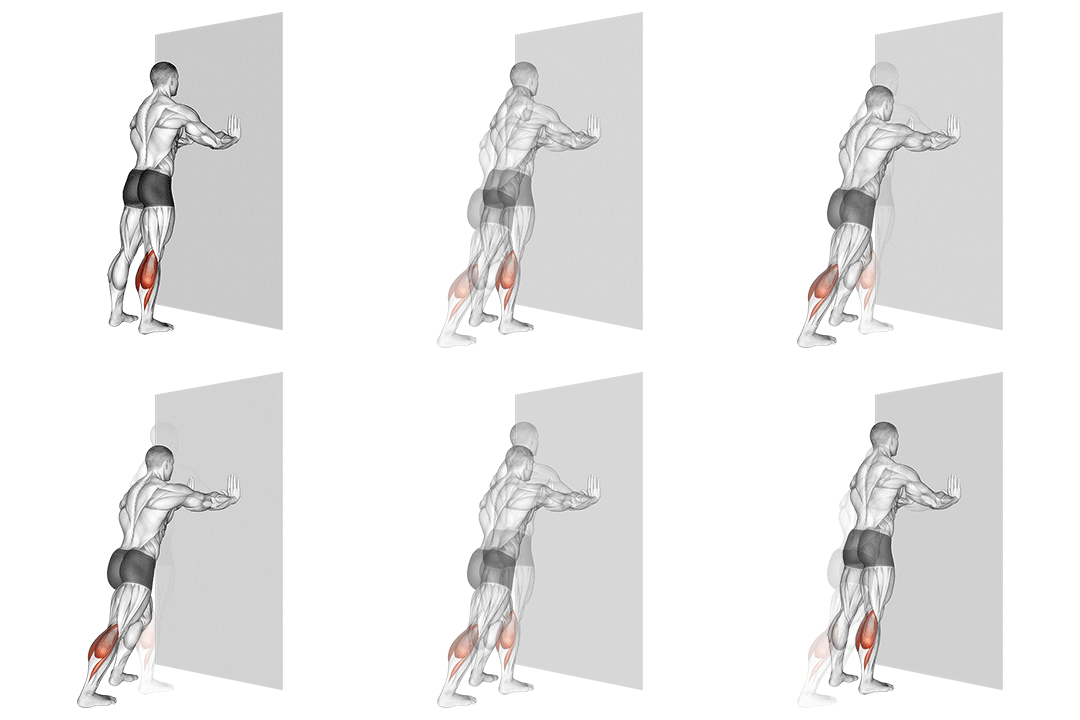
How to perform this exercise
- Stand with your feet shoulder-width apart, toes pointing forward.
- Place your hands on a wall or stable surface for balance.
- Slowly raise your heels off the ground, lifting your body weight onto the balls of your feet.
- Pause for a moment at the top, then slowly lower your heels back down to the starting position.
- Repeat for the desired number of repetitions.
Sets and reps: 3 sets of 8 to 12 reps, and add reps before you add load.
Why this matches
- Primary muscle: calves, the same as the Standing Barbell Calf Raise
- Equipment: bodyweight only, not free weights
- Body position: standing, the same as the Standing Barbell Calf Raise
- Balance: easier to stay steady on than the Standing Barbell Calf Raise
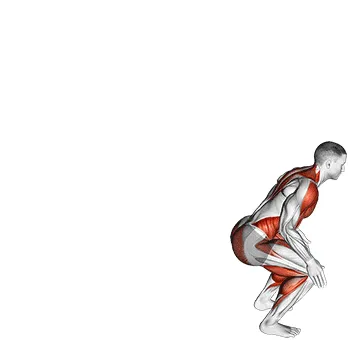
3. Bench Jump
63% match- Quads
- Bodyweight
- Intermediate
- Compound
A looser match: it works the quads rather than the calves.
How to perform this exercise
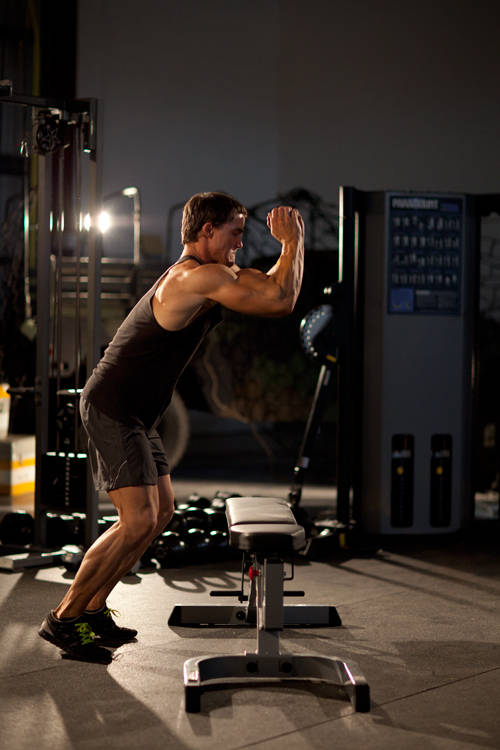
- Begin with a box or bench 1-2 feet in front of you. Stand with your feet shoulder width apart. This will be your starting position.
- Perform a short squat in preparation for the jump; swing your arms behind you.
- Rebound out of this position, extending through the hips, knees, and ankles to jump as high as possible. Swing your arms forward and up.
- Jump over the bench, landing with the knees bent, absorbing the impact through the legs.
- Turn around and face the opposite direction, then jump back over the bench.
Sets and reps: 3 or 4 sets of 6 to 10 reps.
Why this matches
- Primary muscle: quads, not calves
- Equipment: bodyweight only, not free weights
- Body position: standing, the same as the Standing Barbell Calf Raise
- Balance: harder to stay steady on than the Standing Barbell Calf Raise
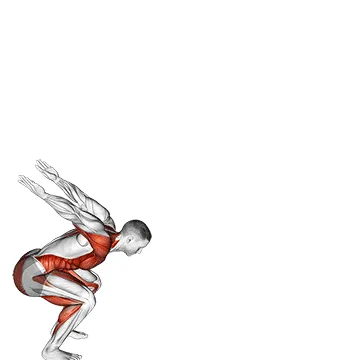
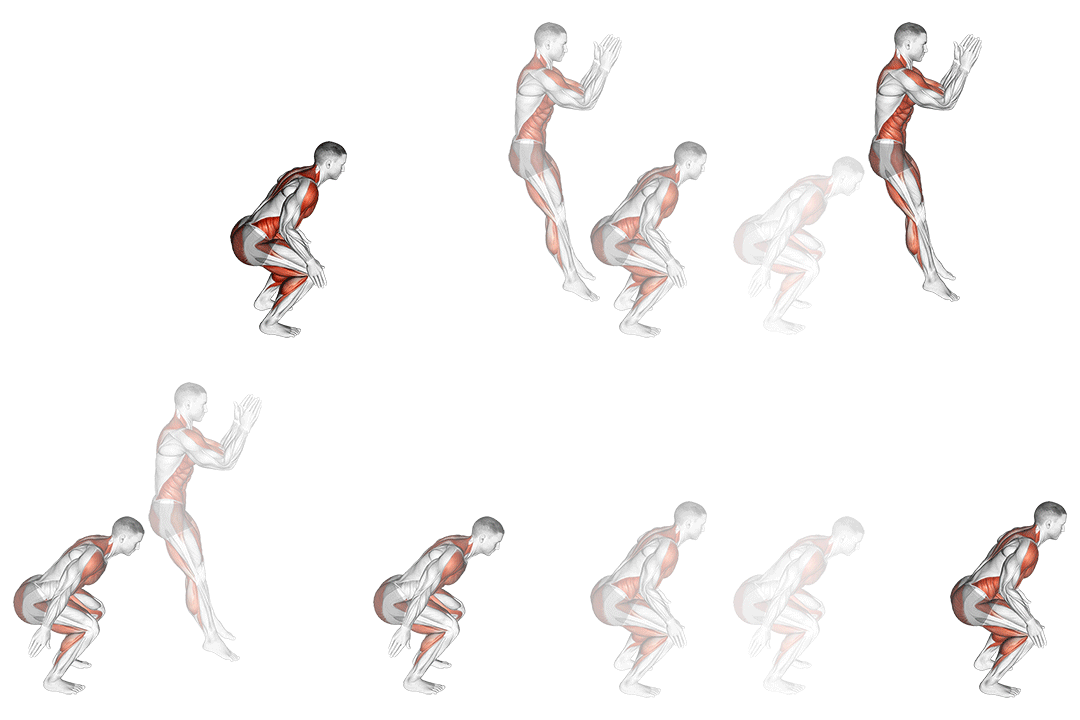
4. Knee Tuck Jump
63% match- Hamstrings
- Bodyweight
- Intermediate
- Compound
A looser match: it works the hamstrings rather than the calves.
How to perform this exercise
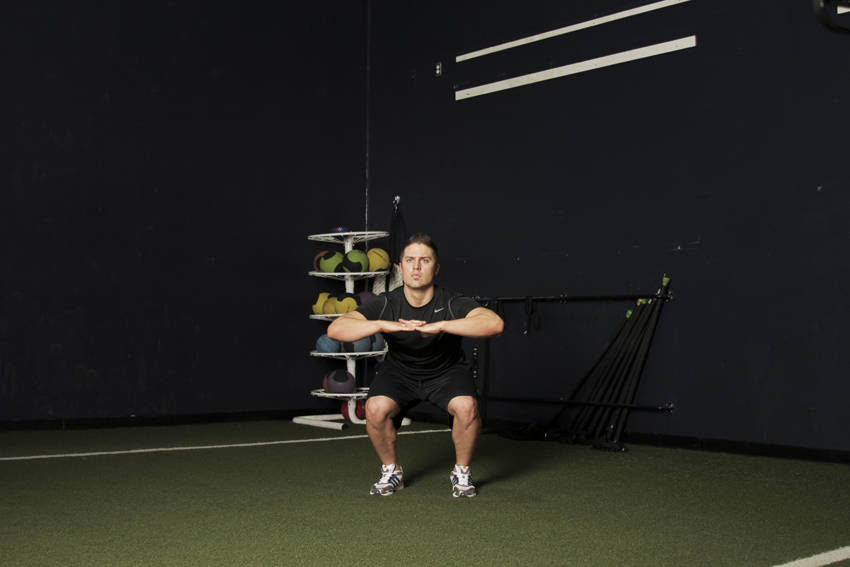
- Begin in a comfortable standing position with your knees slightly bent. Hold your hands in front of you, palms down with your fingertips together at chest height. This will be your starting position.
- Rapidly dip down into a quarter squat and immediately explode upward. Drive the knees towards the chest, attempting to touch them to the palms of the hands.
- Jump as high as you can, raising your knees up, and then ensure a good land be re-extending your legs, absorbing impact through be allowing the knees to rebend.
Sets and reps: 3 or 4 sets of 6 to 10 reps.
Why this matches
- Primary muscle: hamstrings, not calves
- Equipment: bodyweight only, not free weights
- Body position: standing, the same as the Standing Barbell Calf Raise
- Balance: harder to stay steady on than the Standing Barbell Calf Raise
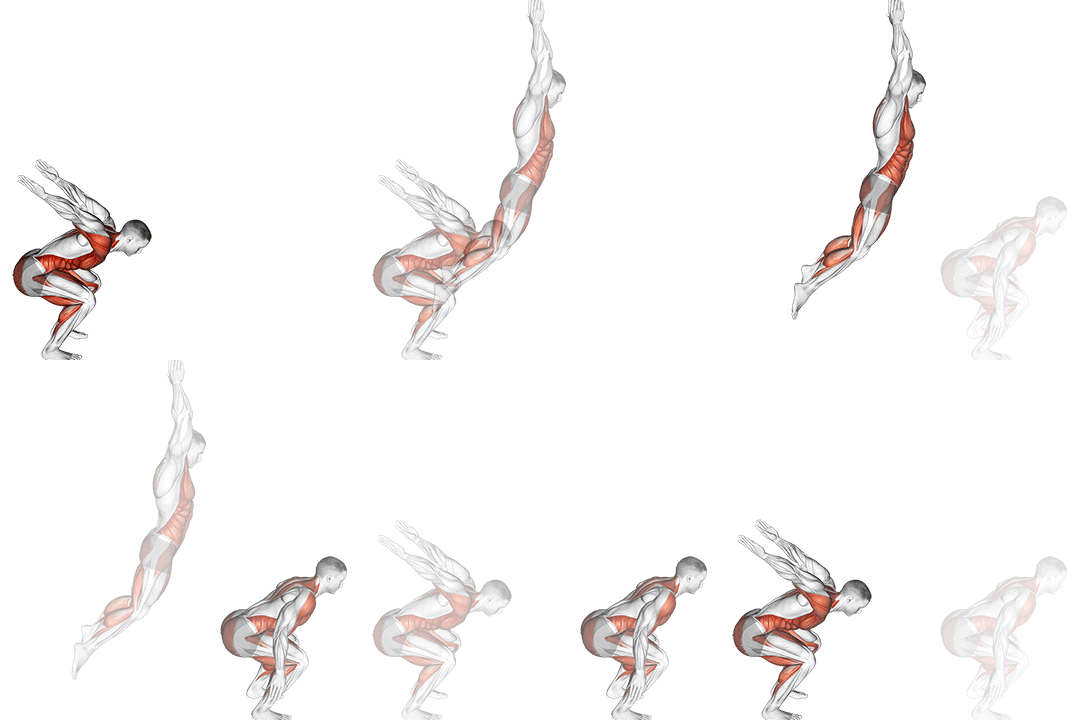
5. Rocket Jump
63% match- Quads
- Bodyweight
- Advanced
- Compound
How to perform this exercise
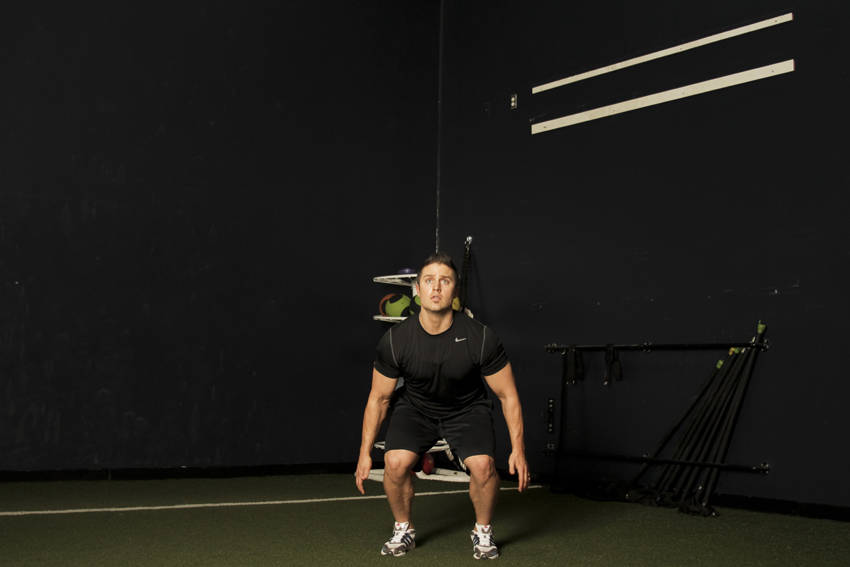
- Begin in a relaxed stance with your feet shoulder width apart and hold your arms close to the body.
- To initiate the move, squat down halfway and explode back up as high as possible.
- Fully extend your entire body, reaching overhead as far as possible. As you land, absorb your impact through the legs.
Sets and reps: 3 or 4 sets of 6 to 10 reps.
Why this matches
- Primary muscle: quads, not calves
- Equipment: bodyweight only, not free weights
- Body position: standing, the same as the Standing Barbell Calf Raise
- Balance: harder to stay steady on than the Standing Barbell Calf Raise
6. Backward Jump
63% match- Quads
- Bodyweight
- Intermediate
- Compound
How to perform this exercise
- Stand with your feet shoulder-width apart.
- Bend your knees slightly and jump backwards, pushing off with both feet.
- Land softly on the balls of your feet, bending your knees to absorb the impact.
- Repeat for the desired number of repetitions.
Sets and reps: 3 or 4 sets of 6 to 10 reps.
Why this matches
- Primary muscle: quads, not calves
- Equipment: bodyweight only, not free weights
- Body position: standing, the same as the Standing Barbell Calf Raise
- Balance: harder to stay steady on than the Standing Barbell Calf Raise
7. Forward Jump
63% match- Quads
- Bodyweight
- Intermediate
- Compound
How to perform this exercise
- Stand with your feet shoulder-width apart.
- Bend your knees and lower your body into a squat position.
- Swing your arms back for momentum.
- Jump forward explosively, extending your hips, knees, and ankles.
- Land softly on the balls of your feet and immediately go into the next jump.
- Repeat for the desired number of repetitions.
Sets and reps: 3 or 4 sets of 6 to 10 reps.
Why this matches
- Primary muscle: quads, not calves
- Equipment: bodyweight only, not free weights
- Body position: standing, the same as the Standing Barbell Calf Raise
- Balance: harder to stay steady on than the Standing Barbell Calf Raise
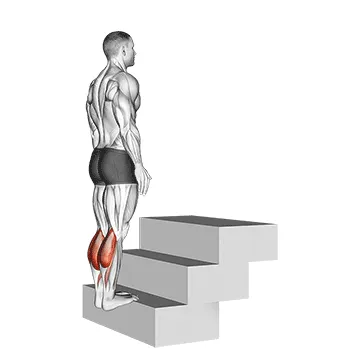
- Calves
- Bodyweight
- Beginner
- Isolation
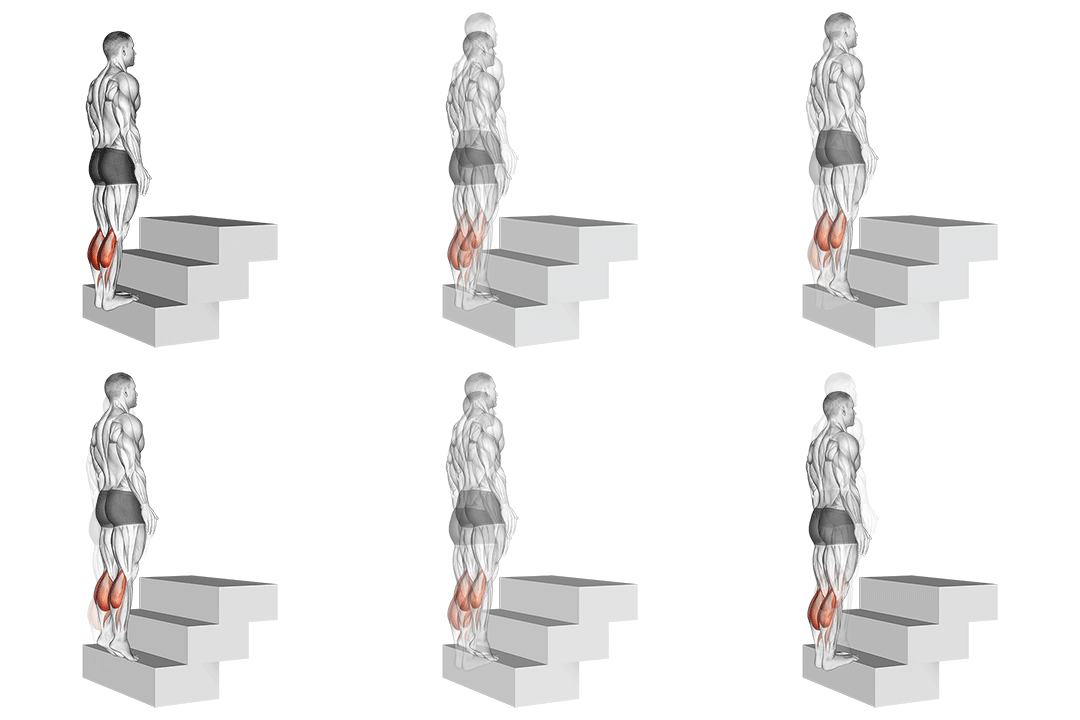
How to perform this exercise
- Stand on the edge of a step or a sturdy platform with your heels hanging off and your toes on the step.
- Hold onto a railing or wall for balance if needed.
- Slowly raise your heels as high as possible, lifting your body weight onto the balls of your feet.
- Pause for a moment at the top, then slowly lower your heels back down to the starting position.
- Repeat for the desired number of repetitions.
Sets and reps: 3 sets of 8 to 12 reps, and add reps before you add load.
Why this matches
- Primary muscle: calves, the same as the Standing Barbell Calf Raise
- Equipment: bodyweight only, not free weights
- Body position: standing, the same as the Standing Barbell Calf Raise
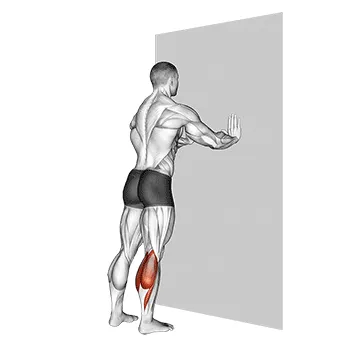
9. Standing Calves
62% match- Calves
- Bodyweight
- Beginner
- Isolation
How to perform this exercise
- Stand with your feet shoulder-width apart, toes pointing forward.
- Raise your heels off the ground as high as possible, standing on your toes.
- Hold the position for a moment, then slowly lower your heels back down to the starting position.
- Repeat for the desired number of repetitions.
Sets and reps: 3 sets of 8 to 12 reps, and add reps before you add load.
Why this matches
- Primary muscle: calves, the same as the Standing Barbell Calf Raise
- Equipment: bodyweight only, not free weights
- Body position: standing, the same as the Standing Barbell Calf Raise
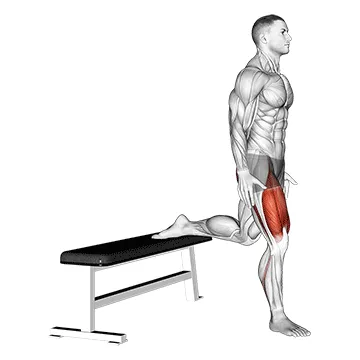
10. Quads
61% match- Quads
- Bodyweight
- Beginner
- Compound
How to perform this exercise
- Stand with your feet shoulder-width apart.
- Lower your body by bending your knees and pushing your hips back as if sitting on a chair.
- Keep your chest up and your back straight.
- Lower yourself until your thighs are parallel to the ground.
- Push through your heels to return to the starting position.
- Repeat for the desired number of repetitions.
Sets and reps: 3 sets of 8 to 12 reps, and add reps before you add load.
Why this matches
- Primary muscle: quads, not calves
- Equipment: bodyweight only, not free weights
- Body position: standing, the same as the Standing Barbell Calf Raise
Why You Might Need a Standing Barbell Calf Raise Alternative
You may need substitutes because a loaded bar across the shoulders aggravates back or shoulder issues, you lack a barbell, or you want unilateral work to fix side-to-side weakness. Biomechanically, seated variations bias the soleus by increasing knee flexion, while single-leg raises force greater stabilizer recruitment and higher per-leg tension. Some injuries, like Achilles irritation or limited ankle dorsiflexion, make seated or machine options safer. When replacing the barbell raise, keep a controlled 2–3 second descent and a solid concentric squeeze to preserve eccentric loading and peak plantarflexion activation.
Standing Barbell Calf Raise FAQ
What muscles does Standing Barbell Calf Raise work?
The exercise primarily targets the gastrocnemius with secondary activation of the soleus and stabilizers like the tibialis posterior. With knees nearly straight the gastrocnemius is emphasized; keep the heel moving through full plantarflexion and pause briefly at the top to increase peak contraction.
What is the best bodyweight alternative to Standing Barbell Calf Raise?
Single-leg calf raises on a step are the top bodyweight substitute because they increase per-leg load and stabilizer demand. Perform them with a controlled 2–3 second descent, full plantarflexion, and a 1–2 second pause at the top to maximize gastrocnemius activation.
Find Alternatives for Any Exercise
Search the exercise database and filter the ranked substitutes by the equipment you own.
Similarity scores compare exercise metadata such as movement pattern, muscles, equipment and body position. They are not a safety rating or a check that you own the equipment. Learn about our methodology