

10 Alternatives to Bent-over Two-arm Dumbbell Triceps Extension
The Standing Bent-over Two-arm Dumbbell Triceps Extension is done standing with dumbbells. Ranked closest by our scoring: the Chain Handle Extension and the Dumbbell One-arm Triceps Extension. Eight harder versions, among them the Dumbbell Pronate-grip Triceps Extension and the Standing One-arm Dumbbell Triceps Extension, are listed below as progressions rather than swaps.
Updated Ranked by our 12-factor similarity model How it works
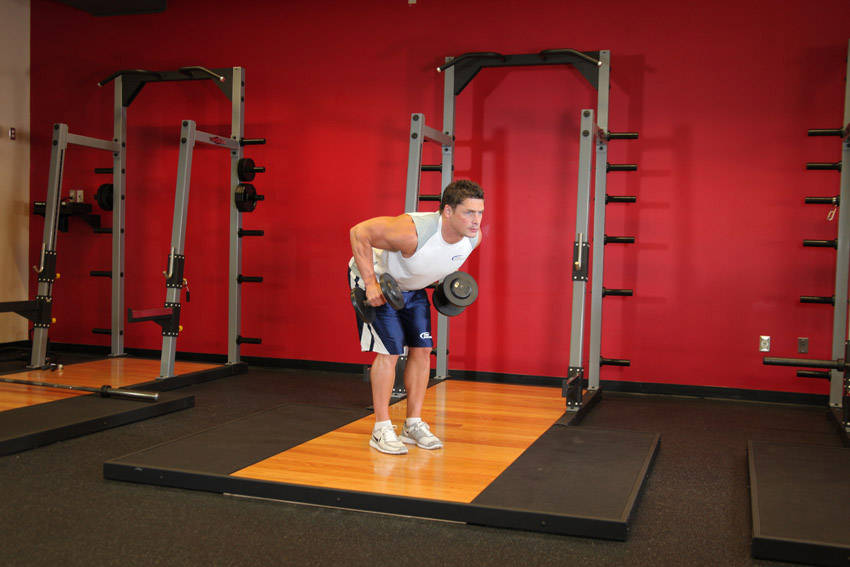
Original Exercise: Standing Bent-over Two-arm Dumbbell Triceps Extension
- Primary muscle
- Triceps
- Equipment
- Dumbbell
- Difficulty
- Beginner
- Type
- Isolation
How to perform Standing Bent-over Two-arm Dumbbell Triceps Extension
- With a dumbbell in each hand and the palms facing your torso, bend your knees slightly and bring your torso forward, by bending at the waist, while keeping the back straight until it is almost parallel to the floor. Make sure that you keep the head up. The upper arms should be close to the torso and parallel to the floor while the forearms are pointing towards the floor as the hands hold the weights. Tip: There should be a 90-degree angle between the forearms and the upper arm. This is your starting position.
- Keeping the upper arms stationary, use the triceps to lift the weights as you exhale until the forearms are parallel to the floor and the whole arms are extended. Like many other arm exercises, only the forearm moves.
- After a second contraction at the top, slowly lower the dumbbells back to their starting position as you inhale.
- Repeat the movement for the prescribed amount of repetitions.
Ranked Standing Bent-over Two-arm Dumbbell Triceps Extension Alternatives
10 substitutes, ranked by how closely each one matches the Standing Bent-over Two-arm Dumbbell Triceps Extension on movement pattern, muscles worked, equipment and body position. The higher the score, the less you change. Open "How to perform this exercise" on a card for the steps; every card title links to that exercise's own alternatives page. Harder versions are tagged as progressions and kept out of the top spot even when they score higher.
Best match 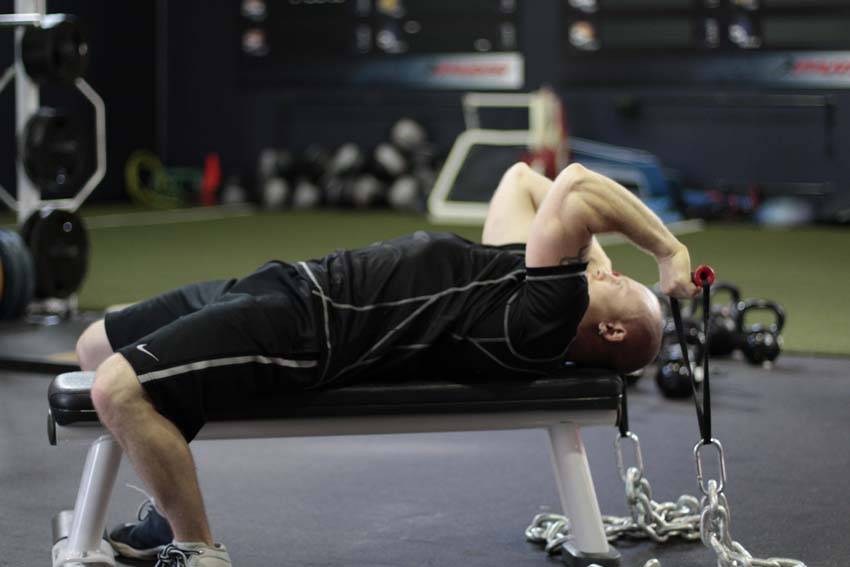
1. Chain Handle Extension
91% match- Triceps
- Other
- Intermediate
- Isolation
Pick this when you want a harder version that works the triceps one side at a time.
How to perform this exercise
- You will need two cable handle attachments and a flat bench, as well as chains, for this exercise. Clip the middle of the chains to the handles, and position yourself on the flat bench. Your elbows should be pointing straight up.
- Begin by extending through the elbow, keeping your upper arm still, with your wrists pronated.
- Pause at the lockout, and reverse the motion to return to the starting position.
Sets and reps: 3 sets of 10 to 15 reps on each side.
Why this matches
- Movement: extension, the same as the Standing Bent-over Two-arm Dumbbell Triceps Extension
- Primary muscle: triceps, the same as the Standing Bent-over Two-arm Dumbbell Triceps Extension
- Body position: standing, the same as the Standing Bent-over Two-arm Dumbbell Triceps Extension
- Balance: easier to stay steady on than the Standing Bent-over Two-arm Dumbbell Triceps Extension
Progression
- Triceps
- Dumbbell
- Intermediate
- Isolation
Pick this when you want a harder version that still works the triceps.
How to perform this exercise
- Sit on a bench or chair with your back straight and feet flat on the ground.
- Hold a dumbbell with both hands, palms facing down, and extend your arms straight up overhead.
- Keeping your upper arms close to your head and elbows pointing forward, slowly lower the dumbbell behind your head by bending your elbows.
- Pause for a moment, then extend your arms back up to the starting position.
- Repeat for the desired number of repetitions.
Sets and reps: 3 sets of 10 to 15 reps.
Why this matches
- Movement: extension, the same as the Standing Bent-over Two-arm Dumbbell Triceps Extension
- Primary muscle: triceps, the same as the Standing Bent-over Two-arm Dumbbell Triceps Extension
- Equipment: free weights, the same as the Standing Bent-over Two-arm Dumbbell Triceps Extension
- Body position: standing, the same as the Standing Bent-over Two-arm Dumbbell Triceps Extension
Progression
- Triceps
- Dumbbell
- Intermediate
- Isolation
Pick this when you want a harder single-arm version that still works the triceps.
How to perform this exercise
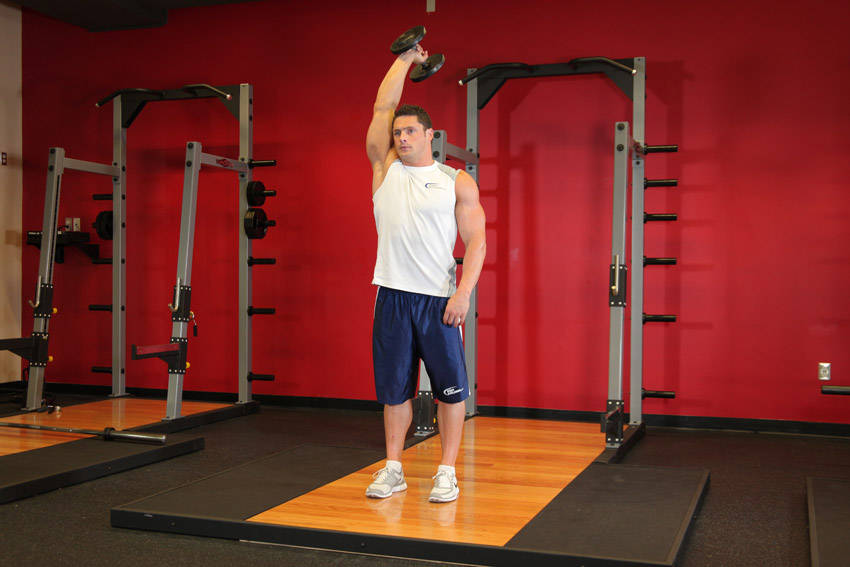
- To begin, stand up with a dumbbell held in one hand. Your feet should be about shoulder width apart from each other. Now fully extend the arm with the dumbbell over your head. Tip: The small finger of your hand should be facing the ceiling and the palm of your hand should be facing forward. The dumbbell should be above your head.
- This will be your starting position.
- Keeping your upper arm close to your head (elbows in) and perpendicular to the floor, lower the resistance in a semicircular motion behind your head until your forearm touch your bicep. Tip: The upper arm should remain stationary and only the forearm should move. Breathe in as you perform this step.
- Go back to the starting position by using the triceps to raise the dumbbell. Breathe out as you perform this step.
- Repeat for the recommended amount of repetitions.
- Switch arms and repeat the exercise.
Sets and reps: 3 sets of 10 to 15 reps on each side.
Why this matches
- Movement: extension, the same as the Standing Bent-over Two-arm Dumbbell Triceps Extension
- Primary muscle: triceps, the same as the Standing Bent-over Two-arm Dumbbell Triceps Extension
- Equipment: free weights, the same as the Standing Bent-over Two-arm Dumbbell Triceps Extension
- Body position: standing, the same as the Standing Bent-over Two-arm Dumbbell Triceps Extension
Progression
- Triceps
- Dumbbell
- Beginner
- Isolation
How to perform this exercise
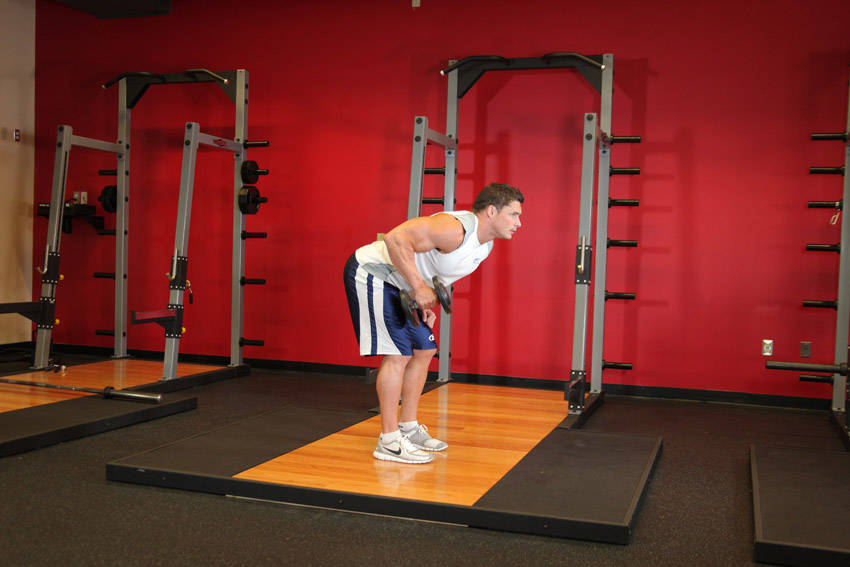
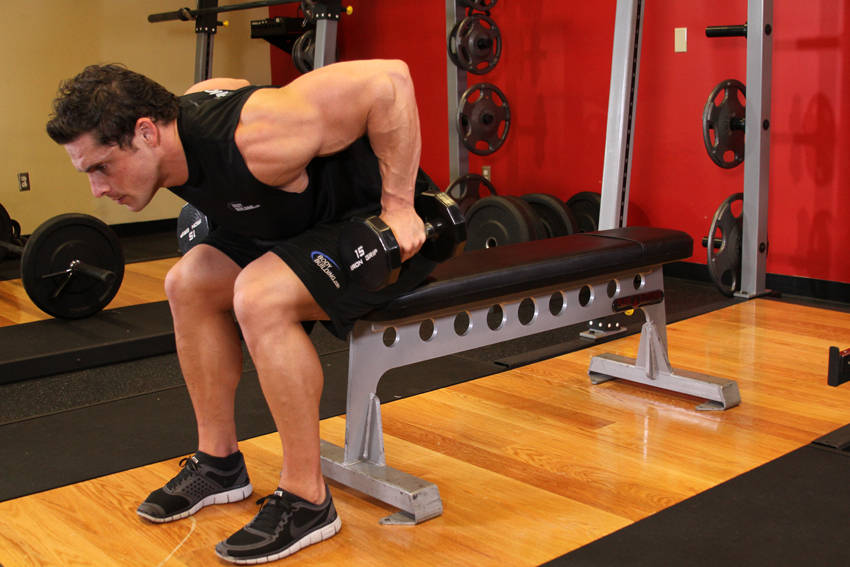
- With a dumbbell in one hand and the palm facing your torso, bend your knees slightly and bring your torso forward, by bending at the waist, while keeping the back straight until it is almost parallel to the floor. Make sure that you keep the head up.
- The upper arm should be close to the torso and parallel to the floor while the forearm is pointing towards the floor as the hand holds the weight. Tip: There should be a 90-degree angle between the forearm and the upper arm. This is your starting position.
- Keeping the upper arms stationary, use the triceps to lift the weights as you exhale until the forearms are parallel to the floor and the whole arm is extended. Like many other arm exercises, only the forearm moves.
- After a second contraction at the top, slowly lower the dumbbell back to the starting position as you inhale.
- Repeat the movement for the prescribed amount of repetitions.
- Switch arms and repeat the exercise.
Sets and reps: 3 sets of 10 to 15 reps on each side.
Why this matches
- Movement: extension, the same as the Standing Bent-over Two-arm Dumbbell Triceps Extension
- Primary muscle: triceps, the same as the Standing Bent-over Two-arm Dumbbell Triceps Extension
- Equipment: free weights, the same as the Standing Bent-over Two-arm Dumbbell Triceps Extension
- Body position: standing, the same as the Standing Bent-over Two-arm Dumbbell Triceps Extension
Progression
- Triceps
- Dumbbell
- Intermediate
- Isolation
How to perform this exercise
- Sit down at the end of a flat bench with a dumbbell in both arms using a neutral grip (palms of the hand facing you).
- Bend your knees slightly and bring your torso forward, by bending at the waist, while keeping the back straight until it is almost parallel to the floor. Make sure that you keep the head up.
- The upper arms with the dumbbells should be close to the torso and aligned with it (lifted up until they are parallel to the floor while the forearms are pointing towards the floor as the hands hold the weights). Tip: There should be a 90-degree angle between the forearms and the upper arm. This is your starting position.
- Keeping the upper arms stationary, use the triceps to lift the weight as you exhale until the forearms are parallel to the floor and the whole arm is extended. Like many other arm exercises, only the forearm moves.
- After a second contraction at the top, slowly lower the dumbbells back to the starting position as you inhale.
- Repeat the movement for the prescribed amount of repetitions.
Sets and reps: 3 sets of 10 to 15 reps.
Why this matches
- Movement: extension, the same as the Standing Bent-over Two-arm Dumbbell Triceps Extension
- Primary muscle: triceps, the same as the Standing Bent-over Two-arm Dumbbell Triceps Extension
- Equipment: free weights, the same as the Standing Bent-over Two-arm Dumbbell Triceps Extension
- Body position: seated, not standing
- Triceps
- Dumbbell
- Beginner
- Isolation
Pick this when you want to work the triceps one side at a time.
How to perform this exercise
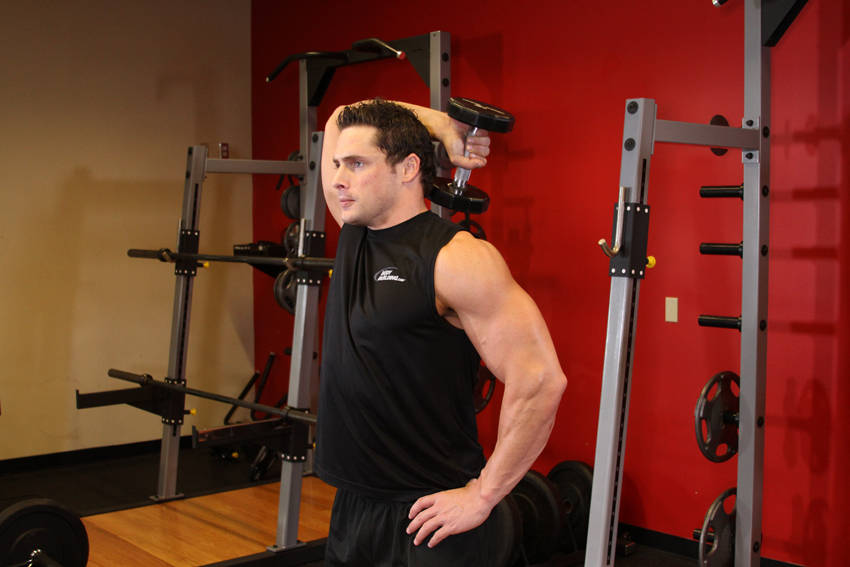
- Grab a dumbbell and either sit on a military press bench or a utility bench that has a back support on it as you place the dumbbells upright on top of your thighs or stand up straight.
- Clean the dumbbell up to bring it to shoulder height and then extend the arm over your head so that the whole arm is perpendicular to the floor and next to your head. The dumbbell should be on top of you. The other hand can be kept fully extended to the side, by the waist, supporting the upper arm that has the dumbbell or grabbing a fixed surface.
- Rotate the wrist so that the palm of your hand is facing forward and the pinkie is facing the ceiling. This will be your starting position.
- Slowly lower the dumbbell behind your head as you hold the upper arm stationary. Inhale as you perform this movement and pause when your triceps are fully stretched.
- Return to the starting position by flexing your triceps as you breathe out. Tip: It is imperative that only the forearm moves. The upper arm should remain at all times stationary next to your head.
- Repeat for the recommended amount of repetitions and switch arms.
Sets and reps: 3 sets of 10 to 15 reps on each side.
Why this matches
- Movement: extension, the same as the Standing Bent-over Two-arm Dumbbell Triceps Extension
- Primary muscle: triceps, the same as the Standing Bent-over Two-arm Dumbbell Triceps Extension
- Equipment: free weights, the same as the Standing Bent-over Two-arm Dumbbell Triceps Extension
- Body position: standing, the same as the Standing Bent-over Two-arm Dumbbell Triceps Extension
- Balance: easier to stay steady on than the Standing Bent-over Two-arm Dumbbell Triceps Extension
Progression
- Triceps
- Dumbbell
- Intermediate
- Isolation
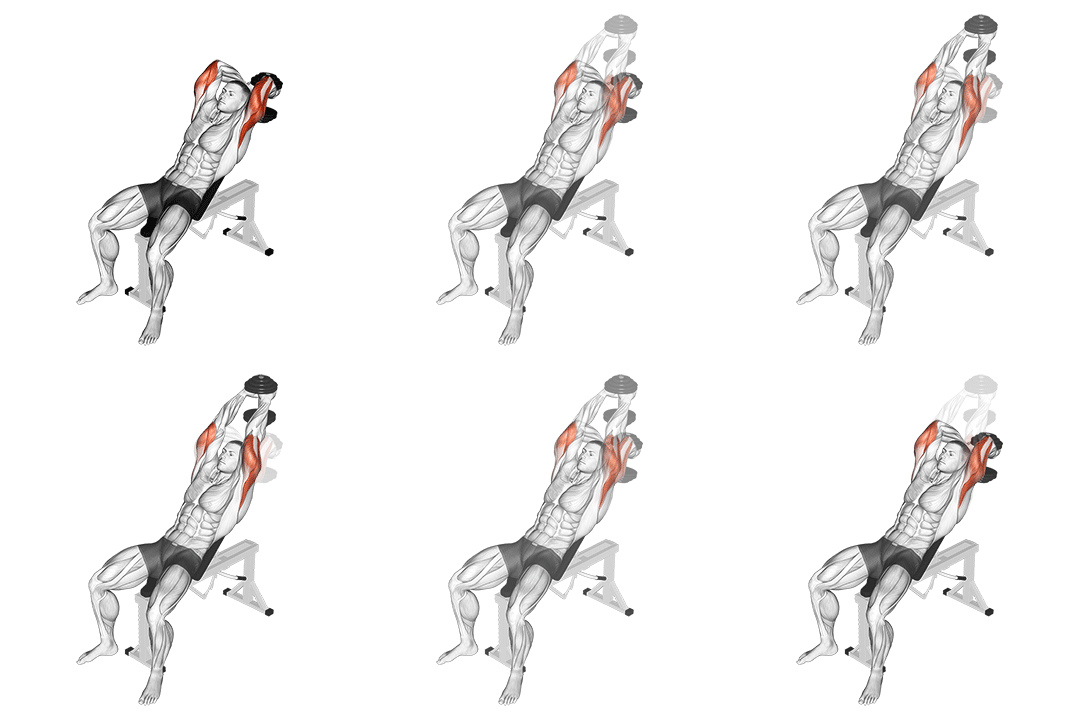
How to perform this exercise
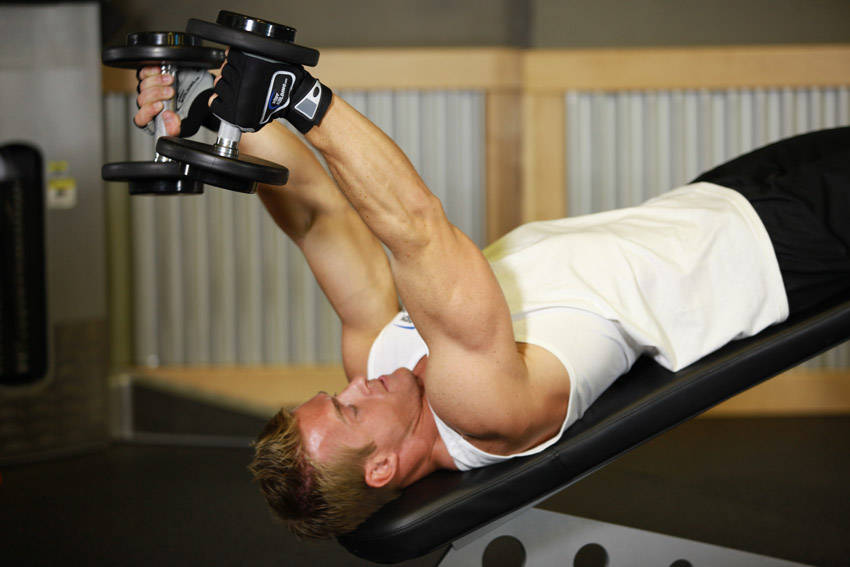
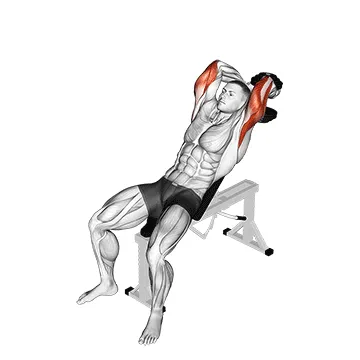
- Sit on an incline bench with a dumbbell in each hand, resting on your thighs.
- Slowly lie back on the bench, keeping the dumbbells close to your chest.
- Once you are fully lying down, extend your arms straight up towards the ceiling, keeping your elbows slightly bent.
- Pause for a moment at the top, then slowly lower the dumbbells back down to the starting position.
- Repeat for the desired number of repetitions.
Sets and reps: 3 sets of 10 to 15 reps.
Why this matches
- Movement: extension, the same as the Standing Bent-over Two-arm Dumbbell Triceps Extension
- Primary muscle: triceps, the same as the Standing Bent-over Two-arm Dumbbell Triceps Extension
- Equipment: free weights, the same as the Standing Bent-over Two-arm Dumbbell Triceps Extension
- Body position: lying on your back, not standing
Progression
- Triceps
- Dumbbell
- Intermediate
- Isolation
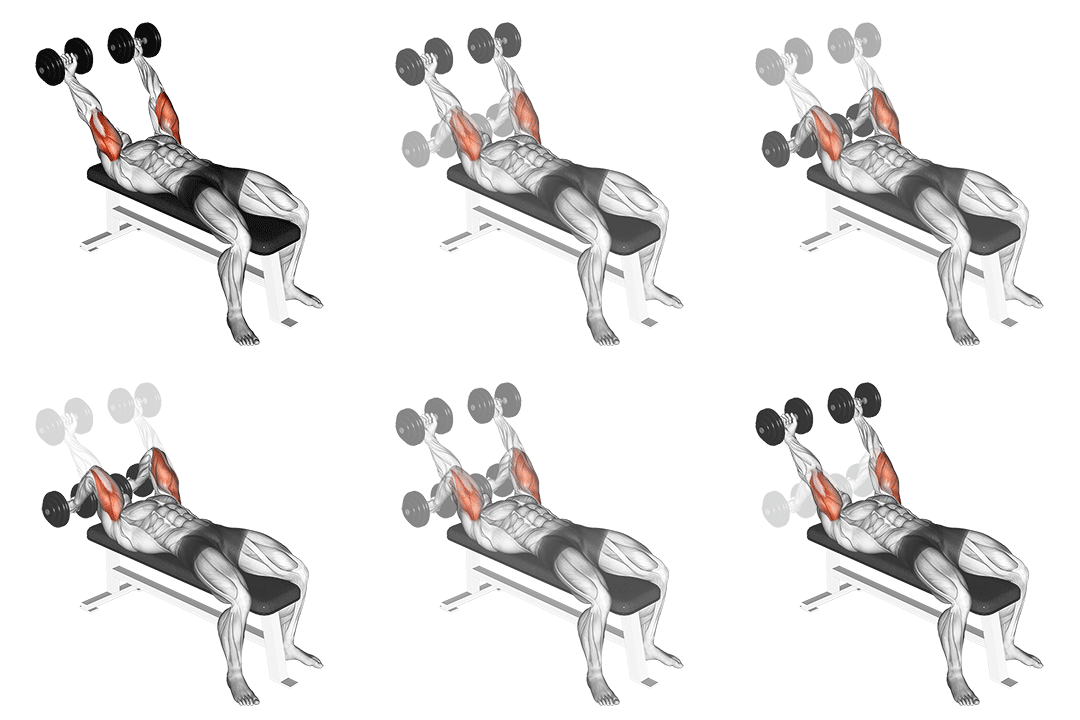
How to perform this exercise
- Secure your legs at the end of the decline bench and lie down with a dumbbell on each hand on top of your thighs. The palms of your hand will be facing each other.
- Once you are laying down, move the dumbbells in front of you at shoulder width. The palms of the hands should be facing each other and the arms should be perpendicular to the floor and fully extended. This will be your starting position.
- As you breathe in and you keep the upper arms stationary (and elbows in), bring the dumbbells down slowly by moving your forearms in a semicircular motion towards you until your thumbs are next to your ears. Breathe in as you perform this portion of the movement.
- Lift the dumbbells back to the starting position by contracting the triceps and exhaling.
- Repeat for the recommended amount of repetitions.
Sets and reps: 3 sets of 10 to 15 reps.
Why this matches
- Movement: extension, the same as the Standing Bent-over Two-arm Dumbbell Triceps Extension
- Primary muscle: triceps, the same as the Standing Bent-over Two-arm Dumbbell Triceps Extension
- Equipment: free weights, the same as the Standing Bent-over Two-arm Dumbbell Triceps Extension
- Body position: lying on your back, not standing
- Balance: easier to stay steady on than the Standing Bent-over Two-arm Dumbbell Triceps Extension
Progression
- Triceps
- Dumbbell
- Intermediate
- Isolation
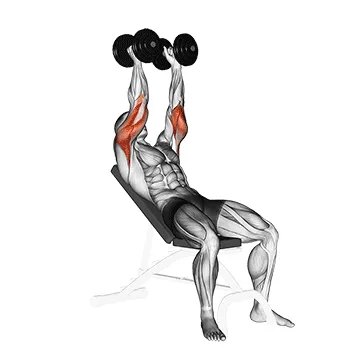
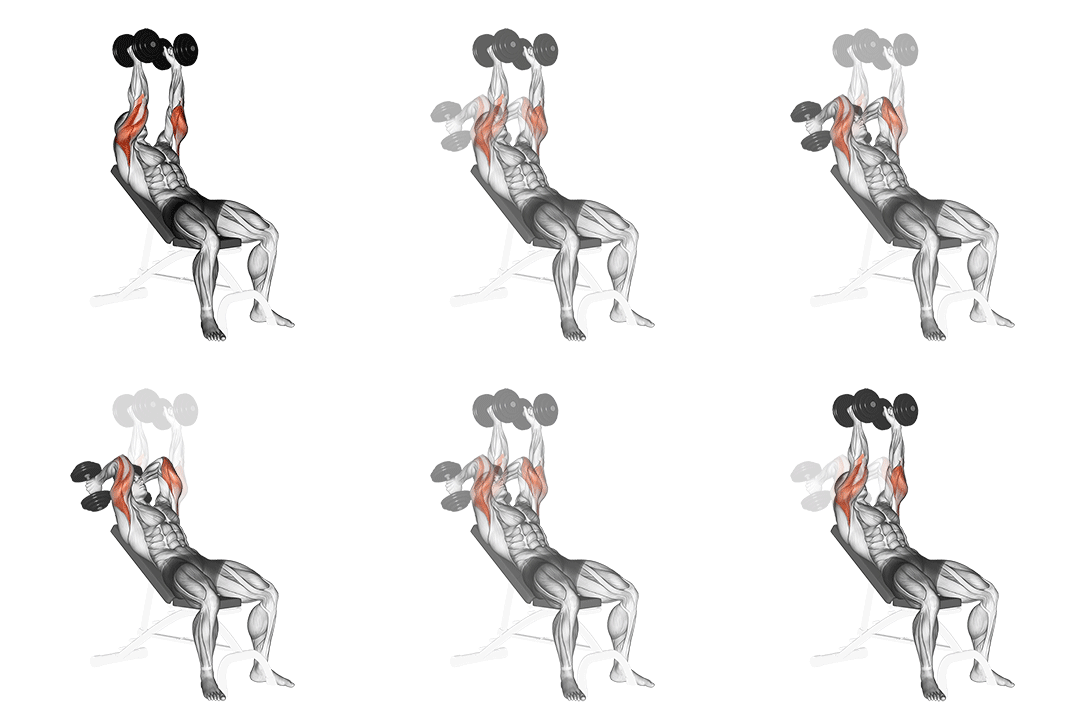
How to perform this exercise
- Sit on an incline bench with a dumbbell in each hand, palms facing inwards.
- Extend your arms fully overhead, keeping your elbows close to your head.
- Lower the dumbbells behind your head by bending your elbows, keeping your upper arms stationary.
- Pause for a moment, then raise the dumbbells back to the starting position by extending your arms.
- Repeat for the desired number of repetitions.
Sets and reps: 3 sets of 10 to 15 reps.
Why this matches
- Movement: extension, the same as the Standing Bent-over Two-arm Dumbbell Triceps Extension
- Primary muscle: triceps, the same as the Standing Bent-over Two-arm Dumbbell Triceps Extension
- Equipment: free weights, the same as the Standing Bent-over Two-arm Dumbbell Triceps Extension
- Body position: lying on your back, not standing
- Balance: easier to stay steady on than the Standing Bent-over Two-arm Dumbbell Triceps Extension
Progression
10. Dumbbell Seated Bench Extension
89% match- Triceps
- Dumbbell
- Intermediate
- Isolation
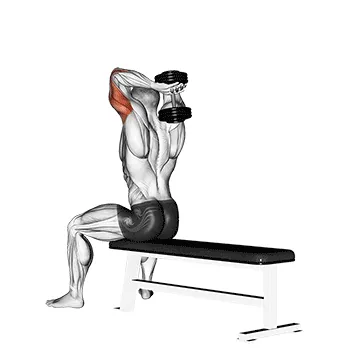
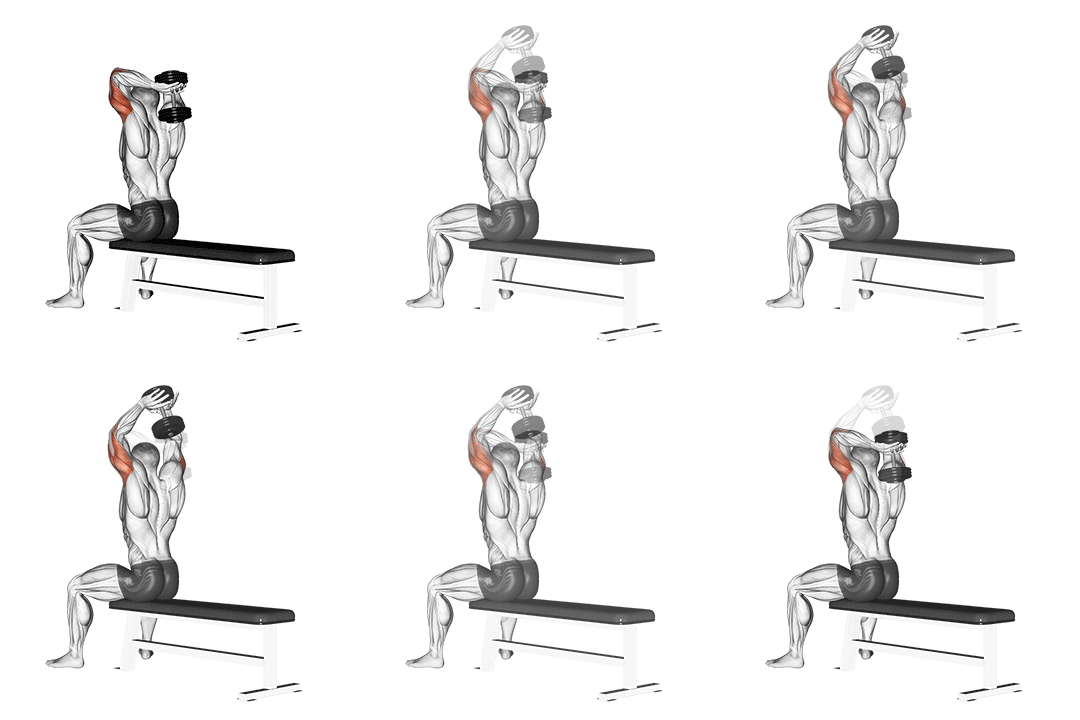
How to perform this exercise
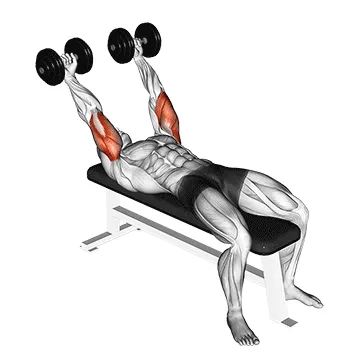
- Sit on a bench with your back straight and feet flat on the ground.
- Hold a dumbbell with both hands and extend your arms straight up above your head.
- Slowly lower the dumbbell behind your head, keeping your elbows close to your ears.
- Pause for a moment, then raise the dumbbell back up to the starting position.
- Repeat for the desired number of repetitions.
Sets and reps: 3 sets of 10 to 15 reps.
Why this matches
- Movement: extension, the same as the Standing Bent-over Two-arm Dumbbell Triceps Extension
- Primary muscle: triceps, the same as the Standing Bent-over Two-arm Dumbbell Triceps Extension
- Equipment: free weights, the same as the Standing Bent-over Two-arm Dumbbell Triceps Extension
- Body position: seated, not standing
- Balance: easier to stay steady on than the Standing Bent-over Two-arm Dumbbell Triceps Extension
How to Choose the Right Standing Bent-over Two-arm Dumbbell Triceps Extension Substitute
Match your substitute to equipment, muscle-head emphasis, and stability needs. Use overhead extensions (dumbbell or cable) to load the long head through a long muscle length. Choose pushdowns, kickbacks, or skull crushers for high isolation of the lateral and medial heads. If you need constant tension pick cables or bands; for maximal loading pick barbell or weighted dips. Consider spine loading, seated or supported variations reduce lumbar stress. Technique cue: control the eccentric, keep elbows tucked and stationary, and stop when you can no longer maintain strict elbow positioning to preserve triceps activation.
Standing Bent-over Two-arm Dumbbell Triceps Extension FAQ
What muscles does Standing Bent-over Two-arm Dumbbell Triceps Extension work?
The movement primarily targets the triceps brachii, all three heads, with extra emphasis on the lateral and long heads when the upper arm is behind the torso. You also recruit posterior deltoid and spinal erectors for torso support; cue: hinge at the hips, keep a flat back and lock the upper arm so the triceps control elbow extension.
Find Alternatives for Any Exercise
Search the exercise database and filter the ranked substitutes by the equipment you own.
Similarity scores compare exercise metadata such as movement pattern, muscles, equipment and body position. They are not a safety rating or a check that you own the equipment. Learn about our methodology