

10 Best Standing Cable Lift Alternatives for Core Strength
If you can't do the Standing Cable Lift, use exercises that deliver the same anti-rotation and oblique-driven rotation: Pallof press variations, landmine rotations, cable chops, side-plank hip dips, or dumbbell standing chops. Brace your core, keep a neutral spine, and initiate movement from the ribs and obliques rather than the lower back.
Original Exercise: Standing Cable Lift
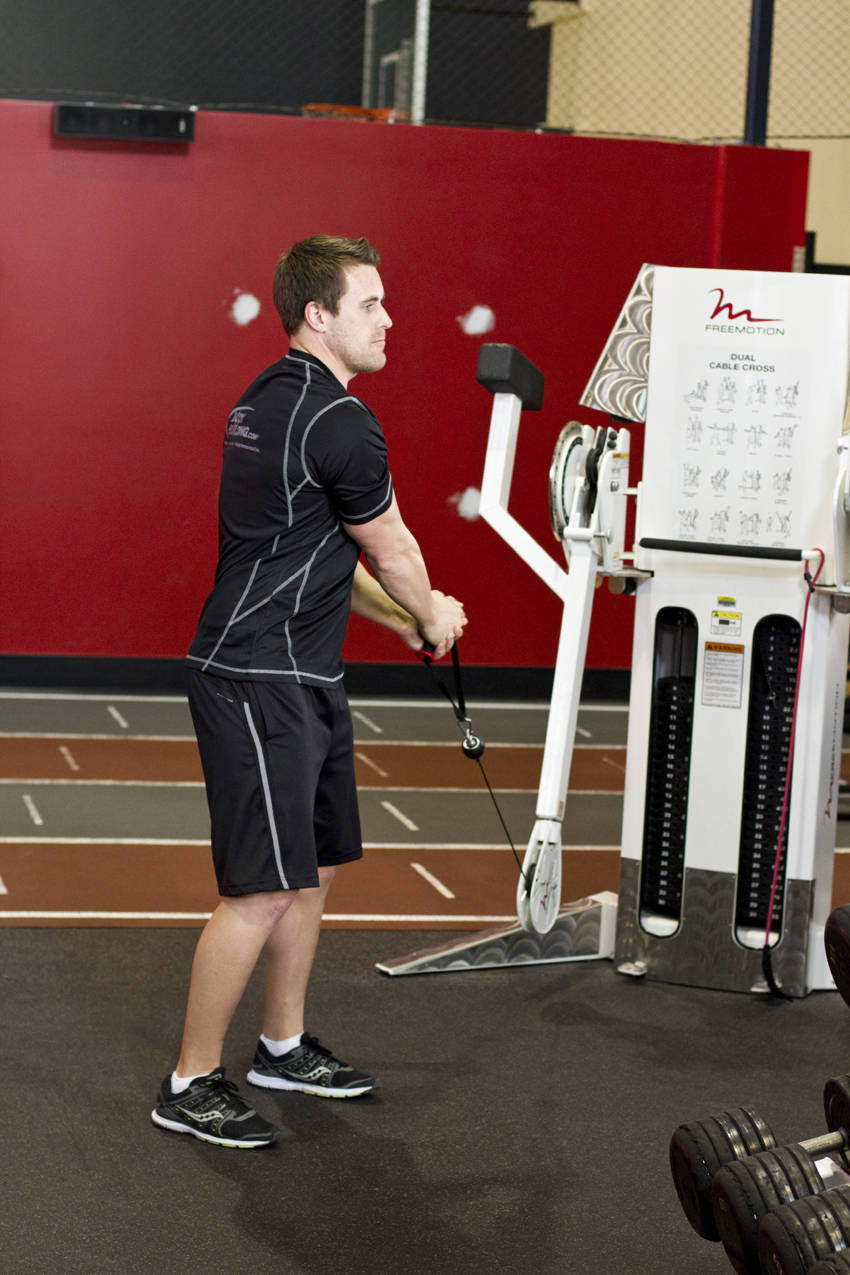
How to Perform Standing Cable Lift
- Connect a standard handle on a tower, and move the cable to the lowest pulley position.
- With your side to the cable, grab the handle with one hand and step away from the tower. You should be approximately arm's length away from the pulley, with the tension of the weight on the cable. Your outstretched arm should be aligned with the cable.
- With your feet positioned shoulder width apart, squat down and grab the handle with both hands. Your arms should still be fully extended.
- In one motion, pull the handle up and across your body until your arms are in a fully-extended position above your head.
- Keep your back straight and your arms close to your body as you pivot your back foot and straighten your legs to get a full range of motion.
- Retract your arms and then your body. Return to the neutral position in a slow and controlled manner.
- Repeat to failure.
- Then, reposition and repeat the same series of movements on the opposite side.
Pro Tips
- Category: Strength
- Force: Pull
- Movement type: Compound
Best Standing Cable Lift Alternatives
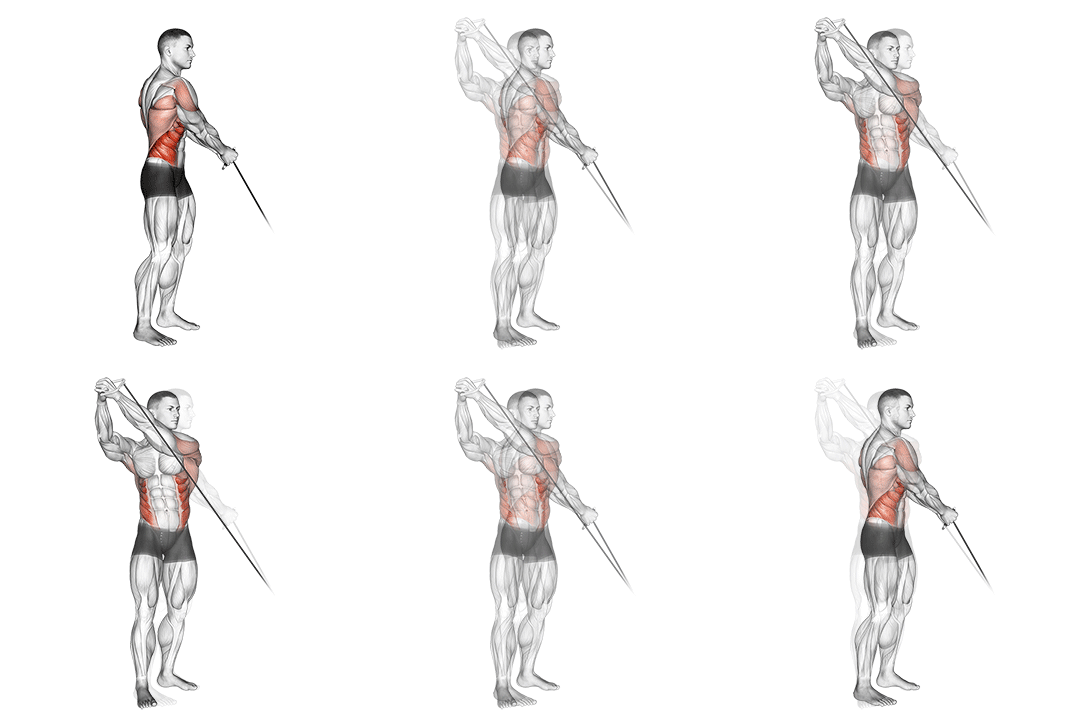
1. Cable Standing Lift
95.2% MatchHow to perform this exercise
- Stand facing the cable machine with your feet shoulder-width apart.
- Hold the cable handle with both hands and position it at waist height.
- Engage your core and maintain a straight back throughout the exercise.
- Keeping your arms straight, exhale and lift the cable handle up towards your opposite shoulder, rotating your torso.
- Pause for a moment at the top, then inhale and slowly lower the cable handle back to the starting position.
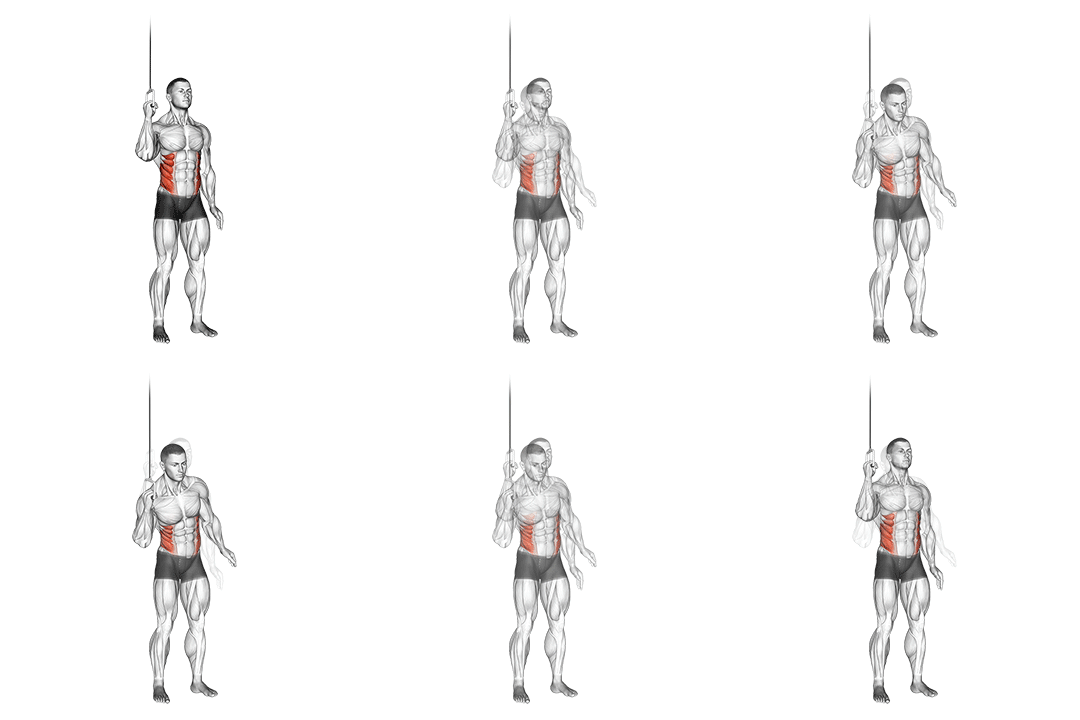
2. Cable Side Crunch
84.7% MatchHow to perform this exercise
- Attach a cable handle to a low pulley and stand sideways to the machine.
- Grasp the handle with the hand furthest from the machine and place your other hand on your hip.
- Keep your feet shoulder-width apart and your knees slightly bent.
- With your abs engaged, bend sideways at the waist, bringing your elbow down towards your hip.
- Pause for a moment at the bottom, then slowly return to the starting position.
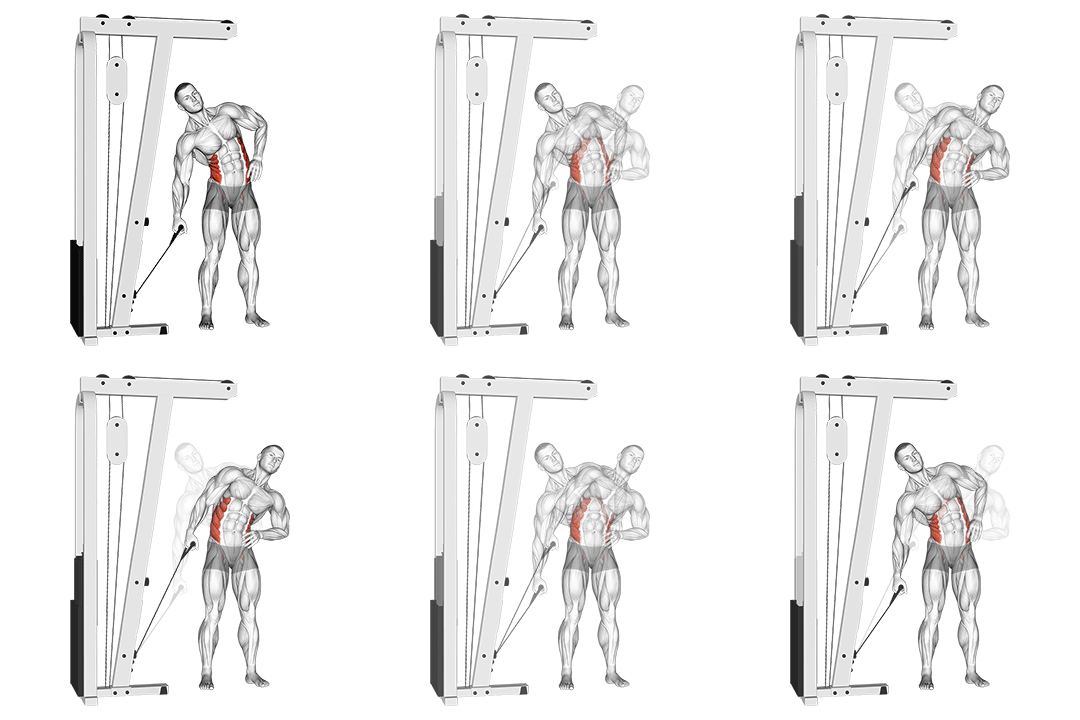
3. Cable Side Bend
84.7% MatchHow to perform this exercise
- Stand with your feet shoulder-width apart and grasp the cable handle with one hand.
- Keep your back straight and your core engaged.
- Slowly bend sideways at the waist, lowering the cable handle towards your knee.
- Pause for a moment, then return to the starting position.
- Repeat on the other side.
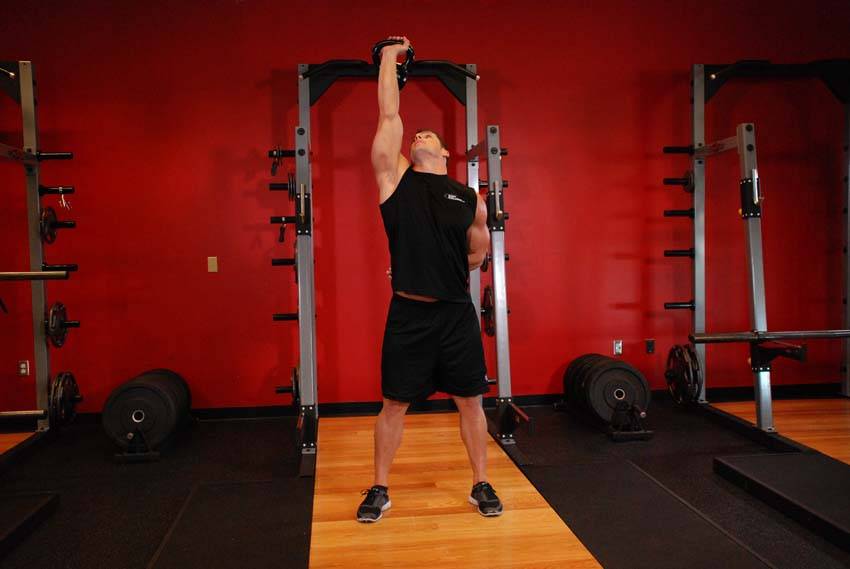
4. Advanced Kettlebell Windmill
83.9% MatchHow to perform this exercise
- Clean and press a kettlebell overhead with one arm.
- Keeping the kettlebell locked out at all times, push your butt out in the direction of the locked out kettlebell. Keep the non-working arm behind your back and turn your feet out at a forty-five degree angle from the arm with the kettlebell.
- Lower yourself as far as possible.
- Pause for a second and reverse the motion back to the starting position.
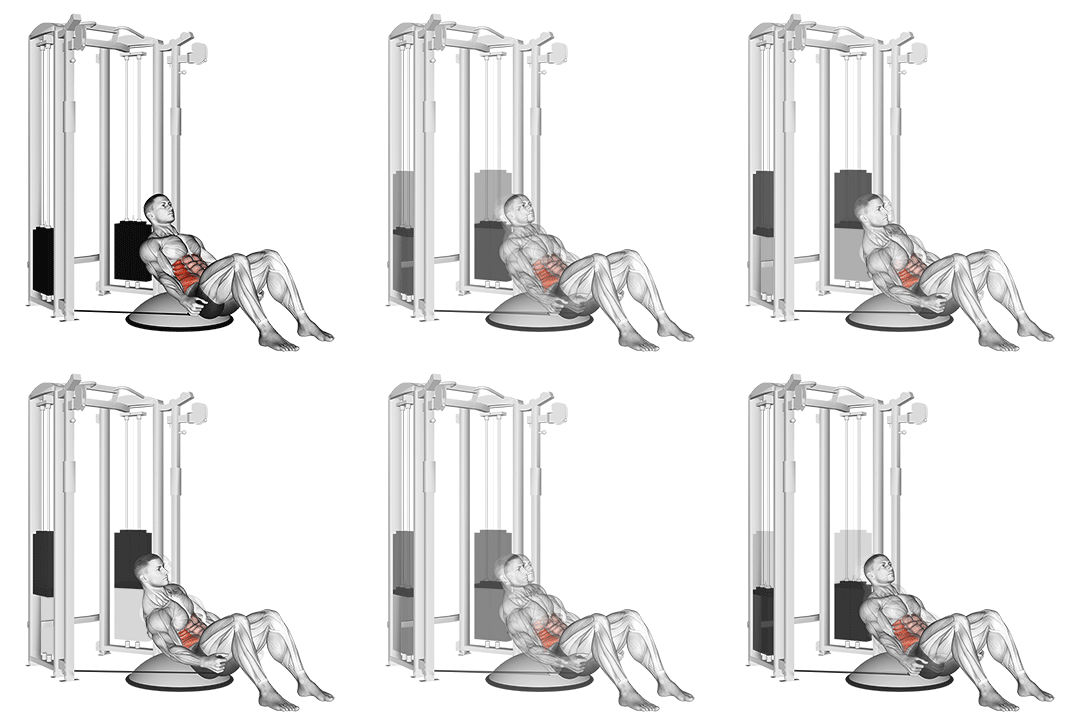
5. Cable Side Bend Crunch (bosu Ball)
81% MatchHow to perform this exercise
- Stand with your feet shoulder-width apart, holding a cable handle in one hand.
- Place the other hand on your hip.
- Engage your core and slowly bend sideways towards the hand holding the cable, keeping your back straight.
- Pause for a moment at the bottom of the movement, then slowly return to the starting position.
- Repeat for the desired number of repetitions, then switch sides.
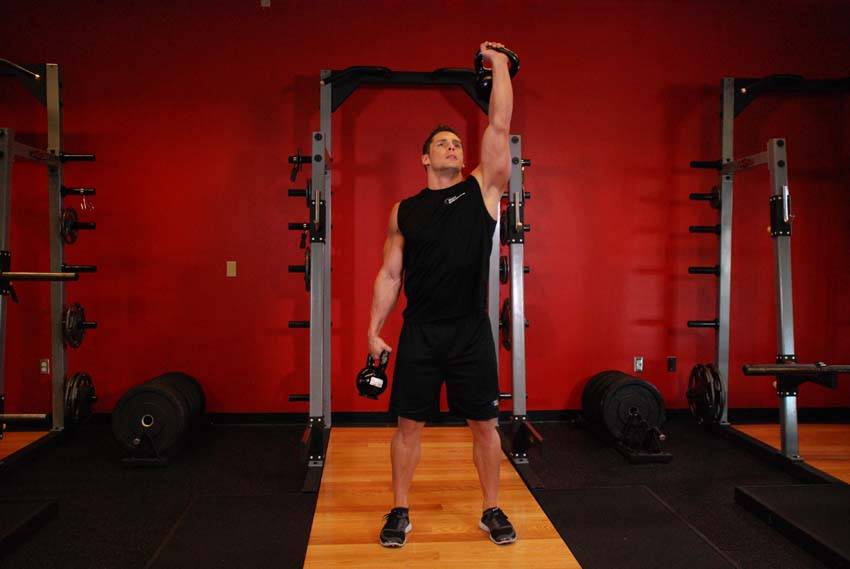
6. Double Kettlebell Windmill
78.2% MatchHow to perform this exercise
- Place a kettlebell in front of your front foot and clean and press a kettlebell overhead with your opposite arm. Clean the kettlebell to your shoulder by extending through the legs and hips as you pull the kettlebell towards your shoulders. Rotate your wrist as you do so, so that the palm faces forward.
- Keeping the kettlebell locked out at all times, push your butt out in the direction of the locked out kettlebell. Turn your feet out at a forty-five degree angle from the arm with the locked out kettlebell.
- Bending at the hip to one side, sticking your butt out, slowly lean until you can retrieve the kettlebell from the floor. Keep your eyes on the kettlebell that you hold over your head at all times.
- Pause for a second after retrieving the kettlebell from the ground and reverse the motion back to the starting position.
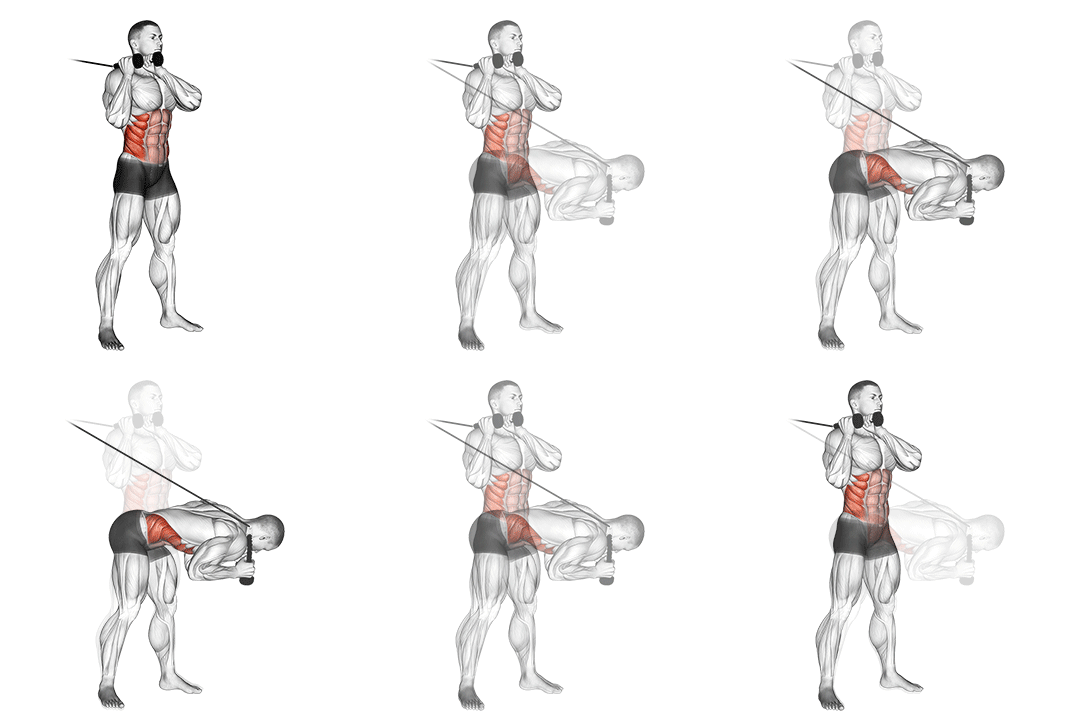
7. Cable Judo Flip
76.3% MatchHow to perform this exercise
- Stand facing the cable machine with your feet shoulder-width apart.
- Hold the cable handle with both hands at chest level, palms facing down.
- Engage your core and rotate your torso to the right, pulling the cable across your body.
- As you rotate, pivot your back foot and allow your hips to rotate naturally.
- Extend your arms fully and finish the movement by flipping the cable handle over your shoulder.
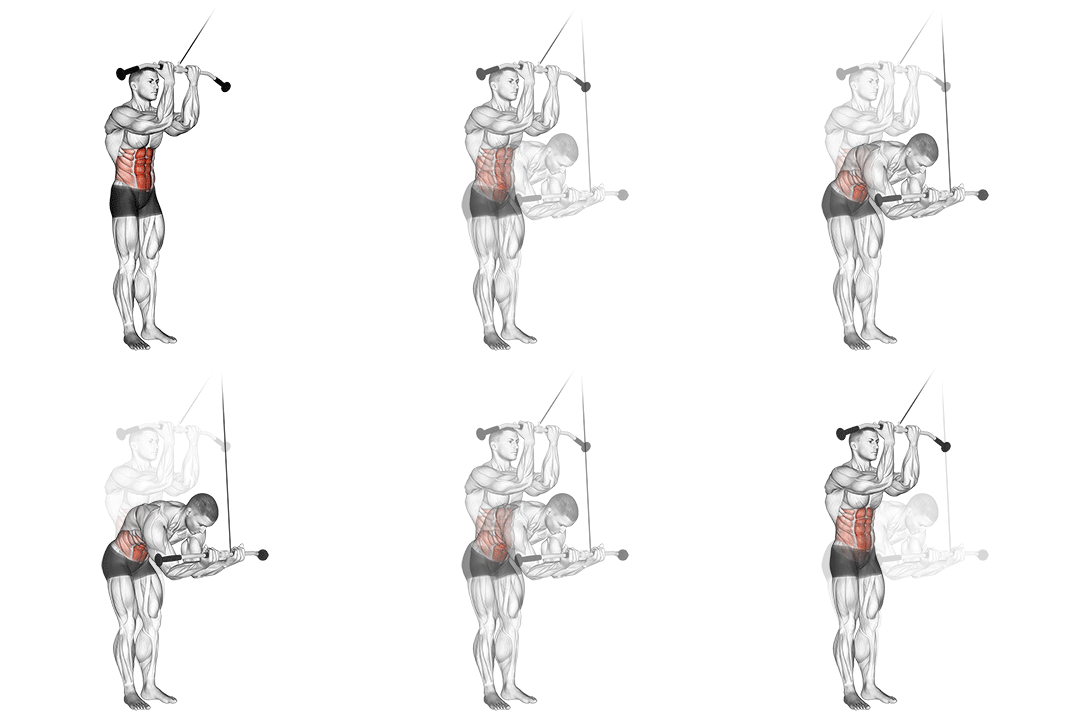
8. Cable Standing Crunch
74.4% MatchHow to perform this exercise
- Attach a cable handle to a high pulley and stand facing away from the machine.
- Hold the handle with both hands and place it behind your head, keeping your elbows bent.
- Stand with your feet shoulder-width apart and your knees slightly bent.
- Keeping your abs engaged, exhale and crunch your torso down towards your knees, bringing your elbows towards your thighs.
- Pause for a moment at the bottom of the movement, then slowly return to the starting position.
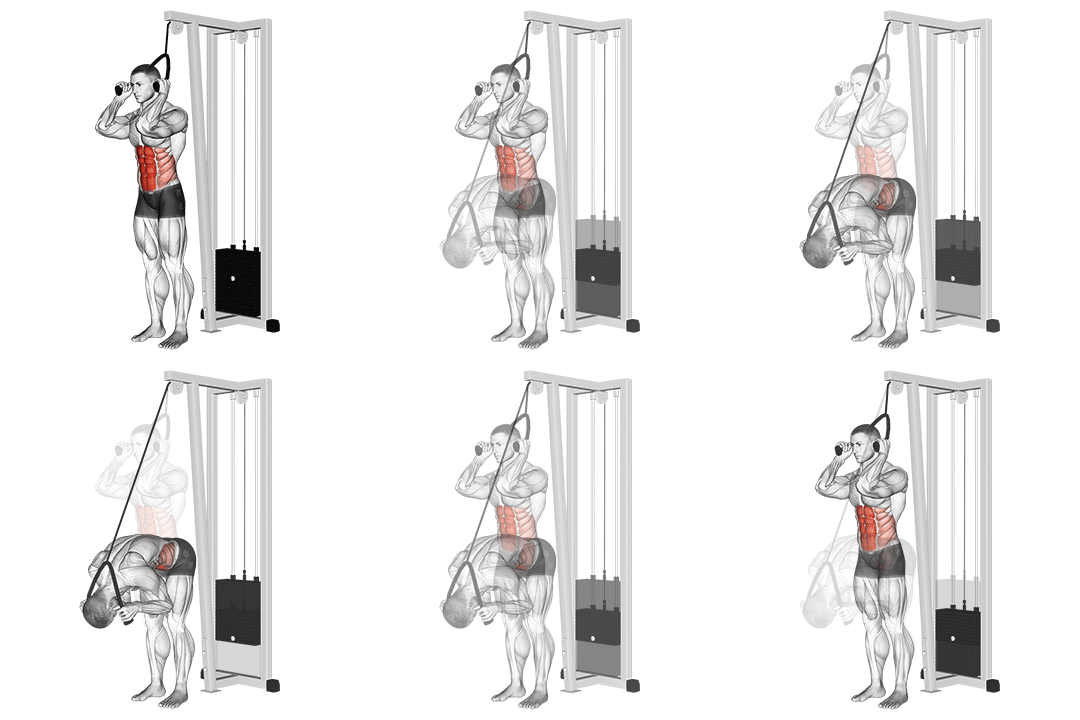
9. Cable Standing Crunch (with Rope Attachment)
74.4% MatchHow to perform this exercise
- Attach a rope to a cable machine at chest height.
- Stand facing away from the machine with your feet shoulder-width apart.
- Hold the rope with both hands and bring it behind your head, keeping your elbows bent.
- Engage your abs and slowly crunch your torso forward, bringing your elbows towards your knees.
- Pause for a moment at the top of the crunch, then slowly return to the starting position.
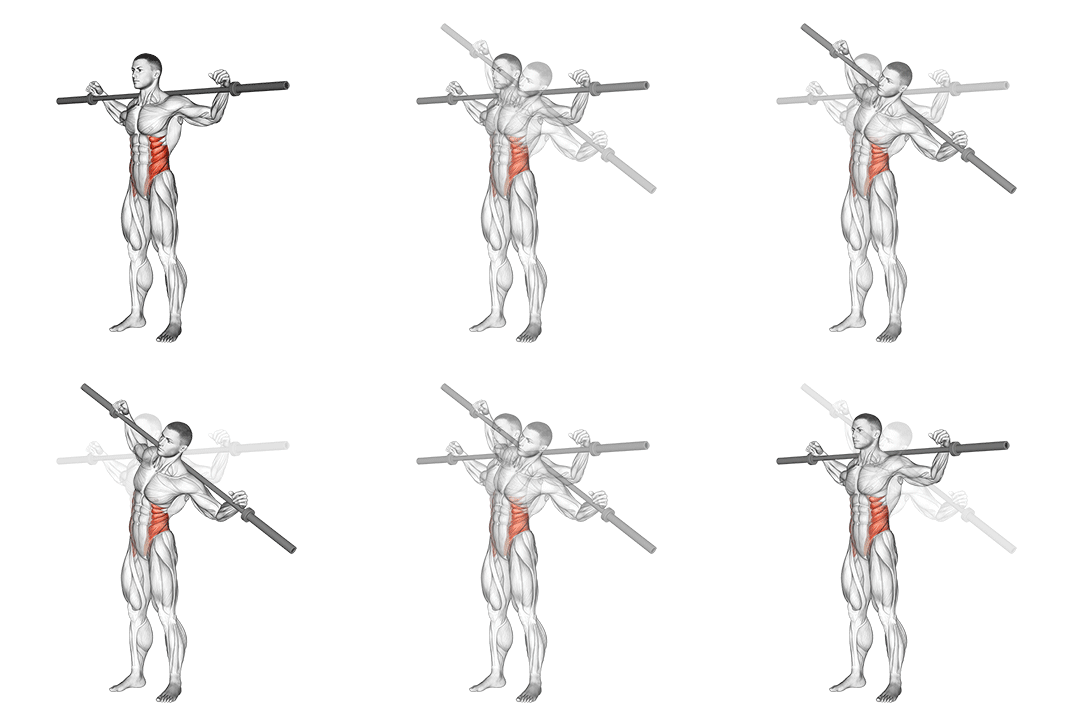
10. Barbell Side Bent V. 2
74.1% MatchHow to perform this exercise
- Stand with your feet shoulder-width apart and hold a barbell with both hands, palms facing down.
- Keep your back straight and core engaged throughout the exercise.
- Slowly bend your torso to the right side, lowering the barbell towards your right knee.
- Pause for a moment, then return to the starting position.
- Repeat the movement on the left side.
Why You Might Need a Standing Cable Lift Alternative
People substitute the Standing Cable Lift for several practical reasons: no cable station, shoulder or lumbar irritation, or a need for different loading planes. The lift produces rotational torque that stresses the obliques and requires hip stability; swapping exercises can reduce lumbar shear while preserving oblique recruitment. Cue: brace the transverse abdominis, maintain a neutral spine, hinge slightly at the hips, and rotate through the thoracic spine while keeping the pelvis square. For rehab pick Pallof presses or side planks to train anti-rotation with low shear; for power choose landmine or dumbbell chops to emphasize hip drive and explosive oblique contraction.
How to Choose the Right Substitute
Match the substitute to the primary demand: rotational power, anti-rotation stability, or concentric oblique hypertrophy. For power and hip drive, pick landmine or dumbbell chops and emphasize an explosive hip pivot; cue: load the hips, drive with glute and oblique contraction, and follow through with thoracic rotation. For stability or rehab, use Pallof presses or side-plank variations and focus on bracing the transverse abdominis and keeping a neutral spine. Also consider equipment availability, ability to progress load, unilateral needs, and whether you need lower-back friendly options. Track progress with load, range of motion, tempo, and rep targets.
Frequently Asked Questions
What muscles does Standing Cable Lift work?
The Standing Cable Lift primarily targets the obliques, rectus abdominis, and transverse abdominis while recruiting lats, glutes, and erector spinae to transfer force. Biomechanically it produces rotational torque and trains both concentric rotation and anti-rotation control. Cue: rotate from the thoracic spine and keep the pelvis stable to emphasize oblique activation.
What is the best bodyweight alternative to Standing Cable Lift?
A side plank with controlled hip dips is the best bodyweight alternative to train obliques and anti-rotation endurance. Hold a tight brace, stack the hips, and lower them slowly to load the obliques eccentrically; cue: press the elbow into the ground and exhale as you lift. Perform 3–4 sets of 8–15 slow reps per side.
Can I build muscle without doing Standing Cable Lift?
Yes — you can hypertrophy the obliques and waist with other rotational and anti-rotation movements. Use progressive overload with weighted chops, Pallof presses, or slow weighted Russian twists and increase time under tension while maintaining core brace. Prioritize full range of motion and 2–3 weekly focused core sessions for measurable growth.
More Exercise Alternatives
Find Alternatives for Any Exercise
Use our free tool to discover the best substitute exercises based on your available equipment and goals.
Try the Exercise Substitution Finder →