

10 Best Trail Running/walking Alternatives for Bad Weather & Injury
If you can't trail run or walk, use bodyweight movements that replicate uphill, single-leg loading: walking lunges, step-ups, stair climbs, hill sprints, and Bulgarian split squats. Drive through the front foot, extend the knee fully, and keep your torso upright to maximize quadriceps activation and maintain balance.
Original Exercise: Trail Running/walking
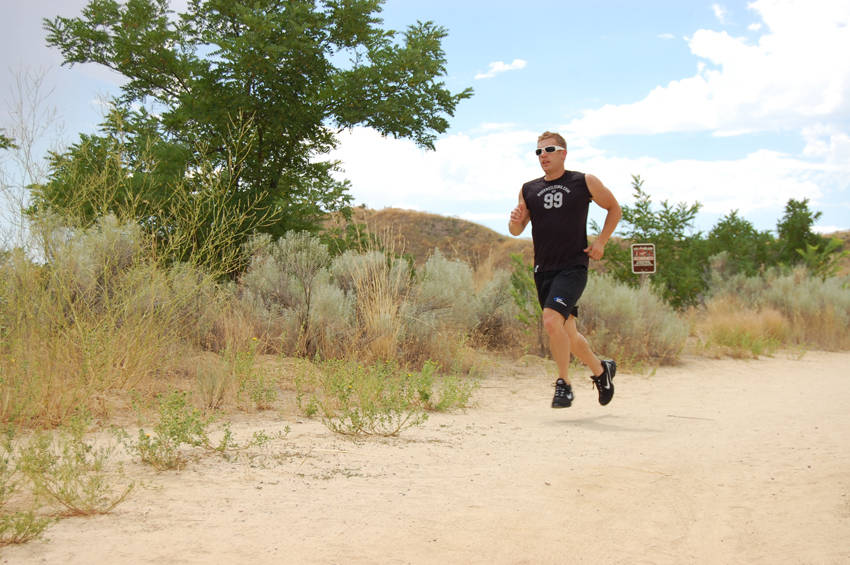
How to Perform Trail Running/walking
- Running or hiking on trails will get the blood pumping and heart beating almost immediately. Make sure you have good shoes. While you use the muscles in your calves and buttocks to pull yourself up a hill, the knees, joints and ankles absorb the bulk of the pounding coming back down. Take smaller steps as you walk downhill, keep your knees bent to reduce the impact and slow down to avoid falling.
- A 150 lb person can burn over 200 calories for 30 minutes walking uphill, compared to 175 on a flat surface. If running the trail, a 150 lb person can burn well over 500 calories in 30 minutes.
Pro Tips
- Category: Cardio
Best Trail Running/walking Alternatives
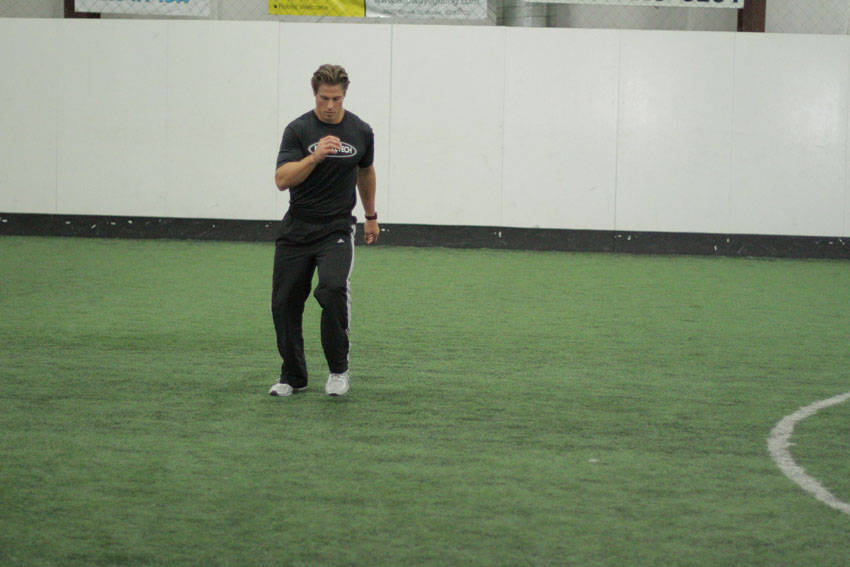
1. Carioca Quick Step
74.2% MatchHow to perform this exercise
- Begin with your feet a few inches apart and your left arm up in a relaxed, athletic position.
- With your right foot, quick step behind and pull the knee up.
- Fire your arms back up when you pull the right knee, being sure that your knee goes straight up and down. Avoid turning your feet as you move and continue to look forward as you move to the side.
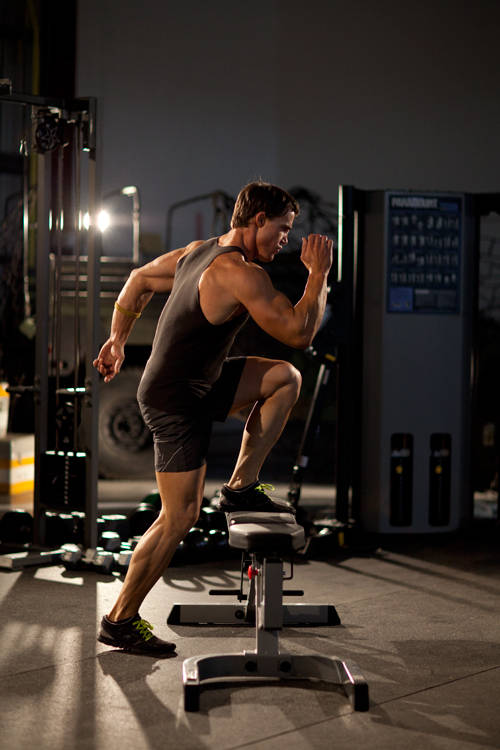
2. Bench Sprint
65.4% MatchHow to perform this exercise
- Stand on the ground with one foot resting on a bench or box with your heel close to the edge.
- Push off with your foot on top of the bench, extending through the hip and knee.
- Land with the opposite foot on top of the box, returning your other foot back to the start position.
- Continue alternating from one foot to another to complete the set.
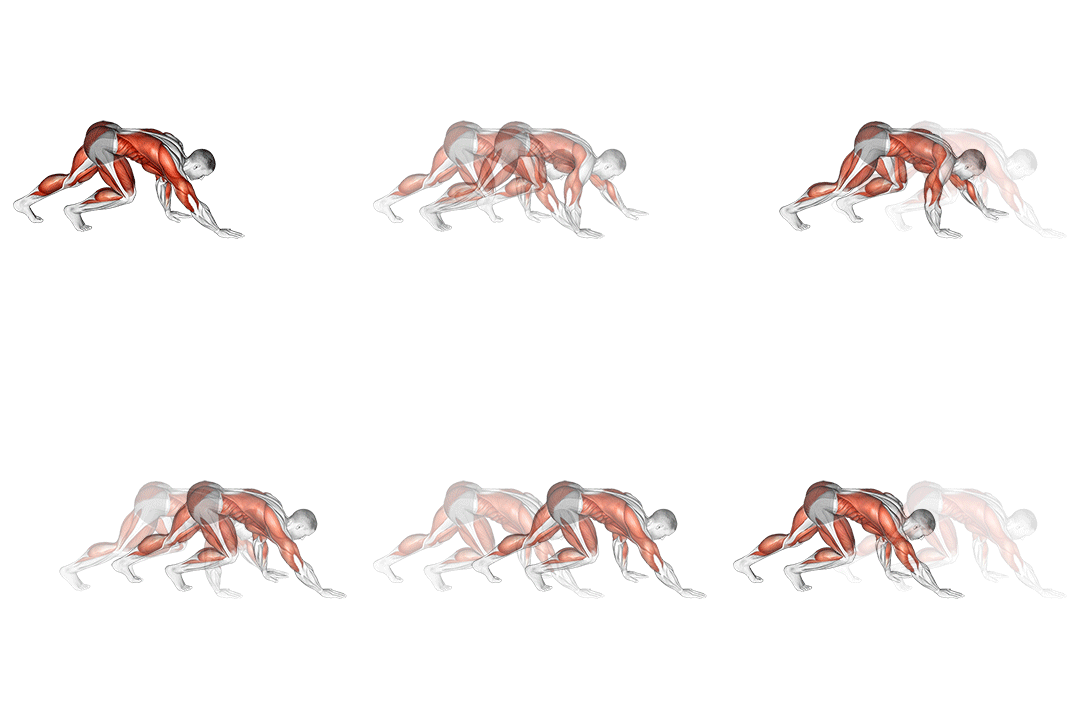
3. Bear Crawl
61.4% MatchHow to perform this exercise
- Start on all fours with your hands directly under your shoulders and your knees directly under your hips.
- Lift your knees slightly off the ground, keeping your back flat and your core engaged.
- Move your right hand and left foot forward simultaneously, followed by your left hand and right foot.
- Continue crawling forward, alternating your hand and foot movements.
- Maintain a steady pace and keep your core tight throughout the exercise.
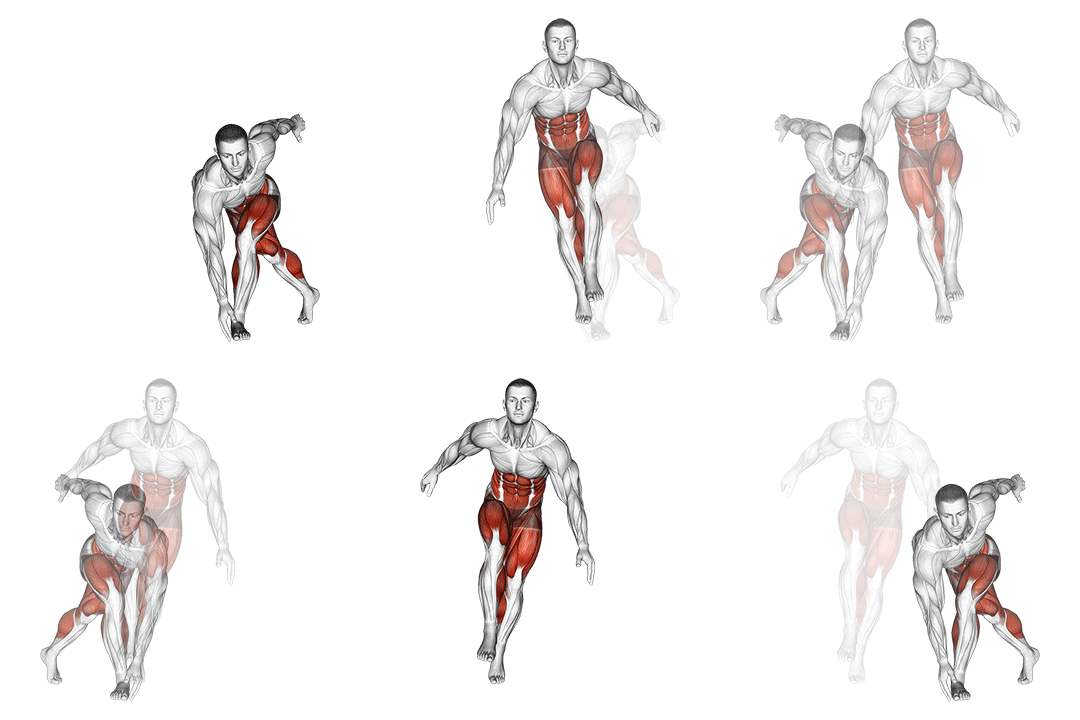
4. Back And Forth Step
57.3% MatchHow to perform this exercise
- Stand with your feet shoulder-width apart.
- Step forward with your right foot, bending your knee and lowering your body into a lunge position.
- Push off with your right foot and step back to the starting position.
- Repeat the movement with your left foot, alternating legs with each step.
- Continue stepping back and forth, maintaining a steady pace.
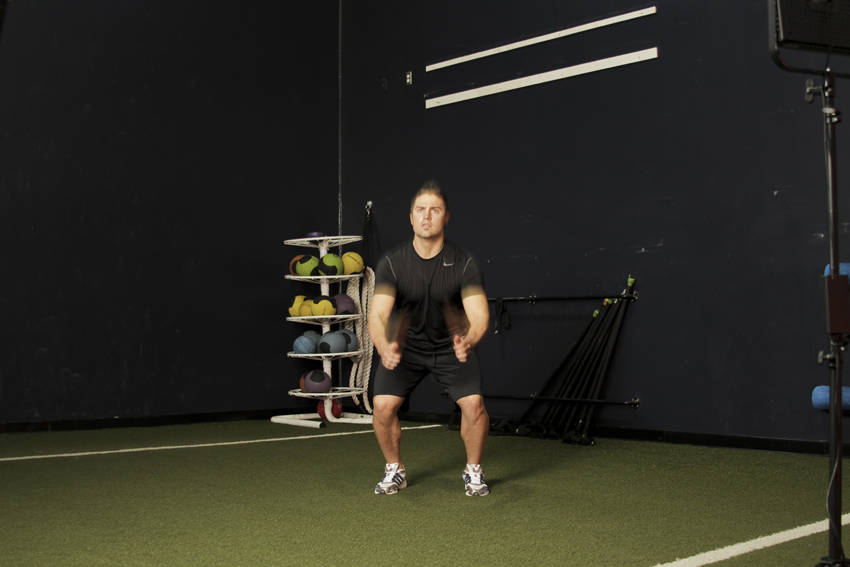
5. Double Leg Butt Kick
56.8% MatchHow to perform this exercise
- Begin standing with your knees slightly bent.
- Quickly squat a short distance, flexing the hips and knees, and immediately extend to jump for maximum vertical height.
- As you go up, tuck your heels by flexing the knees, attempting to touch the buttocks.
- Finish the motion by landing with the knees only partially bent, using your legs to absorb the impact.
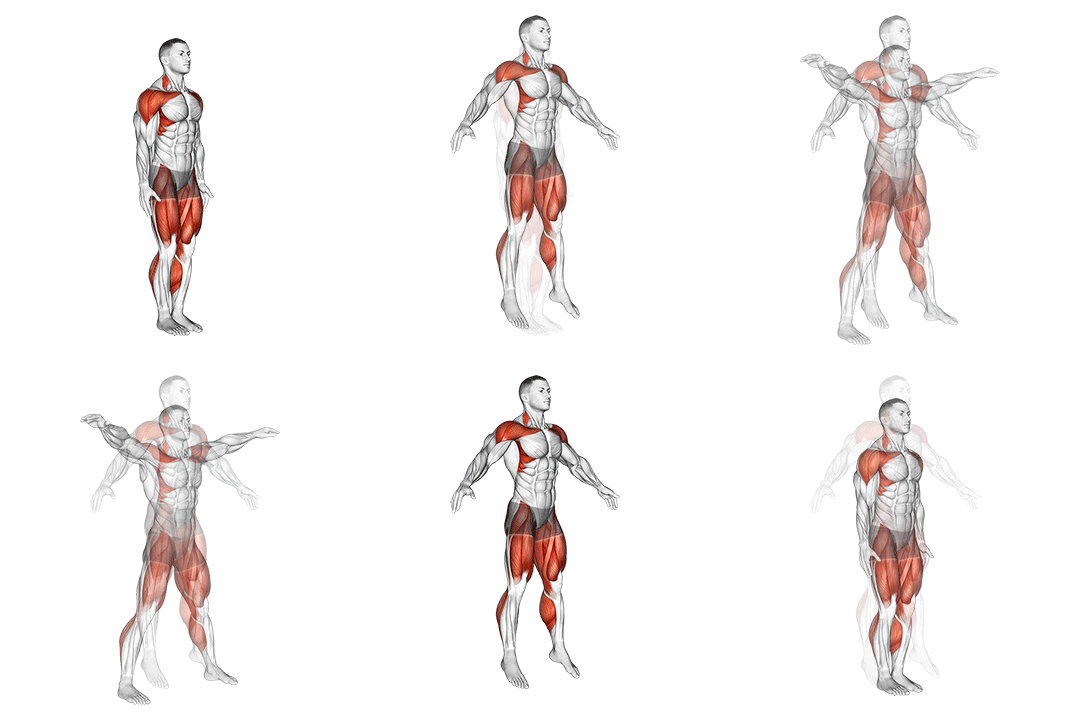
6. Astride Jumps (male)
55.4% MatchHow to perform this exercise
- Stand with your feet shoulder-width apart.
- Bend your knees and lower your body into a squat position.
- Jump explosively upwards, extending your legs and arms.
- While in the air, spread your legs apart and bring your arms out to the sides.
- Land softly with your feet shoulder-width apart, bending your knees to absorb the impact.
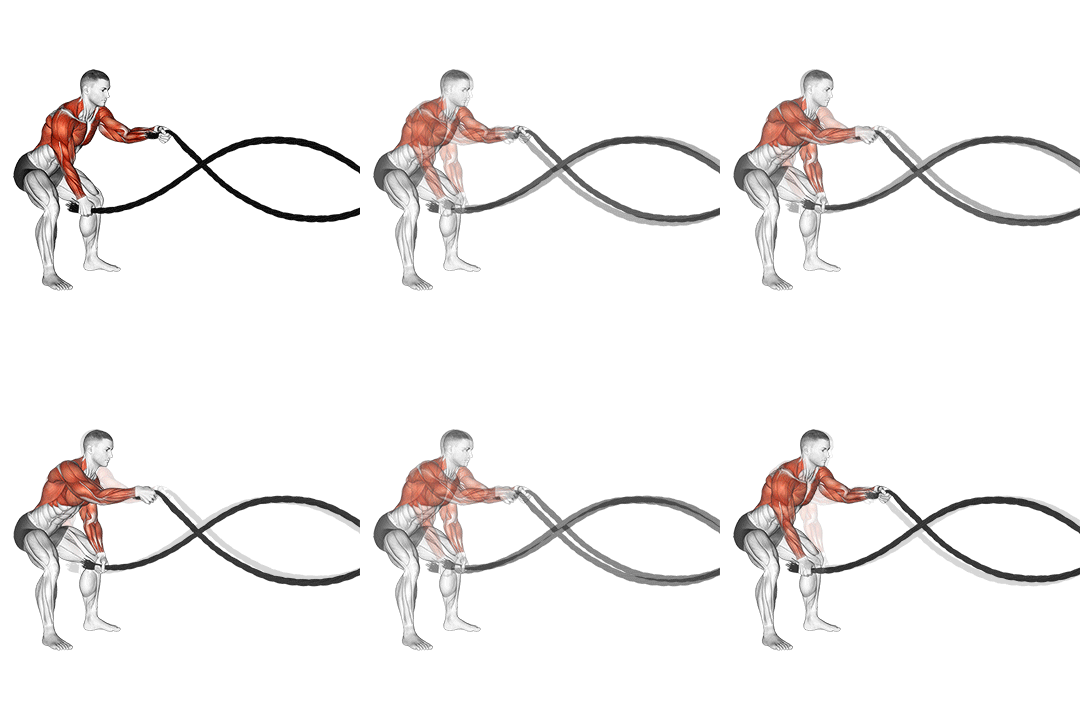
7. Battling Ropes
54.7% MatchHow to perform this exercise
- Stand with your feet shoulder-width apart and knees slightly bent.
- Hold one end of the rope in each hand, with your palms facing each other.
- Raise your arms to shoulder height, keeping your elbows slightly bent.
- Begin making alternating waves with the ropes by rapidly raising and lowering each arm.
- Continue for the desired duration or number of repetitions.
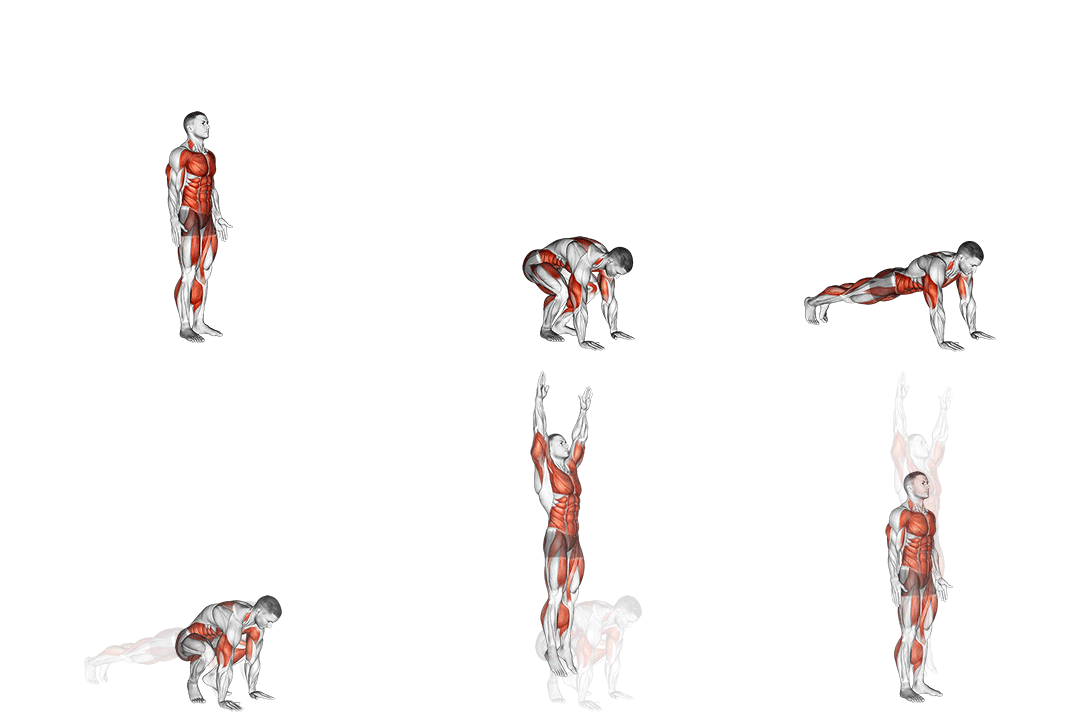
8. Burpee
52.4% MatchHow to perform this exercise
- Start in a standing position with your feet shoulder-width apart.
- Lower your body into a squat position by bending your knees and placing your hands on the floor in front of you.
- Kick your feet back into a push-up position.
- Perform a push-up, keeping your body in a straight line.
- Jump your feet back into the squat position.
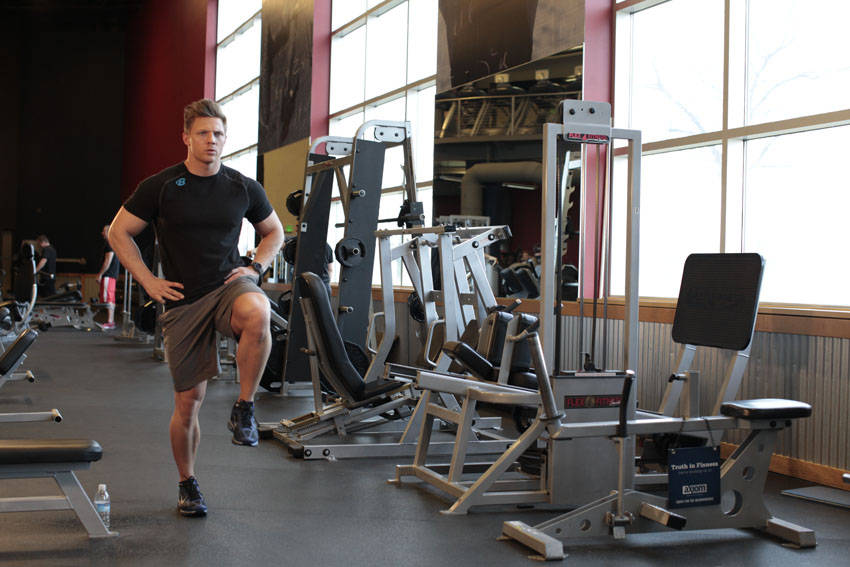
9. Bodyweight Walking Lunge
52.3% MatchHow to perform this exercise
- Begin standing with your feet shoulder width apart and your hands on your hips.
- Step forward with one leg, flexing the knees to drop your hips. Descend until your rear knee nearly touches the ground. Your posture should remain upright, and your front knee should stay above the front foot.
- Drive through the heel of your lead foot and extend both knees to raise yourself back up.
- Step forward with your rear foot, repeating the lunge on the opposite leg.
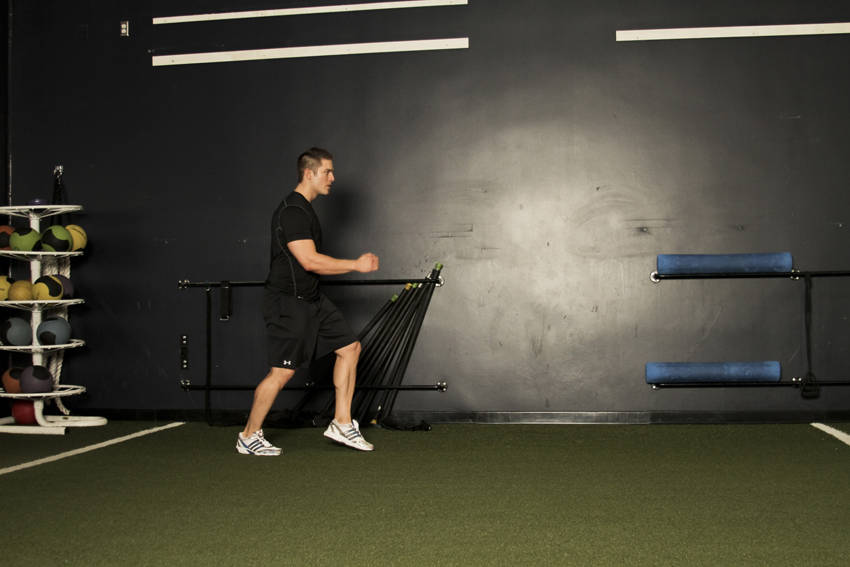
10. Fast Skipping
52.3% MatchHow to perform this exercise
- Start in a relaxed position with one leg slightly forward. This will be your starting position.
- Skip by executing a step-hop pattern of right-right-step to left-left-step, and so on, alternating back and forth.
- Perform fast skips by maintaining close contact with the ground and reduce air time, moving as quickly as possible.
Why You Might Need a Trail Running/walking Alternative
You may need a substitute because of injury, limited outdoor access, poor trail conditions, or training specificity. Trail running loads the quadriceps through repeated eccentric and concentric knee action and challenges hip stabilizers on uneven ground; that can aggravate knees or ankles. Alternatives let you control range of motion, tempo and unilateral loading to reduce joint stress while preserving quad stimulus. For example, perform step-ups with a deliberate 2–3 second eccentric descent to emulate downhill demand and increase quadriceps tension. Choosing unilateral options like Bulgarian split squats also isolates the quads, retrains balance and targets hip stabilizers that trail terrain normally challenges.
How to Choose the Right Substitute
Match the substitute to your goal, joint health and available space. For conditioning, pick stair climbs or timed walking lunges and keep cadence elevated while shortening stride to lower impact. For strength or hypertrophy, choose Bulgarian split squats or elevated step-ups and emphasize full knee extension on the concentric phase to bias the quads. If you have knee pain, reduce depth, slow the eccentric phase and keep the knee tracking over the second toe to limit shear. Progress by increasing step height, reps, tempo (2–3 sec descent), or adding unilateral volume.
Frequently Asked Questions
What muscles does Trail Running/walking work?
Trail running primarily targets the quadriceps through repeated knee extension and eccentric control, while also recruiting the glutes, hamstrings and calves for propulsion. It demands hip abductor and core activation to stabilize the pelvis on uneven terrain.
What is the best bodyweight alternative to Trail Running/walking?
Walking lunges and step-ups are the best bodyweight alternatives because they replicate single-leg loading and uphill mechanics. Perform step-ups by driving through the heel of the front foot, fully extending the knee at the top to maximize quadriceps activation and carry pace for conditioning.
Can I build muscle without doing Trail Running/walking?
Yes. Use progressive overload with unilateral exercises like Bulgarian split squats, elevated step-ups and tempo-controlled reps to stimulate the quads. Increase step height, add pauses or slow the eccentric phase to raise mechanical tension and drive hypertrophy without trail miles.
More Exercise Alternatives
Find Alternatives for Any Exercise
Use our free tool to discover the best substitute exercises based on your available equipment and goals.
Try the Exercise Substitution Finder →