

10 Best Triceps Pushdown - Rope Attachment Alternatives for Home Gyms
The Triceps Pushdown - Rope Attachment is done standing with a cable machine. Ranked closest by our scoring: the Low Cable Triceps Extension, the Triceps Pushdown and the Triceps Pushdown - V-bar Attachment. Three harder versions, the Cable Alternate Triceps Extension, the Standing Low-pulley One-arm Triceps Extension and the Cable Lying Triceps Extension, are listed below as progressions rather than swaps.
Updated Ranked by our 12-factor similarity model How it works
Original Exercise: Triceps Pushdown - Rope Attachment
- Primary muscle
- Triceps
- Equipment
- Cable
- Difficulty
- Beginner
- Type
- Isolation
How to perform Triceps Pushdown - Rope Attachment
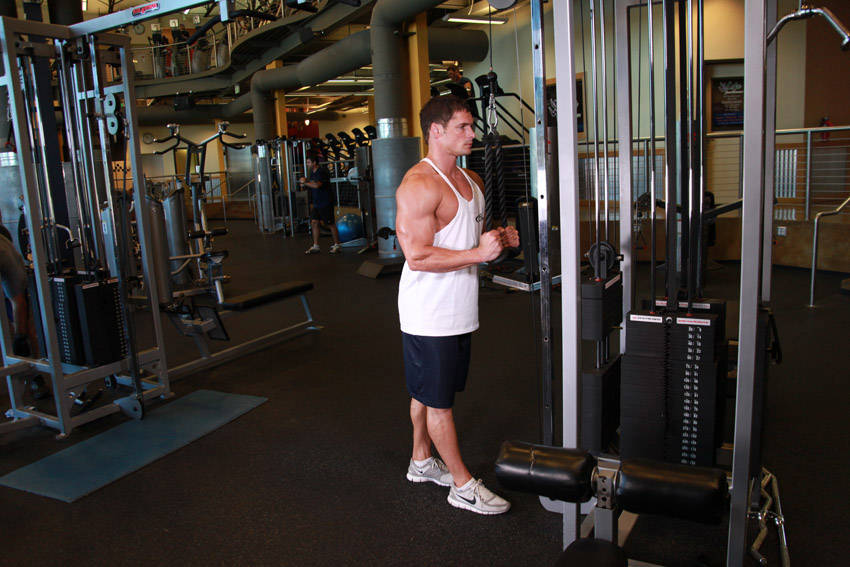
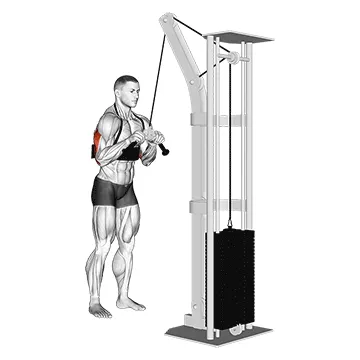
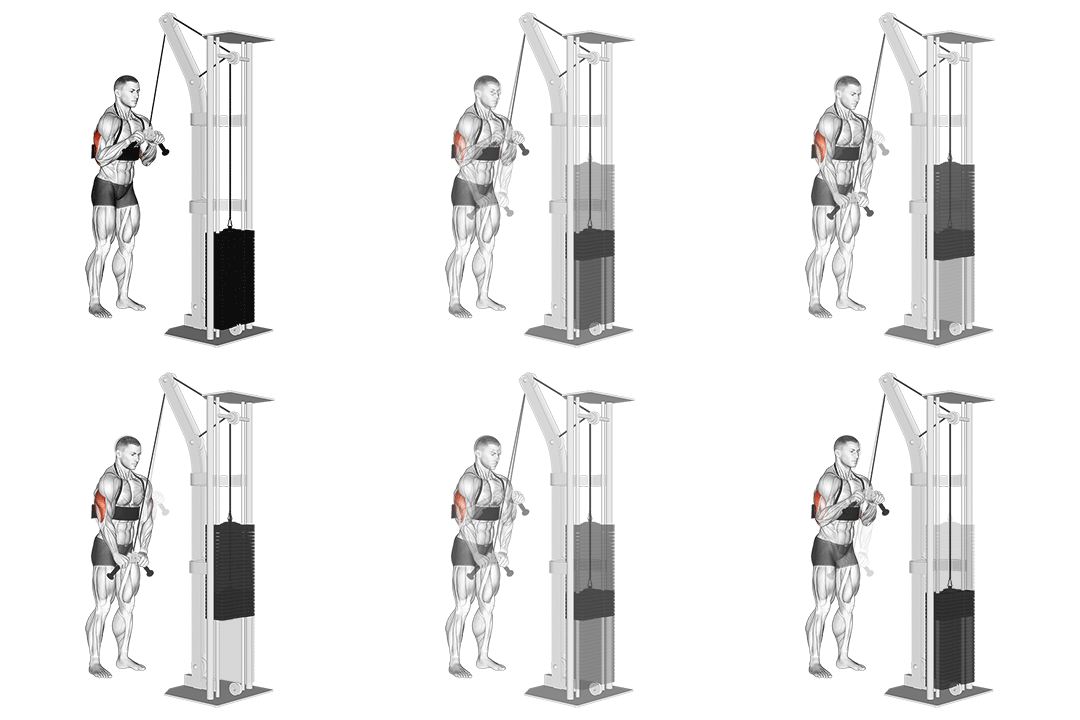
- Attach a rope attachment to a high pulley and grab with a neutral grip (palms facing each other).
- Standing upright with the torso straight and a very small inclination forward, bring the upper arms close to your body and perpendicular to the floor. The forearms should be pointing up towards the pulley as they hold the rope with the palms facing each other. This is your starting position.
- Using the triceps, bring the rope down as you bring each side of the rope to the side of your thighs. At the end of the movement the arms are fully extended and perpendicular to the floor. The upper arms should always remain stationary next to your torso and only the forearms should move. Exhale as you perform this movement.
- After holding for a second, at the contracted position, bring the rope slowly up to the starting point. Breathe in as you perform this step.
- Repeat for the recommended amount of repetitions.
Ranked Triceps Pushdown - Rope Attachment Alternatives
10 substitutes, ranked by how closely each one matches the Triceps Pushdown - Rope Attachment on movement pattern, muscles worked, equipment and body position. The higher the score, the less you change. Open "How to perform this exercise" on a card for the steps; every card title links to that exercise's own alternatives page. Harder versions are tagged as progressions and kept out of the top spot even when they score higher.
Best match 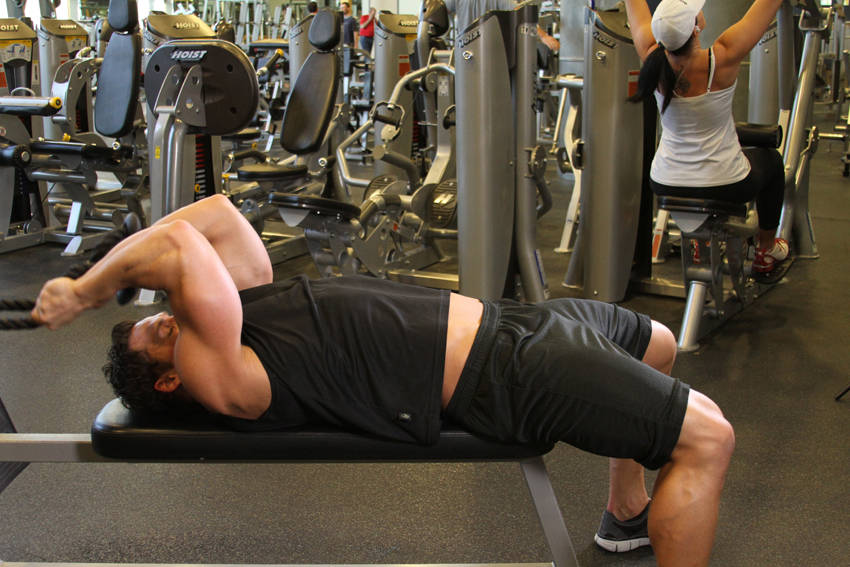
1. Low Cable Triceps Extension
96% match- Triceps
- Cable
- Beginner
- Isolation
It uses the same equipment and still works the triceps.
How to perform this exercise
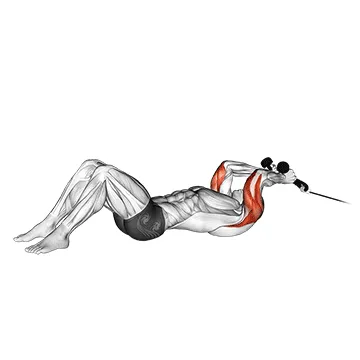
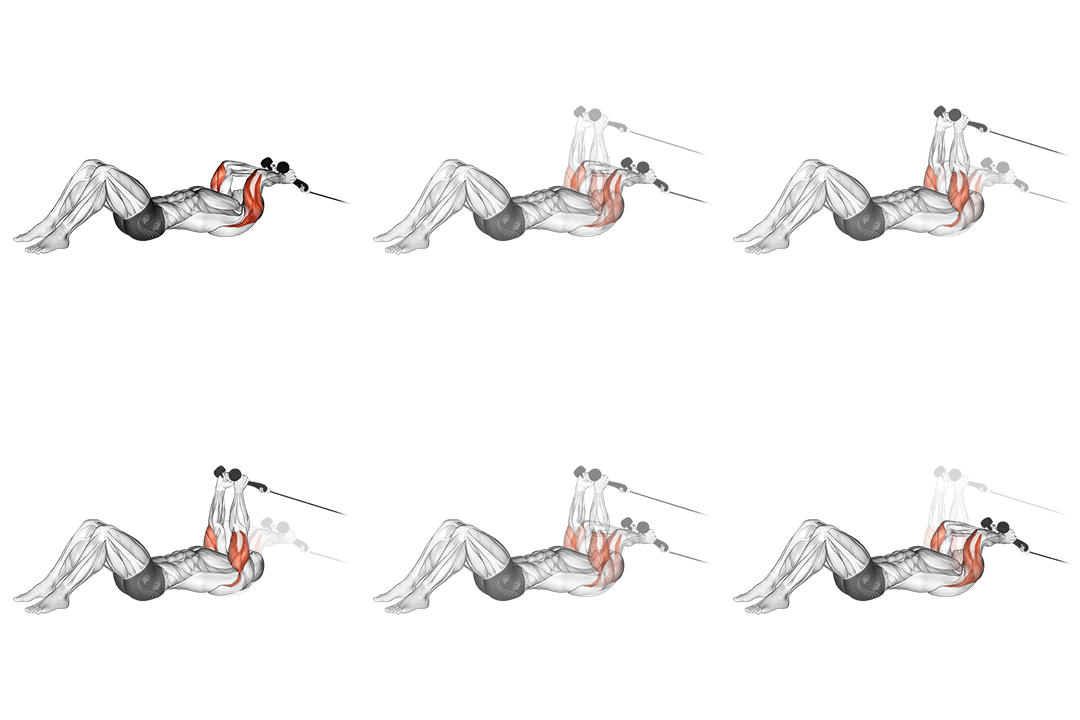
- Select the desired weight and lay down face up on the bench of a seated row machine that has a rope attached to it. Your head should be pointing towards the attachment.
- Grab the outside of the rope ends with your palms facing each other (neutral grip).
- Position your elbows so that they are bent at a 90 degree angle and your upper arms are perpendicular (90 degree angle) to your torso. Tip: Keep the elbows in and make sure that the upper arms point to the ceiling while your forearms point towards the pulley above your head. This will be your starting position.
- As you breathe out, extend your lower arms until they are straight and vertical. The upper arms and elbows remain stationary throughout the movement. Only the forearms should move. Contract the triceps hard for a second.
- As you breathe in slowly return to the starting position.
- Repeat for the recommended amount of repetitions.
Sets and reps: 3 sets of 10 to 15 reps.
Why this matches
- Primary muscle: triceps, the same as the Triceps Pushdown - Rope Attachment
- Equipment: a cable, the same as the Triceps Pushdown - Rope Attachment
2. Triceps Pushdown
96% match- Triceps
- Cable
- Beginner
- Isolation
The same equipment, taken with an overhand grip.
How to perform this exercise
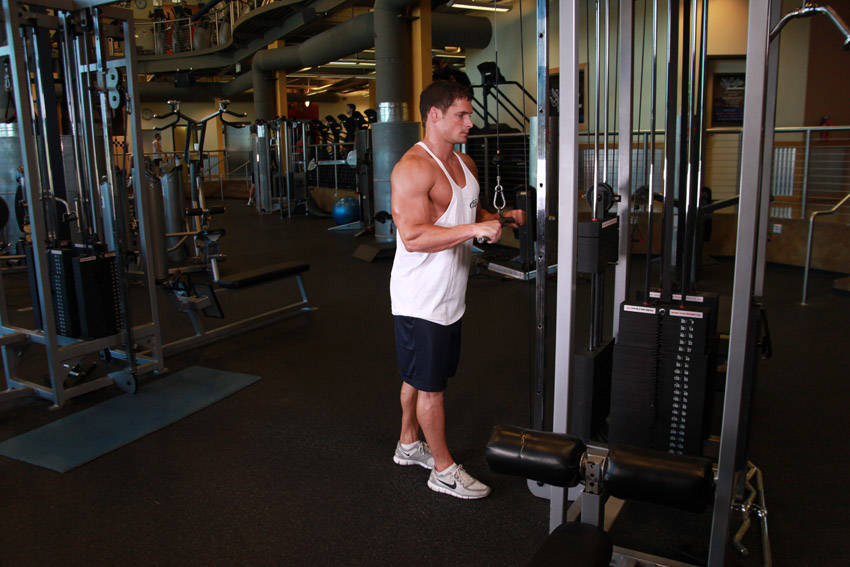
- Attach a straight or angled bar to a high pulley and grab with an overhand grip (palms facing down) at shoulder width.
- Standing upright with the torso straight and a very small inclination forward, bring the upper arms close to your body and perpendicular to the floor. The forearms should be pointing up towards the pulley as they hold the bar. This is your starting position.
- Using the triceps, bring the bar down until it touches the front of your thighs and the arms are fully extended perpendicular to the floor. The upper arms should always remain stationary next to your torso and only the forearms should move. Exhale as you perform this movement.
- After a second hold at the contracted position, bring the bar slowly up to the starting point. Breathe in as you perform this step.
- Repeat for the recommended amount of repetitions.
Sets and reps: 3 sets of 10 to 15 reps.
Why this matches
- Primary muscle: triceps, the same as the Triceps Pushdown - Rope Attachment
- Equipment: a cable, the same as the Triceps Pushdown - Rope Attachment
- Body position: standing, the same as the Triceps Pushdown - Rope Attachment
- Triceps
- Cable
- Beginner
- Isolation
The same equipment, taken with a close grip.
How to perform this exercise
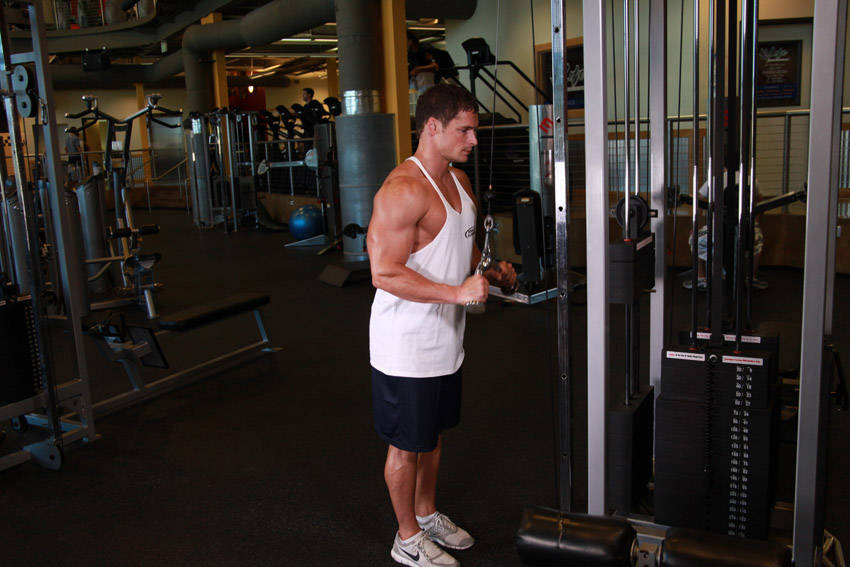
- Attach a V-Bar to a high pulley and grab with an overhand grip (palms facing down) at shoulder width.
- Standing upright with the torso straight and a very small inclination forward, bring the upper arms close to your body and perpendicular to the floor. The forearms should be pointing up towards the pulley as they hold the bar. The thumbs should be higher than the small finger. This is your starting position.
- Using the triceps, bring the bar down until it touches the front of your thighs and the arms are fully extended perpendicular to the floor. The upper arms should always remain stationary next to your torso and only the forearms should move. Exhale as you perform this movement.
- After a second hold at the contracted position, bring the V-Bar slowly up to the starting point. Breathe in as you perform this step.
- Repeat for the recommended amount of repetitions.
Sets and reps: 3 sets of 10 to 15 reps.
Why this matches
- Primary muscle: triceps, the same as the Triceps Pushdown - Rope Attachment
- Equipment: a cable, the same as the Triceps Pushdown - Rope Attachment
- Body position: standing, the same as the Triceps Pushdown - Rope Attachment
- Triceps
- Cable
- Beginner
- Isolation
How to perform this exercise
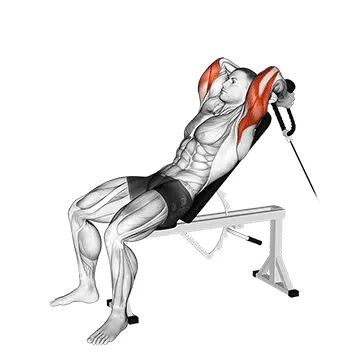
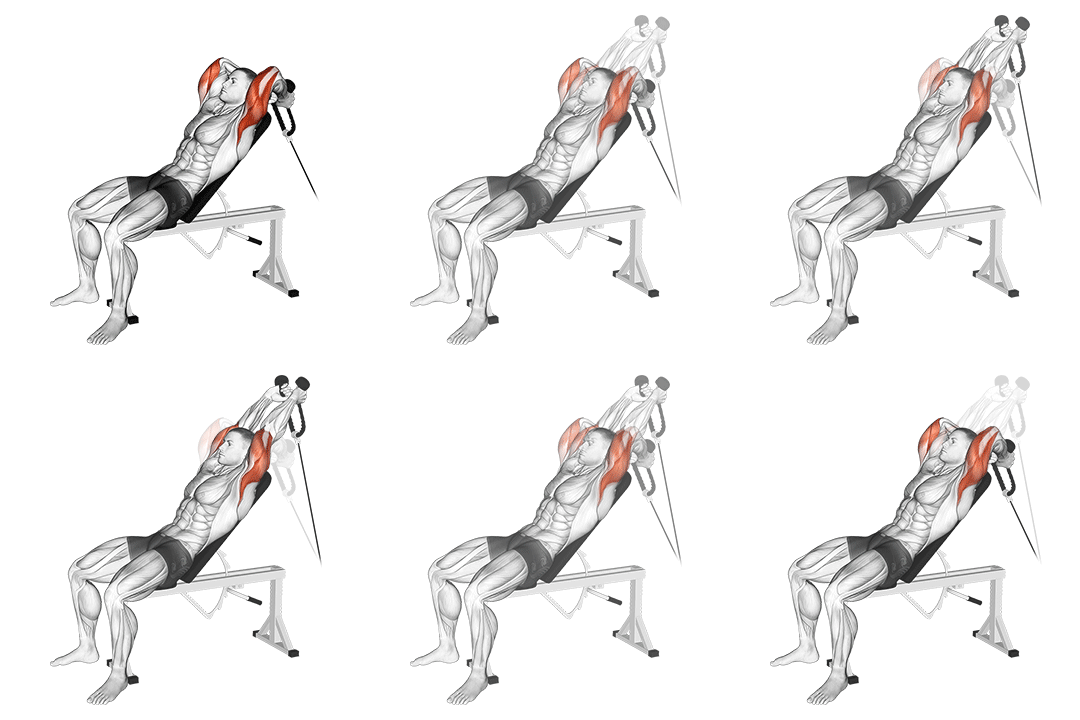
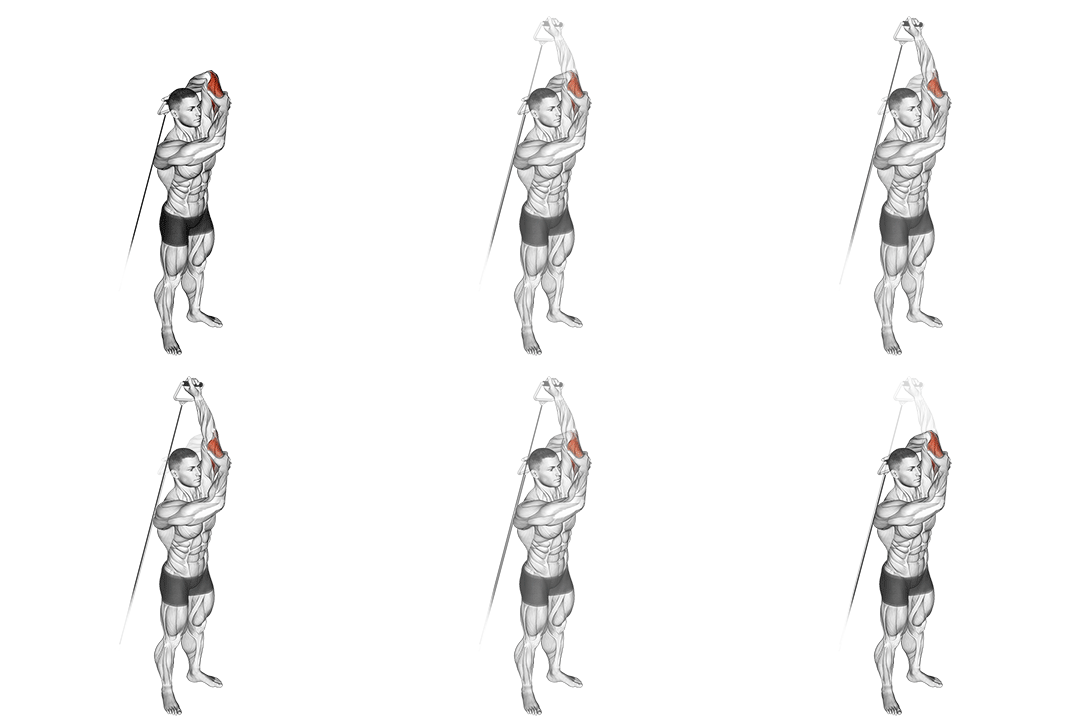
- Attach a rope to a high pulley and adjust the incline bench to a comfortable angle.
- Stand facing away from the pulley with your feet shoulder-width apart.
- Grasp the rope with an overhand grip and extend your arms straight overhead.
- Keep your elbows close to your head and your upper arms stationary throughout the exercise.
- Lower the rope behind your head by bending your elbows until your forearms touch your biceps.
- Pause for a moment, then extend your arms back to the starting position.
- Repeat for the desired number of repetitions.
Sets and reps: 3 sets of 10 to 15 reps.
Why this matches
- Primary muscle: triceps, the same as the Triceps Pushdown - Rope Attachment
- Equipment: a cable, the same as the Triceps Pushdown - Rope Attachment
- Body position: standing, the same as the Triceps Pushdown - Rope Attachment
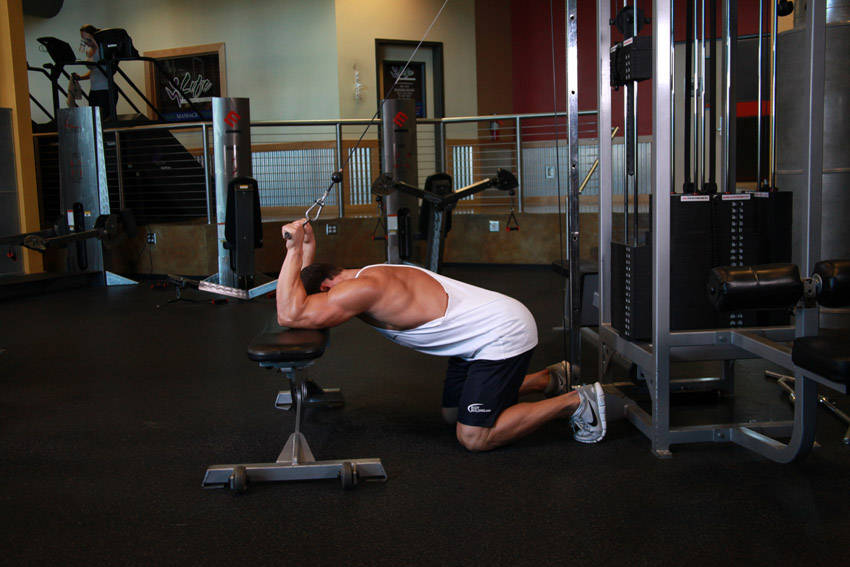
5. Kneeling Cable Triceps Extension
92% match- Triceps
- Cable
- Beginner
- Isolation
The same equipment, done kneeling instead.
How to perform this exercise
- Place a bench sideways in front of a high pulley machine.
- Hold a straight bar attachment above your head with your hands about 6 inches apart with your palms facing down.
- Face away from the machine and kneel.
- Place your head and the back of your upper arms on the bench. Your elbows should be bent with the forearms pointing towards the high pulley. This will be your starting position.
- While keeping your upper arms close to your head at all times with the elbows in, press the bar out in a semicircular motion until the elbows are locked and your arms are parallel to the floor. Contract the triceps hard and keep this position for a second. Exhale as you perform this movement.
- Slowly return to the starting position as you breathe in.
- Repeat for the recommended amount of repetitions.
Sets and reps: 3 sets of 10 to 15 reps.
Why this matches
- Primary muscle: triceps, the same as the Triceps Pushdown - Rope Attachment
- Equipment: a cable, the same as the Triceps Pushdown - Rope Attachment
- Body position: kneeling, not standing
Progression
6. Cable Alternate Triceps Extension
89% match- Triceps
- Cable
- Intermediate
- Isolation
Pick this when you want a harder version that works the triceps one side at a time.
How to perform this exercise
- Stand facing the cable machine with your feet shoulder-width apart.
- Hold the cable handle with your right hand and bring your arm up so that your upper arm is parallel to the ground and your elbow is bent at a 90-degree angle.
- Keep your upper arm stationary and extend your forearm backward, fully straightening your arm.
- Pause for a moment, then slowly return to the starting position.
- Repeat with your left arm.
- Continue alternating arms for the desired number of repetitions.
Sets and reps: 3 sets of 10 to 15 reps on each side.
Why this matches
- Primary muscle: triceps, the same as the Triceps Pushdown - Rope Attachment
- Equipment: a cable, the same as the Triceps Pushdown - Rope Attachment
- Body position: standing, the same as the Triceps Pushdown - Rope Attachment
Progression
- Triceps
- Cable
- Intermediate
- Isolation
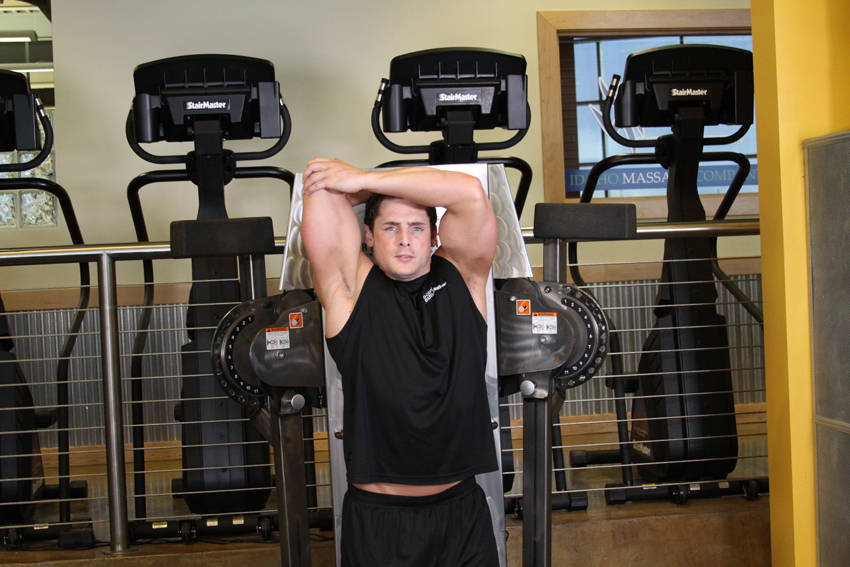
Pick this when you want a harder single-arm version that still works the triceps.
How to perform this exercise
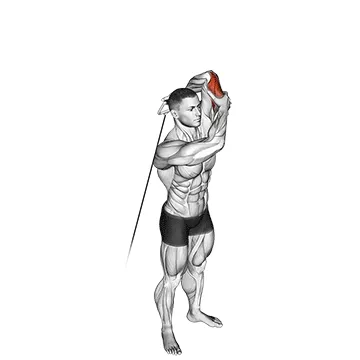
- Grab a single handle with your left arm next to the low pulley machine. Turn away from the machine keeping the handle to the side of your body with your arm fully extended. Now use both hands to elevate the single handle directly above the head with the palm facing forward. Keep your upper arm completely vertical (perpendicular to the floor) and put your right hand on your left elbow to help keep it steady. This is the starting position.
- Keeping your upper arms close to your head (elbows in) and perpendicular to the floor, lower the resistance in a semicircular motion behind your head until your forearms touch your biceps. Tip: The upper arms should remain stationary and only the forearms should move. Breathe in as you perform this step.
- Go back to the starting position by using the triceps to raise the single handle. Breathe out as you perform this step.
- Repeat for the recommended amount of repetitions.
- Switch arms and repeat the exercise.
Sets and reps: 3 sets of 10 to 15 reps on each side.
Why this matches
- Primary muscle: triceps, the same as the Triceps Pushdown - Rope Attachment
- Equipment: a cable, the same as the Triceps Pushdown - Rope Attachment
- Body position: standing, the same as the Triceps Pushdown - Rope Attachment
Progression
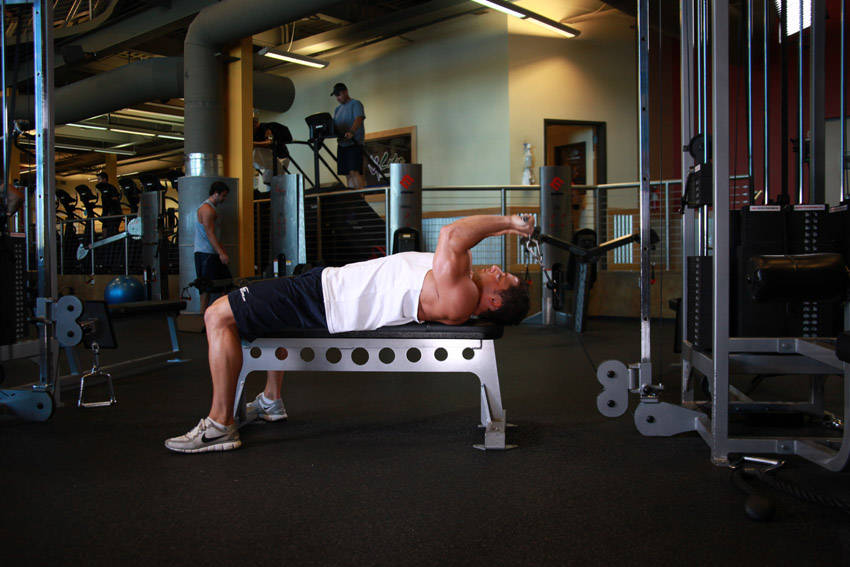
8. Cable Lying Triceps Extension
88% match- Triceps
- Cable
- Intermediate
- Isolation
How to perform this exercise
- Lie on a flat bench and grasp the straight bar attachment of a low pulley with a narrow overhand grip. Tip: The easiest way to do this is to have someone hand you the bar as you lay down.
- With your arms extended, position the bar over your torso. Your arms and your torso should create a 90-degree angle. This will be your starting position.
- Lower the bar by bending at the elbow while keeping the upper arms stationary and elbows in. Go down until the bar lightly touches your forehead. Breathe in as you perform this portion of the movement.
- Flex the triceps as you lift the bar back to its starting position. Exhale as you perform this portion of the movement.
- Hold for a second at the contracted position and repeat for the recommended amount of repetitions.
Sets and reps: 3 sets of 10 to 15 reps.
Why this matches
- Primary muscle: triceps, the same as the Triceps Pushdown - Rope Attachment
- Equipment: a cable, the same as the Triceps Pushdown - Rope Attachment
- Body position: lying on your back, not standing
- Triceps
- Cable
- Beginner
- Isolation
How to perform this exercise
- Attach a rope to a cable machine and set it to the lowest position.
- Lie on the floor facing up, with your head towards the cable machine.
- Hold the rope with both hands, palms facing each other, and extend your arms straight up towards the ceiling.
- Keep your upper arms stationary and slowly lower the rope towards your forehead, bending your elbows.
- Pause for a moment, then extend your arms back up to the starting position.
- Repeat for the desired number of repetitions.
Sets and reps: 3 sets of 10 to 15 reps.
Why this matches
- Primary muscle: triceps, the same as the Triceps Pushdown - Rope Attachment
- Equipment: a cable, the same as the Triceps Pushdown - Rope Attachment
- Body position: lying on your back, not standing
- Triceps
- Cable
- Beginner
- Isolation
How to perform this exercise
- Attach a v-bar attachment to the cable machine at the highest setting.
- Stand facing the cable machine with your feet shoulder-width apart.
- Grasp the v-bar with an overhand grip, palms facing down, and your hands shoulder-width apart.
- Keep your elbows close to your sides and your upper arms stationary throughout the exercise.
- Engage your triceps and exhale as you push the v-bar down until your arms are fully extended.
- Pause for a moment at the bottom of the movement, squeezing your triceps.
- Inhale as you slowly return the v-bar to the starting position, maintaining control.
- Repeat for the desired number of repetitions.
Sets and reps: 3 sets of 10 to 15 reps.
Why this matches
- Primary muscle: triceps, the same as the Triceps Pushdown - Rope Attachment
- Equipment: a cable, the same as the Triceps Pushdown - Rope Attachment
- Body position: standing, the same as the Triceps Pushdown - Rope Attachment
Why You Might Need a Triceps Pushdown - Rope Attachment Alternative
You may substitute the rope pushdown for several reasons: machine or cable unavailability, wrist or elbow irritation from rope rotation, or a goal to load the triceps with heavier compound force. Alternatives change moment arm and shoulder position to bias the long head (overhead positions) or the lateral/medial heads (pressing and pressing variants). For joint concerns, choose neutral-grip dumbbell extensions or band pushdowns and keep the elbow pinned to the side to reduce shear. If you chase hypertrophy, emphasize a controlled eccentric and a 1–2 second peak contraction; if you chase strength, pick compound lifts with heavier loads while maintaining full elbow extension.
Triceps Pushdown - Rope Attachment FAQ
What muscles does Triceps Pushdown - Rope Attachment work?
The rope pushdown primarily targets the three triceps heads: lateral, long, and medial, with elbow extension as the main movement. It also recruits the forearm extensors for grip and requires shoulder stability; keep elbows pinned to the sides to maximize triceps loading.
Can I build muscle without doing Triceps Pushdown - Rope Attachment?
Yes. You can achieve triceps hypertrophy with compound presses (close-grip bench), overhead extensions, skull crushers, dips, or band/cable variations by applying progressive overload. Focus on full elbow extension, controlled eccentrics, and progressive increases in load or volume to drive growth.
Find Alternatives for Any Exercise
Search the exercise database and filter the ranked substitutes by the equipment you own.
Similarity scores compare exercise metadata such as movement pattern, muscles, equipment and body position. They are not a safety rating or a check that you own the equipment. Learn about our methodology