

10 Best Upright Barbell Row Alternatives for Shoulder Strength
The Upright Barbell Row is done standing with a barbell. Ranked closest by our scoring: the Face Pull, the Smith Machine One-arm Upright Row and the Cable Kneeling Rear Delt Row (With Rope).
Updated Ranked by our 12-factor similarity model How it works
Original Exercise: Upright Barbell Row
- Primary muscle
- Delts
- Equipment
- Barbell
- Difficulty
- Intermediate
- Type
- Compound
Secondary muscles: Traps
How to perform Upright Barbell Row
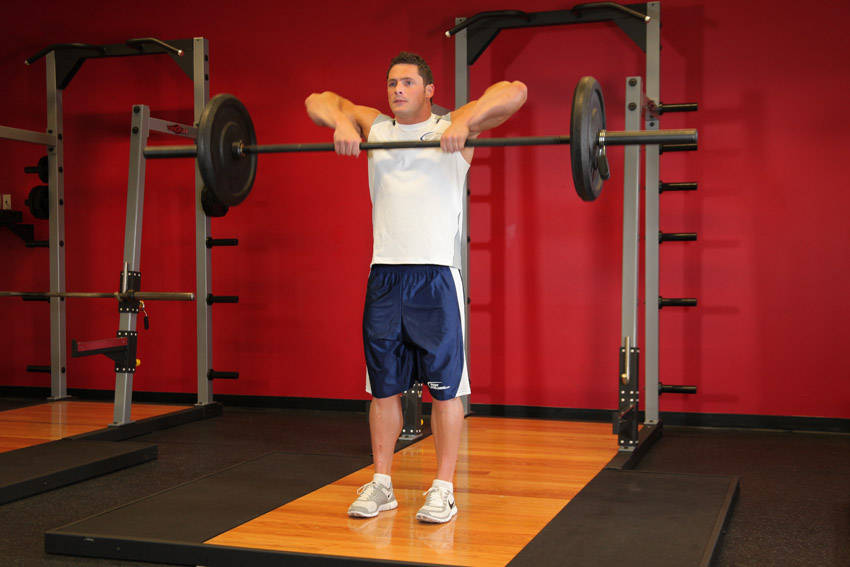
- Grasp a barbell with an overhand grip that is slightly less than shoulder width. The bar should be resting on the top of your thighs with your arms extended and a slight bend in your elbows. Your back should also be straight. This will be your starting position.
- Now exhale and use the sides of your shoulders to lift the bar, raising your elbows up and to the side. Keep the bar close to your body as you raise it. Continue to lift the bar until it nearly touches your chin. Tip: Your elbows should drive the motion, and should always be higher than your forearms. Remember to keep your torso stationary and pause for a second at the top of the movement.
- Lower the bar back down slowly to the starting position. Inhale as you perform this portion of the movement.
- Repeat for the recommended amount of repetitions.
Ranked Upright Barbell Row Alternatives
10 substitutes, ranked by how closely each one matches the Upright Barbell Row on movement pattern, muscles worked, equipment and body position. The higher the score, the less you change. Open "How to perform this exercise" on a card for the steps; every card title links to that exercise's own alternatives page.
Best match 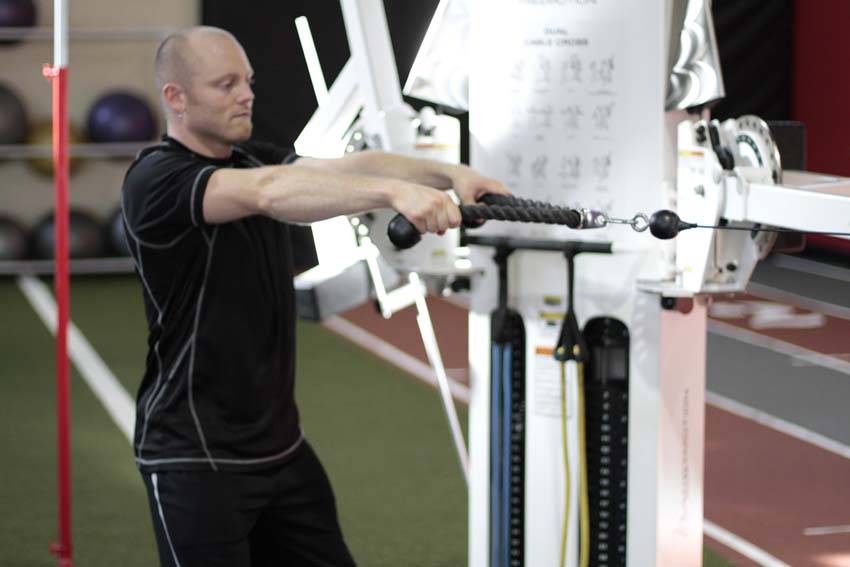
1. Face Pull
80% match- Delts
- Cable
- Intermediate
- Compound
A good swap when you have a cable machine to work with, and it still works the delts.
How to perform this exercise
- Facing a high pulley with a rope or dual handles attached, pull the weight directly towards your face, separating your hands as you do so. Keep your upper arms parallel to the ground.
Sets and reps: 3 or 4 sets of 6 to 10 reps.
Why this matches
- Primary muscle: delts, the same as the Upright Barbell Row
- Equipment: a cable, not free weights
- Body position: standing, the same as the Upright Barbell Row
- Balance: easier to stay steady on than the Upright Barbell Row
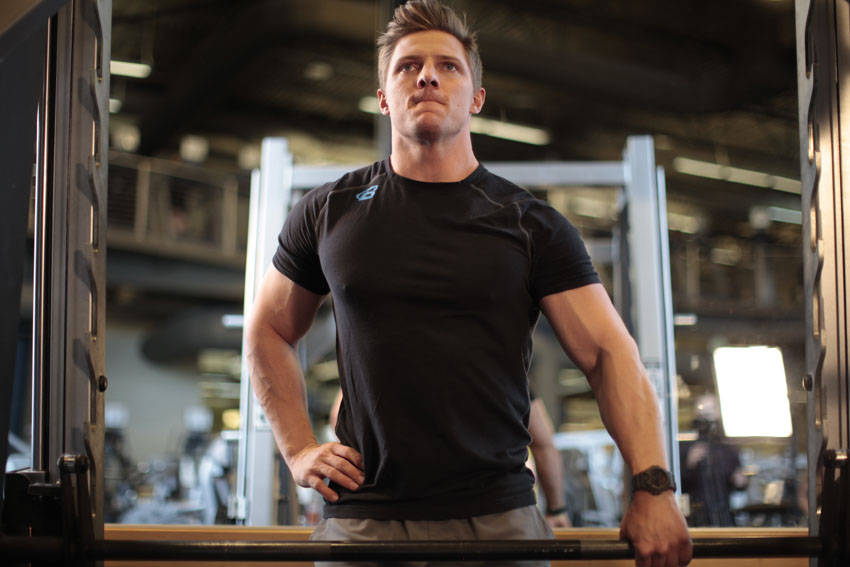
2. Smith Machine One-arm Upright Row
77% match- Delts
- Machine
- Intermediate
- Compound
Pick this when you want to work the delts one side at a time.
How to perform this exercise
- With the bar at thigh level, load an appropriate weight.
- Take a wide grip on the bar and unhook the weight, removing your off hand from the bar. Your arm should be extended as you stand up straight with your head and chest up. This will be your starting position.
- Begin the movement by flexing the elbow, raising the upper arm with the elbow pointed out. Continue until your upper arm is parallel to the floor.
- After a brief pause, return the weight to the starting position.
- Repeat for the desired number of repetitions before engaging the hooks to rack the weight.
Sets and reps: 3 or 4 sets of 6 to 10 reps on each side.
Why this matches
- Primary muscle: delts, the same as the Upright Barbell Row
- Equipment: a machine, not free weights
- Body position: standing, the same as the Upright Barbell Row
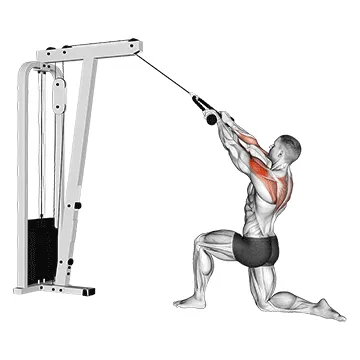
- Delts
- Cable
- Intermediate
- Compound
How to perform this exercise
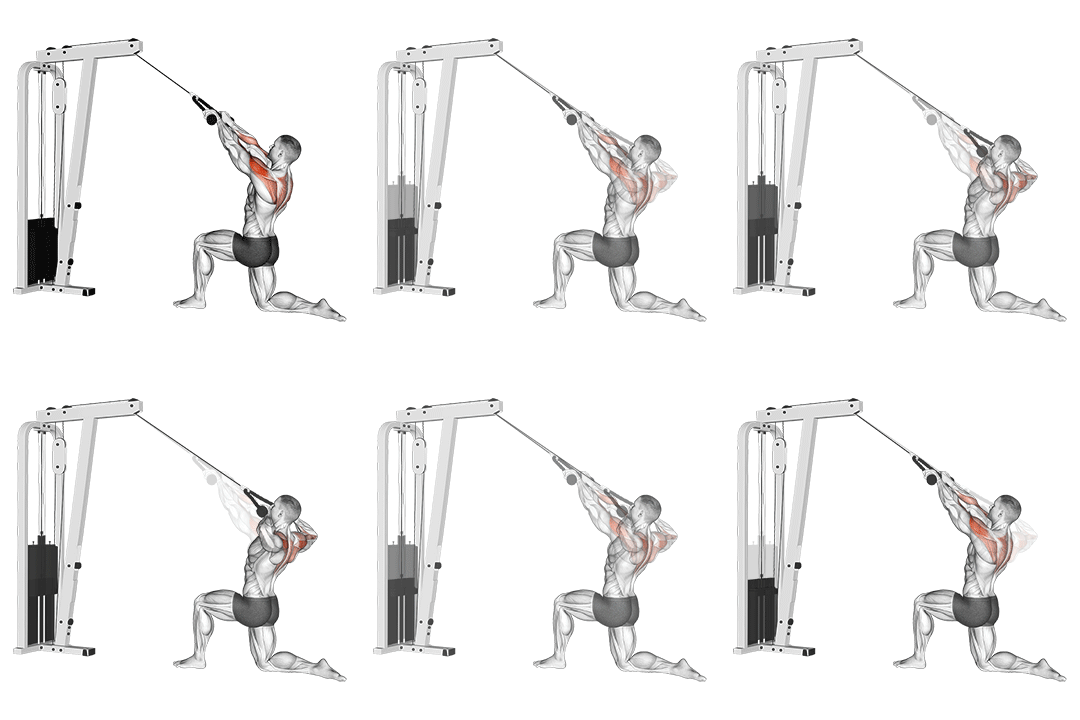
- Attach a rope handle to a low cable pulley and kneel down facing the machine.
- Grasp the rope with a neutral grip (palms facing each other) and extend your arms fully in front of you.
- Keeping your back straight and core engaged, pull the rope towards your body by retracting your shoulder blades.
- Squeeze your shoulder blades together at the end of the movement and hold for a brief pause.
- Slowly release the tension and return to the starting position.
- Repeat for the desired number of repetitions.
Sets and reps: 3 or 4 sets of 6 to 10 reps.
Why this matches
- Primary muscle: delts, the same as the Upright Barbell Row
- Equipment: a cable, not free weights
- Body position: kneeling, not standing
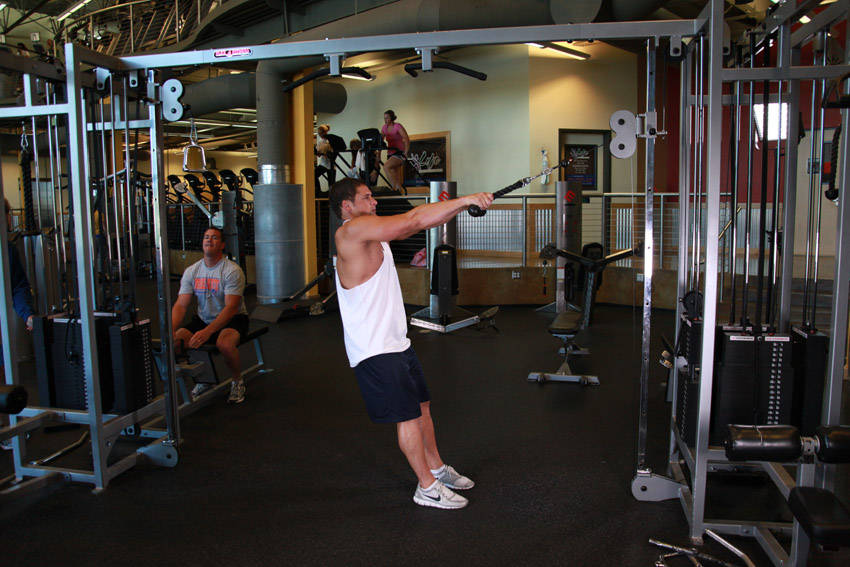
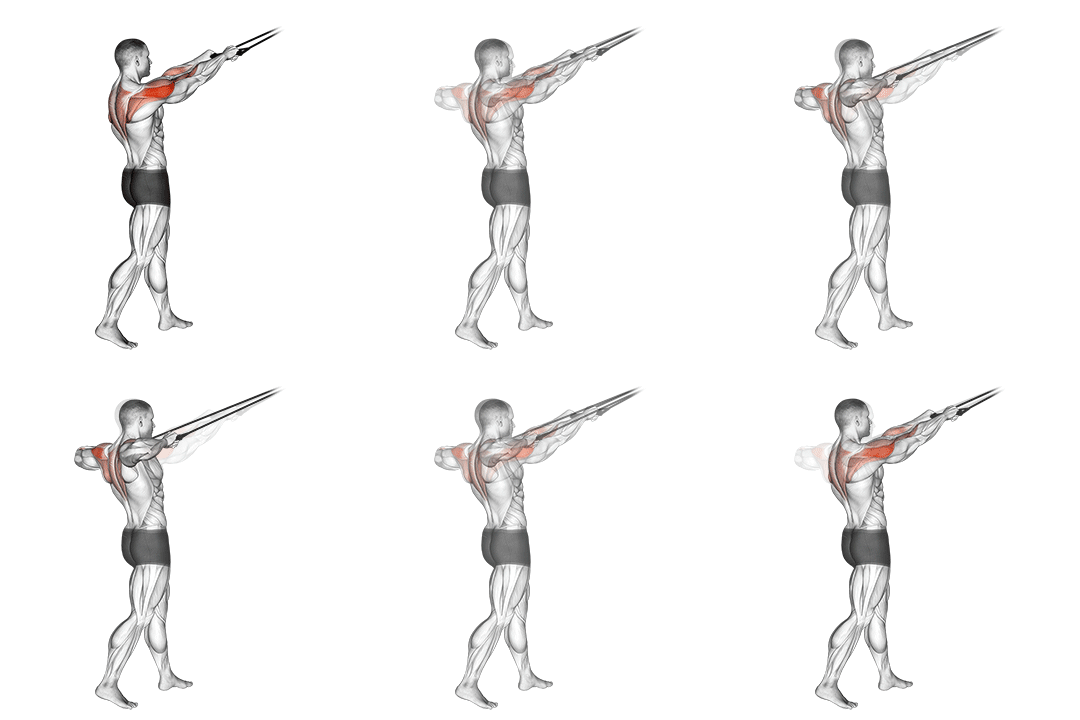
4. Cable Rope Rear-delt Rows
72% match- Delts
- Cable
- Intermediate
- Compound
How to perform this exercise
- Sit in the same position on a low pulley row station as you would if you were doing seated cable rows for the back.
- Attach a rope to the pulley and grasp it with an overhand grip. Your arms should be extended and parallel to the floor with the elbows flared out.
- Keep your lower back upright and slide your hips back so that your knees are slightly bent. This will be your starting position.
- Pull the cable attachment towards your upper chest, just below the neck, as you keep your elbows up and out to the sides. Continue this motion as you exhale until the elbows travel slightly behind the back. Tip: Keep your upper arms horizontal, perpendicular to the torso and parallel to the floor throughout the motion.
- Go back to the initial position where the arms are extended and the shoulders are stretched forward. Inhale as you perform this portion of the movement.
- Repeat for the recommended amount of repetitions.
Sets and reps: 3 or 4 sets of 6 to 10 reps.
Why this matches
- Primary muscle: delts, the same as the Upright Barbell Row
- Equipment: a cable, not free weights
- Body position: standing, the same as the Upright Barbell Row
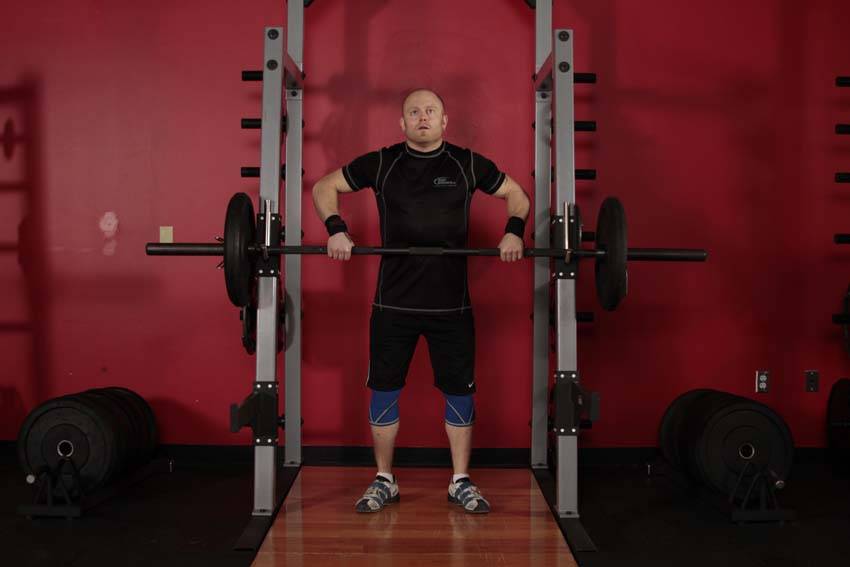
5. Rack Delivery
71% match- Delts
- Barbell
- Intermediate
- Compound
It uses the same equipment and still works the delts.
How to perform this exercise
- This drill teaches the delivery of the barbell to the rack position on the shoulders. Begin holding a bar in the scarecrow position, with the upper arms parallel to the floor, and the forearms hanging down. Use a hook grip, with your fingers wrapped over your thumbs.
- Begin by rotating the elbows around the bar, delivering the bar to the shoulders. As your elbows come forward, relax your grip. The shoulders should be protracted, providing a shelf for the bar, which should lightly contact the throat.
- It is important that the bar stay close to the body at all times, as with a heavier load any distance will result in an unwanted collision. As the movement becomes smoother, speed and load can be increased before progressing further.
Sets and reps: 3 or 4 sets of 6 to 10 reps.
Why this matches
- Primary muscle: delts, the same as the Upright Barbell Row
- Equipment: free weights, the same as the Upright Barbell Row
- Body position: standing, the same as the Upright Barbell Row
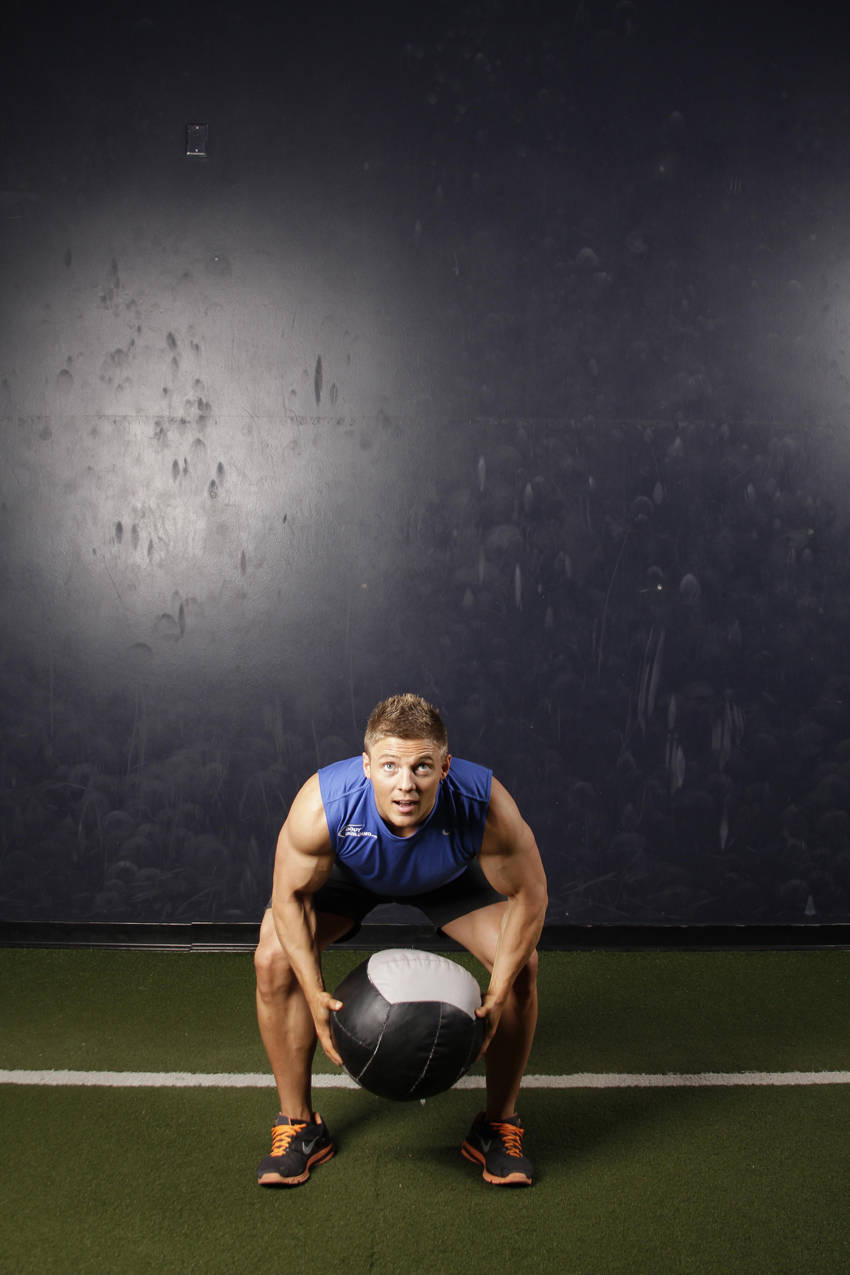
6. Backward Medicine Ball Throw
71% match- Delts
- Medicine-ball
- Intermediate
- Compound
A good swap when you have a medicine ball to work with, and it still works the delts.
How to perform this exercise
- This exercise is best done with a partner. If you lack a partner, the ball can be thrown and retrieved or thrown against a wall.
- Begin standing a few meters in front of your partner, both facing the same direction. Begin holding the ball between your legs.
- Squat down and then forcefully reverse direction, coming to full extension and you toss the ball over your head to your partner.
- Your partner can then roll the ball back to you. Repeat for the desired number of repetitions.
Sets and reps: 3 or 4 sets of 6 to 10 reps.
Why this matches
- Primary muscle: delts, the same as the Upright Barbell Row
- Equipment: free weights, the same as the Upright Barbell Row
- Body position: standing, the same as the Upright Barbell Row
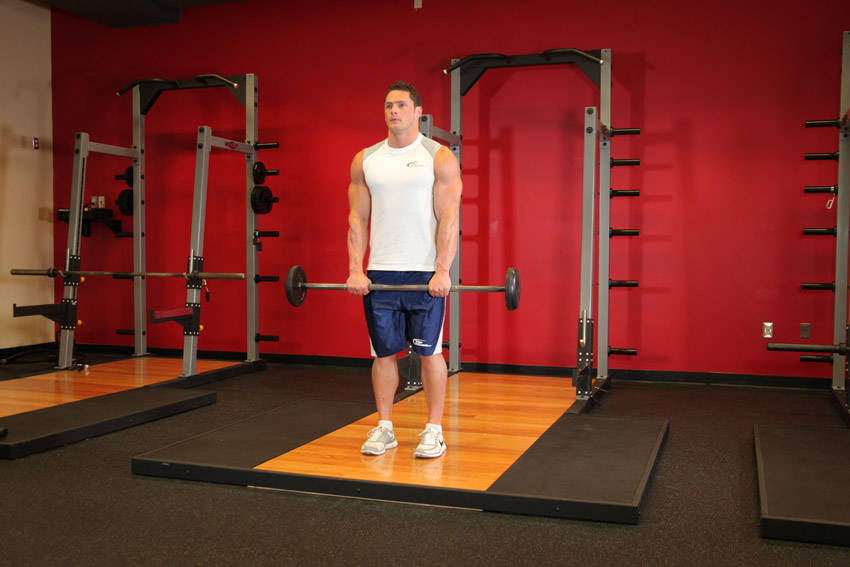
- Delts
- Barbell
- Intermediate
- Compound
How to perform this exercise
- To begin, stand straight with a barbell in your hands. You should grip the bar with palms facing down and a closer than shoulder width grip apart from each other.
- Your feet should be shoulder width apart from each other. Your elbows should be slightly bent. This is the starting position.
- Lift the barbell up until it is directly over your head while exhaling. Make sure to keep your elbows slightly bent when performing each repetition.
- Once you feel the contraction, begin to lower the barbell back down to the starting position as you inhale.
- Repeat for the recommended amount of repetitions.
Sets and reps: 3 or 4 sets of 6 to 10 reps.
Why this matches
- Primary muscle: delts, the same as the Upright Barbell Row
- Equipment: free weights, the same as the Upright Barbell Row
- Body position: standing, the same as the Upright Barbell Row
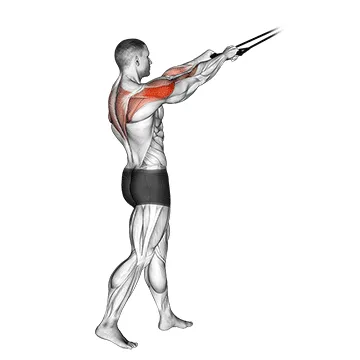
8. Band Standing Rear Delt Row
71% match- Delts
- Band
- Intermediate
- Compound
How to perform this exercise
- Stand with your feet shoulder-width apart and place the band under your feet.
- Hold the band handles with your palms facing each other and your arms extended in front of you.
- Bend your knees slightly and hinge forward at the hips, keeping your back straight.
- Pull the band towards your chest, squeezing your shoulder blades together.
- Pause for a moment at the top, then slowly release the tension and return to the starting position.
- Repeat for the desired number of repetitions.
Sets and reps: 3 or 4 sets of 6 to 10 reps.
Why this matches
- Primary muscle: delts, the same as the Upright Barbell Row
- Equipment: a band, not free weights
- Body position: standing, the same as the Upright Barbell Row
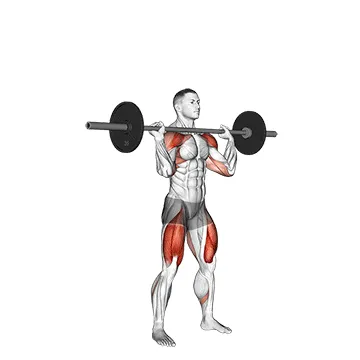
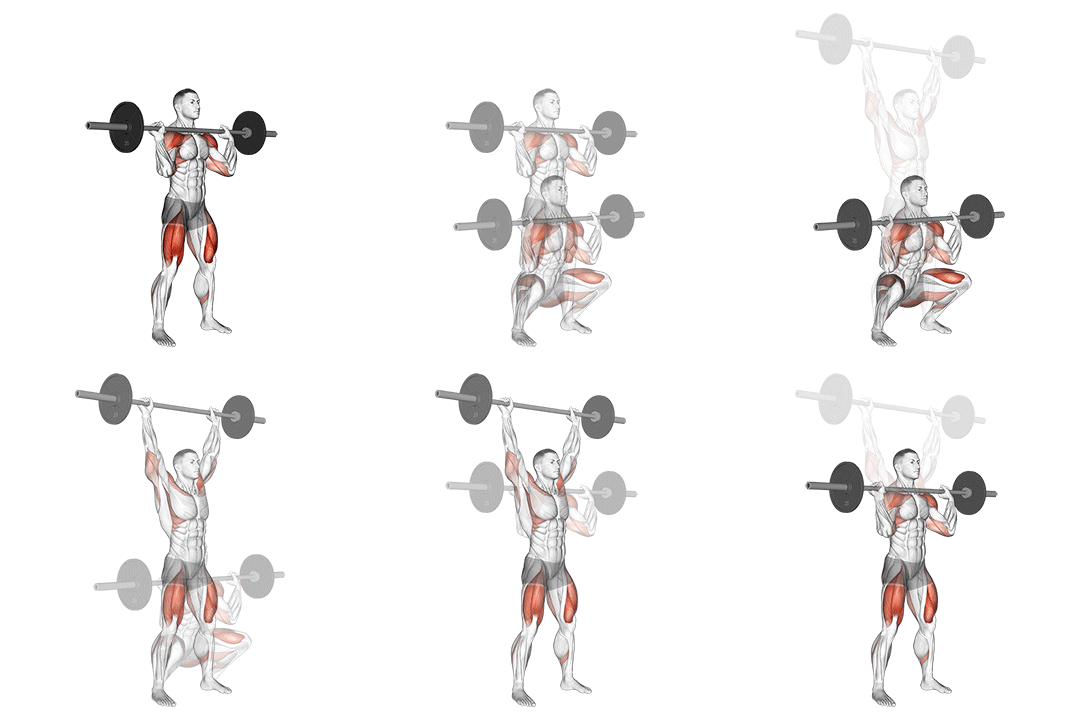
9. Barbell Thruster
71% match- Delts
- Barbell
- Intermediate
- Compound
How to perform this exercise
- Start by standing with your feet shoulder-width apart, holding a barbell at shoulder height with an overhand grip.
- Lower into a squat position by bending your knees and pushing your hips back.
- As you reach the bottom of the squat, explosively drive through your heels to stand up, simultaneously pressing the barbell overhead.
- Lower the barbell back to shoulder height as you lower back into the squat position.
- Repeat for the desired number of repetitions.
Sets and reps: 3 or 4 sets of 6 to 10 reps.
Why this matches
- Primary muscle: delts, the same as the Upright Barbell Row
- Equipment: free weights, the same as the Upright Barbell Row
- Body position: standing, the same as the Upright Barbell Row
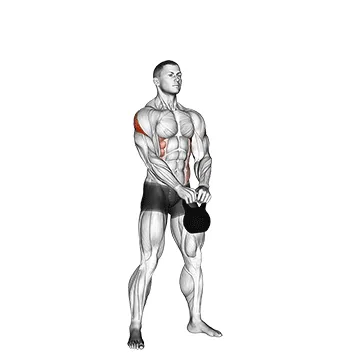
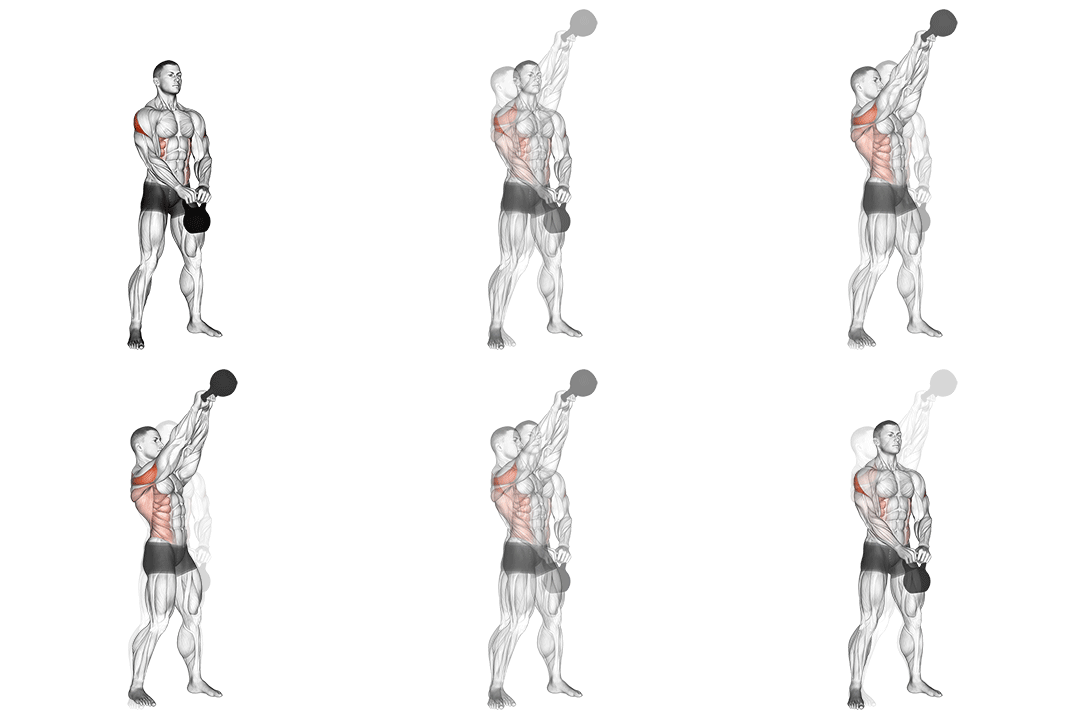
10. Kettlebell Pirate Supper Legs
71% match- Delts
- Kettlebell
- Intermediate
- Compound
How to perform this exercise
- Stand with your feet shoulder-width apart, holding a kettlebell in one hand.
- Bend your knees slightly and hinge forward at the hips, keeping your back straight.
- Raise the kettlebell up to shoulder height, keeping your elbow close to your body.
- Extend your arm fully overhead, straightening your elbow.
- Lower the kettlebell back down to shoulder height, then return to the starting position.
- Repeat for the desired number of repetitions, then switch sides.
Sets and reps: 3 or 4 sets of 6 to 10 reps.
Why this matches
- Primary muscle: delts, the same as the Upright Barbell Row
- Equipment: free weights, the same as the Upright Barbell Row
- Body position: standing, the same as the Upright Barbell Row
How to Choose the Right Upright Barbell Row Substitute
Match the substitute to your joint health, equipment, and which deltoid head you want to stress. For shoulder-friendly posterior/lateral work, pick face pulls and cue a slow eccentric with scapular retraction to activate the posterior deltoid. To isolate lateral delts, choose single-arm lateral raises with a 15-degree forward lean and a controlled 2–3 second lowering phase to increase lateral head activation. If you need compound strength, use dumbbell or kettlebell high pulls and practice triple extension: hips drive, then shrug, then pull with elbows leading. Monitor where fatigue shows up (upper trap vs lateral deltoid) and adjust form or selection.
Upright Barbell Row FAQ
What muscles does Upright Barbell Row work?
The upright barbell row primarily targets the lateral and anterior deltoids and the upper trapezius, with secondary loading of the rhomboids and biceps. Biomechanically, lifting the elbows high abducts the shoulder and elevates the scapula; cue elbows leading and wrists neutral to emphasize deltoid activation.
Find Alternatives for Any Exercise
Search the exercise database and filter the ranked substitutes by the equipment you own.
Similarity scores compare exercise metadata such as movement pattern, muscles, equipment and body position. They are not a safety rating or a check that you own the equipment. Learn about our methodology