

10 Best Vertical Leg Raise (on Parallel Bars) Alternatives for Home Gyms
What can I do instead of Vertical Leg Raise (on Parallel Bars)? Use alternatives like hanging knee raises, lying leg raises, dragon flags, seated pike-ups, or decline crunches to hit the rectus abdominis and hip flexors. Focus on a posterior pelvic tilt, brace your core, and lower for 2–3 seconds to eliminate momentum.
Original Exercise: Vertical Leg Raise (on Parallel Bars)
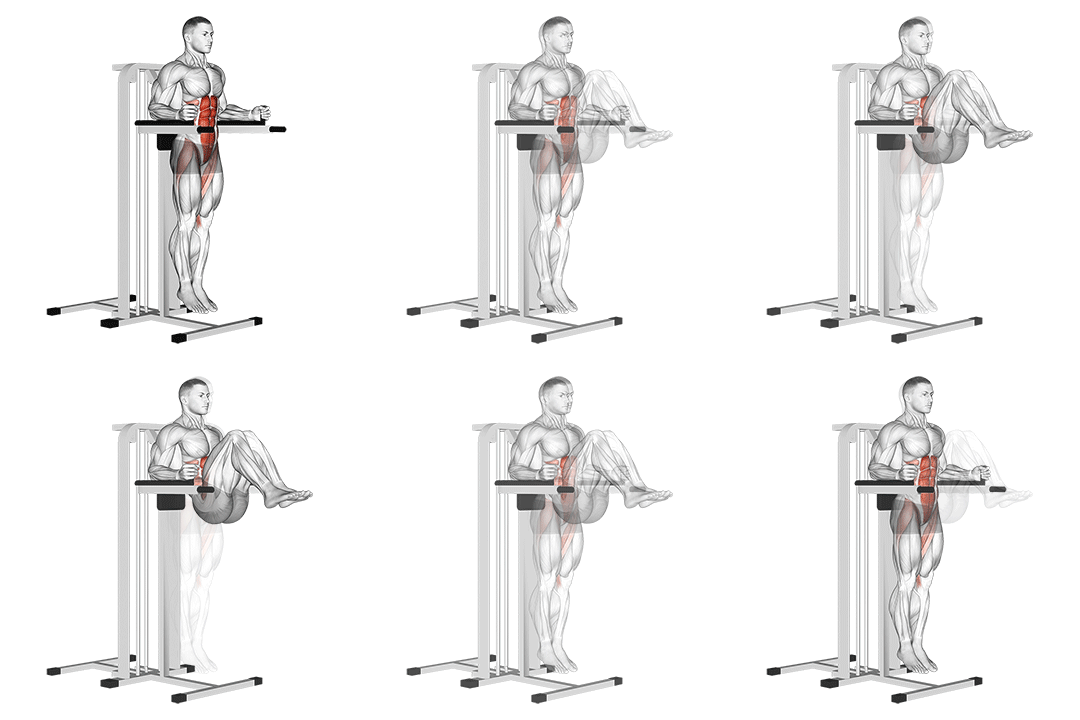
How to Perform Vertical Leg Raise (on Parallel Bars)
- Hang from the parallel bars with your arms fully extended and your body straight.
- Engage your core and lift your legs up in front of you, keeping them straight.
- Continue lifting until your legs are parallel to the ground or slightly higher.
- Pause for a moment at the top, then slowly lower your legs back down to the starting position.
- Repeat for the desired number of repetitions.
Best Vertical Leg Raise (on Parallel Bars) Alternatives
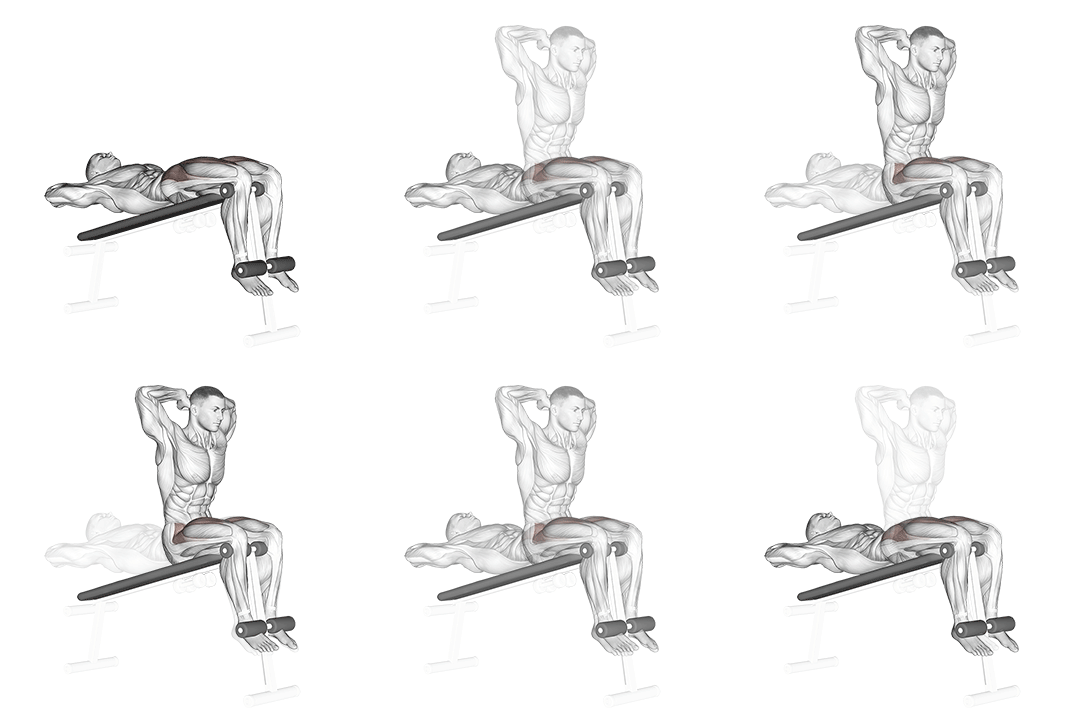
1. Decline Sit-up
82.8% MatchHow to perform this exercise
- Lie on a decline bench with your feet secured and your knees bent.
- Place your hands behind your head or across your chest.
- Engage your abs and lift your upper body off the bench, curling forward towards your knees.
- Pause for a moment at the top, then slowly lower your upper body back down to the starting position.
- Repeat for the desired number of repetitions.
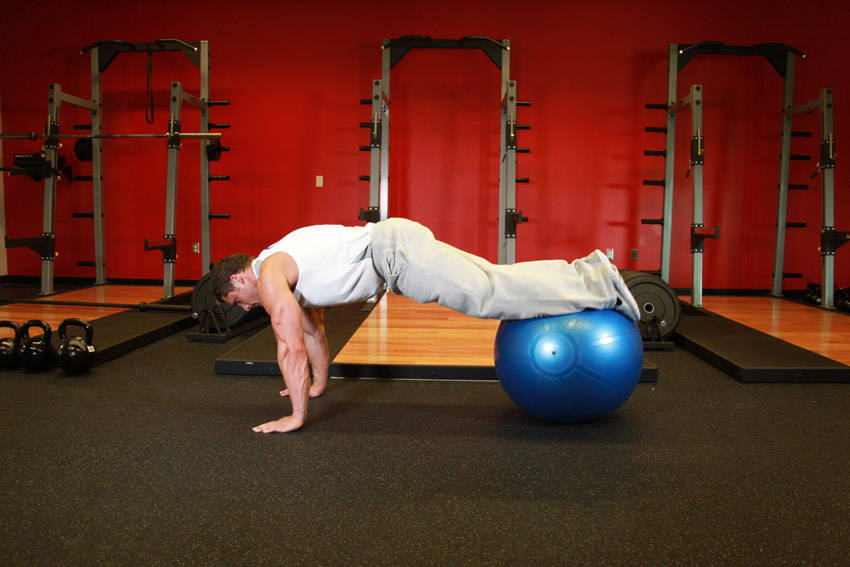
2. Exercise Ball Pull-In
82.4% MatchHow to perform this exercise
- Place an exercise ball nearby and lay on the floor in front of it with your hands on the floor shoulder width apart in a push-up position.
- Now place your lower shins on top of an exercise ball. Tip: At this point your legs should be fully extended with the shins on top of the ball and the upper body should be in a push-up type of position being supported by your two extended arms in front of you. This will be your starting position.
- While keeping your back completely straight and the upper body stationary, pull your knees in towards your chest as you exhale, allowing the ball to roll forward under your ankles. Squeeze your abs and hold that position for a second.
- Now slowly straighten your legs, rolling the ball back to the starting position as you inhale.
- Repeat for the recommended amount of repetitions.
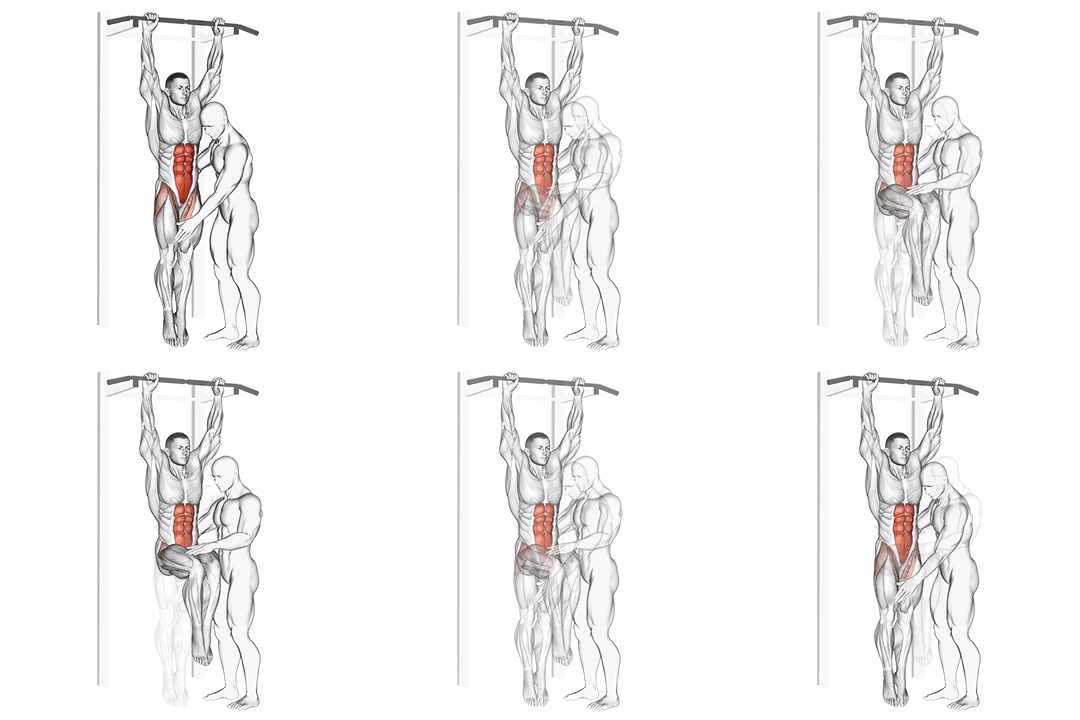
3. Assisted Hanging Knee Raise
81.2% MatchHow to perform this exercise
- Hang from a pull-up bar with your arms fully extended and your palms facing away from you.
- Engage your core muscles and lift your knees towards your chest, bending at the hips and knees.
- Pause for a moment at the top of the movement, squeezing your abs.
- Slowly lower your legs back down to the starting position.
- Repeat for the desired number of repetitions.
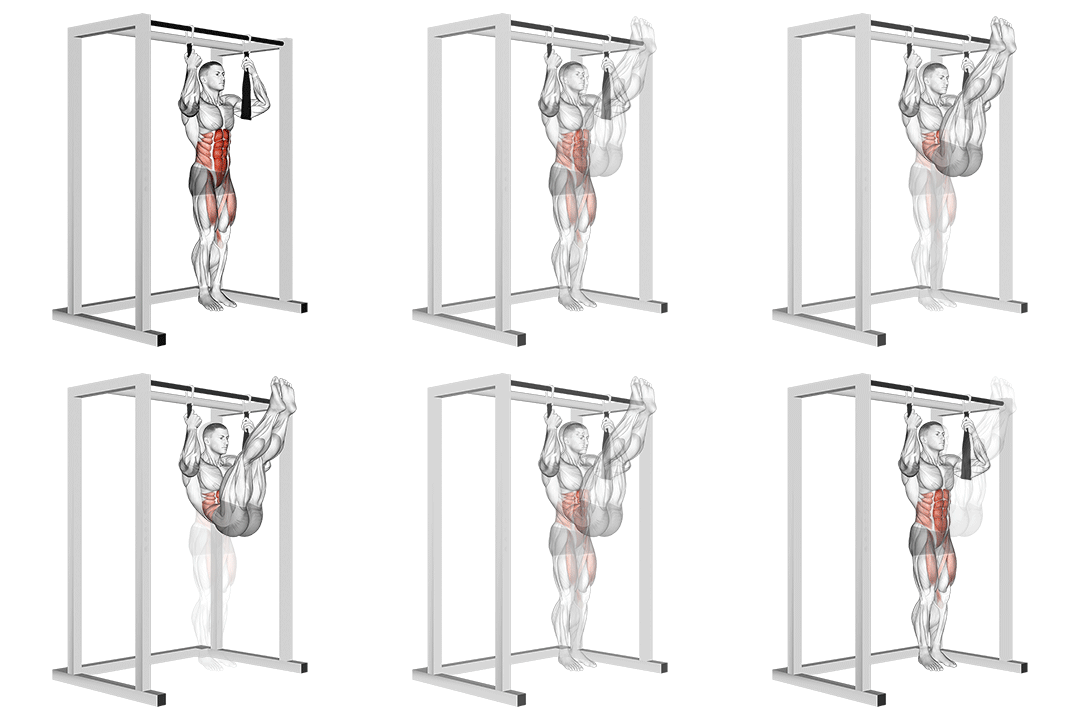
4. Arm Slingers Hanging Straight Legs
79% MatchHow to perform this exercise
- Hang from a pull-up bar with your arms fully extended and your legs straight down.
- Engage your core and lift your legs up in front of you until they are parallel to the ground.
- Hold for a moment at the top, then slowly lower your legs back down to the starting position.
- Repeat for the desired number of repetitions.
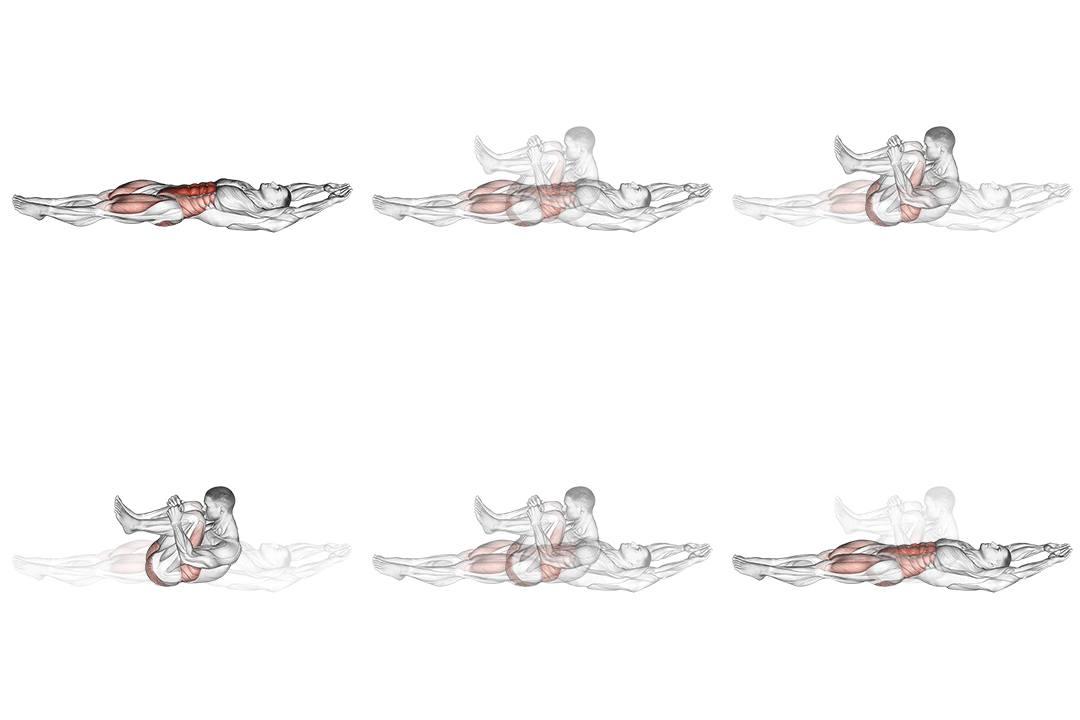
5. Cocoons
78.6% MatchHow to perform this exercise
- Lie flat on your back with your knees bent and feet flat on the ground.
- Place your hands behind your head with your elbows pointing outwards.
- Engaging your abs, slowly lift your upper body off the ground, curling forward until your torso is at a 45-degree angle.
- Pause for a moment at the top, then slowly lower your upper body back down to the starting position.
- Repeat for the desired number of repetitions.
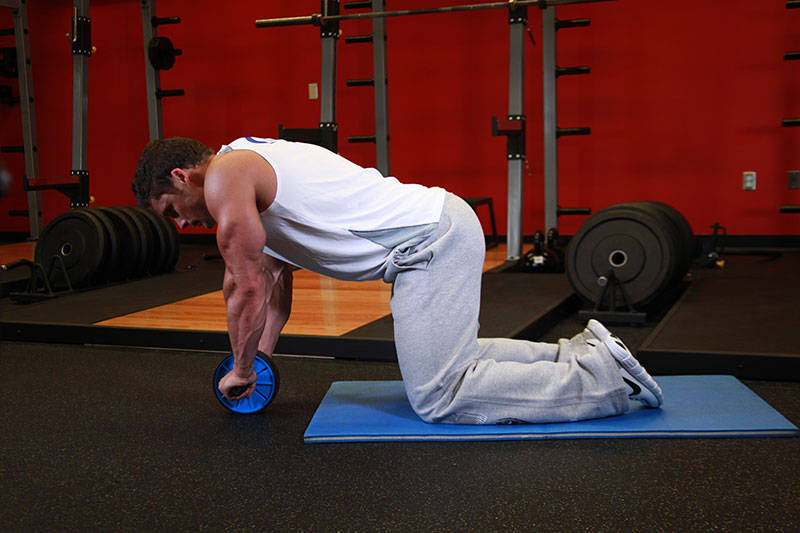
6. Ab Roller
78.2% MatchHow to perform this exercise
- Hold the Ab Roller with both hands and kneel on the floor.
- Now place the ab roller on the floor in front of you so that you are on all your hands and knees (as in a kneeling push up position). This will be your starting position.
- Slowly roll the ab roller straight forward, stretching your body into a straight position. Tip: Go down as far as you can without touching the floor with your body. Breathe in during this portion of the movement.
- After a pause at the stretched position, start pulling yourself back to the starting position as you breathe out. Tip: Go slowly and keep your abs tight at all times.
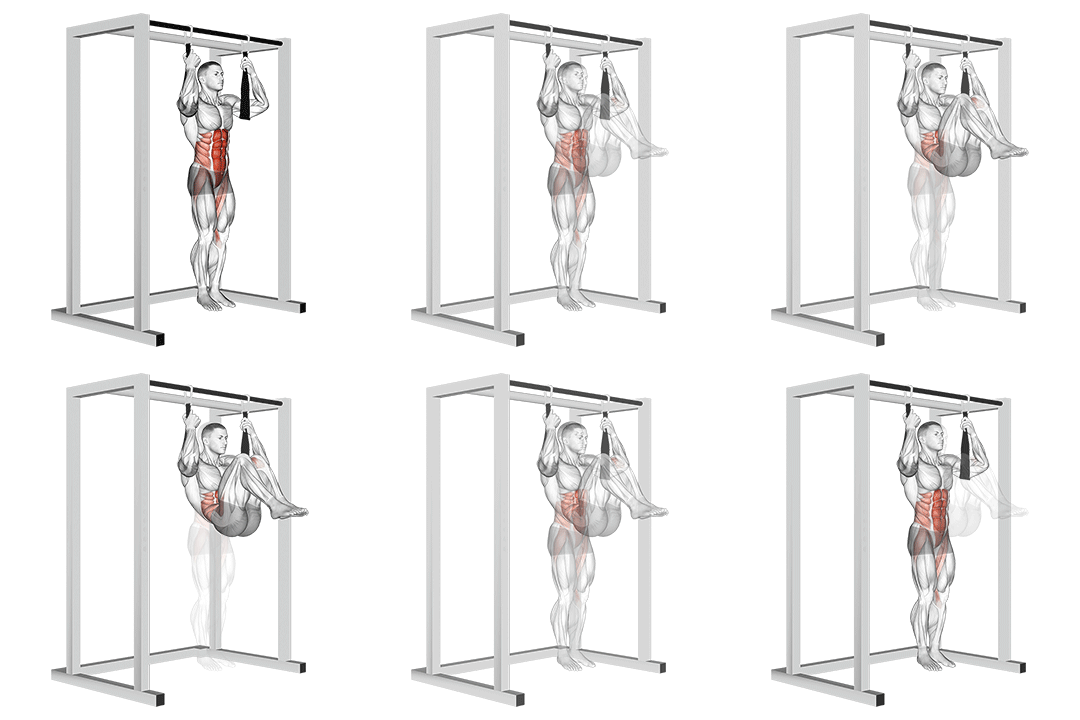
7. Arm Slingers Hanging Bent Knee Legs
77.7% MatchHow to perform this exercise
- Hang from a pull-up bar with your arms fully extended and your knees bent at a 90-degree angle.
- Engage your core and lift your knees towards your chest, bringing them as close to your elbows as possible.
- Slowly lower your legs back down to the starting position.
- Repeat for the desired number of repetitions.
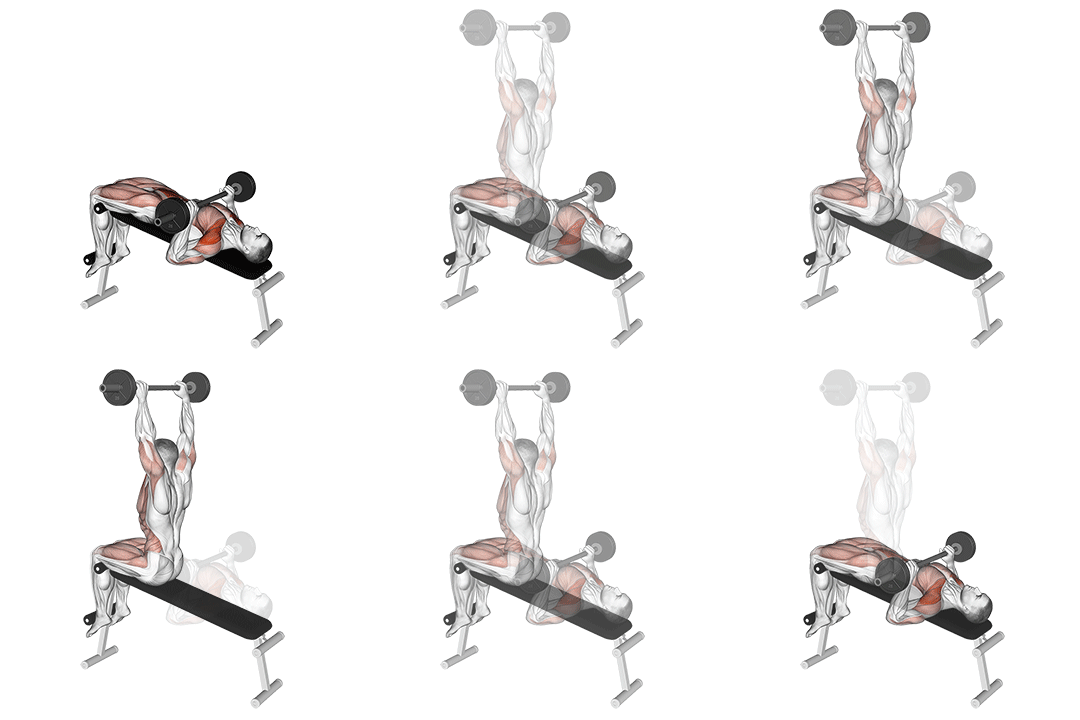
8. Barbell Press Sit-up
76.4% MatchHow to perform this exercise
- Lie flat on your back on a mat with your knees bent and feet flat on the ground.
- Hold the barbell with an overhand grip, resting it on your chest.
- Engaging your abs, slowly lift your upper body off the ground, curling forward until your torso is at a 45-degree angle.
- Pause for a moment at the top, then slowly lower your upper body back down to the starting position.
- Repeat for the desired number of repetitions.
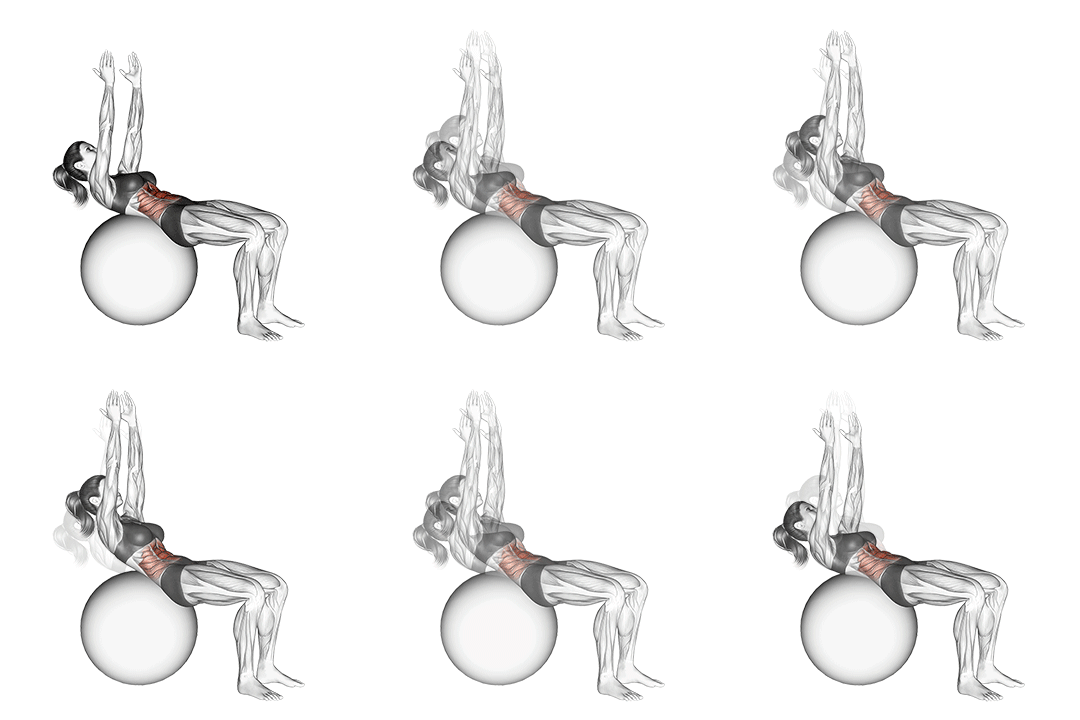
9. Crunch (on Stability Ball, Arms Straight)
76.1% MatchHow to perform this exercise
- Sit on the stability ball with your feet flat on the ground and your knees bent at a 90-degree angle.
- Lie back on the ball until your lower back is supported and your upper body is parallel to the floor.
- Place your hands behind your head or cross them over your chest.
- Engage your abs and lift your upper body off the ball, curling your shoulders towards your hips.
- Pause for a moment at the top, then slowly lower your upper body back down to the starting position.
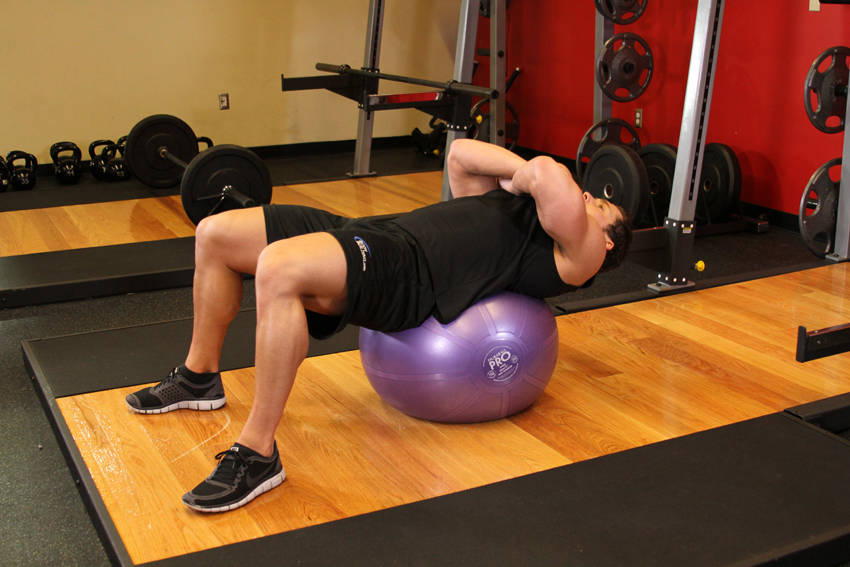
10. Exercise Ball Crunch
76.1% MatchHow to perform this exercise
- Lie on an exercise ball with your lower back curvature pressed against the spherical surface of the ball. Your feet should be bent at the knee and pressed firmly against the floor. The upper torso should be hanging off the top of the ball. The arms should either be kept alongside the body or crossed on top of your chest as these positions avoid neck strains (as opposed to the hands behind the back of the head position).
- Lower your torso into a stretch position keeping the neck stationary at all times. This will be your starting position.
- With the hips stationary, flex the waist by contracting the abdominals and curl the shoulders and trunk upward until you feel a nice contraction on your abdominals. The arms should simply slide up the side of your legs if you have them at the side or just stay on top of your chest if you have them crossed. The lower back should always stay in contact with the ball. Exhale as you perform this movement and hold the contraction for a second.
- As you inhale, go back to the starting position.
- Repeat for the recommended amount of repetitions.
Why You Might Need a Vertical Leg Raise (on Parallel Bars) Alternative
You might substitute vertical leg raises for several reasons: no access to parallel bars, limited grip strength, shoulder or wrist pain, or to reduce lumbar irritation. Alternatives let you alter hip-flexor involvement and spinal load; for example, lying leg raises remove shoulder compression while preserving rectus abdominis tension if you press your lower back to the floor. If the iliopsoas dominates, shorten the range and initiate the lift with a posterior pelvic tilt to bias the lower abs. For progression and variety, use slow eccentrics and 1–2 second isometric holds at the top to increase abdominal eccentric control and training stimulus.
How to Choose the Right Substitute
Match the substitute to your equipment, injury profile, and which muscles you want to prioritize. If you lack a bar or have weak grip, choose lying leg raises or reverse crunches to preserve sagittal hip flexion and minimize shoulder demand; cue: press the lumbar spine to the mat and start the movement with a posterior pelvic tilt. If your hips dominate, shorten the lever arm by bending the knees or use seated pike-ups to isolate the rectus abdominis. Progress logically: knee tucks → straight-leg lowers → weighted or slow negatives to increase mechanical tension safely.
Frequently Asked Questions
What muscles does Vertical Leg Raise (on Parallel Bars) work?
The exercise primarily targets the rectus abdominis and the hip flexors (iliopsoas), while the obliques and transverse abdominis stabilize the trunk. Your lats and forearms act isometrically for support, so brace your core and posteriorly tilt the pelvis to emphasize abdominal contraction.
What is the best bodyweight alternative to Vertical Leg Raise (on Parallel Bars)?
Lying leg raises are the best no-equipment bodyweight alternative because they let you isolate the rectus abdominis without shoulder or grip demand. Lie flat, press your lower back into the floor, perform a posterior pelvic tilt, and lower slowly to emphasize abdominal eccentric control.
Can I build muscle without doing Vertical Leg Raise (on Parallel Bars)?
Yes—you can build abdominal muscle using other movements and progressive overload, such as weighted leg raises, slow eccentrics, and advanced bodyweight moves like dragon flags. Emphasize controlled 3–4 second lowers and a firm posterior pelvic tilt to maximize rectus abdominis activation and hypertrophic stimulus.
More Exercise Alternatives
Find Alternatives for Any Exercise
Use our free tool to discover the best substitute exercises based on your available equipment and goals.
Try the Exercise Substitution Finder →