

10 Best Kettlebell Figure 8 Alternatives for Core Strength
The Kettlebell Figure 8 is done standing with a kettlebell. Ranked closest by our scoring: the Landmine 180's, the Kettlebell Pass Between The Legs and the Landmine 180. Two harder versions, the Double Kettlebell Windmill and the Kettlebell Bent Press, are listed below as progressions rather than swaps.
Updated Ranked by our 12-factor similarity model How it works
Original Exercise: Kettlebell Figure 8
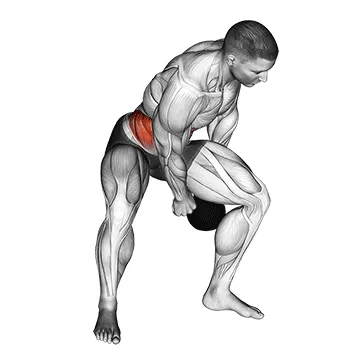
- Primary muscle
- Abs
- Equipment
- Kettlebell
- Difficulty
- Intermediate
- Type
- Compound
Secondary muscles: Shoulders, Forearms
How to perform Kettlebell Figure 8
- Stand with your feet shoulder-width apart, holding a kettlebell in one hand.
- Bend your knees slightly and hinge forward at the hips, keeping your back straight.
- Pass the kettlebell between your legs, switching hands as it reaches the back of your legs.
- As the kettlebell comes forward, pass it to the other hand between your legs.
- Continue passing the kettlebell between your legs in a figure 8 motion.
- Maintain a steady pace and engage your core throughout the exercise.
- Repeat for the desired number of repetitions.
Ranked Kettlebell Figure 8 Alternatives
10 substitutes, ranked by how closely each one matches the Kettlebell Figure 8 on movement pattern, muscles worked, equipment and body position. The higher the score, the less you change. Open "How to perform this exercise" on a card for the steps; every card title links to that exercise's own alternatives page. Harder versions are tagged as progressions and kept out of the top spot even when they score higher.
Best match 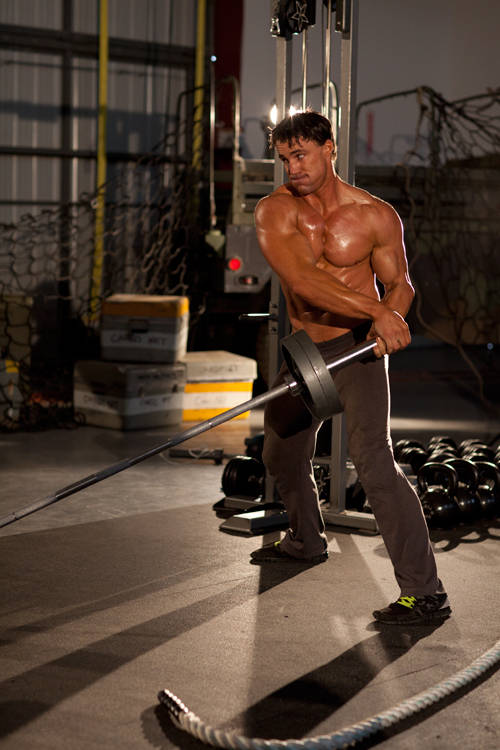
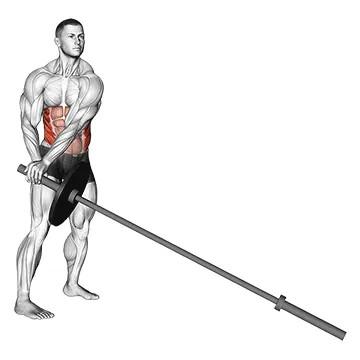
1. Landmine 180's
98% match- Abs
- Barbell
- Intermediate
- Compound
A good swap when you have a barbell to work with, and it still works the abs.
How to perform this exercise
- Position a bar into a landmine or securely anchor it in a corner. Load the bar to an appropriate weight.
- Raise the bar from the floor, taking it to shoulder height with both hands with your arms extended in front of you. Adopt a wide stance. This will be your starting position.
- Perform the movement by rotating the trunk and hips as you swing the weight all the way down to one side. Keep your arms extended throughout the exercise.
- Reverse the motion to swing the weight all the way to the opposite side.
- Continue alternating the movement until the set is complete.
Sets and reps: 3 to 5 sets of 5 to 8 reps on each side.
Why this matches
- Primary muscle: abs, the same as the Kettlebell Figure 8
- Equipment: free weights, the same as the Kettlebell Figure 8
- Body position: standing, the same as the Kettlebell Figure 8
- Balance: easier to stay steady on than the Kettlebell Figure 8
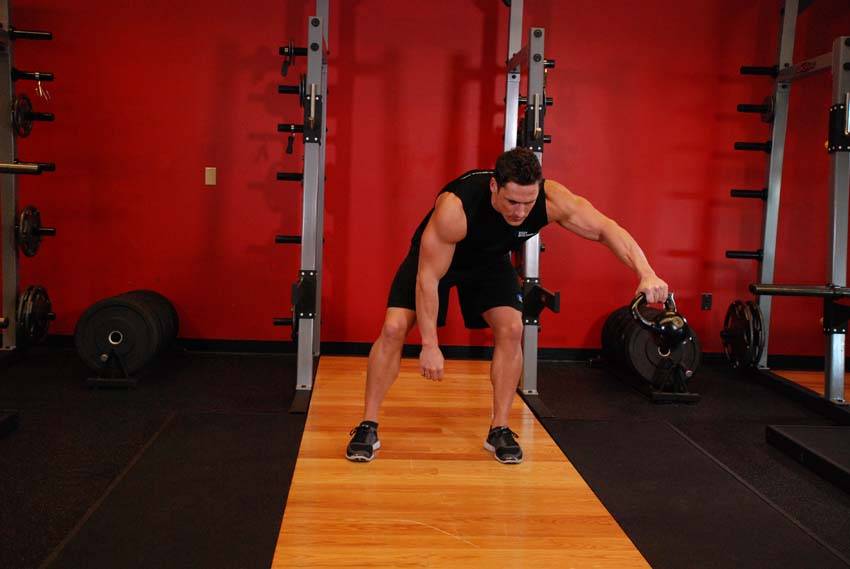
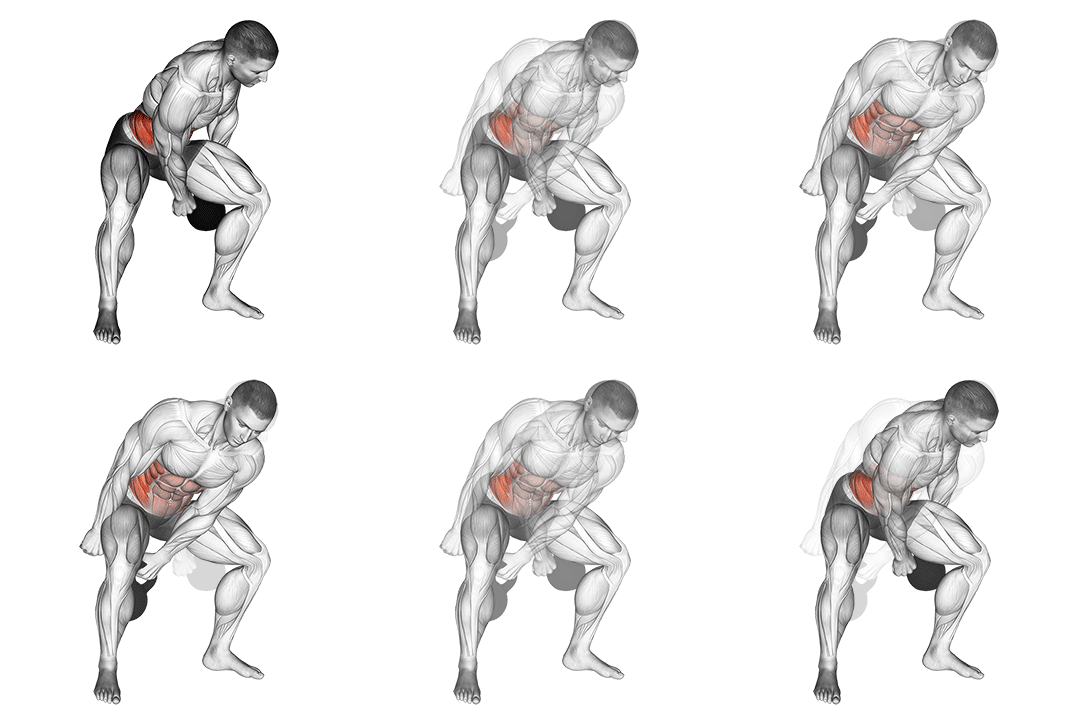
2. Kettlebell Pass Between The Legs
97% match- Abs
- Kettlebell
- Intermediate
- Compound
Pick this when you want an easier version that still works the abs.
How to perform this exercise
- Place one kettlebell between your legs and take a comfortable stance. Bend over by pushing your butt out and keeping your back flat.
- Pick up a kettlebell and pass it to your other hand between your legs, in the fashion of a "W". Go back and forth for several repetitions.
Sets and reps: 3 or 4 sets of 6 to 10 reps on each side.
Why this matches
- Primary muscle: abs, the same as the Kettlebell Figure 8
- Equipment: free weights, the same as the Kettlebell Figure 8
- Body position: standing, the same as the Kettlebell Figure 8
- Balance: easier to stay steady on than the Kettlebell Figure 8
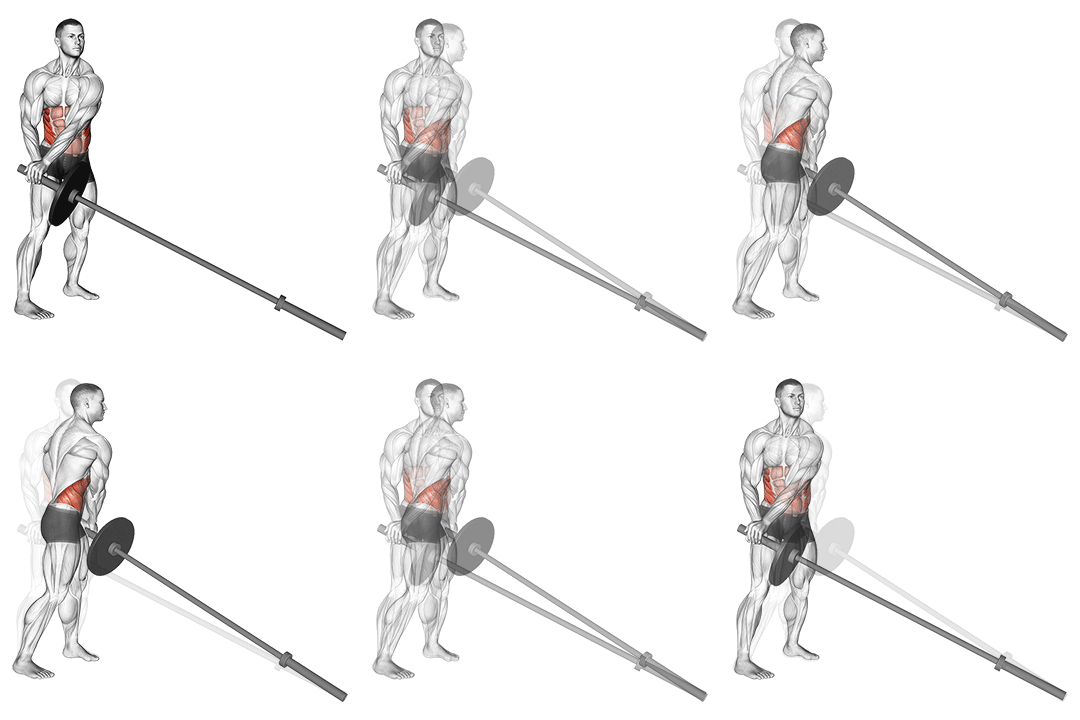
3. Landmine 180
91% match- Abs
- Barbell
- Intermediate
- Compound
How to perform this exercise
- Stand with your feet shoulder-width apart and hold the barbell with both hands in front of your chest.
- Bend your knees slightly and rotate your torso to the right, swinging the barbell down towards your right hip.
- As you reach the bottom of the movement, quickly reverse the motion and rotate your torso to the left, swinging the barbell up and across your body towards your left shoulder.
- Continue this twisting motion, alternating sides, for the desired number of repetitions.
Sets and reps: 3 to 5 sets of 5 to 8 reps.
Why this matches
- Primary muscle: abs, the same as the Kettlebell Figure 8
- Equipment: free weights, the same as the Kettlebell Figure 8
- Body position: standing, the same as the Kettlebell Figure 8
- Balance: easier to stay steady on than the Kettlebell Figure 8
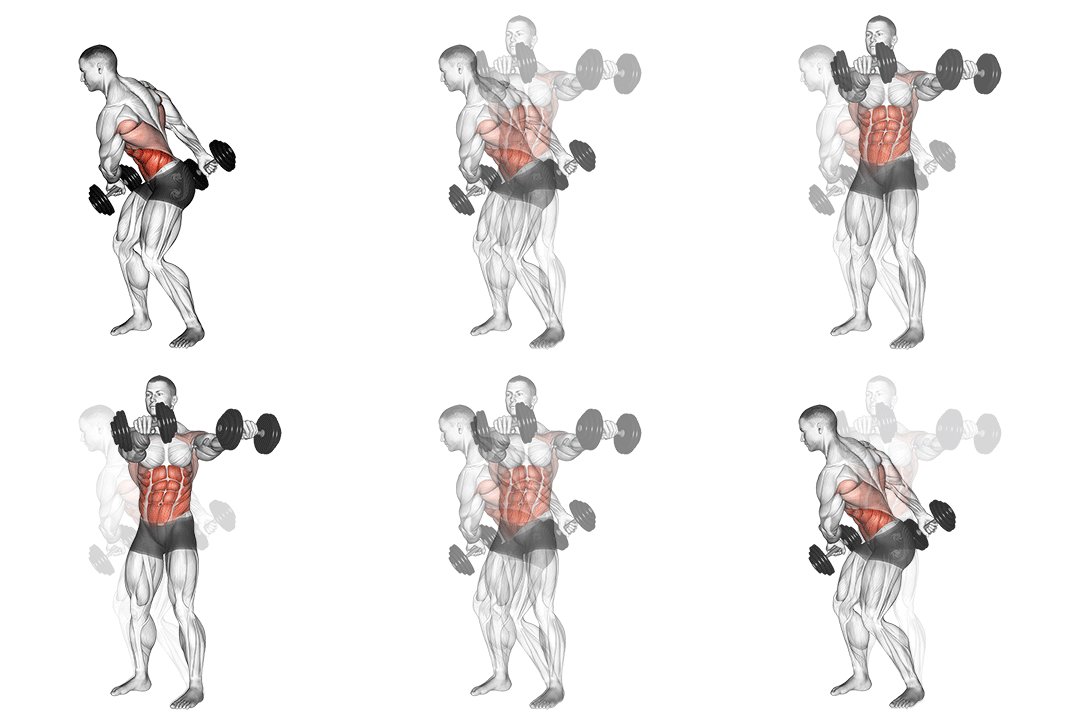
4. Spell Caster
88% match- Abs
- Dumbbell
- Intermediate
- Compound
A good swap when you have dumbbells to work with, and it still works the abs.
How to perform this exercise
- Stand with your feet shoulder-width apart and hold a dumbbell in one hand.
- Bend your knees slightly and hinge forward at the waist, keeping your back straight.
- Extend your arm with the dumbbell towards the opposite foot, rotating your torso as you do so.
- Return to the starting position and repeat on the other side.
- Continue alternating sides for the desired number of repetitions.
Sets and reps: 3 or 4 sets of 6 to 10 reps on each side.
Why this matches
- Primary muscle: abs, the same as the Kettlebell Figure 8
- Equipment: free weights, the same as the Kettlebell Figure 8
- Body position: standing, the same as the Kettlebell Figure 8
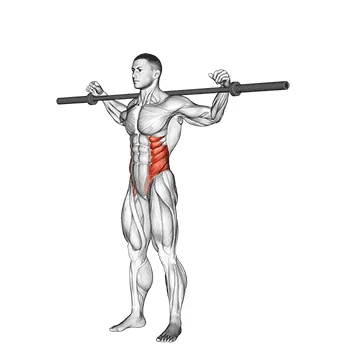
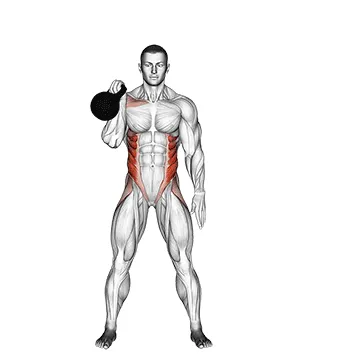
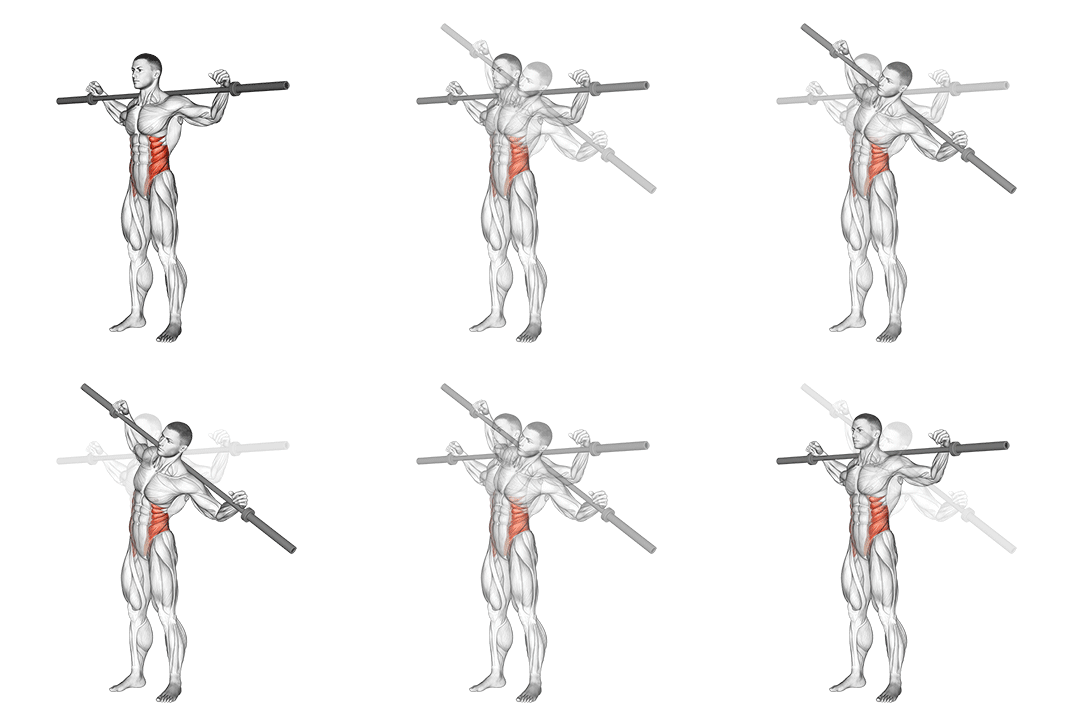
5. Barbell Side Bent
84% match- Abs
- Barbell
- Beginner
- Compound
How to perform this exercise
- Stand with your feet shoulder-width apart and hold a barbell with both hands, palms facing down.
- Keep your back straight and core engaged throughout the exercise.
- Slowly bend your torso to the right side, lowering the barbell towards your right knee.
- Pause for a moment, then return to the starting position.
- Repeat the movement on the left side.
- Continue alternating sides for the desired number of repetitions.
Sets and reps: 3 or 4 sets of 6 to 10 reps on each side.
Why this matches
- Primary muscle: abs, the same as the Kettlebell Figure 8
- Equipment: free weights, the same as the Kettlebell Figure 8
- Body position: standing, the same as the Kettlebell Figure 8
- Balance: easier to stay steady on than the Kettlebell Figure 8
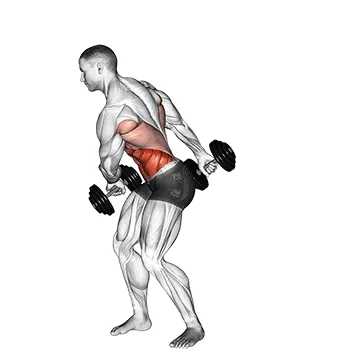
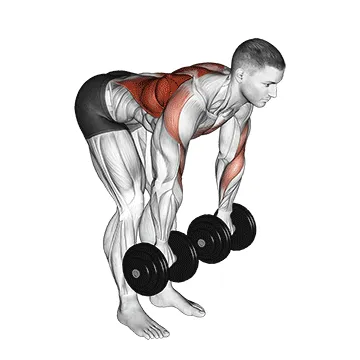
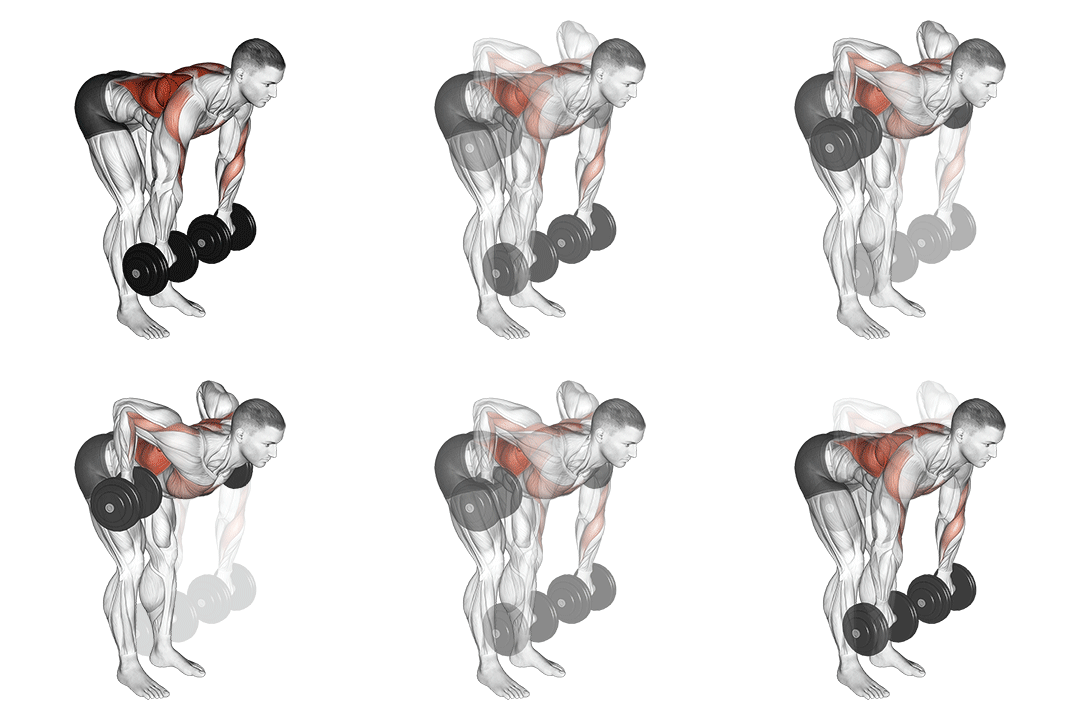
- Upper Back
- Dumbbell
- Intermediate
- Compound
A looser match: it works the upper back rather than the abs.
How to perform this exercise
- Stand with your feet shoulder-width apart, holding a dumbbell in each hand with an overhand grip.
- Bend forward at the hips, keeping your back straight and your knees slightly bent.
- Let your arms hang straight down, palms facing your body.
- Engage your core and pull the dumbbells up towards your chest, keeping your elbows close to your body.
- As you pull the dumbbells up, rotate your palms so they face away from your body.
- Squeeze your shoulder blades together at the top of the movement.
- Slowly lower the dumbbells back down to the starting position, rotating your palms back to the starting position.
- Repeat for the desired number of repetitions.
Sets and reps: 3 or 4 sets of 6 to 10 reps on each side.
Why this matches
- Primary muscle: upper back, not abs
- Equipment: free weights, the same as the Kettlebell Figure 8
- Body position: standing, the same as the Kettlebell Figure 8
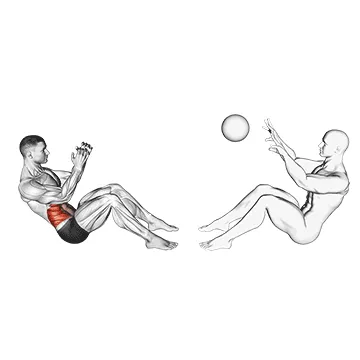
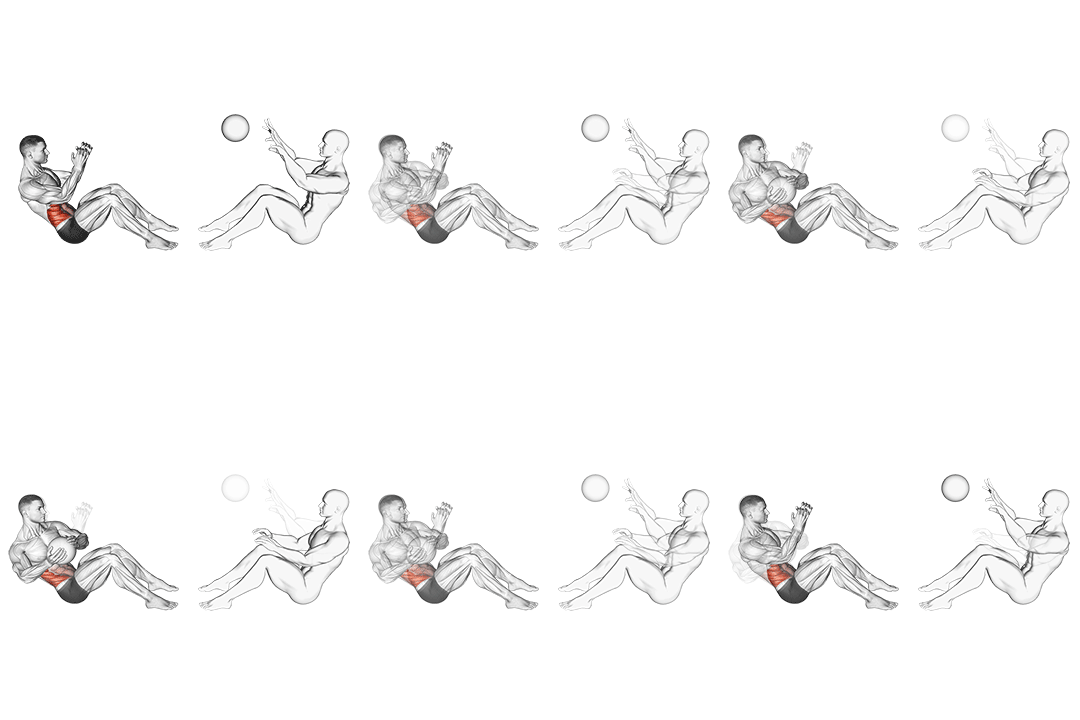
7. Assisted Motion Russian Twist
84% match- Abs
- Medicine-ball
- Intermediate
- Isolation
A good swap when you have a medicine ball to work with, and it still works the abs.
How to perform this exercise
- Sit on the ground with your knees bent and feet flat on the floor.
- Hold the medicine ball with both hands in front of your chest.
- Lean back slightly, engaging your abs and keeping your back straight.
- Slowly twist your torso to the right, bringing the medicine ball towards the right side of your body.
- Pause for a moment, then twist your torso to the left, bringing the medicine ball towards the left side of your body.
- Continue alternating sides for the desired number of repetitions.
Sets and reps: 3 sets of 10 to 15 reps on each side.
Why this matches
- Primary muscle: abs, the same as the Kettlebell Figure 8
- Equipment: free weights, the same as the Kettlebell Figure 8
- Body position: seated, not standing
- Balance: easier to stay steady on than the Kettlebell Figure 8
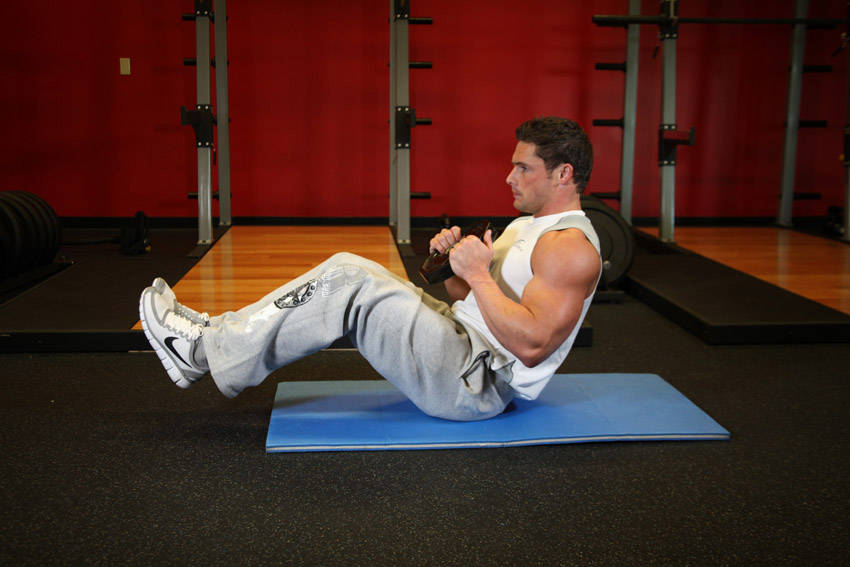
8. Plate Twist
83% match- Abs
- Other
- Intermediate
- Isolation
How to perform this exercise
- Lie down on the floor or an exercise mat with your legs fully extended and your upper body upright. Grab the plate by its sides with both hands out in front of your abdominals with your arms slightly bent.
- Slowly cross your legs near your ankles and lift them up off the ground. Your knees should also be bent slightly. Note: Move your upper body back slightly to help keep you balanced turning this exercise. This is the starting position.
- Move the plate to the left side and touch the floor with it. Breathe out as you perform that movement.
- Come back to the starting position as you breathe in and then repeat the movement but this time to the right side of the body. Tip: Use a slow controlled movement at all times. Jerking motions can injure the back.
- Repeat for the recommended amount of repetitions.
Sets and reps: 3 sets of 10 to 15 reps.
Why this matches
- Primary muscle: abs, the same as the Kettlebell Figure 8
- Balance: easier to stay steady on than the Kettlebell Figure 8
Progression
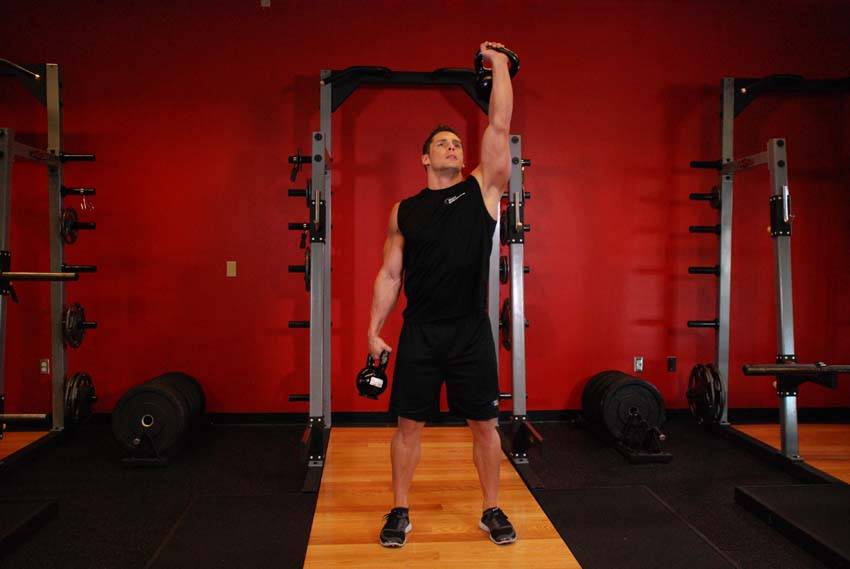
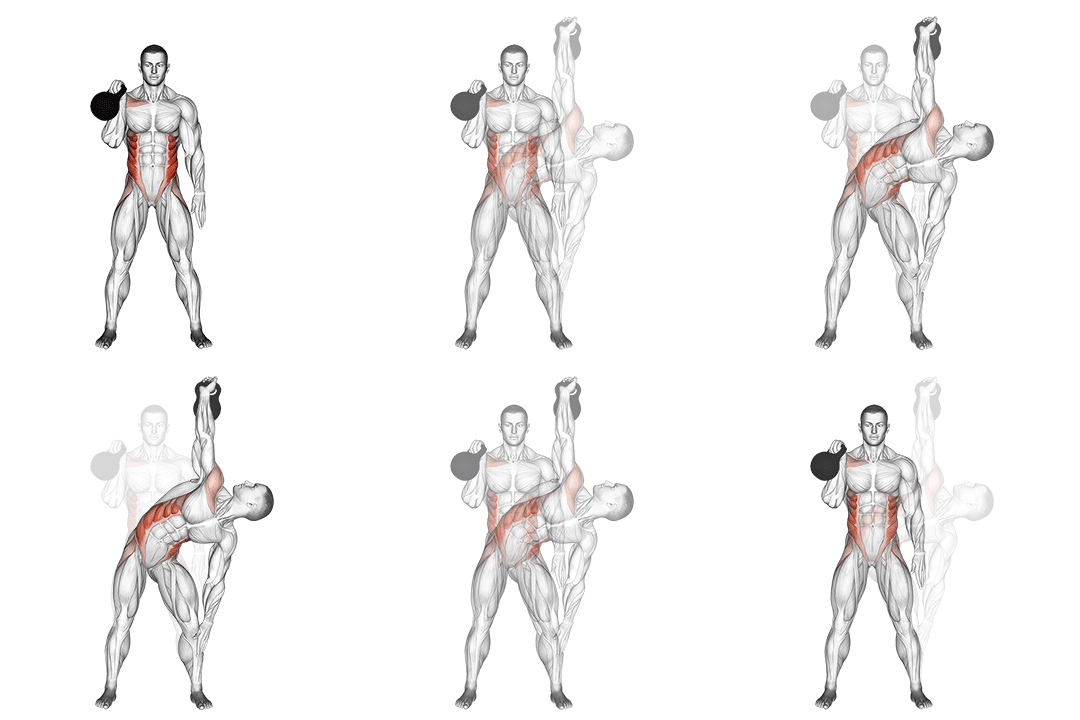
9. Double Kettlebell Windmill
82% match- Abs
- Kettlebell
- Advanced
- Compound
How to perform this exercise
- Place a kettlebell in front of your front foot and clean and press a kettlebell overhead with your opposite arm. Clean the kettlebell to your shoulder by extending through the legs and hips as you pull the kettlebell towards your shoulders. Rotate your wrist as you do so, so that the palm faces forward.
- Keeping the kettlebell locked out at all times, push your butt out in the direction of the locked out kettlebell. Turn your feet out at a forty-five degree angle from the arm with the locked out kettlebell.
- Bending at the hip to one side, sticking your butt out, slowly lean until you can retrieve the kettlebell from the floor. Keep your eyes on the kettlebell that you hold over your head at all times.
- Pause for a second after retrieving the kettlebell from the ground and reverse the motion back to the starting position.
Sets and reps: 3 to 5 sets of 5 to 8 reps.
Why this matches
- Primary muscle: abs, the same as the Kettlebell Figure 8
- Equipment: free weights, the same as the Kettlebell Figure 8
- Body position: standing, the same as the Kettlebell Figure 8
Progression
10. Kettlebell Bent Press
82% match- Abs
- Kettlebell
- Advanced
- Compound
How to perform this exercise
- Stand with your feet shoulder-width apart, holding a kettlebell in your right hand.
- Bend your knees slightly and press the kettlebell overhead with your right arm, keeping your elbow locked.
- Rotate your torso to the left, shifting your weight onto your left foot.
- Bend your left knee and lower your torso towards the ground, keeping your right arm extended overhead.
- As you lower, keep your eyes on the kettlebell and your chest lifted.
- Once your left hand touches the ground, push through your left foot and straighten your left leg, driving your hips forward.
- As you drive your hips forward, use your core and right arm to press the kettlebell back up to the starting position.
- Repeat for the desired number of repetitions, then switch sides.
Sets and reps: 3 to 5 sets of 5 to 8 reps on each side.
Why this matches
- Primary muscle: abs, the same as the Kettlebell Figure 8
- Equipment: free weights, the same as the Kettlebell Figure 8
- Body position: standing, the same as the Kettlebell Figure 8
Why You Might Need a Kettlebell Figure 8 Alternative
You may need substitutes for shoulder pain, lower‑back irritation, lack of kettlebell access, or to emphasize a different pattern. The figure 8 combines anti‑rotation core work with hip drive and shoulder stability; it loads the obliques, transverse abdominis, and glutes through transverse and sagittal coupling. If rotation under load causes lumbar shear, pick carries or controlled chops that limit transverse torque. For equipment limits, use band‑resisted chops or single‑leg anti‑rotation holds to maintain oblique activation. Cue: keep ribs down, maintain a neutral pelvis, and exhale on exertion to improve deep core recruitment.
Kettlebell Figure 8 FAQ
What muscles does Kettlebell Figure 8 work?
The kettlebell figure 8 targets the obliques and transverse abdominis for transverse‑plane control, plus the rectus abdominis for flexion. It also recruits glutes and hip extensors during the hip drive and requires shoulder girdle stability from the deltoids and lats. Cue: brace the core and move through the hips, not by flinging the torso.
Can I build muscle without doing Kettlebell Figure 8?
Yes. Focus on progressive overload and time under tension with alternatives that load the same motor patterns, progress from carries to loaded chops or windmills. Cue: slow the eccentric, hold end ranges, and prioritize bracing to maximize oblique and transverse abdominis activation for hypertrophy.
Find Alternatives for Any Exercise
Search the exercise database and filter the ranked substitutes by the equipment you own.
Similarity scores compare exercise metadata such as movement pattern, muscles, equipment and body position. They are not a safety rating or a check that you own the equipment. Learn about our methodology