

Every person would want a chiseled six-pack if given a choice. However, a lack of gym access and time constraints keep most from starting their transformation journey.
As a personal trainer with almost two decades of experience, I have tried almost every bodyweight core exercise under the sun, but I always return to my three trusted moves (hollow body holds, L-sits, hanging windshield wipers) when I want to achieve visible results in a short time for myself or my clients.
These moves train your core with brutal intensity, including the rectus abdominis, obliques, and transverse abdominis, and demand strength, balance, and grit.
In this article, I spill the beans on how you can squeeze the most out of these three highly effective moves to achieve visible results consistently. You’ll also learn how to prioritize endurance, strength, and muscle definition with these advanced core exercises while training at home.
Why Bodyweight Core Training Works

When I first started training, I thought that core exercises were just for aesthetics. I have no qualms in admitting I was dead wrong.
Bodyweight core exercises are incredibly versatile. You can do them anywhere, at any time, and scale them according to your own needs. The right combination of these exercises enhances your functionality and overall work capacity and spikes fat expenditure by boosting metabolism, revealing your hard-earned definition.
Contrary to what many people think, you don’t need cable crunches to carve a defined core. Advanced bodyweight moves like the hollow body hold, L-sit, and hanging windshield wipers challenge stability, endurance, and strength, rivaling any barbell or machine move.
They also demand high muscle engagement, razor-sharp coordination, and rock-solid balance. However, your results will ultimately come down to your exercise selection and workout programming.
Performing the same exercises over and over again can limit your growth potential.
I leveraged my experience working with athletes across varying experience levels to devise a core training routine that boosts definition without equipment.
Exercise 1: Hollow Body Hold
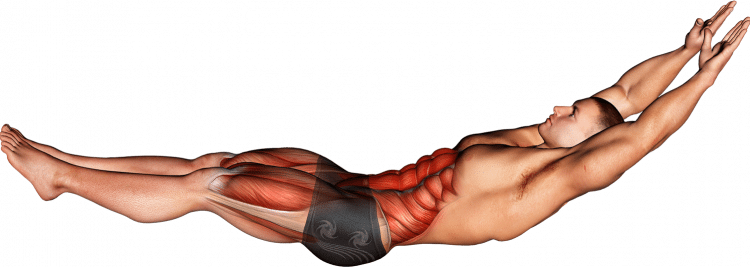
Most people think that they have to burn themselves out with high-intensity exercises to build a chiseled physique. Endless burpees, mountain climbers, and decline crunches are their idea of an effective core workout.
However, this is a dogma.
Your body primarily needs three key factors to promote hypertrophy. These are mechanical tension, muscle damage, and metabolic stress.
Static exercises like hollow body holds can deliver on all three of these fronts, helping you achieve a cover photo-worthy six-pack. Also known as isometric exercises, these involve holding a position for an extended period without any movement at the joints.
Exercises like hollow body holds are incredibly effective for achieving peak muscle contractions and generating force without significant changes in muscle length. This makes them incredibly effective for people dealing with joint issues or undergoing rehab.
This unassuming, gymnastics-inspired move targets the entire core, particularly the rectus abdominis, transverse abdominis, and the obliques.
I tell my clients to imagine forming a banana shape with their body. You must lift your shoulders and legs while keeping your lower back glued to the floor. Hold this for a couple of seconds, and you’ll experience full-body tension like never before.
Unlike isolation exercises like crunches, hollow body holds engage your core holistically, forging overall strength and stability. This can improve your performance in day-to-day activities, workouts, and sports.
How To Perform:
- Lie flat on your back with your arms extended overhead and legs straight and together.
- Engage your core by pulling your belly button toward your spine. Think about bracing for a punch from Conor McGregor.
- Lift your arms and shoulders off the ground, aiming for 6-12 inches. Then, lift your legs to the same height. Advanced trainers can raise all their limbs simultaneously.
- Actively press your lower back into the floor to ensure optimal spinal alignment.
- Hold this position for as long as possible (at least 15 seconds).
Coach Tip: Breathe steadily throughout the exercise and avoid holding your breath. Stop the set and reset if you notice your form slipping.
Beginners can perform the bent-knee variation of this exercise, which involves tucking your knees toward your chest. This reduces the lever length, easing this strain on your core. Alternatively, keep your arms at your sides to lower the training intensity.
Common Mistakes To Avoid:
Since this exercise looks relatively straightforward, many people jump right in without spending enough time learning the correct technique. In my experience, beginners usually arch their lower back, robbing their core of tension. Consciously press your spine into the floor throughout the exercise to minimize strain risk.
Also, don’t lift your legs too high, as it can hamper core engagement. Keep them within the sweet spot to intensify the burn and unlock your maximum fitness potential.
Many of my clients report improved posture and reduced lower back pain after performing this exercise for 8-12 weeks.
Exercise 2: L-Sit
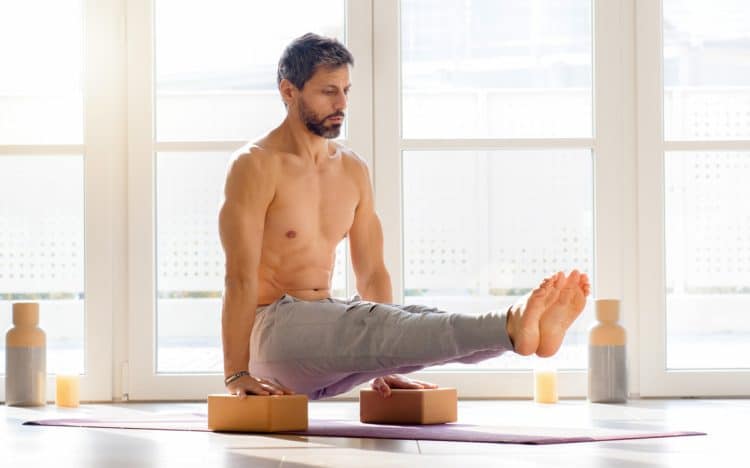
The thing about advanced core training exercises is that most of them look super simple until you try them.
I’ve lost count of how many people I’ve seen fail trying the L-sit for the first time without any prep.
The L-sit is a gymnastic move that demands a balance of strength and balance. It involves lifting your body off the floor with your legs extended parallel. This move fires up your core and hip flexors and targets the stubborn lower rectus abdominis muscles (lower belly) along with the transverse abdominis.
You’ll also feel your obliques and quads light up while you hold this position. This move can help build endurance while improving your ab aesthetics and enhancing core stabilizer recruitment, improving your overall balance and functionality.
Making this exercise a part of your arsenal will help tighten your waistline and boost core stabilizer engagement.
Many people underplay the efficiency of this exercise in improving focus and building mental resilience and discipline. You’ll experience all your muscles firing on all cylinders as soon as you lift off the floor. Your mind will tell you to quit as your abs are flushed with lactic acid, but you must resist this temptation and complete the exercise while sticking to a picture-perfect form.
Step-by-Step Guide:
I recommend that beginners start with the parallel bar variation, as it gives you more wiggle room, and the neutral grip position can help generate more power. Intermediate and advanced trainers can go for the floor variation. We’ll stick to the parallel bar variation for this example.
- Sit on the floor with a pair of parallel dip/push-up bars beside your hips.
- Grab the handles in the center with your palms facing your body.
- Engage your core and drive your hands into the dip handles to lift your body while keeping your legs straight and parallel to the ground.
- Maintain a neutral spine and avoid leaning.
- Hold this position for 10-20 seconds while breathing steadily.
Mistakes To Avoid
Some exercisers tend to round their shoulders and hunch their backs while performing this exercise, assuming it will make things easier. However, doing this will automatically drive your heels toward the floor, throwing you off balance.
Avoid holding your breath during this exercise as it can sap your energy, negatively affecting your training performance.
Modifications for Beginners
I’ll be the first to admit that L-sits are a very challenging exercise and come with a steep learning curve. Most trainers must start with a scaled-down variation until they build the necessary core strength. Here are the two variations I recommend:
- Tuck L-Sit: Pull your knees toward your chest to ease core demand. Then, lift your hips off the ground.
- Single-Leg L-Sit: This more challenging variation involves extending one leg straight while tucking the other. Alternate the sides between sets.
Beginners should aim for a 10-second hold and gradually increase the hold time to 60 seconds. Increasing the time under tension is your key to unlocking maximum core strength and endurance gains. (1)
Also, as you get better at this exercise, try to lift your legs slightly higher to increase the tension on your core muscles.
Exercise 3: Hanging Windshield Wipers
In my experience, hanging ab exercises are some of the most effective as they isolate the target muscles with precision, ensuring you get the best bang for your training buck.
The side-to-side motion of the hanging windshield wipers recruits virtually every midline muscle tissue fiber, particularly the obliques and transverse abdominis, carving them into a work of art. It’s not just about aesthetics; this move also builds a core that powers every twist and turn in your daily life and training.
I must also add that this exercise demands significant grip strength if you’re aiming for a full-send effort.
Begin this exercise by gripping a pull-up bar with both hands using an overhand grip. Your body should be in a straight line from hands to toes in the starting position. Engage your core and hinge at your hips to raise your legs to 90 degrees, keeping them straight and together.
Rotate your legs to one side in a slow, controlled arc and stop just before your hips twist. Then, reverse the motion to return to the starting position and repeat on the other side. Move like a windshield wiper for 8-12 reps.
Scaling This Exercise
Windshield wipers in their full glory are no joke. They require a significant amount of time and commitment to perfect. Beginners can start with the bent-knee variation, as the shorter levers reduce core and grip demand.
You could also perform this exercise while lying on the floor with your legs raised straight. Then, rotate from side to side to mimic the windshield motion.
However, there are a few common errors that I routinely encounter that limit your results.
First, avoid swinging your legs uncontrollably, as momentum removes tension from the target muscles and transfers it to supporting groups, like the upper back. Employ a slow and controlled motion to maximize target muscle fiber stimulation and subsequent adaptations.
Progression Tips
Progressive overload is the name of the game when it comes to making consistent progress. Here are a few ways to do it:
- Increase the training volume: You could do this by doing more sets and reps for this exercise. This is one of the best ways to maximize endurance.
- Add a hold: Pause for 1-2 seconds at each side to spike time under tension.
- Extend the range of motion: Bring your legs closer to parallel with the pull-up bar and rotate in this position for a deeper burn.
Building a Routine Around These Moves
Here is a sample workout you can try today:
| Exercise | Sets | Time | Rest |
| Hollow Body Hold | 4 | 20-30 sec hold | 45 sec |
| L-Sit Progression | 3 | 15-20 sec hold | 60 sec |
| Hanging Windshield Wipers | 3 | 10-12 sec hold | 60 sec |
Adapt this workout according to your current fitness level and training objectives.
Nutrition and Lifestyle for Visible Core Results
Training is only half the equation when it comes to carving a shredded six-pack. You must also nail your diet and recovery programs.
Use this TDEE calculator to determine your ideal daily calorie intake and then divide it into three to five meals to ensure your muscles get a constant supply of nutrients throughout the day. Most people must enter a calorie deficit, which involves expending more calories in a day than they consume, to burn off the extra fat and reveal muscle definition and separation.
Drink at least a gallon of water daily to limit the risk of dehydration and the negative side effects that come with it.
Conclusion
You don’t need weights or fancy training equipment to build a Greek god-like midline. A personalized training routine with hollow body holds, L-sits, and windshield wipers done 3-4 times a week can deliver the desired results within three to five months.
Consistency and dedication are the most crucial factors for success during this program. Start small and gradually increase the training volume, intensity, and frequency as you gain more experience. Best of luck!
References:
- Burd NA, Andrews RJ, West DW, Little JP, Cochran AJ, Hector AJ, Cashaback JG, Gibala MJ, Potvin JR, Baker SK, Phillips SM. Muscle time under tension during resistance exercise stimulates differential muscle protein sub-fractional synthetic responses in men. J Physiol. 2012 Jan 15;590(2):351-62. doi: 10.1113/jphysiol.2011.221200. Epub 2011 Nov 21. PMID: 22106173; PMCID: PMC3285070.