



A 12-hour fast, also called 12:12 intermittent fasting, means you eat all your food within 12 hours and go without food for the other 12. Most of the fast happens while you sleep. If you finish dinner at 8 PM and eat breakfast at 8 AM, you have done it.
It is the easiest way to start intermittent fasting, and it is likely safe for most healthy adults. (1) On its own, though, it is a small change for many people. Below is what happens in your body at 12 hours, whether 12:12 is enough to lose weight, and how to move up to longer fasts if you want to.
A Simple 12-Hour Fasting Schedule
| If your last meal ends at | Your fast ends at | Good for |
|---|---|---|
| 6 PM | 6 AM | Early risers, early dinners |
| 7 PM | 7 AM | Most work schedules |
| 8 PM | 8 AM | A typical family dinner time |
| 9 PM | 9 AM | Late dinners, late breakfasts |
Pick the one that fits your day and keep it the same every day. Then stop eating after dinner: no late snacks, no drinks with calories. To see the times for any start, use our intermittent fasting calculator.
During the fast you can have water, black coffee and plain tea. A squeeze of lemon in water is fine too (see lemon water and fasting). Anything with real calories, including milk in your coffee, breaks the fast. Not sure about something? Check our what breaks a fast tool.
What Happens in Your Body After 12 Hours Without Food
For the first hours after a meal, your body runs on the food you just ate and on glucose stored in your liver (glycogen). As those stores run down, it starts burning more fat and turning some of it into ketones. Researchers call this the “metabolic switch”. It happens somewhere between 12 and 36 hours after your last meal, depending on how much glycogen you started with and how active you are. (2)
So at 12 hours you are at the start of that switch, not deep into it. That is the honest difference between 12:12 and longer fasts like 16:8: a 16-hour fast spends more time in the fat-burning phase.
Is a 12-Hour Fast Enough to Lose Weight?
It can be, but not because of the 12 hours themselves. You lose weight when you eat fewer calories than you burn. A 12-hour window helps mainly by cutting out late-night snacks and drinks, which are an easy place to save calories.
If you already eat dinner and then nothing until breakfast, 12:12 changes little, and you will need to eat less overall or move to a longer fast to see a difference. If you usually snack in the evening, closing the kitchen after dinner can make a real difference on its own.
Your body burns about the same number of calories during a 12-hour fast as it would otherwise; the fast doesn’t speed up your metabolism. Find your daily calorie burn with our TDEE calculator.
For a sense of scale: eating about 500 calories a day less than you burn adds up to roughly 3,500 calories a week, or about 1 pound of weight loss. Our calorie deficit calculator works out the right number for you.
12-Hour vs 14-Hour vs 16-Hour Fast
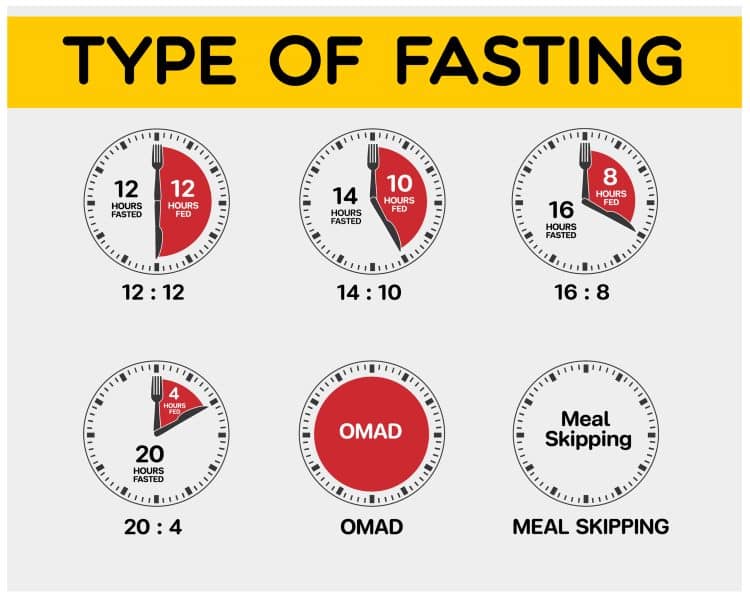
| Schedule | Fast | Eating window | What it’s like |
|---|---|---|---|
| 12:12 | 12 hours | 12 hours | Easiest. Mostly overnight; cuts late snacks. |
| 14:10 | 14 hours | 10 hours | A small step up: breakfast a little later or dinner a little earlier. |
| 16:8 | 16 hours | 8 hours | The most popular schedule. Usually means skipping breakfast. |
Start with 12:12. When it feels easy, push breakfast back by an hour every few days until you reach 14 or 16 hours. Longer options like OMAD (one meal a day) and the 5:2 diet are a much bigger step. Compare all the schedules side by side in our fasting protocols, and see which suits your age in our intermittent fasting by age chart.
Benefits of a 12-Hour Fast
- Fewer late-night calories. Closing the kitchen after dinner is the main way 12:12 helps with weight.
- An easy habit to keep. Most of the fast is sleep, so it rarely feels like fasting.
- A first step to longer fasts. It gets you used to a set eating window before you try 14:10 or 16:8.
Studies of longer daily fasts have found better blood sugar, insulin and blood pressure in some people, mostly alongside weight loss. (2) How much a plain 12-hour fast adds on its own is less clear.
What to Eat in Your 12-Hour Eating Window
There are no banned foods on 12:12, but what you eat still decides your results. Build meals around protein, vegetables, fruit, whole grains and healthy fats, and keep sweets and ultra-processed snacks for occasional treats. Vegetables with very few calories, like the ones in our list of zero calorie foods, help you stay full.
Good ways to break a 12-hour fast include eggs, Greek yogurt with fruit, oats, or wholegrain toast with smoked salmon.
Who Should Not Do a 12-Hour Fast
A 12-hour overnight fast is gentle, but talk to your doctor before any fasting routine if you:
- Have diabetes or take medication that lowers blood sugar
- Are pregnant or breastfeeding
- Are under 18
- Have, or have had, an eating disorder
FAQs
Is fasting for 12 hours enough?
For a first fasting habit, yes. For weight loss it is enough only if it also lowers how much you eat, for example by cutting out evening snacks. For more of the fat-burning phase, work up to 14 or 16 hours.
How many calories do I burn if I fast for 12 hours?
About the same as on any other half day: roughly half your daily calorie burn, mostly while you sleep. Fasting itself doesn’t raise it.
Is it good to go 12 hours without eating?
For most healthy adults, yes. An overnight gap of 12 hours is common and likely safe. (1) People with diabetes or other conditions should check with their doctor first.
Should I skip breakfast or dinner?
On 12:12 you usually skip neither: you just stop eating after dinner. If you move to longer fasts, choose whichever meal is easier for you to drop and keep it the same every day.
Is a 12-hour fast the same as fasting before a blood test?
Many blood tests ask for 8 to 12 hours without food, so a 12:12 schedule often covers it. Always follow your lab’s instructions, including whether you may drink black coffee.
The Bottom Line
A 12-hour fast is the simplest form of intermittent fasting: stop eating after dinner and wait until breakfast. It is a good habit and an easy first step, especially if it ends late-night snacking. For bigger results, pair it with eating a little less, or work up to 14:10 or 16:8.
References
Fitness Volt is committed to providing our readers with science-based information. We use only credible and peer-reviewed sources to support the information we share in our articles.
- NIH News in Health. To Fast or Not to Fast. December 2019.
- Anton SD, Moehl K, Donahoo WT, et al. Flipping the Metabolic Switch: Understanding and Applying the Health Benefits of Fasting. Obesity. 2018;26(2):254-268.






Can I take medication during the fasting? Period.
Hi Armond, thanks for reaching out with your question. When it comes to taking medication during a 12-hour fast, it’s crucial to follow medical advice. While fasting typically involves abstaining from caloric intake, medications may not necessarily break the fast. However, this can depend on the type of medication and your individual health circumstances. It’s best to consult your healthcare provider for guidance on how to manage your medication regimen while fasting to ensure both the effectiveness of your fast and your health safety. Good luck!
I have just signed up with the Me fasting program don’t know much about it . Thank you for your article I learned alot. I will be starting the 12/12 fasting program in the morning Im confused im told it’s good to start eating window at 8:00 am-8:00 pm and start the 12 hour fast while you sleep. How is that fasting if your sleeping and not eating? Then you have the opportunity the next morning to have all 3 meals. Is it the diet change? Wouldn’t be better to skip dinner. Please help do i have this all wrong?