
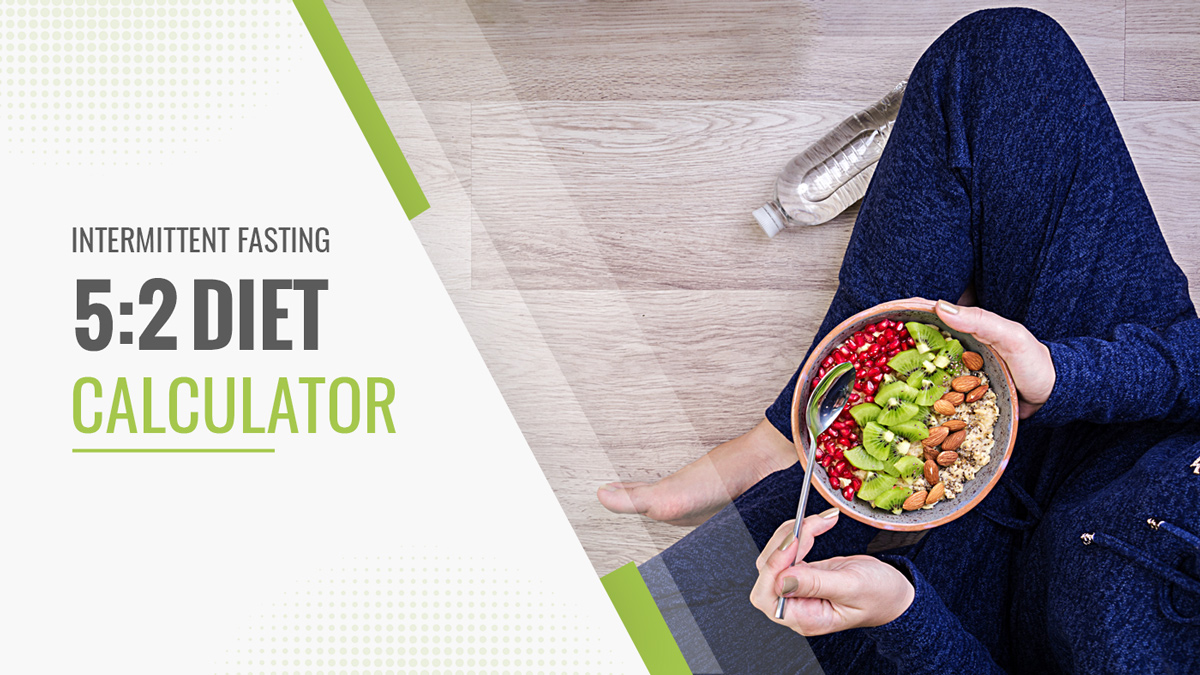
5:2 Diet Calculator
Calculate your fast day and normal day calories for the 5:2 diet
Related Calculators
Medical Disclaimer: This calculator provides estimates for educational purposes only and does not constitute medical advice. Intermittent fasting is not appropriate for everyone. Do not fast if you are pregnant or breastfeeding, under 18 years of age, have a history of eating disorders, or have been diagnosed with Type 1 diabetes. If you take medications (especially insulin or blood pressure medication), have any chronic health conditions, or are recovering from surgery, consult your physician before beginning any fasting protocol. If you experience chest pain, fainting, persistent dizziness, or heart palpitations during a fast, stop immediately and seek medical attention.
How to Use the 5:2 Diet Calculator
- Enter your stats — Provide your age, weight, height, sex, and activity level. The calculator determines your total daily energy expenditure (TDEE) for normal eating days.
- Set your fasting day calories — The standard 5:2 protocol recommends 500 calories for women and 600 calories for men on fasting days. The calculator lets you adjust within a safe range.
- Choose your fasting days — Select which two days of the week you will restrict calories. Non-consecutive days (such as Monday and Thursday) are generally recommended.
- Review your weekly plan — Get a summary of your weekly calorie intake, projected weekly deficit, and estimated timeline for your weight management goals.
Understanding the 5:2 Diet Protocol
The 5:2 diet, popularized by Dr. Michael Mosley, is a form of intermittent fasting where you eat normally for five days per week and restrict calorie intake to approximately 500 to 600 calories on two non-consecutive days. Unlike daily time-restricted eating, the 5:2 approach focuses on calorie reduction rather than meal timing, making it a flexible option for people who find daily fasting windows too restrictive.
Clinical research has shown the 5:2 protocol to be effective for weight management. A study published in the British Journal of Nutrition found that intermittent calorie restriction produced similar weight loss to continuous calorie restriction over 6 months, with some evidence of better insulin sensitivity improvements. The psychological advantage is that adherents only need to exercise discipline two days per week, knowing they can eat normally the other five.
On fasting days, food choices should prioritize protein and fiber-rich vegetables to maximize satiety within the calorie limit. Spreading calories across two small meals (such as a late breakfast and early dinner) or consuming them in a single meal are both viable approaches. Staying well-hydrated with water, herbal tea, and black coffee helps manage hunger on restricted days.
Key Takeaways
- The 5:2 diet creates a weekly calorie deficit of approximately 3,000 to 4,000 calories, supporting a weight loss rate of roughly 1 pound per week.
- Fasting days should be non-consecutive to avoid excessive fatigue and to support adherence.
- Normal eating days mean eating to maintenance, not overeating to compensate for fasting days.
- Protein-rich foods on fasting days help preserve muscle mass and control hunger.
- The 5:2 approach may be easier to maintain socially since most days involve normal eating patterns.
Frequently Asked Questions
Can I choose any two days for fasting?
Yes, you can pick whichever days fit your schedule best. Most practitioners recommend non-consecutive days (for example, Tuesday and Friday) to avoid two consecutive days of low energy. Keeping the same days each week helps establish a routine.
What should I eat on the 500/600 calorie fasting days?
Focus on lean protein (chicken breast, fish, eggs), non-starchy vegetables (broccoli, spinach, cauliflower), and small portions of complex carbohydrates. Avoid processed foods and sugary items, as they provide little satiety for the calorie cost. Many people find that two small meals work better than three tiny ones.
Will I feel too hungry to function on fasting days?
The first two to three weeks may involve noticeable hunger, but most people report that it becomes significantly easier with practice. Drinking plenty of water, staying busy, and timing your meals strategically (for example, saving calories for dinner) can help manage hunger effectively.
Can I exercise on fasting days?
Light to moderate exercise such as walking, yoga, or light cycling is fine on fasting days. Intense workouts or heavy resistance training are better scheduled on normal eating days when you have adequate fuel for performance and recovery.
How is the 5:2 diet different from alternate-day fasting?
The 5:2 diet restricts calories on only two days per week, while alternate-day fasting involves fasting every other day (three to four times per week). The 5:2 approach is generally considered more sustainable and socially compatible, while alternate-day fasting creates a larger weekly calorie deficit.
 You can also follow us on Twitter, Facebook, Instagram, and
YouTube for even more content.
You can also follow us on Twitter, Facebook, Instagram, and
YouTube for even more content.Tip: If you're signed in to Google, tap Follow.