

Backs make bodybuilders. OK, that’s a bit of an overstatement, but consider this, power lifters, football players and wrestlers may possess colossal legs, arms and necks, but how many of them have attention-grabbing backs?
Expansive ‘wings’ seldom occur without regular doses of specialized exercises, so, outside of our subculture, they’re as rare as abs are in sumo wrestling.
 What’s more, even in Olympia posedowns, backs frequently separate the winner from the runner-up. From Samir Bannout in 1983 to Jay Cutler in 2006 and at arguably every Mr. Olympia in between, he with the best back won. Having convinced you, we hope, of the importance of these potentially showstopping muscles, let us now suggest that your back training probably needs a tune-up, if not a complete overhaul. Never fear, we come to the rescue with five fresh approaches to help you get your back on track and distinguish you from the narrow norm.
Back Tip 1: Old School
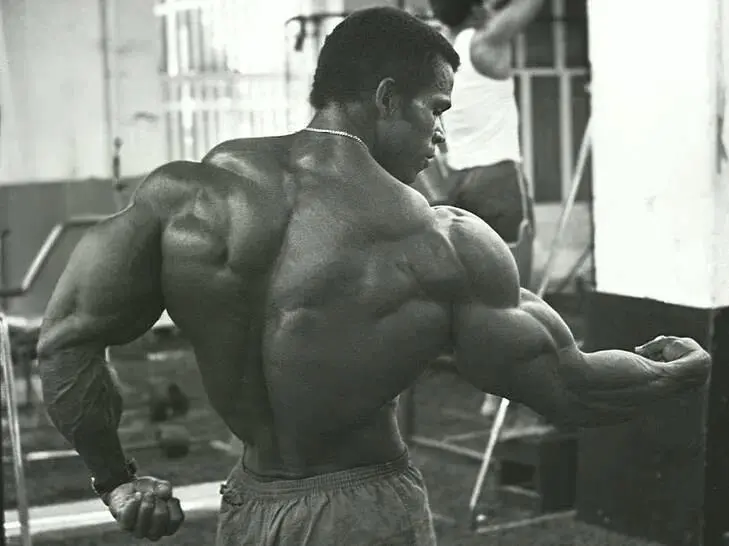 Let’s start with the basics. You could argue that this is the opposite of a fresh approach, for the exercises we prescribe were all “old favorites” by 1957 and, yet, over the decades, as more and more pulldown and rowing machines moved into gyms, trainers have done fewer free-weight exercises. Today, although you may do one or two nonmechanical exercises in each back workout, it’s unlikely you do only free-weight exercises. Go back to the future with our rediscovered old-school routine. By pyramiding deadlifts and barbell rows, and by performing a total of three free-weight lifts and one bodyweight exercise, you can deepen your rear torso from your glutes to your traps.
Back Tip 2: Unilateral
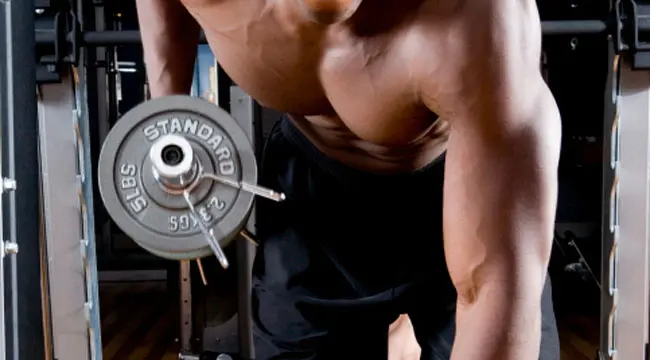 The principal mistake most trainers make in back workouts is focusing too much on moving the weight but failing to feel the targeted muscles (or areas of muscles) working. An excellent way of correcting this is to work both sides of your back independently. Of the four exercises in our unilateral routine, you are undoubtedly familiar with one-arm dumbbell rows. The second suggested unilateral exercise is one arm pulldowns, which are described in the unique lifts section (see Tip #5). One-arm low cable rows are performed like the two-arm version, although they allow for a longer range of motion at contraction. For one-arm lat levers, stand at arm’s length from an overhead cable, holding a D-handle with one hand. Keeping that working arm nearly straight throughout, bring it from overhead down to the corresponding (same side) thigh. This puts the focus on your outer lat and serratus.
Back Tip 3: Pre-Exhaust
Deadlifts and Barbell rows are usually the first exercises performed in a back routine. If that’s your style, you may be surprised to learn how much more you will feel your back working if you do them after lighter, more focused exercises. Our sample workout is not a “textbook” pre-exhaust routine wherein a compound lift (which stresses more than one bodypart) follows an isolation exercise (which stresses only one body part) because, technically, they are all compound lifts. Still, if you do pulldowns before pullovers, you’ll feel the pullovers working your back more than if you reverse the order. Next, perform one-arm low cable rows, then barbell rows followed by deadlifts. By the time you get to those last two heavy, standard exercises, your upper back should be pre-exhausted enough that you’ll feel them more in your lats, trapezius and rhomboids than usual.
Back Tip 4: High/Low
When you train high/low style, you do all higher-rep sets of one exercise and all lower-rep sets of the following exercise. Alternate like this throughout a routine. This principle lends itself to back training because you can go light on a machine exercise, focusing on isolating muscles and holding contractions, and then slip as many plates as you can use on a barbell for sets of a heavy free-weight lift. Repeating this pattern throughout your workout stresses your muscles in two different ways. Those of you who tend to always slog through the same sets of eight to 10 may be surprised at how varying your rep scheme can hike your intensity and enthusiasm.
Back Tip 5: Unique Lifts
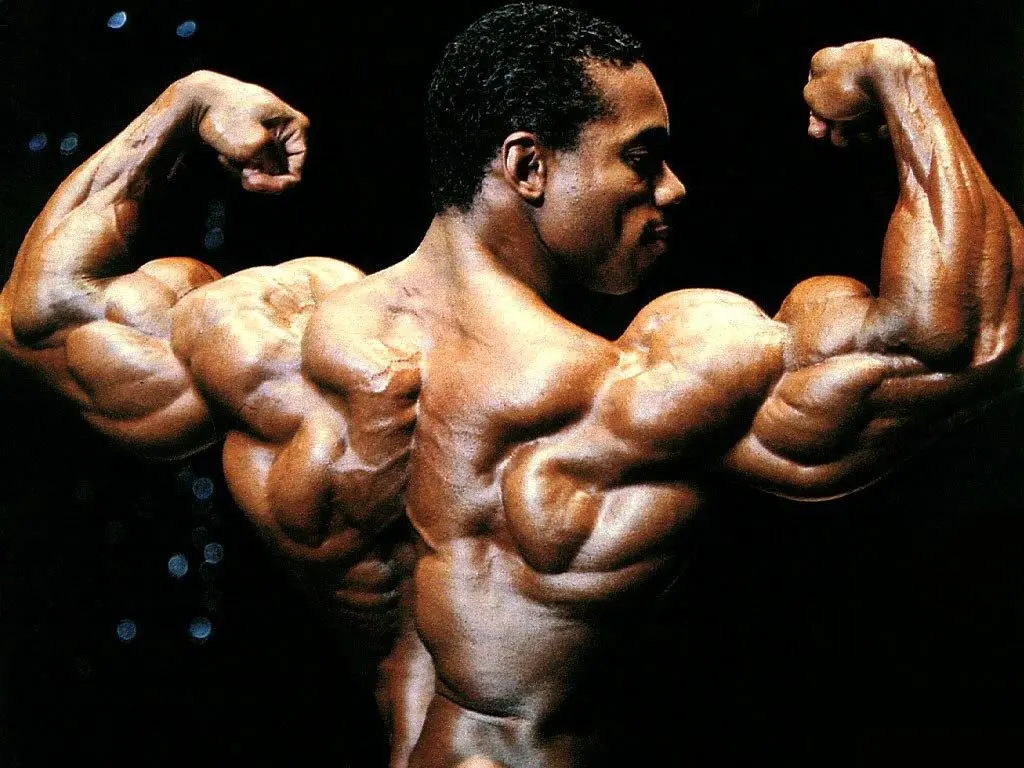 Because your upper back is a complex muscle group, there are many exercises that work it in distinct ways. Try the various machines in your gym. Also, experiment by performing standard exercises on different equipment and with varying grips. For example, an underhand row on a Smith machine will work your back differently than an overhand barbell row. It’s likely you’re unfamiliar with most or all of our four unique back lifts. Work one or two into your current routine or try our regimen of all four in the same workout.
- Incline dumbbell rows Lie face-down on an incline bench and row two dumbbells up, rotating your wrists from an overhand grip at the bottom to a palms-facing-your-sides grip at the top. This strict manner of rowing is a favorite of trainer Charles Glass, who has prescribed it for Gunter Schlierkamp, Chris Cormier and other pros.
- One-arm pulldowns With one hand, grab a D-handle attached to a pulldown cable. Pull the handle down to the side of your chest (armpit area). With a longer range of motion, it’s easier to place more emphasis on the contraction than in a standard (two-hand) pulldown.
- Seated cable high rows With an overhand grip, grasp two ends of a rope attached to a low cable. Pull the rope back and up and separate the two parts so that at the top position, your hands are near your face but at opposite sides. This exercise combines a low cable row with an upright row; it works the lats and the lower and upper traps.
- High-cable arms-out pulldowns Stand in the middle of a cable crossover station and hold D-handles attached to two high cables (your arms will be out and up). Pull your elbows down and to your sides at the same time. You should feel a strong stretch in your outer lats at the top and a firm contraction in your inner, lower traps at the bottom position.
Back It Up
Your back is a complex muscle group, so your training should reflect this complexity. In order to maximize the density and details of your back, maximize variety in your back training. Incorporate our five approaches into your routine, at least on occasion, in order to grow “wings” that show everyone everywhere you’re a bodybuilder.
Author: Greg Merritt
References: flexonline.com