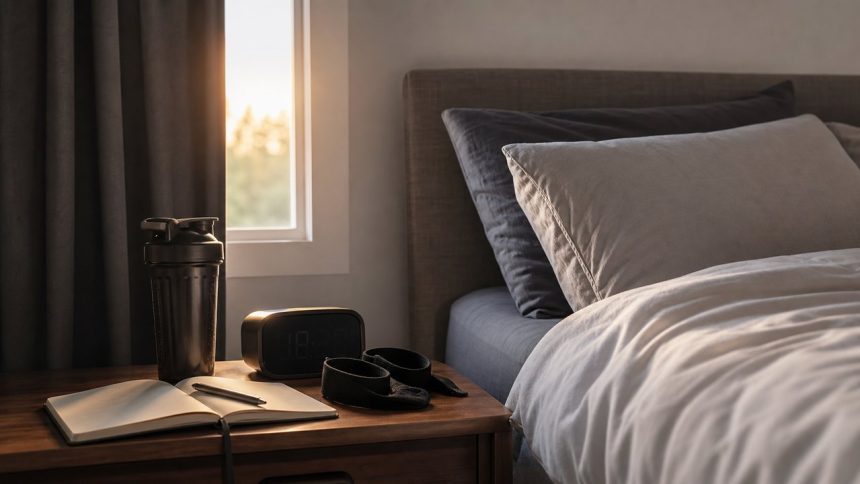
Sleepmaxxing has turned basic recovery into a product category. There are mouth tapes, trackers, blue-light lenses, cooling pads, magnesium stacks, weighted blankets, and morning routines so complicated they need their own calendar. Some of those tools can help the right person. Most lifters, though, do not need more bedtime theater. They need a repeatable sleep system that protects training quality.
The useful question is not whether a gadget can improve one metric on a sleep app. The useful question is whether you wake up able to train, think, eat normally, and recover from yesterday’s session. A lifter who sleeps six choppy hours with a perfect wearable score is still under-recovered. A lifter who gets consistent, boring, protected sleep is usually ahead.
This version keeps the useful parts of sleepmaxxing and cuts the noise. The goal is simple: build a sleep setup that supports muscle repair, appetite control, mood, and performance without making recovery feel like another sport.
The Better Move
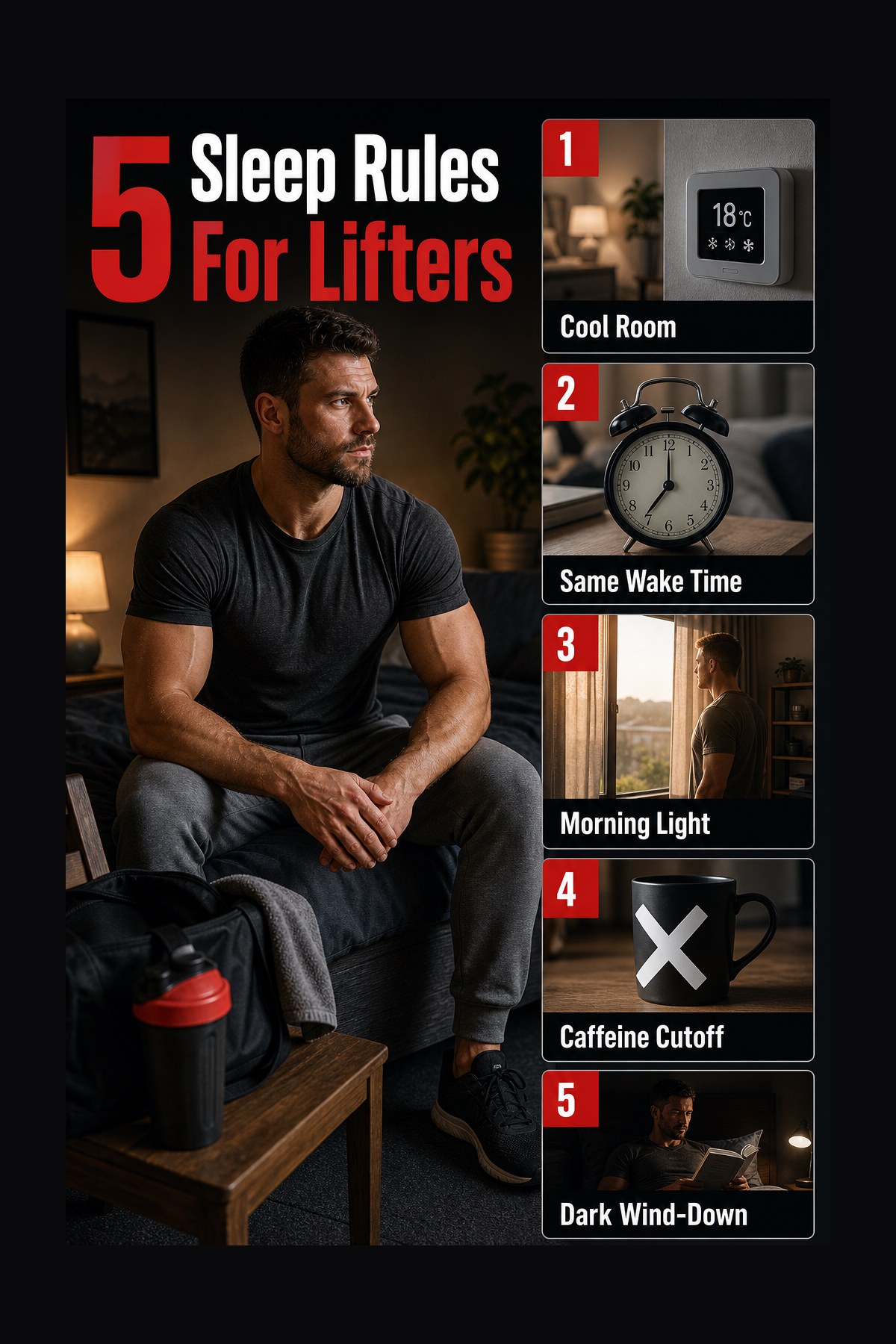
Use the trend as a doorway, then build a system you can repeat. The win is not novelty. The win is a rule that survives real training weeks, busy mornings, missed meals, stress, and imperfect equipment. That is why this article focuses on decisions, not hacks.
Start With The Sleep Window, Not The Sleep Score
A wearable score can be useful if it changes behavior, but it is not the target. The target is enough time in bed to make actual sleep possible. The American Academy of Sleep Medicine and Sleep Research Society recommend that adults sleep at least seven hours per night on a regular basis. For lifters, that is the floor, not a luxury. Heavy training adds stress to muscle, connective tissue, nervous system readiness, and appetite regulation. If the sleep window is too short, recovery tools are patching a leak instead of fixing it.
- Choose a wake time you can hold on training and rest days.
- Count backward eight hours for a realistic in-bed target.
- Use your tracker only to spot patterns, not to grade your identity.
Put Caffeine On A Clock
Caffeine is not the enemy. Poor caffeine timing is. A classic controlled study found that caffeine taken even six hours before bed can meaningfully disrupt sleep. Lifters often notice this as light sleep, more night waking, or a next-day need for even more caffeine. That cycle makes pre-workout feel necessary because the previous dose damaged the recovery it was supposed to support.
- Set a default cutoff 8-10 hours before bedtime.
- If sleep is already fragile, make the cutoff earlier before buying sleep supplements.
- Keep late-day training lower in stimulant load: music down, phone away, long exhale cooldown.
Separate Recovery Sleep From Laziness
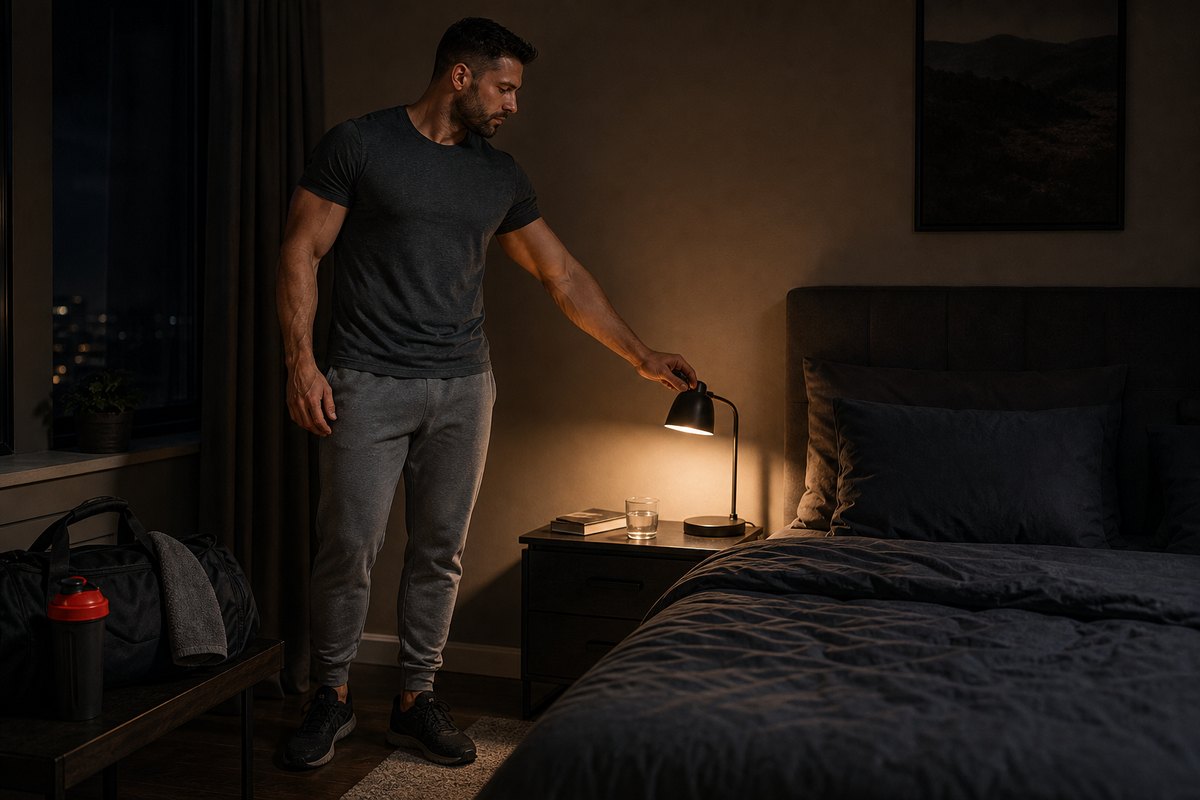
Some lifters still treat sleep as optional because hard work is easier to respect than rest. That mindset breaks down once training gets heavy. Sleep is when the body handles a large share of tissue repair, hormonal rhythm, learning, and immune regulation. More effort in the gym does not cancel out a recovery debt. It usually makes that debt more expensive.
- If performance drops for two straight sessions, audit sleep before changing the program.
- If hunger spikes at night, check total calories and sleep duration together.
- If joints ache more than muscles, add a deload or reduce late-night intensity.
Use Supplements As The Last 10 Percent
Magnesium, glycine, tart cherry, and other sleep-adjacent supplements may help some people, but they should not become a substitute for schedule control. If the bedroom is bright, caffeine is late, and bedtime changes by two hours every night, the supplement is being asked to do the wrong job. Build the routine first, then test one variable at a time.
- Try one change for 10-14 nights before judging it.
- Avoid combining several sleep products at once.
- Use FitnessVolt’s magnesium for muscle and recovery guide when deciding whether magnesium even fits your problem.
Sleep Problem, Smarter First Fix
| If this happens | Try this first | Why it matters |
|---|---|---|
| Tired but wired at bedtime | Move caffeine cutoff earlier and add a 10-minute cooldown | Reduces stimulation instead of masking it |
| Wake up sore and flat | Protect 7-9 hours in bed for one training week | Gives recovery enough time to happen |
| Late-night hunger | Check dinner protein, carbs, and total calories | Undereating often shows up as poor sleep |
| Tracker says poor recovery | Compare it with performance, mood, and soreness | Data needs real-world context |
Use It This Week
For the next seven nights, do not try to optimize everything. Pick one wake time, one caffeine cutoff, and one bedroom rule. That is enough data to learn from. If you change the mattress, supplement stack, training schedule, bedtime, and caffeine all at once, you will not know which lever mattered.
Training feedback should be part of the sleep audit. Track morning energy, warm-up speed, soreness, and whether you need more caffeine than usual. A better sleep routine usually shows up first as steadier mood and fewer ugly warm-up sets, not as a perfect sleep score.
If the week includes late training, use a softer post-workout runway: shower, meal, low light, phone away, and ten minutes of downshifting before bed. Lifters often need help leaving the gym state, not another sleep device.
Adjust It By Goal
| Goal | Best adjustment | Why |
|---|---|---|
| Muscle gain | Prioritize 8+ hours in bed when volume climbs | Recovery capacity limits productive volume |
| Fat loss | Protect sleep before increasing cardio | Poor sleep can make hunger harder to manage |
| Strength peak | Keep wake time stable and reduce late stimulants | Readiness matters more than novelty |
| Busy schedule | Anchor wake time and caffeine cutoff first | Small rules survive chaotic weeks |
When To Change The Plan
Do not judge the plan from one perfect day or one bad day. Most useful fitness and nutrition changes need a short runway. Give the system one to two weeks unless pain, dizziness, digestive distress, sleep disruption, or a clear medical concern shows up sooner. Early feedback is useful, but it needs context.
The right adjustment is usually smaller than the emotional reaction. If the plan feels too hard, reduce the dose before abandoning the idea. If it feels too easy, repeat it until the habit is stable before adding complexity. Most people fail these trends by escalating too quickly, not by starting too conservatively.
- Change one variable at a time so the result is readable.
- Keep the part that improves training, hunger, recovery, or consistency.
- Remove the part that adds friction without a clear payoff.
- Treat pain, dizziness, unusual fatigue, or persistent digestive symptoms as stop signs, not discipline tests.
The Smarter Starting Dose
Start smaller than your motivation wants. A conservative first dose protects the rest of the week and gives you cleaner feedback. Once the behavior is repeatable, progression is easy. When the starting point is too aggressive, the plan often fails for reasons that have nothing to do with the idea itself.
That is especially important for lifters because everything competes with recovery. A new food habit can change digestion. A new cardio session can change leg fatigue. A new recovery tool can change sleep timing. The first job is to make the change fit the training week. The second job is to make it stronger.
Mistakes To Avoid
- Buying devices before fixing the sleep window.
- Judging one bad night as a failed routine.
- Using alcohol as a sleep aid; it can make sleep feel easier while hurting sleep quality.
- Training at maximum intensity late at night and expecting instant sleep.
How To Know It Is Working
The right version should make the next decision easier. Training should feel more predictable, meals should require less negotiation, and recovery should become easier to read. If the plan adds stress, confusion, pain, or obsessive tracking, simplify it before adding another layer.
Use one clear metric for two weeks. For nutrition articles, that could be hunger, protein consistency, calories, or training energy. For training articles, use performance, soreness, joint comfort, and repeatability. If the metric improves without creating a new problem, keep the system.
Where This Fits On FitnessVolt
This piece is meant to connect with the rest of your training and nutrition system, not replace it. Use the linked FitnessVolt guides where they match your next decision, especially when you need a calculator, a workout progression, or a more detailed nutrition framework.
FAQ
Is sleepmaxxing useful for lifters?
It can be, but only if it improves the basics: enough sleep time, consistent timing, lower evening stimulation, and a better bedroom environment. Gadgets should support those habits, not replace them.
How much sleep do lifters need?
Most adults should aim for at least seven hours. Lifters in hard training blocks may do better with a larger sleep opportunity, especially when soreness, appetite, mood, or performance start slipping.
Should I take magnesium for sleep?
Maybe, but magnesium is not a universal sleep fix. It is more reasonable if intake is low or cramps/tension are part of the picture. Fix caffeine timing and sleep schedule first.
Can I train late and still sleep well?
Yes, but late hard training needs a calmer finish: lower stimulation, cool shower if needed, easy breathing, and a post-workout meal that does not leave you hungry in bed.
Sources
- Watson NF, et al. 2015. Recommended Amount of Sleep for a Healthy Adult. Journal of Clinical Sleep Medicine. Accessed June 4, 2026.
- Drake C, et al. 2013. Caffeine Effects on Sleep Taken 0, 3, or 6 Hours Before Going to Bed. Journal of Clinical Sleep Medicine. Accessed June 4, 2026.
- Fullagar HHK, et al. 2015. Sleep and Athletic Performance: The Effects of Sleep Loss on Exercise Performance. Sports Medicine. Accessed June 4, 2026.