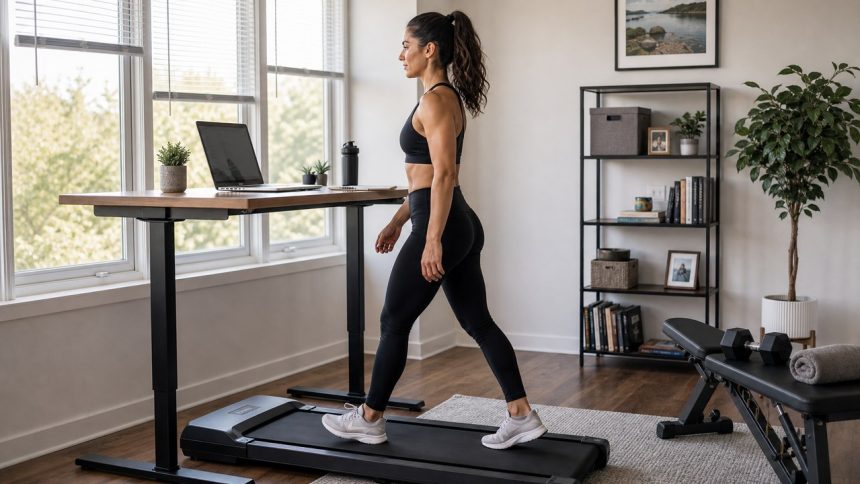
A 20-minute walking pad routine works best as a movement break, not a secret cardio workout under your desk. Keep the pace slow enough that posture, typing, and breathing stay controlled. Use it to break sitting, add steps, and reduce stiffness. Do not turn every work block into a leg-fatigue contest.
Walking pads are easy to misunderstand because the machine looks simple. The mistake is trying to work, train, and chase step totals at the same time. Lifters need a cleaner plan: one focused 20-minute block that adds movement without stealing recovery from the gym.
The Smarter 20-Minute Routine
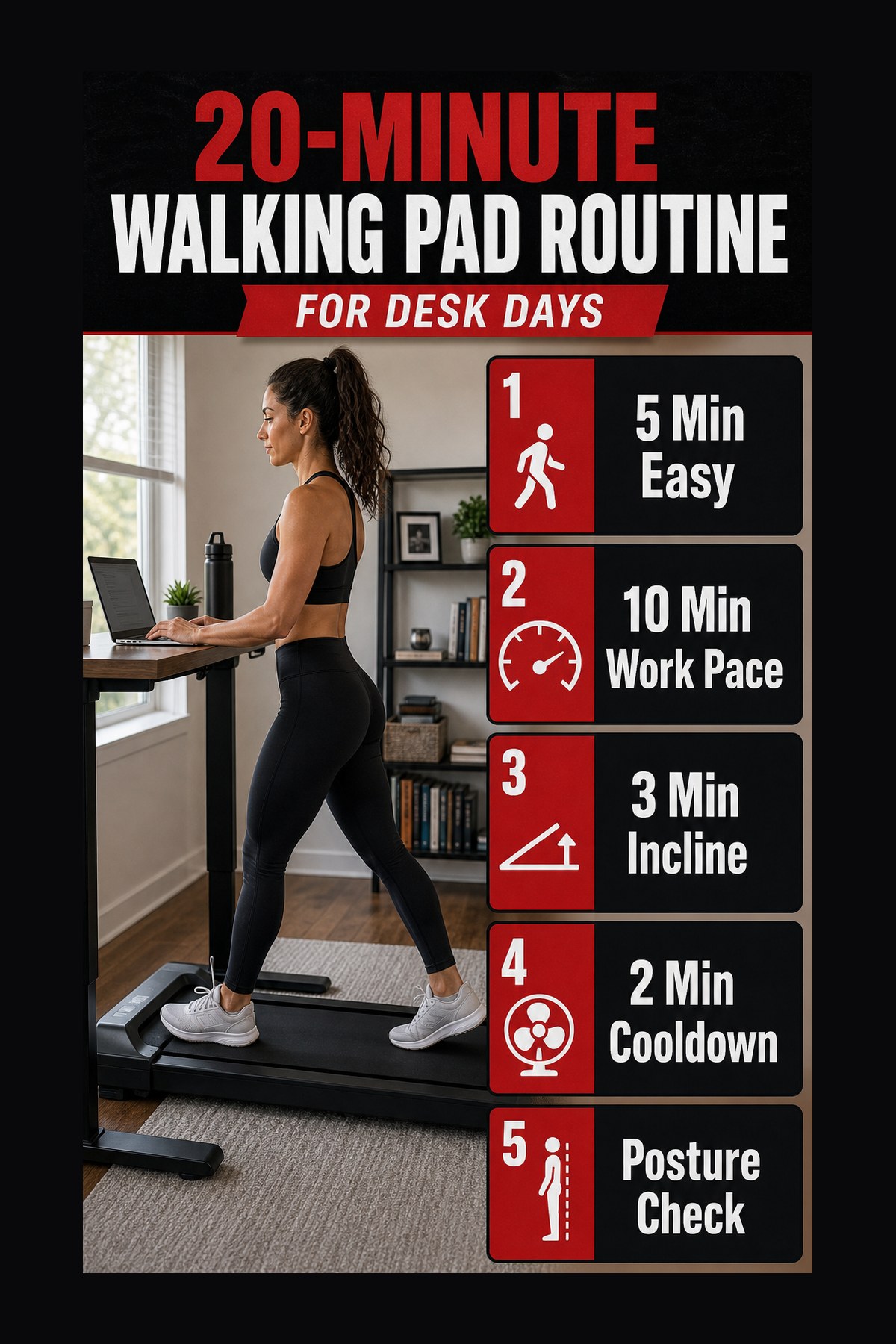
The routine has three parts: five minutes to settle in, ten minutes at a steady desk pace, and five minutes to cool down or finish away from the keyboard. That structure is boring on purpose. It prevents the two biggest problems: walking too fast for work and adding more fatigue than you meant to add.
| Minute | What To Do | Intensity | Rule |
|---|---|---|---|
| 0-5 | Easy walk, check desk height | Very easy | Shoulders down, screen at eye level |
| 5-15 | Steady walking | Easy to moderate | You should be able to speak normally |
| 15-20 | Slow down or step off for admin work | Easy | Stop before form gets sloppy |
If your walking pad displays speed, most desk users should start below the pace they would use outdoors. If typing accuracy drops, your pace is too high. If your calves feel cooked by the end of the day, total volume is too high.
What The Research Actually Supports
The stronger evidence is not that a walking pad is a fat-loss shortcut. It is that interrupting long sitting with short bouts of activity can improve post-meal glucose and insulin responses. In one Diabetes Care study, short light- or moderate-intensity walking breaks lowered postprandial glucose and insulin in overweight and obese adults.
That makes the practical takeaway clear: use the walking pad to break sitting and accumulate low-intensity movement. Keep your real training plan separate. The CDC and ACSM still point adults toward weekly aerobic activity plus strength training, not one gadget as a complete fitness plan.
Desk-Day Placement Plan
The easiest way to make a walking pad useful is to attach it to moments that already exist. Use one block after your first work sprint, one after lunch, or one before the late-afternoon slump. Start with the time of day when sitting is clearly making you feel worse.
| Desk Problem | Walking Pad Fix | Limit |
|---|---|---|
| Stiff after first work block | One 20-minute easy walk | No incline yet |
| Post-lunch sleepiness | Ten easy minutes, then ten work-pace minutes | Keep typing light |
| Low step count on lifting days | One short block away from leg training | Do not chase fatigue |
| Rest day restlessness | Two separated 20-minute blocks | Stop if feet or calves get irritated |
If you are still shopping for equipment, FV’s walking pad guide and treadmill desk roundup can help with the hardware side. This routine is the behavior layer after you already have the setup.
Posture Rules That Matter
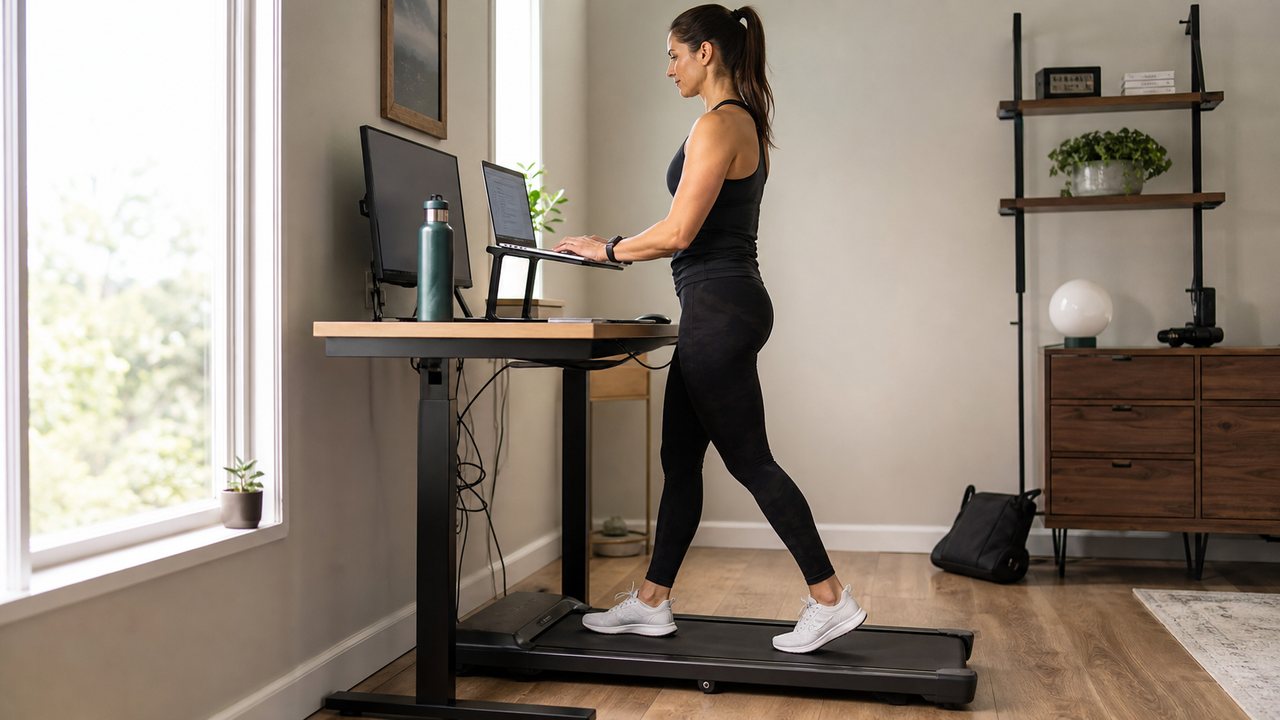
The walking pad should not make your workstation worse. Put the screen near eye level, keep the keyboard close enough that your shoulders do not reach forward, and use a pace where your head stays steady. If you are bouncing while typing, slow down.
- Screen: Top third near eye level.
- Keyboard: Close enough to keep elbows relaxed.
- Stride: Shorter than outdoor walking if you are typing.
- Feet: Use shoes that tolerate repeated daily steps.
- Work type: Calls and reading are better than detailed writing.
How Lifters Should Pair It With Training
On upper-body days, a walking pad block can sit almost anywhere. On hard lower-body days, keep it short and easy. On the day before heavy squats or deadlifts, avoid turning desk walking into a hidden conditioning session.
A good rule is to add walking pad time only while gym performance stays stable. If your warm-up sets feel heavy, sleep worsens, or your feet feel beat up, hold volume steady for another week. FV’s 7-day walking reset is a better model for gradually increasing walking volume than jumping from 2,000 to 12,000 steps overnight.
Best Follow-Along Video
If you prefer a simple pace cue, use a beginner-friendly 20-minute walking video and keep your speed conservative. The video is optional. The routine still works as a timer-based walk.
Common Mistakes
- Walking too fast while typing: The work gets worse and posture breaks.
- Using it as punishment cardio: Desk walking should not drain leg recovery.
- Ignoring foot volume: Calves, arches, and Achilles tendons notice extra steps.
- Stacking too many new habits: Start with one 20-minute block, then add more.
- Skipping post-meal walks: FV’s guide to walking after meals explains why that timing can be useful.
The Four-Week Progression
Progress walking pad work the same way you would progress any other training stress: slowly enough that joints and recovery keep up. The goal is not to prove toughness under a desk. The goal is to make movement automatic without making the next lift worse.
| Week | Plan | Progress Only If |
|---|---|---|
| 1 | One 20-minute block, 3 days | No foot, calf, shin, or back irritation |
| 2 | One 20-minute block, 4 days | Typing and posture stay clean |
| 3 | One 20-minute block, 5 days | Lower-body workouts feel normal |
| 4 | Add a second 10- to 20-minute block on 1-2 days | Sleep, steps, and recovery still look stable |
Which Work Tasks Fit Walking?
Walking while working is not equally useful for every task. Low-friction tasks fit best because they allow a relaxed gait and normal breathing. If a task demands precision, stop walking and do the work well.
| Good Fit | Use Caution | Better Seated |
|---|---|---|
| Calls, reading, inbox cleanup | Light editing, low-stakes admin | Deep writing, design work, data review |
| Web research, review queues | Meetings where you speak often | Anything requiring fine mouse control |
Footwear and Surface Rules
Use shoes that feel good after repeated easy steps, not just shoes that look good at a standing desk. If you normally walk very little, your feet and calves may complain before your lungs do. That is a volume problem, not proof that walking pads are bad.
Keep the belt clear, keep cables away from your stride, and step off before adjusting speed or desk position. A walking pad is low intensity, but it still deserves attention because falling at a desk is a very avoidable injury.
FAQ
Is 20 minutes on a walking pad enough?
Yes, if the goal is to break sitting and add movement. It is not enough to replace a full training plan, but it can make a desk day less sedentary and easier to recover from.
How fast should I walk while working?
Start slower than your outdoor walking pace. If typing gets sloppy, your shoulders tense up, or your breathing changes too much for normal conversation, reduce speed.
Can walking pads help fat loss?
They can help by increasing daily movement, but fat loss still depends on overall energy balance, food intake, sleep, and training consistency. The walking pad is a tool, not the plan.
Should lifters use a walking pad on leg day?
Yes, but keep it easy. Hard lower-body sessions already create fatigue. Use the walking pad for light movement, not extra conditioning, when your legs need recovery.
What hurts first if I overdo it?
Feet, calves, shins, Achilles tendons, and low back are common early warning areas. Reduce duration and frequency before increasing speed or adding more daily sessions.
The Recovery Check
Use a simple weekly recovery check before adding more walking-pad time. Ask whether your lower-body sessions felt normal, whether your feet or calves stayed quiet, whether sleep stayed stable, and whether the walking blocks improved energy rather than making work feel scattered.
If two of those answers are negative, hold the same volume for another week. If three are negative, cut the walking pad back to three short sessions and rebuild. Desk walking should disappear into the day. If it becomes another stressor, the dose is wrong.
Bottom Line
The walking pad is best as a controlled desk-day movement break. Use one 20-minute block, keep pace honest, protect posture, and judge success by consistency and recovery, not by turning every workday into a treadmill challenge.
Sources
- Dunstan DW, et al. Breaking up prolonged sitting reduces postprandial glucose and insulin responses. Diabetes Care. 2012.
- Chastin SFM, et al. Effects of interrupting prolonged sitting with physical activity breaks. Sports Medicine. 2019.
- American College of Sports Medicine. Physical Activity Guidelines. Accessed June 20, 2026.
- Centers for Disease Control and Prevention. Adult Activity: An Overview. Accessed June 20, 2026.