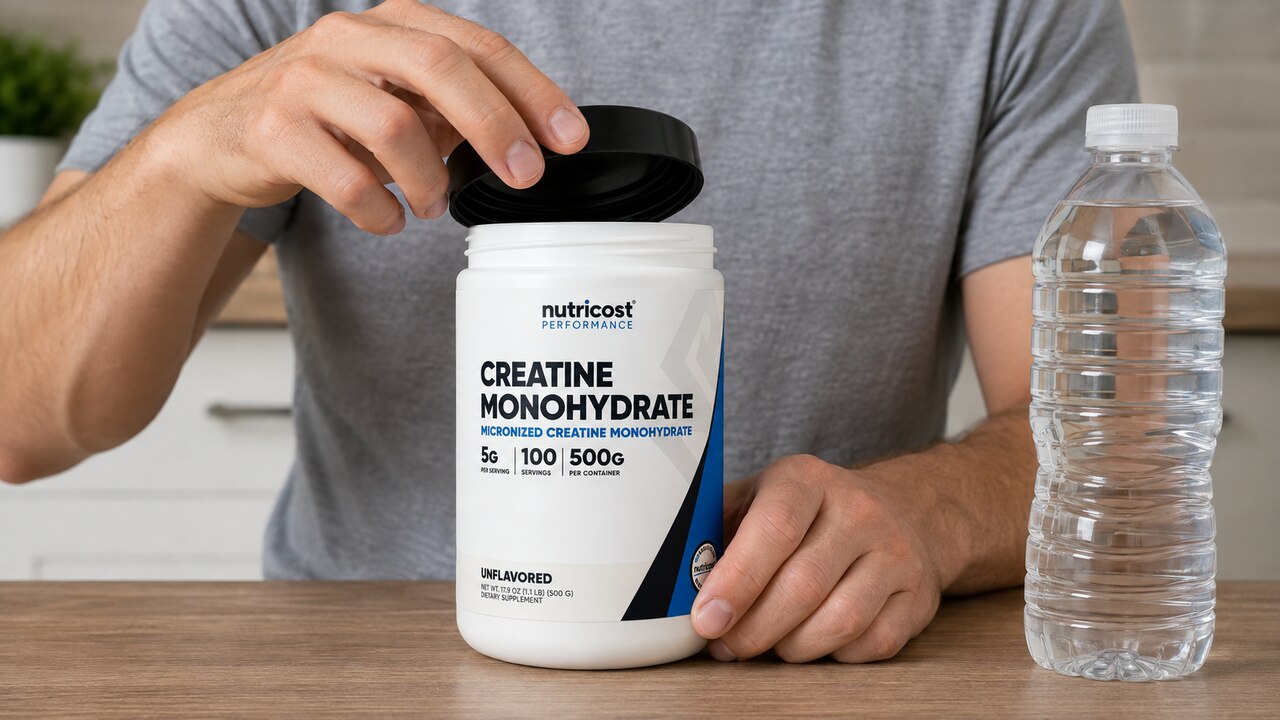
At the captured $21.50 price, Nutricost’s unflavored 500 g tub supplies 100 labeled 5 g servings. The ingredient is the same creatine monohydrate found in more expensive powders. This version keeps the decision simple: one ingredient, a measured scoop, and no flavor system to fit around your usual drink.
The unanswered question is the testing behind your particular tub. Nutricost says it uses third-party testing, but we did not inspect a lot-matched laboratory report for the product shipped through this Amazon listing. That distinction matters more than the word “micronized” if you compete in drug-tested sport.
FitnessVolt may earn a commission from qualifying purchases through links in this review, at no extra cost to you.
Our verdict: Nutricost’s unflavored 500 g creatine is a sensible budget choice for an adult who wants plain monohydrate and is comfortable mixing powder. Skip it if you need a verified sport-certified product or know that measuring powder will stop you taking it consistently.
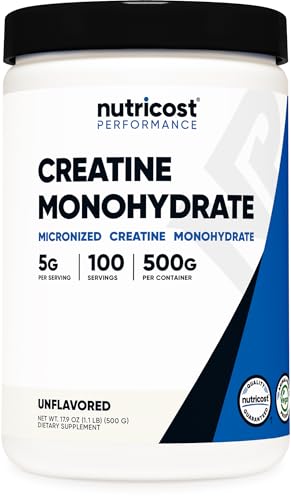
Nutricost Creatine Monohydrate, Unflavored, 500 g
Budget PowderA plain 500-gram creatine powder for buyers who prioritize cost per serving and do not need a flavored drink or chewable format.
Pros
- 5 g monohydrate per labeled scoop
- 100 labeled servings
- No other ingredients on the unflavored label
Cons
- Requires measuring and mixing
- No lot-matched test report inspected for this review
What We Evaluated
We checked the exact Amazon product identifier B00GL2HMES, the manufacturer’s 500 g unflavored label and directions, and published creatine research. We calculated costs from Amazon product data retrieved September 7, 2026. We have not used this tub, measured its purity, tasted it, or tested its mixing. Our recommendation concerns the documented formula and buying tradeoffs, not a hands-on performance score.
This review covers the ordinary unflavored monohydrate. Nutricost also sells flavored powders and a separate Creapure product. Do not transfer claims, serving counts, or ingredient lists between them. Our broader creatine supplement comparison covers other buying options.
The Label Is Simple, but Check the Variant
The manufacturer’s unflavored 500 g product lists 5 grams of micronized creatine monohydrate per scoop, 100 servings, and no other ingredients. You are not paying for a combined pre-workout, protein powder, or recovery blend.
| Item | Reviewed version |
|---|---|
| Amazon product identifier | B00GL2HMES |
| Flavor and net weight | Unflavored, 500 g |
| Labeled serving | One 5 g scoop |
| Servings per tub | 100 |
| Other ingredients | None on the manufacturer label inspected |
| Hands-on testing by FitnessVolt | Not performed |
That short ingredient list is useful if you already have a shake you like or want to avoid an additional sweetened drink. It does not make the powder uniquely effective. The research supporting creatine monohydrate concerns the ingredient and the amounts used, not this brand’s label design.
Before ordering, check three details together: unflavored, 500 g, and 100 servings. A similarly colored tub can be a different size or flavor. A flavored 500 g powder also need not contain 500 g of creatine, because flavoring ingredients contribute to its total weight.
What Does a Serving Cost?
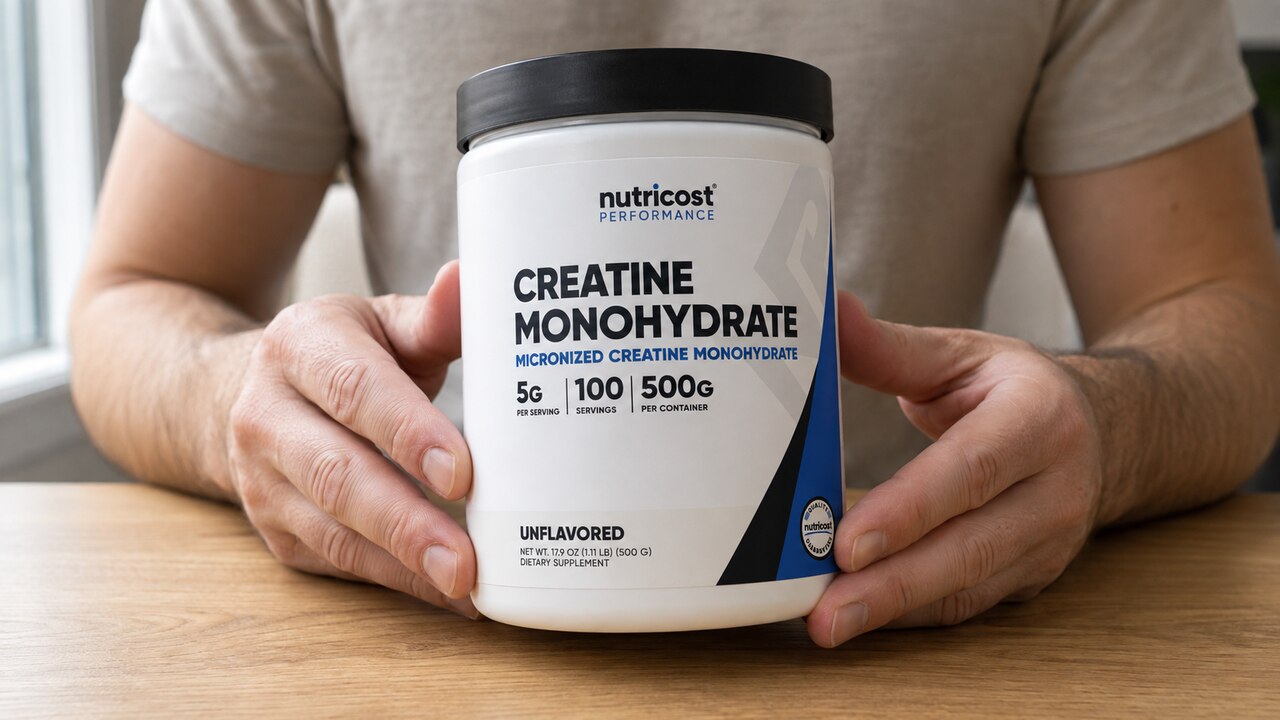
Amazon’s product data showed $21.50 for the reviewed tub on September 7, 2026. Dividing that by 100 labeled servings gives 21.5 cents per 5 g serving. Thirty servings cost $6.45 on that basis, before any tax or shipping. These are dated comparison figures, not a promise of today’s checkout price.
Use the same calculation when a different container goes on sale. At the captured price, two 500 g tubs would cost $43. A 1 kg tub would need to cost less than $43 to beat that price per gram, assuming it is the same unflavored formula. The larger tub is not automatically the better deal.
| Calculation | Result | What it means |
|---|---|---|
| 500 g divided by 5 g | 100 servings | Count portions, not the size of the container |
| $21.50 divided by 100 | $0.215 per serving | Use this to compare equal 5 g amounts |
| 30 servings at $0.215 | $6.45 | A 30-serving cost comparison |
| Two 500 g tubs at $21.50 | $43 for 1 kg | The larger-size break-even price |
Do not compare the front-of-bottle serving prices of a gummy, capsule, and powder until you check their creatine amounts. A cheaper serving can contain less creatine. For the practical differences in handling each format, see our creatine powder versus pills guide.
Micronized Does Not Establish Better Results
Nutricost describes this powder as micronized. That describes smaller particles; it is not a separate form of creatine or proof that you will gain more strength than with another monohydrate powder. We did not conduct a side-by-side mixing or absorption test, so we cannot rank its texture or digestion against competing products.
If you dislike powder, this review cannot settle whether this particular one will change your mind. A capsule avoids stirring, while a gummy adds chewing and a different ingredient list. Choose a format you can use within your budget. Do not pay extra for an absorption claim unless the seller can show relevant evidence.
Read the Loading Directions in Context
The manufacturer label we inspected describes a loading phase followed by a once-daily maintenance phase. That is one approach, not a requirement for everyone. The evidence review by Antonio and colleagues explains that lower daily amounts can also increase muscle creatine stores, with a slower buildup than loading. [1]
A loading phase also changes how long the tub lasts. Four 5 g servings per day for five days would use 100 g, leaving 400 g, or 80 labeled servings. By contrast, one labeled serving per day uses the tub over 100 days. This is container arithmetic, not a personal dosing plan. Discuss an appropriate routine with your clinician when needed and follow the directions on the product you receive.
Keep the broader goal in view. Creatine can support resistance-training adaptations, but buying it does not replace a training program. Start with the priorities in our basic supplements guide for lifters if you are deciding where to spend a limited budget.
Third-Party Testing: What We Can and Cannot Confirm
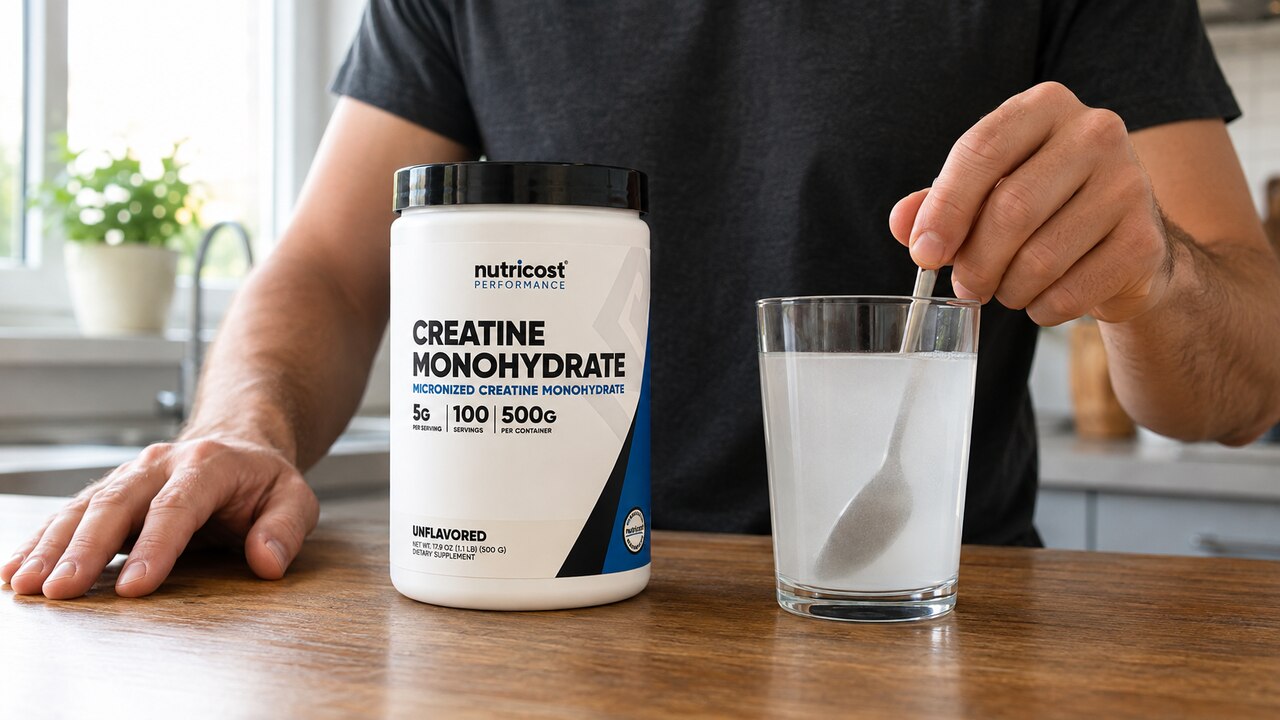
Nutricost’s label states that the product is third-party tested and manufactured in a GMP-compliant facility. Neither statement tells you which substances a particular lot was tested for, what the results were, or whether the exact product meets your sport’s certification requirements. We did not verify a current NSF Certified for Sport listing for this exact tub.
That is an evidence limit, not a finding that the powder is contaminated. Ask for a certificate of analysis that matches the lot number on your tub if you want to examine its potency and contaminant results. Check that the report identifies the product, lot, laboratory, test date, and measured values.
Drug-tested athletes should be more selective. USADA recommends third-party programs that test for prohibited substances and identifies NSF Certified for Sport as its preferred risk-reduction program. Certification reduces risk; it cannot remove it. Verify the actual product and lot instead of relying on a manufacturer’s general testing badge. [2]
Who Should Choose Something Else?
Choose another format if mixing is your sticking point. A low price has little value if the tub stays in the cupboard. Capsules may fit your routine better, provided you check the number needed for the labeled amount.
Choose a verified certified product if your sport requires it. The savings here should not outweigh a requirement from your team or governing body.
Get personal advice first if the label’s cautions apply to you. The manufacturer directs pregnant or nursing people, people taking medication, and those with a medical condition to consult a healthcare professional. It labels the product for healthy adults aged 18 or older. This review does not clear it for a medical condition or for children.
Bottom Line
Nutricost’s unflavored 500 g creatine makes a straightforward budget case: a documented single-ingredient formula, 100 labeled servings, and a captured cost of 21.5 cents per 5 g serving. The main compromises are handling powder and the limits of the lot-specific testing evidence we could inspect. Buy it for the formula and arithmetic, not an expectation that “micronized” will outperform every other monohydrate.
Sources
- Antonio J, et al. (2021). Common questions and misconceptions about creatine supplementation: what does the scientific evidence really show? Journal of the International Society of Sports Nutrition, 18, 13. doi:10.1186/s12970-021-00412-w.
- U.S. Anti-Doping Agency. (n.d.). Reduce your risk of testing positive or experiencing adverse health effects. Supplement Connect. Accessed September 7, 2026.