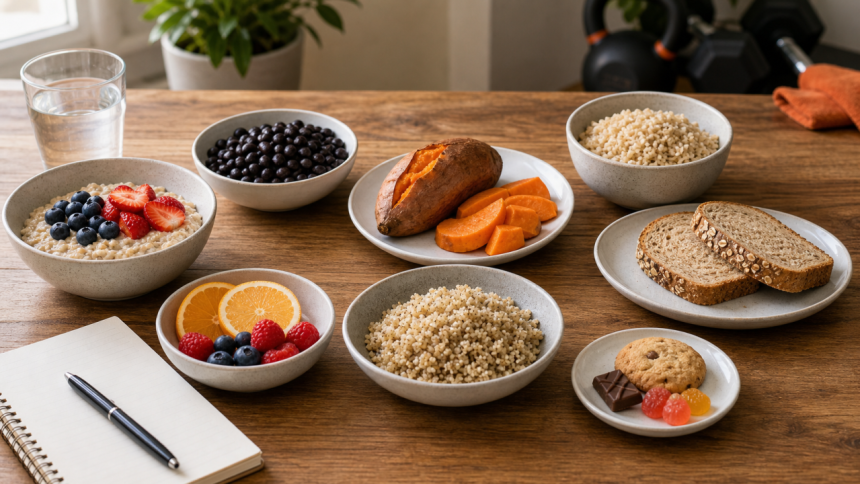
A carb is a carb if you are only counting calories and grams. That narrow truth is why the old debate never dies. Forty grams of carbohydrate from oats and forty grams from candy both provide roughly the same carbohydrate energy, but they do not behave the same in a real diet. The food around the carbohydrate changes fiber, fullness, digestion speed, micronutrients, and how easy it is to stop eating.
For lifters, the practical answer is better than the argument: match the carb source to the job. Use fiber-rich carbs for daily diet quality and appetite control. Use faster, lower-fiber carbs when training demands quick fuel. Track total calories with the TDEE calculator, then improve carb quality so those calories work harder for you.
Are all carbs the same for body composition?
For body weight, total calories and total carbohydrate intake matter most. For diet quality, health, hunger, digestion, and workout performance, carb source matters a lot. A sugar drink, a bowl of oats, a potato, and beans can fit the same macro line but produce different fullness, fiber, and micronutrient outcomes.
This is where the old “a calorie is a calorie” line gets misused. Calories determine energy accounting, but foods influence how easy that accounting is to maintain. Highly refined carbohydrates are often easier to overeat. Whole-food carbs usually bring water, fiber, chewing time, and nutrients with them.
What makes one carb source better than another?
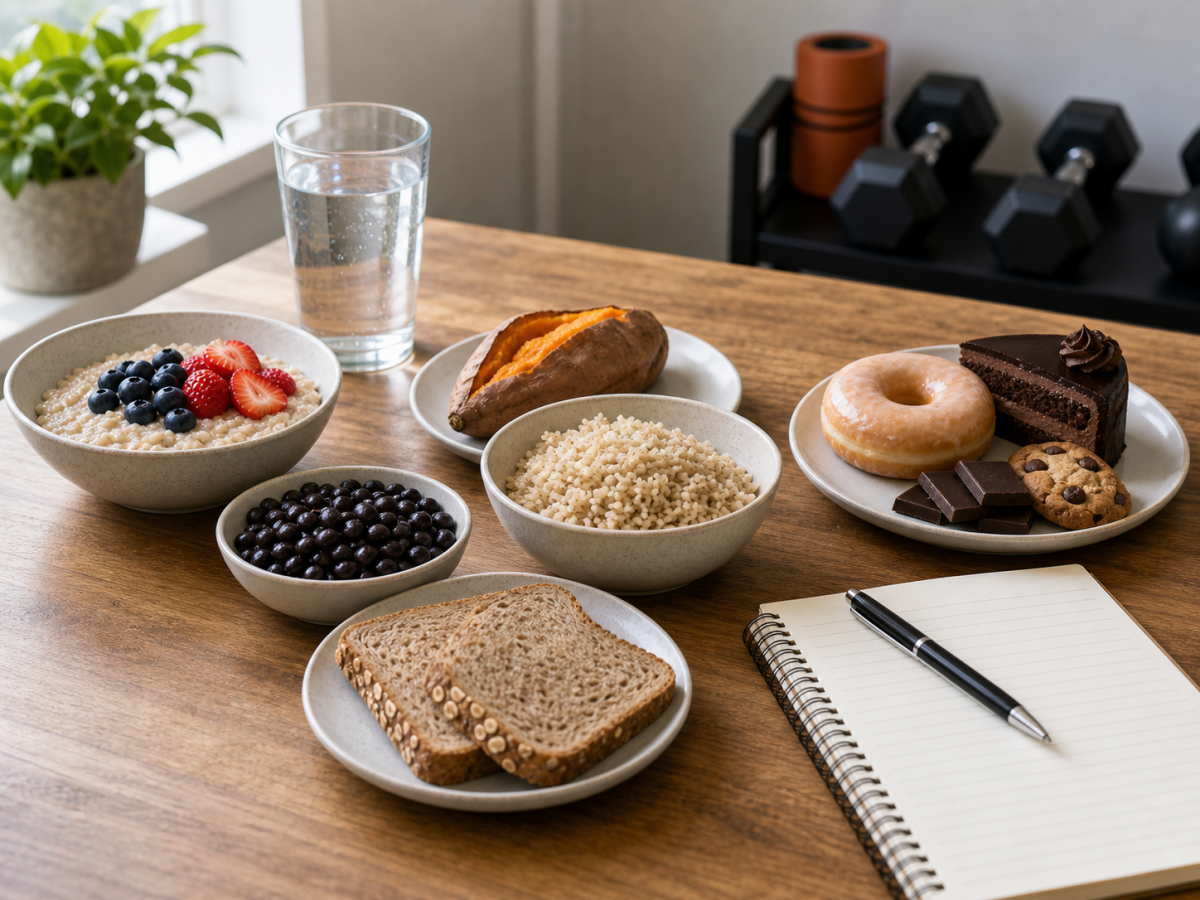
Four things matter most: fiber, processing, portion size, and context. Oats, potatoes, beans, lentils, fruit, vegetables, and whole grains usually give you more volume and nutrition per calorie. Desserts, candy, sugary drinks, pastries, and many snack foods can fit occasionally, but they are easier to overconsume and harder to build a diet around.
The Dietary Guidelines for Americans recommend nutrient-dense eating patterns that include fruits, vegetables, grains, protein foods, dairy or fortified alternatives, and oils while limiting added sugars, saturated fat, and sodium. That is not anti-carb. It is anti-random.
Does glycemic index decide whether a carb is good?
Glycemic index can be useful, but it should not be your only filter. It measures blood glucose response to a fixed amount of carbohydrate from a food, usually eaten alone. Real meals include protein, fat, fiber, and mixed portions, which can change the response. Training status and the timing of exercise also matter.
Instead of obsessing over one number, ask better questions. Does the food help you hit fiber? Does it fit your calories? Does it fuel training? Does it leave you satisfied? Does it crowd out more useful food? Those answers predict real-world success better than a chart alone.
How should lifters use carbs around training?
Carbs support high-output training because muscle glycogen is an important fuel source. The ISSN nutrient timing position stand notes that timing strategies can be useful when they fit the athlete and the session. For most lifters, that means eating a carb-and-protein meal within a few hours before or after training, especially before hard lower-body or high-volume sessions.
If you train early and feel strong, you do not need to force carbs. If your sessions fade, add a simple pre-workout carb: fruit, oats, rice, potatoes, bread, or a sports drink for longer sessions. Our nutrient timing calculator can help estimate a starting point.
Should you avoid sugar completely?
No. Sugar is not automatically fattening independent of calories, but it is easy to overeat and often comes packaged with low fiber and high palatability. Keep sugary foods as planned extras, not the foundation of the diet. The more aggressive the fat-loss goal, the more your carb budget should come from foods that keep you full.
A useful carb rule: choose high-fiber carbs most of the day, faster carbs around demanding training when they help, and fun carbs deliberately instead of accidentally.
What is the best carb list for active people?
Start with potatoes, sweet potatoes, oats, rice, beans, lentils, fruit, vegetables, whole-grain bread, quinoa, and cereal or sports fuel when it serves the workout. If fiber is low, build toward the basics with help from our guide on getting 20 grams of fiber daily. If meal timing is confusing, our article on meal timing and metabolism explains what matters and what does not.
Sources
- U.S. Department of Agriculture and U.S. Department of Health and Human Services. (2020). Dietary Guidelines for Americans, 2020-2025. Accessed May 22, 2026.
- Kerksick, C. M., et al. (2017). International society of sports nutrition position stand: nutrient timing. Journal of the International Society of Sports Nutrition. doi:10.1186/s12970-017-0189-4.
- U.S. Department of Agriculture. (n.d.). FoodData Central. Accessed May 22, 2026.
- Mozaffarian, D., et al. (2011). Changes in Diet and Lifestyle and Long-Term Weight Gain in Women and Men. New England Journal of Medicine. doi:10.1056/NEJMoa1014296.