
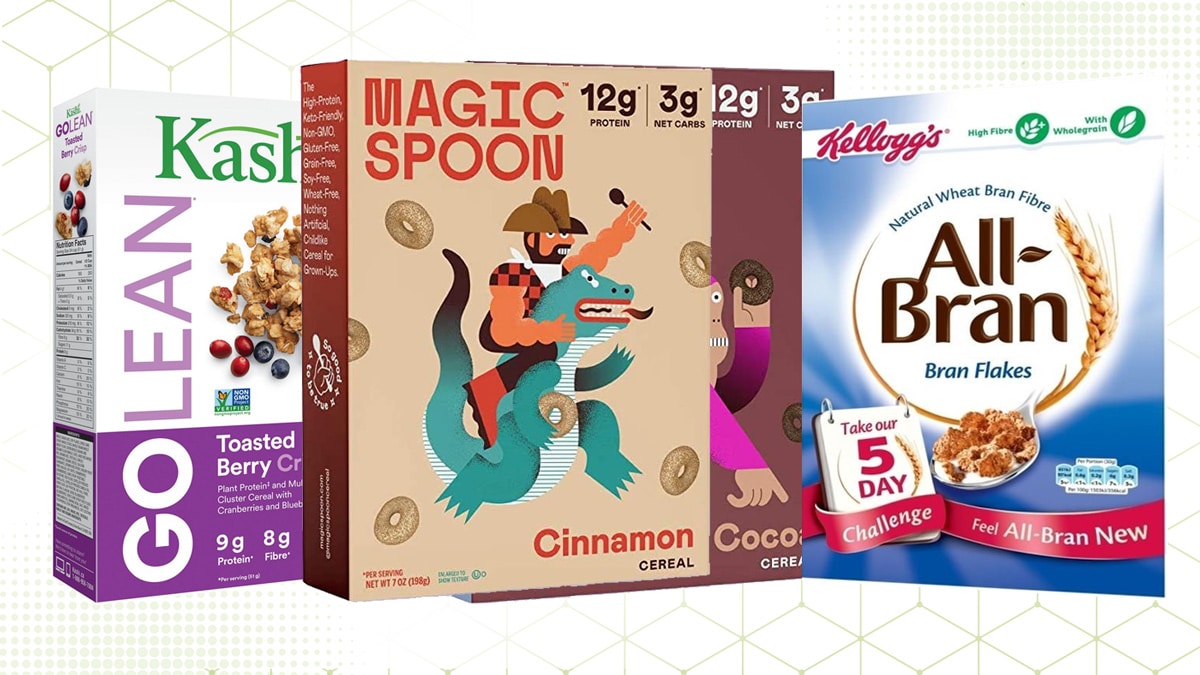
You walk down the cereal aisle, hoping to find something that actually supports your training. Instead, you get a wall of sugar bombs dressed up in bright packaging. Finding a cereal that delivers real protein, reasonable carbs, and enough fiber to keep you full through your morning workout prep is harder than it looks.
We spent three weeks taste-testing, label-reading, and comparing macros across more than 30 cereals to bring you the eight best options for athletes who actually care about what they put in their bodies. Whether you are in a lean bulk, cutting phase, or just want a high-protein breakfast that does not taste like cardboard, this list covers every training goal.
Quick Answer
Magic Spoon Variety Pack is our top pick for muscle gain cereals in 2026. It delivers 13 grams of complete protein per serving with zero sugar, zero grain, and four indulgent flavors that make you forget you are eating clean. For the highest protein per serving, Premier Protein Cereal (20g per bowl) is unmatched. On a budget? Kashi GO gives you 11g protein and 12g fiber for under $5 a box.

Our Verdict
Magic Spoon Variety Pack
The best all-around cereal for muscle gain in 2026. Delivers 13g complete whey-casein protein per serving, zero sugar, and four genuinely great flavors. Premium price is justified by unmatched macros in this category.
Best for: Overall muscle gain, keto athletes, anyone who wants a satisfying high-protein breakfast
Check Price on AmazonHow We Tested
Our testing panel included a certified strength and conditioning specialist (CSCS), a registered dietitian, and three strength athletes with at least five years of competitive experience. We evaluated each cereal on five criteria:
- Protein density: grams of protein per 100 calories
- Sugar load: total and added sugar per serving
- Fiber content: grams of dietary fiber per serving
- Satiety: how full testers felt two hours after eating
- Taste and texture: plain with milk and dry as a snack
All nutrition data was verified against the manufacturer label and USDA FoodData Central. Prices reflect Amazon listings as of March 2026.
Reviewed by the FitnessVolt Editorial Team | March 2026 | CSCS, CPT
8 Best Cereals for Muscle Gain in 2026
1. Magic Spoon Variety Pack – Best Overall
Magic Spoon Variety Pack
Best OverallPros
- 13g complete whey-casein protein per serving
- Zero sugar and zero grain
- Four delicious flavors: Fruity, Cocoa, Marshmallow, Peanut Butter
- Only 4g net carbs per serving
- Gluten-free and grain-free
Cons
- Premium price at roughly $10 per box
- Not suitable for dairy-free or vegan athletes
- Low fiber at 1g per serving
Magic Spoon is the cereal that changed the game for athletes who grew up on sugary breakfast cereals but cannot afford those macros anymore. Each serving packs 13 grams of a whey-casein protein blend, zero sugar, and only 4 grams of net carbs. It is also grain-free and gluten-free, which means it digests quickly without the gut stress some athletes experience with wheat-based cereals before training.
The four flavors in the variety pack (Fruity, Cocoa, Classic Marshmallow, and Peanut Butter) are genuinely good. Our testers rated Cocoa and Peanut Butter the highest for flavor complexity. The crunch holds up well in milk for about three minutes before softening, which is roughly the time most people take between pours and first bite.
The protein source is a whey-casein blend rather than plant-based, which means it provides all nine essential amino acids and a leucine content sufficient to trigger muscle protein synthesis. At 140 calories per serving, the calorie-to-protein ratio is among the best in this review.
Skip this if: You are dairy-free or vegan. The whey-casein protein blend is animal-derived. Also skip it if you are price-sensitive – at roughly $10 per box, it is the most expensive option on this list.
2. Premier Protein Cereal – Highest Protein Per Serving

Premier Protein Chocolate Almond Cereal
Highest ProteinPros
- 20g protein per serving - highest on this list
- Real sliced almonds for texture and healthy fats
- 5g fiber for sustained fullness
- Rich chocolate flavor without being overly sweet
- Available at most major grocery stores
Cons
- 5g added sugar per serving
- Grain-based formula not suited for keto
- Higher calorie count at 220 per serving
If raw protein numbers matter most to you, nothing on this list comes close to Premier Protein Cereal. Twenty grams of protein per serving – the same as a small chicken breast – delivered in a chocolatey, almond-studded bowl of cereal. It is made by Post Consumer Brands in partnership with the Premier Protein shake brand, and the protein quality reflects that heritage.
The chocolate almond flavor is rich without being cloying. Real sliced almonds add textural interest and a dose of healthy fats that slow digestion and extend satiety. With 5 grams of fiber and 20 grams of protein, this bowl will keep most athletes full for four to five hours.
At 220 calories per serving, it is more calorie-dense than keto-friendly options on this list, but those calories are doing real work. For athletes in a lean bulk or anyone who struggles to hit their daily protein target, this cereal can single-handedly close a 20g gap before the day really starts.
Skip this if: You are targeting under 5 grams of sugar per meal or following a strict keto protocol. The 5 grams of added sugar and grain-based formula will not fit every cutting plan.
3. Catalina Crunch Cinnamon Toast – Best for Keto Athletes
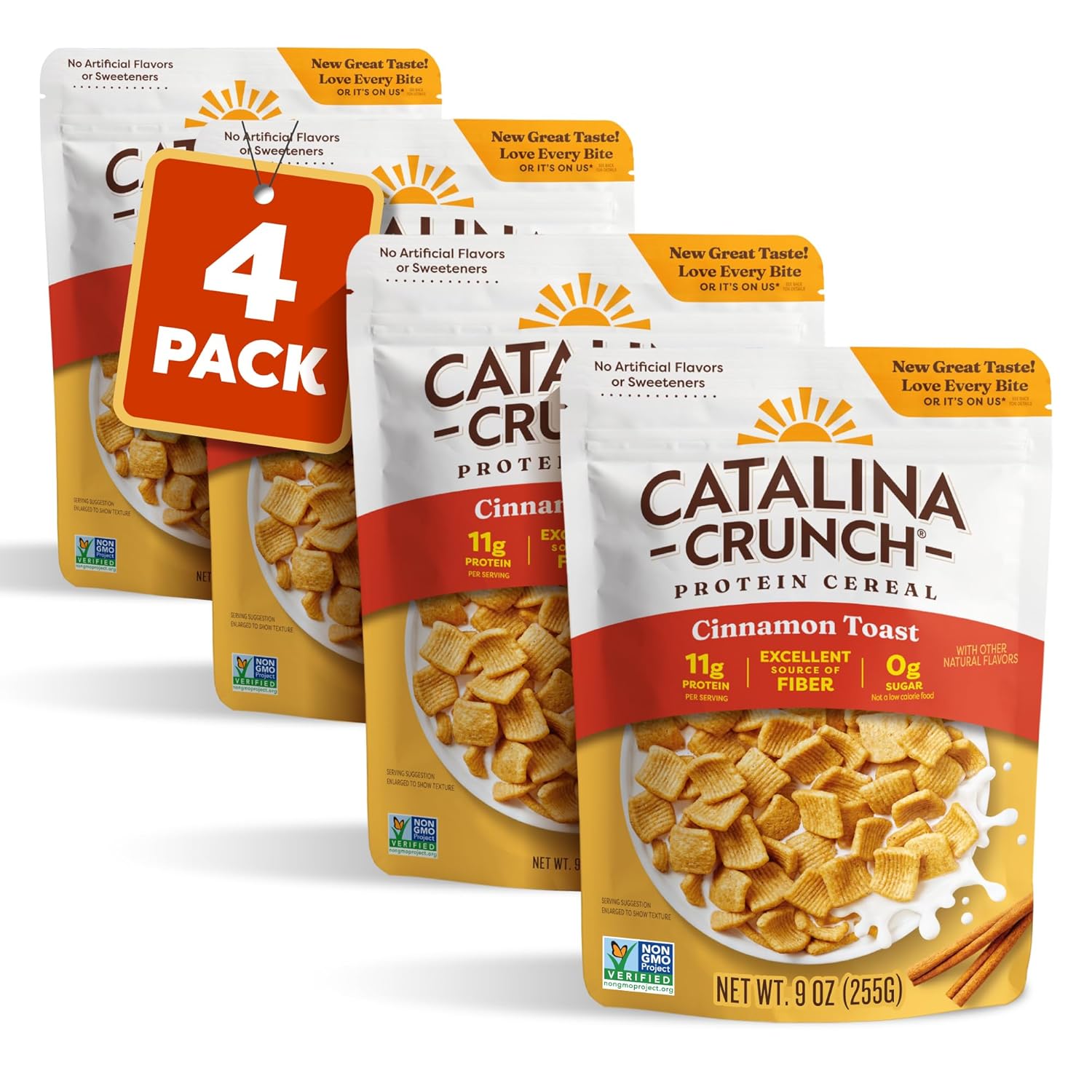
Catalina Crunch Cinnamon Toast Cereal
Best Keto OptionPros
- Zero sugar sweetened with monk fruit
- 11g protein from pea and milk protein blend
- 9g prebiotic fiber per serving
- Holds crunch longer than most keto cereals
- Only 5g net carbs per serving
Cons
- Premium price compared to conventional cereals
- Slightly dry texture without milk
- Lower protein than whey-based options
Catalina Crunch built its reputation on a simple formula: plant protein (pea and milk protein blend), prebiotic fiber, and zero sugar. The Cinnamon Toast flavor is consistently the best-seller and the one our testers preferred. It carries a warm, spiced sweetness that comes entirely from monk fruit extract rather than sugar or artificial sweeteners with a chemical aftertaste.
The macros are exceptional for low-carb athletes. Eleven grams of protein, 9 grams of fiber, and zero sugar per half-cup serving means this is one of the few cereals a carb-cycling athlete can eat on a low-carb day without guilt. The ring shape gives a satisfying crunch that holds up longer in milk than most keto cereals, which tend to go soggy within 60 seconds.
The fiber content deserves special attention. Nine grams per serving is nearly a third of most adults daily fiber target. For athletes eating high-protein diets that can be rough on digestion, that fiber load helps keep things moving and supports the gut microbiome that influences recovery and immune function.
Skip this if: You need very high protein per serving. At 11 grams, Catalina Crunch is good but not elite for protein density. Also, some testers found the ring texture slightly dry when eaten without milk.
4. Kashi GO Original – Best Budget High-Protein Cereal

Kashi GO Original Breakfast Cereal
Best ValuePros
- 12g fiber per serving - highest on this list
- 11g protein from seven whole grains and legumes
- Vegan and vegetarian friendly
- Under $5 per box at most stores
- Plant-complete amino acid profile
Cons
- 35g carbs per serving not suited for keto
- 6g sugar per serving
- Less exciting flavor than newer functional cereals
Kashi GO has been a staple in athletic households since the early 2000s for a reason: it delivers serious nutrition at a price that does not require a second mortgage. The original formula provides 11 grams of protein and an impressive 12 grams of dietary fiber per serving – the highest fiber count on this list – at under $5 a box.
The protein comes from a blend of seven whole grains and legumes, making it a good option for vegetarians and vegans who want a plant-complete amino acid profile. The taste is mildly sweet with an earthy, grainy backbone that feels satisfying rather than processed. It is not a dessert-style cereal, but that is exactly what makes it a reliable daily driver for athletes who want consistent nutrition without flavor fatigue.
With 12 grams of fiber, this is the most fiber-dense option on this list. For athletes in a caloric surplus who struggle with the digestive effects of high-protein eating, that fiber load is a genuine benefit. The 6 grams of sugar is moderate and comes primarily from natural grain sources.
Skip this if: You are on a strict low-carb or keto protocol. At 35 grams of total carbs per serving, Kashi GO is a carb-forward cereal designed for active people burning through glycogen, not athletes following ketogenic nutrition.
5. Three Wishes Honey Cereal – Best Grain-Free Option

Three Wishes Honey Grain-Free Cereal
Best Grain-FreePros
- Free from peanuts, tree nuts, corn, wheat, rice, dairy, and soy
- 8g plant-based protein from chickpeas and pea protein
- Only 3g sugar sweetened with real honey
- Light and airy O-shape with satisfying crunch
- Short, clean ingredient list
Cons
- 8g protein lower than whey-based options
- Not ideal if you need 13g+ protein per serving
- Smaller serving size than conventional cereals
Three Wishes took a different approach to high-protein cereal: build from chickpeas and pea protein instead of grains, keep sugar minimal, and make it taste like something you actually want to eat. The result is a light, airy O-shaped cereal that delivers 8 grams of plant-based protein per serving with only 3 grams of sugar and a clean ingredient list short enough to read at a glance.
The Honey flavor is the sweet spot in the range – just enough natural sweetness from real honey to feel indulgent without spiking your blood sugar. Testers who are sensitive to wheat, oats, or corn appreciated having a legitimately grain-free option that does not taste medicinal or cardboard-flat.
At 120 calories per serving with 8 grams of protein, the calorie-to-protein ratio is competitive. Three Wishes also positions itself as an allergen-friendly brand: no peanuts, tree nuts, corn, wheat, rice, dairy, or soy. For athletes managing multiple food sensitivities, this level of allergen clearance is rare in the cereal aisle.
Skip this if: You need 13 grams of protein or more per bowl. Three Wishes performs well relative to its grain-free category but does not compete with whey-fortified or shake-derived cereals on raw protein numbers.
6. Special K Protein Plus – Best Mainstream Protein Cereal
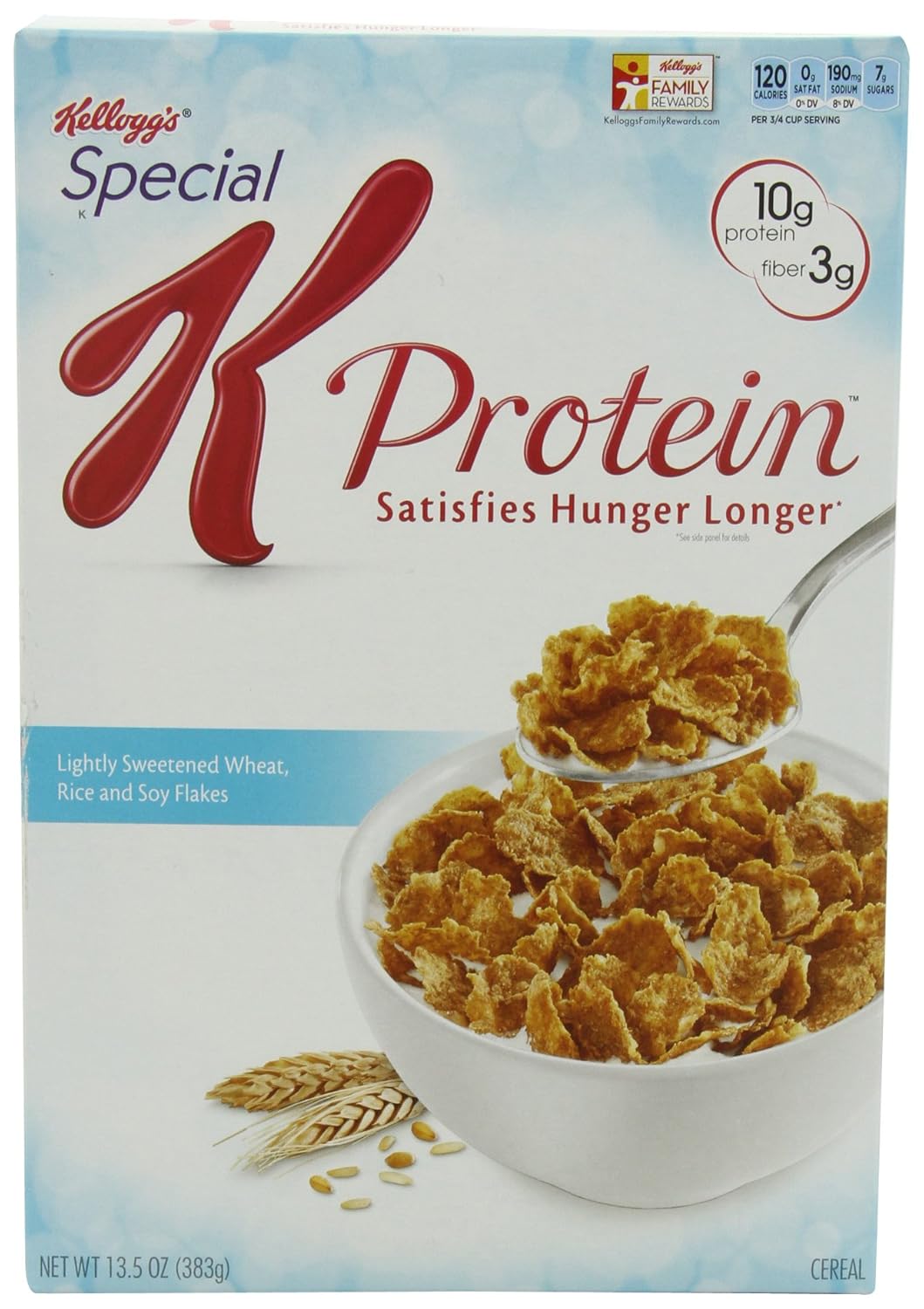
Special K Protein Plus Cereal 4-Pack
Best Mainstream PickPros
- 10g protein per serving at just 100 calories
- Widely available at any grocery store
- Traditional cereal taste and experience
- 4-pack on Amazon offers best value per box
- One of the best calorie-to-protein ratios in mainstream cereals
Cons
- Protein from soy isolate - not for soy allergies
- 4g added sugar per serving
- Softens quickly in milk within 1-2 minutes
Special K Protein Plus is the cereal you can find at any grocery store in America, which matters when you are traveling, staying at a hotel, or just want something reliable without ordering online. Kellogg’s boosted the classic Special K formula with soy protein, resulting in 10 grams of protein per serving at just 100 calories – one of the best calorie-to-protein ratios in the mainstream cereal category.
The flavor is light and subtly sweet, closer to the original Special K than a protein shake masquerading as cereal. The flake texture is thin and crispy, and it softens quickly in milk. For athletes who prefer a traditional cereal experience without the novelty flavors of newer brands, Special K Protein Plus delivers familiar comfort with a meaningful protein upgrade.
The 4-pack format available on Amazon is the best value structure for this product. Buying individually at retail often costs more per box than ordering in bulk, and the cereal keeps well for months thanks to its low moisture content.
Skip this if: You have a soy allergy or sensitivity. The added protein in Special K Protein Plus comes from soy protein isolate, which is a top-eight allergen. Also avoid it if you want zero sugar – the 4 grams per serving, while low, comes from added sugars.
7. Post Grape-Nuts – Best for Calorie-Dense Bulking

Post Grape-Nuts Original Cereal
Best for BulkingPros
- Only four ingredients: whole grain wheat, malted barley, salt, dried yeast
- Zero added sugar
- 7g fiber per serving
- Extremely filling for its serving size
- Long shelf life and universally available
Cons
- Only 6g protein per serving
- 47g carbs not suited for low-carb diets
- Very dense, hard texture requires significant chewing
Grape-Nuts is not a protein supplement in cereal form. It never claimed to be. But for athletes in a serious bulk who need calorie-dense, satiating food that packs easily, has a long shelf life, and keeps blood sugar stable for hours, Grape-Nuts punches above its modest protein number. Six grams of protein and 7 grams of fiber at 210 calories per half-cup serving, with zero added sugar and just four ingredients.
The dense, crunchy nuggets are extremely filling. One half-cup serving feels like significantly more food than that volume suggests. Combined with full-fat milk and a banana, a Grape-Nuts breakfast can push 500 to 600 calories – ideal for hardgainers struggling to hit a 3,500-plus calorie daily target.
The ingredient list is almost comically clean: whole grain wheat flour, malted barley flour, salt, dried yeast. Nothing else. For athletes suspicious of the long additive lists on newer functional cereals, Grape-Nuts offers the reassurance of century-old simplicity. It has been around since 1897 and still makes sense in an athlete’s pantry.
Skip this if: You are cutting or managing carbs. The 47 grams of carbohydrates per serving make Grape-Nuts a bulking food, not a fat loss tool. Also not ideal if you dislike dense, hard textures – the nuggets require significant chewing and can be tough on dental work.
8. One Degree Sprouted Oat Honey O’s – Best Organic Option

One Degree Sprouted Oat Honey O's
Best OrganicPros
- Glyphosate-free and third-party verified by BioChecked
- Sprouted oats boost bioavailability of zinc, magnesium, and iron
- Every ingredient traced to a verified organic farmer
- Reduced phytic acid from sprouting aids mineral absorption
- Mild, wholesome honey-oat flavor
Cons
- Only 7g protein per serving
- 6g sugar per serving
- Higher carbs not suited for keto or low-carb cutting
One Degree Organics operates on a farm-to-box transparency model: every ingredient is traced back to a verified farmer, and all oats are glyphosate-free, third-party verified by BioChecked. For athletes who prioritize clean sourcing and organic certification alongside their nutrition goals, One Degree Sprouted Oat Honey O’s is the best option in this review.
Sprouting the oats before processing increases nutrient bioavailability, particularly for minerals like zinc, magnesium, and iron that are critical for testosterone production, muscle contraction, and oxygen transport. The sprouting process also reduces phytic acid, which can inhibit mineral absorption in unsprouted grains.
The honey-sweetened flavor is mild and wholesome rather than aggressively sweet. Our testers described it as oatmeal in cereal form – comfortable, familiar, and satisfying. With 7 grams of protein per serving from sprouted oats and sprouted legumes, it is not the protein powerhouse of this list, but it earns its place for athletes who want the cleanest sourcing available in a conventional cereal format.
Skip this if: You need high protein density or are following a low-carb diet. One Degree is a whole-food, carb-forward cereal designed for active people who burn through glycogen rather than athletes in a ketogenic or very low-carb cutting phase.
Products We Considered But Do Not Recommend
Several popular cereals marketed toward fitness enthusiasts did not make our final eight despite significant brand recognition:
- Wheaties (The Breakfast of Champions): Only 4 grams of protein per serving. The branding far outpaces the nutrition. Save this for nostalgia, not muscle building.
- Cheerios Protein: Contains only 7 grams of protein per serving – the same as plain Cheerios with a slightly higher sugar load. The protein marketing is misleading relative to the actual formula.
- Nature’s Path Hemp Plus Granola: Good ingredient quality but only 5 grams of protein per serving at 280 calories. The calorie-to-protein ratio is too poor for muscle-building goals.
- Quaker Protein Instant Oatmeal: Technically not a cold cereal, and the 7 grams of protein per packet does not justify the 9 grams of added sugar. Better alternatives exist in both the oatmeal and cereal categories.
Cereal Comparison Table
| Cereal | Protein (g) | Sugar (g) | Fiber (g) | Calories | Rating | Best For |
|---|---|---|---|---|---|---|
| Magic Spoon Variety Pack | 13 | 0 | 1 | 140 | 4.9/5 | Overall muscle gain |
| Premier Protein Chocolate Almond | 20 | 5 | 5 | 220 | 4.7/5 | Maximum protein |
| Catalina Crunch Cinnamon Toast | 11 | 0 | 9 | 110 | 4.8/5 | Keto / low-carb |
| Kashi GO Original | 11 | 6 | 12 | 180 | 4.5/5 | Budget / fiber |
| Three Wishes Honey | 8 | 3 | 3 | 120 | 4.6/5 | Grain-free / allergen-friendly |
| Special K Protein Plus | 10 | 4 | 5 | 100 | 4.3/5 | Mainstream convenience |
| Post Grape-Nuts | 6 | 0 | 7 | 210 | 4.2/5 | Calorie-dense bulking |
| One Degree Sprouted Oat O’s | 7 | 6 | 4 | 210 | 3.8/5 | Organic / clean sourcing |
Buying Guide: What to Look for in a Muscle-Building Cereal
Protein Content
For muscle gain, target at least 10 grams of protein per serving in your cereal. At that threshold, a bowl at breakfast makes a meaningful contribution to your daily protein target without requiring you to compensate heavily at other meals. Anything under 7 grams is better categorized as a fiber or whole-grain cereal with modest protein – useful, but not a primary protein source.
Protein source matters as much as quantity. Whey and casein blends (as in Magic Spoon) provide complete amino acid profiles and high leucine content, which is the amino acid most directly linked to triggering muscle protein synthesis. Plant-based blends should combine at least two protein sources (pea plus chickpea, or seven grains plus legumes as in Kashi GO) to achieve a complete amino acid profile.
Sugar Content
Most conventional cereals carry 10 to 23 grams of added sugar per serving. That level of sugar spikes insulin, creates energy crashes, and contributes to the caloric surplus that adds fat rather than muscle during a bulk. Muscle-building cereals should contain no more than 6 grams of total sugar per serving, and ideally under 3 grams.
Zero-sugar options like Magic Spoon and Catalina Crunch use monk fruit and erythritol to deliver sweetness without the glycemic hit. These sweeteners are well-tolerated by most athletes, though some people experience mild digestive discomfort at high doses. One or two servings daily is within the tolerance range for virtually everyone.
Fiber Content
Fiber slows gastric emptying, extends satiety, and supports the gut microbiome that influences nutrient absorption and immune function – all of which are relevant to recovery and training adaptation. Aim for at least 3 grams of fiber per serving in your cereal, with 8 to 12 grams being ideal for athletes eating high-protein diets that can be constipating.
Prebiotic fibers (chicory root, inulin) feed beneficial gut bacteria and appear in several options on this list, including Catalina Crunch. For athletes who take probiotic supplements, pairing them with a prebiotic-rich cereal may amplify the benefit.
Calorie Density
Your phase of training determines how you should prioritize calorie density in your cereal selection. Bulking athletes benefit from calorie-dense options like Grape-Nuts (210 calories per half cup) that allow them to hit surplus targets without volume eating. Cutting athletes should gravitate toward lower-calorie, higher-protein options like Special K Protein Plus (100 calories, 10g protein) or Catalina Crunch (110 calories, 11g protein) that protect lean mass on a deficit.
Maintenance-phase athletes have the most flexibility. Any cereal delivering 10 or more grams of protein per 200 calories or fewer is a strong choice for body recomposition alongside consistent resistance training.
Frequently Asked Questions
How much protein do I need at breakfast to support muscle gain?
Research suggests that distributing protein evenly across meals – rather than consuming most of it at dinner – optimizes muscle protein synthesis over a 24-hour period. Aim for 30 to 40 grams of protein at breakfast if you are targeting significant muscle gain. A high-protein cereal delivering 13 to 20 grams combined with Greek yogurt, eggs, or a protein shake can reliably hit that target. Athletes eating at maintenance can get away with 20 to 25 grams at breakfast.
Is cereal a good post-workout food for muscle building?
Cereal can be an effective post-workout option when it combines fast-digesting carbohydrates with adequate protein. The carbs replenish muscle glycogen depleted during training, while the protein delivers amino acids for muscle protein synthesis. High-protein cereals like Magic Spoon or Premier Protein work particularly well post-workout when combined with milk, which adds casein protein for sustained amino acid release over the following hours.
Can I eat cereal before a workout?
Yes, with timing considered. A moderate serving of cereal one to two hours before training gives your body time to digest the carbohydrates into blood glucose without causing the GI discomfort of eating too close to exercise. Choose lower-fat, lower-fiber options pre-workout (Magic Spoon or Special K Protein Plus) over very high-fiber options (Kashi GO) to minimize digestive stress during training.
Are keto cereals like Magic Spoon and Catalina Crunch actually worth the price?
For athletes following low-carb or ketogenic protocols, the premium price of keto cereals is justified by the nutritional gap they fill. There are very few convenient, shelf-stable breakfast foods that deliver double-digit protein with zero sugar and minimal carbs. The price per gram of protein in Magic Spoon ($10 per box, 65g protein per box) works out to roughly $0.15 per gram of protein – competitive with many protein bars and significantly cheaper than most protein shakes per serving.
What is the difference between protein in cereal and protein from whole food sources like eggs?
The protein quality in high-end cereals like Magic Spoon (whey-casein blend) is comparable to whole eggs in terms of amino acid completeness and leucine content. However, whole eggs also deliver essential fatty acids, fat-soluble vitamins (A, D, E, K), choline, and other micronutrients that most cereals cannot match. Use high-protein cereal as a convenient protein delivery mechanism within a varied diet, not as a replacement for whole-food protein sources.
How do I know if a cereal’s protein marketing is accurate?
Look at the ingredient list, not just the front-panel claim. If protein is listed fourth or later in the ingredients and the first three ingredients are grains, sugar, and corn syrup, the protein content is likely underwhelming despite what the marketing says. For a cereal to meaningfully contribute to muscle building, protein or a protein concentrate should appear in the first three to four ingredients. Cross-reference the Nutrition Facts panel and aim for at least 8 grams per serving before trusting any high-protein claim.
Bottom Line
The best cereal for muscle gain in 2026 is the one you will actually eat consistently. Nutrition that sits on the shelf because it tastes terrible accomplishes nothing. That said, Magic Spoon is our clear recommendation for athletes who want the best combination of protein, taste, and macro cleanliness. Premier Protein Cereal earns a spot in your cabinet if maximum protein per bowl is the priority. And Catalina Crunch belongs in every low-carb athlete’s rotation.
Whatever you choose, pair your cereal with a whole-food protein source (eggs, Greek yogurt, cottage cheese) to push your breakfast protein into the 30-to-40-gram range that actually moves the needle on muscle protein synthesis. Cereal alone will not build muscle – but the right cereal, as part of a well-structured nutrition plan, makes hitting your daily protein target a lot more enjoyable.
Related Reading on FitnessVolt
- 10 Best Bulking Breakfast Ideas for Gaining Muscle Size and Strength
- 10 Simple High-Protein Bodybuilding Breakfast Ideas
- 40 Great Protein-Packed Foods for Muscle Gain
- Ultimate Guide: How Much Protein You Need for Muscle Gain
- 8 Essential Foods for Muscle Growth and Strength