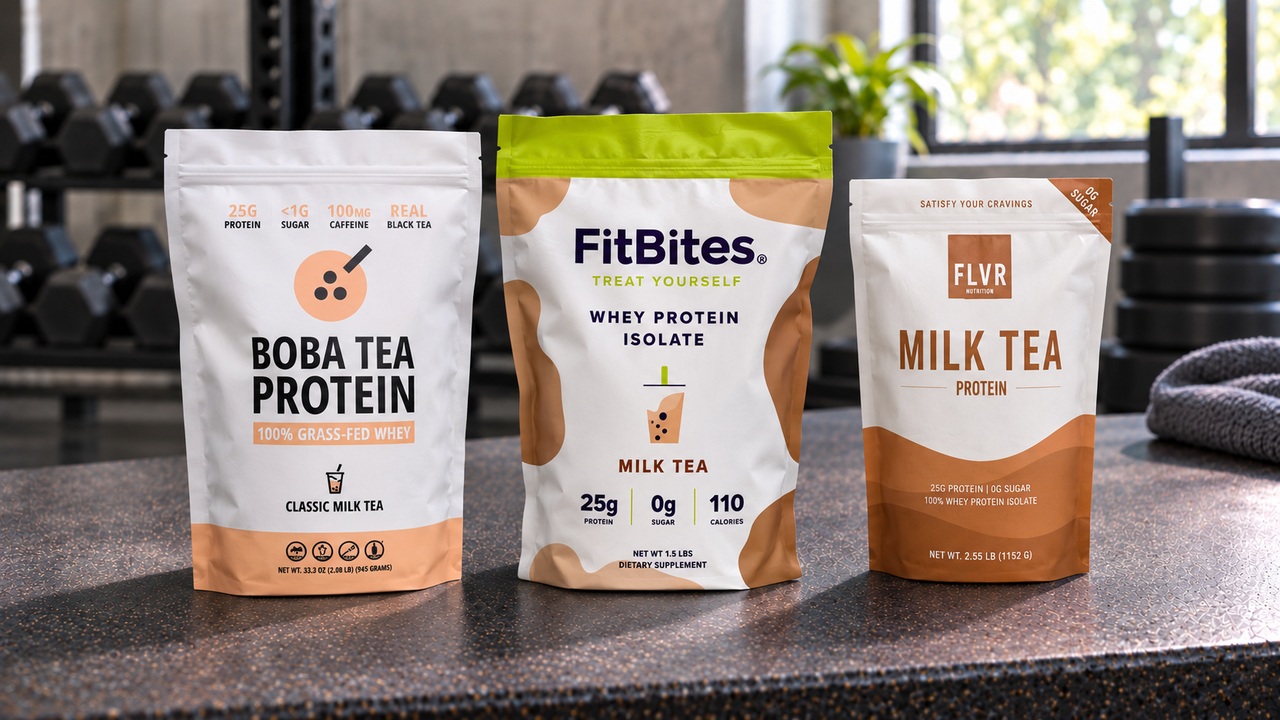
A milk-tea protein powder can supply 25g protein and still contain anywhere from 110 to 200 calories before you add milk. Sweeteners and caffeine matter just as much: these three black-tea whey mixes suit different buyers, despite the matching protein number.
Written by Tom Miller, CSCS. Last updated: November 2026.
Short on time? Boba Tea Protein Classic Milk Tea is our pick if you want real black tea, 25g whey protein and monk fruit instead of erythritol. Choose FitBites Milk Tea for the lowest-calorie serving here. All three contain milk and caffeine.
How We Chose These Protein Milk Tea Powders
We focused on black-tea milk-tea powders with a substantial protein serving. Each mix contains whey isolate and black tea, and supplies 25g total protein. Matcha, chai, ready-to-drink shakes and collagen-focused beauty blends have different buying priorities.
Our comparisons use dry-powder nutrition, serving weight, sweeteners, caffeine information and preparation instructions. We also consider whether a bag contains enough portions for your routine. Boba earns our top recommendation for its five-ingredient recipe and monk-fruit sweetener, with a clear penalty for inconsistent caffeine information. FitBites leads on calories, but includes erythritol. FLVR suits buyers who want a larger cold-mixed portion and accept more calories. The ratings reflect those tradeoffs, not a claim that one brand produces better muscle growth.
Our Verdict
Boba Tea Protein Classic Milk Tea
A five-ingredient black-tea whey mix with 25g protein and monk fruit, for buyers who prefer to avoid erythritol.
Best for: Adults who want a caffeinated black-tea protein drink without erythritol
Check Current PriceOur Top Picks
Best With Monk Fruit: Boba Tea Protein Classic Milk Tea

Boba Tea Protein Classic Milk Tea
Monk-Fruit PickBoba Tea Protein combines black tea, whey isolate and monk fruit in a five-ingredient mix, for buyers who prefer to skip erythritol.
Pros
- 25g whey protein per scoop
- Black tea with monk fruit
- 25 servings per pouch
Cons
- 3.5g saturated fat per serving
- Maker gives inconsistent caffeine figures
The current 945g pouch contains 25 servings. One 37.8g scoop supplies 25g protein, 160 calories, less than 1g sugar and 3.5g saturated fat. The recipe contains grass-fed whey isolate, coconut-oil creamer, black tea powder, monk fruit and salt. Compared with FitBites, you get the same protein with 50 more calories and a different sweetener.
Caffeine is the main caution. The pouch and product page say about 100mg per serving, while the brand’s separate caffeine page lists 69mg. Treat this as a caffeinated drink, not a reliable low-caffeine option. Skip this if you need a precise caffeine limit, avoid milk, or want less saturated fat. Low-lactose wording does not make whey suitable for a milk allergy.
Boba’s serving guide centers on iced drinks and a two-parts-milk to one-part-water ratio. Its layered recipe uses a little less than a full scoop, so that version contributes less protein than the full dry serving. Add milk and pearls to your nutrition totals rather than assuming the powder’s numbers describe the finished cup.
Best Lower-Calorie Serving: FitBites Milk Tea
FitBites Milk Tea Whey Protein Isolate
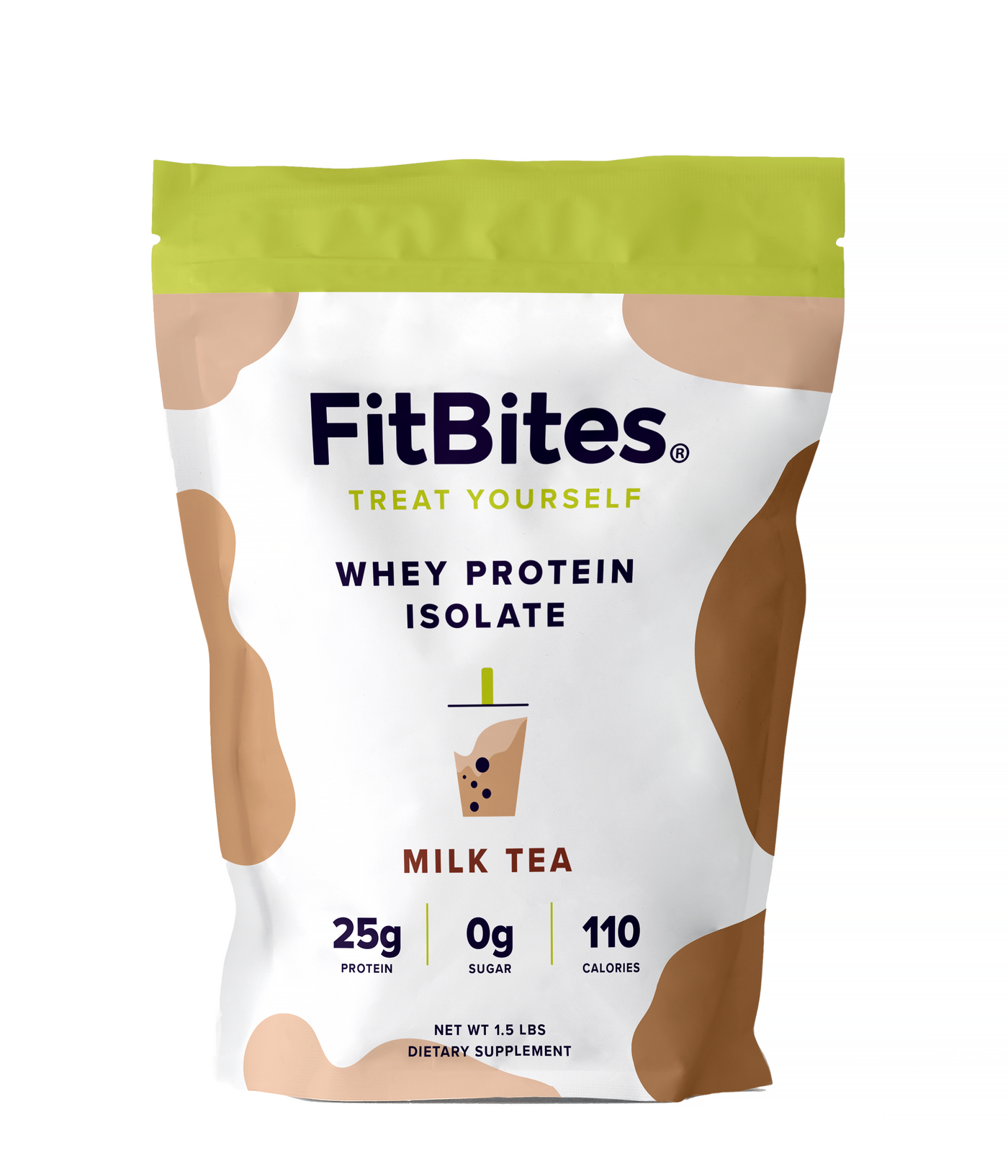
Lower-Calorie PickFitBites pairs twenty-five grams of whey protein with black tea in a lower-calorie serving, with erythritol and stevia instead of sugar.
Pros
- 25g protein in 110 calories
- 0g sugar per serving
- 95mg caffeine amount stated
Cons
- 5g erythritol per serving
- Milk allergen and broad shared-facility warning
FitBites supplies 25g protein in a 35g scoop, with 110 calories, 0g sugar and 0g saturated fat. Its 1.5lb pouch holds about 19 servings. Black tea contributes 95mg caffeine per serving, and the formula contains whey isolate, erythritol, sunflower lecithin and stevia.
The 5g erythritol is the key tradeoff. Choose Boba instead if you prefer to avoid that sugar alcohol. Skip this if erythritol does not agree with you or you need a caffeine-free drink. FitBites contains milk, and the maker also lists wheat, soy, sesame, egg, fish, peanuts and tree nuts among ingredients handled in its facility.
The maker directs you to add one scoop to 8oz milk or water and shake or blend. FitBites gives the same 25g protein as FLVR with 90 fewer dry-powder calories, but its smaller bag holds about five fewer portions. That makes price per serving more useful than comparing the bag prices alone.
Best Larger Cold-Mixed Portion: FLVR Premium Milk Tea Protein
FLVR Premium Milk Tea Protein
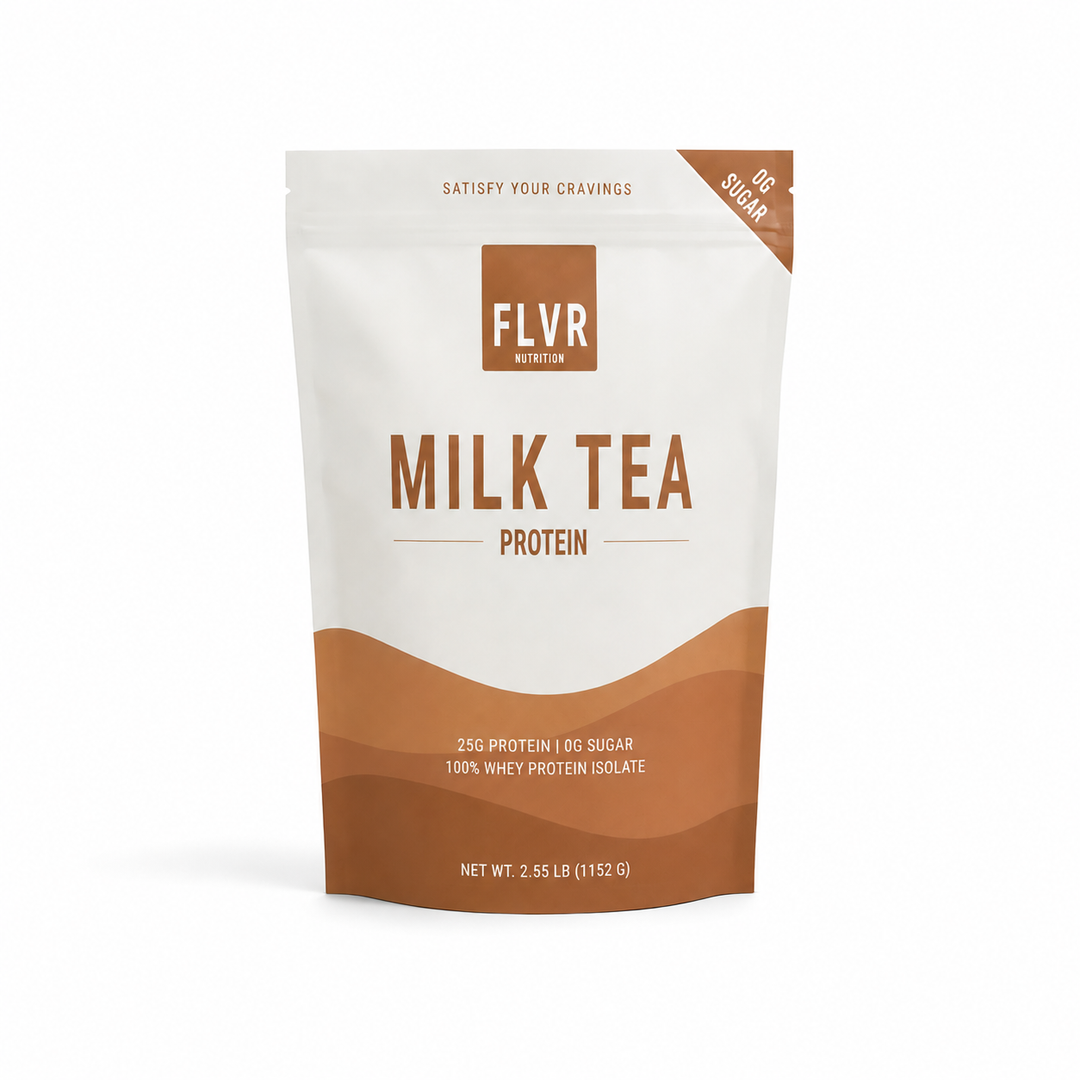
Larger Cold ServingFLVR combines whey isolate, black tea and creamer in a larger cold-mixed serving, for buyers who accept more calories at the same protein dose.
Pros
- 25g protein per portion
- 24 servings in a 2.55lb pouch
- Explicit cold-water or milk directions
Cons
- 200 calories for the same 25g protein
- Caffeine amount not quantified
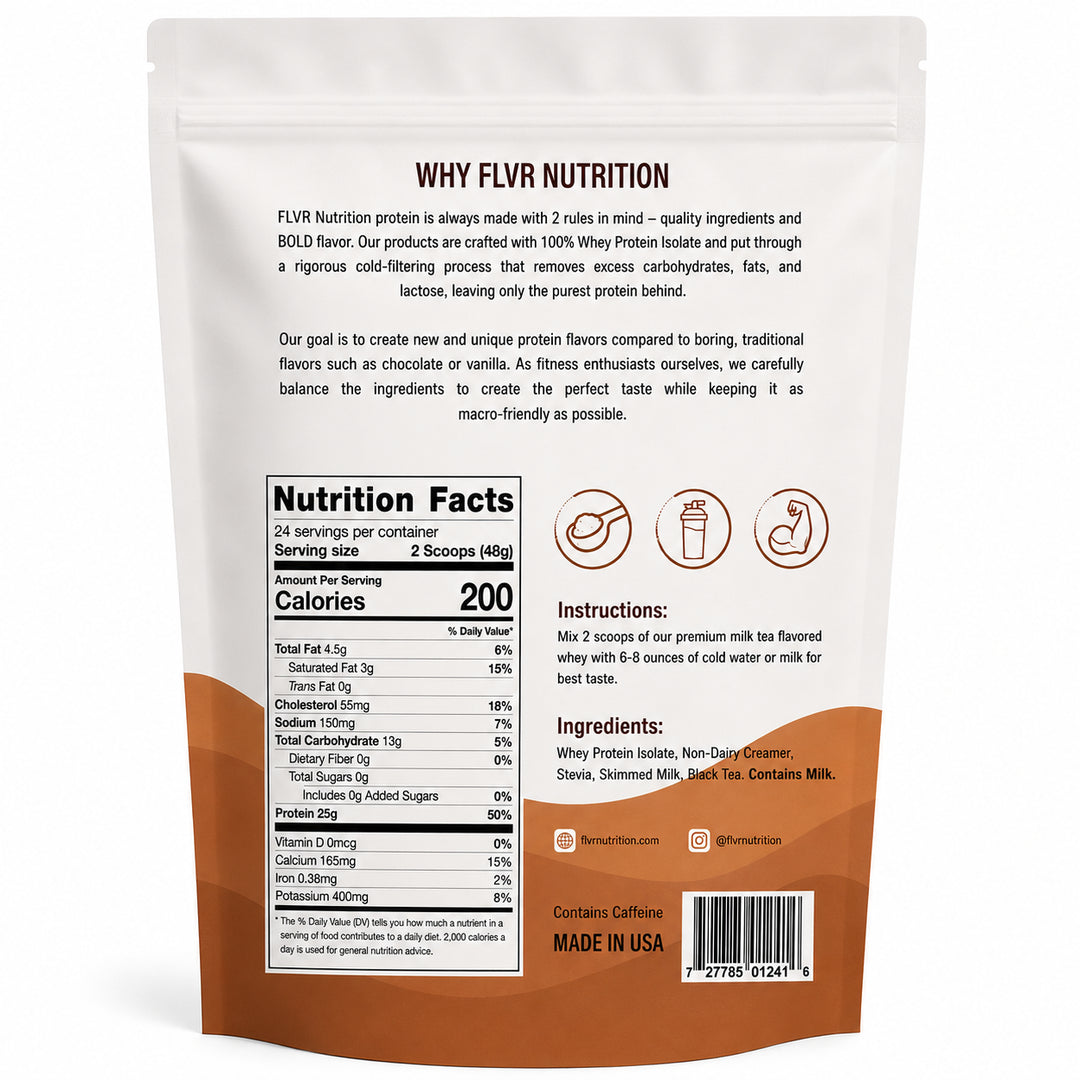
FLVR’s two-scoop serving weighs 48g and contains 25g protein, 200 calories, 0g sugar and 3g saturated fat. The 2.55lb pouch holds 24 portions. Its ingredient list names whey isolate, non-dairy creamer, stevia, skimmed milk and black tea.
You need more powder for the same protein: FLVR’s 48g portion exceeds Boba’s 37.8g and FitBites’ 35g. Choose it when that larger portion and its ingredients fit your diet, not because the heavier bag guarantees more protein servings. Skip this if you want the most protein for the fewest calories or need a quantified caffeine amount. FLVR states that it contains caffeine without giving a milligram figure.
The back label specifies 6-8oz cold water or milk for two scoops. Despite the words non-dairy creamer, the overall formula contains both whey and skimmed milk. Buyers with milk allergies should pass on this and the other two picks.
Protein Milk Tea Comparison
| Product | Key Spec | Best For | Price |
|---|---|---|---|
| Boba Tea Protein Classic Milk Tea | 1 scoop (37.8g); 25g protein; 160 calories; less than 1g sugar; 25 servings; caffeine figures conflict: about 100mg on pack versus 69mg on maker caffeine list | Monk-Fruit Pick | Check Price |
| FitBites Milk Tea Whey Protein Isolate | 1 scoop (35g); 25g protein; 110 calories; 0g sugar; 5g erythritol; 95mg caffeine; about 19 servings | Lower-Calorie Pick | Check Price |
| FLVR Premium Milk Tea Protein | 2 scoops (48g); 25g protein; 200 calories; 0g sugar; caffeine amount not quantified; 24 servings; cold water or milk | Larger Cold Serving | Check Price |
How to Choose a Protein Milk Tea
Compare Protein Before Adding Milk
All three powders contribute 25g protein per full dry serving. The calorie totals differ: FitBites has 110, Boba has 160 and FLVR has 200. Adding the same milk to each preserves that gap. Pearls, syrup, cream and extra scoops change the totals again.
The International Society of Sports Nutrition gives 20-40g high-quality protein as a general serving range for exercising adults, with individual needs affected by age, body size and training. That supports comparing these as substantial protein drinks; it does not establish a superior result for a particular brand. Use our protein calculator to put a serving into your daily intake.
Choose a Sweetener You Can Use
Boba uses monk fruit, FitBites combines erythritol and stevia, and FLVR lists stevia. FitBites’ zero-sugar label does not mean the serving lacks sweetener: it contains 5g erythritol. If you already avoid that ingredient, Boba or FLVR fits that preference without requiring you to guess about tolerance.
Zero sugar also does not mean zero calories. FLVR’s sugar-free portion contains 200 calories and 3g saturated fat. Boba contains less than 1g sugar with 3.5g saturated fat. Read the whole panel instead of treating one front-of-bag number as a complete nutrition assessment.
Make a Separate Caffeine Decision
FitBites states 95mg caffeine per serving. Boba’s pouch says about 100mg, but its separate caffeine page lists 69mg; FLVR does not quantify its caffeine. Buyers who need a precise limit should avoid uncertainty rather than averaging conflicting figures or assuming an undisclosed amount is small.
Count coffee, other tea, energy drinks and pre-workouts as well. The FDA cites 400mg per day as an amount not generally associated with negative effects for most adults, while noting variation in sensitivity and the effects of conditions or medications. It is not an intake goal. Ask your clinician about a suitable limit during pregnancy or breastfeeding, or with a relevant condition or medication.
Match the Instructions to Your Cup
FLVR specifies cold liquid. Boba’s serving guide uses iced preparation; FitBites gives milk-or-water shaking instructions without a hot-latte method. Use these as cold protein drinks unless your current package gives another method. Do not shake hot liquid in a sealed bottle.
For a spiced tea with different preparation choices, see our protein chai comparison. Our protein matcha guide covers green-tea alternatives. Neither a different tea nor added protein removes the need to check caffeine and allergens.
Calculate Cost Per Full Serving
Divide the current delivered price by the portion count: 25 for Boba, about 19 for FitBites and 24 for FLVR. Include shipping. FLVR’s 2.55lb bag is the heaviest here, yet Boba’s smaller 945g pouch contains one more full protein serving.
Since each full portion contributes 25g protein, the serving-price comparison is straightforward. Halving a portion reduces the protein as well as the cost; it does not turn a bag into twice as many equivalent servings. Follow the scoop weight on the package you receive if the manufacturer changes its formula.
Alternatives and Reasons to Pass
Keep tea and protein separate if none of these sweeteners or caffeine amounts fits your routine. Brew the tea you prefer, let it cool, then use a suitable unflavored protein according to its directions. You gain control over the protein and tea quantities, though you must calculate the finished drink’s nutrition yourself.
These picks contain milk and are not vegan. A collagen milk tea also serves a different purpose from a whey drink; a protein total alone does not make different protein sources interchangeable. For a coffee-based option, compare the formats and protein sources in our protein coffee guide rather than buying on flavor alone.
Frequently Asked Questions
Does Protein Milk Tea Contain Real Tea?
These three do: Boba and FitBites name black tea powder, and FLVR lists black tea. Other boba-style protein flavors may use fruit, roots or flavoring without tea. Read the ingredient list for the exact variety. A milk-tea name by itself does not establish the tea ingredient or its caffeine amount.
How Much Protein Is in a Serving?
Each full dry serving here supplies 25g protein. The required amount of powder differs: 37.8g for Boba, 35g for FitBites and 48g for FLVR. A partial scoop supplies less. Added dairy or plant milk contributes whatever its own label specifies, so count that separately when calculating the finished drink.
Which Pick Has the Fewest Calories?
FitBites has 110 calories per full dry serving, compared with 160 for Boba and 200 for FLVR. Each has 25g protein. Those figures exclude milk, pearls and other additions. FitBites also contains 5g erythritol and 95mg caffeine, so the lower calorie count does not make it the right choice for every buyer.
Can I Drink Protein Milk Tea Before Bed?
These are caffeinated products, so they are poor choices if evening caffeine affects your sleep. FitBites states 95mg; Boba gives conflicting amounts, and FLVR leaves the amount unquantified. Choose a caffeine-free protein source and a suitable caffeine-free drink instead of assuming that milk or protein offsets the stimulant.
Is Low-Lactose Whey Safe for a Milk Allergy?
No. Lactose is a sugar; a milk allergy involves milk proteins. These three powders contain whey, and FLVR also lists skimmed milk. Low-lactose claims and non-dairy-creamer wording do not make the complete drink milk-free. Follow your allergist’s advice and check the current package, including shared-facility warnings, before buying.
Do These Powders Include Boba Pearls?
The selected products are protein powders, not complete pearl kits. Buy toppings separately if you want them, and include their nutrition in your cup. Boba Tea Protein states that its powder does not contain tapioca balls. A photograph of a prepared drink with pearls does not mean they come inside the pouch.
Bottom Line
Boba Tea Protein Classic Milk Tea is our pick for a black-tea whey drink sweetened with monk fruit rather than erythritol. Its 25g protein serving comes with 160 calories and 3.5g saturated fat, and its inconsistent caffeine figures matter if you need a precise limit. FitBites suits a lower-calorie drink with a stated caffeine dose; FLVR fits a larger cold-mixed portion. Choose around those differences, then add the nutrition from your milk and toppings. None of these three suits a milk allergy or a caffeine-free routine.
Sources
- Boba Tea Protein Classic Milk Tea ingredients and package options
- Boba Classic 25-serving nutrition panel
- Boba Tea Protein caffeine list
- Boba Tea Protein serving instructions
- FitBites Milk Tea ingredients and allergen information
- FitBites Milk Tea nutrition and caffeine panel
- FitBites preparation directions
- FLVR Milk Tea Protein product and US shipping information
- FLVR full nutrition, ingredients and cold-preparation label
- International Society of Sports Nutrition position stand on protein and exercise
- FDA guidance on caffeine amounts and individual sensitivity