Mike Mentzer built a training philosophy on doing less. His Heavy Duty system called for one all-out set per exercise, workouts a week or more apart, and a warning that even one extra set could tip you into overtraining. Decades later, it has a new following among lifters who want short, hard sessions.
Exercise scientists have since tested almost every piece of it. Mentzer was right about effort, recovery and keeping workouts short. He was wrong about the dose: one set builds muscle, and two or three sets build more.
What Heavy Duty is
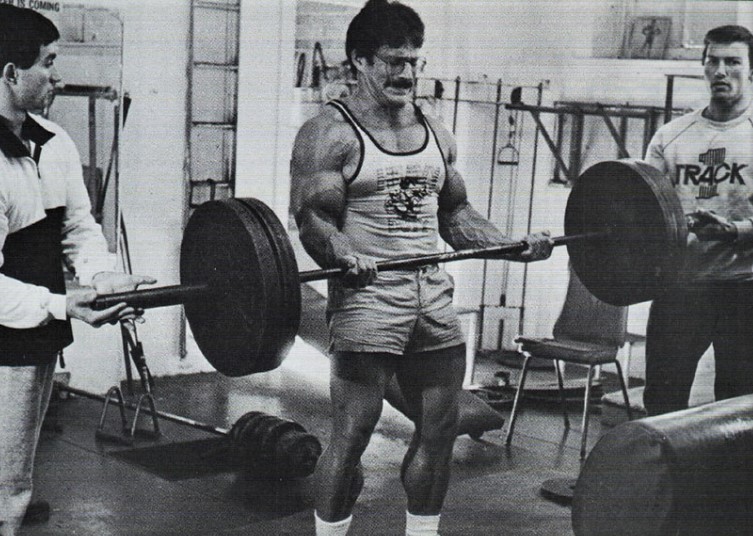
Mentzer won the heavyweight class at the 1979 Mr. Olympia and finished fifth at the 1980 Mr. Olympia before he stopped competing. He spent the following years teaching his own version of high-intensity training through books, seminars and one-on-one coaching. In recorded seminars, he summed up the theory in three words: training should be intense, brief and infrequent.
His reasoning was that a hard set acts as a signal, and the body grows while it recovers from that signal. Anything beyond the minimum signal only adds to the recovery bill. Our Mike Mentzer profile covers his career, and our Heavy Duty workout guide has full routines.
Mentzer’s rules in his own teaching
His recorded seminars lay out these rules:
- One set per exercise. Never more than two sets for any muscle.
- Every working set to failure. He called the last, almost impossible rep the trigger that switches on growth.
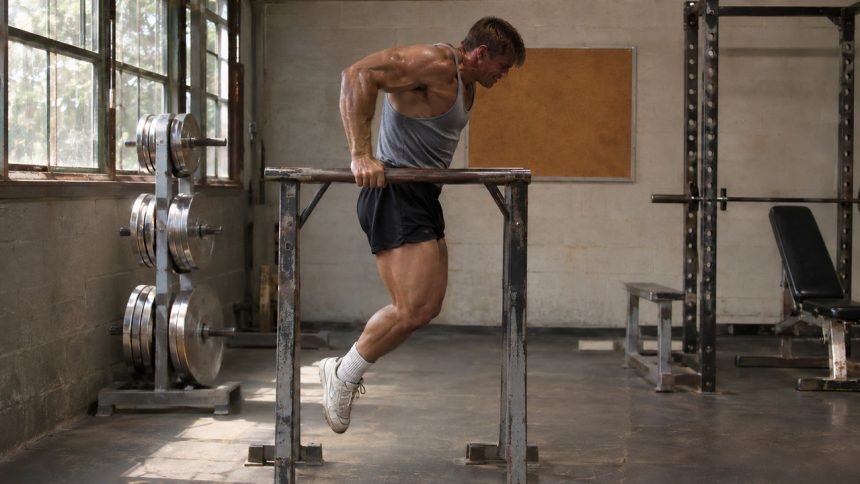
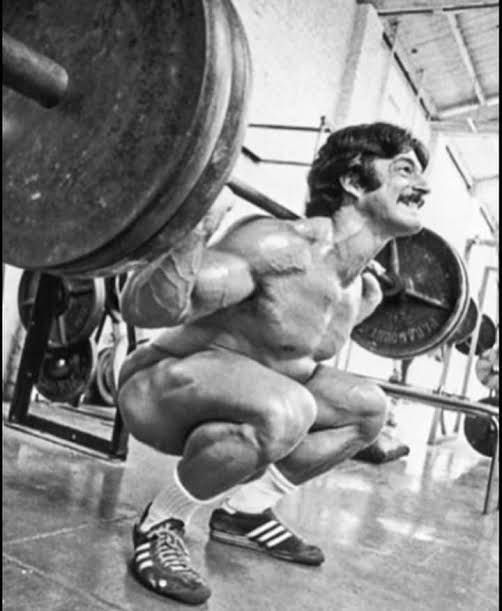
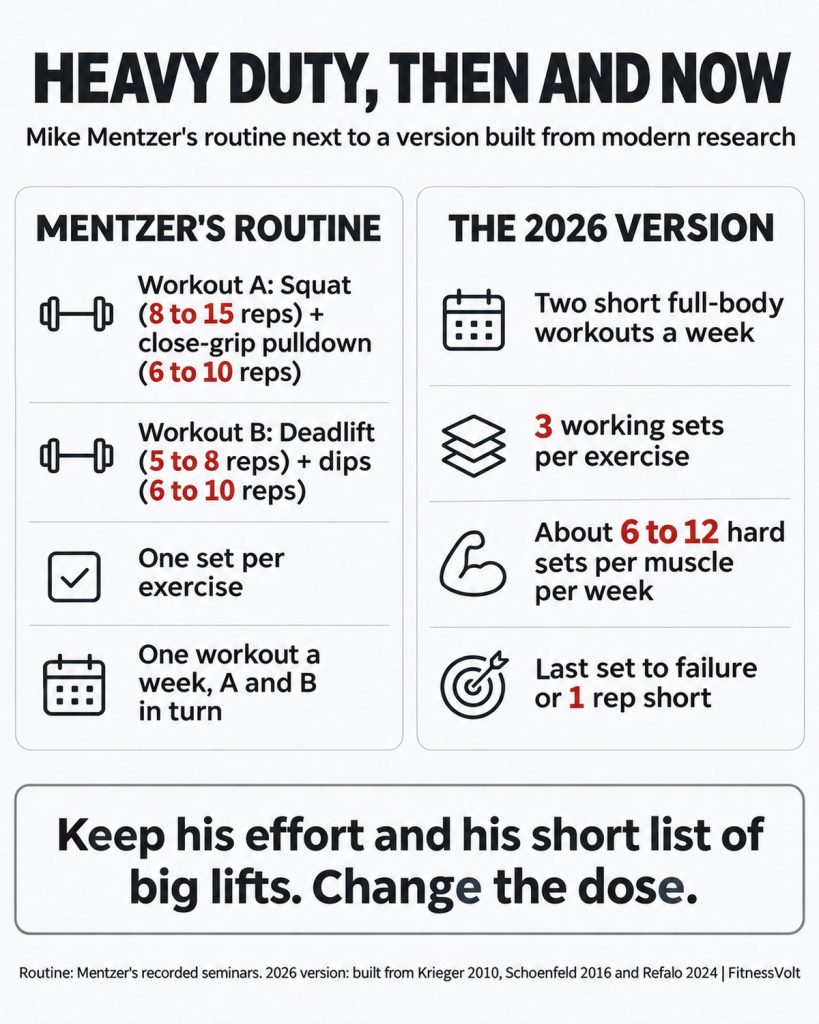
- Brief sessions. His “consolidation” routine had two exercises per workout: squats and close-grip, palms-up pulldowns in one, deadlifts and parallel-bar dips in the other.
- Rare workouts. Beginners trained every 72 hours, and no more often than every 48. For the vast majority of people, he said, one session every 5 to 10 days or even less often worked best, and never two days in a row. The consolidation routine ran one workout a week, the two taken in turn.
- Planned layoffs. After about eight of those workouts, he prescribed two full weeks off, then one session every nine days.
- Slow, controlled reps. Roughly four seconds up, a two-second pause and four seconds down, about ten seconds a rep, though he said being off by a second didn’t matter.
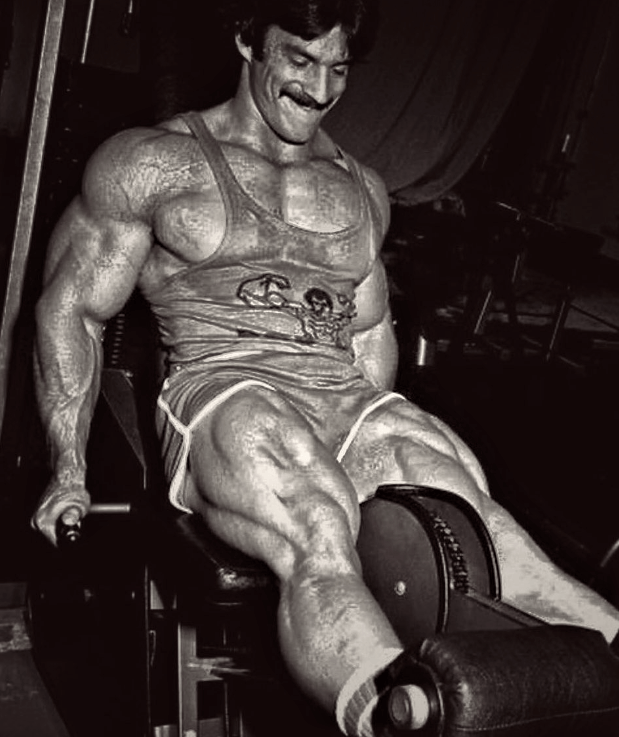
- Supersets for chest and legs. Flyes straight into incline presses, and leg extensions straight into leg presses.
- Forced reps and negatives only as extras. He said that when he had early clients do them on every set, almost nobody gained well, so he left them out of his baseline programs.
- One extra set is overtraining. Even one set more than the body requires counts as overtraining, he warned. It’s the claim at the heart of the system.
Heavy Duty, graded by modern research
The grades below compare each rule with systematic reviews and controlled trials. A means the research backs it outright. B means it holds with a caveat, and the plus or minus shows how small or large that caveat is. C means it works but leaves gains behind. D means the research contradicts it. Ungraded means none of the studies here tested it. Each grade gets its evidence below; the last two sections turn the grades into a plan and a session check.
| Mentzer’s rule | Grade | What the research says |
|---|---|---|
| Forced reps and negatives only as extras | B+ | Extra forced reps didn’t add strength, and rest-pause and drop sets didn’t add muscle at matched volume; he reached the same conclusion |
| Brief sessions | B+ | A handful of hard sets per muscle each week produces real gains in trained lifters |
| Slow, controlled reps | B | Reps from half a second to eight seconds build similar muscle; his ten-second reps sit just past that range, where the evidence is thin |
| Supersets for chest and legs | B | An isolation move straight into a compound lift gave similar strength and size gains with less total work in one trial in untrained men |
| Every working set to failure | B- | Failure adds little or no size over stopping a rep or two short, and it costs more recovery |
| One set per exercise | C | It works, but multiple sets had about a 40% larger effect on muscle growth in a meta-analysis |
| Rare workouts: each muscle every 5 to 10 days or less often | C | Twice a week beats once a week for size |
| One extra set is overtraining | D | Trained lifters still grew on 9 to 24 weekly sets per muscle, far above the one or two he allowed |
| Planned layoffs | Ungraded | None of the studies here tested two weeks off after every eight workouts |
Volume: one set works, two or three sets build more
The one-set question has two meta-analyses of its own. A 2010 meta-analysis of eight studies found that multiple sets per exercise had about a 40% larger effect on muscle growth than a single set, in both trained and untrained people. A 2009 meta-analysis by the same author found 46% greater strength gains from two to three sets than from one. Four to six sets didn’t beat two to three in either analysis.
A 2017 meta-analysis of 15 studies found that each extra weekly set per muscle added about 0.37% to muscle growth. A larger analysis of 67 studies, published online in 2025, confirmed that size and strength keep rising with volume, with diminishing returns that come on much faster for strength than for size.
Mentzer was right that more isn’t always better, but the plateau sits far higher than he thought. In an 8-week study of 35 trained lifters, 12, 18 and 24 weekly sets for the legs all grew the thighs by similar amounts, about 6% to 8%. When 49 trained men did biceps work for six weeks, 9 sets done in one weekly session grew the muscle by 4.3%, 18 sets over two sessions by 9.5%, and 27 sets by 5.4%. The authors concluded that 9 weekly sets were enough for growth, and that the higher doses may add more strength.
The best evidence in Mentzer’s favor is a 2020 review of minimal-dose training. In resistance-trained men, a single set done one to three times a week produced meaningful strength gains: about 12 kg on average across lifts, including about 17 kg on the squat. The authors called those gains “suboptimal, yet significant,” which sums up one-set training well.
Frequency: once a week leaves gains behind
A 2016 meta-analysis of ten studies found that training a muscle at least twice a week produced more growth than training it once, with effect sizes of 0.49 against 0.30. A 2018 meta-analysis of 22 studies found strength rose with more weekly sessions, but when total volume was matched, frequency made no significant difference. The analysis of 67 studies reached a similar place: frequency on its own showed no reliable effect on size.
That makes the once-a-week part of Heavy Duty less damaging than it sounds, as long as the weekly dose is high enough. The problem is that Mentzer paired low frequency with very low volume. None of the studies here tested his longer gaps of 9 or 10 days, or his scheduled two-week layoffs.
Failure and recovery
Mentzer treated the last rep, the one you can’t finish, as the point of the set. A 2023 meta-analysis of 15 studies found no clear advantage for momentary muscular failure over stopping short for muscle growth, with an effect size of 0.12 and a confidence interval that crossed zero. A 2024 trial in 18 trained adults had each person train one leg to failure and the other leg one to two reps short for eight weeks. Quadriceps thickness grew by 0.181 cm on the failure leg and 0.182 cm on the other.
Load changes the picture. In a 2022 study of 25 untrained men, failure mattered at 30% of one-rep max, where muscle area grew 7.8% to failure against 2.8% short of it. At 80% of max, failure added nothing, 8.1% against 7.7%. Most of Mentzer’s sets used loads heavy enough for 5 to 15 reps, much closer to the heavier condition.
One analysis points the other way: a 2024 series of meta-regressions found muscle growth increased as sets ended closer to failure, though its authors called the work exploratory. Failure also has a cost. In a 2017 study, sets taken to failure caused a bigger drop in performance and slowed recovery for 24 to 48 hours compared with the same total work stopped short. With one set per exercise, taking it to failure or a rep short makes sense, and slower recovery is the price.
Forced reps and negatives: Mentzer was mostly right
Mentzer dropped forced reps and negatives as a default after his early clients failed to gain on them, and the research since then mostly agrees with where he ended up. In a 2007 trial in team-sport athletes, more forced reps didn’t improve strength gains. In a 2021 study of 28 trained men, rest-pause and drop sets didn’t grow the thighs any more than traditional sets when total work was the same, though the rest-pause group gained more squat strength than the traditional group. None of the trials here measured muscle growth from forced reps or negatives. Our guide to drop sets for muscle growth covers when they still earn a place.
Tempo and supersets
A 2015 meta-analysis of eight studies found similar muscle growth with rep durations from half a second to eight seconds. His roughly ten-second rep sits at the edge of the zone where the same review found very slow reps inferior, though on thin evidence. Two to three seconds each way keeps the control he wanted and stays inside the range the studies support.
His chest and leg supersets put an isolation exercise straight before a compound lift, the method usually called pre-exhaust. In a 2019 trial of 31 untrained men over nine weeks, a set of leg extensions to failure before leg presses produced strength gains similar to three sets of leg presses alone, 16% against 15%, with less total work. That trial didn’t include experienced lifters.
Where Heavy Duty falls short
The weak point is the dose, and it shows up in two places at once. One set per exercise, once a week, adds up to one or two hard sets per muscle per week. The volume research puts the useful range several times higher, and the frequency research says you lose little by splitting that work across two sessions. Mentzer’s claim that one extra set is overtraining has the least support of anything in the system.
A Heavy Duty-style plan you can run
The plan below keeps Mentzer’s four lifts, his effort and his short sessions, and changes the dose. The set counts, the twice-weekly schedule and the two added exercises are this article’s.
Run the same short full-body workout twice a week, at least two days apart: squats, close-grip palms-up pulldowns and parallel-bar dips, with deadlifts in one session and a row and a leg curl in the other. Three working sets per exercise gives each major muscle about 6 to 12 hard sets a week. Take the last set of each exercise to failure or one rep short, and stop the earlier sets one to three reps short. Keep reps controlled and log every set.
The Heavy Duty self-check
The four checks below are this article’s. Score one point for each after every session:
- Effort. Your last set of each exercise ended at failure or one rep short.
- Brevity. The session took under 45 minutes.
- Dose. Over the week, each major muscle got at least six hard sets.
- Progress. You beat your logged reps or load on at least one lift since last time.
Four points means you kept the best of Heavy Duty without its biggest weakness. Miss the progress check two sessions running and cut a set per exercise or add a rest day, Mentzer’s own fix in a smaller dose.

Common questions
Is one set to failure enough to build muscle?
It’s enough to make progress, especially for strength, and not enough to build the most muscle. Two to three sets per exercise is where the research puts the better return.
Who does Heavy Duty suit best?
Lifters with very little time who want a minimum effective dose, especially for strength. Our Mike Mentzer training challenge shows how four weeks of one-set training felt in practice.
How is it different from Lee Haney’s approach?
They sit at opposite ends of the same argument. Haney trained more often and warned against wrecking the muscle; Mentzer trained rarely and pushed every set to the limit. We graded Lee Haney’s rules the same way: his every-fourth-day frequency earned an A where Mentzer’s rare workouts earn a C, and Mentzer’s two-exercise sessions were far shorter than Haney’s.
The bottom line
Mike Mentzer got the spirit of training right: push hard, keep it short and respect recovery. He got the dose wrong. Keep his effort and his short list of big lifts, and do three sets per exercise twice a week instead of one set once a week.
Sources
- Mentzer, M. Heavy Duty training system (high-intensity training: theory and application) [Recorded lecture]. YouTube.
- Mentzer, M. Bodybuilding seminar [Recorded seminar, uploader-dated 1998]. YouTube.
- Mentzer, M. Bodybuilding seminar [Recorded seminar, uploader-dated 1996]. YouTube.
- Krieger, J. W. (2010). Single vs. multiple sets of resistance exercise for muscle hypertrophy: a meta-analysis. Journal of Strength and Conditioning Research, 24(4), 1150-1159. DOI: 10.1519/JSC.0b013e3181d4d436. PMID: 20300012.
- Krieger, J. W. (2009). Single versus multiple sets of resistance exercise: a meta-regression. Journal of Strength and Conditioning Research, 23(6), 1890-1901. DOI: 10.1519/JSC.0b013e3181b370be. PMID: 19661829.
- Schoenfeld, B. J., Ogborn, D., & Krieger, J. W. (2017). Dose-response relationship between weekly resistance training volume and increases in muscle mass: a systematic review and meta-analysis. Journal of Sports Sciences, 35(11), 1073-1082. DOI: 10.1080/02640414.2016.1210197. PMID: 27433992.
- Pelland, J. C., Remmert, J. F., Robinson, Z. P., Hinson, S. R., & Zourdos, M. C. (2026). The resistance training dose response: meta-regressions exploring the effects of weekly volume and frequency on muscle hypertrophy and strength gains. Sports Medicine, 56(2), 481-505. Published online December 4, 2025. DOI: 10.1007/s40279-025-02344-w. PMID: 41343037.
- Aube, D., Wadhi, T., Rauch, J., Anand, A., Barakat, C., Pearson, J., et al. (2022). Progressive resistance training volume: effects on muscle thickness, mass, and strength adaptations in resistance-trained individuals. Journal of Strength and Conditioning Research, 36(3), 600-607. DOI: 10.1519/JSC.0000000000003524. PMID: 32058362.
- Heaselgrave, S. R., Blacker, J., Smeuninx, B., McKendry, J., & Breen, L. (2019). Dose-response relationship of weekly resistance-training volume and frequency on muscular adaptations in trained men. International Journal of Sports Physiology and Performance, 14(3), 360-368. DOI: 10.1123/ijspp.2018-0427. PMID: 30160627.
- Androulakis-Korakakis, P., Fisher, J. P., & Steele, J. (2020). The minimum effective training dose required to increase 1RM strength in resistance-trained men: a systematic review and meta-analysis. Sports Medicine, 50(4), 751-765. DOI: 10.1007/s40279-019-01236-0. PMID: 31797219.
- Refalo, M. C., Helms, E. R., Trexler, E. T., Hamilton, D. L., & Fyfe, J. J. (2023). Influence of resistance training proximity-to-failure on skeletal muscle hypertrophy: a systematic review with meta-analysis. Sports Medicine, 53(3), 649-665. DOI: 10.1007/s40279-022-01784-y. PMID: 36334240.
- Refalo, M. C., Helms, E. R., Robinson, Z. P., Hamilton, D. L., & Fyfe, J. J. (2024). Similar muscle hypertrophy following eight weeks of resistance training to momentary muscular failure or with repetitions-in-reserve in resistance-trained individuals. Journal of Sports Sciences, 42(1), 85-101. DOI: 10.1080/02640414.2024.2321021. PMID: 38393985.
- Lasevicius, T., Schoenfeld, B. J., Silva-Batista, C., Barros, T. S., Aihara, A. Y., Brendon, H., et al. (2022). Muscle failure promotes greater muscle hypertrophy in low-load but not in high-load resistance training. Journal of Strength and Conditioning Research, 36(2), 346-351. DOI: 10.1519/JSC.0000000000003454. PMID: 31895290.
- Robinson, Z. P., Pelland, J. C., Remmert, J. F., Refalo, M. C., Jukic, I., Steele, J., & Zourdos, M. C. (2024). Exploring the dose-response relationship between estimated resistance training proximity to failure, strength gain, and muscle hypertrophy: a series of meta-regressions. Sports Medicine, 54(9), 2209-2231. DOI: 10.1007/s40279-024-02069-2. PMID: 38970765.
- Morán-Navarro, R., Pérez, C. E., Mora-Rodríguez, R., de la Cruz-Sánchez, E., González-Badillo, J. J., Sánchez-Medina, L., & Pallarés, J. G. (2017). Time course of recovery following resistance training leading or not to failure. European Journal of Applied Physiology, 117(12), 2387-2399. DOI: 10.1007/s00421-017-3725-7. PMID: 28965198.
- Drinkwater, E. J., Lawton, T. W., McKenna, M. J., Lindsell, R. P., Hunt, P. H., & Pyne, D. B. (2007). Increased number of forced repetitions does not enhance strength development with resistance training. Journal of Strength and Conditioning Research, 21(3), 841-847. DOI: 10.1519/R-20666.1. PMID: 17685709.
- Enes, A., Alves, R. C., Schoenfeld, B. J., Oneda, G., Perin, S. C., Trindade, T. B., et al. (2021). Rest-pause and drop-set training elicit similar strength and hypertrophy adaptations compared with traditional sets in resistance-trained males. Applied Physiology, Nutrition, and Metabolism, 46(11), 1417-1424. DOI: 10.1139/apnm-2021-0278. PMID: 34260860.
- Schoenfeld, B. J., Ogborn, D., & Krieger, J. W. (2016). Effects of resistance training frequency on measures of muscle hypertrophy: a systematic review and meta-analysis. Sports Medicine, 46(11), 1689-1697. DOI: 10.1007/s40279-016-0543-8. PMID: 27102172.
- Grgic, J., Schoenfeld, B. J., Davies, T. B., Lazinica, B., Krieger, J. W., & Pedisic, Z. (2018). Effect of resistance training frequency on gains in muscular strength: a systematic review and meta-analysis. Sports Medicine, 48(5), 1207-1220. DOI: 10.1007/s40279-018-0872-x. PMID: 29470825.
- Schoenfeld, B. J., Ogborn, D. I., & Krieger, J. W. (2015). Effect of repetition duration during resistance training on muscle hypertrophy: a systematic review and meta-analysis. Sports Medicine, 45(4), 577-585. DOI: 10.1007/s40279-015-0304-0. PMID: 25601394.
- Trindade, T. B., Prestes, J., Neto, L. O., Medeiros, R. M. V., Tibana, R. A., de Sousa, N. M. F., et al. (2019). Effects of pre-exhaustion versus traditional resistance training on training volume, maximal strength, and quadriceps hypertrophy. Frontiers in Physiology, 10, 1424. DOI: 10.3389/fphys.2019.01424. PMID: 31824336.