

Archer Push Up vs Band One Arm Twisting Chest Press: Complete Comparison Guide
Archer Push Up vs Band One Arm Twisting Chest Press — you’re choosing between a high-skill bodyweight staple and a band-based unilateral press. I’ll walk you through how each targets the pectorals, how they load the shoulders and triceps, what equipment and progressions each needs, and which fits your goal: hypertrophy, strength, or convenient home training. You’ll get clear technique cues, biomechanics explanations (force vectors, length-tension), rep-range recommendations, and practical programming advice so you can pick the better option for your training plan.
Exercise Comparison
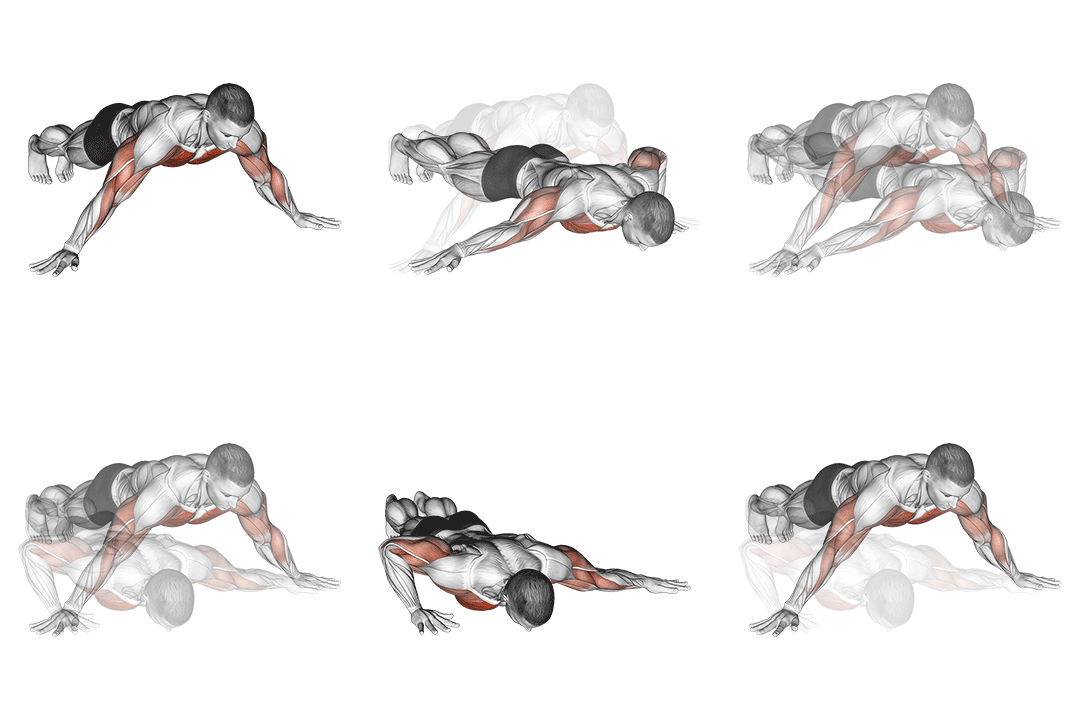
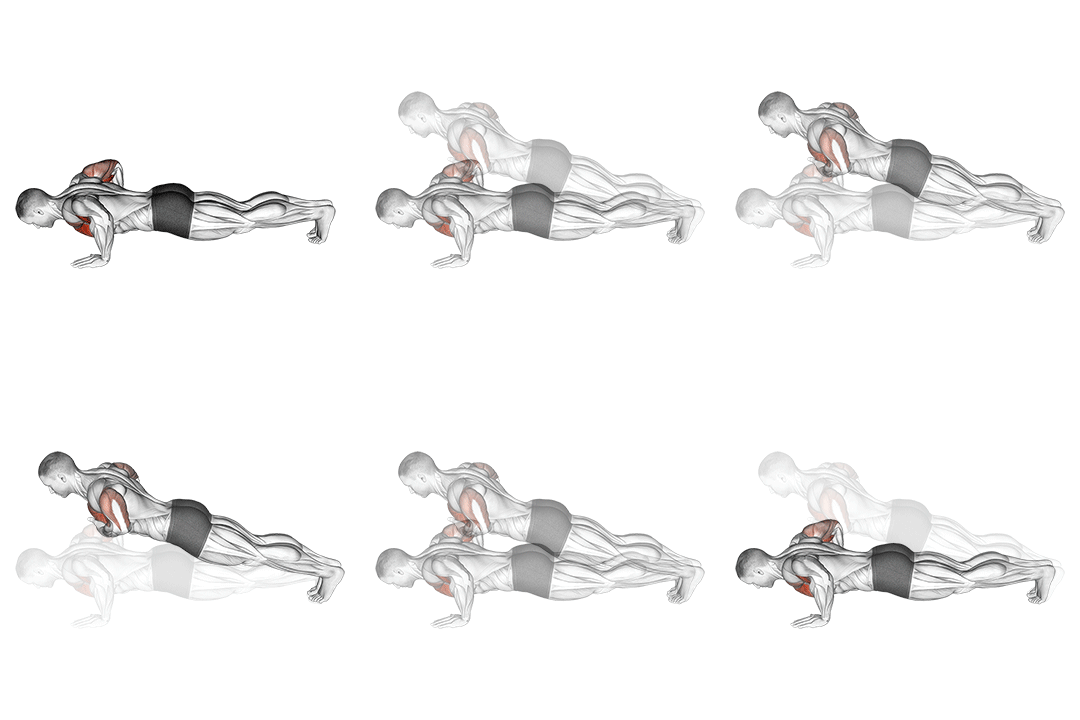
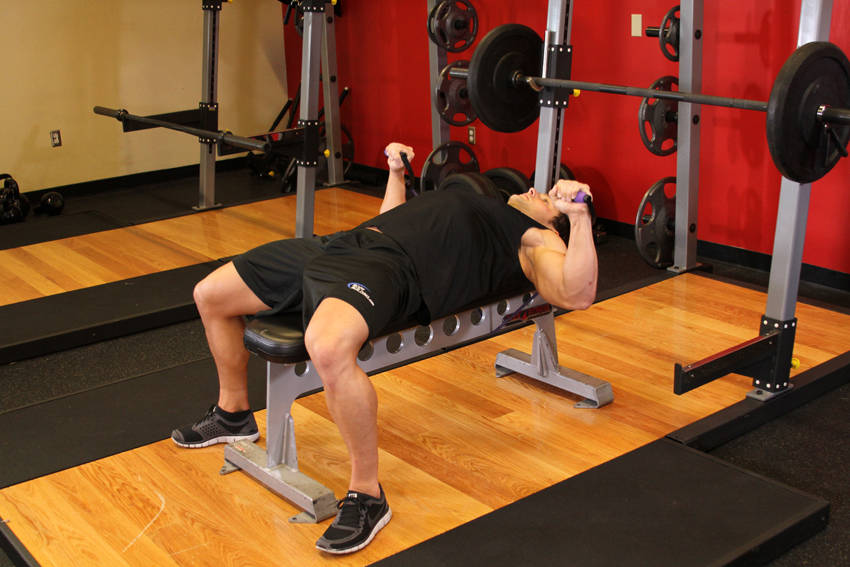
Archer Push Up
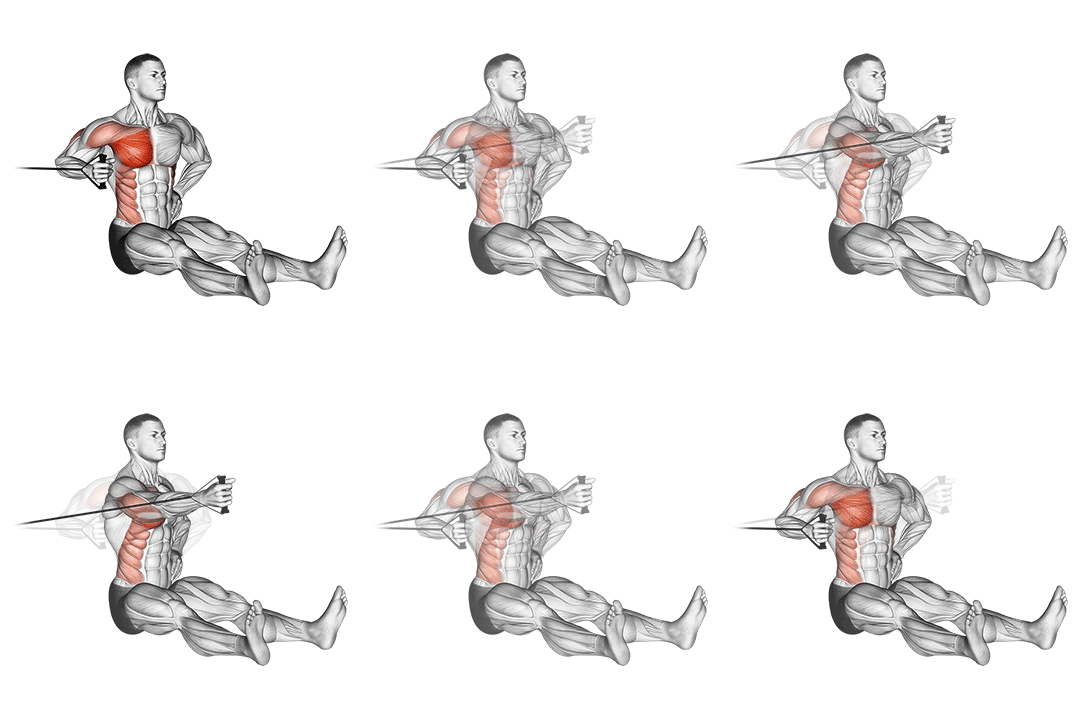
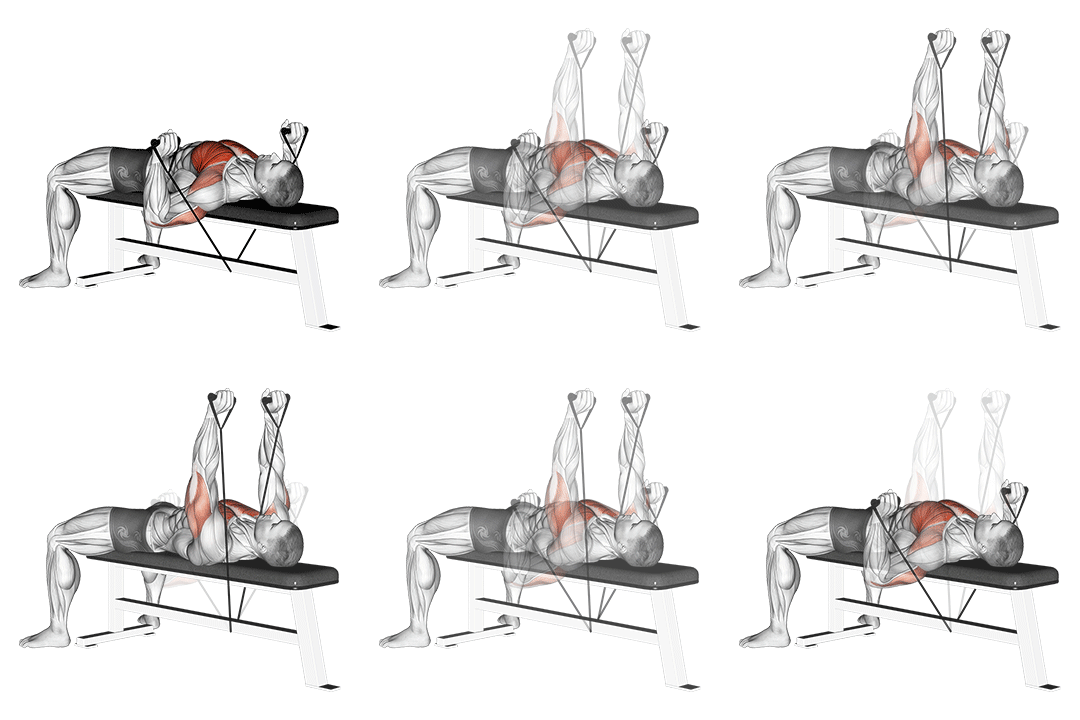
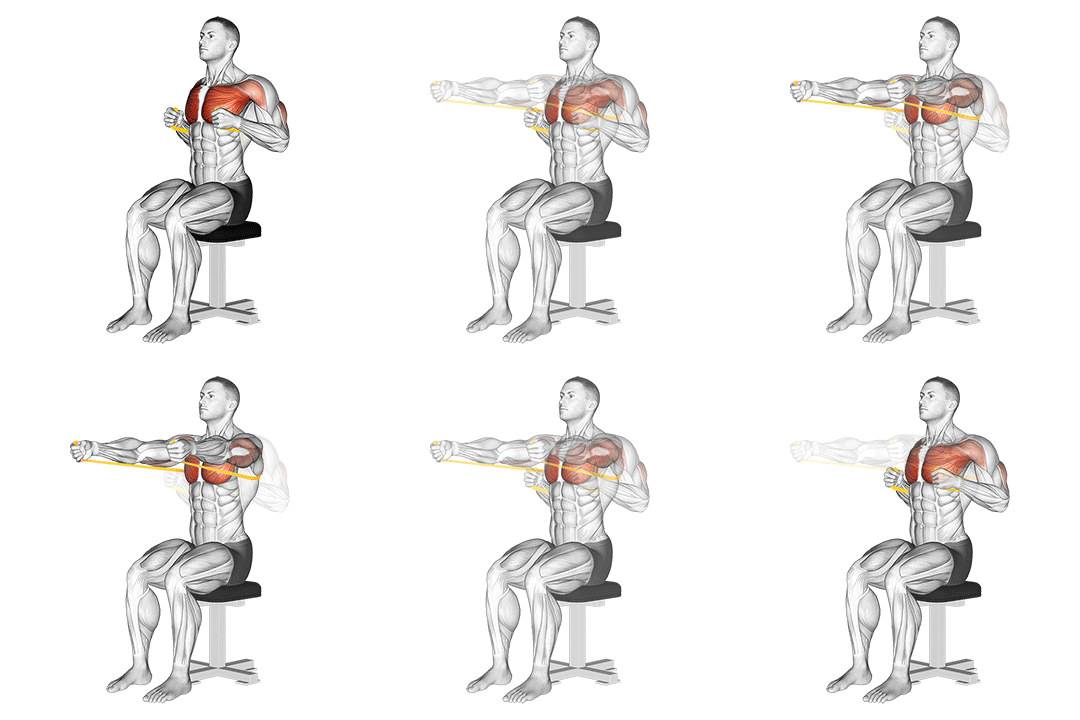
Band One Arm Twisting Chest Press
Head-to-Head Comparison
| Attribute | Archer Push Up | Band One Arm Twisting Chest Press |
|---|---|---|
| Target Muscle |
Pectorals
|
Pectorals
|
| Body Part |
Chest
|
Chest
|
| Equipment |
Body-weight
|
Band
|
| Difficulty |
Advanced
|
Intermediate
|
| Movement Type |
Compound
|
Compound
|
| Secondary Muscles |
3
|
2
|
Secondary Muscles Activated
Archer Push Up
Band One Arm Twisting Chest Press
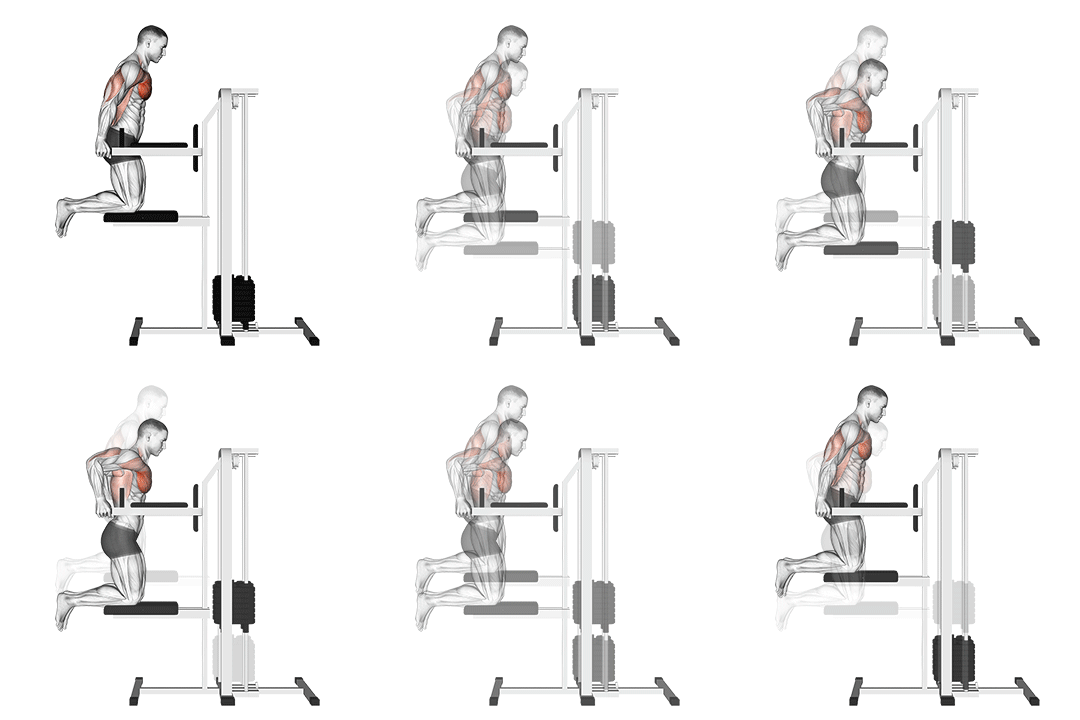
Visual Comparison
Overview
Archer Push Up vs Band One Arm Twisting Chest Press — you’re choosing between a high-skill bodyweight staple and a band-based unilateral press. I’ll walk you through how each targets the pectorals, how they load the shoulders and triceps, what equipment and progressions each needs, and which fits your goal: hypertrophy, strength, or convenient home training. You’ll get clear technique cues, biomechanics explanations (force vectors, length-tension), rep-range recommendations, and practical programming advice so you can pick the better option for your training plan.
Key Differences
- Equipment differs: Archer Push Up uses Body-weight, while Band One Arm Twisting Chest Press requires Band.
- Difficulty levels differ: Archer Push Up is advanced, while Band One Arm Twisting Chest Press is intermediate.
Pros & Cons
Archer Push Up
+ Pros
- No equipment: pure body-weight unilateral overload
- High anti-rotation and core demand improves functional stability
- Loads pecs with high peak mechanical tension on the working side
- Great carryover to pushing strength and closed-chain control
− Cons
- Steep technical learning curve for shoulders and scapula
- Limited micro-load progression without equipment (harder to add small increments)
- Higher shoulder and wrist stress if mobility or cuff strength is lacking
Band One Arm Twisting Chest Press
+ Pros
- Adjustable, continuous tension makes progressive overload easy
- Lower barrier to entry—easier to scale for most lifters
- Twist component targets different pec fibers and improves transverse control
- Portable and friendly for tempo work, drop sets, and volume training
− Cons
- Elastic load curve differs from free weights; less peak eccentric load
- Anchor/placement errors can create awkward force vectors
- Requires bands and an anchor for best results
When Each Exercise Wins
Bands offer precise, repeatable resistance and continuous tension, making it easier to target 8–12 reps and increase load in small steps. The twisting element lets you emphasize different pec fibers and maintain tension throughout the eccentric and concentric phases.
Archer Push Ups create high peak mechanical load and large moment arms that train force production and joint stability under heavy unilateral stress. That closed-chain strength translates well to pressing power and core anti-rotation strength.
Bands let you start with low tension and build press mechanics safely while controlling range, tempo, and rotation. The exercise is easier to scale and correct for poor scapular or cuff control than the archer.
No equipment needed and you can progress via body position or added household weight. If you already have the requisite shoulder mobility and core strength, archer offers a high-return, equipment-free option.
Frequently Asked Questions
Can I do both Archer Push Up and Band One Arm Twisting Chest Press in the same workout?
Yes — start with the exercise that requires the most neural freshness. Do archer push-ups early for maximal strength sets, then use the band press as an accessory for volume and hypertrophy (2–4 sets of 8–12). Alternate or separate by training days to avoid excessive shoulder fatigue.
Which exercise is better for beginners?
Band One Arm Twisting Chest Press is better for beginners because you can scale resistance precisely and teach pressing mechanics with less joint stress. Progress to more challenging unilateral variations only after building cuff and scapular control.
How do the muscle activation patterns differ?
Archer Push Ups produce a high, short-duration peak in the working pec and demand strong anti-rotation from the core; the load is concentrated during mid-range with elbow angles around 80–100°. Band presses create a more even activation curve across the entire concentric and eccentric range, with added anterior deltoid and triceps recruitment during the twist and lockout.
Can Band One Arm Twisting Chest Press replace Archer Push Up?
For hypertrophy and progressive overload, yes — the band press can replace the archer. For developing closed-chain pushing strength and anti-rotation stability, no — the archer provides unique benefits you won’t fully replicate with bands.
Expert Verdict
Use the Archer Push Up when you want raw unilateral force production and to train closed-chain stability — it’s ideal if you have solid shoulder health and want to develop pushing strength and anti-rotation control. Choose the Band One Arm Twisting Chest Press when your priority is hypertrophy, controlled progressive overload, or easier scaling; bands keep tension through the range and let you hit volume with lower shoulder risk. For programming, pair the band press in higher-volume blocks (3–4 sets of 8–15) and use archer push-ups for strength-focused sets (3–6 sets of 3–8, or tempo-controlled work). If you train both, use bands for accumulation and archer for intensity weeks.
Also Compare
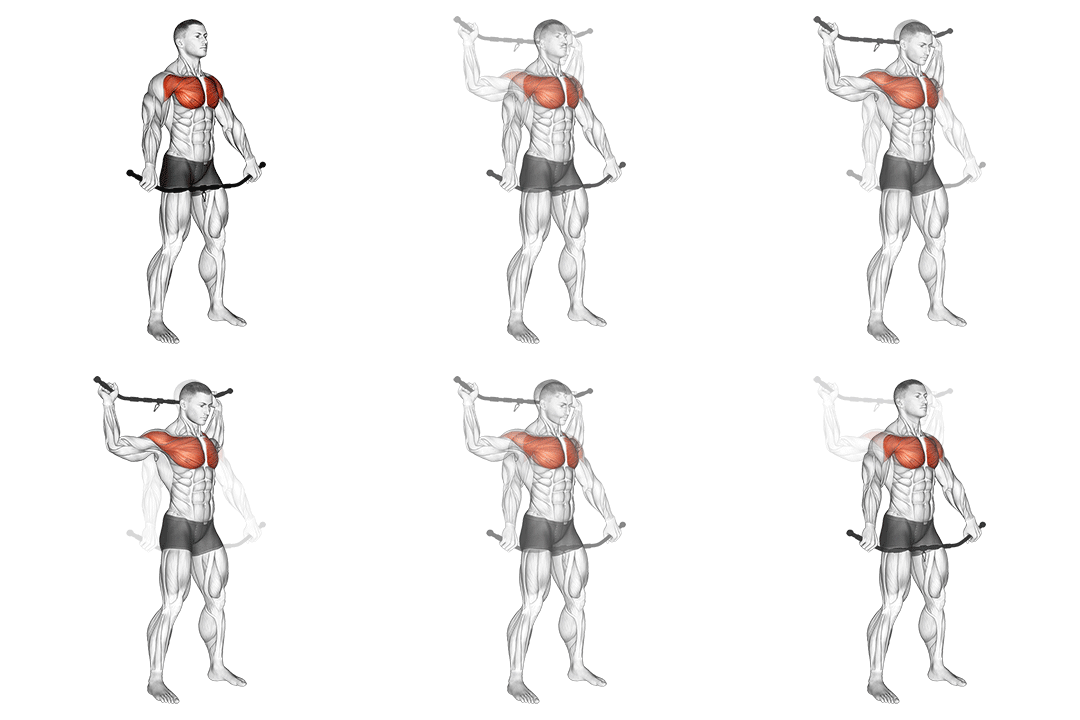
More comparisons with Archer Push Up
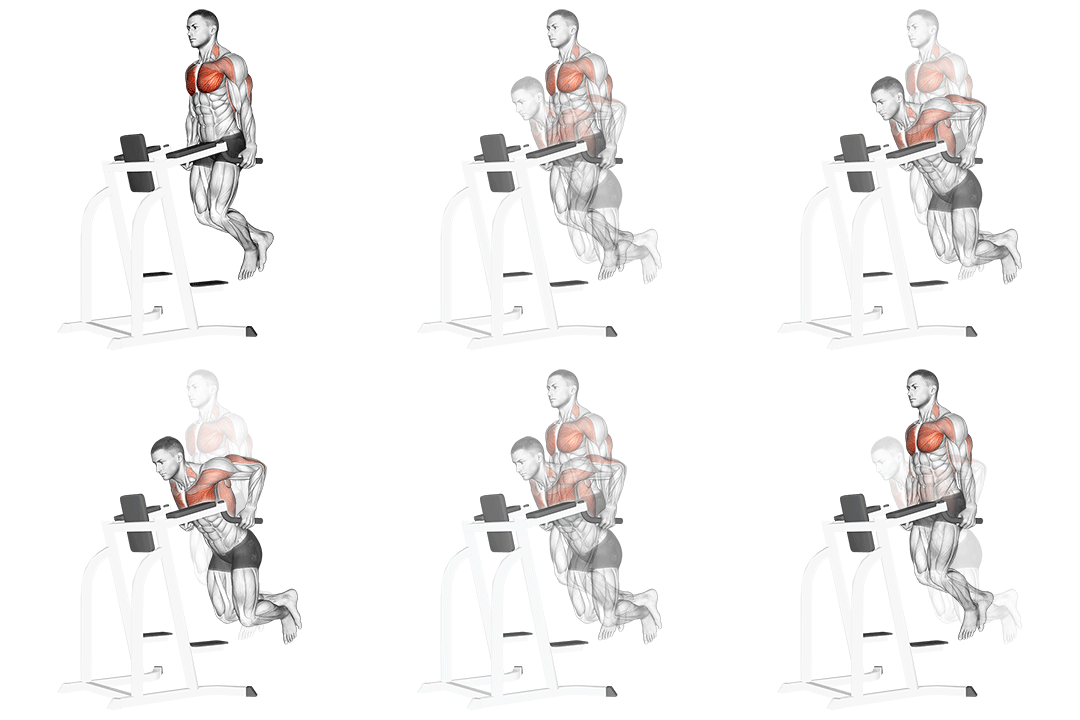
More comparisons with Band One Arm Twisting Chest Press

Compare More Exercises
Use our free comparison tool to analyze any two exercises head-to-head.
Compare Exercises