

Assisted Lying Glutes Stretch vs Trap Bar Deadlift: Complete Comparison Guide
Assisted Lying Glutes Stretch vs Trap Bar Deadlift — you want the clearest choice for targeting your glutes. Here you'll get technique cues, biomechanics, and practical recommendations so you can pick the right move for mobility, isolation work, or heavy strength training. I’ll cover muscle activation, equipment needs, learning curve, injury risk, and exactly when to use the banded lying stretch versus the trap bar deadlift in your program.
Exercise Comparison
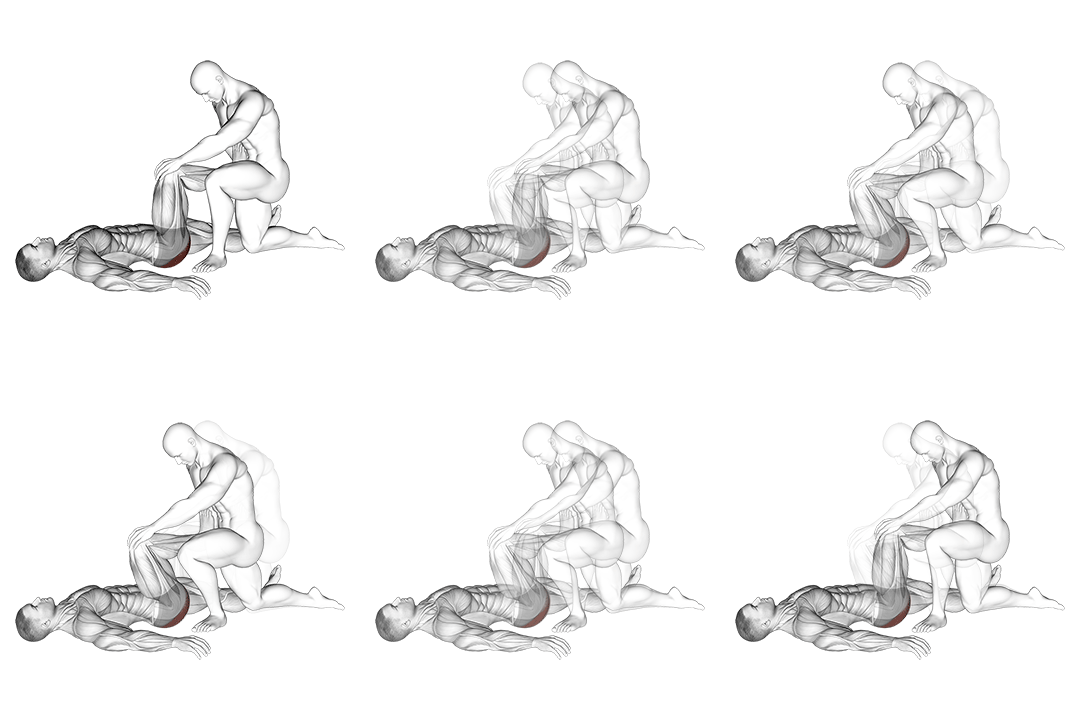
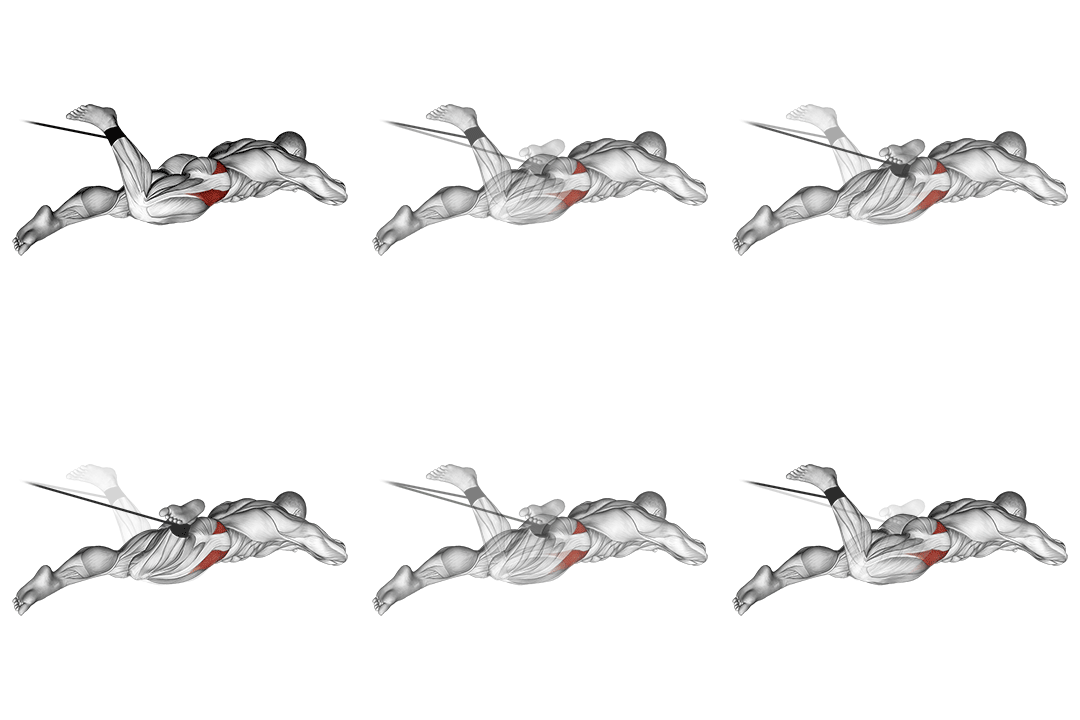
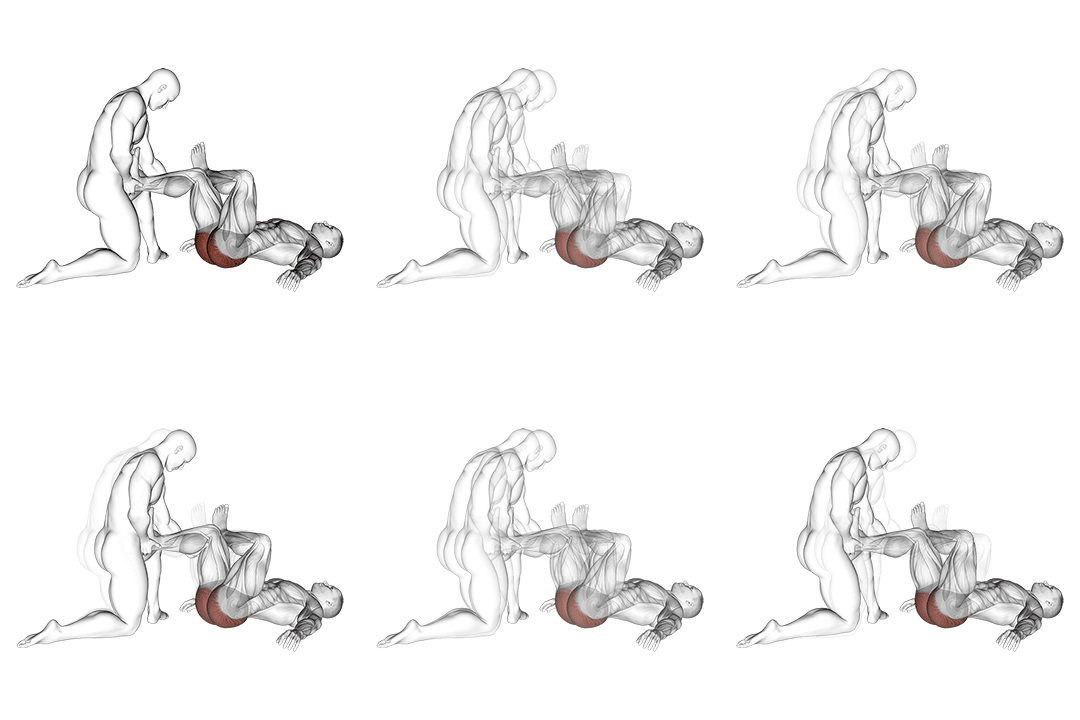
Assisted Lying Glutes Stretch
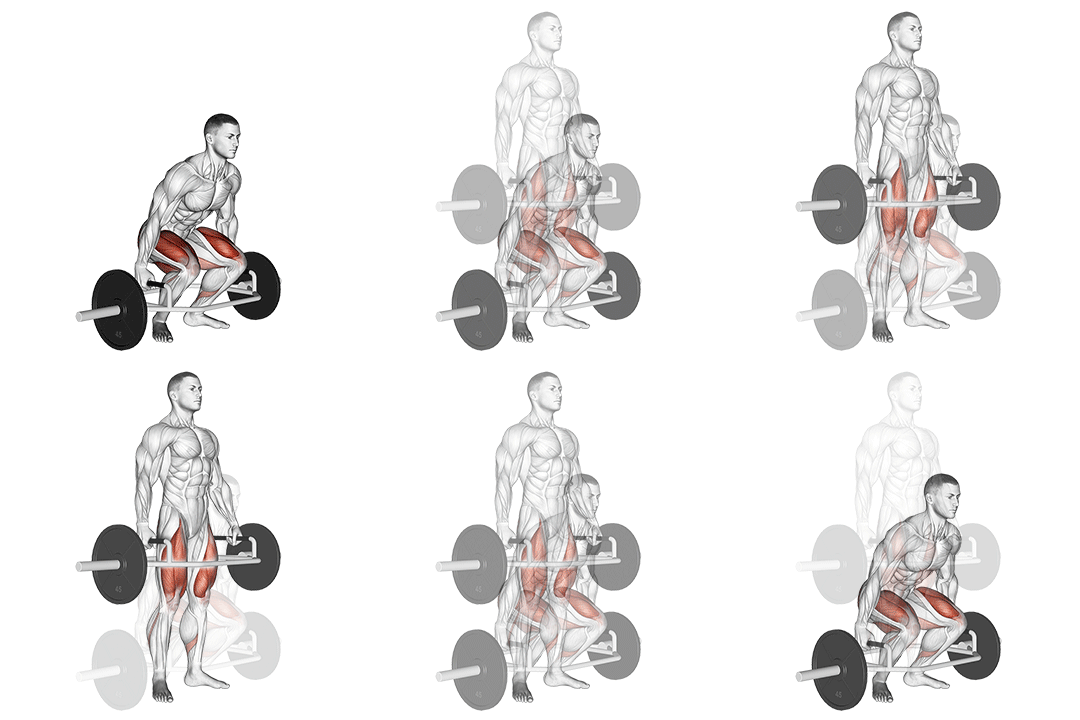
Trap Bar Deadlift
Head-to-Head Comparison
| Attribute | Assisted Lying Glutes Stretch | Trap Bar Deadlift |
|---|---|---|
| Target Muscle |
Glutes
|
Glutes
|
| Body Part |
Upper-legs
|
Upper-legs
|
| Equipment |
Band
|
Trap-bar
|
| Difficulty |
Beginner
|
Intermediate
|
| Movement Type |
Isolation
|
Compound
|
| Secondary Muscles |
1
|
3
|
Secondary Muscles Activated
Assisted Lying Glutes Stretch
Trap Bar Deadlift
Visual Comparison
Overview
Assisted Lying Glutes Stretch vs Trap Bar Deadlift — you want the clearest choice for targeting your glutes. Here you'll get technique cues, biomechanics, and practical recommendations so you can pick the right move for mobility, isolation work, or heavy strength training. I’ll cover muscle activation, equipment needs, learning curve, injury risk, and exactly when to use the banded lying stretch versus the trap bar deadlift in your program.
Key Differences
- Equipment differs: Assisted Lying Glutes Stretch uses Band, while Trap Bar Deadlift requires Trap-bar.
- Assisted Lying Glutes Stretch is an isolation exercise, while Trap Bar Deadlift is a compound movement.
- Difficulty levels differ: Assisted Lying Glutes Stretch is beginner, while Trap Bar Deadlift is intermediate.
Pros & Cons
Assisted Lying Glutes Stretch
+ Pros
- Highly accessible — needs only a band and floor space
- Effective at exposing glutes to long-muscle-length tension (30–60s holds)
- Low systemic fatigue; useful for warm-ups and recovery sessions
- Easy to cue: knee to chest or figure-4 variations target specific glute regions
− Cons
- Limited progressive overload for muscle growth
- Primarily passive/isometric — not a strength replacement
- Less carryover to compound, load-bearing movements
Trap Bar Deadlift
+ Pros
- High mechanical tension for muscle growth and strength (loadable)
- Engages glutes, hamstrings, quads, and lower back for functional transfer
- More progression options: load, sets, reps, tempo
- Trape bar reduces lumbar shear vs conventional deadlift and encourages an upright torso
− Cons
- Requires equipment and coaching for safe technique
- Higher systemic fatigue and recovery demand
- Elevated injury risk if spinal position or bracing is poor
When Each Exercise Wins
The trap bar deadlift produces larger mechanical tension and allows progressive overload (3–12 reps with increasing load). Its compound nature recruits multiple prime movers, giving more stimulus for overall thigh and glute hypertrophy.
Use heavy sets of 3–6 reps to develop maximal hip and knee extension strength. The trap bar enables higher external loads with a safer torso angle, transferring directly to compound strength improvements.
It has a simple setup, low coordination demands, and minimal injury risk, making it ideal to teach glute activation and mobility before introducing loaded hip hinges.
A single band and floor space is sufficient, while a trap bar requires gym access or significant investment. The stretch can be programmed daily for mobility and activation.
Frequently Asked Questions
Can I do both Assisted Lying Glutes Stretch and Trap Bar Deadlift in the same workout?
Yes. Use the Assisted Lying Glutes Stretch as a pre-lift activation or post-workout mobility drill (2–3 sets of 30–60s) and perform trap bar deadlifts as your heavy compound sets. Place the stretch before heavy sets to prime glute firing or after for cooldown and lengthening.
Which exercise is better for beginners?
The Assisted Lying Glutes Stretch is better for absolute beginners because it teaches glute activation with low coordination and low load. Introduce trap bar deadlifts after basic hip-hinge competency and core bracing are established.
How do the muscle activation patterns differ?
The banded stretch produces isometric and passive tension at long muscle lengths, emphasizing stretch-mediated activation and neuromuscular priming. The trap bar deadlift creates high concentric and eccentric activation under load, with peak glute activation near lockout and substantial quad and lumbar contribution during lift.
Can Trap Bar Deadlift replace Assisted Lying Glutes Stretch?
Not entirely. The trap bar deadlift can replace the loading and strength aspects but won’t replicate the long-length, mobility-focused stimulus of a 30–60s assisted glute stretch. Keep the stretch for activation and mobility, and use the trap bar for progressive loading.
Expert Verdict
Use the Assisted Lying Glutes Stretch when your goal is targeted glute activation, increasing hip range of motion, or prehab and recovery work—hold 30–60 seconds for 2–3 sets and cue external rotation/abduction to bias glute medius. Choose the Trap Bar Deadlift when your goal is progressive muscle growth or strength: load heavy for 3–6 reps for strength or 6–12 for hypertrophy, focus on a strong hip hinge, braced core, and neutral spine. For balanced programming, pair the banded stretch as an activation/ mobility tool and the trap bar deadlift as your primary loading exercise.
Also Compare
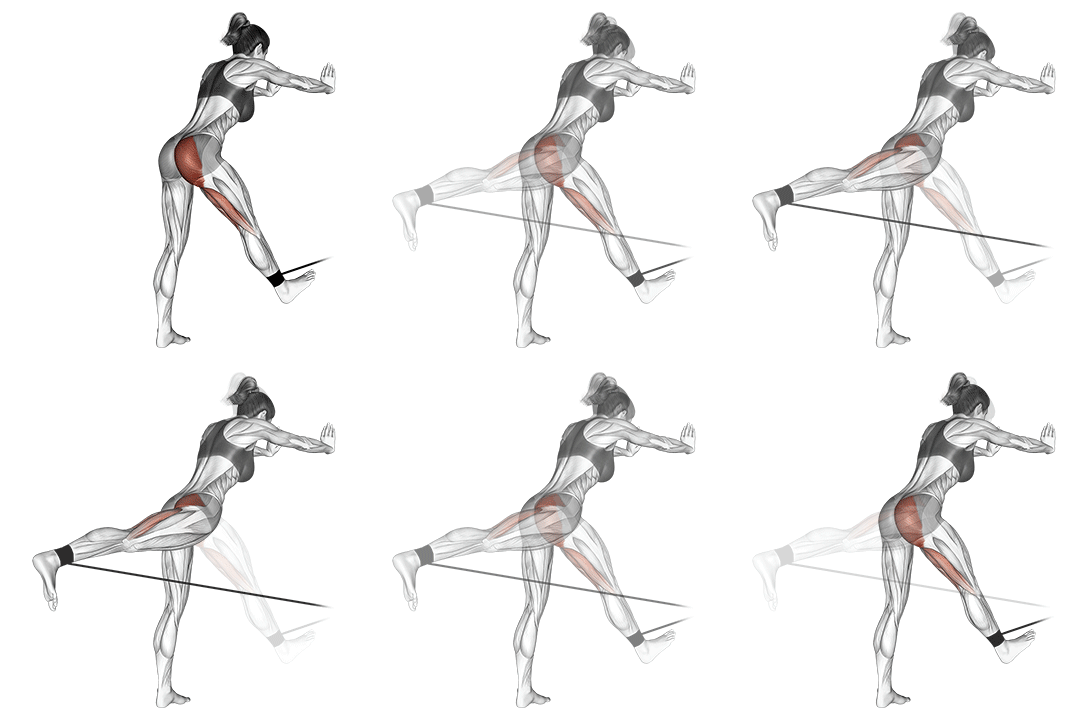
More comparisons with Assisted Lying Glutes Stretch
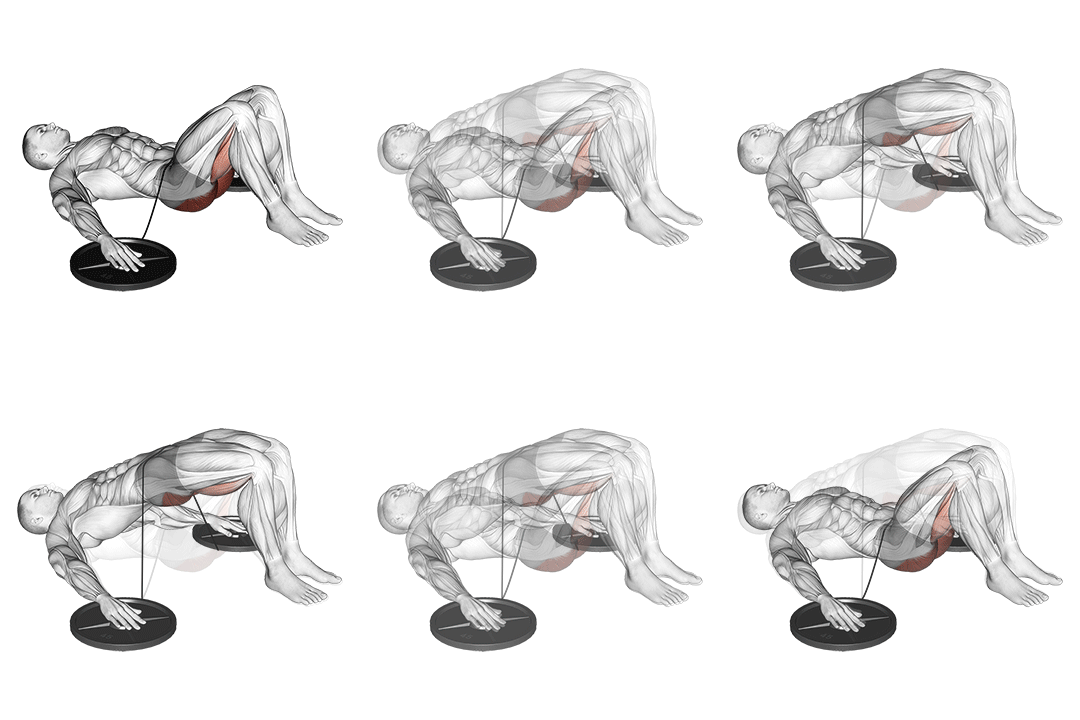
More comparisons with Trap Bar Deadlift
Compare More Exercises
Use our free comparison tool to analyze any two exercises head-to-head.
Compare Exercises