

Band Hip Lift vs Trap Bar Deadlift: Complete Comparison Guide
Band Hip Lift vs Trap Bar Deadlift — you want stronger, fuller glutes and a clear plan for which movement to prioritize. In this guide you’ll get a side-by-side look at how each exercise loads the glutes, which secondary muscles get recruited, equipment needs, learning curves, and rep ranges for both strength and hypertrophy. I’ll show specific technique cues (hip hinge depth, knee angle, band placement, neutral spine), explain the biomechanics (force vectors, hip moment arm, length-tension), and give decisive recommendations so you can pick the right lift for your goals.
Exercise Comparison
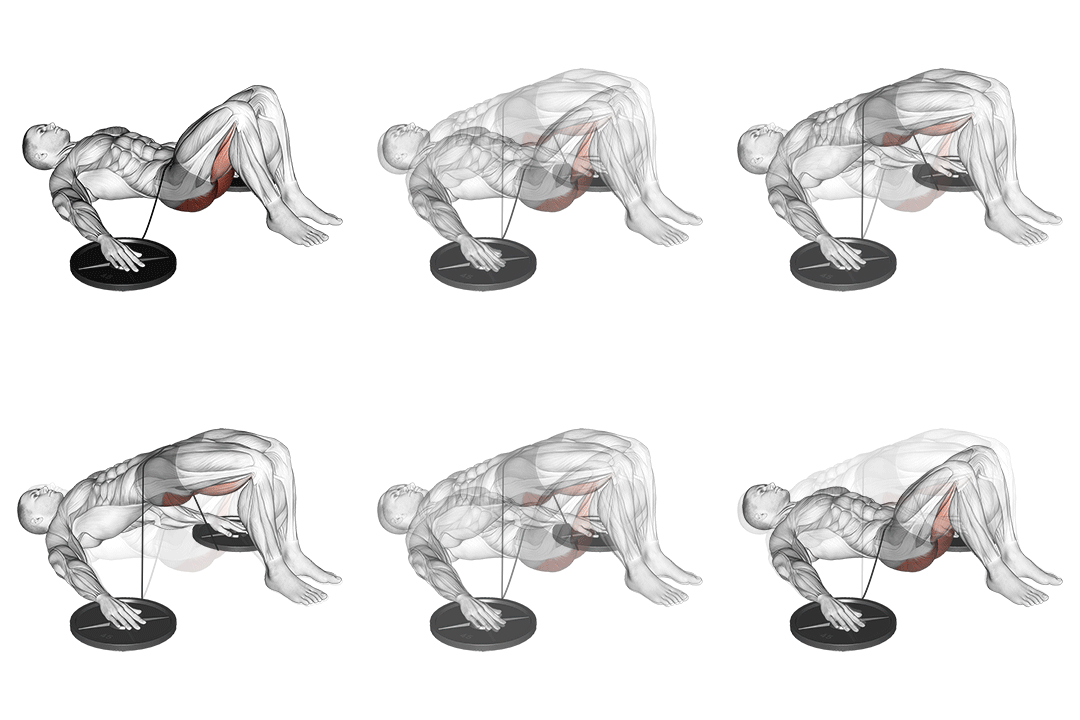
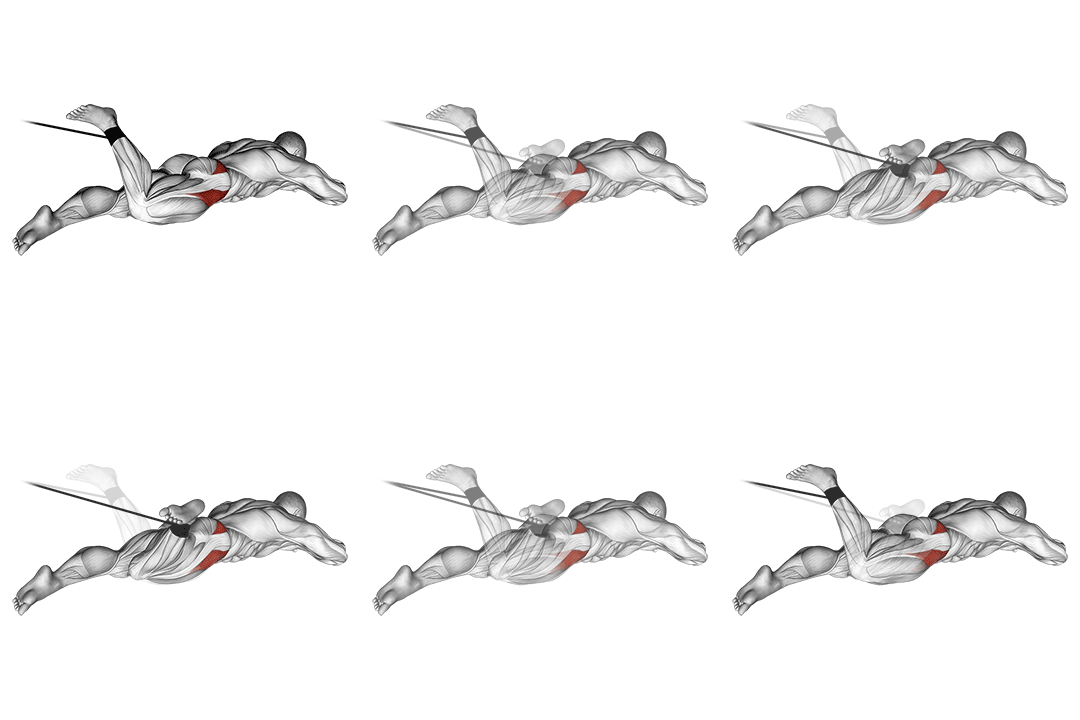
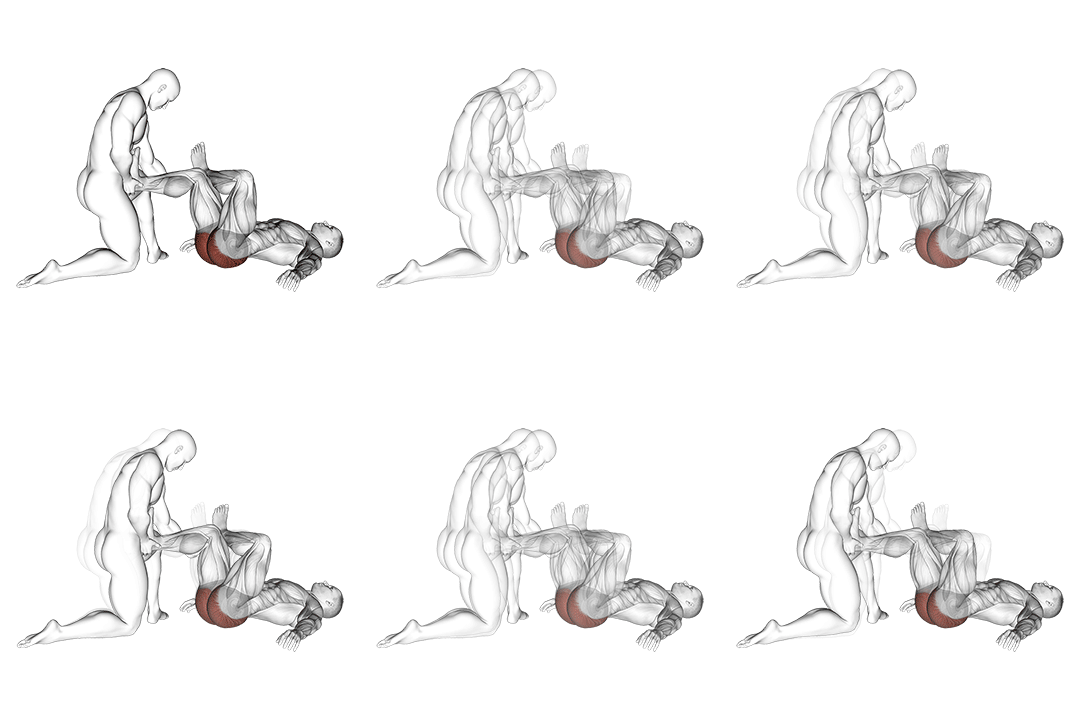
Band Hip Lift
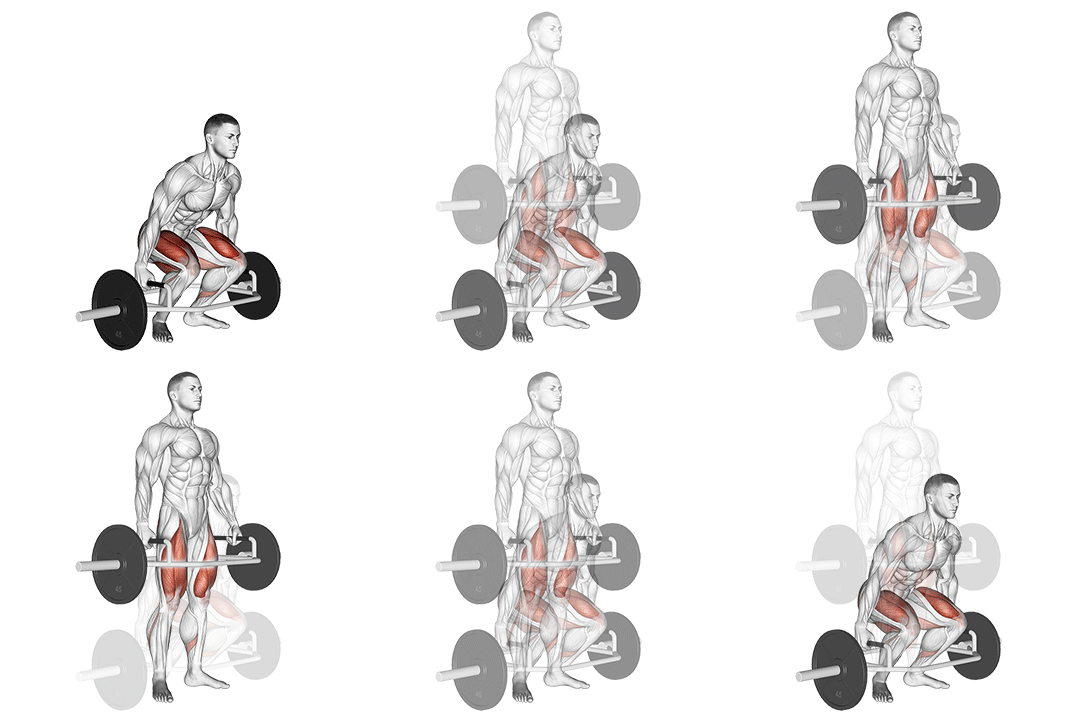
Trap Bar Deadlift
Head-to-Head Comparison
| Attribute | Band Hip Lift | Trap Bar Deadlift |
|---|---|---|
| Target Muscle |
Glutes
|
Glutes
|
| Body Part |
Upper-legs
|
Upper-legs
|
| Equipment |
Band
|
Trap-bar
|
| Difficulty |
Beginner
|
Intermediate
|
| Movement Type |
Compound
|
Compound
|
| Secondary Muscles |
2
|
3
|
Secondary Muscles Activated
Band Hip Lift
Trap Bar Deadlift
Visual Comparison
Overview
Band Hip Lift vs Trap Bar Deadlift — you want stronger, fuller glutes and a clear plan for which movement to prioritize. In this guide you’ll get a side-by-side look at how each exercise loads the glutes, which secondary muscles get recruited, equipment needs, learning curves, and rep ranges for both strength and hypertrophy. I’ll show specific technique cues (hip hinge depth, knee angle, band placement, neutral spine), explain the biomechanics (force vectors, hip moment arm, length-tension), and give decisive recommendations so you can pick the right lift for your goals.
Key Differences
- Equipment differs: Band Hip Lift uses Band, while Trap Bar Deadlift requires Trap-bar.
- Difficulty levels differ: Band Hip Lift is beginner, while Trap Bar Deadlift is intermediate.
Pros & Cons
Band Hip Lift
+ Pros
- Minimal equipment and low cost — bench and band are enough
- Low spinal loading, safer for those with back issues
- Excellent end-range glute activation and peak contraction
- Easy to learn and scale via band tension or reps
− Cons
- Limited absolute load for maximum strength development
- Band tension can be inconsistent across setups
- Less total work per rep compared with heavy barbell lifts
Trap Bar Deadlift
+ Pros
- Allows heavy, progressive overload ideal for strength
- Greater total mechanical tension across a longer ROM
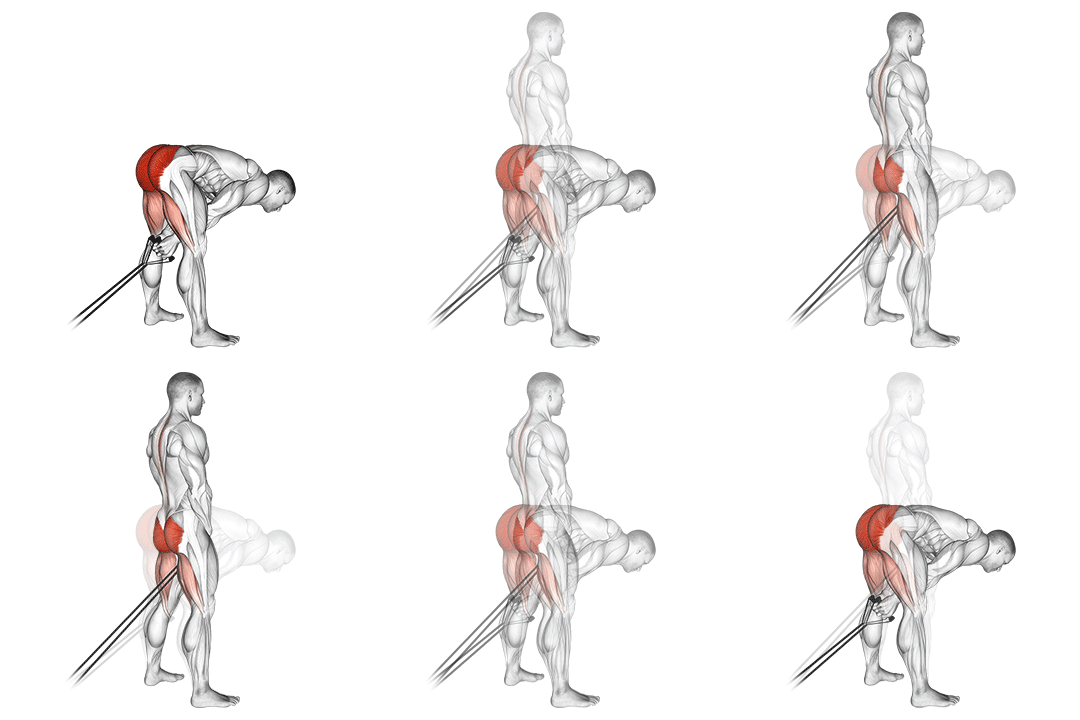
- Balanced recruitment of quads, hamstrings, and glutes
- Neutral grip and center-of-mass reduce shear compared with straight bar deadlift
− Cons
- Requires specialized equipment and a safe training space
- Higher technical demand and spinal loading under heavy sets
- Greater injury risk if technique or load management is poor
When Each Exercise Wins
Band Hip Lifts let you maximize peak glute contraction and time under tension with light equipment — use 8–20 reps, 2–4 second eccentrics, and holds at lockout to stimulate hypertrophy. You can also ramp band resistance for high-rep volume without heavy spinal load.
Trap Bar Deadlifts allow heavy external loading and progressive overload for 1–5RM work, increasing overall lower-body and posterior chain strength. The movement builds transferable force through a long ROM and higher total work per rep.
Band Hip Lifts are simpler to teach and safe for new trainees: minimal spine demand, easy cues (drive through heels, squeeze glutes), and immediate neuromuscular feedback. Start with bodyweight and light bands before advancing.
Bands and a bench fit most home setups and let you train glute strength and hypertrophy without a trap bar or heavy plates. You can vary tension to match progressive goals.
Frequently Asked Questions
Can I do both Band Hip Lift and Trap Bar Deadlift in the same workout?
Yes — that pairing is effective. Do the trap bar deadlift early in the session for heavy strength sets (3–6 reps), then follow with band hip lifts for 2–4 sets of 8–20 reps to emphasize glute peak contraction and finish with targeted volume.
Which exercise is better for beginners?
Band Hip Lift is better for most beginners because it has a simpler setup and lower spinal demand. It teaches hip extension and glute activation before progressing to complex, heavier lifts like the trap bar deadlift.
How do the muscle activation patterns differ?
Band Hip Lifts concentrate activation at terminal hip extension, increasing concentric glute activity near lockout and relying less on lumbar extensors. Trap Bar Deadlifts produce sustained glute and hamstring activation across a long ROM and add more erector spinae and quad loading due to greater external load and different force vectors.
Can Trap Bar Deadlift replace Band Hip Lift?
Not entirely — trap bar deadlifts can replace some glute strength work, but they won’t match the banded lift’s peak contraction and low spinal load. If your priority is end-range glute hypertrophy or you have back limitations, keep band hip lifts in your program.
Expert Verdict
Choose Band Hip Lifts when your goal is targeted glute development, reduced spinal load, or when you’re training at home. Use focused sets of 8–20 reps, emphasize a 2–3 second eccentric and a strong 1–2 second peak contraction. Choose Trap Bar Deadlifts when you want to build raw lower-body strength and total work capacity; program 3–6 reps for strength or 6–10 for heavier hypertrophy blocks, and prioritize technique (neutral spine, hip hinge) before adding weight. Both lifts complement each other: pair trap bar heavy days with banded accessory work for balanced progression.
Also Compare
More comparisons with Band Hip Lift
More comparisons with Trap Bar Deadlift
Compare More Exercises
Use our free comparison tool to analyze any two exercises head-to-head.
Compare Exercises