

Band Lying Hip Internal Rotation vs Trap Bar Deadlift: Complete Comparison Guide
Band Lying Hip Internal Rotation vs Trap Bar Deadlift — two exercises that hit your glutes from very different angles. You’ll learn how each movement loads the glutes and upper-legs, which secondary muscles get involved, what equipment and skill each requires, and clear programming recommendations (sets, reps, progression). Read on to find which one fits your current goal — isolation, rehab or heavy compound strength — and pick the drill that gives you the most efficient path to stronger, more stable hips.
Exercise Comparison
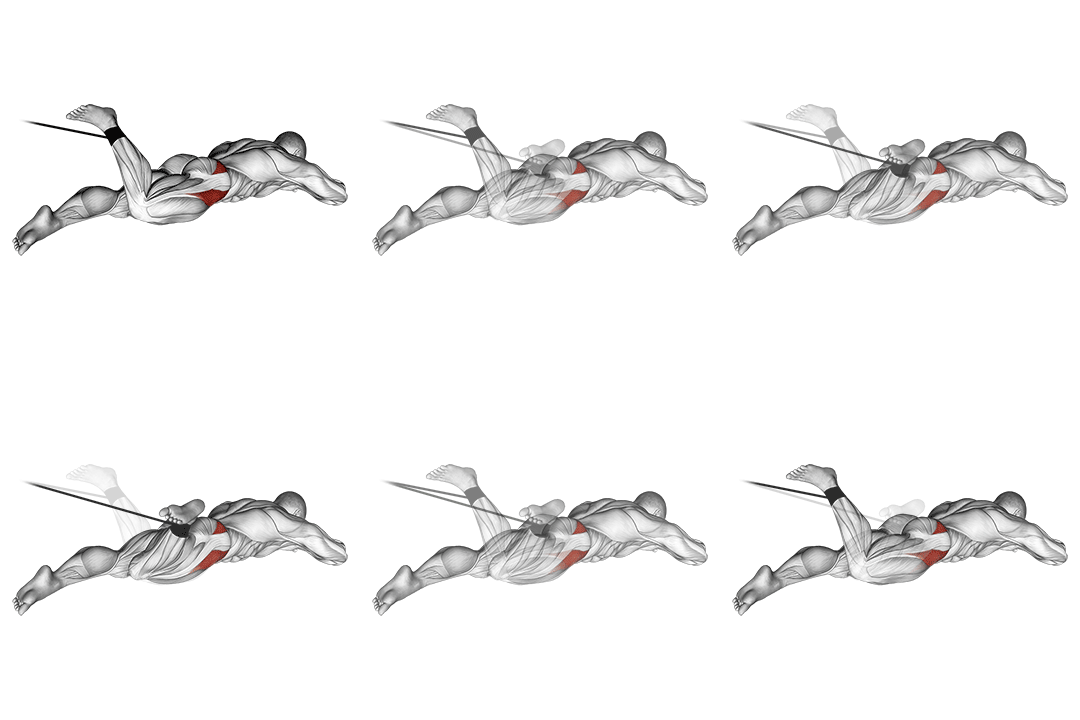
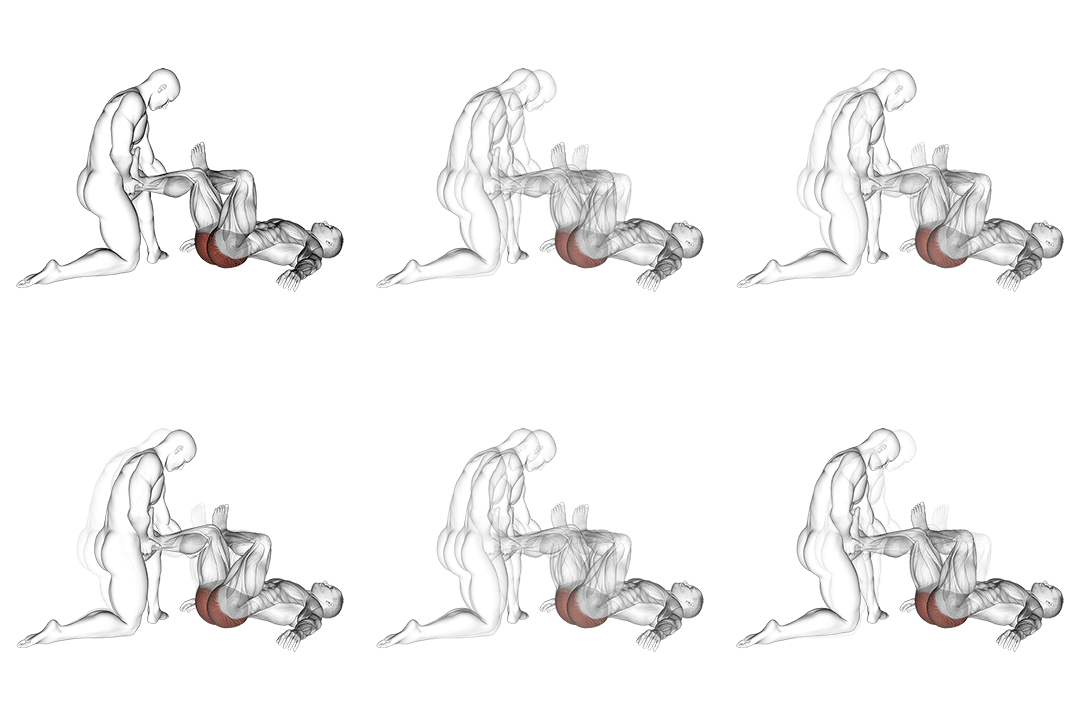
Band Lying Hip Internal Rotation
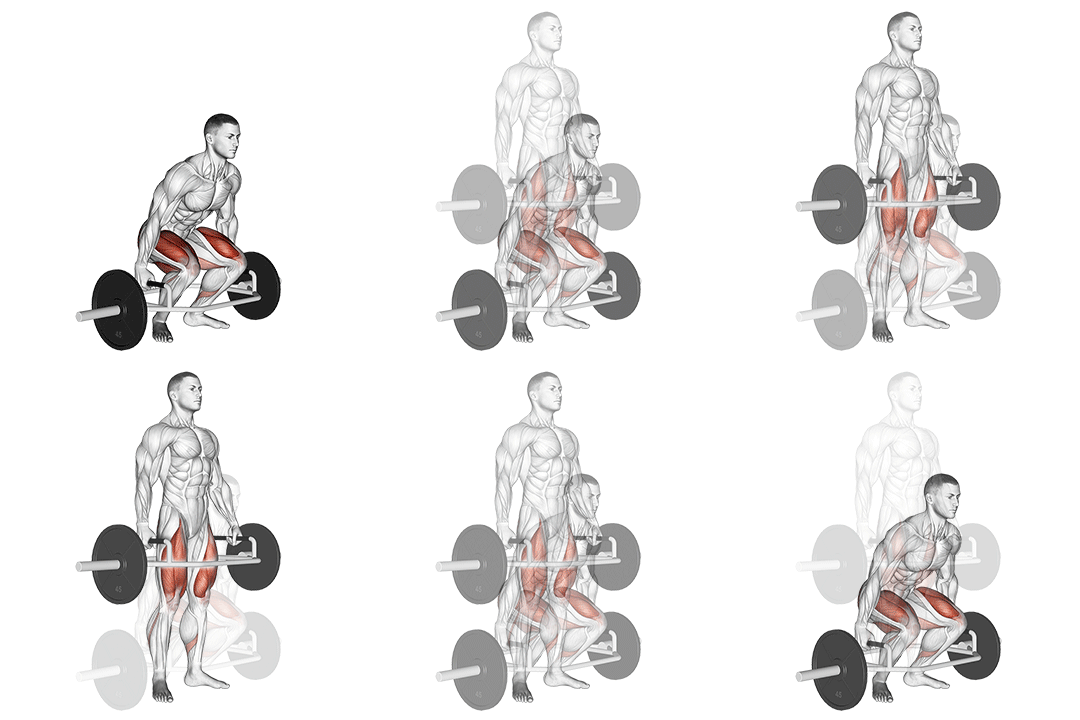
Trap Bar Deadlift
Head-to-Head Comparison
| Attribute | Band Lying Hip Internal Rotation | Trap Bar Deadlift |
|---|---|---|
| Target Muscle |
Glutes
|
Glutes
|
| Body Part |
Upper-legs
|
Upper-legs
|
| Equipment |
Band
|
Trap-bar
|
| Difficulty |
Beginner
|
Intermediate
|
| Movement Type |
Isolation
|
Compound
|
| Secondary Muscles |
2
|
3
|
Secondary Muscles Activated
Band Lying Hip Internal Rotation
Trap Bar Deadlift
Visual Comparison
Overview
Band Lying Hip Internal Rotation vs Trap Bar Deadlift — two exercises that hit your glutes from very different angles. You’ll learn how each movement loads the glutes and upper-legs, which secondary muscles get involved, what equipment and skill each requires, and clear programming recommendations (sets, reps, progression). Read on to find which one fits your current goal — isolation, rehab or heavy compound strength — and pick the drill that gives you the most efficient path to stronger, more stable hips.
Key Differences
- Equipment differs: Band Lying Hip Internal Rotation uses Band, while Trap Bar Deadlift requires Trap-bar.
- Band Lying Hip Internal Rotation is an isolation exercise, while Trap Bar Deadlift is a compound movement.
- Difficulty levels differ: Band Lying Hip Internal Rotation is beginner, while Trap Bar Deadlift is intermediate.
Pros & Cons
Band Lying Hip Internal Rotation
+ Pros
- Isolates transverse-plane glute work (targets glute medius/minimus)
- Minimal equipment and space needed — ideal for home or rehab
- Low systemic fatigue, suitable for high reps (12–30+) and activation work
- Easy to cue and regress/progress by band tension and range
− Cons
- Limited progressive overload compared to free weights
- Small torque output — not ideal for maximal strength or mass
- Primarily single-plane; won’t train hip extension under load
Trap Bar Deadlift
+ Pros
- Loads the glute max and posterior chain under high external resistance
- Superior for strength and muscle growth due to heavy axial loading
- Safer lumbar position vs conventional deadlift for many lifters (neutral grip, centered load)
- Easy to quantify and progress load (add plates, sets, reps)
− Cons
- Requires specialized equipment and more space
- Higher technical demand — poor form increases injury risk
- Greater systemic fatigue and recovery needs
When Each Exercise Wins
Trap bar deadlifts allow heavier loads and greater mechanical tension across glute max and hamstrings, which drives more muscle growth when programmed for 6–12 reps and progressive overload.
The trap bar lets you apply high external loads in a safe, symmetrical position so you can train 3–6 rep ranges and increase maximal force production with clear progression.
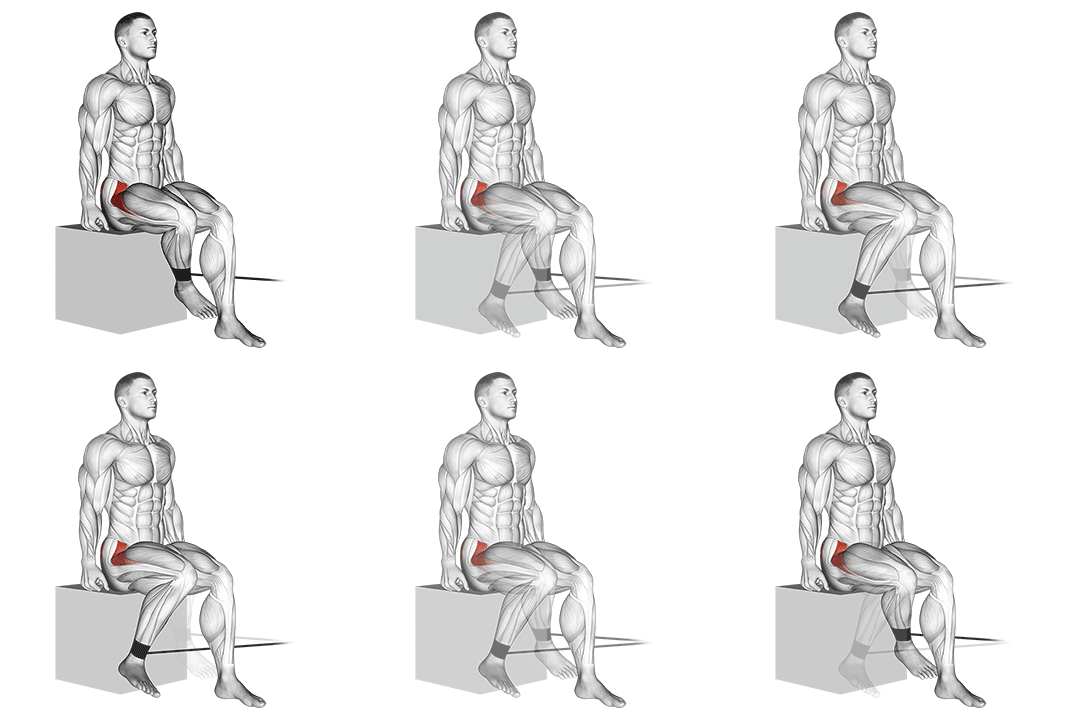
The band drill teaches hip-control and pelvic stability with low load and simple cues (hip at 90°, rotate foot inward), making it easier and safer for novices to build foundational motor patterns.
Requires only a loop band and floor space, allowing consistent glute activation work without heavy equipment or risk of poor-loading technique.
Frequently Asked Questions
Can I do both Band Lying Hip Internal Rotation and Trap Bar Deadlift in the same workout?
Yes. Do band lying internal rotations as an activation set (2–3 sets of 12–20 reps) before heavy trap bar deadlifts to prime glute medials and improve hip stability, then perform deadlifts for strength or hypertrophy.
Which exercise is better for beginners?
Band lying internal rotation is better for beginners because it’s single-joint, low load and easier to master. It builds pelvic stability before introducing heavier, multi-joint lifts like the trap bar deadlift.
How do the muscle activation patterns differ?
The band drill emphasizes transverse-plane internal rotation torque, activating glute medius/minimus at shorter lengths, while the trap bar elicits large hip-extension moments, recruiting glute max, hamstrings and quads through concentric hip and knee extension under heavy load.
Can Trap Bar Deadlift replace Band Lying Hip Internal Rotation?
Not fully. Trap bar deadlifts build overall glute strength and size but won’t isolate transverse-plane control of the glute medials. If your goal includes pelvic stability or rehab, keep the band drill as a supplement.
Expert Verdict
Use the band lying hip internal rotation when your goal is hip stability, pelvic control and targeted activation of the glute medius/minimus — ideal for warm-ups, rehab, and high-rep accessory work (12–30+ reps, slow tempo). Choose the trap bar deadlift when you want heavy, compound loading to build glute max size and maximal strength; program it for 3–8 reps for strength or 6–12 for hypertrophy with progressive overload. For a balanced plan, pair them: use the band drill early for activation and motor control, then perform trap bar deadlifts as the primary strength stimulus.
Also Compare
More comparisons with Band Lying Hip Internal Rotation
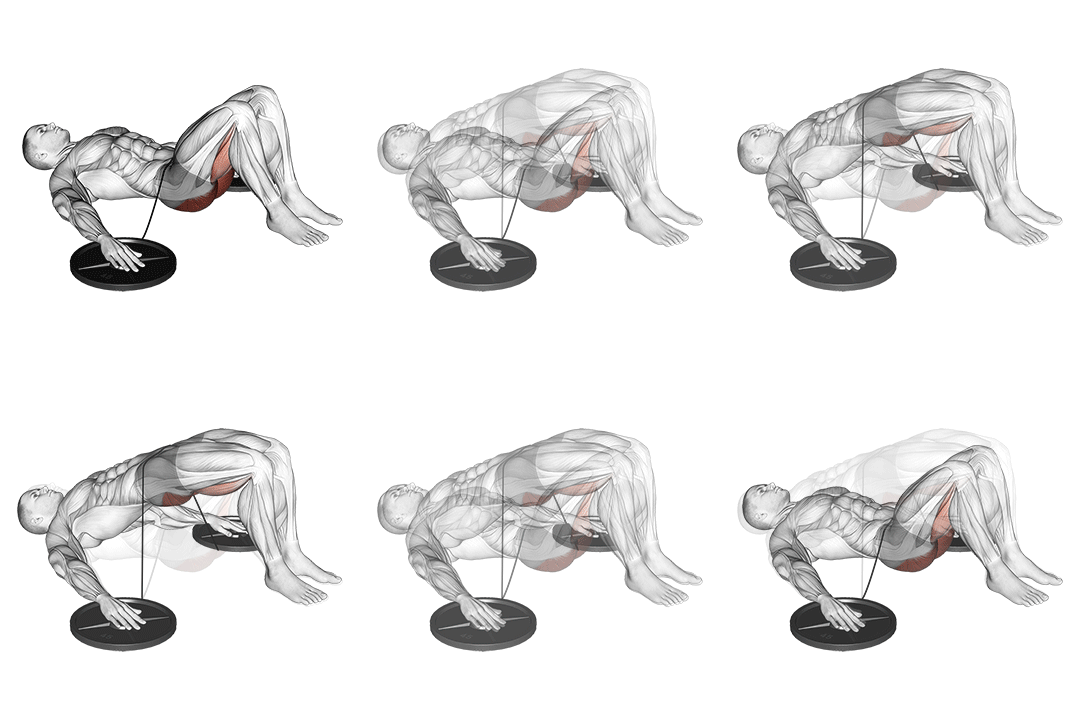
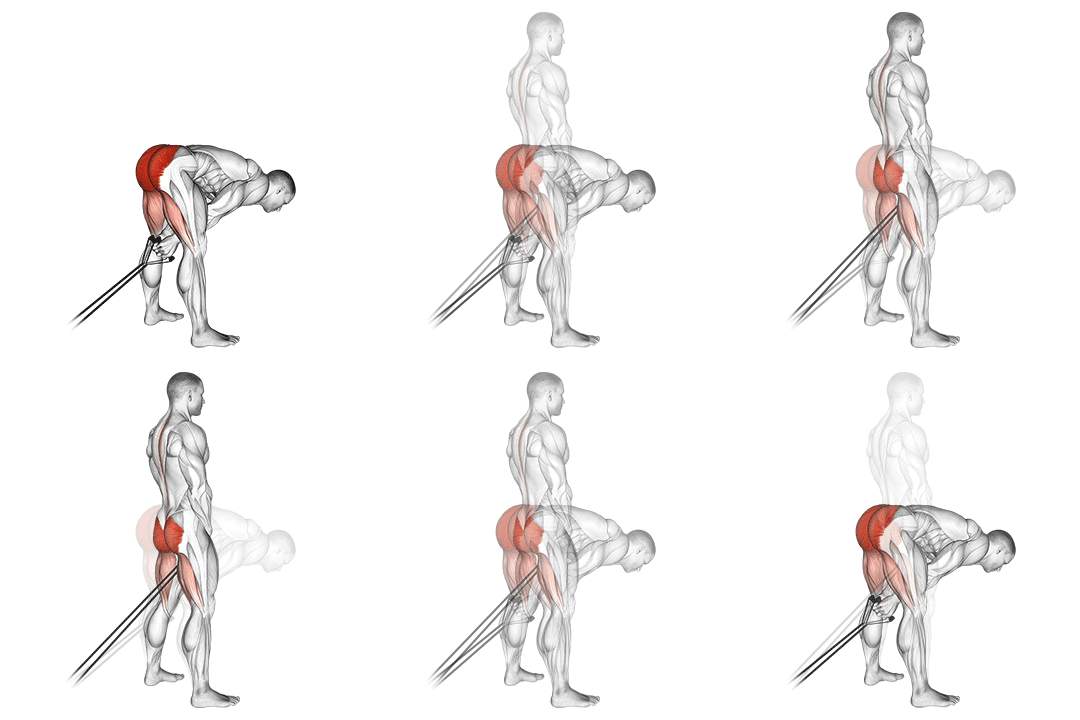
More comparisons with Trap Bar Deadlift
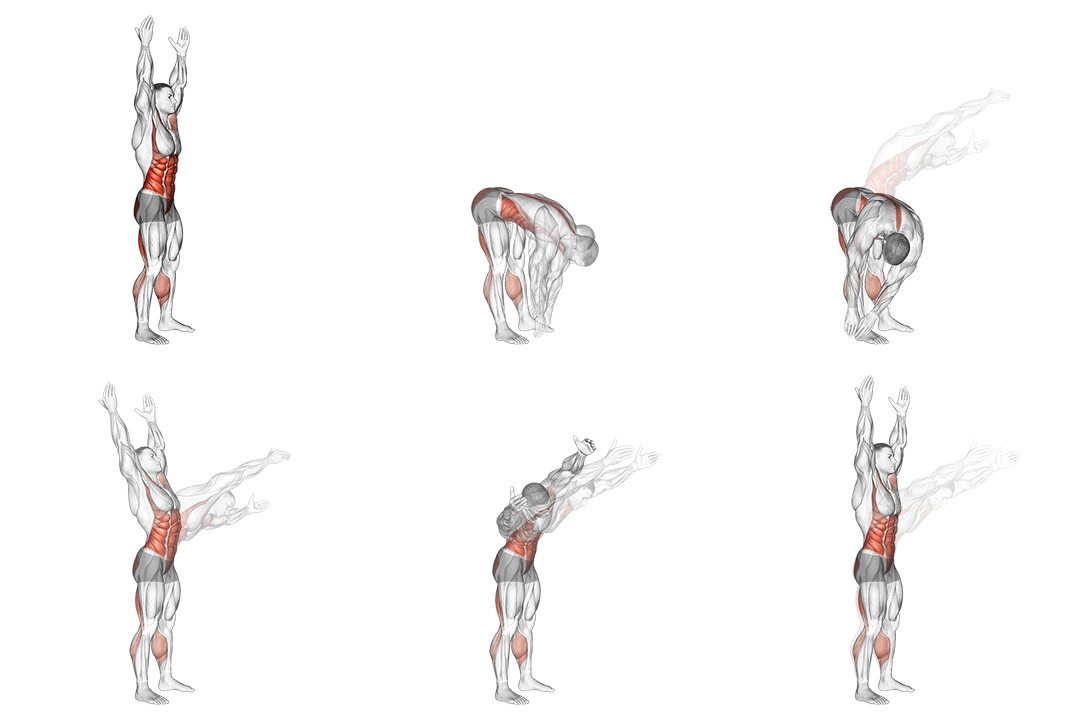
Compare More Exercises
Use our free comparison tool to analyze any two exercises head-to-head.
Compare Exercises