

Band Bent-over Hip Extension vs Trap Bar Deadlift: Complete Comparison Guide
Band Bent-over Hip Extension vs Trap Bar Deadlift — you’re deciding between a glute-focused isolation move and a heavy compound lift. In this comparison you’ll get clear technique cues, biomechanical differences (hip angles, force vectors, length‑tension), rep ranges, equipment needs, and programming recommendations. I’ll show how each movement loads the glutes and supporting muscles, who should prioritize which exercise, and practical sets/reps you can use next workout. Read on to match the lift to your goals and avoid common form errors.
Exercise Comparison
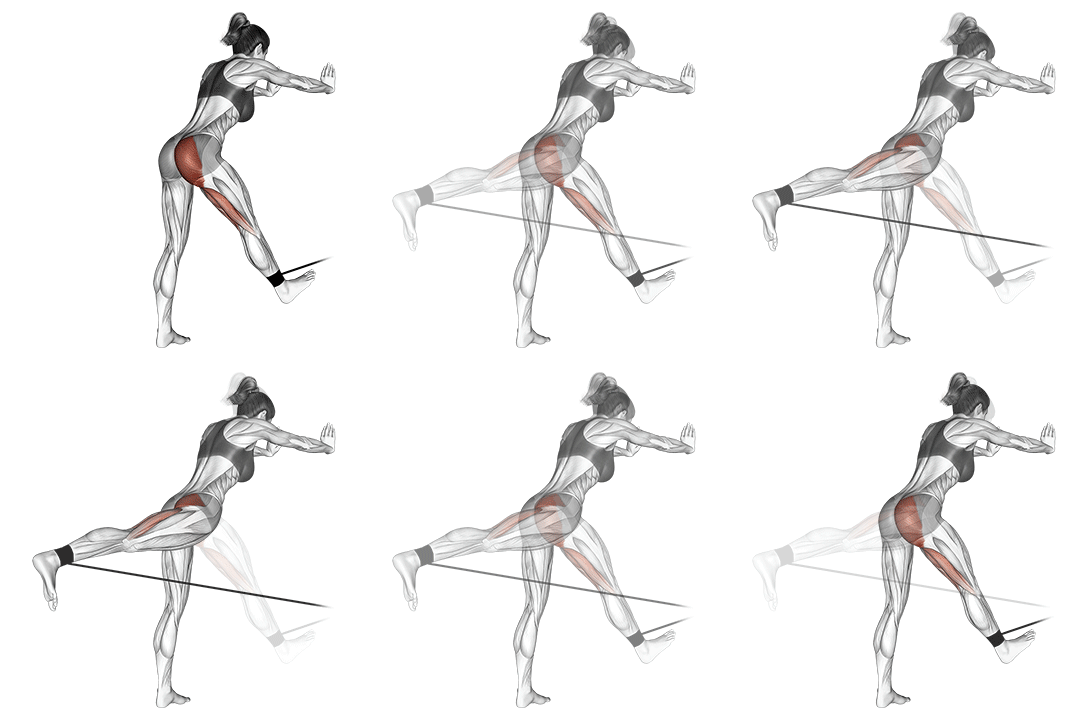
Band Bent-over Hip Extension
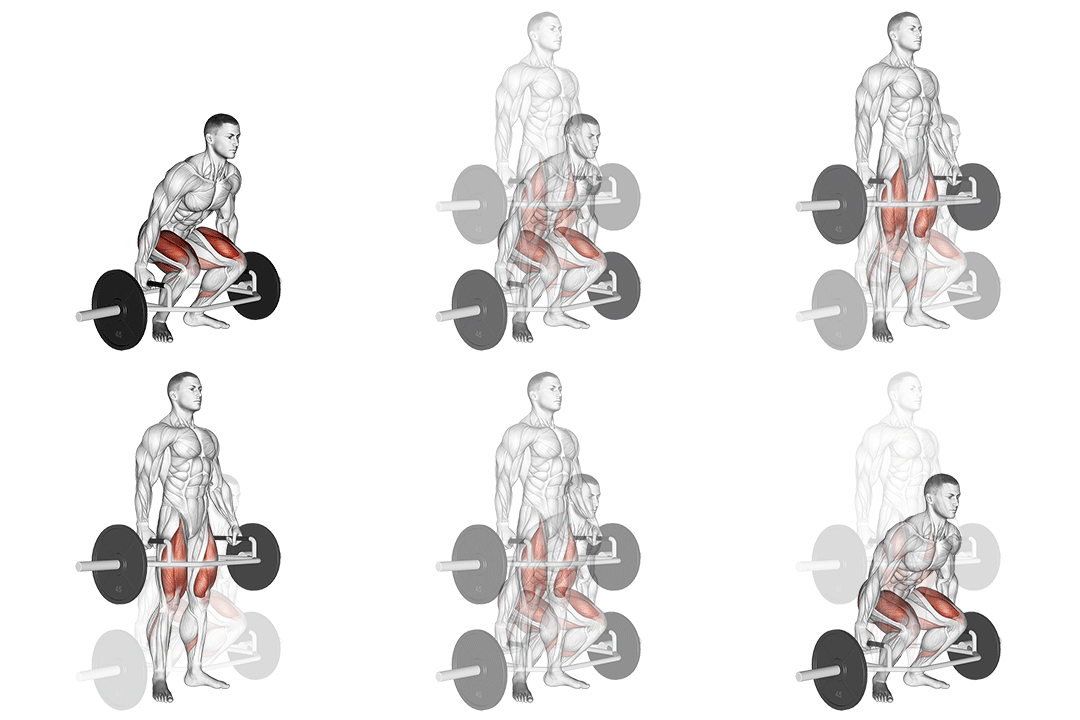
Trap Bar Deadlift
Head-to-Head Comparison
| Attribute | Band Bent-over Hip Extension | Trap Bar Deadlift |
|---|---|---|
| Target Muscle |
Glutes
|
Glutes
|
| Body Part |
Upper-legs
|
Upper-legs
|
| Equipment |
Band
|
Trap-bar
|
| Difficulty |
Beginner
|
Intermediate
|
| Movement Type |
Isolation
|
Compound
|
| Secondary Muscles |
2
|
3
|
Secondary Muscles Activated
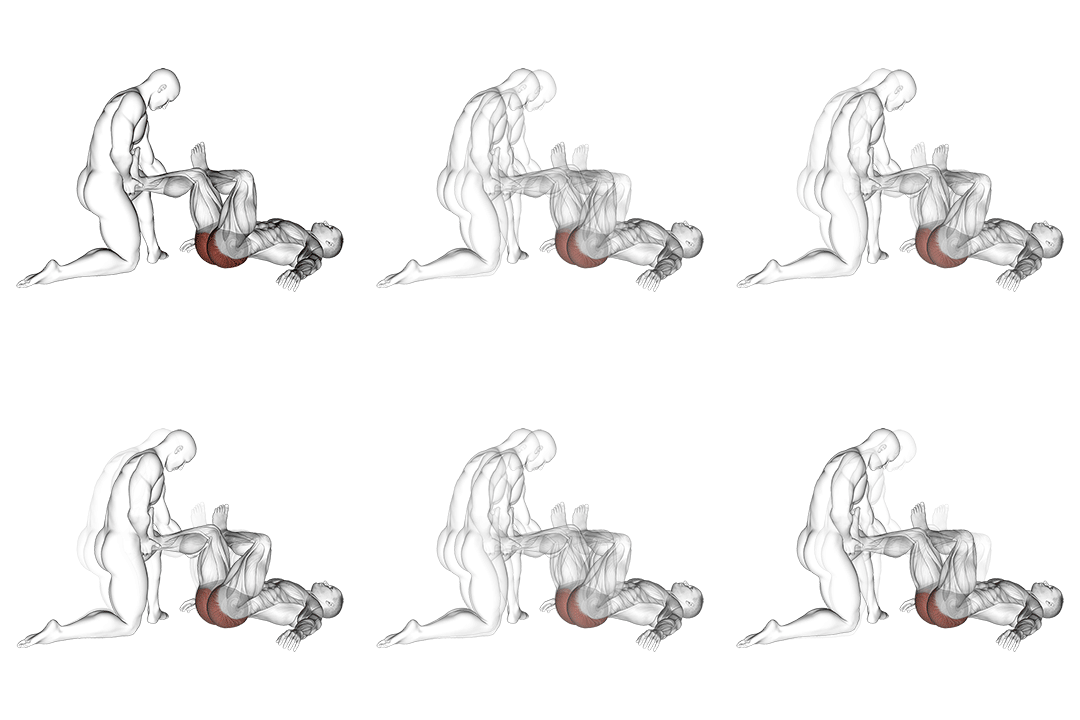
Band Bent-over Hip Extension
Trap Bar Deadlift
Visual Comparison
Overview
Band Bent-over Hip Extension vs Trap Bar Deadlift — you’re deciding between a glute-focused isolation move and a heavy compound lift. In this comparison you’ll get clear technique cues, biomechanical differences (hip angles, force vectors, length‑tension), rep ranges, equipment needs, and programming recommendations. I’ll show how each movement loads the glutes and supporting muscles, who should prioritize which exercise, and practical sets/reps you can use next workout. Read on to match the lift to your goals and avoid common form errors.
Key Differences
- Equipment differs: Band Bent-over Hip Extension uses Band, while Trap Bar Deadlift requires Trap-bar.
- Band Bent-over Hip Extension is an isolation exercise, while Trap Bar Deadlift is a compound movement.
- Difficulty levels differ: Band Bent-over Hip Extension is beginner, while Trap Bar Deadlift is intermediate.
Pros & Cons
Band Bent-over Hip Extension
+ Pros
- Highly glute‑focused isolation with low spinal load
- Portable and inexpensive equipment
- Beginner friendly — simpler motor pattern
- Easy to add high‑rep volume for metabolic stress (12–20 reps)
− Cons
- Limited maximal overload compared to heavy barbells
- Band tension varies across range of motion, changing force curve
- Less carryover to overall strength and quad development
Trap Bar Deadlift
+ Pros
- Allows heavy progressive overload for strength and muscle growth
- Compound pattern recruits glutes, quads, hamstrings and erectors
- More transferable to athletic movements and loaded performance
- Neutral hand position reduces shear compared to straight‑bar deadlift
− Cons
- Requires specific equipment and more setup
- Higher technical demand and greater compressive spinal load
- Less isolation of glutes; quads and hamstrings share workload
When Each Exercise Wins
The trap bar allows higher absolute loads and progressive overload across multiple muscle groups, delivering greater total mechanical tension — the primary driver of hypertrophy. Use 6–12 rep sets for mass, and supplement with glute isolation for detail.
Trap bar deadlifts let you handle maximal weights (3–6 rep range) with a favorable force vector and strong carryover to hip and leg strength. The ability to systematically add load makes it the clear choice for raw strength.
It isolates hip extension, reduces spinal compression, and requires fewer technical cues — ideal for teaching glute activation and building motor control before progressing to loaded compounds.
Requires only a resistance band and small space, enabling effective glute training (8–20 reps) without a gym. It's the practical pick when a trap bar isn't available.
Frequently Asked Questions
Can I do both Band Bent-over Hip Extension and Trap Bar Deadlift in the same workout?
Yes — that’s an effective strategy. Do heavy trap bar deadlifts early (3–6 or 6–8 reps) to target strength and mechanical tension, then finish with banded hip extensions for 10–20 reps to increase gluteal volume and train end‑range contraction.
Which exercise is better for beginners?
Band Bent‑over Hip Extension is better for most beginners because it isolates hip extension, reduces spinal load, and helps establish glute activation. Once you can maintain a neutral spine and produce consistent hip drive, progress to trap bar work.
How do the muscle activation patterns differ?
Banded hip extensions emphasize glute activation near terminal extension with minimal knee movement, relying on length‑tension at the gluteus maximus. Trap bar deadlifts distribute activation across glutes, hamstrings and quads due to combined hip and knee extension and higher external loads.
Can Trap Bar Deadlift replace Band Bent-over Hip Extension?
Not completely — the trap bar provides superior overall loading but less isolation. If your goal is pure glute hypertrophy or rehab, keep banded hip extensions; if you want strength and mass, prioritize trap bar deadlifts and use bands as accessory work.
Expert Verdict
Use the Trap Bar Deadlift when your goal is heavy strength and overall muscle growth: it provides the greatest mechanical tension and progression options (work in 3–6 reps for strength, 6–12 for hypertrophy). Use the Band Bent‑over Hip Extension when you need glute isolation, lower spinal load, rehab work, or training at home — ideal for high‑rep volume (8–20 reps) and improving end‑range hip extension. Program both: prioritize trap bar deadlifts in heavy sessions and follow with banded hip extensions for targeted hypertrophy and endurance. Cue hip hinge depth (approx. 30–60° hip flexion), maintain neutral spine, and choose reps that match the adaptation you want.
Also Compare
More comparisons with Band Bent-over Hip Extension
More comparisons with Trap Bar Deadlift
Compare More Exercises
Use our free comparison tool to analyze any two exercises head-to-head.
Compare Exercises