

Assisted Lying Gluteus And Piriformis Stretch vs Trap Bar Deadlift: Complete Comparison Guide
Assisted Lying Gluteus And Piriformis Stretch vs Trap Bar Deadlift — you’re comparing a beginner isolation mobility move with a loaded compound lift that demands technique and strength. You’ll get clear technique cues for both, a biomechanical breakdown of how each stresses the glutes and surrounding tissues, equipment and accessibility guidance, plus program suggestions (rep ranges, sets, and progressions). Read on to decide which to use for mobility, recovery, hypertrophy, or strength, and how to combine them effectively in your weekly plan.
Exercise Comparison
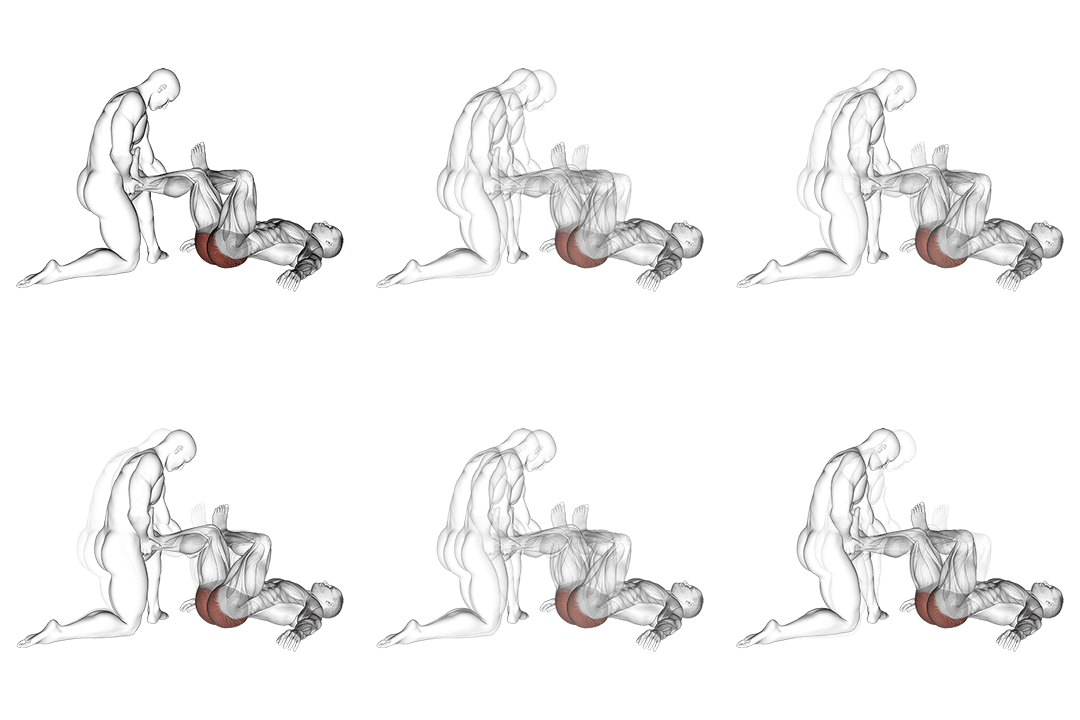
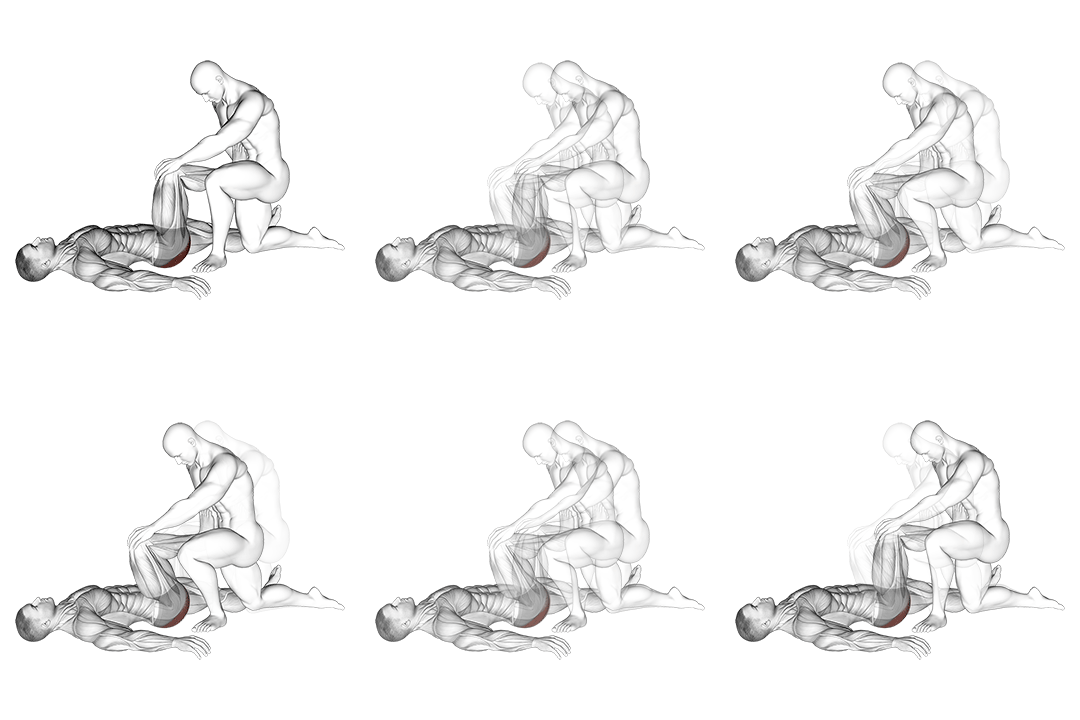
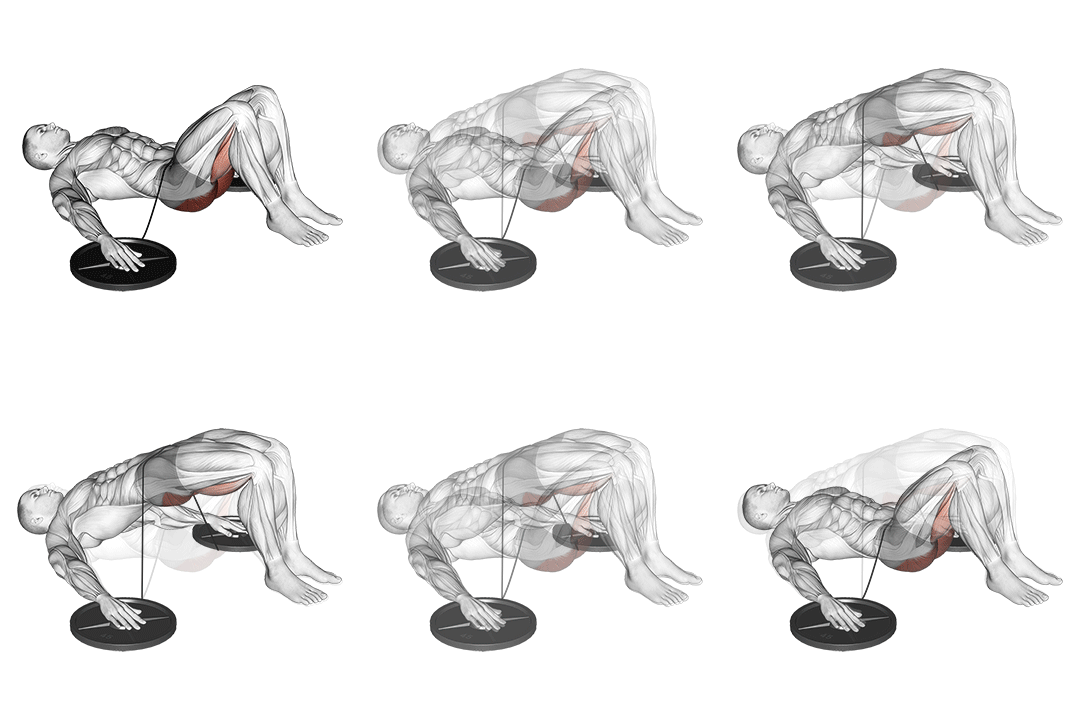
Assisted Lying Gluteus And Piriformis Stretch
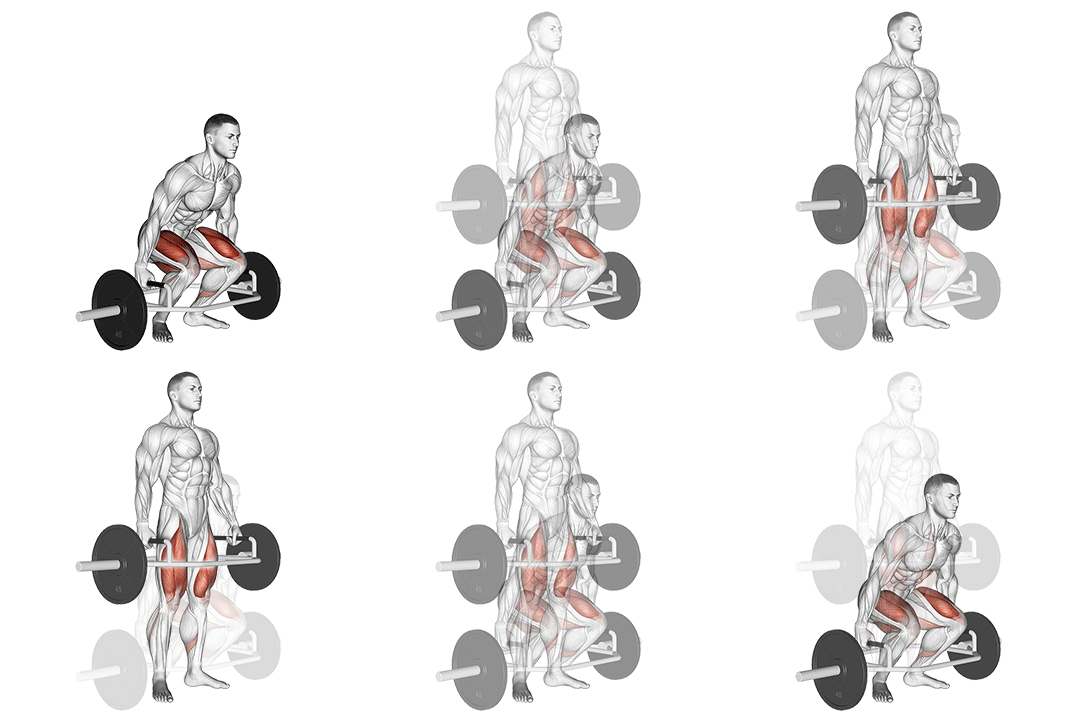
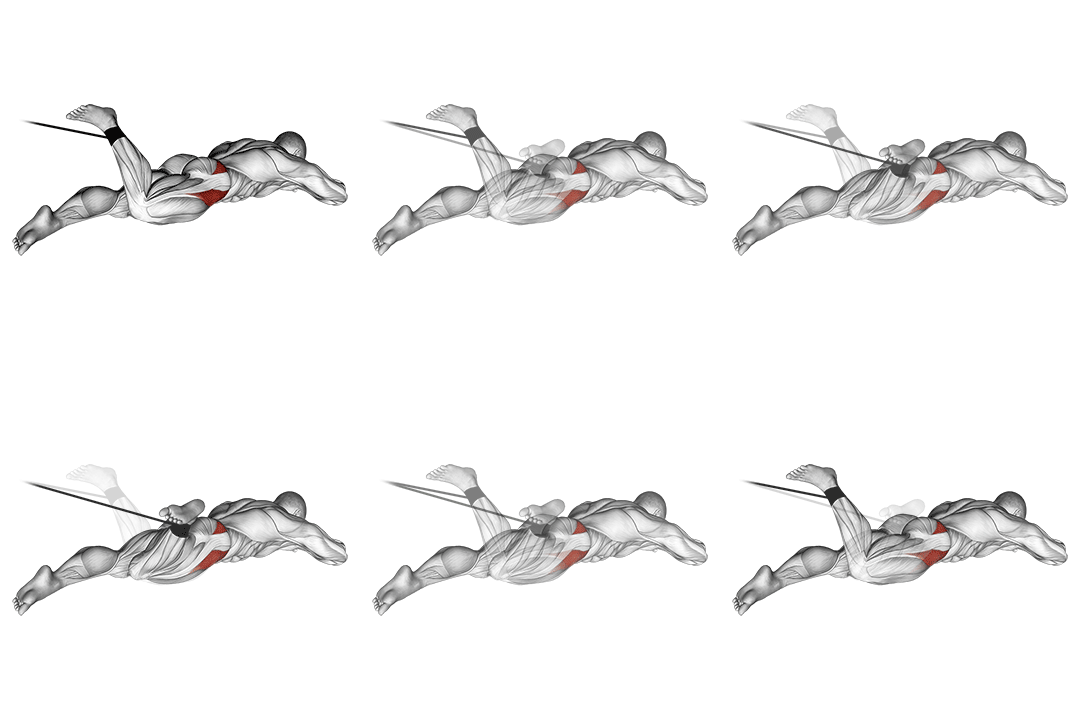
Trap Bar Deadlift
Head-to-Head Comparison
| Attribute | Assisted Lying Gluteus And Piriformis Stretch | Trap Bar Deadlift |
|---|---|---|
| Target Muscle |
Glutes
|
Glutes
|
| Body Part |
Upper-legs
|
Upper-legs
|
| Equipment |
Other
|
Trap-bar
|
| Difficulty |
Beginner
|
Intermediate
|
| Movement Type |
Isolation
|
Compound
|
| Secondary Muscles |
1
|
3
|
Secondary Muscles Activated
Assisted Lying Gluteus And Piriformis Stretch
Trap Bar Deadlift
Visual Comparison
Overview
Assisted Lying Gluteus And Piriformis Stretch vs Trap Bar Deadlift — you’re comparing a beginner isolation mobility move with a loaded compound lift that demands technique and strength. You’ll get clear technique cues for both, a biomechanical breakdown of how each stresses the glutes and surrounding tissues, equipment and accessibility guidance, plus program suggestions (rep ranges, sets, and progressions). Read on to decide which to use for mobility, recovery, hypertrophy, or strength, and how to combine them effectively in your weekly plan.
Key Differences
- Equipment differs: Assisted Lying Gluteus And Piriformis Stretch uses Other, while Trap Bar Deadlift requires Trap-bar.
- Assisted Lying Gluteus And Piriformis Stretch is an isolation exercise, while Trap Bar Deadlift is a compound movement.
- Difficulty levels differ: Assisted Lying Gluteus And Piriformis Stretch is beginner, while Trap Bar Deadlift is intermediate.
Pros & Cons
Assisted Lying Gluteus And Piriformis Stretch
+ Pros
- Requires minimal equipment and space
- Directly improves glute and piriformis mobility and hip internal rotation
- Beginner-friendly with low loading risk
- Useful as a warm-up, cooldown, or recovery tool
− Cons
- Does not provide significant mechanical tension for muscle growth
- Limited progression options for strength
- Passive nature gives minimal carryover to loaded performance
Trap Bar Deadlift
+ Pros
- Generates high mechanical tension for glute hypertrophy and strength
- Safe spine position compared to straight-bar deadlifts for many lifters
- Scalable with load, tempo, and volume for clear progressions
- Transfers strongly to athletic movements via vertical force production
− Cons
- Requires a trap bar and weights
- Higher technical demand and injury risk with poor form
- Less targeted for piriformis-specific mobility or neural tension relief
When Each Exercise Wins
The trap bar allows heavy loaded hip extension and clear progressive overload (6–12 reps for hypertrophy). Its vertical force vector and ability to increase load produce larger time under tension and mechanical stress required for muscle growth.
Trap bar deadlifts let you work in 1–6 rep ranges at 80–95%+ of 1RM with stable biomechanics, maximizing hip torque and neural adaptations for strength more effectively than a passive stretch.
The assisted stretch teaches you to find and release tight glute and piriformis tissues with minimal risk and complexity. It’s ideal for building mobility and pain-free movement before loading the posterior chain.
You can perform the stretch without a trap bar, plates, or a gym. It fits limited-space routines and supports recovery days when heavy equipment isn’t available.
Frequently Asked Questions
Can I do both Assisted Lying Gluteus And Piriformis Stretch and Trap Bar Deadlift in the same workout?
Yes. Use the stretch as a prehab warm-up or post-workout cooldown. Perform the assisted stretch before lifting to improve hip mobility and again after heavy sets to facilitate recovery and restore range of motion.
Which exercise is better for beginners?
For absolute beginners and those with tight hips, the assisted stretch is better because it teaches tissue awareness without load. Once you have basic mobility and no pain, introduce trap bar deadlifts with light weight to learn the hinge pattern.
How do the muscle activation patterns differ?
The assisted stretch produces an elongation/isometric stimulus and reduces active glute force as the muscle lengthens, while the trap bar deadlift produces concentric and eccentric contractions under load, maximizing hip extension torque and recruiting hamstrings, quads, and lumbar extensors.
Can Trap Bar Deadlift replace Assisted Lying Gluteus And Piriformis Stretch?
No—if your goal is mobility or neural tension reduction, the stretch is irreplaceable. If your goal is strength or hypertrophy, the trap bar deadlift is superior; ideally include both: stretch for mobility, deadlift for load and progression.
Expert Verdict
Use the Assisted Lying Gluteus And Piriformis Stretch when your goal is improved hip mobility, pain reduction, or prehab—hold 30–90 seconds, 2–4 sets, and breathe into the stretch to reduce neural tension and restore range. Choose the Trap Bar Deadlift when you want measurable posterior-chain strength and muscle growth: program 3–5 sets of 3–6 reps for strength or 4–6 sets of 6–12 reps for hypertrophy, maintaining a neutral spine and driving through the heels. Best practice: pair them—do the stretch as a warm-up or cooldown around heavy trap bar sessions to improve tissue quality and movement mechanics.
Also Compare
More comparisons with Assisted Lying Gluteus And Piriformis Stretch
More comparisons with Trap Bar Deadlift
Compare More Exercises
Use our free comparison tool to analyze any two exercises head-to-head.
Compare Exercises