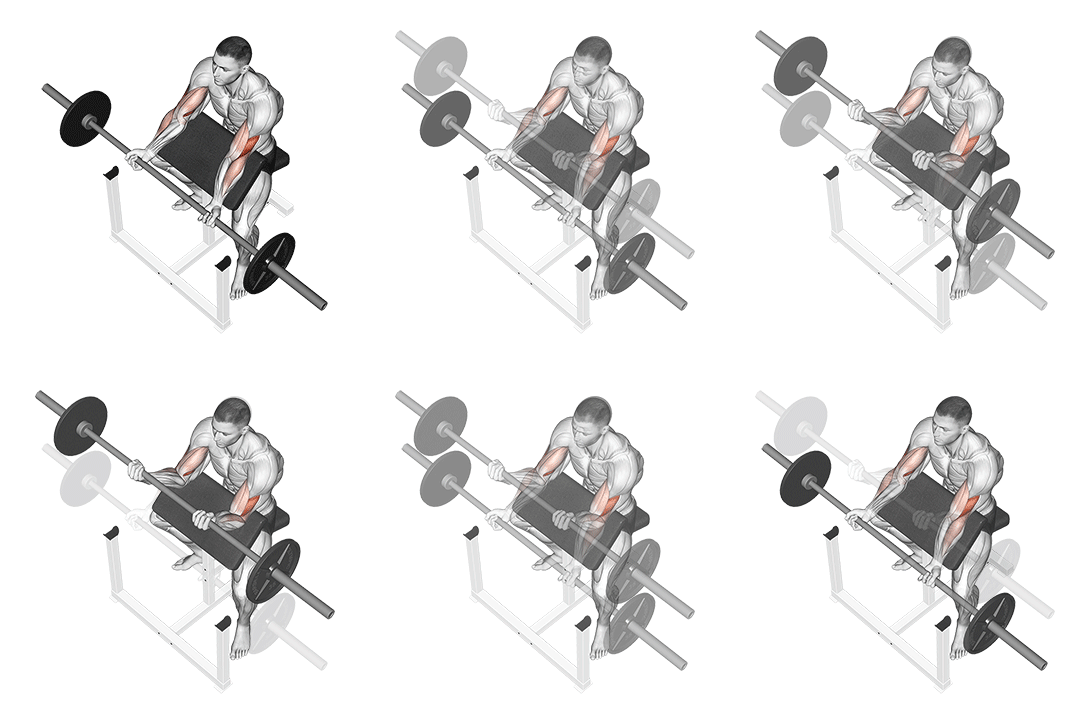
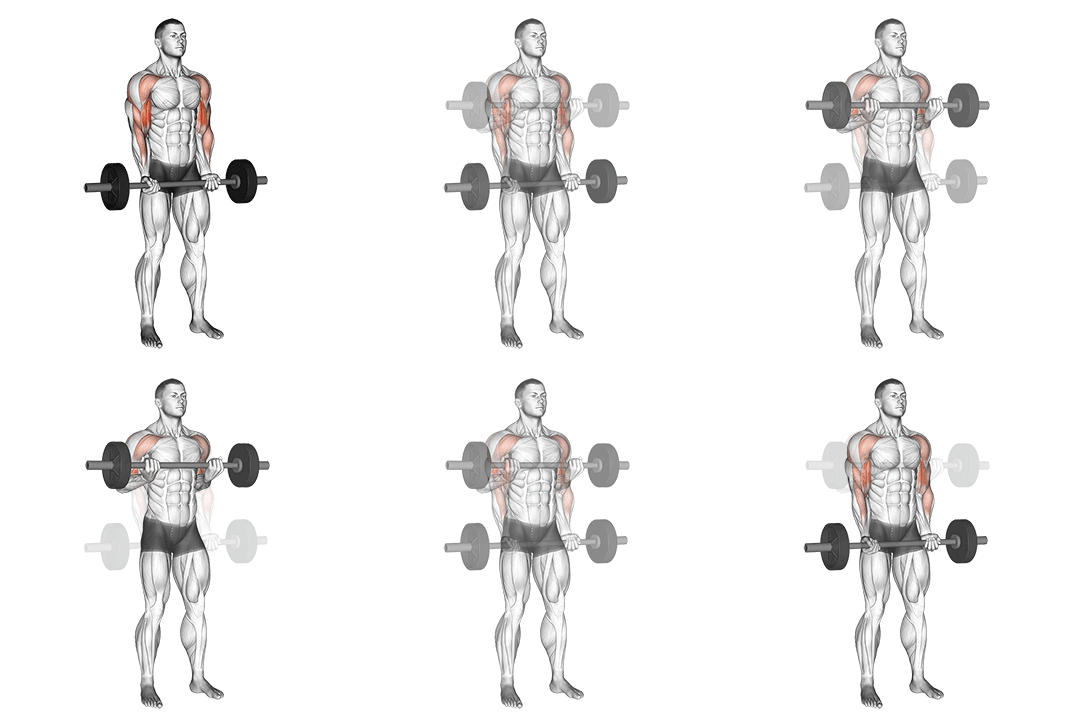
Barbell Alternate Biceps Curl vs Barbell Biceps Curl (with Arm Blaster)

Compare target muscles, equipment, difficulty, movement type, and secondary muscles for Barbell Alternate Biceps Curl and Barbell Biceps Curl (with Arm Blaster).

Change comparison Share

Get comparison link

Select the link and use your device's Copy command.

Comparison overview

AI-generated
Barbell Alternate Biceps Curl vs Barbell Biceps Curl (with Arm Blaster) — if you want thicker arms, choosing the right curl matters. You’ll learn how each exercise loads the biceps, how the forearms and shoulders contribute, what equipment you need, and which movement to use for hypertrophy, strength, or convenience. I’ll give technique cues (elbow position, wrist rotation, tempo), biomechanics (length-tension and force vectors), and clear rep ranges so you can pick the movement that fits your goals and training environment.

Exercise Comparison

Exercise A
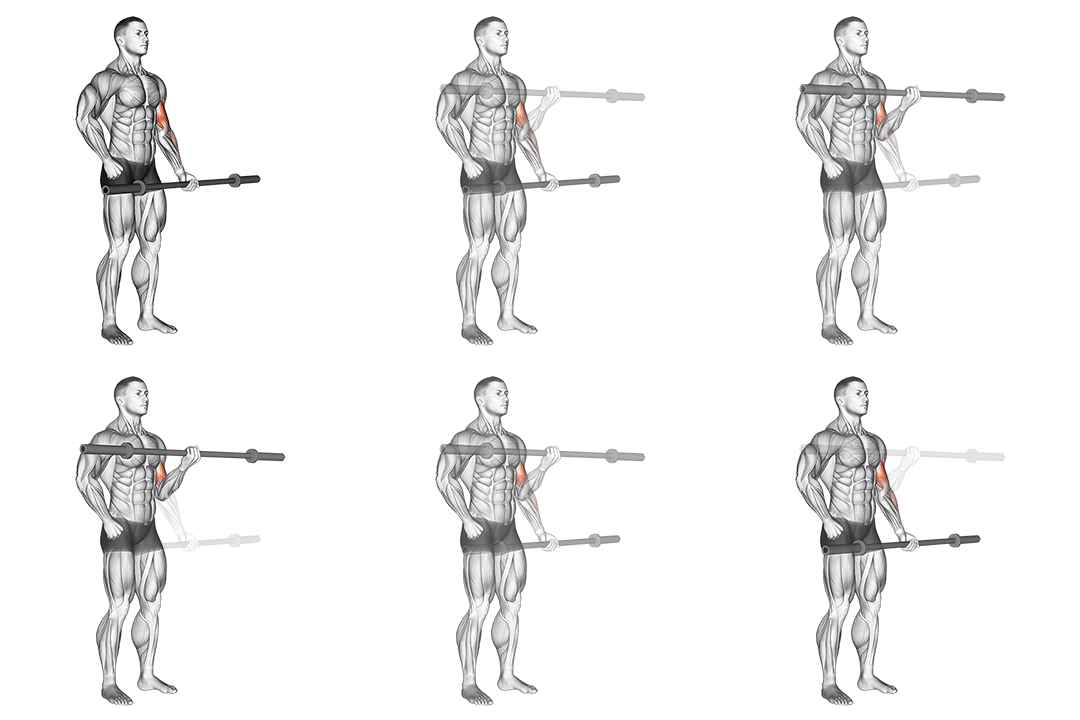
Barbell Alternate Biceps Curl demonstration

Barbell Alternate Biceps Curl

Target Biceps
Equipment Barbell
Body Part Upper-arms
Difficulty Beginner
Movement Isolation
Secondary Muscles
Forearms
VS
Exercise B
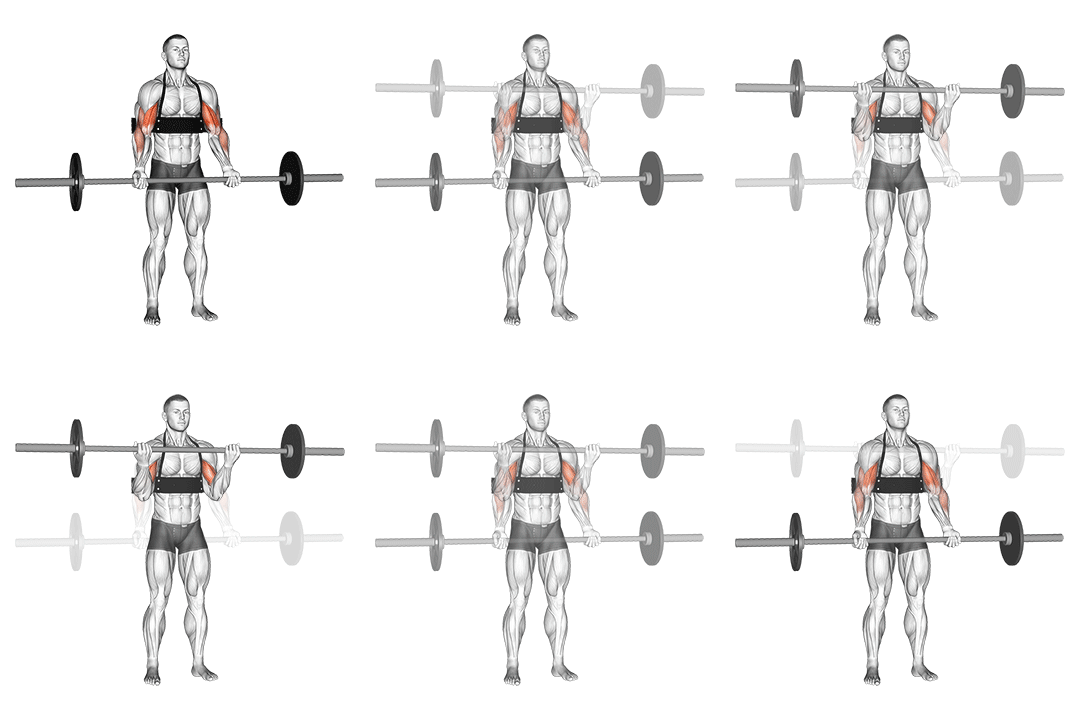
Barbell Biceps Curl (with Arm Blaster) demonstration

Barbell Biceps Curl (with Arm Blaster)

Target Biceps
Equipment Barbell
Body Part Upper-arms
Difficulty Beginner
Movement Isolation
Secondary Muscles
Forearms

Head-to-Head Comparison

Different values are marked. These are catalogue attributes, not performance scores.

Muscles used

Listed target and secondary muscles, shown on the body. Locations, not activation or strength scores.

  • Target
  • Secondary
  • Not highlighted

Barbell Alternate Biceps Curl

Front
Barbell Alternate Biceps Curl: front muscle locationsSolid: listed target. Striped: listed secondary. Grey: not highlighted. Locations, not activation or strength scores. See the muscle names below.
Back
Barbell Alternate Biceps Curl: back muscle locationsSolid: listed target. Striped: listed secondary. Grey: not highlighted. Locations, not activation or strength scores. See the muscle names below.
Target
Biceps
Secondary
Forearms

Barbell Biceps Curl (with Arm Blaster)

Front
Barbell Biceps Curl (with Arm Blaster): front muscle locationsSolid: listed target. Striped: listed secondary. Grey: not highlighted. Locations, not activation or strength scores. See the muscle names below.
Back
Barbell Biceps Curl (with Arm Blaster): back muscle locationsSolid: listed target. Striped: listed secondary. Grey: not highlighted. Locations, not activation or strength scores. See the muscle names below.
Target
Biceps
Secondary
Forearms

Grey does not mean a muscle is unused. The diagrams show only the mapped catalogue labels.

Attribute Barbell Alternate Biceps Curl Barbell Biceps Curl (with Arm Blaster)
Target Muscle
Biceps
Biceps
Body Part
Upper-arms
Upper-arms
Equipment
Barbell
Barbell
Difficulty
Beginner
Beginner
Movement Type
Isolation
Isolation
Secondary Muscles
Forearms
Forearms

Visual Comparison

An illustrative 1–10 profile derived from catalog difficulty, equipment, and listed-muscle fields—not measured performance or muscle activation.

Key Differences

  • Both exercises target the Biceps using Barbell. The catalogue does not establish which exercise is better for an individual goal.

Muscle comparison

Shared target muscles

Both movements target the biceps brachii as the primary mover through elbow flexion and forearm supination. The main overlap is high elbow-flexion torque across the 0–135° arc: both produce peak tension around 60–90° of elbow flexion where the moment arm is largest. Expect similar direct biceps stimulus when load and reps match, because both isolate elbow flexion rather than shoulder-driven pulling.

Secondary muscle differences

Secondary recruitment differs in stabilization demand and shoulder involvement. The alternate curl asks for more anti-rotation from the core and scapular stabilizers because you load one arm at a time. The curl with an Arm Blaster pins the elbows and reduces shoulder travel, lowering deltoid and clavicular involvement but increasing isometric triceps and upper-back stabilization around the scapula.

Muscle involvement analysis

During alternate curls you get a dynamic pattern: shoulder and torso micro-adjustments let you press through sticking points, shifting force vectors slightly toward forearm flexors at end-range. With the Arm Blaster, the elbow stays fixed so the biceps experiences a more consistent length-tension curve across reps and less compensatory shoulder flexion; that increases pure elbow-flexor loading especially in the mid-range (approx. 45–90°).

Equipment and setup

Barbell Alternate Biceps Curl: setup

Barbell Alternate Biceps Curl needs only a barbell (straight or EZ) and plates. You can perform it with a standard 20–45 mm barbell shaft and minimal space.

Barbell Biceps Curl (with Arm Blaster): setup

Barbell Biceps Curl (with Arm Blaster) requires the same barbell and plates plus an Arm Blaster plate that straps around the torso to pin elbows. The accessory is inexpensive but not universal in every gym.

Access and practicality

Barbell Alternate Biceps Curl — it requires no accessory, fits virtually any gym or home setup, and scales from very light to heavy loads without extra gear.

Learning and progression

Learning the movements

Barbell Alternate Biceps Curl is slightly easier to learn because you move one arm at a time, letting you focus on supination and elbow path. The Arm Blaster setup is simple but requires learning to keep elbows snug against the pad and avoid shrugging.

Progression considerations

Barbell Biceps Curl (with Arm Blaster) offers cleaner progressive overload because it limits cheating and lets you add 2.5–5 lb increments while keeping strict form. The alternate curl offers unilateral progression to fix left-right imbalances and overload one side with heavier relative load.

Limitations and precautions

Relative injury risk is modest for both when loaded properly. The Arm Blaster can concentrate stress on the elbow joint and biceps tendon if you suddenly spike load; that raises risk slightly compared to alternates where torso motion can partially offload peak torque.

Pros & Cons

Barbell Alternate Biceps Curl

+ Pros

  • Requires only a barbell — highly accessible
  • Unilateral work fixes left-right strength imbalances
  • Natural supination pattern improves peak contraction at the top
  • Core and anti-rotation demand improves overall stability

Cons

  • Easier to cheat with torso sway under heavy loads
  • Longer set time if you do strict unilateral sets
  • Less consistent elbow position can vary biceps loading across reps

Barbell Biceps Curl (with Arm Blaster)

+ Pros

  • Pins elbows for consistent length-tension and strict form
  • Reduces shoulder involvement so more pure elbow-flexor loading
  • Easier to maintain tempo and time-under-tension (TUT)
  • Better for loading mid-range (45–90°) where biceps moment arm peaks

Cons

  • Requires an Arm Blaster accessory not always available
  • Pins elbows which can increase localized stress on tendons
  • Slight learning curve to avoid shrugging and discomfort

When Each Exercise Wins

1
For muscle hypertrophy: Barbell Biceps Curl (with Arm Blaster)

The Arm Blaster enforces a fixed elbow, maximizing time under tension in the biceps' optimal mid-range (45–90°). That consistent force vector allows you to use strict 8–12 rep sets and progressive overload with less shoulder compensation.

2
For strength gains: Barbell Alternate Biceps Curl

Alternate curls let you target unilateral strength and push heavier relative loads per arm when programmed with 4–6 rep sets; they also teach force transfer and grip control, which transfers to heavier bilateral lifts.

3
For beginners: Barbell Alternate Biceps Curl

Beginners can learn elbow flexion and forearm supination patterns more easily with one arm at a time and without an accessory; it also reduces the tendency to overload and risk tendon stress.

4
For home workouts: Barbell Alternate Biceps Curl

No extra equipment is required and the exercise adapts to limited space and adjustable barbells, making it the clear home option.

Frequently Asked Questions

Can I do both Barbell Alternate Biceps Curl and Barbell Biceps Curl (with Arm Blaster) in the same workout?

Yes — pair them strategically. Do the Arm Blaster first as a strict mass-builder (8–12 reps) then follow with alternate curls for single-arm finishing work to address imbalances and add 2–3 lighter sets.

Which exercise is better for beginners?

Barbell Alternate Biceps Curl is better for beginners because it requires no accessory and lets you learn elbow flexion and supination with less concentrated tendon stress and easier load progression.

How do the muscle activation patterns differ?

Alternate curls show more anti-rotation and core involvement with slight shoulder micro-movement, producing variable peak points. The Arm Blaster stabilizes the humerus and scapula, yielding a steadier biceps length-tension curve and more consistent mid-range activation.

Can Barbell Biceps Curl (with Arm Blaster) replace Barbell Alternate Biceps Curl?

It can replace it for pure hypertrophy phases because of stricter isolation, but it won’t correct unilateral imbalances as effectively. Keep alternates in your program when you need single-arm strength or when accessories aren’t available.

Comparison Summary

Both curls serve you well, but pick based on your immediate goal. Use the Barbell Biceps Curl (with Arm Blaster) when you want strict isolation and maximal mid-range biceps tension — program it for 8–12 reps, slow eccentrics (2–3 s), and controlled peak contraction. Choose the Barbell Alternate Biceps Curl if you need unilateral balance, limited equipment, or are focusing on strength with lower reps (4–6) and heavier loads. Rotate both across phases: use the Arm Blaster for hypertrophy blocks and alternates when correcting imbalances or emphasizing heavier, unilateral strength work.

Exercise instructions

Steps from the exercise catalogue. Read the full sequence before starting.

Barbell Alternate Biceps Curl

  1. Stand up straight with your feet shoulder-width apart and hold a barbell in each hand, palms facing forward.
  2. Keep your upper arms stationary and exhale as you curl the weights while contracting your biceps.
  3. Continue to raise the barbells until your biceps are fully contracted and the barbells are at shoulder level.
Read remaining steps for Barbell Alternate Biceps Curl
  1. Hold the contracted position for a brief pause as you squeeze your biceps.
  2. Inhale as you slowly begin to lower the barbells back to the starting position.
  3. Repeat for the desired number of repetitions, alternating arms.

Barbell Biceps Curl (with Arm Blaster)

  1. Stand up straight with your feet shoulder-width apart and hold a barbell with an underhand grip, palms facing up.
  2. Place your upper arms against the arm blaster, keeping your elbows close to your torso.
  3. Keeping your upper arms stationary, exhale and curl the weights while contracting your biceps.
Read remaining steps for Barbell Biceps Curl (with Arm Blaster)
  1. Continue to raise the barbell until your biceps are fully contracted and the bar is at shoulder level.
  2. Hold the contracted position for a brief pause as you squeeze your biceps.
  3. Inhale and slowly begin to lower the barbell back to the starting position.
  4. Repeat for the desired number of repetitions.

Also Compare

Compare another pair

Choose two exercises to see their differences side by side.

Compare Exercises