

Barbell Close-grip Bench Press vs Barbell Incline Close Grip Bench Press: Complete Comparison Guide
Barbell Close-grip Bench Press vs Barbell Incline Close Grip Bench Press — two compound barbell lifts that aim at the triceps but shift load across the shoulder and chest. If you want clear direction on which to pick, you’re in the right place. I’ll walk you through primary and secondary muscle activation, exact technique cues (grip width, bar path, bench angle), biomechanics (moment arms, length-tension), programming ranges (3–6 for strength, 6–12 for hypertrophy), and practical progressions so you can choose the one that matches your goals.
Exercise Comparison
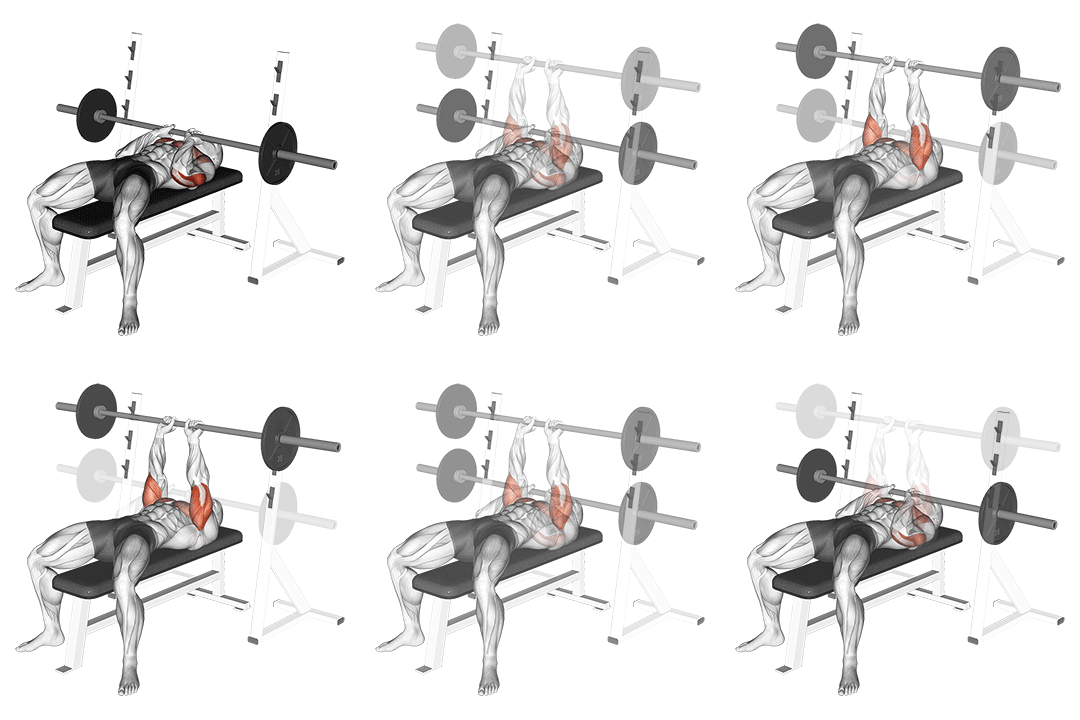
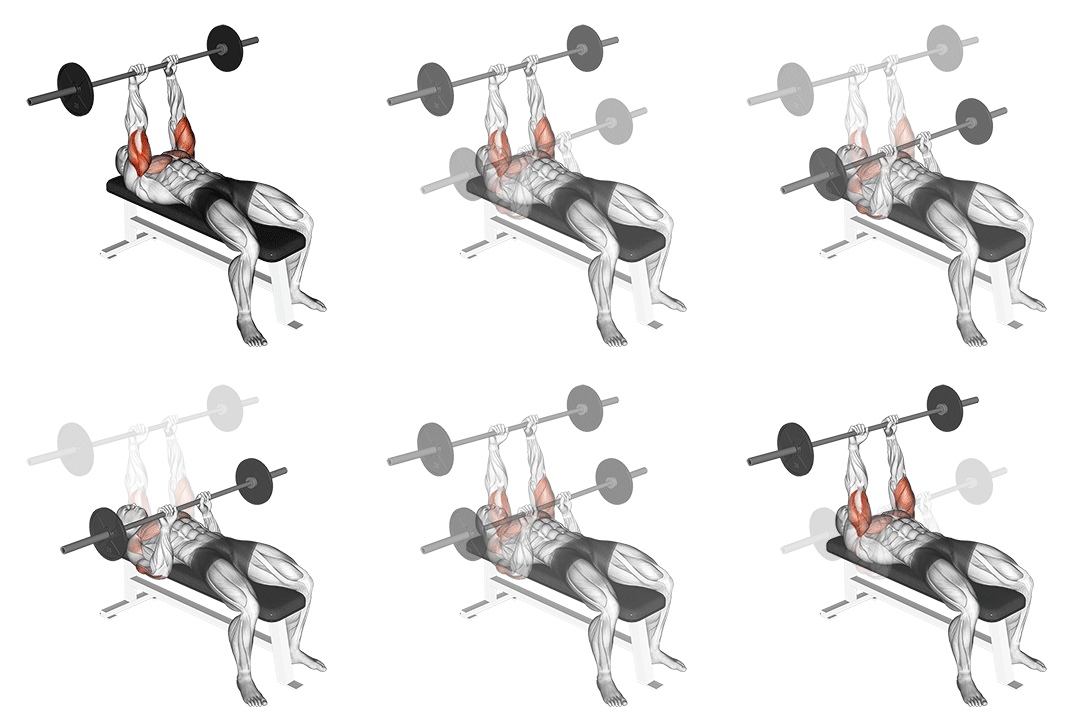
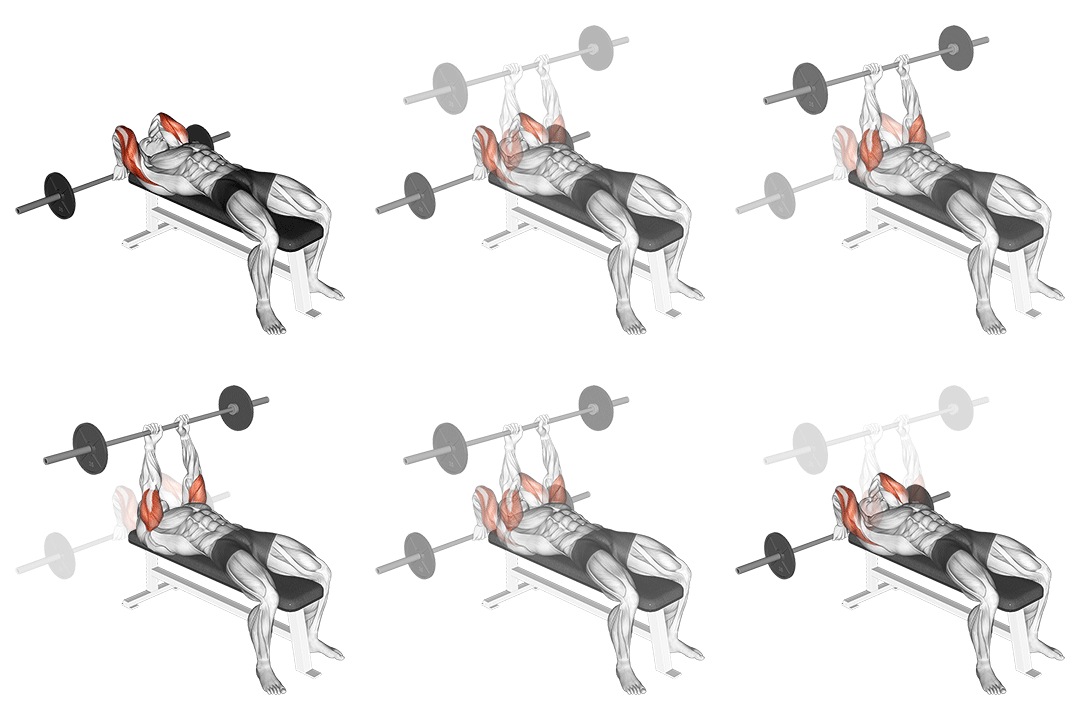
Barbell Close-grip Bench Press
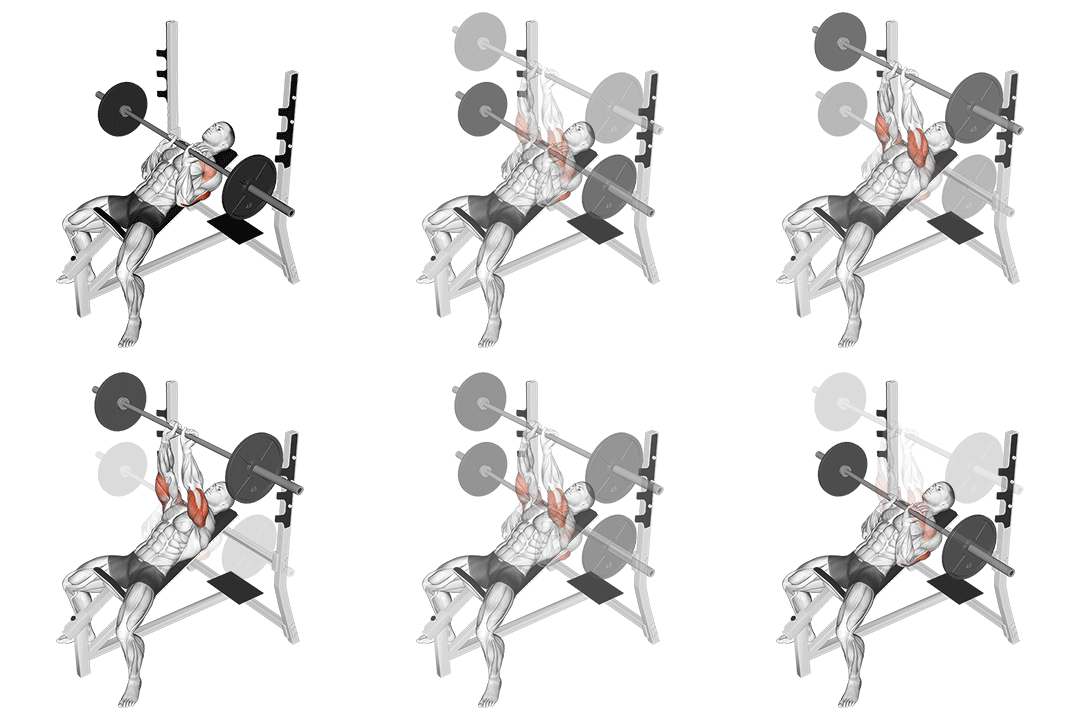
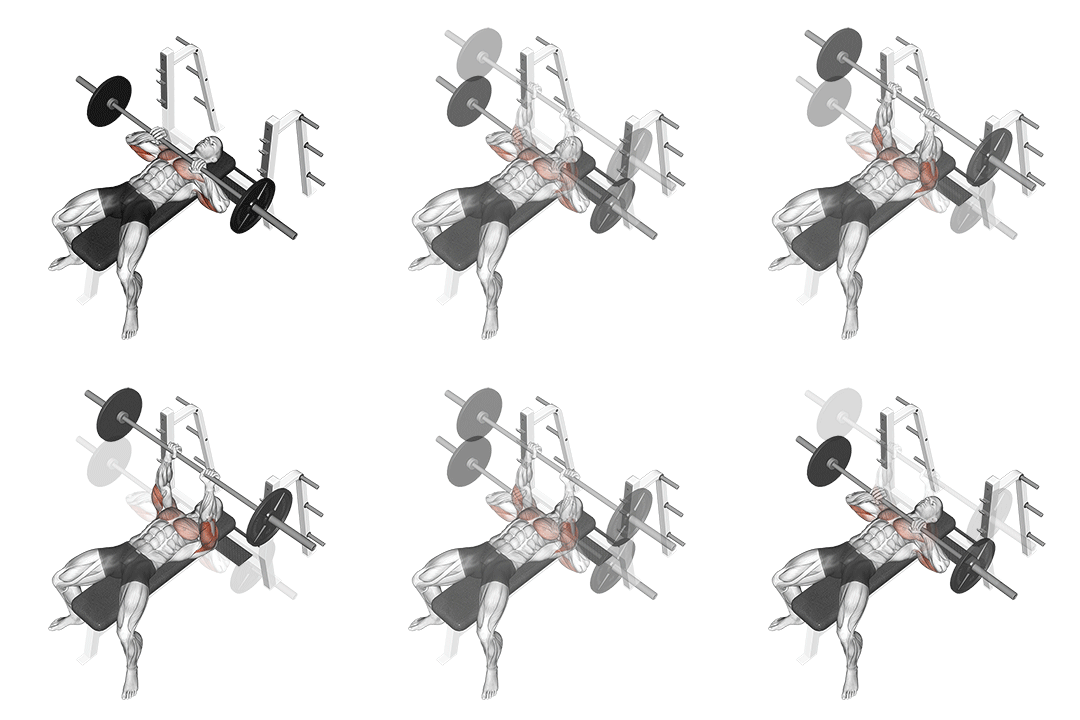
Barbell Incline Close Grip Bench Press
Head-to-Head Comparison
| Attribute | Barbell Close-grip Bench Press | Barbell Incline Close Grip Bench Press |
|---|---|---|
| Target Muscle |
Triceps
|
Triceps
|
| Body Part |
Upper-arms
|
Upper-arms
|
| Equipment |
Barbell
|
Barbell
|
| Difficulty |
Intermediate
|
Intermediate
|
| Movement Type |
Compound
|
Compound
|
| Secondary Muscles |
2
|
2
|
Secondary Muscles Activated
Barbell Close-grip Bench Press
Barbell Incline Close Grip Bench Press
Visual Comparison
Overview
Barbell Close-grip Bench Press vs Barbell Incline Close Grip Bench Press — two compound barbell lifts that aim at the triceps but shift load across the shoulder and chest. If you want clear direction on which to pick, you’re in the right place. I’ll walk you through primary and secondary muscle activation, exact technique cues (grip width, bar path, bench angle), biomechanics (moment arms, length-tension), programming ranges (3–6 for strength, 6–12 for hypertrophy), and practical progressions so you can choose the one that matches your goals.
Key Differences
- Both exercises target the Triceps using Barbell. The main differences are in their movement patterns and muscle activation angles.
Pros & Cons
Barbell Close-grip Bench Press
+ Pros
- Allows heavier loading and progressive overload for triceps strength
- Simpler setup and bar path — easier to teach and learn
- Strong carryover to lockout strength in traditional bench variations
- High triceps activation in the mid to top range due to optimal force vector
− Cons
- Can concentrate stress on wrists and elbow tendons if grip or wrist position is poor
- Less emphasis on the clavicular (upper) chest compared with incline variations
- May require spotter at higher intensities for safety
Barbell Incline Close Grip Bench Press
+ Pros
- Shifts more load to the clavicular head of the chest for upper-chest development
- Places long head of triceps at a different length for balanced hypertrophy
- Useful for addressing weak lockout points at different shoulder angles
- Adds training variety and can reduce repetitive stress from flat pressing
− Cons
- Typically lower absolute loads due to less favorable leverage (roughly 5–15% less)
- Requires an adjustable bench and slightly more technical setup
- Higher anterior shoulder demand can aggravate pre-existing shoulder issues
When Each Exercise Wins
For triceps hypertrophy the flat close-grip lets you load heavier and apply progressive overload in the 6–12 rep range, producing higher mechanical tension. Use 6–12 reps, 3–4 sets, and controlled 1–2 second eccentrics for best results.
The flat close-grip offers superior stability and allows you to move heavier absolute weight (3–6 rep ranges), making it the better choice to build raw elbow extension strength and lockout power.
Flat close-grip is easier to learn, requires fewer setup decisions, and gives simpler cues for bar path and hand placement. Start with lighter loads and master technique before adding incline variants.
Most home gyms have a flat bench and rack but not an adjustable incline setup. The flat version delivers high triceps stimulus with minimal extra equipment.
Frequently Asked Questions
Can I do both Barbell Close-grip Bench Press and Barbell Incline Close Grip Bench Press in the same workout?
Yes. Start with the movement you plan to prioritize (usually the heavier flat close-grip for strength), then use the incline as an accessory for 8–12 reps to target the upper chest and different triceps fibers. Keep total weekly volume in check to avoid overuse.
Which exercise is better for beginners?
Barbell Close-grip Bench Press is the better starting point because the flat position is more stable and easier to coach. Begin with light loads to learn wrist alignment, scapular retraction, and a consistent bar path.
How do the muscle activation patterns differ?
The flat close-grip produces peak triceps activation near mid-range where elbow torque is highest, while the incline shifts some work to the clavicular chest due to increased shoulder flexion. Incline also alters long-head triceps length, moving peak activation slightly earlier in the concentric.
Can Barbell Incline Close Grip Bench Press replace Barbell Close-grip Bench Press?
It can replace the flat variation if your goal is upper-chest development or to reduce wrist/elbow stress, but it won’t match the flat version for absolute triceps loading and maximal strength. Use it as a substitute in deloads or to emphasize different muscle lengths.
Expert Verdict
If your primary goal is triceps strength and muscle growth, prioritize the Barbell Close-grip Bench Press because it supports heavier loads and straightforward progressive overload. Program it for 3–6 reps to build strength or 6–12 reps for hypertrophy, with tight elbows and a bar path toward the sternum. Use the Barbell Incline Close Grip Bench Press when you want extra upper-chest involvement or to vary the long-head triceps length-tension — set the bench at 25–35°, reduce load by ~10%, and focus on controlled tempo. Use both strategically: flat for heavy cycles, incline for targeted upper-chest and variety.
Also Compare
More comparisons with Barbell Close-grip Bench Press
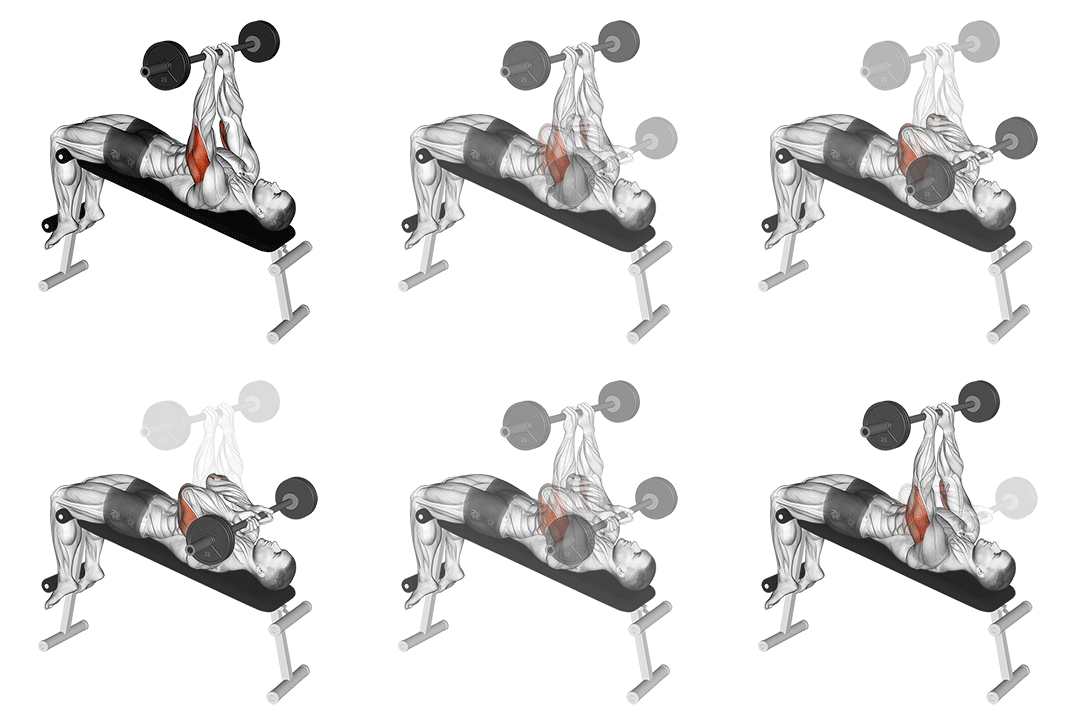
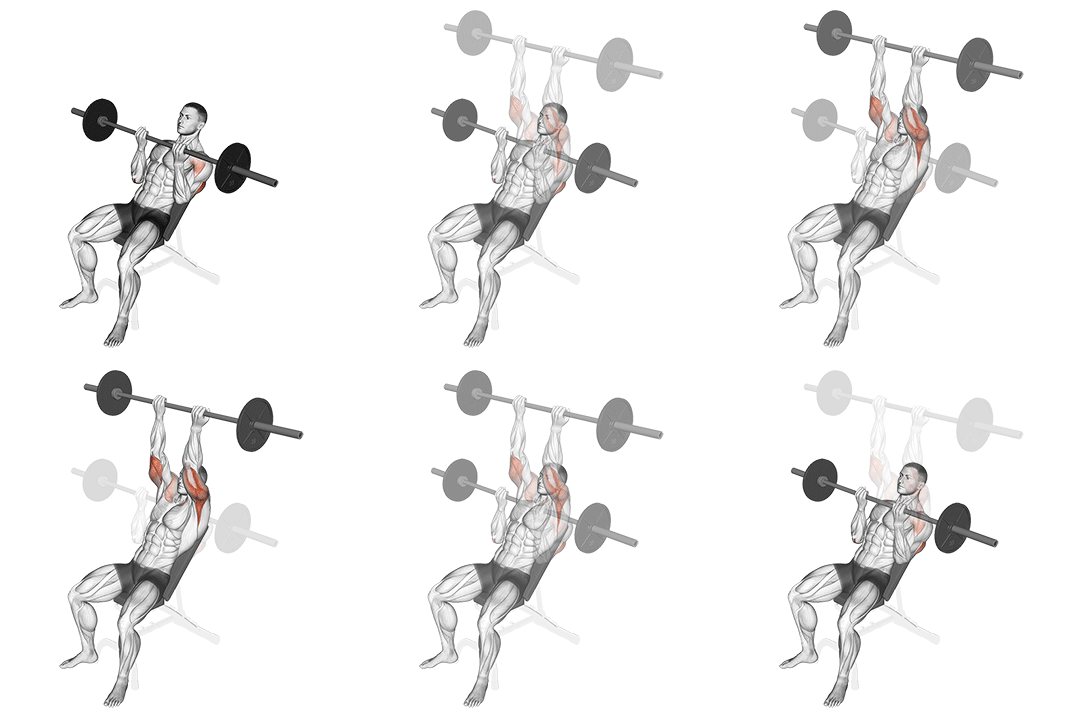
More comparisons with Barbell Incline Close Grip Bench Press
Compare More Exercises
Use our free comparison tool to analyze any two exercises head-to-head.
Compare Exercises