

Barbell Deadlift vs Deadlift With Bands: Complete Comparison Guide
Barbell Deadlift vs Deadlift With Bands — if you want clearer choices for strength, hypertrophy, and technique, you’re in the right place. I’ll walk you through how each lift loads the hips, hamstrings, and spine, show the key technique cues (hip hinge angles, bar path, bracing), and give practical programming advice (rep ranges, progression options). Read on to learn which movement better matches your goal — heavier loading for glute and upper-leg development or variable resistance to emphasize the erector spinae and lockout strength.
Exercise Comparison
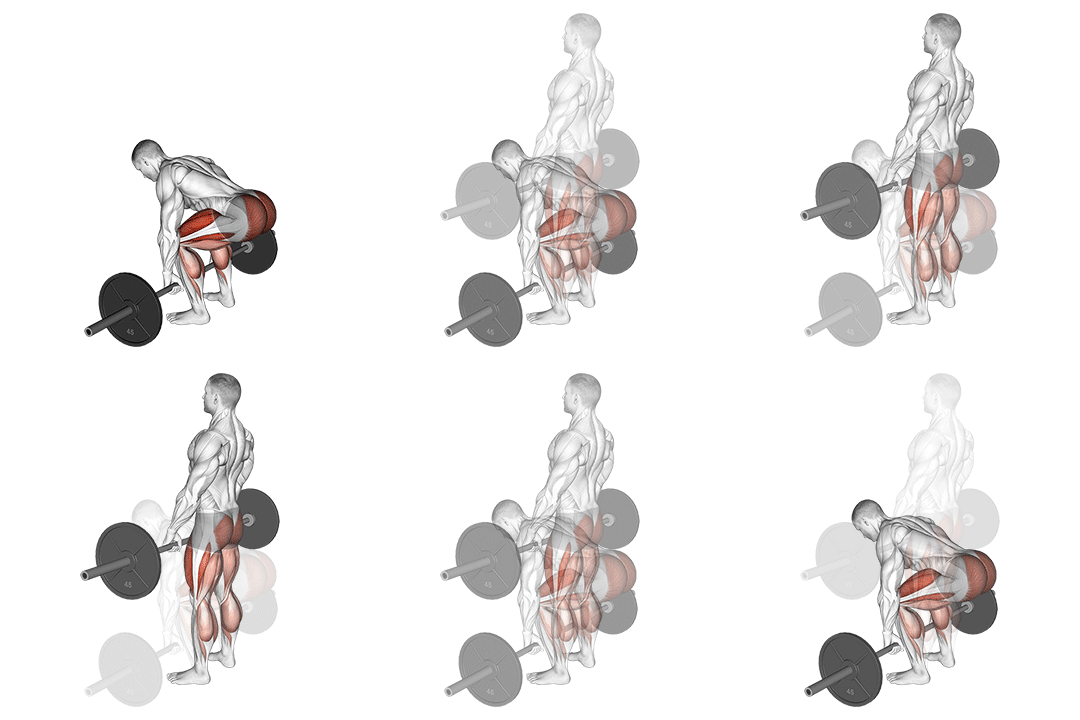
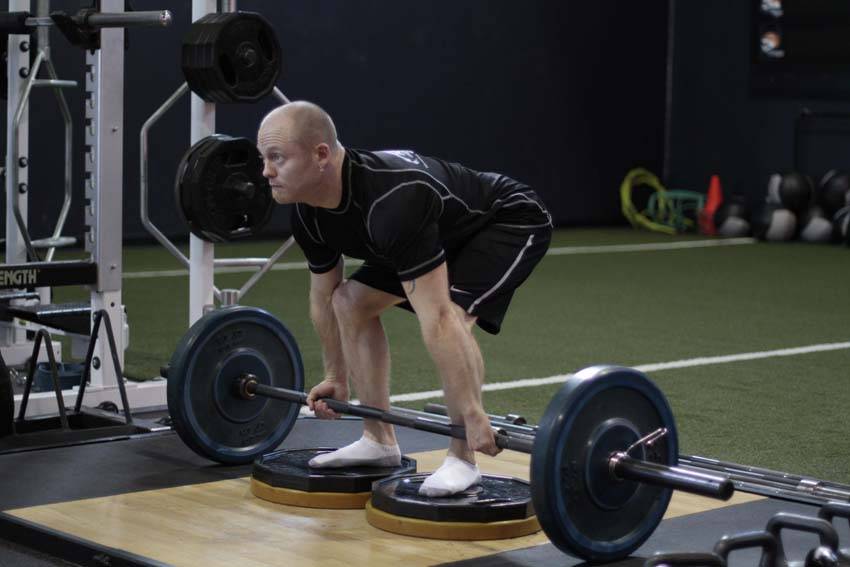
Barbell Deadlift
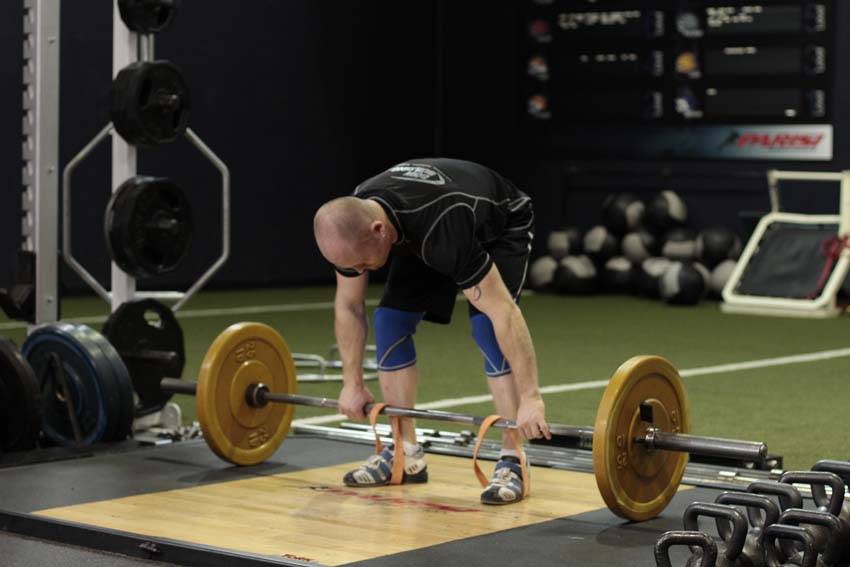
Deadlift With Bands
Head-to-Head Comparison
| Attribute | Barbell Deadlift | Deadlift With Bands |
|---|---|---|
| Target Muscle |
Glutes
|
Erector-spinae
|
| Body Part |
Upper-legs
|
Back
|
| Equipment |
Barbell
|
Barbell
|
| Difficulty |
Advanced
|
Advanced
|
| Movement Type |
Compound
|
Compound
|
| Secondary Muscles |
2
|
6
|
Secondary Muscles Activated
Barbell Deadlift
Deadlift With Bands
Visual Comparison
Overview
Barbell Deadlift vs Deadlift With Bands — if you want clearer choices for strength, hypertrophy, and technique, you’re in the right place. I’ll walk you through how each lift loads the hips, hamstrings, and spine, show the key technique cues (hip hinge angles, bar path, bracing), and give practical programming advice (rep ranges, progression options). Read on to learn which movement better matches your goal — heavier loading for glute and upper-leg development or variable resistance to emphasize the erector spinae and lockout strength.
Key Differences
- Barbell Deadlift primarily targets the Glutes, while Deadlift With Bands focuses on the Erector-spinae.
Pros & Cons
Barbell Deadlift
+ Pros
- Maximal absolute loading for glute and upper-leg strength and hypertrophy (ideal for 1–5 rep strength cycles)
- Simple equipment setup: barbell and plates
- Predictable linear progression using small incremental plates (1.25–2.5 kg)
- Powerful eccentric and concentric carryover to many sports due to constant external load and vertical force vector
− Cons
- Higher compressive and shear forces on lumbar spine under heavy loads
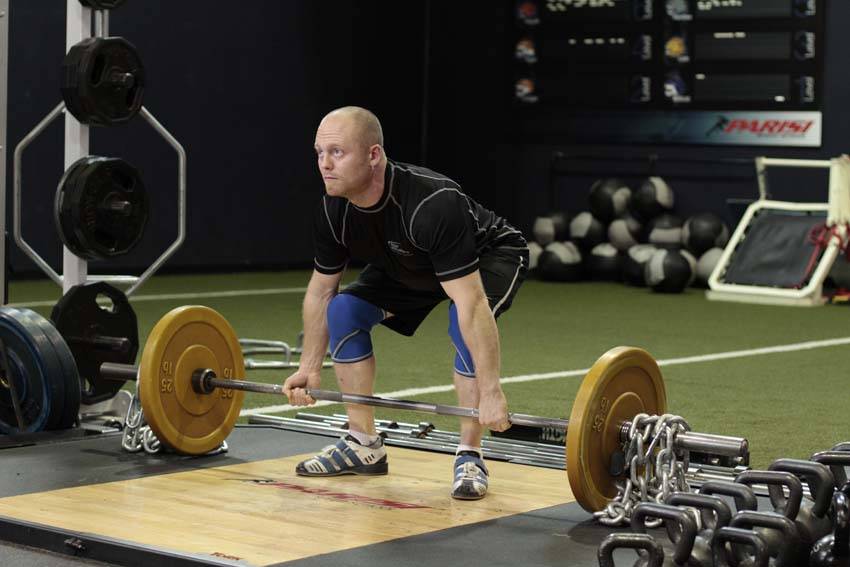
- Requires precise technique: bar close to shins, hinge at hips, neutral spine
- Less specificity for top-end lockout strength compared with accommodating resistance
Deadlift With Bands
+ Pros
- Accommodating resistance increases top-end tension, improving lockout and erector-spinae work
- Can reduce bottom-end load to protect the lumbar spine while still training extension strength
- Versatile for speed work and banded overload sets to build bar speed and top-end force
- Useful for peaking phases where you want high top-range tension without maximal plates
− Cons
- Requires bands and secure anchoring; inconsistent band colours/tension complicate loading precision
- Bar path and timing change; can interfere with motor learning if overused early
- Bands can pull the bar forward or alter form if not tensioned symmetrically
When Each Exercise Wins
Barbell deadlifts let you stack heavy absolute loads to drive mechanical tension in the glutes and upper-legs across full ROM. Use 6–12 rep sets with controlled eccentrics and a 1–2 second pause at the transition to maximize time under tension.
Raw maximal strength improvements require moving heavy fixed loads (1–5 reps) with consistent bar path and overload progression. Barbell deadlifts provide clearer metrics for progressive overload and neuromuscular adaptation.
Banded deadlifts reduce bottom-end load and let beginners practice hip hinge and lockout mechanics with less compressive stress. Start with light bands and low weight, focusing on hinge depth (~45° hip flexion) and neutral spine.
If you lack heavy plates, bands let you simulate heavier top-end resistance and train posterior chain effectively. Bands are portable and allow progressive overload without a full plate set, provided you have a safe anchor.
Frequently Asked Questions
Can I do both Barbell Deadlift and Deadlift With Bands in the same workout?
Yes. A common structure is heavy barbell sets first (1–5 reps) to train maximal strength, then banded sets afterwards (3–8 reps) to overload the lockout and practice speed. Keep total volume in check and monitor fatigue to avoid form breakdown.
Which exercise is better for beginners?
Deadlift With Bands is generally safer for absolute beginners because bands reduce bottom-end load and let you focus on hip hinge and spinal bracing. Start light, emphasize neutral spine and bar path, and progress to heavier barbell work as technique solidifies.
How do the muscle activation patterns differ?
Barbell deadlifts provide steady external load, so peak activation often appears during the initial pull and lockout for glutes and hamstrings. Banded deadlifts create a rising resistance curve that increases erector-spinae and lockout muscle activation late in the concentric phase due to higher tension and altered joint moments.
Can Deadlift With Bands replace Barbell Deadlift?
Not entirely. Banded deadlifts are an excellent complement for lockout work and reducing bottom-end stress, but they don’t replace the ability to train maximal absolute strength with heavy plates. Use bands to supplement, not fully substitute, heavy barbell loading if your goal is maximal strength.
Expert Verdict
Use the Barbell Deadlift when your priority is raw strength or glute and upper-leg hypertrophy: it lets you load the hip extensors with consistent external force and clear progression (1–5 reps for strength, 6–12 for hypertrophy). Choose Deadlift With Bands when you want to emphasize lockout strength, protect the bottom of the range, or train bar speed—bands increase late-range erector-spinae demand and allow overload without massive plates. For programming, combine both across a cycle: heavy barbell work for base strength and targeted banded sets for lockout and velocity once per week. Always prioritize hip hinge mechanics, neutral spine, and gradual load increases.
Also Compare
More comparisons with Barbell Deadlift
More comparisons with Deadlift With Bands
Compare More Exercises
Use our free comparison tool to analyze any two exercises head-to-head.
Compare Exercises